Disclosure: Some links in this post are affiliate links. As an Amazon Associate I earn from qualifying purchases, at no extra cost to you. Learn more
Specs are compiled from manufacturer listings and verified buyer reviews and can change over time — please confirm the key details on the product page before buying.
Martial arts shoes are not sneakers with a logo swap. A running shoe’s cushioned heel lifts you off the mat, and that lift is exactly what makes your pivot slip and your balance wander during a drill. What you actually want is a thin, flat sole that lets your toes spread, a snug midfoot that stops your foot from sliding inside the shoe, and a tread that grips canvas or tatami without marking it. This guide covers seven shoes that solve that problem in different ways — from a split-toe tabi built for Budō to a barefoot trainer that lifts balance for kettlebell work — so you can match the shoe to the art you actually practise.
This guide is built by comparing the manufacturers’ published specifications and the patterns across verified customer reviews, so you get each pick’s real strengths and trade-offs instead of marketing spin.
Some shoes here are built for the wrestling mat, some for the boxing ring, and some for barefoot-style training. The trick is picking the sole shape that matches how your art moves, and the right pair of shoes for martial arts starts with that one decision, not with the biggest logo.
Top Picks

How To Choose The Best Shoes for Martial Arts
Start with the surface and the movement. A wrestling mat wants grip and lateral stability. A boxing ring wants a low, flexible sole so your foot rolls through a pivot instead of dragging. A barefoot-style training session wants a wide toe box and a zero-drop sole so your toes can spread and press. Get that match right and the rest of the spec sheet mostly sorts itself out.
Sole thickness and drop change how you stand
A zero-drop sole keeps your heel and forefoot at the same level, so you stand as you would barefoot. That flatness is what most martial artists want, because a raised heel shifts your weight forward and makes a deep stance feel unstable. Thin, flexible soles bend with your foot, which helps you feel the mat under you and adjust your balance in small increments.
Toe box shape: wide, split, or standard
A wide toe box gives your toes room to spread naturally, which matters when you push off or brace. A split-toe tabi design goes a step further by separating the big toe from the rest, so your foot can grip the ground more like a hand. A standard tapered toe box is narrower and can squeeze your toes together over a long session.
Ankle support versus freedom to move
Higher-cut shoes add ankle coverage, and a medial side support unit (a reinforced panel on the inside of the foot) helps keep you stable when you shift weight sideways. Lower-cut shoes give your ankle more freedom to flex. Neither is better — pick the one your art rewards. Wrestlers and boxers often want a low, locked-in shoe; some karate and taekwondo practitioners prefer a higher cut.
Side-by-Side Comparison
| Model | Best For | Sole / Shape | Key Feature | Stated Weight | Amazon |
|---|---|---|---|---|---|
| ASICS Men’s MATCONTROL 3★ Best Overall | Wrestling and boxing training | Flexion-groove outsole | Shoelace garage | 1.44 lb | Amazon |
| adidas Men’s HVC 2Best Value | Mat work and gym cardio | Flexible low-cut | Lightweight build | — | Amazon |
| FISTRAGE Leather Kick Boxing Shoe | Boxing and jump rope | Leather and mesh upper | High-top ankle support | — | Amazon |
| Marugo Tabi Action Jog II | All-day Budō training | Split toe, thin sole | Tabi toe separation | — | Amazon |
| Xero Shoes Women’s Prio Neo | Barefoot strength training | Flat, zero-rise sole | Wide toe box | — | Amazon |
| adidas Women’s Taekwondo Sneakers | Everyday wear around the gym | Flat, hard-bottom | Soft leather upper | 3 lb (package) | Amazon |
| WHITIN Canvas Slip On W863 | Casual barefoot-style wear | Zero-drop, flexible | Wide toe box | — | Amazon |
Detailed Reviews
1. ASICS Men’s MATCONTROL 3 Wrestling Shoes
Our pick — 4.5+★ from 500+ verified ratings; the strongest balance of quality and price.
A mat shoe that hides your laces and bends exactly where your foot does.
The ASICS MATCONTROL 3 does one job properly: it keeps you planted on a wrestling mat and gets out of the way of your foot. At 1.44 pounds, it is a genuinely light shoe, and that lower number is what makes quick footwork feel quick rather than sluggish. The outsole carries flexion grooves — shallow channels cut into the rubber that let the sole bend at the ball of your foot — so you can drop into a stance without the shoe fighting you.
Two details separate it from the pack. First, a shoelace garage in the eyestay: a small pocket at the top of the lacing that your tied laces tuck into, so they stay put through a match instead of whipping loose. Second, a medial side support unit — a reinforced panel running along the inside edge of the foot — which adds stability when you push sideways. The flexible upper moves with your foot’s natural motion without giving up that support. Quality is the trait that lands hardest with owners, and it tracks with the durability they describe lasting past six months of regular work.
The catch is the fit, and it is worth planning around. The upper runs snug around the toes at first, and a few owners needed roughly two weeks of practices to get comfortable. A size-12 wearer found it tighter than the previous MATCONTROL generation before it broke in, and the width runs narrower than expected. Try them on before you commit if you have a wide forefoot. Once broken in, though, they settle — one buyer put it plainly: “now that I’ve broken them in, they’re my favorite shoes to use for boxing.”
What it gets right
- Shoelace garage tucks laces away mid-match
- Flexion grooves let the sole bend at the ball of your foot
- Medial side support unit steadies sideways pushes
- Light 1.44 lb build keeps footwork crisp
- Grip and build quality hold up through months of training
Where it asks patience
- Snug toe box needs a break-in of around two weeks
- Width runs narrow for wide feet
- Some find the laces short once tied
Made for: wrestlers and boxers who want a light, low shoe with locked-down laces and a sole that bends naturally.
Consider another shape: if your forefoot is wide — this one rewards an accurate size or a try-before-you-buy.
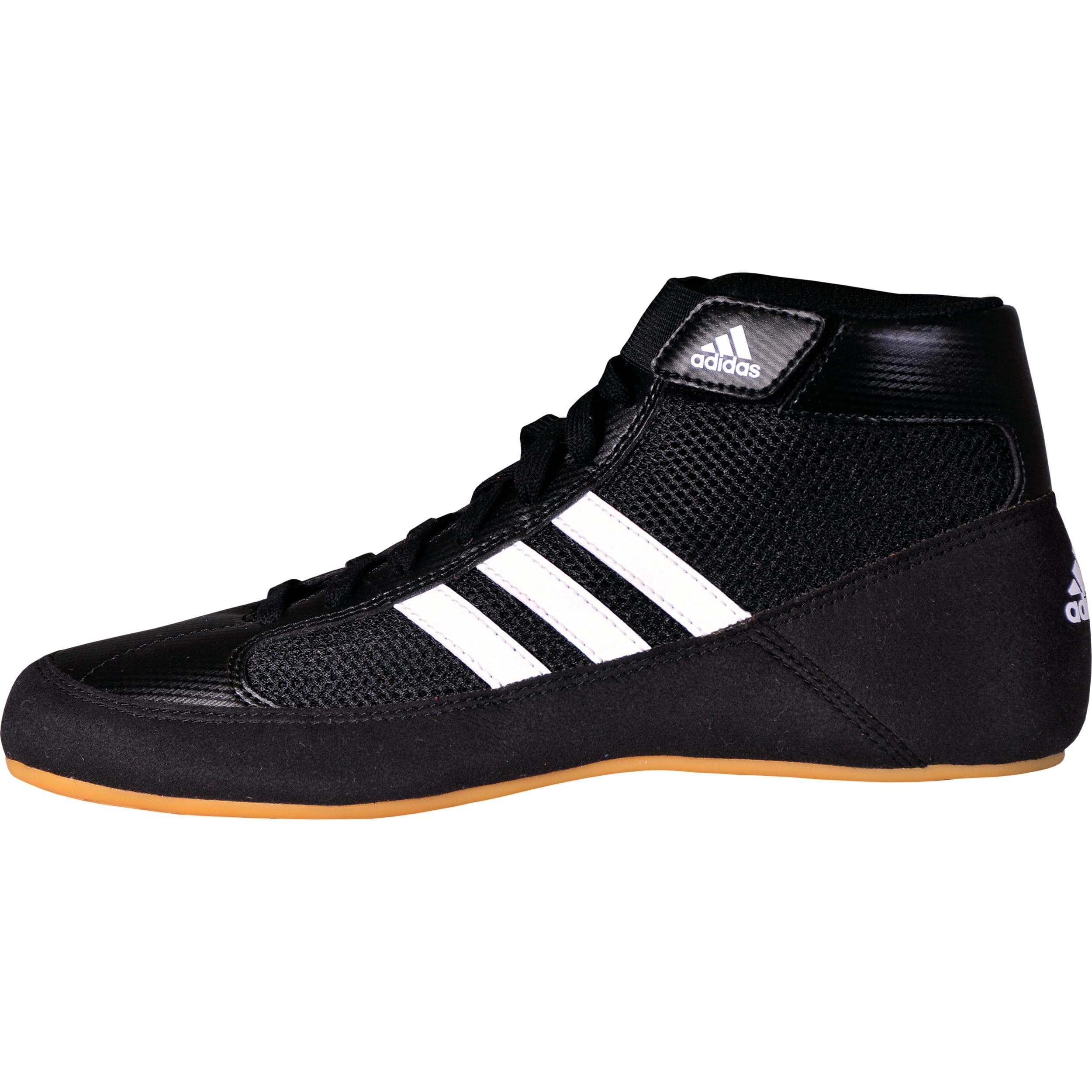
2. adidas Men’s HVC 2 Wrestling Shoes
A budget-friendly mat shoe that punches above its tier on grip and comfort.
The HVC 2 is the pick to look at closely if you are new to mat work and want a first wrestling shoe without gambling much. Flexibility is the headline: the upper bends and moves with your foot so it feels broken in fast, and owners describe it as soft, sturdy, and light all at once. Grip is the part people bring up again and again — the tread grabs canvas and gym floor reliably, which is what you need when you plant and pivot.
Where it earns its place in a martial arts bag is versatility. It handles wrestling drills, gym cardio, and general training without complaint, and a low-cut ankle keeps your foot free to flex rather than locked upright. Ankle support still gets its due from owners who want a little steadiness without a high-top. Colours and styling get consistent praise too, which matters if you wear the same pair from the mat to the gym floor.
Oversized expectations are where this one asks you to be realistic. Narrow feet fare best — the shoe runs noticeably tight across the forefoot, and a buyer who tried it found the lower ankle slightly loose while the strap felt short of slack. Durability is the bigger honest caveat: a small handful of owners had the sole begin separating early, and a parent reported having to glue a pair back together after first use. Size up if your foot is wide, and treat these as a great value starter rather than a shoe you expect to outlast everything.
Who it clicks with: anyone stepping onto a mat for the first time, or someone who wants a light training shoe for gym cardio and bag work without a high-top cut.
The honest limit: the sole bond is the weak point — a few pairs have come apart early, so a wide forefoot should size up and a heavy weekly schedule may want a sturdier build.
Reach for this if: you want proven grip and an easy, flexible feel at the entry end of the market.
Look elsewhere if: you have wide feet or plan to punish the same pair daily for a full season.
3. FISTRAGE Leather Kick Boxing Shoes
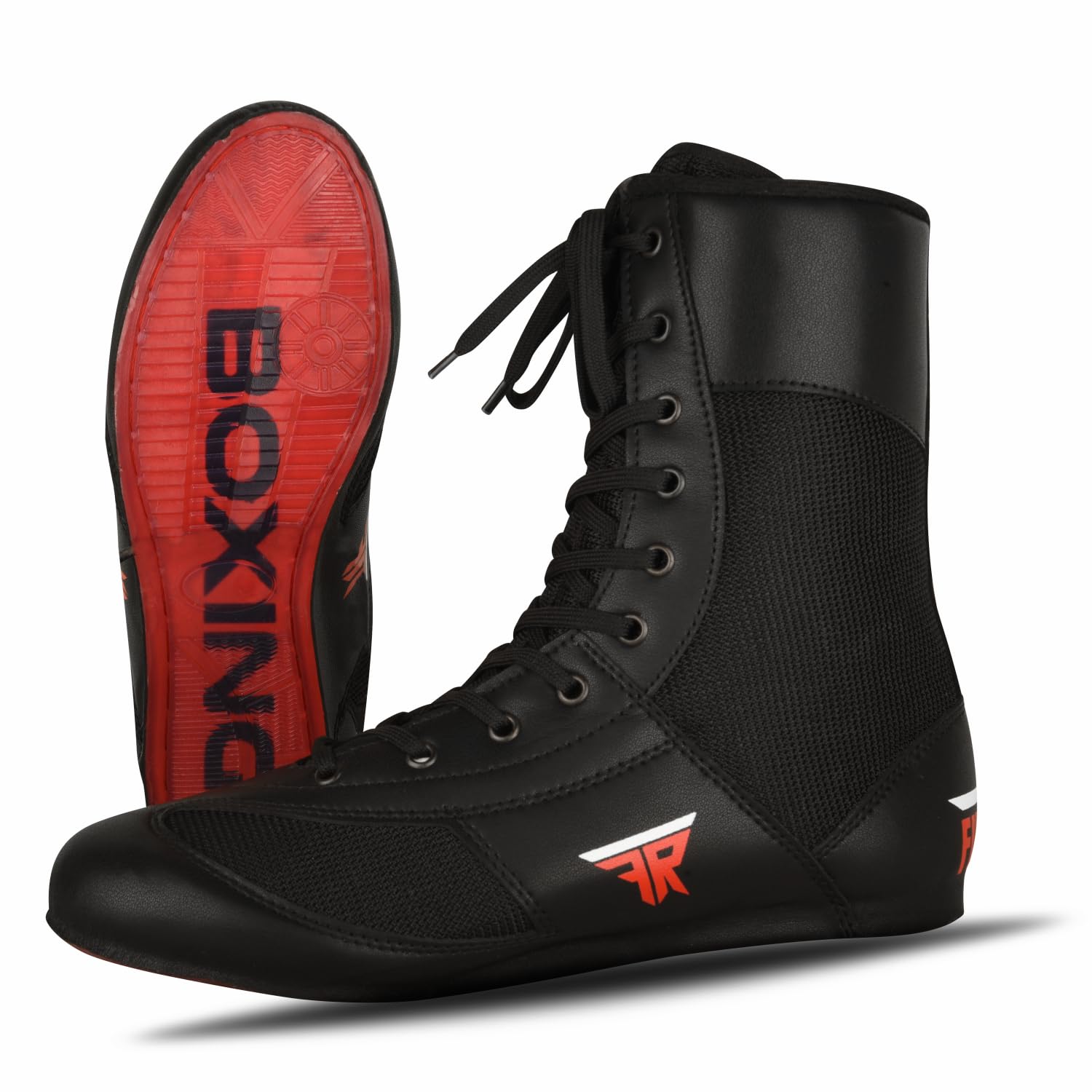
A high-top boxing boot with a breathable leather-mesh upper and a boot-like ankle feel.
If your training is boxing and ring footwork rather than mat wrestling, the FISTRAGE boot changes the shape you are working with. The high-top cut wraps the ankle with real support, and the leather-and-mesh upper breathes rather than trapping heat through a long session. Grip is strong, and the feel is snug and stable rather than loose or sloppy. It is a great starter boot for someone who wants ankle coverage and a proper boxing silhouette without going all the way to top-of-market prices.
The finish leans dressier than most training shoes, and that shows in the details — the laces arrive individually wrapped, and the overall presentation feels considered, as a delighted owner described in the review pages when they called the hand-wrapped packaging a nice touch. Owners who jump rope rate it for that too: the sole is responsive enough for a bounce rhythm, and the lightweight build keeps a heavy bag session from feeling like leg day.
Two honest caveats to weigh. The fit is narrow, and owners with wide feet found they needed to order a half size up to get comfortable. Second, this is a consumer-tier boot, not an indestructible one — the stitching and logo finish can arrive imperfect, and one buyer had a pair run small enough to return, so check the return window before you scuff them. Get the size right, though, and it earns its keep for ring work and jump rope alike.
The boot that fits boxing: a high-top cut plus a breathable leather-and-mesh upper and reliable grip makes ring footwork feel planted.
Read before you order: the build runs narrow, so wide feet should go a half size up.
Pick this for: boxers who want ankle coverage, a breathable upper, and a sharp look that holds up through daily training.
Size up if: your forefoot is wide — the cut runs narrow and the return window is your safety net.
4. Marugo Tabi Action Shoes Jog II

The split-toe tabi that lets your big toe work on its own, all day on the mat.
Traditional Budō training is the scenario where the Marugo Tabi shines, because the split-toe design separates your big toe from the rest so your foot grips the ground more like a hand. Owners who train all day describe the fit as accurate when you measure from the middle toe to the heel, and the build holds its shape without going stiff. Add the breathable upper and it stays comfortable through a long session rather than trapping heat.
What wins people over is how much ground feel the thin sole gives back. The low profile keeps you connected to the mat, which is exactly what helps balance — one regular wearer credited the split toe with steadier posture and better balance through a full workday. The split toe also relieves pressure on the outside bone behind the big toe by keeping the toes from pressing together, which makes a long session far less wearisome. For gym use it is remarkably quiet too, with very little of the squeak that plagues flat rubber soles on polished floors.
The trade-off is durability and wet-weather grip, and both are worth knowing before you buy. The soft rubber around the toe can hole up over time, and the glue seams at the sole can split after a few years of hard wear. On wet or icy ground it is genuinely slippery — worse than going barefoot, so do not use it as a rain shoe. And sizing runs big for some; measure your foot carefully rather than guessing from your usual number.
Where it stands out
- Split toe lets the big toe grip independently
- Thin sole keeps you connected to the mat
- Breathable upper suits all-day training
- Holds its shape without stiffness
- Notably quiet on gym floors
What to plan for
- Soft rubber and glue seams wear after hard years
- Loses grip on wet or icy ground
- Sizing runs big — measure your foot in centimeters
The match: anyone training Budō or a traditional art who wants a split-toe shoe with real ground feel and an all-day build.
Not this one if: you need a wet-weather shoe or expect heavy rubber to survive rocky outdoor terrain.
5. Xero Shoes Women’s Prio Neo Barefoot Training Shoe
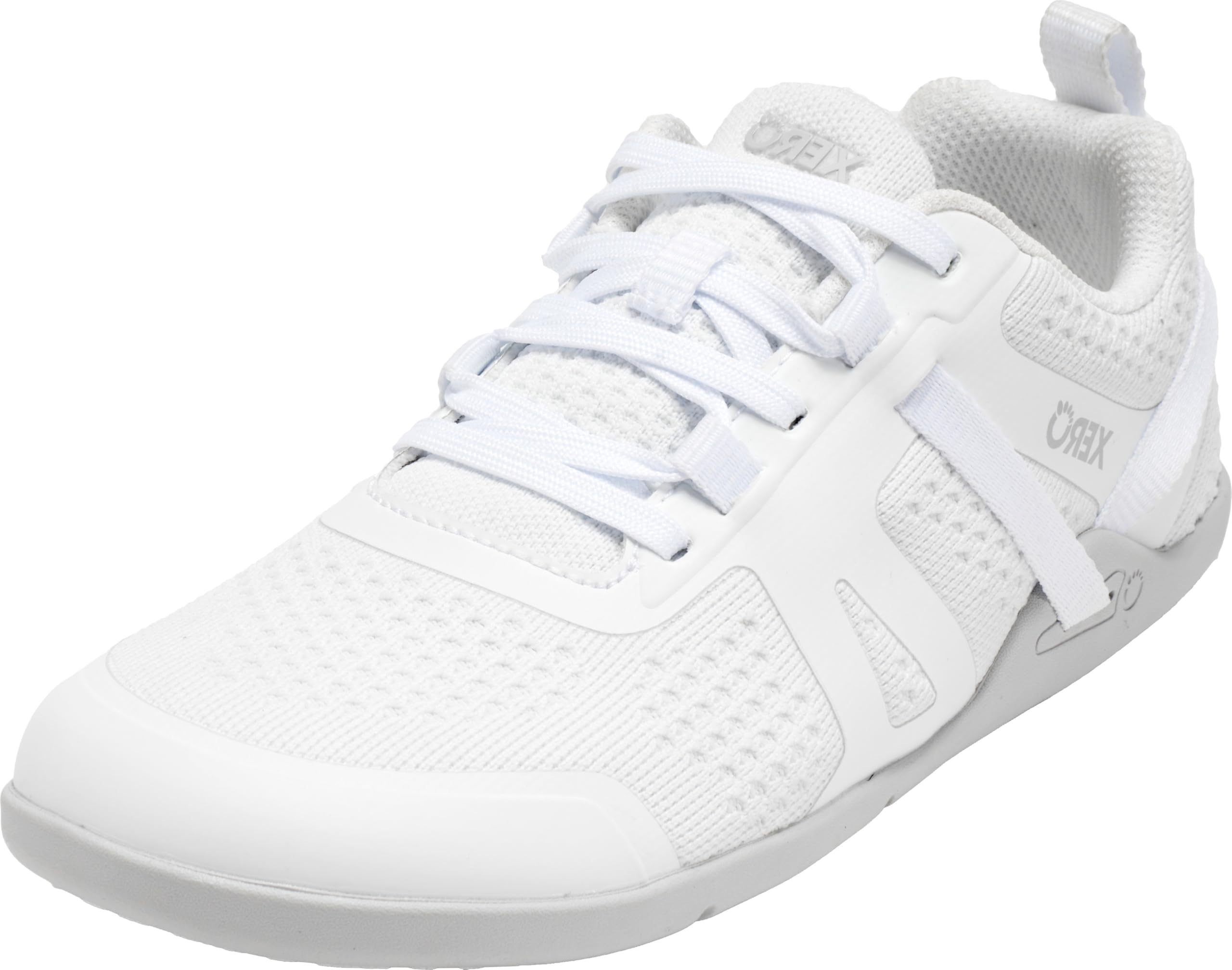
A flat, wide barefoot trainer built for lifters who want their toes to spread.
Strength and kettlebell training punish squishy shoes. A cushiony sole lets your foot wobble mid-lift, which is the exact opposite of what a stable stance needs. The Prio Neo solves that with a flat sole that sits level with the ground, so your foot has a solid base to press into. The wide toe box then lets your toes spread and grip the floor — buyers report a noticeable jump in balance during trainer workouts and an end to the toe-squeezing pain they had in regular sneakers.
Comfort is the trait it’s loved for, and the versatility follows: walking, gym work, kettlebell sessions, treadmill time — it handles all of them without needing a swap. It is light and it can bend and flex with your foot rather than holding it rigid. Style is a quieter bonus; the shoe looks the part in the gym and on the street, and buyers writing about it regularly mention the look as part of why they keep wearing it.
Two things to prepare for. First, if you are coming off a cushioned shoe you will need an adjustment period — the transition from a raised heel to a flat sole can work your calves and knees, and one first-timer needed a cushioned insole for a while to ease it. Second, the sole is hard rather than soft, which some wearers find jarring if they expected a little give. Size up half a size: owners who took that advice landed a perfect fit, while those who trusted the site’s usual-size guidance sometimes found the shoe too short.
Balance, not squish: a flat, level sole plus a wide toe box lets toes spread and grip, which is what steadies a lift.
The adjustment: swapping in from cushioned shoes takes patience, and the firm sole is felt on day one.
Best for: lifters and barefoot-curious trainers who want an even, wide base and a shoe that works from gym to street.
Go half a size up if: you are between sizes — owners who did got a solid fit.
6. adidas Women’s Taekwondo Sneakers
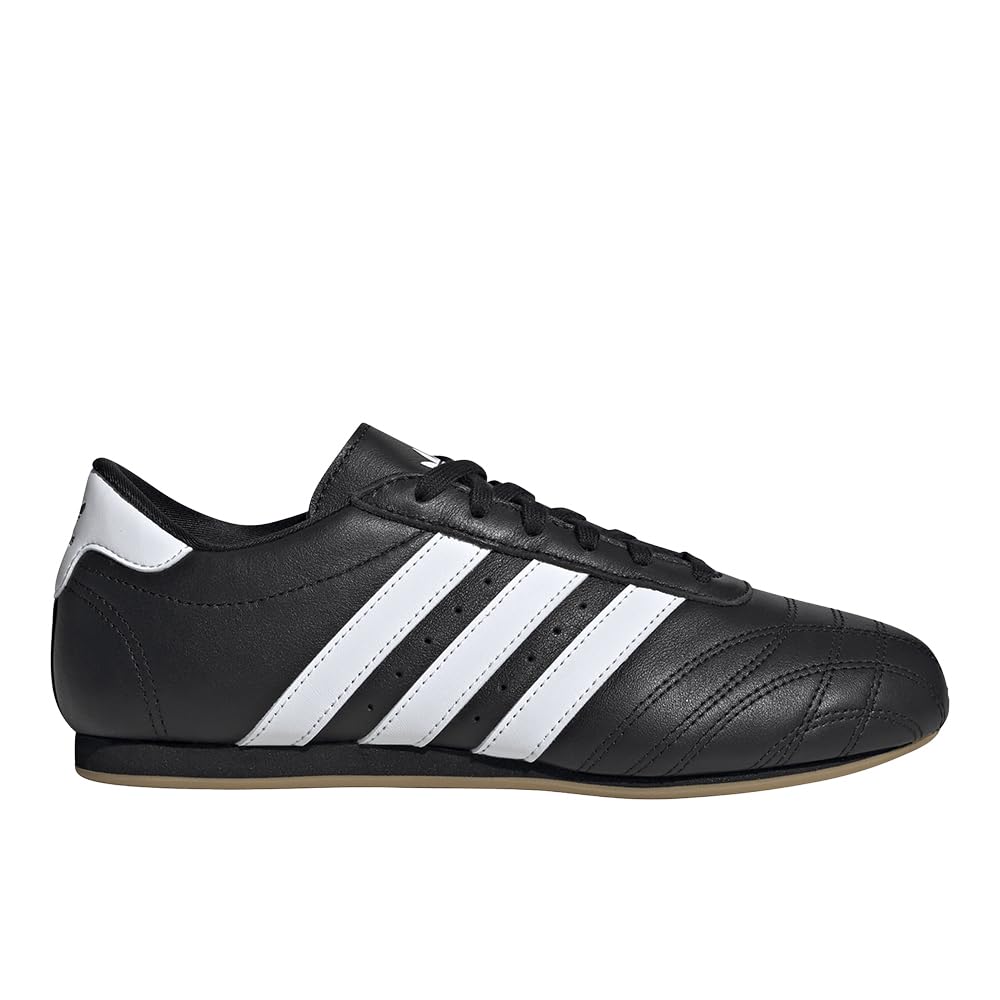
A flat, soft-leather sneaker that looks like a street shoe but sits low like a mat shoe.
This one is a women’s everyday sneaker with a martial-arts soul — flat, hard-bottomed, and low to the ground. The body is soft leather with ’00s-inspired quilting at the toe and the classic three stripes running down the side. The flat sole is the detail that matters for a martial artist, because it keeps you level rather than tipped forward onto a cushioned heel. One regular wearer found that even though the shoe felt firm at first, it caused no foot pain across a twelve-hour workday.
Where it earns its keep in a training bag is as a warm-up and travel shoe. It’s easy to wipe down too, and one owner singled out exactly that — leather over suede means a quick cloth brings it back. The fit is the thing owners praise most prominently, with a true-to-size run and a snug, soft feel that is comfortable rather than tight. It’s flexible enough for trampoline and floor classes where you want a flat base, and stylish enough to wear straight to the gym without a change.
Honest note on the weight: the 3 pounds on the spec sheet is the package weight, so don’t read it as the shoe on your foot — the shoe itself is described as lightweight. The other honest caveat is that the arch support is minimal and the sole is hard, which is great for flat-footed mat work and less forgiving if you need cushioning. And unlike the Marugo above, this one is built for dry indoor surfaces, not split-toe ground grip.
This suits you if: you want a flat, soft-leather sneaker for class warm-ups, travel, and all-day wear that nods to martial arts without shouting it.
Know before you buy: the sole is hard with minimal arch support, so it is not a cushioned walking shoe.
7. WHITIN Men’s Canvas Slip On Barefoot Shoes Wide Toe Box W863

An easy-on, wide-toe canvas shoe for the days you’re not on the mat.
The WHITIN W863 is the most affordable way to get a zero-drop sole and a wide toe box on your foot. The design keeps your heel and forefoot at the same level for that natural, low-to-the-ground feel, and the flexible sole bends with your foot so it never fights a push-off. Elastic side gore at the opening means you slip them on without bending over, which is the kind of small convenience that makes them the shoe you grab on the way out the door. The canvas upper is breathable and the textured rubber outsole gives dependable everyday traction.
The toe box is the real story here. If narrow mat shoes squeeze your toes together, this gives them room to spread — a wide-foot owner with joint trouble found the stiff upper felt too snug at first, but once broken in it became their go-to daily slip-on. They also hold more structure than many barefoot shoes, which owners credit with months of hard daily wear without coming apart. And when they get wet, they dry fast, so a damp morning walk does not sideline them all day.
This is not a competition shoe — it is a barefoot-style sneaker for casual wear and training-adjacent days. The canvas picks up dirt quickly and takes some scrubbing to bring back, and the tread is textured rubber rather than a mat-specific non-marking sole, so treat it as an everyday low-profile shoe rather than a wrestling or boxing trainer. There’s visible glue at the sole seam on some pairs, which is expected at this level. If you want the barefoot feel between sessions without spending much, it does the job.
The value read: a zero-drop, wide-toe canvas slip-on that promises natural foot position and easy on-off for the days off the mat.
What you give up: canvas stains easily and there’s no mat-specific non-marking sole.
Go for this: if you want a zero-drop, wide-toe everyday shoe at the entry end of the market.
Not for: competition days on the wrestling mat — it is a casual barefoot-style sneaker, not a trainer.
Know the Specs
Zero-drop sole
A zero-drop sole keeps your heel and forefoot at the same level, so you stand as you would barefoot. That flatness makes a deep stance feel stable instead of tipped forward. Look for the phrase “zero drop” or “flat sole” if you want this feel.
Wide vs split toe box
A wide toe box gives your toes room to spread naturally, while a split-toe tabi design separates the big toe entirely so your foot can grip more like a hand. A standard tapered box squeezes the toes together over time.
Shoelace garage
A shoelace garage is a small pocket in the eyestay where tied laces tuck away. It stops laces flapping or catching on a mat during a match, which is why wrestling shoes include one.
Medial side support and flexion grooves
A medial side support unit is a reinforced panel on the inside of the foot that steadies sideways pushes. Flexion grooves are shallow channels in the outsole that let the sole bend at the ball of the foot so you can drop into a stance.
Common Questions
Can I wear running shoes for martial arts training?
What is the difference between a split-toe tabi shoe and a wide toe box shoe?
How long does it take to break in a wrestling shoe?
Should I size up or down for boxing and wrestling shoes?
Are barefoot shoes good for lifting and kettlebell training?
Do martial arts shoes need a non-marking sole?
What are shoelace garages and flexion grooves on a wrestling shoe?
Can I wear these martial arts shoes outside the dojo or gym?
Do martial arts shoes run true to size?
What is the lightest shoe here for quick footwork?
The Bottom Line
For most people stepping onto a mat, the shoes for martial arts pick is the ASICS MATCONTROL 3. It has the details that matter — flexion grooves for a real bend, a shoelace garage to keep laces locked, and a medial side support unit to steady sideways moves — all in a light 1.44-pound shoe. If you want a boxing boot with high ankle coverage and a breathable upper, grab the FISTRAGE Leather Kick Boxing Shoe. And for traditional Budō training where toe grip and ground feel come first, the Marugo Tabi Action Jog II is the one to reach for — just measure your foot in centimeters and keep it out of the rain.
How we choose
We do not accept paid placement. Every pick is matched to a real buyer and a real use-case; we do not hands-on test units.
Sources
Specifications: manufacturer listings and product documentation. Review insights: verified customer reviews, as of October 2026. Pricing: not shown on this page (it changes often); check the current price via the retailer link.
As an Amazon Associate, Aappliancez earns from qualifying purchases. This does not affect which products we feature.