Disclosure: Some links in this post are affiliate links. As an Amazon Associate I earn from qualifying purchases, at no extra cost to you. Learn more
Specs are compiled from manufacturer listings and verified buyer reviews and can change over time — please confirm the key details on the product page before buying.
A shell jacket has one job: keep the rain out without trapping your own sweat inside. Most buyers get that first part right and get burned on the second — they end up clammy after twenty minutes of walking because the jacket traps every bit of heat they produce. The fix is not more layers underneath — it is a shell whose fabric, hood and seams match how hard you move. It is picking a shell whose fabric, hood and seams are actually built for the way you move.
This guide is built by comparing the manufacturers’ published specifications and the patterns across verified customer reviews, so you get each pick’s real strengths and trade-offs instead of marketing spin.
Below you will find nine real-world picks sorted by what they are genuinely good at, from commuter raincoats to alpine hard shells. Every pick below earns its place on construction, hood design and how it handles moisture on the inside. My picks for the best shell jackets weigh fit against breathability, so you know which cut really works under a pack.
Top Picks

How To Choose The Best Shell Jackets
A shell jacket has one job: block wind and water while letting your body heat escape. Each spec below — seam sealing, breathability, hood shape, hem length — pushes that balance toward drier or damper. Deciding which way you want to lean before you shop keeps you from buying a shell that fights you on every climb.
Seams and zips decide whether “waterproof” is real
A fabric can shed rain and still let you get soaked, because water finds the needle holes. Fully sealed seams close those holes. Waterproof zips do the same for the pockets and the front closure. Ski and alpine shells lean hardest on this — the Oakley Unbound uses fully taped seams and waterproof chest and side zips for exactly that reason.
Breathability versus warmth
A thin unlined shell moves moisture best and adds almost no heat. A lined shell keeps you warmer but can trap sweat on a fast climb. The Mammut hardshell counters this with a rated breathability figure, while the Helly Hansen Crew leans warm with Polartec fleece lining. Neither is wrong — match the shell to how hard you plan to work.
Cut, hem and hood for your actual activity
Cyclists need a long back hem and a hood that clears a helmet. Hikers want a hood that adjusts down tight in wind. City commuters mostly want a jacket that looks normal with jeans. The GOREWEAR Lupra is shaped for the handlebars, and the Oakley Unbound hood is built to fit over a ski helmet.
Sizing runs are the number-one return reason
Shell sizing is famously inconsistent — some run roomy for layering, some run small. The Antora is cut generously enough to layer a fleece underneath, while the Beta Jacket runs small enough that regular buyers had to send it back. Check the fit notes on each pick before you commit.
Side-by-Side Comparison
| Model | Best For | Waterproof Protection | Breathability | Fabric / Construction | Amazon |
|---|---|---|---|---|---|
| The North Face Men’s Antora Waterproof Jacket★ Best Overall | Everyday rain and layering | Waterproof and windproof | Lightweight, breathable | Packable rain shell | Amazon |
| Helly Hansen Women’s Aden JacketBest for Women | Women’s coastal and travel raincoat | Waterproof, fully sealed seams | Breathable with quick-dry lining | Helly Tech, windproof | Amazon |
| Helly Hansen Crew Sailing Jacket 2.0Warmest Shell | Cold-weather sailing and city wear | HELLY TECH waterproof | Breathable with fleece lining | Polartec fleece lining | Amazon |
| Mammut Men’s Alto Light HS Hooded Jacket | Minimalist packable shell | Hardshell | — | 12.8 ounces | Amazon |
| GOREWEAR Lupra 2.0 GORE-TEX Cycling Jacket | Riding and commuting | GORE-TEX waterproof | Breathable | 11.2 ounces | Amazon |
| Mammut Outdoor Hardshell Hooded Jacket | Hiking and active use | 20,000mm | 20/m²/24h | 100% recycled polyamide, 190g | Amazon |
| Oakley Unbound GORE-TEX Shell Jacket | Skiing and storm days | GORE-TEX with fully taped seams | Body heat retention | 100% recycled outer, FC0-style water-repelling treatment | Amazon |
| Arc’teryx Beta Jacket Men’s | Year-round mountain travel | 80D 3L GORE-TEX ePE | GORE C-KNIT backer | FC0 DWR, PFC free | Amazon |
| Arc’teryx Beta AR Men’s Jacket | Hard-use alpine shell | GORE-TEX PRO | Hybrid-material build | GORE-TEX PRO shell | Amazon |
Detailed Reviews
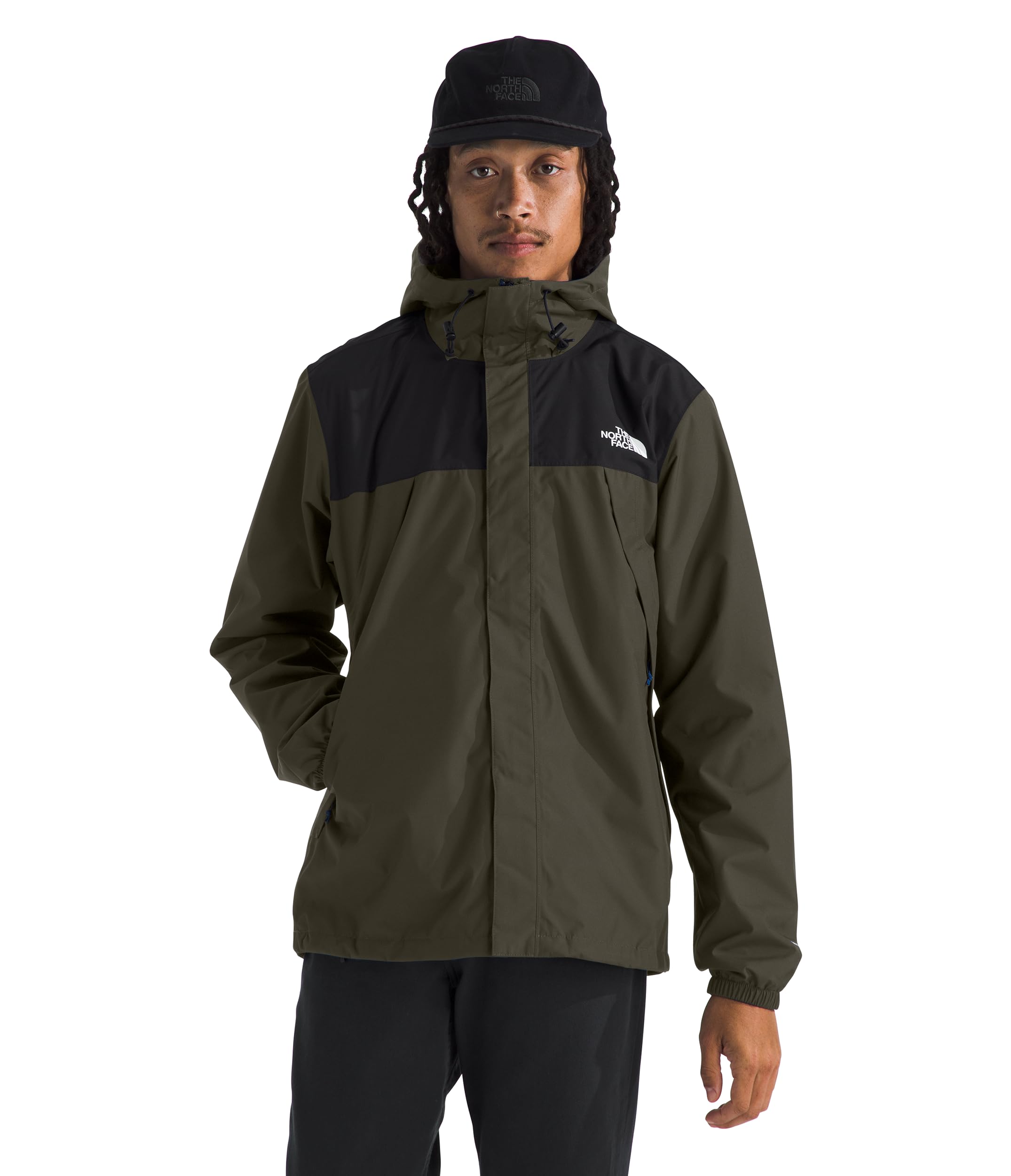
1. The North Face Men’s Antora Jacket
Our pick — 4.5+★ from 2,000+ verified ratings; the strongest balance of quality and price.
The everyday shell that layers over a fleece and shrugs off a commute downpour.
What makes the Antora the pick here is construction that holds up under repeat use. The reviews circle the same point again and again: this is a well-made jacket, and owners say so more than anything else — quality is the aspect that gets praised most across this product’s feedback. It sheds wind and rain on a hike or a wet walk to the station, then dries fast enough to ball up and stuff in a bag. For a rain shell you wear hard rather than baby, that combination of dry and quick-drying is what matters.
The fit is generous, which is the practical reason it works as a year-round layer. One buyer at 1.75m and 98 kilograms ordered an XL and reported “still room for a vest” underneath. A second person bought it as a gift and said the recipient found it comfortable without overheating, staying warm without turning clammy. The roomy cut also means a Denali fleece slides under it and you can still move freely.
Here is the honest catch. This is a light shell, not insulation, so it will not keep you warm on its own in real cold — it needs a mid-layer under it. Some wearers also find it runs hot on a fast walk because it has no vents. If you want warmth straight out of the bag, this is the wrong jacket. If you want an affordable, packable rain shell that layers over what you already own, it is tough to top.
What earns it the crown
- Keeps you dry in rain and blocks wind, per repeat owner experience
- Roomy cut layers cleanly over a fleece or vest
- Lightweight and quick to pack for travel
- Color options that draw compliments, including a vivid purple
Where it stops short
- No insulation — you need a layer beneath in the cold
- Lacks vents, so it can feel warm on a brisk climb
- The red shade reads closer to reddish orange
Buy it if: you want one packable rain shell for commuting, light hiking and travel that fits over your existing layers.
Think twice if: you need a jacket that stands alone in winter cold — this one is a shell, not a heater.
2. Helly Hansen Women’s Aden Jacket
A women’s raincoat that beads water off the shoulder and still looks sharp with jeans.
The Aden is built on Helly Tech fabric with fully sealed seams — those are the stitched joints where water would otherwise sneak in. That sealing is what separates a jacket that survives an hour-long downpour from one that soaks through at the shoulders. Owners describe rain beading up and wiping straight off, and the jacket keeps them dry at the beach on a cool, windy day just as well as in a city drizzle. The quick-dry lining keeps it from feeling cold and damp against your back.
Fit is where this jacket earns its keep, but you have to read the sizing notes. The cut is trim, and several wearers sized up to get room for a sweater — a buyer at 5’8″ and 140 lbs bought a large specifically for layering and came away impressed. Someone nearer 5’10” and a size 10 also chose a large for the same reason. One point worth knowing: the shoulders can run snug, so if you are broad across the top, go up.
The one real gripe is breathability. Without vents, a hard walk leaves a sweater a little damp from your own sweat — one owner noted exactly that after an hour in heavy rain. The hood also runs large and can droop, though it folds back. Neither problem touches the waterproofing, which holds up. Pick this if you want a sleek women’s shell that handles wet weather and looks the part.
What women tell each other: the rain beads off and wipes clean, and the lined construction blocks wind without extra bulk.
The one soft spot: no vents means dampness from your own heat on an uphill push, and the hood benefits from a fold when you are not wearing it up.
Reach for this if: you want a well-cut women’s rain shell for travel, coastal walks and wet commutes — and you are willing to size up for layering.
Look elsewhere if: you run hot on steep climbs and need venting zips to dump heat.
3. Helly Hansen Crew Sailing Jacket 2.0
A waterproof shell with fleece built in, so cold wet mornings need one jacket not two.
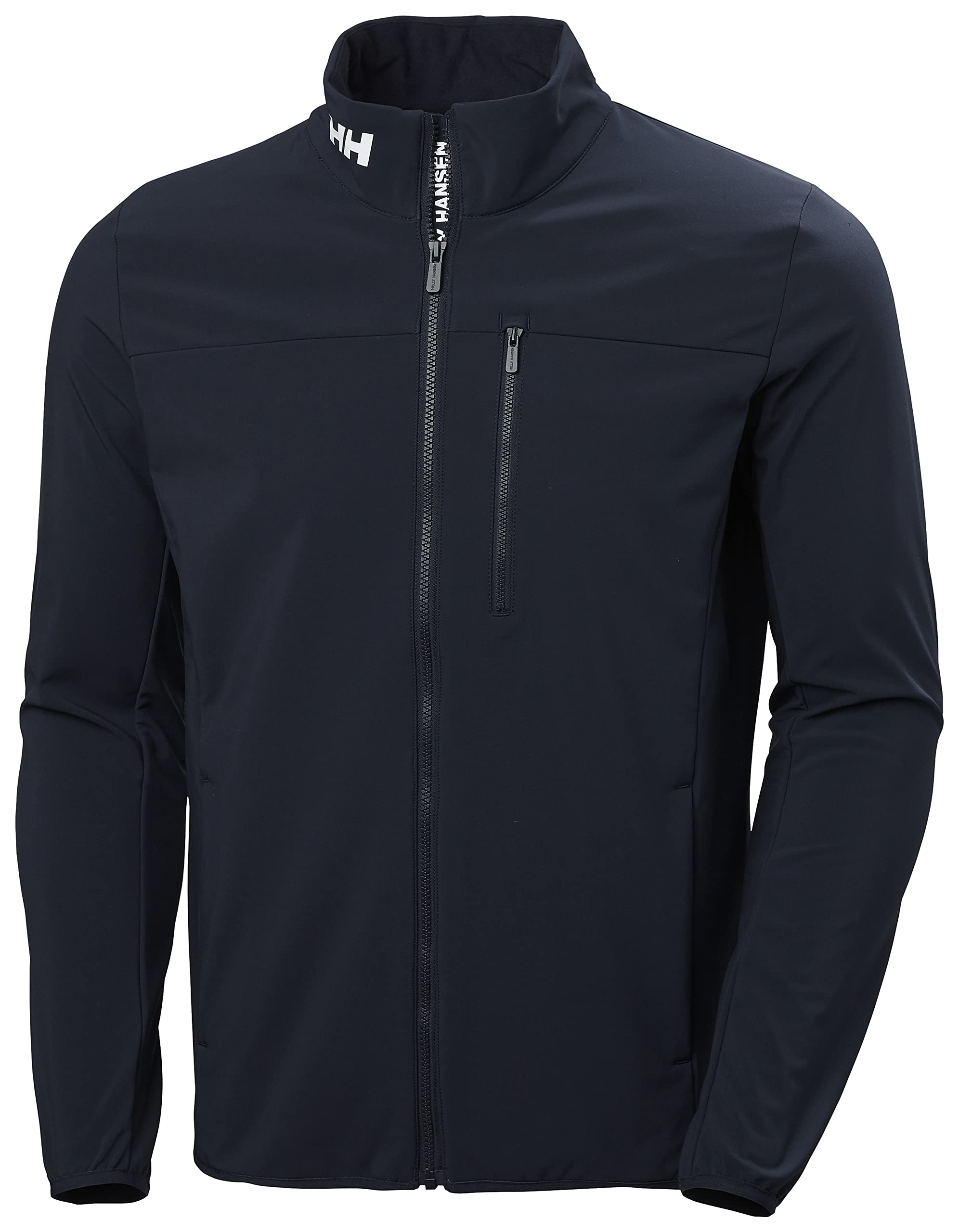
Most shells on this list are a barrier and nothing else. The Crew 2.0 breaks that pattern with a Polartec fleece lining and polyester insulation in the sleeves, with taffeta inside the arms so you slide in and out without snagging a sweater. It is windproof and waterproof through HELLY TECH construction, and it started life as sailing gear — which is a polite way of saying it was designed for spray coming at you sideways.
The details show up in movement. Articulated shoulders and elbows let you reach and pull without the jacket fighting you, and the adjustable cuffs plus a drawcord hem let you cinch it down against a draft. Owner feedback on quality is the strongest note in the reviews here, with fit close behind. Long-armed wearers get a rare win: one owner closer to six feet found the arms actually long enough and the jacket hit slightly below the waist rather than riding up.
The trade-off is bulk around the neck. The collar is heavy and stands stiff, which is fine when the wind is up and less pleasant when you are indoors. It is also a warmer shell by design, so it is not the pick for a humid summer shower. Treat the collar as the price of genuine cold-weather warmth.
Why sailors keep buying it: the fleece lining turns a rain shell into a warm jacket, and the articulated sleeves mean the fabric moves with your arms instead of resisting them.
Worth knowing before you buy: the high, stiff collar adds protection but feels bulky when zipped to the chin.
Good match for: cold, wet days on the water, on a dock, or in a winter city when you want one warm waterproof layer.
Less ideal for: mild-weather wear, where the fleece lining becomes too much heat.
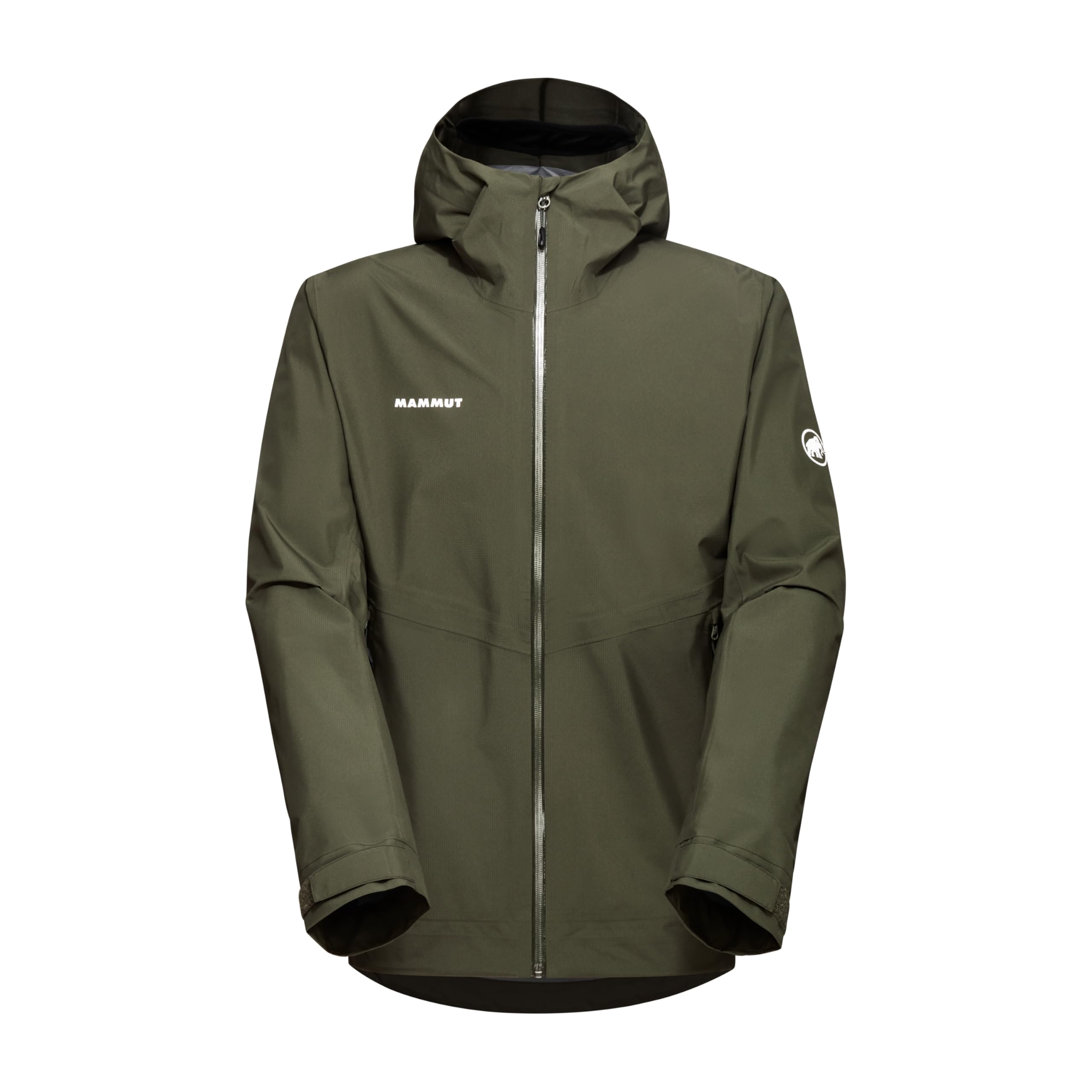
4. Mammut Men’s Alto Light HS Hooded Jacket
Twelve point eight ounces of hardshell — the layer you forget is in your pack until it rains.
This is a pure minimalist shell, and the weight figure tells the whole story: at 12.8 ounces it barely registers on your back or in a daypack. That makes it a strong companion for a trip where you cannot predict the sky — the kind of jacket you clip onto a harness or bury in a bag and pull out when the clouds turn. Its cut is regular, so it layers over a base layer and a light mid-layer without much fuss.
Set your expectations at the door, though. This is a shell, not a winter coat, and the thin fabric surprises buyers who expected insulation. One disappointed wearer came looking for a winter jacket and found what they described as a thin shell instead. That mismatch is a reminder of the design intent: it stops the weather, and your mid-layer does the warming. There is also a sizing snag worth flagging — a customer ordered a medium and received a large, so double-check the size on your order before it ships.
For someone who already owns warm layers and just needs a light, packable rain barrier, this is a sensible, low-bulk choice. If you want a jacket that stands alone in cold, look at the lined picks on this list instead.
Fits the traveler: someone who wants a light hardshell to stash in a pack for sudden showers and already carries their own warmth.
skip it if: you are shopping for a winter jacket — the fabric here is deliberately thin and uninsulated.
5. GOREWEAR Lupra 2.0 Men’s GORE-TEX Cycling Jacket

Shaped for the handlebars — long hem, helmet hood, and eleven point two ounces of GORE-TEX.
Ride in rain and the two things that ruin a jacket are a hem that rides up your back and a hood that flaps blind over your helmet. The Lupra 2.0 addresses both: a long back hem that covers your lower back in the drops, and a hood built to sit over a helmet with taped seams behind it. At 11.2 ounces it packs down into a jersey pocket, so a downpour on the way home does not end the ride.
Owners describe it as genuinely waterproof and windproof, and the flat truth is that a thin GORE-TEX shell like this shines in warm, wet climates. Someone riding through Florida summers called it “extremely lightweight” and said zero water gets in, with synched sleeves keeping the cuffs sealed. The material also runs quiet rather than crinkling with every pedal stroke, which matters on a long commute.
The honest limits are about fit and the hood off the bike. The cut is athletic and trim, so it does not layer well over a bulky sweater — one rider found the stomach tight with no room to layer. The hood is a cycling hood and does not tuck or button away, so it sits bulky when you are not wearing it. That is the price of having a hood that actually clears a helmet.
The commuting case: taped seams and sealed sleeves keep you dry, while the packability means a sudden shower does not strand you.
The cycling-specific cost: an athletic cut with a fixed helmet hood is great on the bike and awkward off it, and bulky layers underneath will fight the fit.
Made for: commuters and road riders who want a waterproof, breathable shell that stows in a jersey pocket and works with a helmet.
Not for: layering over thick winter clothing, or wearing over a suit to the office.
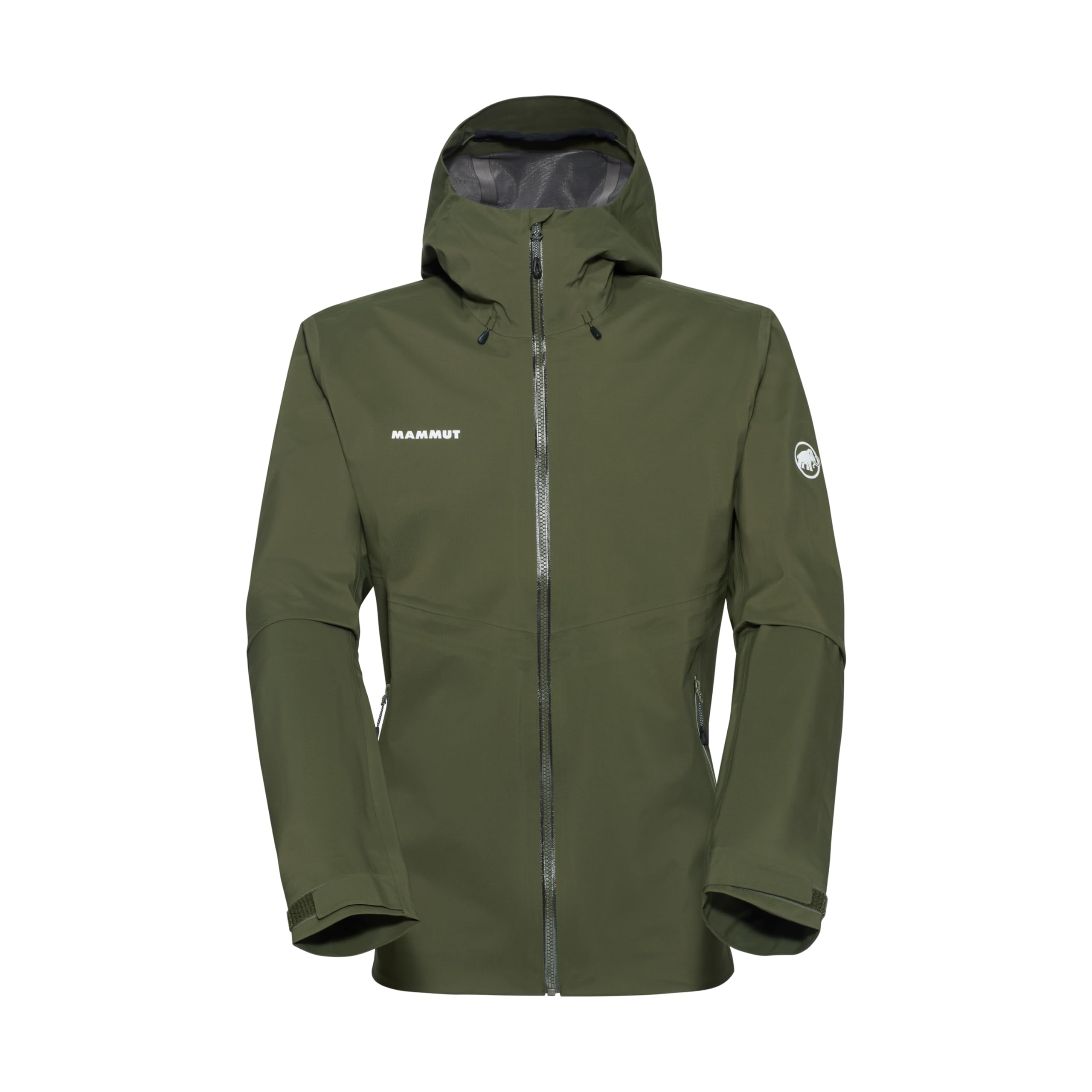
6. Mammut Outdoor Hardshell Hooded Jacket
A 190-gram hardshell with a 20,000mm waterproof rating and recycled fabric throughout.
Two numbers define this jacket. The first is a 20,000mm waterproof rating, which describes how much water pressure the fabric can hold back before it starts to pass moisture — that is a serious barrier against sustained rain on a hike. The second is 190 grams, which is remarkably light for that level of protection. The fabric is 100% recycled polyamide, so the environmental story is baked in rather than bolted on.
Mammut’s own specs also list a breathability rating of 20/m²/24h for controlling moisture, and windproof construction that cuts the chill on a ridge. A large chest pocket doubles as the packing pouch, so the whole thing compresses down for travel. Fit feedback trends positive, and owners describe the fit as right and the build as durable.
The catch is what that featherweight fabric implies: this is a shell and nothing more. It is built for trail running, climbing and active wear where you supply your own heat, and it will not warm you in the cold. Approach it as a barrier against weather and it punches well above its weight.
The specs that justify it
- 20,000mm waterproof protection for sustained rain
- 190g packable body for climbing and travel
- 100% recycled polyamide construction
- Packs into its own chest pocket
What you give up
- Zero insulation — it is a shell only
- Sold as cold-weather outerwear, which can mislead buyers expecting warmth
Ideal on: fast, active mountain days where you want serious rain protection without carrying weight.
The mismatch to avoid: buying it as a warm standalone jacket — plan a mid-layer beneath in real cold.
7. Oakley Men’s Unbound GORE-TEX Shell Jacket

A ski shell that seals every seam, drops a helmet-compatible hood over your goggles and keeps your pockets dry.
This is the pick for falling snow rather than drizzle. Fully taped seams stop water working through the stitching, and a 3-point adjustable helmet-compatible hood pulls up over a helmet when the weather turns serious. The zips on the chest and side pockets are waterproof, and there is a built-in media pocket and goggle pouch — the small things that show a jacket was designed by people who actually ride. The outer shell is 100% recycled material with a water-repelling treatment.
Owners who ski or live through hurricane season tend to describe it as light yet substantial, with the pockets doing real work. The quality of the make is the note that comes up most often. One rider at 6’1″ and 175 lbs called the fit perfect and praised the simple design with zippered pockets exactly where you want them.
Two honest notes. Length runs long in the arms — enough that one skier found the sleeves covering the hands entirely, so try a size down if you are between sizes. And it is a substantial jacket, not a featherweight packable shell, so it adds weight in the bag. For a dedicated snow shell, both are reasonable.
The storm-day argument: taped seams, waterproof zips and a helmet hood add up to proper protection when the snow is coming in sideways.
The sizing caution: sleeves can run unusually long and the cut trends large, so consider sizing down rather than up.
Built for: skiers and riders who want a durable storm shell with goggles and helmet taken care of.
Probably overkill for: a mild city commute, where the weight and heavy build are wasted.
8. Arc’teryx Beta Jacket Men’s
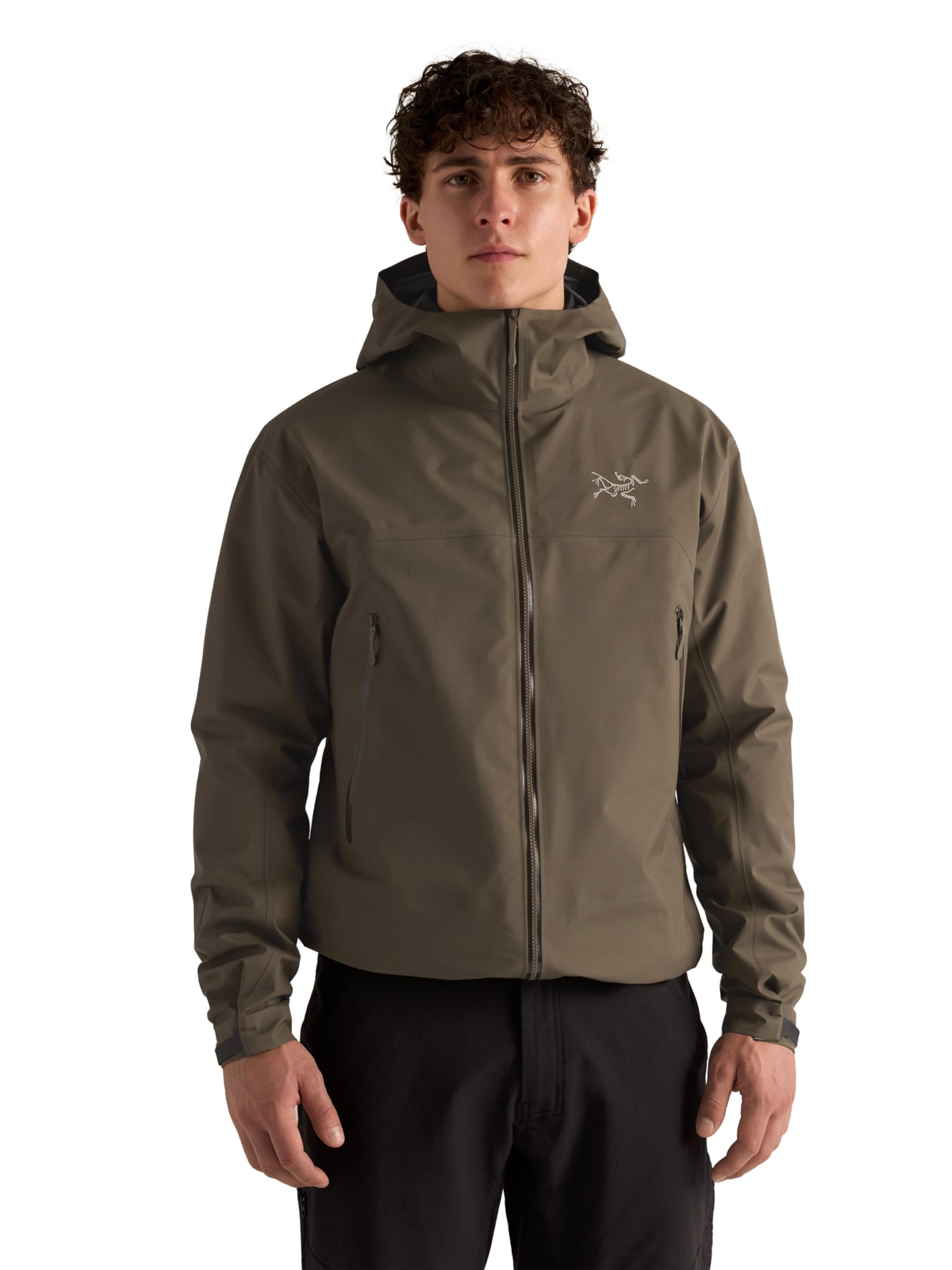
The versatile GORE-TEX ePE shell with a quiet, soft backer and a hood you adjust with one pull.
The Beta is Arc’teryx’s do-everything shell, built on 80D 3L GORE-TEX ePE fabric — the numbers describe a sturdy outer face, a three-layer build and a newer Gore-Tex membrane made without PFCs. Those three layers mean the waterproofing sits inside the fabric stack rather than as a coating you have to refresh. A FC0 DWR treatment on the outside repels moisture before it even reaches the membrane, and the GORE C-KNIT backer makes the jacket quiet and soft against the skin instead of crinkly.
The details that matter on the trail are all here. A low-profile StormHood adjusts with a single pull and keeps your peripheral vision, hand pockets and an internal laminated pocket hold the essentials, and a dual-point hem adjustment seals out drafts. An embedded RECCO reflector is a passive element that search and rescue teams can pick up in an emergency. Owners who took it to Alaska for camping, fishing and a deep-sea charter reported it stayed breathable while keeping them bone dry.
The genuine drawback is sizing. The Beta runs small, and at least one buyer sent it back after the fit did not work — checking the size chart carefully before you order pays off here. It is a serious outlay, but the build and the quiet, soft feel put it in a different league from a basic rain shell.
The three-layer case: an 80D GORE-TEX ePE build with a C-KNIT backer gives you durable wet-weather protection that feels soft and stays quiet.
The one thing to nail down: the fit runs small, so measure against the size chart rather than guessing.
Worth considering if: you travel across changing mountain weather and want one durable, quiet shell that handles rain, wind and long days outside.
Not the pick if: you need a generous cut for thick layers — the Beta is trim by design.
9. Arc’teryx Beta AR Men’s Jacket
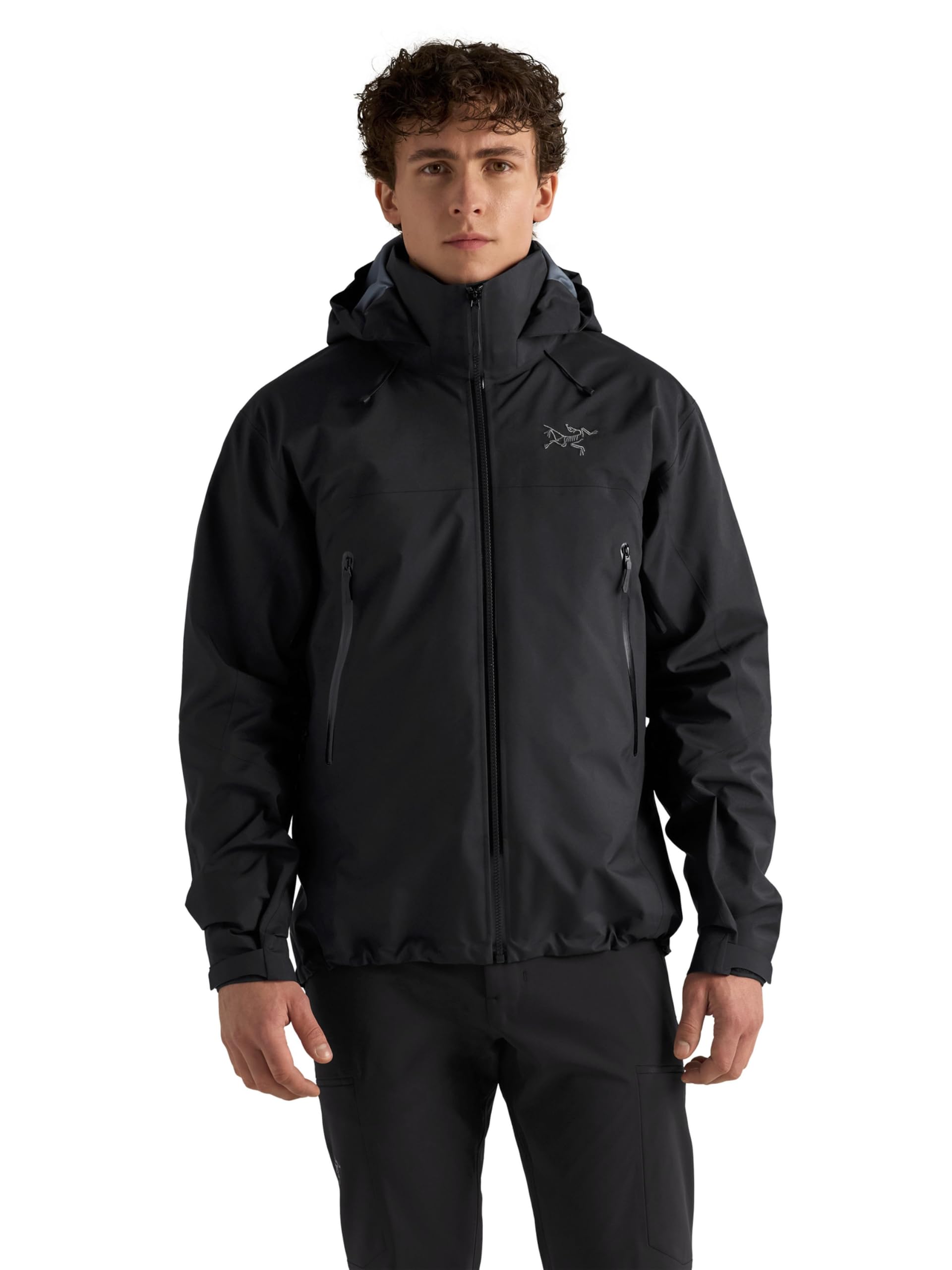
A GORE-TEX PRO hybrid shell built to take years of abuse — if you can forgive the long sleeves.
GORE-TEX PRO is the heaviest-duty membrane Gore makes, chosen for gear that has to survive rock, pack straps and years of use rather than a season. The Beta AR wraps that into a hybrid-material build — meaning the fabric is combined across the jacket for durability where you wear it and less bulk where you do not. Owners who take it into cold, wet conditions describe it as excellent for that job, and the quality of the make is what earns the most praise in the feedback.
Expect a stiffer, noisier fabric than the softer Beta Jacket above. The PRO membrane crinkles as you move, which some wearers notice more than others. A broad-shouldered 6’0″ and 205 lb owner had to size up to an XL to get shoulder room, and the bright colorways are louder than the photos suggest. Sleeves are long by design for reaching overhead, and several owners find them too long for everyday wear.
This is a shell for people who put in serious miles in rough weather and want one jacket to last, not a light city raincoat. The price reflects the membrane and the build. If your shell lives in a pack on rocky ground, that trade makes sense.
Built for the long haul
- GORE-TEX PRO membrane for hard, sustained weather
- Hybrid-material build for durability where it counts
- Performs well in cold, wet conditions
What you accept
- Crinkly, stiff fabric compared with softer shells
- Sleeves run long for everyday wear
- Broad shoulders may need a size up
Best suited to: hikers and climbers who punish their gear and want a shell that will last through hard seasons.
Look at the Beta instead if: you want a quieter, softer shell for mixed travel and everyday rain.
Know the Specs
Waterproof rating in millimetres
This number describes how tall a column of water the fabric can hold back before moisture starts to seep through. A higher figure means better protection in sustained rain. The Mammut hardshell here is rated at 20,000mm, which is a serious barrier for a long hike in heavy weather. For city drizzle, a lower rating is usually enough.
Breathability rating
Breathability describes how much moisture vapour the fabric lets escape over a set period, so sweat does not build up inside. A low figure means you will feel damp after a hard climb even though the jacket kept the rain out. Venting zips and a light, unlined build are the other ways jackets dump heat, which is why unlined shells move moisture best.
Taped and sealed seams
Seams are the stitched lines in a jacket, and every stitch hole is a potential leak. Fully taped seams cover those lines with a waterproof strip, so water cannot track through. It is the difference between a jacket that survives a downpour and one that wets out at the shoulders. Ski and alpine shells tend to seal everything; lighter commuter shells sometimes do not.
GORE-TEX and other membranes
A membrane is the thin waterproof layer bonded inside the fabric — it blocks water from outside while letting vapour pass. GORE-TEX is one well-known membrane; GORE-TEX PRO is its heavier-duty version for hard use, and ePE is a newer version built without PFCs. Other brands use their own membranes, like Helly Tech. All of them work on the same principle: a barrier with tiny pores.
Weight and packability
Weight matters most for shells you carry rather than wear. A jacket in the 11 to 13 ounce range packs into a daypack or jersey pocket and is barely noticed. Heavier shells trade that convenience for durability and features, which is the right call for skiing or hard alpine use. Think about where the jacket spends most of its life before you choose.
DWR treatments
DWR stands for Durable Water Repellent — the finish that makes rain bead up and roll off the surface rather than soaking into the outer fabric. When a jacket “wets out,” the DWR has worn down, even if the membrane inside is still intact. A FC0 DWR is one made without fluorine-based chemicals, which some buyers prefer for environmental reasons.
Common Questions
How is a shell jacket different from a rain jacket?
What waterproof rating do I actually need for a shell jacket?
Why do I sweat inside a waterproof shell jacket?
Should I size up in a shell jacket for layering?
Can I wear a cycling shell jacket off the bike?
How do I know if my shell jacket’s waterproofing has worn out?
Is a helmet-compatible hood worth it if I mostly hike?
What is a RECCO reflector on a shell jacket?
How long should a good shell jacket last?
Do I need a taped-seam shell for skiing or just rain?
The Bottom Line
Want one shell that handles most everyday rain and layers over what you already own? Go with The North Face Antora Waterproof Jacket — it fits the most people with the least fuss. If you run cold and wet and want warmth built in, the Helly Hansen Crew Sailing Jacket 2.0 brings a Polartec fleece lining (a soft brushed fabric that traps warmth). And if you ride, the GOREWEAR Lupra 2.0 is shaped for the handlebars, with a helmet hood (a hood that fits over a bike helmet) and a long back hem (the tail that keeps spray off your lower back).
First decide one thing: do you want a shell that stays light and packs down, or one with warmer lining? That single choice cuts most of the list. Then match the shell to how you actually spend your wet hours — there is a pick here built for it.
How we choose
We do not accept paid placement. Every pick is matched to a real buyer and a real use-case; we do not hands-on test units.
Sources
Specifications: manufacturer listings and product documentation. Review insights: verified customer reviews, as of October 2026. Pricing: not shown on this page (it changes often); check the current price via the retailer link.
As an Amazon Associate, Aappliancez earns from qualifying purchases. This does not affect which products we feature.