Disclosure: Some links in this post are affiliate links. As an Amazon Associate I earn from qualifying purchases, at no extra cost to you. Learn more
Specs are compiled from manufacturer listings and verified buyer reviews and can change over time — please confirm the key details on the product page before buying.
You want cream-edged leaves, bright winter twigs, and a plant that actually arrives alive. The short answer: match the plant to your hardiness zone and your light, then pick a nursery that ships a rooted, potted plant instead of a bare stick. The six picks below span pink and white flowering trees plus one variegated shrub, and each one solves that problem a different way.
This guide is built by comparing the manufacturers’ published specifications and the patterns across verified customer reviews, so you get each pick’s real strengths and trade-offs instead of marketing spin.
You will see how pot size, shipped height, and zone range decide whether your tree leafs out or sulks. The real divide is between potted plants that ship rooted and bare-root sticks that need babying, so here is a working shortlist of the variegated dogwood options worth your garden bed.
Top Picks


How To Choose The Best Variegated Dogwood
Most disappointment with a shipped dogwood has nothing to do with the plant and everything to do with the match. Match the zone, the light, and the pot size, and the tree handles the rest.
Start with your hardiness zone, not the photo
A hardiness zone is the cold-hardiness band your area falls into, and the plant’s listed zone range tells you the coldest winters it tolerates. A tree rated for zones 5-9 will shrug off a normal winter in most of the country. A shrub rated for zones 3-7 handles colder nights but can struggle in long, humid southern summers. Buy inside your zone first, then narrow by light and pot size.
Potted versus bare root on arrival day
A potted plant arrives with soil around living roots, so it has a reserve to draw on while it settles. A bare-root plant ships with exposed roots and no soil, which means a longer, fussier establishment window. For a first-time tree buyer, the pot is the lower-risk start.
Variegated foliage needs light to stay variegated
Variegation is the cream or white edging on a leaf, and it is produced by cells that lack the green pigment. Those cream zones cannot feed the plant the way green tissue does, so a heavily variegated shrub wants sun to part shade to keep its colour crisp. Put it in deep shade and you tend to get more plain green growth and less of the pattern you bought it for.
Shipped height is not mature height
The height on the listing is what goes in the box, and the mature height is what the plant reaches years later in the ground. A tree shipped at 2-3 feet and listed at a mature 15-20 feet is doing exactly what it should. Judge the shipped size against the pot it travels in, not against the eventual canopy.
Side-by-Side Comparison
| Model | Best For | Shipped Size | Mature Height | Hardiness Zones | Amazon |
|---|---|---|---|---|---|
| Kousa Pink Dogwood, 1 gal, Nursery Pot★ Best Overall | First tree in a new bed | 1-gallon nursery pot | 15-20 ft | 5-9 | Amazon |
| White Kousa Dogwood ‘Milky Way’ by DAS FarmsShade Garden Pick | White spring bloom in shade | 2-3 ft, gallon pots | 20 ft | 5-8 | Amazon |
| Pink Flowering Dogwood Seedling, 3×6″ Pot | Trying pink on a small budget | 2-3 ft in a 3×6″ pot | — | 5-8 | Amazon |
| White Dogwood Tree, 1 gal Nursery Pot | Fall colour plus bird berries | 1-gallon nursery pot | 15-25 ft | 5-9 | Amazon |
| Cornus alba ‘Ivory Halo’ Shrub, #2 Container | Cream edges plus red winter twigs | #2 container (2 gallon) | 4-6 ft | 3-7 | Amazon |
| Brighter Blooms White Dogwood Tree, 3-4 Feet | A head start in height | 3-4 ft | 4 ft (expected) | — | Amazon |
Detailed Reviews
1. Kousa Pink Dogwood, 1 gal, Nursery Pot
Our pick — 4.0+★ from 50+ verified ratings; the strongest balance of quality and price.
A rooted pink kousa that arrives ready to dig in, not gasping in a box
The thing that decides your first season is whether the roots show up alive, and this pink kousa ships in a 1-gallon nursery pot — actual soil around the root ball, ready for transplanting the day it lands. It is listed as a mature 15 ft. to 20 ft. tree, which is a proper focal point for a garden of any size rather than a twig you fuss over for years. The colour is pink by name, so if you were hunting a strict white flower, look down this list instead.
What wins people over, judged by where the feedback piles up, is growth: it comes in, settles, and puts on new wood. Appearance runs a close second — the heart-shaped leaves build a dense green canopy, and the pink bloom lands in spring. Shipping is gentle on it too, with owners describing trees that arrive packed snugly and showing no broken limbs.
Here is the honest catch, and it is the one worth knowing before you order. The plant inside that pot is often smaller than the listing implies — a small plant in a large box. That is a size mismatch, not a defect: for instant height, buy the 3-4 ft Brighter Blooms tree instead. If you are buying a live rooted start to plant now and watch fill out across seasons, it does the job.
Why This One Leads The List
- Ships rooted in a 1-gallon nursery pot, ready to transplant straight into the ground
- Mature height of 15 ft. to 20 ft. gives you a real focal point
- Hardy across zones 5-9, which covers a wide spread of climates
- Attracts pollinators and holds lustrous green leaves through the growing season
Where It Falls Short
- The plant in the pot often reads smaller than the listing suggests
- Pink, not white — no use to you if you wanted a white-flowered tree
- Regular watering and acidic, well-draining soil are requirements, not options
Plant this if: you want a rooted pink tree in the ground this season with a clear 15-20 ft. future.
Measure first: the pot is a 1-gallon size — plan your hole and your patience around a young plant, not a mature one.
2. White Kousa Dogwood ‘Milky Way’
Built for the tricky spot: morning sun, afternoon shade, white bloom in spring
Most flowering trees sulk in half-day shade. This one is explicitly listed for zones 5 through 8 with morning sun and afternoon shade only — an unusual, specific instruction that tells you the grower has thought about a real garden problem. It ships at 2 to 3 feet tall in gallon pots and double boxed for transit, so a leafy 3-foot tree can arrive intact instead of stripped.
This ‘Milky Way’ weighs 6 pounds, against the pink kousa’s 5 pounds, and it ships taller. Next to the Brighter Blooms white tree, it stays more modest in height but is clearer about shade. Buyers notice the foliage and health most — sturdy leaves, a nice green canopy — and the planting instructions in the box get real use.
The winter is where you need clear eyes. This is a deciduous plant, so a dormant shipment from late fall through winter arrives bare, with no leaves and no flowers, and it is expected to leaf out in spring. Some plants that look fine in the box fail to bud the following spring, and a few buyers report exactly that. The grower backs a 30-day transplant window if you follow the included instructions with the right location and water, so read the sheet before you dig.
One rule the grower is firm on: this goes in the ground and nowhere else. It should not be transplanted into another container — the 30-day transplant guarantee is tied to ground planting with the included instructions.
The one to buy if: your chosen spot gets morning sun and shade from midday on, and you can commit to regular watering through establishment.
Best matched to: a shaded front bed in zones 5-8 where a white kousa needs to look good in spring.
Look elsewhere if: you want leaves on arrival in December — dormant means bare, and no grower can change that.
3. Pink Flowering Dogwood Tree

A 3×6-inch pot of pink dogwood for the gardener who plants small and waits
This is a pink flowering dogwood seedling, 2-3 feet in height, in a 3×6″ pot, shipped potted so it travels with soil on its roots. It is the lightest plant on this whole list at 16 ounces, which tells you the root ball is petite and the plant is a young start rather than an established tree. Hardy in zones 5-8, it takes full sun to partial shade, and the fruit it produces later feeds songbirds through winter.
The one thing that separates it from the pink kousa up top is the pot: that one ships in a 1-gallon pot, this one in a 3×6″ pot. Same pink idea, smaller starting root ball, and more of a grow-it-yourself project. What comes through in the feedback is health — plants arriving clean and blemish-free, one with about eight happy leaves ready for the ground, packed well enough that it arrives in good shape.
Here is what you need to plan around. Order between October and April and your tree arrives dormant, meaning no leaves at all — that is normal for the season, not a dead plant, and it should push growth when the weather warms. Growth is the honest uncertainty with a start this small; a few plants simply never break dormancy. Plant it in spring or fall, give it moderate water, and let it establish before you judge it.
The Case For The Little One
- Ships potted with soil, at 2-3 feet tall in a 3×6″ pot
- One of the lightest plants in this lineup at 16 ounces
- Hardy in zones 5-8 across full sun to partial shade
- Fruit feeds songbirds through the winter months
Expectations To Adjust
- Dormant October-April shipments arrive leafless by design
- A small starting root ball means a slower first season
- Moderate watering is a commitment during establishment
For the patient gardener: someone happy to plant a 2-3 foot pink start and give it room.
Think twice if: you want a tree that is already showing off — this one is here to grow.
4. White Dogwood Tree, 1 gal Nursery Pot

One tree that works four seasons: white bloom, red berries, burgundy leaves, charcoal bark
White spring flowers are the start, not the finish. This white dogwood follows the bloom with clusters of bright red berries in late summer into fall, then sends its leaves to shades of red, purple, or burgundy, and leaves you charcoal-coloured bark to look at through winter. It reaches a mature 15 to 25 feet with a 25 foot spread, so give it room before you plant it. Hardy in zones 5-9 and shipped in a 1-gallon nursery pot, it is the closest white counterpoint to the pink kousa up top.
The bark detail is worth a second look, because most white dogwoods get sold on flowers alone. Here the charcoal bark and the red berries are doing winter work, which is exactly when a garden bed looks its emptiest. The tree prefers partial shade and well-drained, slightly acidic soil, and the care sheet asks for spring feeding and mulch around the base to hold moisture.
An occasional plant shows up smaller than promised, and growth across the first season is the variable everyone watching this tree is weighing. Set that against how owners feel about the plant itself: healthy arrivals and a fair shake on value are what stand out. One simple piece of advice that holds true here — get the drainage right before you plant, because a waterlogged hole is what kills a dogwood fastest.
What the mature size really means: at 15-25 feet tall with a 25 foot spread, this belongs where it can grow into a canopy, not tight against a wall or under a low roofline.
Choose this one: if you want a white dogwood that earns its garden space year-round, not just in flower.
The trade-off: a first season that sometimes starts small — plant it where the final spread fits, and give it time.
5. Cornus alba ‘Ivory Halo’
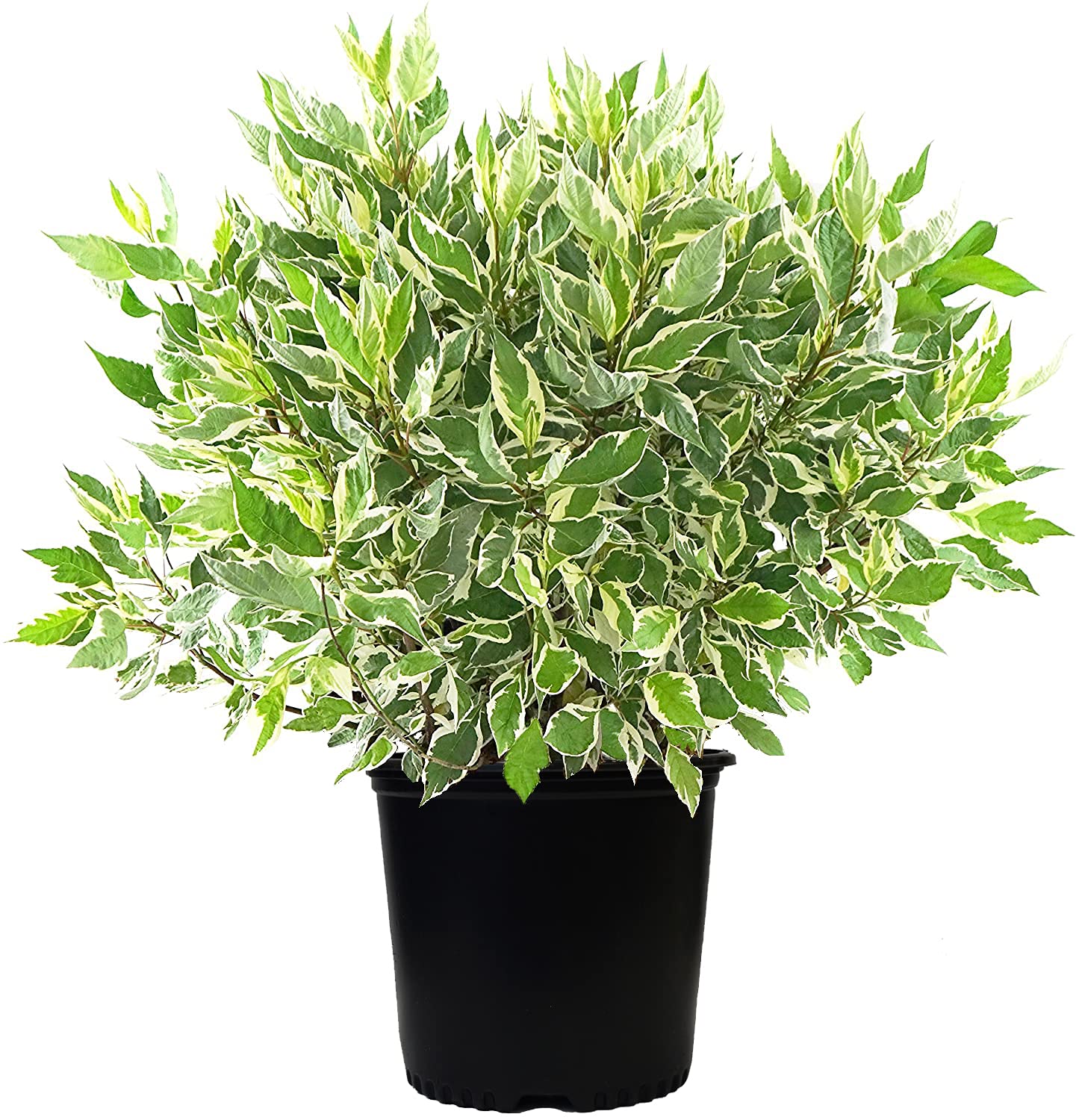
The one that actually carries variegation: cream-edged leaves over bright red twigs
If the word variegated is the whole reason you are shopping, this is the plant that matches it. Cornus alba ‘Ivory Halo’ is a compact shrubby dogwood with cream-edged variegated foliage and stand-out bright red twigs that hold the winter landscape together. It is the only pick here that is a shrub rather than a tree, and the only one where the leaf pattern is the headline feature rather than the flower.
Size is the practical difference. It matures at 4-6 ft H x 4-6 ft W in zones 3-7, against the 15-20 ft a kousa tree reaches — so it fits a smaller bed or mixed border where the tree picks cannot go. It takes full sun to part shade with low maintenance. It ships in a #2 size container, a 2 gallon pot, with a larger #3 size also offered. The grower also says it tolerates a wide range of soils and can go in the ground immediately on arrival, weather permitting.
Order late in the year and you get a dormant plant with little to no leaves — that is normal, not a fault. The one outcome that colours the reviews is a plant arriving half dead after a slow delivery. When it lands in good time, it lands well: healthy, perfectly shaped, and matching the listing photo. One gardener who had searched garden centres in vain was glad to have ordered it online.
What Earns The Space
- Cream-edged variegated foliage with bright red winter twigs
- Compact enough for smaller areas at 4-6 ft H x 4-6 ft W
- Hardy in zones 3-7, so it handles colder winters than the trees here
- Tolerates a wide range of soils and plants on arrival
Keep In Mind
- Dormant shipments from late fall to winter arrive nearly leafless
- A slow delivery is the risk — this plant wants to go into ground promptly
- It stays a 4-6 ft shrub, not a 15-20 ft tree
Reach for this if: the leaf pattern is the point, and you want it in a smaller bed or border in zones 3-7.
Not the one for you if: you have your heart set on a flowering tree canopy — this stays a compact shrub.
6. Brighter Blooms – White Dogwood Tree, 3-4 Feet

Buys you height up front: a 3-4 foot white dogwood straight into the ground
If the box should contain a tree rather than a prospect, this is the pick. It ships at 3-4 feet tall, the largest shipped height in this collection, and it is cold hardy with creamy white flowers that grace the tree from May to June. Set that against the ‘Milky Way’ at 2-3 feet or the 3×6″ pot seedling, and you are paying for a year or two of head start in the ground.
The practical warning sits at the front of the listing: shipping is restricted, and orders will be cancelled if you live in AK, AZ, FL, or HI. Check that before you fall for the photo. The warranty is the other detail worth reading, and it is unusually clear — the plant is covered for being true to type and healthy on arrival, but damaged leaves are not covered. A yellow or dried leaf is how a plant protects itself in heat or darkness. Trim the leaf off and new growth should follow.
Durability is the honest question with this plant. Some trees flourish, and buyers describe a tree that arrives safely packaged and takes off once it is in the yard. Others report a plant so slight it needed a support stake to stand, or one that simply did not last. Reviews split that widely on a young tree shipped without soil weight. If your site is right and you keep up with moderate watering through the first season, you are giving it the best chance.
The height trade-off: 3-4 feet in the box puts you ahead of the 2-3 foot picks, but a young tree with a slim trunk can be top-heavy on arrival and may want support while its roots take hold.
Worth it when: you are inside the allowed shipping states and want the tallest white dogwood you can get delivered.
Check before you order: AK, AZ, FL, and HI are excluded from shipping outright — the order gets cancelled, not delayed.
Know the Specs
Nursery Pot Size And Why It Matters On Arrival
A nursery pot is the container the plant grows in before it ships, and the gallon rating is roughly how much soil volume travels with the roots. A 1-gallon pot carries more soil than a #2 container only in name — a #2 container is a 2 gallon pot, so it actually carries more. More soil around the roots means more water reserve while the plant establishes, which is why a potted plant usually settles faster than a bare-root one. A 3×6″ pot is a much smaller volume, and you should expect a correspondingly smaller plant to start.
Hardiness Zones And What A Zone Number Tells You
A hardiness zone is a band based on the coldest winter temperatures an area experiences, and a plant’s listed zone range is the cold it can take. A shrub rated for zones 3-7 handles colder winters than a dogwood tree rated for zones 5-9. Buy at or inside your own zone’s number, and be cautious at the edge of a range — a plant rated for zone 5 in a zone 5 garden is living at its limit, not in its comfort zone. Zone 5b, for instance, is where a plant that should survive may still lose a hard winter.
Common Questions
What does variegated mean on an Ivory Halo dogwood?
Will a variegated dogwood shrub work where a dogwood tree will not fit?
Why did my dogwood arrive with no leaves at all?
Is zones 5-8 different from zones 5-9 for a dogwood?
What soil does a white dogwood tree need?
Can I grow a shipped dogwood in a container instead of the ground?
How tall will these dogwoods get once they are established?
What does a 30-day transplant guarantee actually cover?
Do these dogwoods feed birds or attract pollinators?
Are there states an online dogwood cannot ship to?
The Bottom Line
For most gardeners, the variegated dogwood winner is the Kousa Pink Dogwood because it ships rooted in a 1-gallon nursery pot and carries a wide 15-20 ft future across zones 5-9. If the leaf pattern is what brought you here rather than the flower, the Cornus alba ‘Ivory Halo’ is the only true variegated pick on the list, and its 4-6 ft compact size fits beds the trees cannot. And if your spot gets morning sun with afternoon shade, the ‘Milky Way’ white kousa is the one built for that exact light. Match the zone and light first; the plant list narrows itself.
How we choose
We do not accept paid placement. Every pick is matched to a real buyer and a real use-case; we do not hands-on test units.
Sources
Specifications: manufacturer listings and product documentation. Review insights: verified customer reviews, as of October 2026. Pricing: not shown on this page (it changes often); check the current price via the retailer link.
As an Amazon Associate, Aappliancez earns from qualifying purchases. This does not affect which products we feature.