Disclosure: Some links in this post are affiliate links. As an Amazon Associate I earn from qualifying purchases, at no extra cost to you. Learn more
Specs are compiled from manufacturer listings and verified buyer reviews and can change over time — please confirm the key details on the product page before buying.
If you have ever driven into a low sun and realized your “transition” lenses stayed stubbornly pale behind the windshield, you already know the exact problem this guide solves. Most photochromic lenses react to UV light, and car glass filters a large share of that UV out before it ever reaches your eyes — which is why a pair that darkens beautifully on a walk can sit nearly clear on the highway. The picks below split into two honest camps: true photochromic safety and sport eyewear that darkens fast and shields glare, and smart glasses with Transitions® lenses that add audio and a camera but were never built as a driving-specific tint. Knowing which camp you actually need is the whole decision.
This guide is built by comparing the manufacturers’ published specifications and the patterns across verified customer reviews, so you get each pick’s real strengths and trade-offs instead of marketing spin.
You will see which frames stay dark enough behind glass, which ones wrap far enough to kill side glare, and where each pair quietly gives something up. Every pick here is a real, currently sold frame, and each one is matched to the driver it actually suits in this rundown of the transition lenses for driving.
Top Picks


How To Choose The Best Transition Lenses for Driving
The single biggest mistake drivers make is assuming any photochromic lens will darken in the car. It will not, at least not fully, because the tint is triggered by UV light and your windshield blocks much of it. So the practical question is not “does it transition?” — it is “does it shield my eyes well enough when the tint does not fully engage, and does it still go clear when I step out?” That reframing changes what you should look for on the box.
Impact rating and lens material matter more than the tint
A driving lens faces road debris, dust, and the occasional kicked-up stone. An ANSI Z87+ rating means the frame passed a standard impact test for protective eyewear — so a chip that would crack a fashion lens is far less likely to reach your eye. Polycarbonate is the common lens material here because it is light and resists impact rather than shattering.
Wrap coverage fights the glare your tint misses
Side glare sneaks in around a flat frame at exactly the angle the sun hits a side mirror. A wrap-around shape that covers the sides of the eyes blocks that path. This is the detail that does the most work on an overcast morning when the photochromic tint barely activates.
UV400, anti-fog, and weight for real drives
UV400 protection blocks the sun’s UV rays, and it stays useful even when the tint is light. Anti-fog treatment keeps the lens from clouding when you move between a cold car and a warm cabin. And weight decides whether you keep them on for a three-hour haul — a frame that presses on the bridge gets pulled off by hour one.
Side-by-Side Comparison
| Model | Best For | Lens Type | Impact Rating | Weight / Battery | Amazon |
|---|---|---|---|---|---|
| Wiley X Guard Advanced★ Best Overall | Everyday driving with real impact protection | Changeable lens series | MIL-PRF-32432(GL) | — | Amazon |
| Ray-Ban Meta (Gen 1), WayfarerCalls and Camera | Drivers who want audio and a camera in one frame | Transitions® Graphite Green | — | — | Amazon |
| Speedone ANSI Z87+ Photochromic | Bright-day commutes and outdoor work | Photochromic polycarbonate | ANSI Z87+ | 1.06 ounces | Amazon |
| Ray-Ban Meta (Gen 2), Wayfarer Large | Long drives with recording and calls | Transitions® Graphite Green | — | 8 hours battery | Amazon |
| Meta Oakley HSTN | Outdoor drives and hands-free messaging | Clear lens | — | — | Amazon |
Detailed Reviews
1. Wiley X Guard Sunglasses
Our pick — 4.5+★ from 250+ verified ratings; the strongest balance of quality and price.
The one pair here that treats a stone chip like a minor inconvenience, not a hazard.
If your commute runs past gravel trucks or you ride with a window down, the Guard Advanced earns its spot on protection first and looks second. It meets the MIL-PRF-32432(GL) ballistic safety standard for impacts and optical quality — a military-grade drop and impact test for protective eyewear, so the lens is built to take a hit rather than shatter into your eye. Wiley X also calls it one of the lowest profile frames in their changeable lens series, so it sits close to your face instead of floating out like a larger shield.
What wins people over is the sheer staying power of the build. Buyers report months of steady use and single out the wrap-around frame for cutting glare and keeping dust out of their eyes. The wrap-around shape earns consistent praise because it covers the sides of the eyes, which is exactly the zone a flat frame leaves wide open when the sun reflects off a side mirror. It holds 4.5+ stars across 250+ ratings, with buyers praising both the look and the value.
The trade-off is honest and worth stating plainly. This is an impact-rated changeable-lens frame, not a windshield-tuned photochromic driver, so if your one goal is a lens that darkens automatically the instant you pull out of the garage, that specific behavior is not what this model is built around. It is the pick for the driver who wants protection that does not depend on the tint. Unlike the smart frames further down, nothing here needs charging, pairing, or an app — you put it on and drive.
Why drivers keep them in the car
- Ballistic-rated to MIL-PRF-32432(GL), so the lens resists impact instead of cracking.
- Wrap-around coverage blocks glare and dust from the sides of the eyes.
- Low-profile fit sits close to the face for a snug, stable wear.
- Owners mention months of steady use without the frame loosening or cracking.
Where it asks you to compromise
- Changeable-lens design, not an auto-darkening windshield-tuned photochromic.
- The listing does not publish a lens weight, so you cannot pre-check heft before buying.
Strongest match: the driver who wants proven impact protection and all-day glare control without a battery or an app in the mix.
Pass it over if: you specifically need a lens that visibly darkens as you drive, since this frame’s strength is protection rather than auto-tinting.
2. Ray-Ban Meta Gen 1 Wayfarer
The frame for the driver who wants hands-free calls and a point-of-view camera on the same drive.
This is a smart-glasses-first purchase, and the driving question has to be answered honestly up front. The Transitions® Graphite Green lens is designed to darken in sunlight and fade to clear indoors, but the lens is not tuned for windshield conditions — and customers note that the “transition lenses not [are] sensitive/dark enough for driving,” which is exactly the limitation a lot of drivers hit. So buy this because you want the technology, not because it is the sharpest driving tint you can strap to your face.
The technology is the real draw. A 12 MP ultra-wide camera captures what you see and hear hands-free, and a five-mic system carries your voice on calls — so you can dial into a meeting on the road or photograph a landmark without touching your phone. Open-ear speakers play music and calls without plugging your ears, which keeps sirens and horns audible. There is live translation between several languages, Meta AI answers when you ask, and the frame is described as slim with a comfortable fit for men and women.
What owners praise most is the audio — music and client calls both land clearly through the open-ear speakers. The fit is a split verdict in the review pages: some find it snug, while others note it does not stay in place, so if you have a narrow bridge it is worth trying before a long trip. One reviewer noted they had to hunt down nose-grip accessories to keep the frame from sliding — a fair reminder that fit varies. At 4.0+ stars, this remains a solid everyday pair whose biggest driving shortfall is the tint, not the build.
Where it shines: the 12 MP ultra-wide camera, five-mic call pickup, and open-ear audio combine into a genuinely useful road companion for calls and quick captures, with Meta AI available hands-free.
The honest catch: the Transitions® tint behind the windshield underperforms in the darkening department, and the fit does not work for every bridge width, so it suits a frameless-glass wearer better than a glare-obsessed one.
Reach for this if you want calls, music, and a 12 MP camera woven into a frame you actually like wearing.
Look elsewhere if windshield glare reduction is your whole reason for buying — the tint is the one job it does not fully handle.
3. Speedone ANSI Z87+ Photochromic Safety Sport Sunglasses
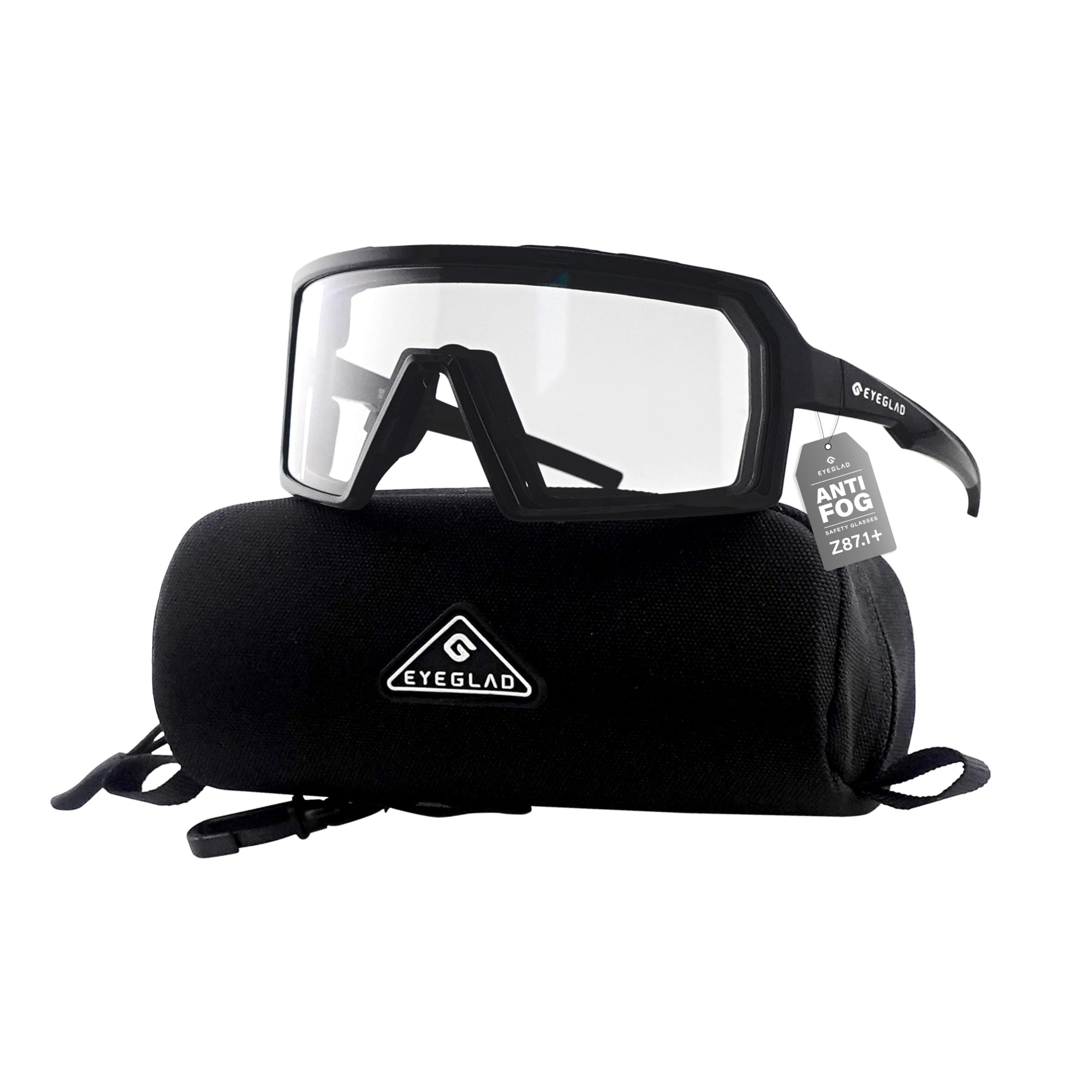
The featherweight pair that leans on a wrap shape and a UV400 lens when the tint stays light.
At just 1.06 ounces, the Speedone barely registers on your face — so it is the pair you forget you are wearing on a two-hour drive. The lens carries UV400 protection, which blocks the sun’s UV rays, and it is made of optical-grade polycarbonate, the same impact-friendly material serious safety eyewear uses. The frame is built from TR90 memory material, which flexes rather than pinching, and an anti-fog treatment keeps the lens clear when the cabin heats up or you step out into humid air.
It also passes the ANSI Z87+ impact standard for protective eyewear, so this is a genuine safety-rated sport frame rather than a fashion tint. The photochromic lens darkens in bright light, and the wrap coverage cuts the side glare a flat frame lets through. What buyers single out most is the value — the price-to-protection ratio is the thing that wins people over here.
The lens quality draws a mixed read, so the smart move is to judge it as a bright-day commute and outdoor-work pair rather than a precision optical lens that rivals a premium brand. That is the fair caveat, not a reason to walk away. If you want a light, low-commitment photochromic that handles glare and dust without any battery or app, this is the one that earns its keep.
What it delivers: an ANSI Z87+ rated polycarbonate lens with UV400 coverage, anti-fog treatment, and a TR90 memory frame at 1.06 ounces — real protection without the weight penalty.
What to expect honestly: the lens quality sits at a mid-tier level, so it suits the driver chasing value and coverage rather than premium optical clarity.
Best for: the driver who wants a nearly weightless, safety-rated photochromic and does not care about audio or apps.
Think twice if: you expect flagship-level lens sharpness — this is the value play, and the tint and optics reflect that.
4. Ray-Ban Meta Gen 2 Wayfarer Large
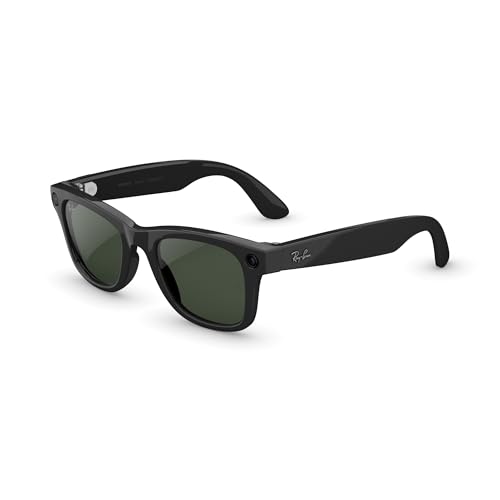
Double the battery, 3K video, and a charging case — the tech-heavy driver’s pick with real caveats.
The headline upgrade here is endurance. The Gen 2 runs up to 8 hours with moderate use — twice the Gen 1’s runtime — and its charging case adds up to 48 hours on the go. That matters on a long haul where you want calls and recordings to survive the whole drive. The camera records hands-free in up to 3K through an ultra-wide 12 MP sensor, in clips up to 3 minutes, and the frame blocks 90% of wind and street noise on calls — a figure that matters at 70 mph.
The catch is that owner experience does not match the spec sheet cleanly. Battery life draws a split verdict, with steady-recording users reporting it falls well short of the advertised number — one buyer found it “died in 4hrs with constant recording.” Reliability is the bigger question mark, and the transition lenses are a noted weak point for driving specifically. If you are buying this for the tint behind glass, look at the specs honestly: it is a smart frame with a Transitions® lens, not a windshield-tune photochromic.
Where this beats the Gen 1 above is battery and video resolution — 8 hours and 3K versus the Gen 1’s shorter runtime and 12 MP stills, plus the included charging case. It is the better long-drive recorder of the two. Just weigh the price against that mixed reliability signal before you commit to the premium tier.
Where the money goes
- Up to 8 hours of battery life, enough for calls and recording on a long drive.
- 3K HD video on an ultra-wide 12 MP camera, in clips up to 3 minutes per session.
- Charging case adds up to 48 hours of charging between outlets.
- Cuts 90% of wind and street noise on calls, per the spec sheet.
What to weigh first
- Battery life reads mixed — heavy recording drains it faster than the spec suggests.
- Reliability concerns show up in reviews, with some frames breaking and stopping within months.
- The Transitions® lens is a noted weak point for driving glare.
Pick it when: you want the longest battery and highest video resolution in the Meta line, plus a charging case for multi-stop trips.
Ask yourself first: whether the premium price is worth it given the reliability signal, especially if you are buying it for the lens tint.
5. Meta Oakley HSTN – Clear

A bold Oakley frame with smart glasses baked in — cool as anything, with one real limitation for drivers.
The HSTN pairs an unmistakable Oakley sport shape with Meta’s smart features, and for outdoor drivers the fit and presence are the point. The frame runs clear — so it is not a darkening driving tint at all, and the review pages back that up, noting “lenses don’t darken in direct sun.” If you want a sunglass-style tint for the highway, this is not the frame to reach for; it is the pair for audio, messaging, and hands-free control with an iconic look on your face.
For that job, owners are enthusiastic. The clear audio, good camera, and easy pairing all earn praise, and the hands-free features fit neatly into daily driving and outdoors use — one review even frames it as built for driving, dog walks, and recording conversations on the move. The look earns the most consistent praise of all, with buyers calling the Oakley styling iconic and getting compliments on it in the wild. Functions include hands-free calls, texts, and message reading, with AI that can see surroundings and offer advice.
Two things to know before you buy. The controls take some programing, and setup can be fiddly — a software quirk, not a hardware flaw, but budget a little patience from the start. The bigger driving caveat is the clear lens. It gives you no sun shading, so pair it with your own tinted lenses or treat it strictly as an audio-and-camera frame for outdoor use. The functionality reviews are split between happy long-term owners and those whose frames eventually failed. For the right buyer, it is a memorable daily driver.
What stands out: the iconic Oakley look and standout audio — a frame that gets compliments and handles hands-free calls, texts, and camera captures while you drive.
The one to note: the clear lens offers no sun-darkening at all, and setup can be fiddly, so it is an audio-first frame rather than a glare-cutting one.
Reach for this if you want an iconic Oakley frame with hands-free calls, messaging, and a camera for outdoor drives.
Look elsewhere if you need actual sun-darkening for the windshield — the clear lens leaves you without it.
Know the Specs
Photochromic vs Transitions® Lenses
Photochromic lenses darken when UV light hits them and clear when it is gone. Transitions® is a specific brand of photochromic lens, and it behaves the same basic way. The reason it matters for driving is that car glass blocks much of the UV the lens needs to trigger, so a photochromic lens often stays lighter behind the windshield than it does in open sun. A UV400 lens still blocks the sun’s rays in that state, so your eyes get protection even when the tint is slow.
Impact Ratings: ANSI Z87+ and MIL-PRF-32432(GL)
ANSI Z87+ is a standard impact test for protective eyewear — passing it means the frame and lens are built to resist a strike rather than shatter. MIL-PRF-32432(GL) is a military-grade ballistic standard that also covers optical quality. For a driving lens, these ratings tell you the lens can handle a kicked-up stone or road debris. The frame’s coverage and lens material do the rest of the work.
Common Questions
Do transition lenses darken behind a car windshield?
Is ANSI Z87+ or MIL-PRF-32432(GL) important for driving lenses?
Are photochromic safety glasses good enough for night driving?
What does UV400 protection actually block?
Will a wrap-around frame really cut side glare while driving?
How long do photochromic lenses last before they stop darkening?
Are smart glasses with Transitions® lenses a good choice for driving glare?
How much do these transition driving lenses weigh?
Which of these handles both bright sun and glare best for a driver?
Do these lenses fog up in a warm car?
The Bottom Line
The clear winner for most drivers is the Wiley X Guard Advanced, because it pairs a ballistic MIL-PRF-32432(GL) lens with wrap-around coverage that blocks the glare a windshield-tuned tint can miss — no charging, no app, no fuss. If you want light weight and a darkening photochromic lens for bright-day commutes, grab the Speedone ANSI Z87+ at just 1.06 ounces. And for a drive that needs hands-free calls and a point-of-view camera, the Ray-Ban Meta (Gen 1) is the one to reach for — just do not expect the tint to carry the glare job.
One last nudge before you decide: match the lens to your actual drive. If sun and debris are the problem, the safety-rated frames do the heavy lifting. If calls and capturing the drive are the point, the Meta line earns its place — and the Gen 1 is the safer bet on both fit and reliability than the premium Gen 2 for most buyers.
How we choose
We do not accept paid placement. Every pick is matched to a real buyer and a real use-case; we do not hands-on test units.
Sources
Specifications: manufacturer listings and product documentation. Review insights: verified customer reviews, as of October 2026. Pricing: not shown on this page (it changes often); check the current price via the retailer link.
As an Amazon Associate, Aappliancez earns from qualifying purchases. This does not affect which products we feature.