Disclosure: Some links in this post are affiliate links. As an Amazon Associate I earn from qualifying purchases, at no extra cost to you. Learn more
Specs are compiled from manufacturer listings and verified buyer reviews and can change over time — please confirm the key details on the product page before buying.
The right step tracker for women should count steps accurately, stay comfortable overnight, and last a week or more per charge. Sleep scores, cycle reminders and call alerts only matter if the step count underneath them is accurate. Below, six trackers are ranked by how well they actually do that core job, starting with the all-rounder that keeps proving itself to the most women.
This guide is built by comparing the manufacturers’ published specifications and the patterns across verified customer reviews, so you get each pick’s real strengths and trade-offs instead of marketing spin.
The gap between a wrist tracker that flatters you and one that tells the truth shows up fast on a walking habit. This breakdown separates accurate trackers from flattering ones so you can pick a tool, not a toy.
Top Picks

How To Choose The Best Step Tracker for Women
Most buyers walk into this category focused on the watch face. The real decision sits somewhere else: does the step count survive a shopping trolley, a handbag, and a two-hour gym class? A tracker that inflates your step count will quietly undermine the daily walking habit you bought it to build.
Start with the step count, not the screen
Step tracking is the one metric you will check every single day, so it is the one to vet hardest. A tracker that overcounts arm swings inflates your progress. A tracker that undercounts a badminton session defeats the point. When a listing quotes thousands of sports modes, treat that as range, not proof — the pedometer underneath is what matters.
Weigh battery life against display brightness
A bright AMOLED screen (the type that lights each pixel itself, so colors pop) looks great in daylight and drains faster than a plain screen. Check whether the quoted battery figure assumes the always-on display is switched off. Most long-life numbers are measured with it off.
Match the waterproof rating to your actual routine
An IP68 rating (protected against dust and short dunks in water) covers rain, sweat and dishwashing. A 5 ATM rating (roughly the pressure of a 50-meter swim, per the maker’s standard) covers swimming and showers. Neither rating means you should press buttons underwater — and no rating survives a hot bath or a sauna.
Decide how much phone you want on your wrist
If you want to leave your phone in your bag, Bluetooth calling and message alerts are worth paying for. If the goal is simply a quieter wrist and a clean step count, every extra notification is one more thing to ignore.
Side-by-Side Comparison
| Model | Best For | Battery Life | Display | Water Rating | Amazon |
|---|---|---|---|---|---|
| Google Fitbit Inspire 3★ Best Overall | Everyday all-rounder | 10 days | Colour touchscreen | — | Amazon |
| Zeacool Fitness Rate TrackerMarathon Battery | Long standby, budget health watch | 10-14 days, 30 days standby | 1.10 inch AMOLED | 5 ATM | Amazon |
| Moremore C60 Fitness Tracker | Simple daily step counting | 7 days, 15 days standby | 1.1 inch AMOLED | — | Amazon |
| Parsonver Smart Watch for Women | Calls and style on a budget | 7 days, 40 days standby | 1.32 inch HD, 360×360 | IP68 | Amazon |
| Google Fitbit Charge 6 | Serious training and GPS | 7 days | Narrow colour screen | — | Amazon |
| RLQA Smart Watch goldpink | Entry-level trial | — | Touchscreen | — | Amazon |
Detailed Reviews
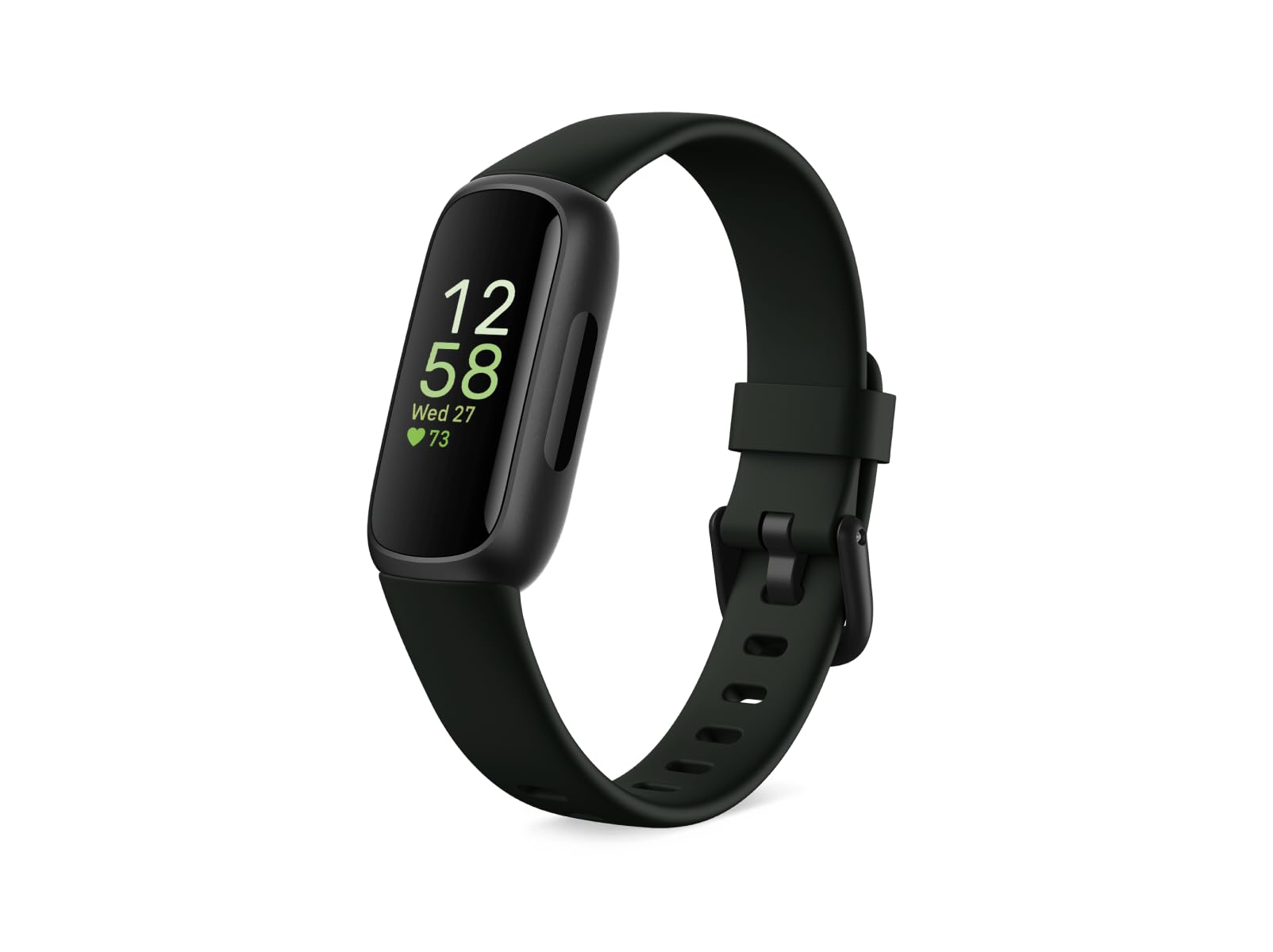
1. Fitbit Inspire 3
Our pick — 4.0+★ from 28,000+ verified ratings; the strongest balance of quality and price.
A slim, sleep-friendly tracker that goes a week-plus between charges and remembers your cycle.
Ten days is the number to hold onto here. That is the rated battery life on the Inspire 3, and it is measured with the always-on display switched off — a screen setting that keeps the face lit continuously and eats charge fast. Leave it off and you charge roughly once a week. In one owner’s words, charging “51% to 80% in ~10 minutes” got them straight back out the door, so topping up is a coffee-break job rather than an overnight one.
The wrist fit is the quiet reason this lands at the top of the list. A silicone band in a compact case, plus a longer band included in the box, suits a smaller wrist without the watch head swallowing your forearm. Automated sleep tracking and a vibrating smart wake alarm make it comfortable enough to wear overnight, which is the only way sleep data means anything. Cycle logging sits alongside step and heart-rate tracking, so the women’s-health side is handled without a second app.
The thing everyone raves about is how little it asks of you: 40+ exercise modes (pre-set activity types like walking, swimming or yoga), automatic exercise detection, and a Daily Readiness Score that tells you when to push and when to rest. Steps and sleep land where owners expect them. The trade-off is durability at the strap — the plastic hinge on the band has fractured inside a year for some wearers, so treat the band as a replaceable part rather than a permanent one. Pairing with an iPhone has also needed a re-do now and then.
What carries it
- Ten-day rated battery with the always-on display off — one weekly charge, not nightly
- Fast top-up: 51% to 80% in about 10 minutes on the charger
- Compact silicone band plus an extra longer band in the box for a snugger fit
- Cycle tracking, SpO2 (blood-oxygen) readings, and stress-management scoring built in
What to know first
- The plastic strap hinge has been known to crack inside a year
- An occasional re-pair with an iPhone or iPad is part of ownership
- Steps can run a little generous on a high-arm-motion day
Reach for this if: you want one comfortable tracker that covers steps, sleep and cycle in a single app and rarely needs a charger.
Know this before buying: budget for a replacement band somewhere down the line.
2. Zeacool Fitness Rate
The one that keeps going when every other tracker on your shelf is dead.
Start with the battery, because it is the headline. The Zeacool is rated at 10-14 days of regular use and 30 days on standby, which puts it well ahead of a seven-day rival in the same round-up. Charging is magnetic, so the cable snaps into place rather than needing a fiddly alignment — a small thing that matters on a bedside table at midnight. If your real complaint with wrist trackers has always been the charger, this is the pick built around that.
What wins people over, going by the feedback, is straight functionality: the watch does what the listing promises with little fuss. The 1.10-inch AMOLED screen (a display type that lights each pixel individually for strong colour and contrast) reaches 300 nits of brightness, which is enough to read the time and your step count in normal daylight. A beige strap and buckle closure keep it looking like a normal watch, and the smaller crowd of owners drawn to it liked that understated look.
Here is where honesty earns its place. Sleep tracking on this watch has been flatly wrong for a chunk of buyers — one report logged roughly 12 hours of sleep against an actual 7, and counted hours spent awake as sleeping. The review pages sum it up: “Sleep tracking highly inaccurate: reported ~12 hrs vs actual 7, 3+ hrs deep sleep vs usual 50-80 min; logged awake time as sleep.” Treat the step counter as the reliable part, the 5 ATM waterproofing (rated for swimming and showers) as genuine, and the sleep number as entertainment.
The battery advantage is real: the 30-day standby and 10-14 day regular use rating are comfortably beyond the seven-day claim on the Moremore tracker further down this list, and magnetic charging removes the fiddliest part of owning a tracker.
Buy it for steps, not sleep: sleep staging has misfired badly for a portion of buyers, and detailed sleep data does not pass through to Apple Health beyond the basics — only the steps and heart-rate readings hold up day to day.
Best matched to: a swimmer or shower-every-day wearer who wants charges measured in weeks, not days.
Look elsewhere for: a trustworthy sleep breakdown — the staging here has a track record of overstating rest.
3. Fitness Tracker

A deep-purple band that slips under a cuff and does the simple jobs without drama.
The look is what sells this one. A narrow, rectangular case on a deep-purple band reads as jewelry rather than a mini computer strapped to your arm, and that styling is what the strongest feedback clusters around. A slim band you keep on all day is what makes a daily step habit stick.
Functionally it covers the basics well: a 1.1-inch AMOLED touchscreen, 25 sports modes selectable in the app, and routine tracking for steps, distance, calories and heart rate. Charging is magnetic and the maker rates a full top-up at 1-2 hours for up to 7 days of regular use and 15 days on standby. Paired with a phone over Bluetooth, it also forwards call, text and app alerts, and nudges you to move and drink.
Where it gets shakier is accuracy under pressure. Step counts have drifted badly on some wrists — one report found the total off by over 5,000 steps and 2 miles after two hours of walking, comparing the watch against a phone. Blood pressure readings have also missed the mark versus a cuff for some owners. The battery is the other watchpoint: it is rated for a week, but charging failures after a couple of months show up among the complaints. If you want a slim, pretty daily step counter and can test it against your phone early, it delivers; if you need clinical-grade numbers, it will frustrate you.
Why it earns the spot
- Slim rectangular case on a deep-purple band — comfortable and cuff-friendly
- 1.1-inch AMOLED touchscreen with custom dial options
- 25 sports modes plus call, text and app notifications over Bluetooth
The honest caveats
- Step counts have been off by thousands on some wrists
- Blood pressure readings have missed a cuff for some owners
- Occasional charging failures within a few months
For you if: a slim profile and a colour you like will keep the tracker on your wrist every day.
Think twice if: you will be relying on its step total to hit a daily target.
4. Parsonver Smart Watch

A rose-gold round watch that answers your calls and tracks your cycle for one budget price.
The defining feature is the one that saves you pulling out your phone. Bluetooth 5.3 (a newer wireless standard with a steadier connection) lets you answer and make calls right on the wrist, and read texts and app alerts from the likes of WhatsApp and Instagram. The 1.32-inch circular HD display runs at 360×360 pixels, so notifications are legible at a glance without squinting. At 37 grams and 22mm strap width, it wears thin and light — one buyer called it thinner and more elegant than the watches she returned to keep it.
Health coverage runs deeper than the price suggests: 24/7 heart rate and SpO2 (blood-oxygen) monitoring, sleep staging across deep, light and REM phases, stress tracking, and a menstrual cycle log — the same women’s-health feature set you would expect from a tracker costing several times more. Battery is rated at 7 days of daily use with up to 40 days on standby, fully charged in 2 hours, and the whole thing is IP68 rated (protected against dust and short water exposure). Over 200 watch dials and custom photo faces let you personalize it endlessly.
Now the part you need to know. Despite the IP68 claim, water resistance has failed for some wearers — one watch died after a jump into a pool. Step counting is also the weakest link: a badminton player logged only about 2,000 steps for a two-hour session. The oversized bezel suits some wrists more than others, and the silicone band on the base model has been called a little slippery. It is a stylish calling watch that also tracks steps reasonably — not a medical monitor and not a swim companion.
The value case: a 1.32-inch 360×360 circular display, Bluetooth 5.3 calling, and 40 days of standby at an entry-level price point is a genuinely generous package for a first smartwatch.
The one gap to accept: IP68 protection and a cold jump into a pool are not the same thing, so if swimming is on your list, wear it dry and take it off before you dive.
The right fit for: a first-time tracker buyer who wants calls on the wrist, cycle logging, and a rose-gold look that goes with everything.
Not the one for: pool laps or a step count you will hold to a strict daily goal.
5. Google Fitbit Charge 6 – Fitness Tracker – Porcelain/Silver

The tracker for the woman who runs, rows hard, and wants the workout honest with her.
Where the Inspire 3 keeps its screen quiet, the Charge 6 leans into training detail. Built-in GPS means you can leave the phone at home on a run and still map the route, and 40+ exercise modes cover everything from spin to strength sessions. There is ECG support (an electrocardiogram function that reads heart-rhythm data), contactless payments through Google Wallet, and turn-by-turn Google Maps on the wrist. The stainless-steel case and porcelain finish feel sturdier than a plastic tracker.
Battery lands around a week on the rated 7-day figure, with a 2-hour charge from empty, and the app’s coaching and sleep score are genuinely useful if training is your goal. The metrics are the draw: heart rate in real time, a Daily Readiness score, and a sleep breakdown that tells you when to take an easier day. Owners who value data over a big screen consistently say it does everything a daily fitness tracker needs without extra fuss.
The honest caveat is one of both money and accuracy. Built-in GPS can drift — one report showed 6.75 miles where a route actually ran close to 5 — and that GPS use eats into the battery quickly. The Google login and a large chunk of features hidden behind a paid subscription annoy some buyers, and the narrow screen can be fiddly to tap. For basic step counting, this is more watch than you need; for serious training, the GPS and ECG detail justifies the price.
The trainer’s pick: built-in GPS, ECG, Google Wallet payments, and Maps on the wrist are features the cheaper options on this list simply do not offer, which is why it sits at the training end of the field.
Count the cost first: the headline features live behind a Google Health Premium membership, and the built-in GPS has read long on some routes — factor in the subscription if you want the full toolkit.
Worth it for: runners, gym-goers and anyone who wants route tracking and health detail without a big-screen smartwatch.
Skip the upgrade if: a simple step count is all you need — this one brings a subscription and a steeper learning curve with it.
6. RLQA Smart Watch goldpink
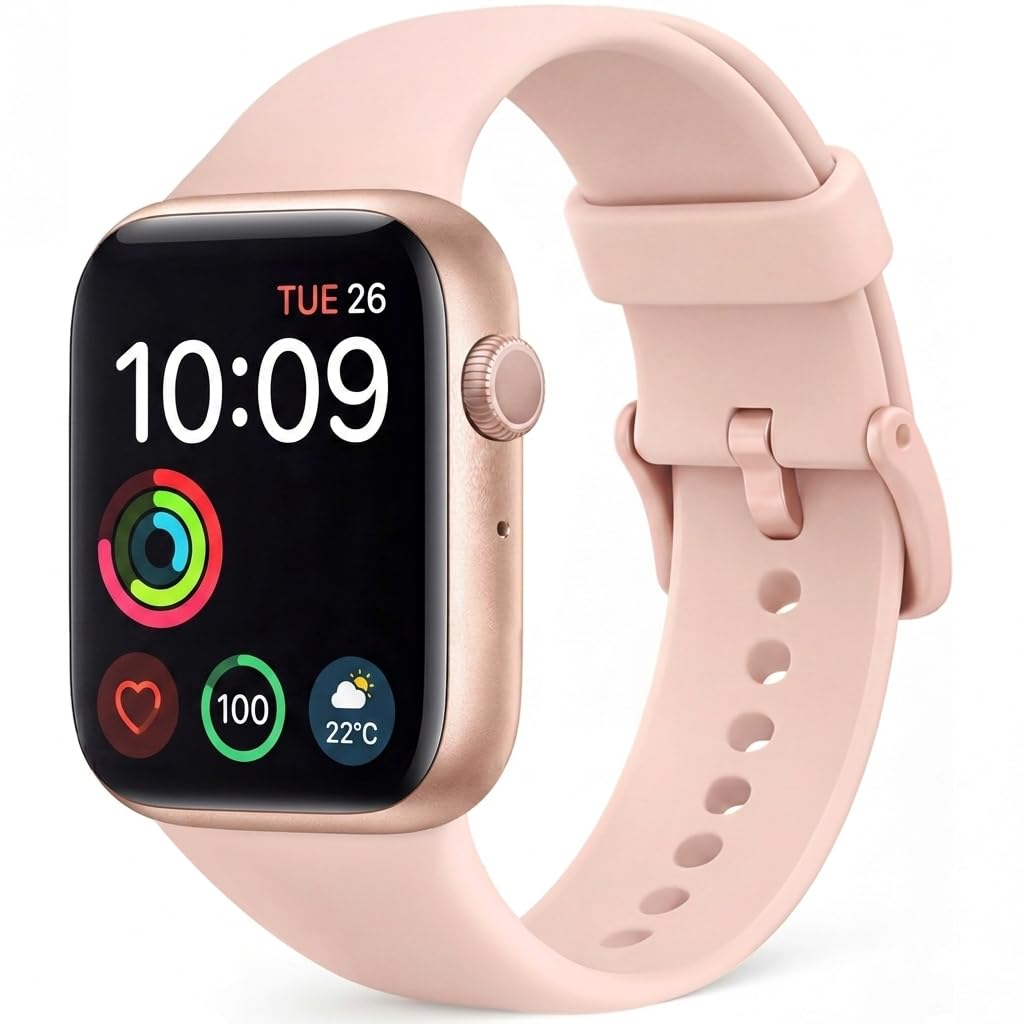
The try-it-out pink watch for testing whether a wrist tracker fits your life at all.
At the very bottom of the price pile, the RLQA sets expectations accordingly. It lists a long feature sheet — 123+ sports modes, Bluetooth calls, message alerts, heart-rate and blood-oxygen monitors, weather, find-your-phone and music control — but the reality is simpler: it is an entry-level watch built on a 22mm pink band. For a first attempt at wrist tracking, that long list is more than enough to explore.
Comfort is the pleasant surprise. The touchscreen and buckle closure suit daily wear, and one owner’s favorite detail was being able to choose a clearer front display. Another noted a curious side effect worth knowing: the watch still logs steps while you are sitting still — driving, in one report, made the step total climb. If you go in expecting a rough guide rather than an exact count, the pink finish and light weight make it fun to wear.
The clear limit is phone pairing. One buyer could not get it to pair with a Samsung S24 despite the listing claiming Android 5.0+ compatibility, and returned it after repeated app reinstalls. Others had good luck, so pairing is the make-or-break test: try it within the return window with your own phone. For an honest first tracker at the lowest tier, this is a low-stakes experiment — not a long-term training partner.
Good to start with
- 123+ sports modes give a beginner plenty to explore
- Pink colourway and comfortable 22mm band
- Heart-rate, blood-oxygen and step tracking built in
The limits, plainly
- Step tracking can count motion while you are seated or driving
- Some phones have refused to pair despite the compatibility claim
- Very basic build and app experience compared with the pricier picks
A fair first buy for: trying a wrist tracker without committing much, especially if pink is your palette.
Set expectations low on: precise step counts and guaranteed phone compatibility.
Know the Specs
Battery Life and Standby in Days
Regular-use days is the number you will actually live with — the time between charges while the watch is on your wrist and tracking. Standby is different: it is how long the watch sits idle without much activity. A 7-day regular-use rating means a weekly charge; a 10-14 day rating with 30 days of standby (as the Zeacool lists) means you can go weeks between concerns. Always ask whether the rating assumes the always-on display is off, because that setting can cut runtime dramatically.
Display Type: AMOLED vs Standard
AMOLED is a screen technology where each pixel makes its own light, so colours look richer and blacks look deeper in daylight. A 1.1-inch or 1.32-inch AMOLED is easy to read on a wrist. The trade-off is power — a brighter screen drains quicker. A standard colour screen or a narrow display (like the Fitbit Charge 6’s) stretches the battery but shows less at once. Brightness is measured in nits, and 300 nits reads fine outdoors.
Step Counting Accuracy
Every tracker uses an accelerometer (a motion sensor that senses arm swing) to estimate steps. It cannot tell a purposeful walk from a hand gesture, which is why a tracker can overcount or undercount depending on your wrist movement. Serious buyers test a new watch against their phone on the same walk. Look for listings that list a real sports mode for the activities you do, since tailored modes tend to produce better data than one generic pedometer.
Waterproof Ratings: IP68 vs 5 ATM
IP68 covers dust and short immersion — sweat, rain and a splash at the sink are fine. 5 ATM is rated to a pressure roughly equal to a 50-meter depth, per the maker’s standard, so it handles swimming and showers. Neither rating is a license to press buttons underwater or take the watch into hot water. If you swim laps, look for 5 ATM; if you just want protection from sweat and rain, IP68 is enough.
Common Questions
Will a step tracker for women count steps accurately in a handbag or pocket?
Can I swim with a 5 ATM waterproof fitness tracker?
Why does my step count go up while I am driving?
Is the Fitbit Charge 6 better than the Inspire 3 for step tracking?
How long does the battery last on the Parsonver smart watch?
Do these trackers work with both iPhone and Android?
Can I wear these fitness trackers overnight to track sleep?
What women-specific health features should I look for on a tracker?
Why does my tracker undercount steps during a gym class?
Do I need a subscription to use these fitness trackers?
The Bottom Line
For most women who want a step tracker that covers the whole day without fuss, the winner is the Google Fitbit Inspire 3. It pairs a slim, sleep-friendly band with a ten-day battery rating and a full set of cycle and heart-rate tools in one app — and it will not send you hunting for a charger every night. If swimming and weeks-long standby matter more, grab the Zeacool Fitness Rate with its 5 ATM rating and 30-day standby. And for the woman who trains hard and wants GPS and route tracking on her wrist, the Google Fitbit Charge 6 is the one to reach for. Pick the tracker that matches how you actually move, and the step count will follow.
How we choose
We do not accept paid placement. Every pick is matched to a real buyer and a real use-case; we do not hands-on test units.
Sources
Specifications: manufacturer listings and product documentation. Review insights: verified customer reviews, as of October 2026. Pricing: not shown on this page (it changes often); check the current price via the retailer link.
As an Amazon Associate, Aappliancez earns from qualifying purchases. This does not affect which products we feature.