Disclosure: Some links in this post are affiliate links. As an Amazon Associate I earn from qualifying purchases, at no extra cost to you. Learn more
Specs are compiled from manufacturer listings and verified buyer reviews and can change over time — please confirm the key details on the product page before buying.
Your step count can be wrong in a way you would never notice. A tracker that logs every arm swing and every bump in the road can hand you a 10,000-step day you did not earn. A tracker with a screen you stare at all day can leave your wrist sore by dinner. The picks below split those two problems apart, and each one is a genuinely good buy for a different kind of person.
This guide is built by comparing the manufacturers’ published specifications and the patterns across verified customer reviews, so you get each pick’s real strengths and trade-offs instead of marketing spin.
You will see screenless pebbles, full smartwatches, and one ring, sorted by which habit each one actually supports. The right pick is the one you will forget you are wearing, and this breakdown of the best step tracker device shows you which one that is.
Top Picks
How To Choose The Best Step Tracker Device
Start with the wrist, not the feature list. A tracker that irritates your wrist by day three ends up in a drawer, counting nothing. Band fit and charge interval decide whether a tracker stays on your arm past the first week.
Screenless pebble or wrist screen
A screenless tracker stays thin and quietly counts steps through a full workday. It runs a sensor against your skin and pushes everything to your phone. A screened tracker lets you check steps on the spot, but the glass, the taps, and the glow add bulk. Think about if you want numbers on your wrist or a glance at your phone later.
Band width and band length matter more than you think
Most wrist complaints trace back to the strap, not the sensor. A narrower band tends to sit flatter under a shirt cuff, while a wider one spreads pressure across a larger patch of skin. Length decides whether the strap closes on a small wrist with room to spare or pinches. Measure your wrist circumference, then compare it to the listed millimeter width and centimeter length before you buy.
Step counting and the vibration problem
Every wrist tracker uses an accelerometer — a motion sensor that reads arm movement as a step. Cars, trucks, and drumming hands all feed that sensor false signals. Tracker brands differ in how aggressively they filter those signals, and that filtering is what separates a believable step count from a generous one.
Battery life and charging habits
A 7-day rating means one charge on a fixed weeknight, with no daily cable hunt. A daily-charge tracker only works if you never miss a night on the charger. For overnight sleep tracking, pick a battery rated to last the night without a top-up.
Side-by-Side Comparison
| Model | Best For | Battery Life | Water Rating | Wearing Style | Amazon |
|---|---|---|---|---|---|
| Google Fitbit Air★ Best Overall | All-day wear and sleep | Up to 7 days | Up to 50 meters | Screenless band | Amazon |
| MorePro Fitness TrackerMost Features | Budget smartwatch features | Up to 7 days (15 standby) | IP68 | Screened watch | Amazon |
| Google Fitbit Inspire 3 | Slim everyday stepping | Up to 10 days | Splash and swim band | Slim screened band | Amazon |
| Google Fitbit Charge 6 | Built-in GPS runners | Up to 7 days | Water resistant | Screened band | Amazon |
| Smart Health Ring | Ring wearers, no subscription | 3–5 days (20+ with case) | Up to 80 meters | Finger ring | Amazon |
Detailed Reviews
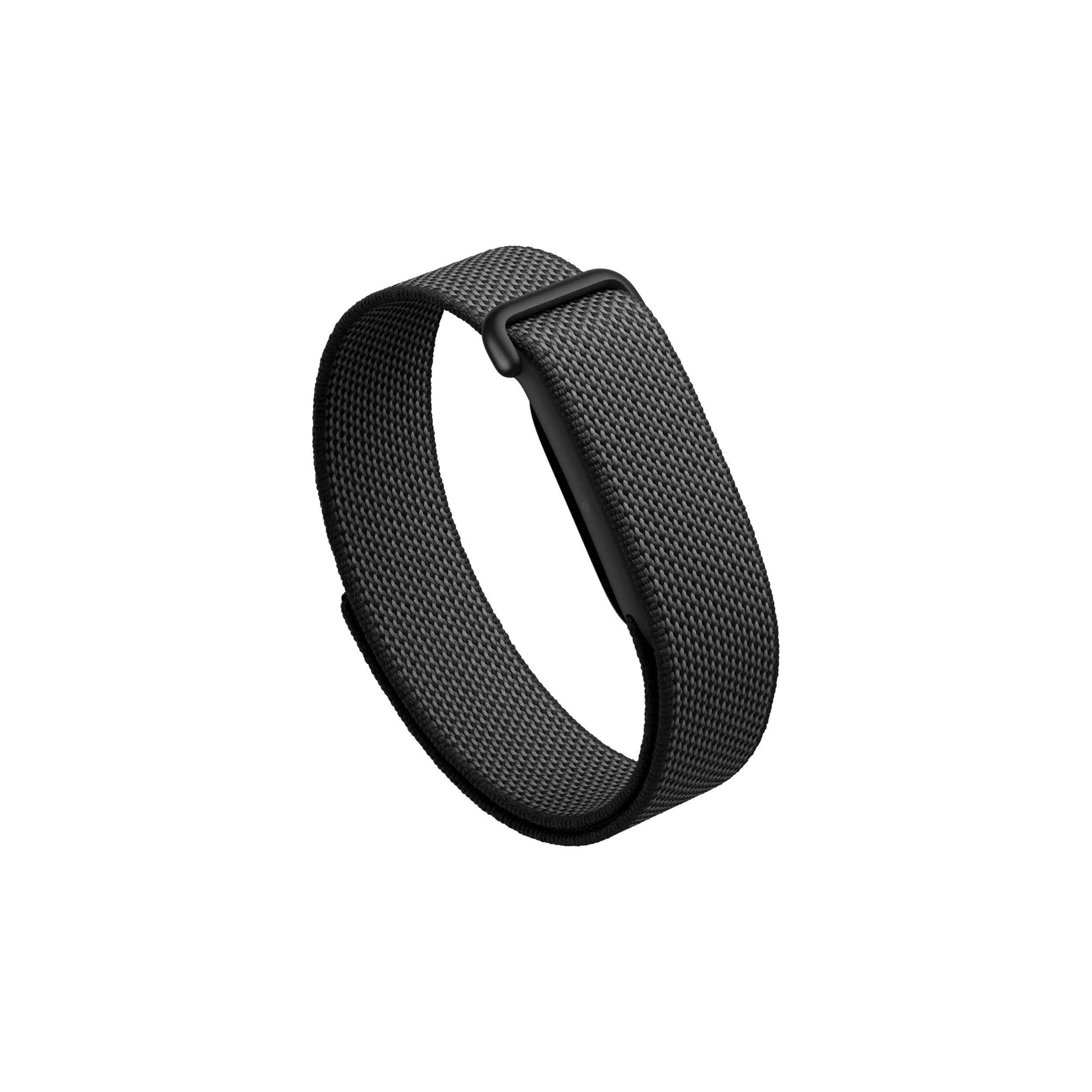
1. Google Fitbit Air – Screenless Activity Tracker, Obsidian
Our pick — 4.0+★ from 2,000+ verified ratings; the strongest balance of quality and price.
The pebble with no screen that quietly counts everything while you sleep.
Here is the whole idea in one sentence: a screenless tracker that pushes every reading to your phone, so your wrist stays light and your step count keeps running. Fitbit Air sits at 18.2 millimeters wide and 21 centimeters long, a band width that comes in 10% narrower than the MorePro watch below and a length 5% shorter. On a small wrist that shorter strap means less tail flapping around under a shirt sleeve all day.
Battery is where this one wins the room. You get up to 7 days on a charge, and a 5-minute top-up buys you a day of tracking — enough to save a forgotten charge before a flight. Wear it through the night and it keeps reading. The comfort side is just as strong: 130 owners single out the band itself, and it is a genuinely forgettable thing on your arm, which is exactly what a sleep tracker needs to be.
The honest catch is the phone link. Without a screen, there is no real-time readout on your wrist, and the all-day sync leans on Bluetooth for hours. Sleep and recovery numbers are the most-discussed corner of this tracker and the response there splits — some owners call it the best feature, others say the sleep scoring needs manual interpretation. If you want a step count you can trust and a screen you can read, the Charge 6 further down is the fit.
What the wrist gets
- Up to 7 days per charge, with a 5-minute top-up covering a full day of tracking.
- 18.2 mm band width stays flat under a cuff and barely registers in bed.
- Water resistant up to 50 meters, so pool sessions and showers are covered.
What costs you attention
- No screen, so every number lives on your phone instead of your wrist.
- Continuous syncing drains Bluetooth through the day.
- Sleep scoring is a mixed read, with some owners finding the numbers need their own judgment.
Reach for this if: you want steps, sleep, and heart rate tracked with nothing to look at and nothing to charge every night.
Look elsewhere if: you need a step count visible the moment you glance down at your arm.
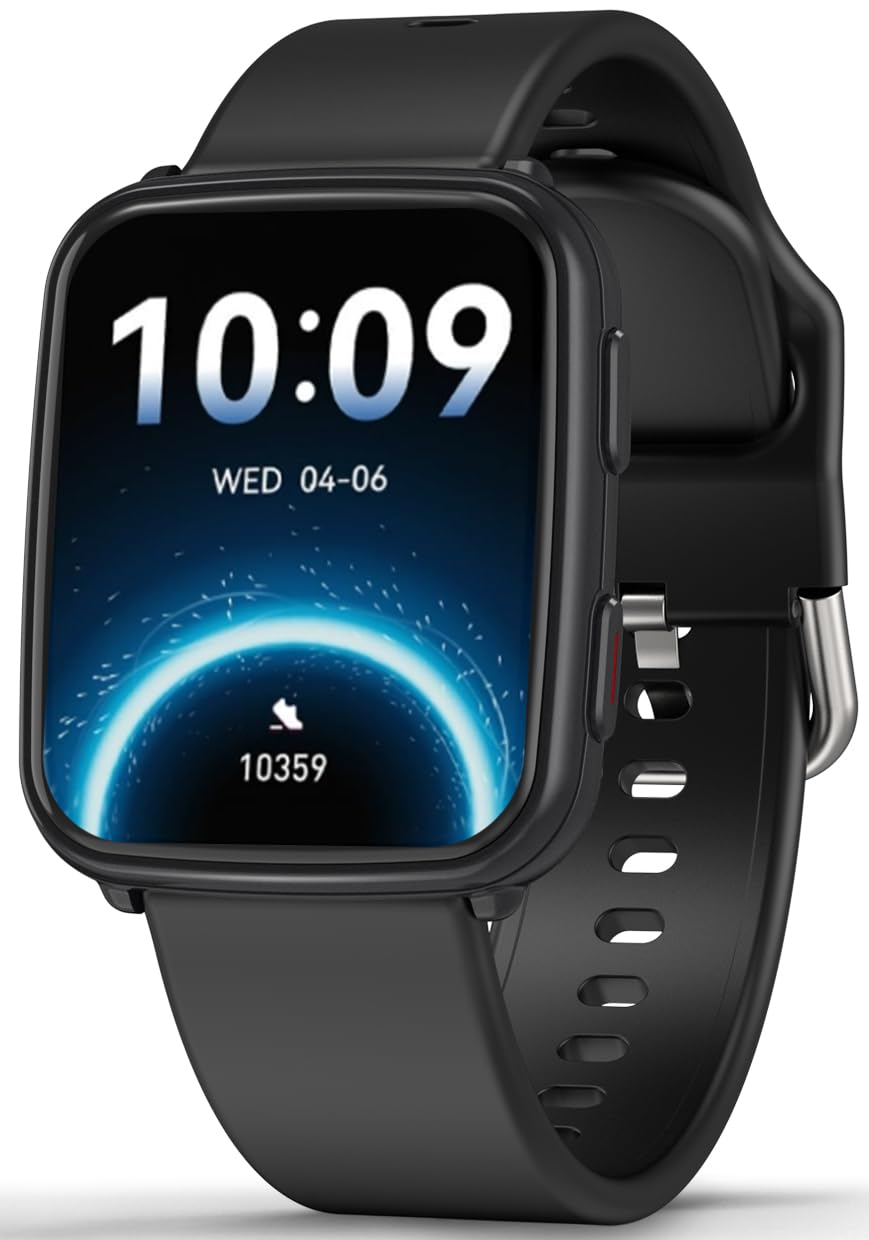
2. MorePro Fitness Tracker
A full-featured wrist screen for people who want the numbers and the notifications.
This one covers a lot: 120+ sport modes (preset activity types like running or cycling), over 200 watch faces (screen designs you can swap), cycle and ovulation logging, and call and message alerts on the wrist. The battery is 230 milliamp-hours (a measure of battery capacity) and charges in about 2 hours, so a lunchtime top-up covers your evening. The band runs 20 millimeters wide and 22 centimeters long, an ordinary size that sits in that make-your-own-watch-face territory a wrist screen settles into.
What owners like is that it just keeps going. Up to 7 days of normal use, or 15 days on standby, plus an IP68 rating that takes sweat, rain, and hand-washing without a fuss. The screen is bright and easy to read, and the step, calorie, and sleep logs sit in one place without a phone in your pocket. That last point is the reason one driver bought it: the watch kept logging through the workday while his phone stayed in the cab.
Step counting is where you should think ahead. The accelerometer reads every bump, and driving over rough roads can add steps you did not take. Blood pressure is not a medical reading either — the maker states it is for inspiration, not medical use. If you have a long commute or a job that shakes the wrist, treat the step total as a guide rather than a ledger.
Where it earns the price: you get a real wrist screen, 120+ activity modes, IP68 waterproofing, and 7 days of battery in a design that costs a fraction of a premium tracker.
What to keep in mind: the step counter cannot be paused, so long drives inflate the total, and the heart and blood pressure readings deserve a second opinion from a proper cuff.
The smart buy if: you want a first smartwatch that tracks steps, sleep, and workouts without a monthly bill.
Not your fit if: your day involves hours behind a wheel and you need a precise step count.
3. Google Fitbit Inspire 3 – Midnight Zen/Black
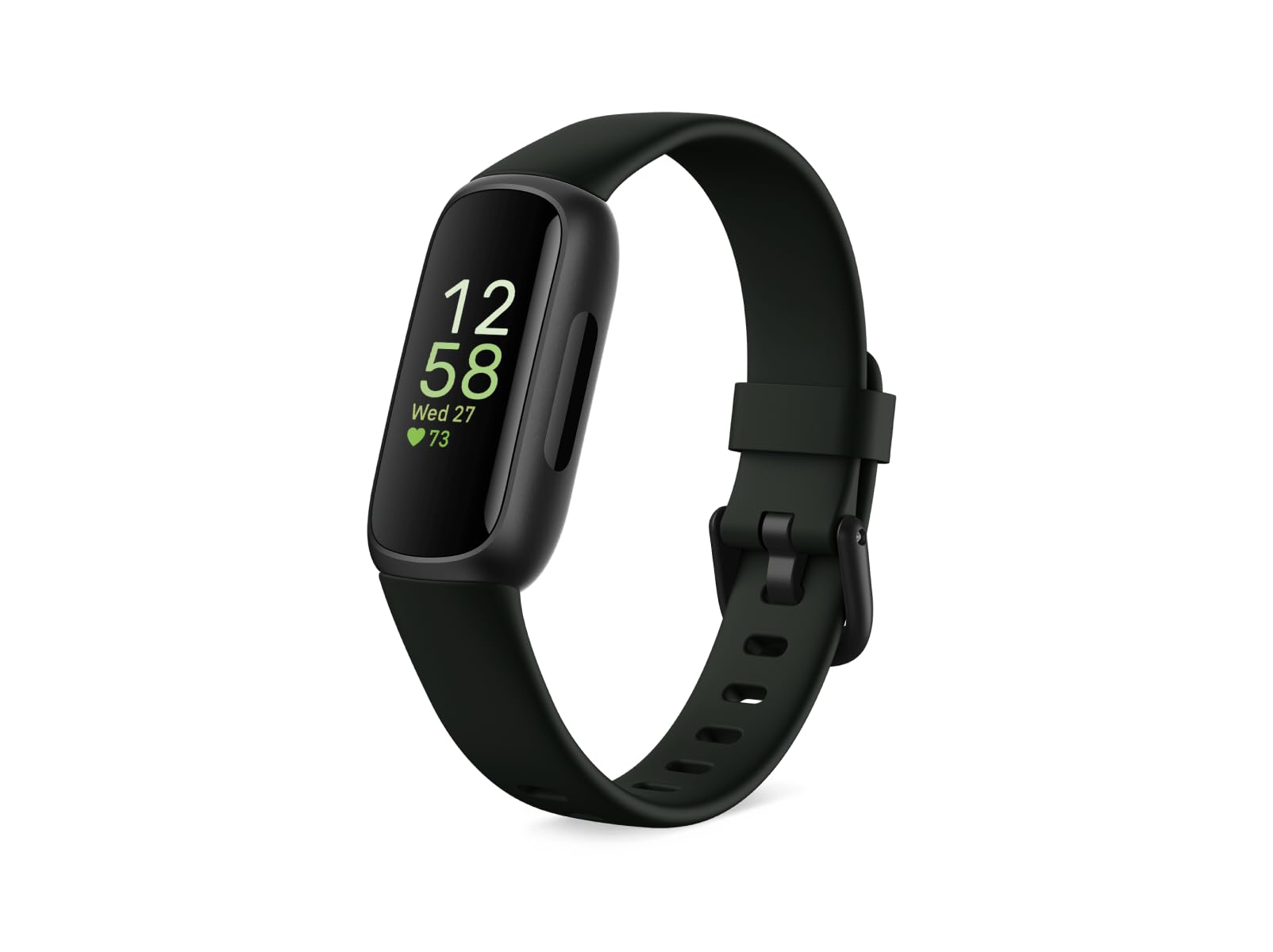
Ten days per charge and a screen small enough to disappear under a cuff.
Battery is the headline and it is a real gap: up to 10 days on a charge here, against the 7 days on the Fitbit Air above. That extra runway matters if you keep forgetting to plug in. The screen is touch and legible, and the band is silicone with a tang buckle, sized for a wrist that wants a small footprint rather than a tablet strapped on. The maker states it works with Apple iOS 16.4 or higher and Android OS 11.0 or higher.
What it does well, it does without asking for attention. Automatic sleep tracking and a daily Sleep Score land each morning, a Smart Wake vibrating alarm nudges you at a light moment, and 40+ exercise modes cover the walks and workouts most people actually do. Fast charging is a quiet perk too — one owner got from roughly 51% to 80% in 10 minutes, which is the kind of top-up that saves a week.
Now the part that needs a clear head. This is a well-liked tracker with a long track record, and the reliability side is genuinely mixed across the long haul. A strap hinge that fractured under a year, an occasional screen freeze that a reset fixed, and a SpO2 sensor that stopped on one unit all show up. The step count also runs generous — drumming fingers has been logged as steps. None of that makes it a bad tracker, but it is a tracker to buy with realistic expectations about a few years of wear.
Why it stays on the wrist: 10 days of battery, accurate step and resting heart rate tracking, and a small silicone band that works through sleep without waking you.
Go here for: a slim, low-fuss tracker where the charge cable stays in a drawer for over a week.
Think twice if: you expect a -class tracker to survive rough handling for many years without a hiccup.
4. Google Fitbit Charge 6 – Fitness Tracker – Obsidian/Black

The one that leaves the phone at home and still maps your route.
Built-in GPS is the reason this pick exists. Walk out the door without your phone and the Charge 6 still logs your distance and route, with turn-by-turn directions from Google Maps on the screen and tap-to-pay through Google Wallet for the coffee stop. Link it to a treadmill or elliptical and your heart rate shows up on the machine’s own display. Battery runs up to 7 days, and a 40+ exercise mode list covers the run, the ride, and the swim.
Owners describe the everyday feel warmly. The band is 22 centimeters of silicone on a stainless steel case, the screen is easy to read in daylight, and a wrist-raise brings the display up without a press. Many who came from a big smartwatch say the smaller body is the whole point — the sleep and step data keeps coming through because the thing is pleasant enough to keep on at night. The step and heart rate quality is where it shines most, and quality is the single biggest strength in its feedback.
Before you commit, weigh the follow-up questions. Google Health Premium is sold separately if you want the Gemini coaching, and the app does not sync into Apple’s Fitness app. GPS accuracy has drawn complaints on some units, with route maps that zigzag and distances that read long. The band has also been called uncomfortable by a few people. Buy it for the phone-free running, and test the GPS on a known route in week one.
The trade-off worth knowing: you get GPS, ECG, contactless payments, and a compact screen in one band, but you are buying into Google’s ecosystem rather than Apple’s.
The other side: a 7-day spec is not a fixed seven days — always-on display and heavy syncing can drag the number down, and GPS unreliability has been the sharpest complaint on this model.
Pick this one for: runs, rides, and swims where you want distance tracked without a phone in your pocket.
Skip the upgrade if: you already own the Inspire 3 and only want steps and sleep — the extra screen and GPS bring their own complications.
5. Smart Health Ring Size 12

A finger ring that skips the subscription and the wrist altogether.
Some people cannot stand a band on the wrist, and this ring is the answer to that specific problem. It slides onto a finger in size 12, has no display at all, and pushes its readings to your phone over Bluetooth. Waterproofing reaches 80 meters, which is a deeper rating than the 50-meter Fitbit Air above, so pool laps and showers are well inside its range. The maker also states there is no app subscription — the readings come free, every day, unlike the premium plans other brands sell separately.
Sensor work is on paper thorough: 4.0 sensors measure heart rate and blood pressure automatically every 30 minutes, while the ring logs steps, calories, distance, and sleep stages. The charging case stretches battery from 3–5 days to more than 20 days of use, so it travels well on a long trip. Owners who are happy describe a lot of data for the money, and the free app is easy enough to open and read.
This is the newest and smallest-track-record pick on the list, and the honest read is that value and reliability are split. Some rings work smoothly for months, and others drop their Bluetooth link or start needing a charge every day within a few months. Sleep logging can also misread a quiet TV night as sleep. Sizing is on you, too — the maker tells you to measure your finger circumference against the size chart first, because a wrong size is the fastest route to a return.
What the finger gets
- No display and no band, so nothing catches on clothing or a watch strap.
- Up to 80 meters of water resistance covers swimming and daily showers.
- 3–5 days per charge, stretching past 20 days with the included charging case.
- No app subscription, so the health data stays free after purchase.
Where it can fall short
- Connectivity and sleep accuracy get mixed reports across buyers.
- Battery has degraded quickly on some rings, shifting to daily charging.
- Sizing is exact — a wrong size means an exchange rather than a quick fit.
The right call if: a wrist band irritates you and you want step and sleep logging from your finger without a subscription.
Look elsewhere if: you need proven long-term reliability above all — the wrist picks above have far more history behind them.
Know the Specs
Battery life and charging time
Battery life tells you how many days pass between charges when you use the tracker normally. A 7-day rating usually drops closer to 5 days once you keep the screen always-on or sync heavily. Charge time matters just as much — a short top-up can cover a full day, which saves a forgotten cable night. Look at both numbers together, and remember that sleep tracking only works if the battery survives the night.
Water resistance ratings
An IP68 rating means the device is protected against dust and against being submerged, while a meter rating tells you how deep it can go. Both cover sweat, rain, and hand-washing. Neither is a promise for hot showers, saunas, or deep diving, because heat and pressure push past what the seals are tested for. Take the number as a guide to normal wear, not a license to take it to the bottom of a pool.
Band width, band length, and fit
Band width is the strip of material against your skin, measured in millimeters, and band length is the full strap run in centimeters. A narrower band sits flatter under a sleeve; a longer band leaves more tail to tuck. Neither number tells you comfort on its own — check both against your wrist circumference, and treat a pair of small wrists as a reason to favor shorter lengths and narrower widths.
Step accuracy and sensors
Wrist trackers read steps through an accelerometer, a motion sensor that catches arm swings. The sensor is fast and cheap to run, but it cannot tell a real step from a bump, so cars, buses, and drumming hands can inflate the count. A tracker that filters those signals well gives you a believable total. If your day is full of vibration, look for a device that lets you pause counting or that filters motion more strictly.
Common Questions
Can a step tracker be worn while swimming?
Why does my tracker count steps while I am driving?
Is a screenless tracker as accurate as one with a screen?
Do I need a paid app subscription to see my steps?
How should I measure my finger for a smart ring?
How long does a charge actually last on these trackers?
Can I send and receive texts from a step tracker?
Does a tracker on a ring count steps as well as one on the wrist?
What does IP68 mean on a workout watch?
Is the blood pressure reading on a fitness tracker a medical measurement?
The Bottom Line
For most people, the best step tracker device here is the Google Fitbit Air. It keeps steps, sleep, and heart rate running for up to 7 days, and it sits so lightly on your wrist you forget it is there. Want the numbers on your arm plus notifications and a screen? Grab the MorePro Fitness Tracker. And if you want your distance mapped without a phone in your pocket, the Fitbit Charge 6 is the one to reach for. The crowd backs that call — the Fitbit Air carries 4.0+ stars across 2,000+ ratings.
How we choose
We do not accept paid placement. Every pick is matched to a real buyer and a real use-case; we do not hands-on test units.
Sources
Specifications: manufacturer listings and product documentation. Review insights: verified customer reviews, as of October 2026. Pricing: not shown on this page (it changes often); check the current price via the retailer link.
As an Amazon Associate, Aappliancez earns from qualifying purchases. This does not affect which products we feature.