Disclosure: Some links in this post are affiliate links. As an Amazon Associate I earn from qualifying purchases, at no extra cost to you. Learn more
Specs are compiled from manufacturer listings and verified buyer reviews and can change over time — please confirm the key details on the product page before buying.
If you want socks knit on American soil, the short answer is this: buy the merino. Wool is the fiber that keeps feet dry in a steel-toe boot and cool on a summer hike, and the five pairs below are all made in the USA with real wool content. The differences that matter are wool percentage, cushion height, and how the fit behaves after a few washes. Get those three right and you stop replacing socks every season.
This guide is built by comparing the manufacturers’ published specifications and the patterns across verified customer reviews, so you get each pick’s real strengths and trade-offs instead of marketing spin.
Some pairs here are built for a boot and some for a running shoe, so the right pick depends on where your feet spend their day. Below you’ll find which pairs stay put, which run thin, and which run snug enough to size up, all in one place for socks made in usa.
Top Picks
How To Choose The Best Socks Made in USA
The label on the package tells you almost nothing about how a sock will feel on mile eight. What tells you is the wool content, the cushion map, and the height of the cuff. Those three decide whether a sock earns its place in your drawer or gets pushed to the back. The rest is color and branding.
Wool percentage is the real price tag
More wool means better moisture handling and less smell, because wool fibers wick sweat off the skin and resist odor without a chemical finish. A 78% merino sock can go two days straight in a work boot before odor becomes an issue. A sock that’s mostly synthetic with a wool blend name will feel soft in the store and clammy by lunchtime.
Cushion where you land, not everywhere
Running and hiking socks usually put a terry-knit cushion under the heel and ball of the foot and keep the top of the foot thin and breathable. A fully cushioned boot sock pads the whole foot but adds bulk. That bulk can crowd the toe box of a close-fitting hiking boot, so match the cushion to the shoe, not to how plush it feels in your hand.
The cuff height decides the shoe
A low-cut ankle sock disappears into a running shoe and never shows above the collar. A crew or extended-crew sock rises above the boot top so the boot leather never rubs bare skin. If you split your week between trail shoes and work boots, you probably want two heights rather than one compromise pair.
Side-by-Side Comparison
| Model | Best For | Height | Wool Content | Cushion | Amazon |
|---|---|---|---|---|---|
| ANTSANG Merino Quarter Ankle★ Best Overall | All-year everyday wear | Quarter ankle | Merino wool blend | Cushioned bottom | Amazon |
| SAMSOX Bozeman Heavyweight BootColdest Days | Cold-weather boots | Extended crew | Merino wool blend | Full plush cushion | Amazon |
| GRIP6 Crew Sock | Four-season hiking | Crew | 40% Wool | Medium terry floor | Amazon |
| SAMSOX Charleston Low-Cut | Running and warm weather | Low-cut ankle | 46% Merino Wool (US-sourced) | Targeted cushion | Amazon |
| Woolrich Merino Hiking 2-Pair | Year-round trail use | Crew | 78% Merino Wool | Medium weight | Amazon |
Detailed Reviews
1. ANTSANG Merino Wool Quarter Ankle Socks
Our pick — 4.5+★ from 950+ verified ratings; the strongest balance of quality and price.
The quarter-ankle merino that stays up past the collar and keeps a boot from rubbing.
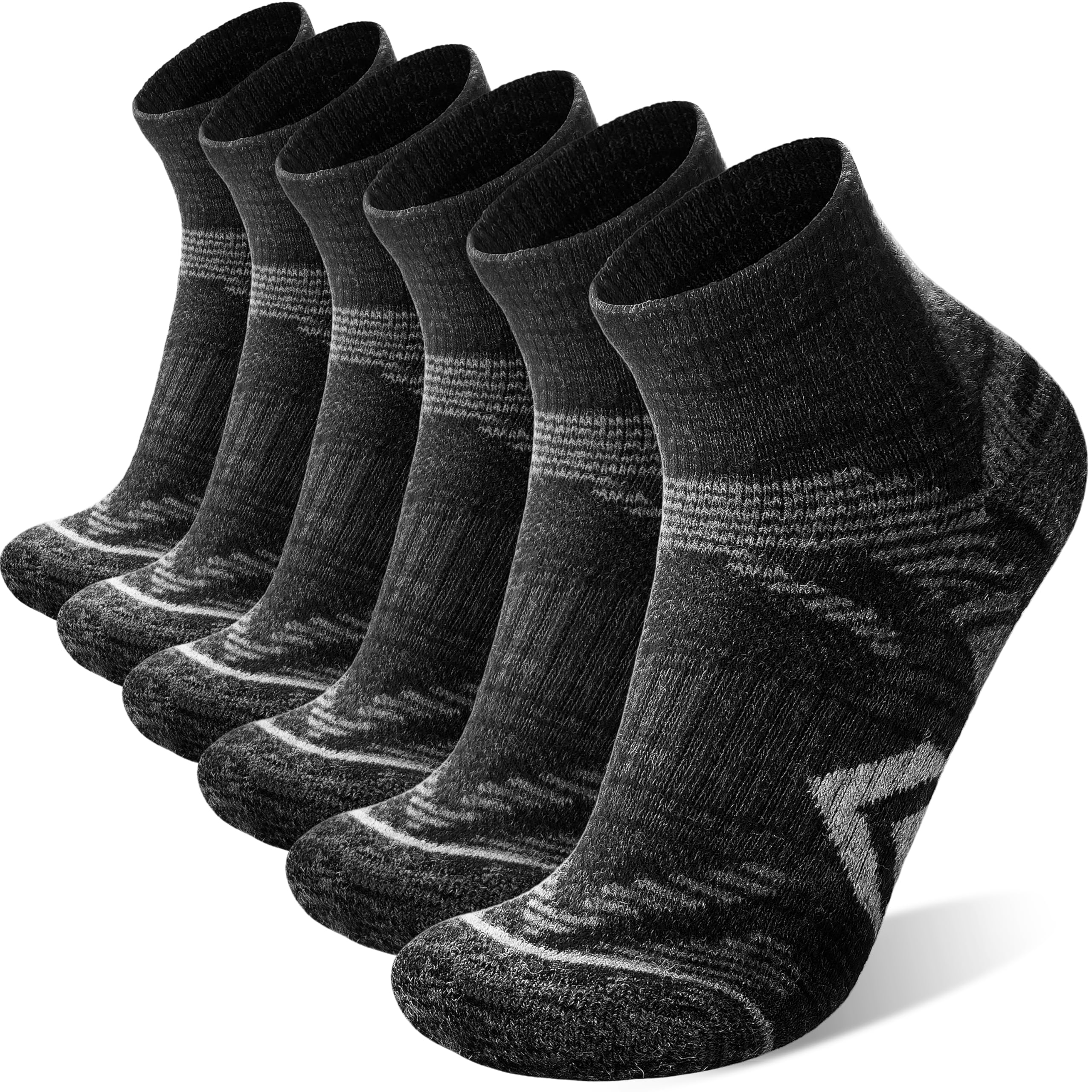
Start with the height. This is a quarter ankle sock, a cut that sits just above the shoe collar so it never slides down under your heel mid-stride. That single design choice is why it works for both a running shoe and a low hiker. The weight is a merino wool blend, and the bottom is cushioned while the upper stays thin — enough padding for a hard trail surface without turning your shoe tight.
What wins people over is the quality of the knit itself. The wool content is higher than most blends in this tier, which is why owners wear these through both winter and summer without their feet turning into a swamp. Reviewers keep returning to the temperature regulation: warm in cold weather, dry in hot weather, and notably less odor after a full day in steel-toe boots. As the review pages put it, these are “very soft and warm” and not tight on your feet, which is a big deal when you are standing all day.
The honest catch is texture. A few wearers find the wool scratchy against skin during long wear, and the inner loops of the knit take a little getting used to before they stop feeling busy underfoot. Neither is a defect — it’s what a higher-wool sock feels like out of the bag. Here’s the honest trade: if your skin is sensitive to raw wool, break these in on short walks first, and note that the inner thread loops are a known characteristic of the thicker knit rather than a flaw.
Why these stay in the rotation
- Quarter-ankle cuff stays above the shoe collar instead of sliding down
- Higher wool content handles sweat and odor better than most blends
- Cushioned bottom for high-mileage days, thin upper for breathability
- Machine washable without shrinking in hot or cold water
Where it asks patience
- Raw wool scratchiness turns up on long wear for sensitive skin
- Inner loops feel busy underfoot until broken in
Made for: the person who wants one sock to cover hikes, gym sessions, and work boots year-round.
Think twice if: your skin reacts to raw wool — the higher merino content is exactly what makes it itch for some.
2. SAMSOX Merino Wool Boot Socks Bozeman
The plush heavyweight that measures 3/8 inch thick and turns a boot into a warm room.
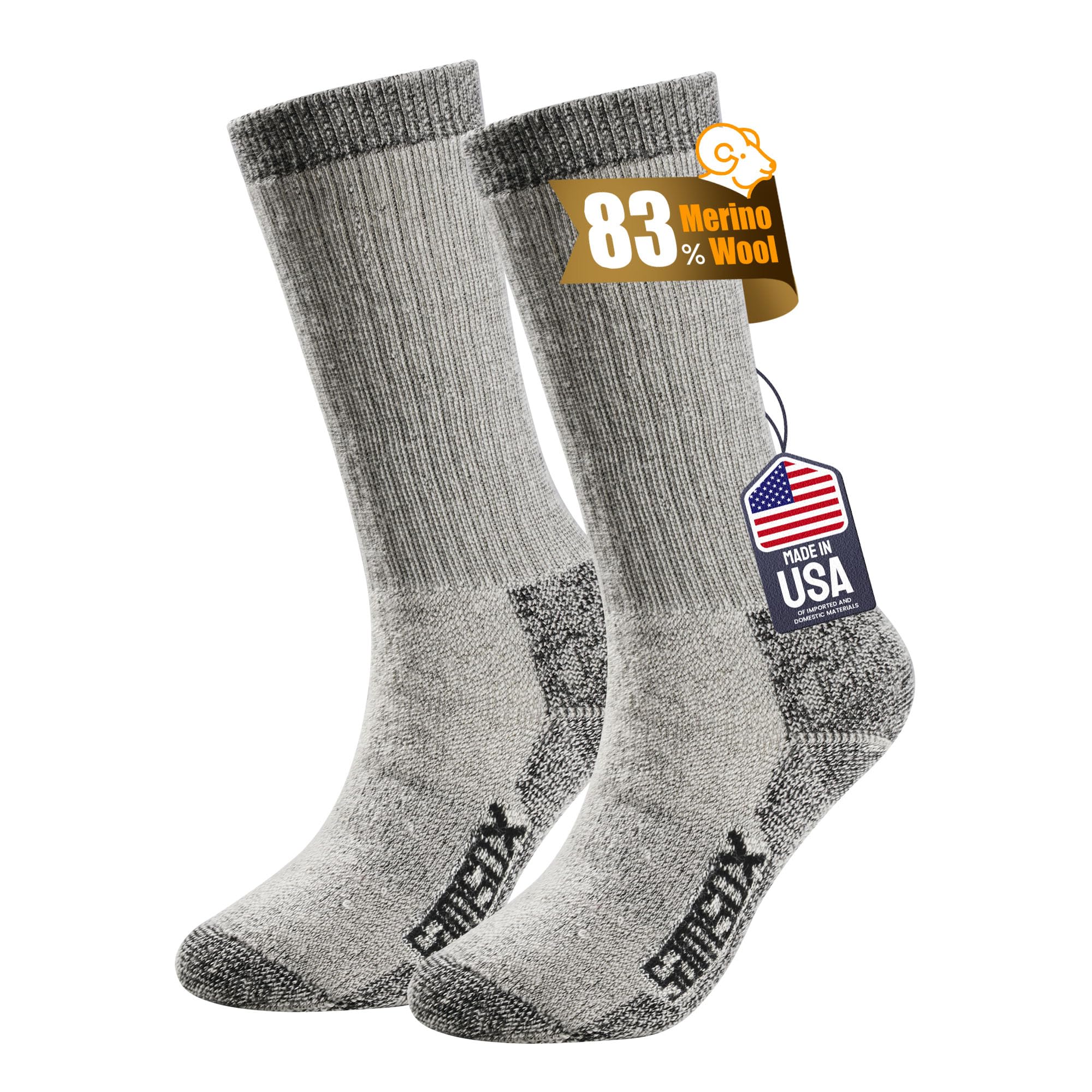
For a birdwatcher standing still in a cold field for two hours, warmth is the whole point. These are built for that: a fully cushioned boot sock with a high-density plush knit running the entire length of the foot. The measured thickness comes in at 3/8 inch, which is the number that tells you most of it. That bulk is also why it pairs with a roomy boot and not a close-fitting trail shoe.
The plush wool blend is ultra-soft and regulates temperature on its own, so the sock warms you without baking you. There’s a reinforced heel and toe for wear, arch support to hold the fit, and a flat-knit toe seam that eliminates bulk at the toes. It rises high above the ankle — one happy owner wore them in Antarctica — so boot leather never touches bare skin. This is the sock you reach for when the weather is the reason you are outside.
The fit reality: the thickness is the honest caveat. Hugely plush socks can cramp the toe box of a hiking boot, so check your boot volume before committing. A fresh pair also arrives with a noticeable odor that a wash takes care of.
The long-weather test: the wool content shows up in the scent as a strong lanolin note — a sign of natural fiber — and the pair holds its shape and loft after multiple washes.
Reach for this if: you spend long stretches outside in cold weather and want maximum padding underfoot.
Look elsewhere if: your boots are already snug — this much cushion needs a little room to breathe.
3. GRIP6 Crew Socks Merino Wool
A crew sock with an honest 40% wool count and a Utah wool station behind the source.
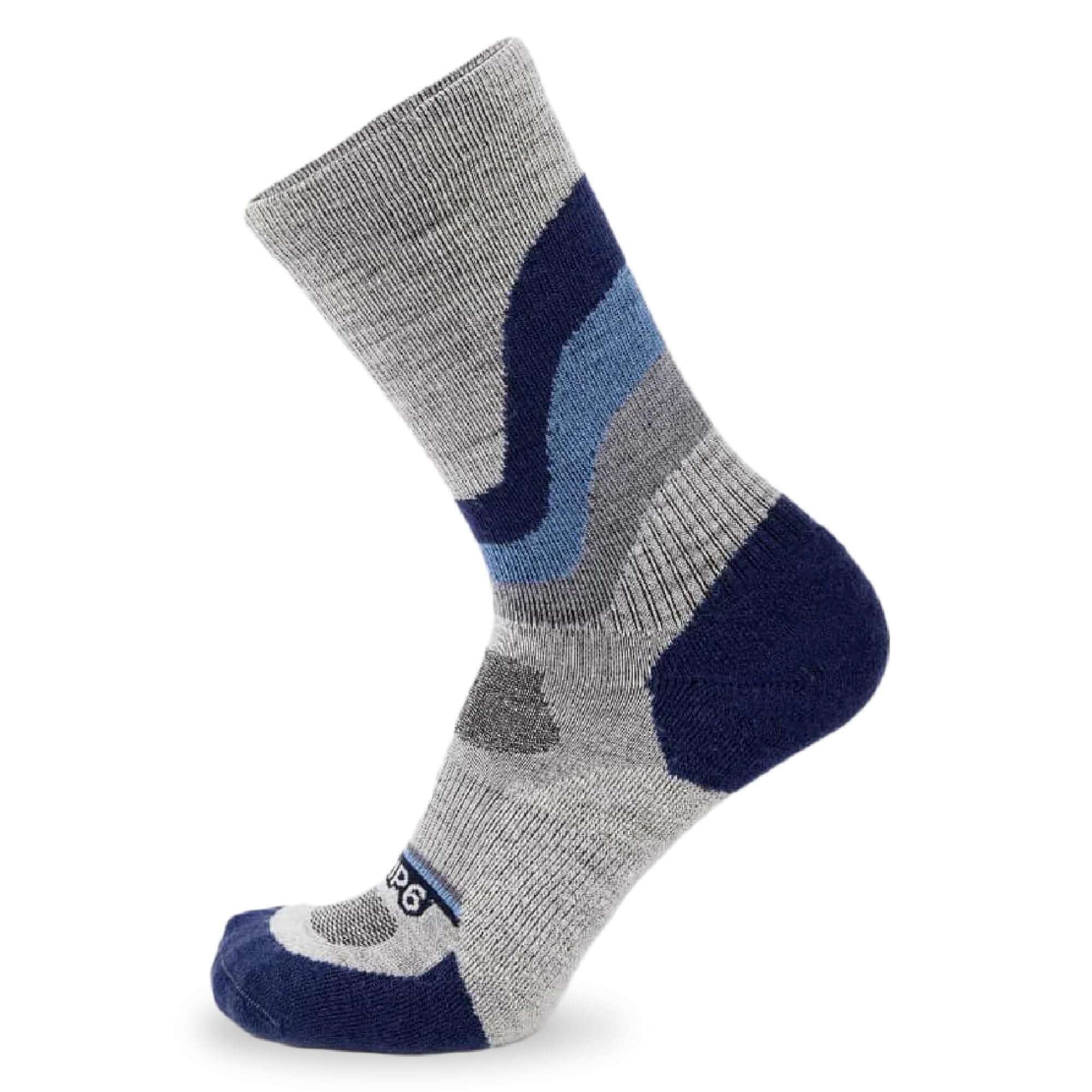
The spec worth reading here is 40% wool. That’s the blend number on the label, and it’s honest — this is a wool, nylon, and elastic mix designed so the wool’s breathability and insulation survive real wear. The sock is knit with a medium terry floor for cushioning underfoot and a thin, breathable flat stitch across the top. The wool itself is Rambouillet Merino sourced in the USA, and GRIP6 runs its own shop in Midvale, Utah, where the knitting happens.
The crew height is a practical one: it covers the ankle without climbing to the calf, so it sits well under a work boot or a hiking shoe. A lifetime warranty covers the pair, and the promise is a sock that stays stretchy rather than slouching into a puddle at the heel. Owners who log serious miles on these report the elastic and the knit holding their shape through repeated wear.
Buyers split on fit and longevity. Some find the sizing tight and awkward to orient on the foot, and a few report holes developing sooner than expected. So measure against your shoe size rather than assume, and read the fit reviews before you order to save a return. Bottom line: comfort and warmth are praised widely, but this is not the pair to size blindly.
Worth the premium: you get a 40% wool blend, a US-sourced fiber, a machine-knit crew in Utah, and a lifetime warranty. For a heavy user, that adds up to a sock that performs from cold mornings to hot hikes.
The size question: fit runs snug for some and the opening can feel tight, so compare your shoe size to the chart before adding to the cart.
Choose these if: you walk hard in varying temperatures and value a wool blend with a real warranty.
Skip them if: you need a guaranteed roomy fit — sizing here is where the mixed feedback lives.
4. SAMSOX 2-Pair Merino Wool Running Socks Charleston Low-Cut

A low-cut running sock that blends 46% US-sourced merino and disappears into your shoe.
You get 46% Merino Wool, and the sourcing is stated as US-grown. That is high for an athletic sock, and it’s why these skip the clammy feel of a synthetic running pair. Mesh panels and impact-cushioning stripes across the top of the foot move air and shed sweat while you move. A heel tab keeps the sock from slipping or bunching, and a smooth toe closure cuts bulk so blisters have less to work with.
These shine in warm weather. On a summer run the 46% merino keeps feet cool and odor-free where an all-polyester sock turns clammy within a mile. The fit stays put without feeling tight — one reviewer wore them through a 6.5-hour standing shift and a run in 100-degree heat without a complaint. Sizing runs S through XL, with the size chart overlapping men’s and women’s ranges so you get a real match for a 5-foot-nothing foot or a size 14.
The trade-off is durability in the lightweight build. At least one owner saw wear within half a day of a first wearing, and another found the low-cut style slipped on steep descents. Those are fit and use-case signals, not a knock on the merino — the 3/4 crew version of this same family gets strong marks from the same reviewers. Buy the cut to match your terrain: the low-cut is a road-and-track sock, not a scrambling sock.
What runners notice first
- 46% US-sourced merino outruns synthetic socks on sweat and smell
- Mesh panels and cushioning stripes keep the top of the foot aired
- Heel tab fights slippage and bunching mid-stride
- smooth toe closure limits blister rub at the front
The honest limits
- Lightweight knit is not built for rocky scrambling
- Low-cut height can slip on very steep descents
Best match: the runner or warm-weather walker who wants merino at ankle height.
Not the pick: if you need a boot-height sock for technical trails — go up to the crew cut.
5. Woolrich Merino Wool Hiking Socks 2 Pair

The highest wool count on this list, backed by a Pennsylvania brand that has been outdoors since 1830.
78% Merino Wool, 21% nylon, and 1% LYCRA Spandex — that’s the recipe, and the wool share is the highest of any pair here. That matters because a high wool share handles temperature and moisture better than a mostly-synthetic blend, which is why owners wear these year-round in northern Minnesota without insulated boots. The nylon and spandex bring stretch and shape retention, so the sock stays up rather than sagging.
The brand’s history is real: Woolrich has equipped outdoor people since 1830 and still calls itself the original outdoor clothing company. The knit is a lightweight merino hiking sock, built for warm and cold weather alike and cushioned enough to double as an indoor sock. Sizing comes in multiple sizes and colors, and it’s sold as a 2-pair pack so you get a spare for wash day.
Then there’s the fit. The fit and thickness get mixed reactions — some find the sock snug and the cushion thinner than expected, and a few report shrinkage after the first wash. It is not a fully padded boot sock; treat it as a medium-weight hiking sock and match it to a roomy shoe. Air drying keeps the elastic and the wool honest for years. The practical read: at 78% merino it’s the most wool per pair here, and you want to keep it out of a hot dryer.
The number that matters: 78% Merino Wool is a genuine high-wool sock, and the year-round range it delivers — warm enough for a Minnesota winter, cool enough for summer — is the payoff.
Where to be careful: fit and thickness come down to the shoe; thin hiking shoes find this sock too snug, and hot washes shrink it.
Good for: the hiker who wants the highest wool content and a 2-pair pack to rotate.
Pass if: you want a thick fully padded boot sock — this is medium weight, not plush.
Know the Specs
Wool content percentage
This is the share of the sock that’s actually wool, printed on the label or in the listing. Higher wool means better sweat handling, better smell control, and better temperature regulation. Lower wool means more nylon or polyester doing the work, which can feel slicker and hold odor longer. A 78% wool sock and a 40% wool sock are solving different problems.
Cushion level
Targeted cushion pads the heel and ball of the foot while keeping the top thin, and that’s a good match for a running shoe. Full cushion wraps the whole foot in padding, which is warmer and softer but adds volume. Match the cushion to your shoe’s inside, because too much padding in a snug boot will pinch your toes.
Common Questions
Do merino wool socks made in the USA itch like regular wool?
Can I machine wash and dry USA-made merino socks?
What wool percentage should I look for in a hiking sock?
Will a thick boot sock fit inside my hiking boots?
Should I size up when buying wool socks?
Do merino socks keep feet cool in summer or only warm in winter?
Are these socks made entirely in the USA or assembled from imported yarn?
How long should a good pair of merino socks last?
The Bottom Line
For most people buying socks made in usa, the ANTSANG Merino Quarter Ankle is the practical winner. A quarter-ankle cut that holds its place, a cushioned bottom for hard ground, and a merino blend that keeps feet dry from cold hikes to hot gym sessions — that’s a year-round sock you won’t think about again. If your feet live in boots and a frozen field, the SAMSOX Bozeman delivers the full plush warmth. And for warm-weather runs, the low-cut SAMSOX Charleston is the one to reach for. The highest-wool pick, the Woolrich 2-pair, is the choice if a year-round trail sock with more wool matters most.
How we choose
We do not accept paid placement. Every pick is matched to a real buyer and a real use-case; we do not hands-on test units.
Sources
Specifications: manufacturer listings and product documentation. Review insights: verified customer reviews, as of October 2026. Pricing: not shown on this page (it changes often); check the current price via the retailer link.
As an Amazon Associate, Aappliancez earns from qualifying purchases. This does not affect which products we feature.