Disclosure: Some links in this post are affiliate links. As an Amazon Associate I earn from qualifying purchases, at no extra cost to you. Learn more
Specs are compiled from manufacturer listings and verified buyer reviews and can change over time — please confirm the key details on the product page before buying.
A temperature sensor earns its price only when the battery, app, and build around it hold up. Most watches that advertise skin temperature tracking either short you on battery, bury the readings in a clumsy app, or export them as raw numbers with no context. The nine picks below all read your skin temperature, and this guide separates the ones that make those readings useful from the ones that just tick a box.
This guide is built by comparing the manufacturers’ published specifications and the patterns across verified customer reviews, so you get each pick’s real strengths and trade-offs instead of marketing spin.
You will see which models pair temperature sensing with multi-day battery, which ones need daily charging, and which ones lock key health features behind a phone brand. Here are nine smartwatches with temperature sensors, ranked by how well each one makes the readings useful.
Top Picks


How To Choose The Best Smartwatch With Temperature Sensor
The first thing to understand is what a skin temperature sensor actually does. It measures how warm your skin is, typically overnight, and charts that against your own normal range. It is not a fever thermometer, and no reading from a wrist watch should be treated as medical advice. What it gives you is a trend line: a swing of a degree or two from your usual baseline can flag that something is off before you feel it.
That reframes the whole buying decision. Sensor count is not the deciding factor. You want a watch that lasts a full night of continuous monitoring, plots the temperature chart clearly in its app, and has a case you can wear for years.
Battery life is the hidden cost of overnight sensing
Temperature tracking happens while you sleep, so the watch has to stay on your wrist and powered all night. A model rated for 6 days can drop sharply once you enable overnight oxygen and temperature monitoring. Models rated 12 to 16 days give you far more slack. When you compare specs, look at the smartwatch-mode figure, not the GPS-mode figure, because that is the number that governs your daily charging habit.
Build material decides how long it stays on your wrist
Sapphire crystal resists scratches from keys and doorframes. Titanium and stainless steel cases survive knocks that would scuff a plastic body. For anyone working with their hands, case material outranks display brightness. Several picks here use a fiber-reinforced polymer case with a metal rear cover, which cuts weight at the cost of some surface toughness.
Match the watch to your phone, not to the ad copy
Phone compatibility is the most common reason these watches get returned. An international-model Samsung watch lists Android 12.0 or higher as a requirement, and it will not pair with an iPhone. The Apple Watch needs an iPhone XS or later with the latest iOS version. Garmin, Amazfit, Cubitt, ARKVOC and Withings all work across both platforms. Confirm your phone’s platform and OS version before you order.
Side-by-Side Comparison
| Model | Best For | Battery (smartwatch mode) | Case Material | Display | Amazon |
|---|---|---|---|---|---|
| Garmin fēnix 8 Sapphire Titanium★ Best Overall | All-day adventure and long battery | Up to 16 days | Titanium bezel, fiber-reinforced polymer | 1.4″ AMOLED, sapphire lens | Amazon |
| Amazfit FalconTitanium Unibody | Offline maps and rugged build | Up to 14 days | Titanium unibody | 1.28″ AMOLED, sapphire glass | Amazon |
| Samsung Galaxy Watch 8 40mmSlimest Package | Galaxy phone owners who want AI health | 325mAh cell | Sapphire crystal | 1.34″ Super AMOLED, 438x438px | Amazon |
| Cubitt Terra Rugged | Outdoor use on a tighter budget | Up to 14 days | Rugged build, Orange finish | 1.48″ AMOLED | Amazon |
| ARKVOC T3 Ultra | Jobsite abuse and long standby | Up to 15 days | Stainless steel | 1.43″ AMOLED, 1000 nits | Amazon |
| Withings ScanWatch Nova | Watch looks with health sensing | Up to 30 days | Stainless steel, steel band | Hybrid, physical hands | Amazon |
| Apple Watch Series 9 45mm | iPhone users who want cellular | — | Graphite stainless steel | Always-On Retina | Amazon |
| Fitbit Sense | Low-cost health-first tracking | Up to 6+ days | Silicone case | — | Amazon |
| Garmin Venu 4 45mm | Everyday wellness with a big AMOLED | Up to 12 days | Stainless steel and fiber-reinforced polymer | 1.4″ AMOLED | Amazon |
Detailed Reviews
1. Garmin fēnix 8 Sapphire 47mm
Our pick — 4.5+★ from 400+ verified ratings; the strongest balance of quality and price.
Titanium on the outside, a month of readings between charges on the inside.
A 47mm titanium bezel with a sapphire lens means the glass shrugs off scratches — the kind of wear that ends a cheaper watch’s life on a doorframe. Garmin rates the battery at up to 16 days in smartwatch mode and up to 47 hours in GPS mode. Those are the numbers that matter here: 16 days of overnight temperature and sleep tracking without a charger in sight.
The rest of the hardware backs up the price. A 1.4″ AMOLED display stays readable in daylight, the built-in LED flashlight is genuinely useful after dark, and the weight lands at 80g, which you feel as a solid piece of hardware rather than a fashion piece. Multi-band GPS with SatIQ technology (SatIQ picks the satellite mode that saves the most power) keeps position accuracy strong in tree cover and between buildings. A 40-meter dive rating covers swimming and recreational diving. The health side runs 24/7 wrist heart rate, sleep monitoring, respiration tracking, Pulse Ox and an ECG app that records heart rhythm, with the caveat that Garmin itself flags all of this as an estimate rather than a medical measurement.
What wins people over is the watch quality itself — the single most-discussed strength by a wide margin — followed by that battery. Eight in ten buyers rate it 4.5+ stars across 400+ ratings. The evidence behind the temperature claims is less glamorous than the battery headline. Skin temperature is one overnight metric inside a wider sleep and recovery picture, and the sleep scheduler is the pick’s weak point: irregular schedules and daytime naps need manual entry, and the training readiness score built on sleep quality can read oddly if your sleep doesn’t fit a normal pattern. Budget the same amount of skepticism for the watch that gives you a clean monthly charge as you would for any tracker.
Where It Earns Its Keep
- Sapphire lens and titanium bezel hold up to daily scraping without visible marks
- 16-day smartwatch rating means real multi-week stretches between charges
- Multi-band GPS with SatIQ keeps position accuracy steady between buildings and tree cover
- Built-in LED flashlight and off-grid voice commands work without a phone connection
- Speaker and mic let you take calls from the wrist on a paired smartphone
The Real Friction
- Sleep scheduling expects a conventional routine; split and daytime sleep need manual entry
- At 80g on a 47mm case it sits heavy on smaller wrists
- Premium tier means the outlay is heavy before you ever strap it on
Strap it on if: you train outdoors, travel without a charger, and want a wrist that reads temperature honestly while surviving real abuse.
Pass on it if: your sleep schedule is irregular — the manual-entry friction will get old fast.
2. Amazfit Falcon Smart Watch
The one that keeps its sapphire and titanium even after the price tag stops climbing.
Where the Garmin above carries a 300mAh cell, the Falcon packs 500mAh into its titanium unibody. That is the biggest battery number on this list, and it answers the question every overnight sensor raises: will it make it through the week? Amazfit rates it at 14 days. Real use pulls that in, and one buyer’s own tally — “Gets 12 days vs. advertised 14 despite all-day use” — is the honest number to plan around rather than the box figure.
Build quality is the reason people end up here. TC4 titanium and sapphire glass give it a look that competes with watches costing several times more, and the auto workout detection and sleep tracking work without a subscription. Dual-band GPS with six satellite systems and offline maps means you can navigate a trail with the phone left at home. It pairs with both Android 7.0 and above and iOS 12.0 and above, so no phone-brand trap. Two recurring gripes call for attention: the app buries settings several menus deep, and the Zepp Coach interface is not intuitive on first contact. Some units also lose the Bluetooth link after a few hours, though one long-term owner reported the connection settled down after a software update.
What buyers keep praising: the titanium-and-sapphire finish is the difference between a watch that gets worn daily and one that gets sold six months in, and the free app means no recurring fee to see your data.
The health-tracking caveat: heart-rate and oxygen accuracy split opinion — some find them close enough to trust, others question the numbers, so treat temperature and HR as trend data to watch over weeks, not an instant diagnosis.
Reach for this if: you want titanium, sapphire, and offline maps at a price that undercuts the flagship Garmins.
Look elsewhere if: on-watch media controls are part of your routine — the Falcon only controls music you have loaded onto the watch, not your phone’s player.
3. Samsung Galaxy Watch 8 40mm
A small-case Galaxy that punches the brightest screen here into the smallest wrist space.
Most wearable screens get washed out on a sunny walk. This one is rated to 3000 nits peak brightness, measured in the standard way screens are rated — bright enough that reading a text outdoors never becomes a squint. The 1.34″ Super AMOLED panel runs 438x438px under sapphire crystal, and the whole case is 40mm, which is the size that fits slimmer wrists without the watch swallowing the arm. IP68 water resistance covers up to 50m of immersion and the casing is MIL-STD-810H compliant.
The temperature sensor joins ECG, a blood pressure monitor, SpO2, heart rate and sleep tracking, with an Antioxidant Index thrown in. Underneath sits a 325mAh battery and a 3nm Exynos W1000 five-core chip running Wear OS 6 with One UI Watch 8. There is 32GB of storage and 2GB of RAM. Galaxy AI handles health summaries, and the Energy Score gives a daily readiness read.
Two details need to be clear before you order. This is the International Model with no warranty, and Samsung states it is not compatible with iPhone or iOS — it needs Android 12.0 or higher with at least 1.5GB RAM. The listing also warns that some region-specific features, blood pressure and ECG among them, can be unavailable depending on country. Battery is the other soft spot: one owner’s plain verdict is a charge “every day,” and power-saving mode only eases the load. The 40mm size and light weight earn steady praise, and the display is what buyers notice first.
Best for: Android owners, particularly Samsung phone users, who want a slim small-case watch with the sharpest screen and a full sensor stack for a mid-range outlay.
Think twice if: you own an iPhone, or you need multiple days between charges — this one is a nightly charger.
Locked in when: you carry an Android phone and want temperature, ECG, and a 3000-nit display in a 40mm case.
Not for you when: you want a single charge to last a week — the 325mAh cell is built for daily topping up, not long stretches.
4. Cubitt Terra Rugged Smartwatch with Dual-Band GPS – Orange
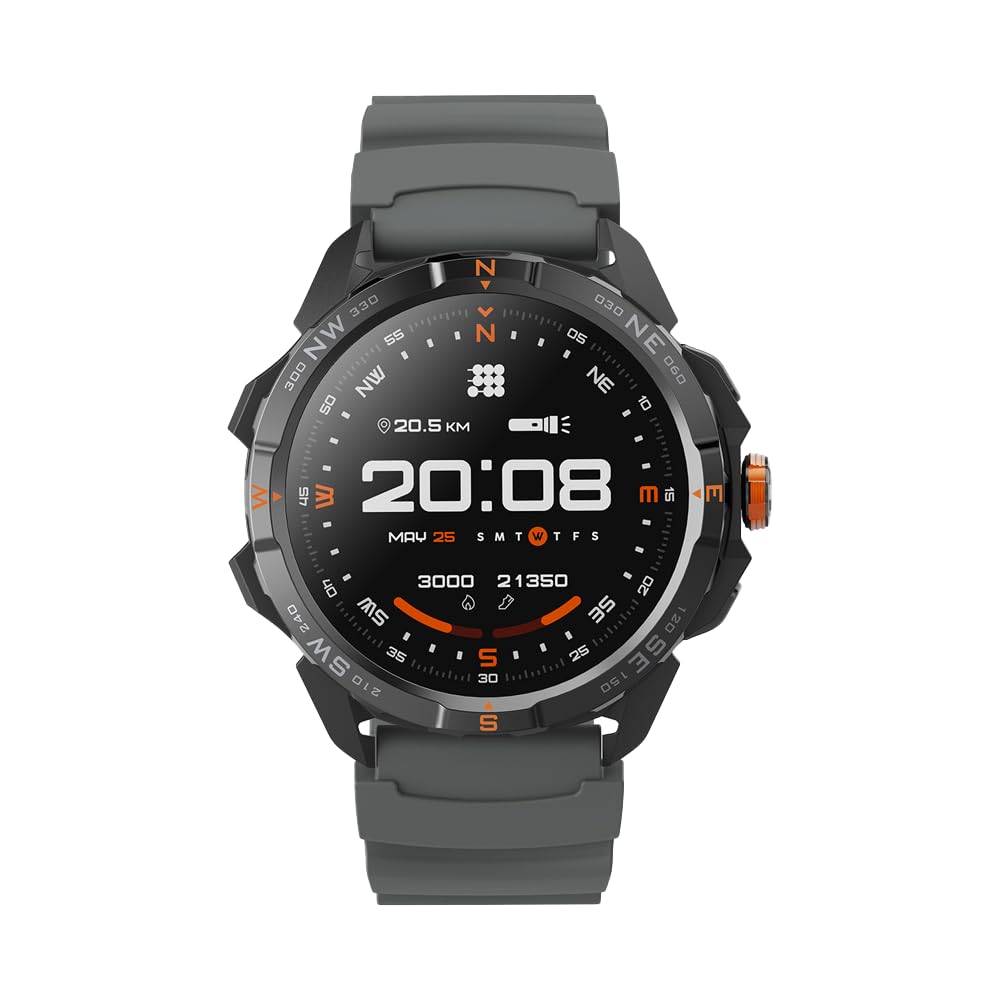
Offline maps, dual-band GPS, and a 530mAh cell built for people who leave the pavement behind.
The spec sheet reads like a hiking checklist. Dual-band GPS on both L1 and L5 signals, support for five GNSS systems — GPS, BDS, GLONASS, GALILEO and QZSS — plus offline maps and an internal compass. On paper that is more positioning redundancy than most watches at twice the price. The 1.48″ AMOLED runs 24-bit true color with auto-brightness, and the 530mAh battery carries a 14-day typical-use rating or 26 hours in GPS mode.
Health coverage stretches beyond the basics: heart rate, blood oxygen, VO2 Max, body temperature, stress, menstrual cycle and sleep analysis with a Sleep Score. There is an AI Coach, a Readiness Score, a VITA AI voice assistant and animated workout guides. Bluetooth 5.3 calling, offline music with direct TWS connection, and a built-in flashlight round it out. A free Cubitt Pro app lets the watch run standalone over WiFi without a cloud account, which is rare at this price point.
What earns the most confidence in owner feedback is build quality — by far the most-discussed strength — followed by battery. Real-world running time lands around 8 to 10 days in normal use, with one owner recharging at 40% after a week. The honesty note: functionality and health tracking split opinion, with some reporting the heart-rate and sleep-tracking readings drifting from expectations. An occasional unit has failed outright. That is the usual bump for a new watch brand at this price, not a pattern to panic over — but buy with realistic expectations. The watch faces are also on the thin side if customization matters to you.
Your pick if: you hike, trail-run, or leave cell coverage regularly and want dual-band GPS, offline maps, and a 530mAh battery.
Hold off if: sleep-score precision is your primary reason for buying — a few buyers report mixed sleep-tracking accuracy.
5. T3 Ultra Smart Watches
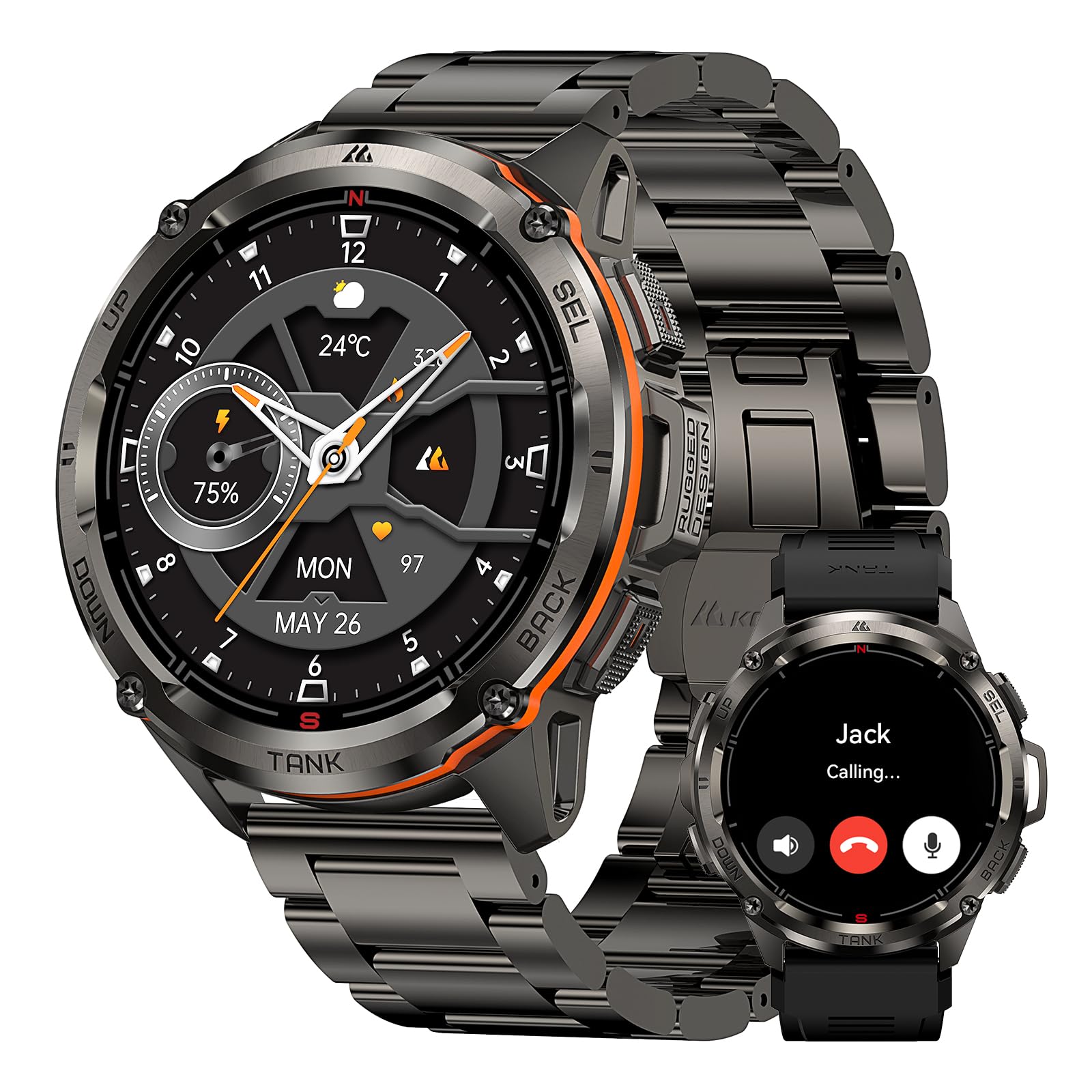
Built for people whose watch faces hammers, salt spray, and impact on a normal Tuesday.
The stainless steel body has passed 15 tests against MIL-STD-810H — the military toughness standard — covering salt spray, rain, and impact. The Corning Gorilla screen rates 9H on the Mohs hardness scale, which is the scale used to grade how hard a material is against scratching. A 5ATM waterproof rating means total immersion in up to 50m of water, so swimming is fine. If your hands are in a toolbox all day, this is the case you want.
The 470mAh cobalt-based battery is big enough that ARKVOC claims up to 2 weeks in normal use and 40+ days in power-saving mode. The 1.43″ AMOLED hits 1000 nits and supports an always-on display. GPS runs on dual-band with six satellite systems, and an internal compass, altimeter, and barometric pressure sensor give you position and air pressure readings. The health stack covers 24-hour heart rate, real-time blood oxygen, sleep, and up to 170 exercise modes with 6 intelligent sports recognition. A microphone and speaker enable Bluetooth calls, and the AI voice assistant handles questions, alarms, and music prompts.
Functionality is the clear winner in buyer feedback — the most-discussed positive — with battery life close behind. What needs to be stated plainly is the connectivity split: Bluetooth pairing frustrates some buyers, notifications arrive inconsistent for some, and the companion app is the weakest link in the chain. Also plan on the metal band being incompatible with standard link types — one owner needed a jeweler to size it. ARKVOC’s responsive support team is the bright spot.
Solid Ground
- 470mAh battery means up to 2 weeks normal use and 40+ days in power-saver mode
- MIL-STD-810H and 5ATM ratings backed by 15 durability tests
- 1.43″ AMOLED screen at 1000 nits with an always-on display option
- 170 exercise modes and 6 smart sport recognitions handle varied training
What You’re Signing Up For
- Bluetooth pairing is the most common frustration; notifications can drop
- The companion app is the weakest piece — syncing and accuracy complaints cluster there
- Metal band is not standard-link compatible, so replacement sizing means a jeweler
Best suited to: mechanics, truck drivers, and HVAC crews who want a rugged case, 5ATM waterproofing, and a 470mAh battery that laughs at a week of abuse.
Skip if: your main priority is a polished app — this delivers on hardware, not software polish.
6. Withings Scanwatch Nova — Heart Health Hybrid Smart Watch

A watch with real hands and a month of battery that still reads your skin temperature.
The 30-day battery rating is the headline, and it is the reason to buy this. Where a 6-day watch makes overnight tracking a chore, a month-long stretch lets the temperature and sleep data run without you thinking about a charger at all. Under the hybrid face sits the TempTech24/7 module — Withings’ name for its continuous temperature sensing — which tracks your baseline body temperature and the fluctuations that can flag the onset of illness. A stainless steel case and steel band give it a look that passes as a conventional watch, and the charging time is listed at 2 hours.
The health stack goes deep: 24/7 heart rate with alerts when it runs high or low, overnight heart rate variability for a heart-health trend over time, on-demand SpO2 plus overnight breathing disturbance tracking, and full sleep analysis including duration, time in light and deep sleep, interruptions, regularity, and a Sleep Quality Score. For activity it auto-recognizes 40+ sports and estimates VO2 max.
Where the Nova asks for patience is the app. The software earns mixed marks — the alarm runs through a clunky time wheel, and the app is on the limited side for a premium watch. Physical build and appearance are what buyers talk about most, and the general read is that it beats expectations. An occasional unit shows a charging hiccup that clears with a power cycle.
Worth it for: anyone who wants real hands on the dial, a month-long battery, continuous temperature trends, and a traditional metal-band look.
Reconsider for: heavy on-watch app use — the software is the weakest part of an otherwise strong watch.
7. Apple Watch Series 9 45mm
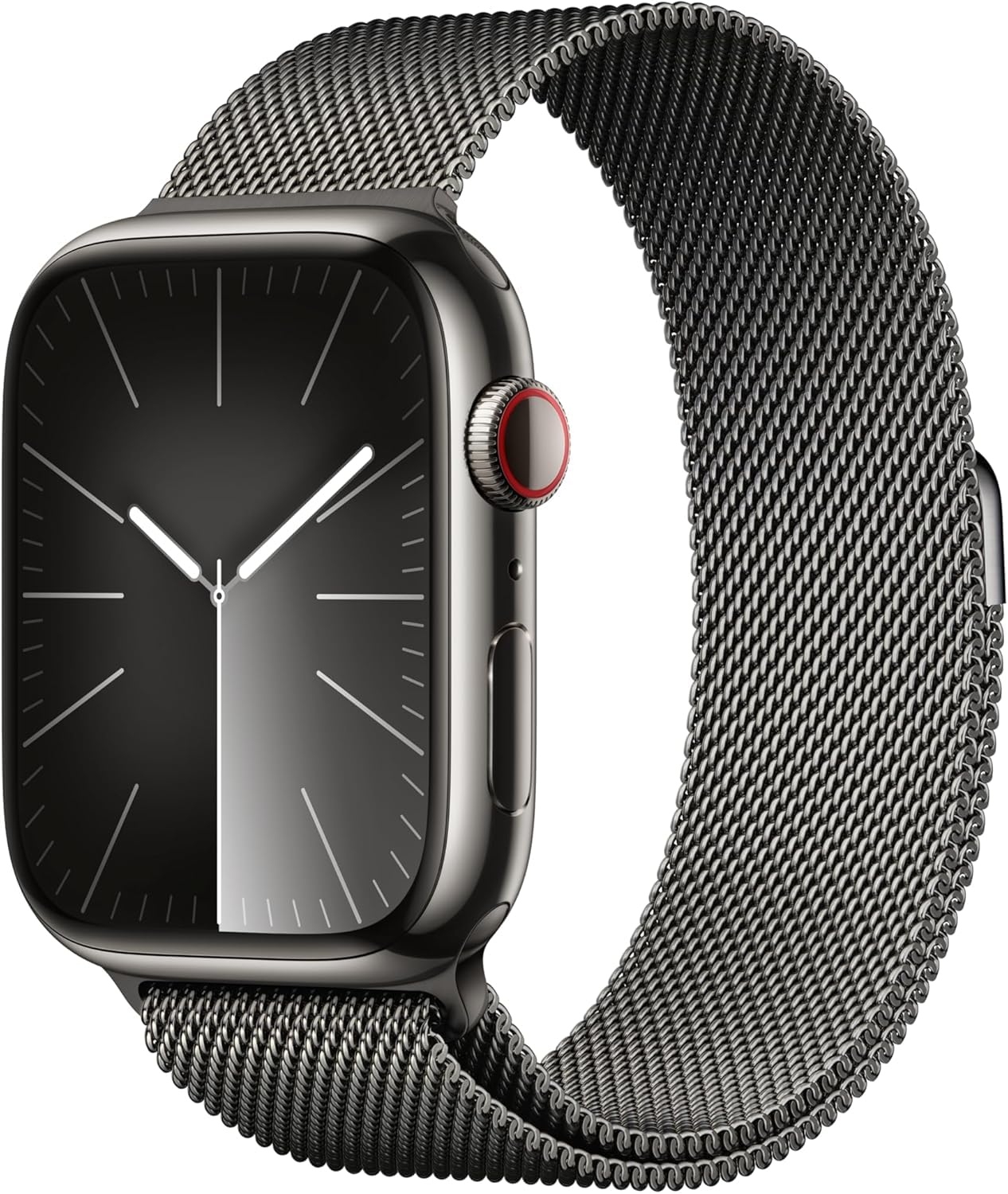
For iPhone owners, the one that turns temperature tracking into a full health dashboard.
Cellular connectivity means you can text, call, and stream music without the iPhone anywhere nearby — handy during a run or a day off the grid. The S9 chip drives an Always-On Retina display, and Double Tap lets you interact without touching the screen. Fall Detection, Crash Detection, and Emergency SOS cover the safety angle. The temperature sensor feeds into overall wellbeing and cycle tracking, with the readings plotted alongside ECG, irregular-rhythm notifications, and full sleep-stage data (REM, Core, and Deep).
The stainless steel case pairs with a graphite Milanese Loop band and sits on a sapphire crystal face — scratch resistance that holds over years of wear. The watch is IP6X dust resistant and swimproof with 50m water resistance. It requires an iPhone XS or later with the latest iOS version, so there is no cross-platform flexibility here.
What people notice first is how quickly it takes over daily life. Cellular, the steel case, and Double Tap come up as the features owners care about most, and the fitness tracking for walks and bike rides quietly earns its keep. The honest deal-breakers to plan for: the cellular service adds a monthly line charge, and the box does not include the USB-C power adapter, so you’ll need to buy one separately if you don’t already own one. Learning the app layout takes a session or two, but a full charge from near-empty takes under an hour in regular use.
Why it fits the shortlist: the stainless steel finish and sapphire crystal age well, and the temperature reading plugs into a wider picture of sleep, cycle, and heart rhythm without needing a third-party app.
The bill beyond the box: cellular service is a monthly cost, and the missing power adapter is another small add-on.
Perfect match for: iPhone owners who want cellular freedom, a sapphire crystal face, and temperature tracking woven into a complete health dashboard.
Not the move if: you carry Android — the watch needs an iPhone XS or later.
8. Fitbit Sense Smartwatch

The budget entry that still packs ECG, skin temperature, and SpO2 into one low-cost package.
For the outlay here you get a serious sensor list: ECG, stress sensing, a skin temperature sensor, SpO2 oxygen tracking via IR sensors, and multi-path optical heart rate. Built-in GPS plus GLONASS handles route tracking, and a speaker and microphone support Bluetooth call and text notifications, with quick replies and voice replies sent right from the wrist. It is water resistant to 50m and rated for 6+ days of battery.
Setup is where the Fitbit earns the warmth it gets. The watch guides you through pairing with minimal steps, and the on-watch fitness tracking and messaging are simple enough that non-technical buyers get up to speed fast. Sleep and heart-rate monitoring are the health features that resonate most with owners. The band material is soft enough to wear overnight without irritation. It runs on both iOS 12.2 or higher and Android 7.0 or higher. A 90-day trial of Fitbit Premium is included.
Where this watch demands a clear-eyed look: some units stop turning on a few months in, and the warranty story gets tangled between Fitbit, Google, and the retailer. Battery life swings significantly with notification volume and activity level — heavy usage can drop it fast. The stress monitoring, skin temperature, and SpO2 sensors all drain power when active, so leaving all three switched on cuts the 6+ day estimate down. Sleep data can also arrive on the watch with a delay. Read the returns policy carefully before checkout; the low up-front cost is real, but long-term durability is the wager.
Best if: you want ECG, SpO2, and skin temperature on a tight budget and you can live with a few minutes of daily charging on heavy-use days.
Reconsider if: you need multi-year durability — the value here is in the feature set, not long-haul reliability.
Buy it when: the budget is tight but the sensor list matters — ECG, SpO2, and skin temperature are all here.
Look past it when: you need a watch that runs five years without a service call.
9. Garmin Venu 4 45mm Health and Fitness GPS Smartwatch, AMOLED
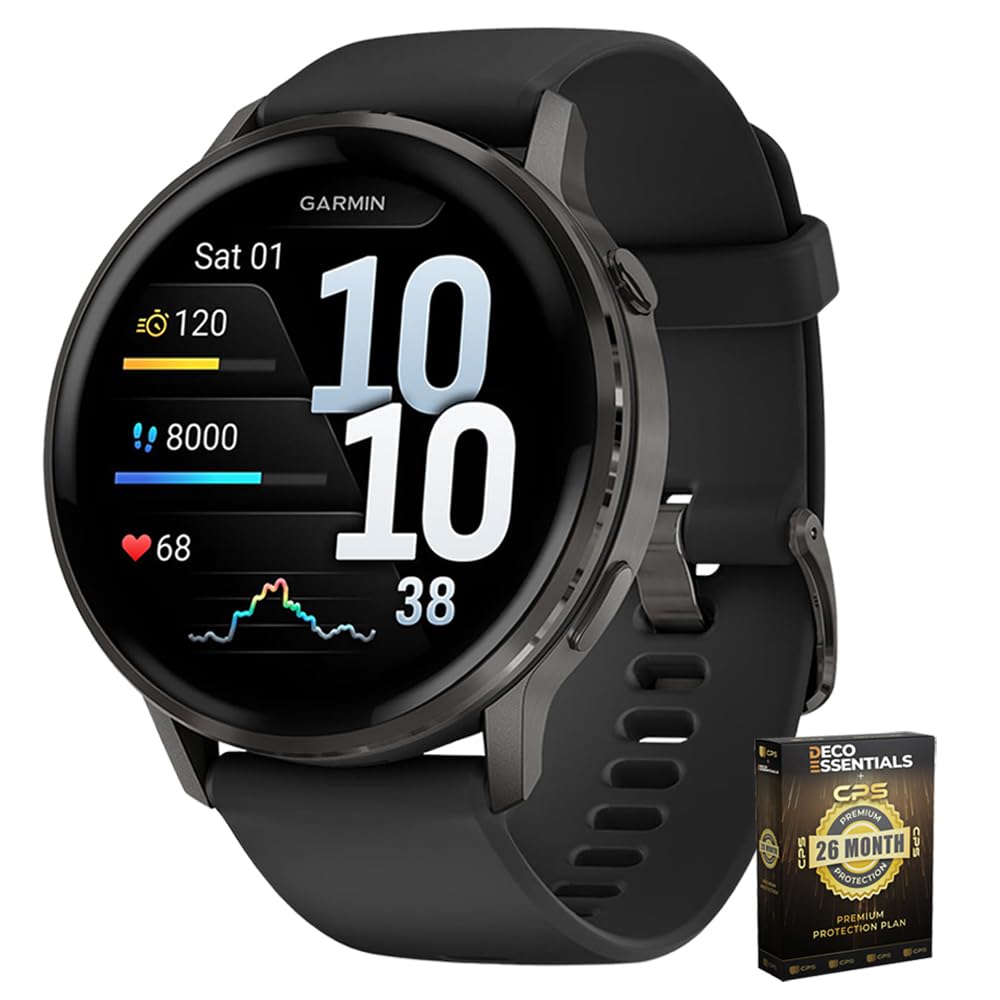
The everyday Garmin that reads temperature, sleeps the night through, and comes with a service plan.
Skin temperature is one of the recovery signals this watch tracks alongside 24/7 heart rate, Pulse Ox, HRV status, stress, and Garmin’s Body Battery energy gauge. The sleep side is deeper than most: advanced sleep tracking, personalized coaching, sleep alignment, and a look at how lifestyle factors affect your stress and sleep quality. The 1.4″ AMOLED display, 5 ATM rating, and 45mm metal case keep it wearable daily, and the battery is rated at up to 12 days in smartwatch mode, or multiple days with always-on display on.
Training support runs to 80+ built-in GPS and indoor apps, with adaptive Garmin Coach plans, recovery tracking, and wrist-based running power and dynamics. Smart features include call, text, and app notifications, music streaming, Garmin Pay, Maps navigation, and on-wrist photo viewing on Android. A built-in LED flashlight, incident detection, live location sharing, and emergency alerts round out the safety side. Caffeine and alcohol logging plus lifestyle impact reports let you see what is nudging your recovery. The bundle adds a 26-month extended service protection plan on top of Garmin’s limited warranty.
The data here is thin — only a handful of ratings so far, and the picture is split. Some units arrive and run clean; others shut down randomly during runs at full charge, and a few of those owners have left disappointed. Before you commit, check the return window and the protection plan terms. The battery capacity figure on the spec sheet is 300mAh, so the 12-day rating depends on how aggressively you use the always-on display.
Makes sense if: you want a big AMOLED, skin temperature, 80+ sport apps, and the safety of a bundled 26-month service plan.
Worth waiting on: if you need a proven reliability record — only a handful of ratings exist so far, and the early reports are mixed.
Know the Specs
Skin temperature sensor
This reads the surface temperature of your skin, not your core body temperature. Because it is measured at the wrist, it works best overnight when the watch sits undisturbed and the reading is compared to your own baseline over days. A single reading means little; a pattern across a week is where the value lives. None of the watches here are medical thermometers — Garmin, Withings, and the others all present temperature as a trend rather than a diagnosis.
Battery life in smartwatch mode
Every watch here lists two battery numbers: one for smartwatch mode and one for GPS mode. The smartwatch figure is the one that governs your charging habit, because it covers sensor tracking, notifications, and always-on display. GPS mode drains the cell far faster and should be used for outdoor workouts, not as your everyday benchmark. A rating of 16 days can drop to 12 or 14 once you put an always-on display and overnight SpO2 on the list.
mAh and battery capacity
mAh stands for milliamp-hours and is the standard unit for small-battery capacity. A 500mAh cell holds more charge than a 300mAh cell, but the actual running time depends on the software and the screen brightness. That is why the Amazfit Falcon at 500mAh rates 14 days while the Garmin fēnix 8 at 300mAh rates 16 — the efficiency of the software matters as much as the raw capacity number.
Water resistance ratings
5ATM means the watch can be immersed in water to 50 meters of pressure — enough for swimming and showering. IP68 is a dust and water rating that covers 50m of immersion in most listings. A 40-meter dive rating on the Garmin fēnix 8 supports scuba and apnea diving activities. None of these ratings mean the watch will survive being left in a hot tub for hours, so treat them as a ceiling for use, not casual encouragement to push it.
Common Questions
How accurate is a smartwatch skin temperature sensor compared to a thermometer?
Do I have to wear the watch overnight for temperature tracking to work?
Will a Garmin watch work with an iPhone?
Why does the Samsung Galaxy Watch 8 list no warranty?
What does “hybrid smartwatch” mean, and does the Withings still track temperature?
How much battery should I expect in real use versus the advertised figure?
Does 5ATM water resistance mean I can swim with the watch on?
Can I use a smartwatch with a temperature sensor without a smartphone?
Is a lightweight or heavier watch better for overnight temperature readings?
Do I need a subscription to see my temperature data?
The Bottom Line
For most buyers, the smartwatch with temperature sensor winner is the Garmin fēnix 8 Sapphire Titanium. It is the only pick that pairs genuine skin temperature tracking with 16-day battery life, a sapphire-and-titanium build, multi-band GPS, and a 40-meter dive rating — a package that stays on your wrist through a week of real use. If you want sapphire and titanium for less, the Amazfit Falcon delivers a 500mAh battery and the same premium materials. And for buyers who want a month between charges without giving up temperature tracking, the Withings ScanWatch Nova is the one to reach for.
The nudge here is simple: every watch on this list reads skin temperature, but only a handful make it through the night without a charging cable nearby. Decide first how often you are willing to plug in, then pick the watch whose battery and phone platform match that answer. That one choice eliminates half the field before you ever read a spec sheet.
How we choose
We do not accept paid placement. Every pick is matched to a real buyer and a real use-case; we do not hands-on test units.
Sources
Specifications: manufacturer listings and product documentation. Review insights: verified customer reviews, as of October 2026. Pricing: not shown on this page (it changes often); check the current price via the retailer link.
As an Amazon Associate, Aappliancez earns from qualifying purchases. This does not affect which products we feature.