Disclosure: Some links in this post are affiliate links. As an Amazon Associate I earn from qualifying purchases, at no extra cost to you. Learn more
Specs are compiled from manufacturer listings and verified buyer reviews and can change over time — please confirm the key details on the product page before buying.
Blisters come from one thing: a shoe that rubs the same spot on your foot, over and over, until the skin gives up. So the fix is not extra socks or another layer of tape. The fix is a shoe with a wide toe box, a firm heel counter that locks the heel down, and an upper that does not press on bony spots. Every pick below was chosen for how it treats friction, not how it looks on a shelf, and the ASICS Gel-Excite 11 is the one to beat for most people — a genuine crowd favorite at 4.5+ stars across 1,600+ ratings.
This guide is built by comparing the manufacturers’ published specifications and the patterns across verified customer reviews, so you get each pick’s real strengths and trade-offs instead of marketing spin.
A roomy toe box matters more than cushioning here: crowded toes rub against the shoe wall and each other, and that friction is where front-of-foot blisters start. From the slip-on barefoot styles to the sturdy walking shoes, this breakdown of the best shoes for blisters focuses on fit first, then everything else.
Top Picks
How To Choose The Best Shoes for Blisters
Most people blame their socks when a blister appears. In reality, the shoe is usually trapping your foot in a position where one spot gets rubbed raw — a pinched toe, a heel that lifts, or an upper that presses hard against a bony part of your foot. Choosing well means checking toe box width and heel lock first, then cushioning.
Start with the toe box, always
The toe box is the front compartment where your toes sit. A wide one lets your toes spread flat instead of stacking on top of each other. When toes are crowded, they rub against the shoe wall and each other, and that is where a lot of front-of-foot blisters begin. Look for a shoe that describes a wide or roomy toe box on the listing, and read whether owners with wide feet say it truly fits.
Then check the heel
Heel blisters are the other big one, and they come from vertical sliding. A shoe with a firm heel counter — the stiff cup that wraps the back of your heel — and a snug top eyelet keeps your foot from moving up and down with each step. Lace-locking the top eyelet is a simple trick, but the shoe has to offer a decent heel cup to begin with.
Think about what goes inside
If you wear orthotics or arch-support inserts, the shoe has to make room for them. Some picks here come with a removable factory insole you can swap out; others expect you to use the stock one. If you need extra volume for thick socks or swelling feet, a wide width in a men’s shoe can sometimes fit a woman better than the women’s version — several owners do exactly that.
Side-by-Side Comparison
| Model | Best For | Design | Cushioning | Toe Box | Amazon |
|---|---|---|---|---|---|
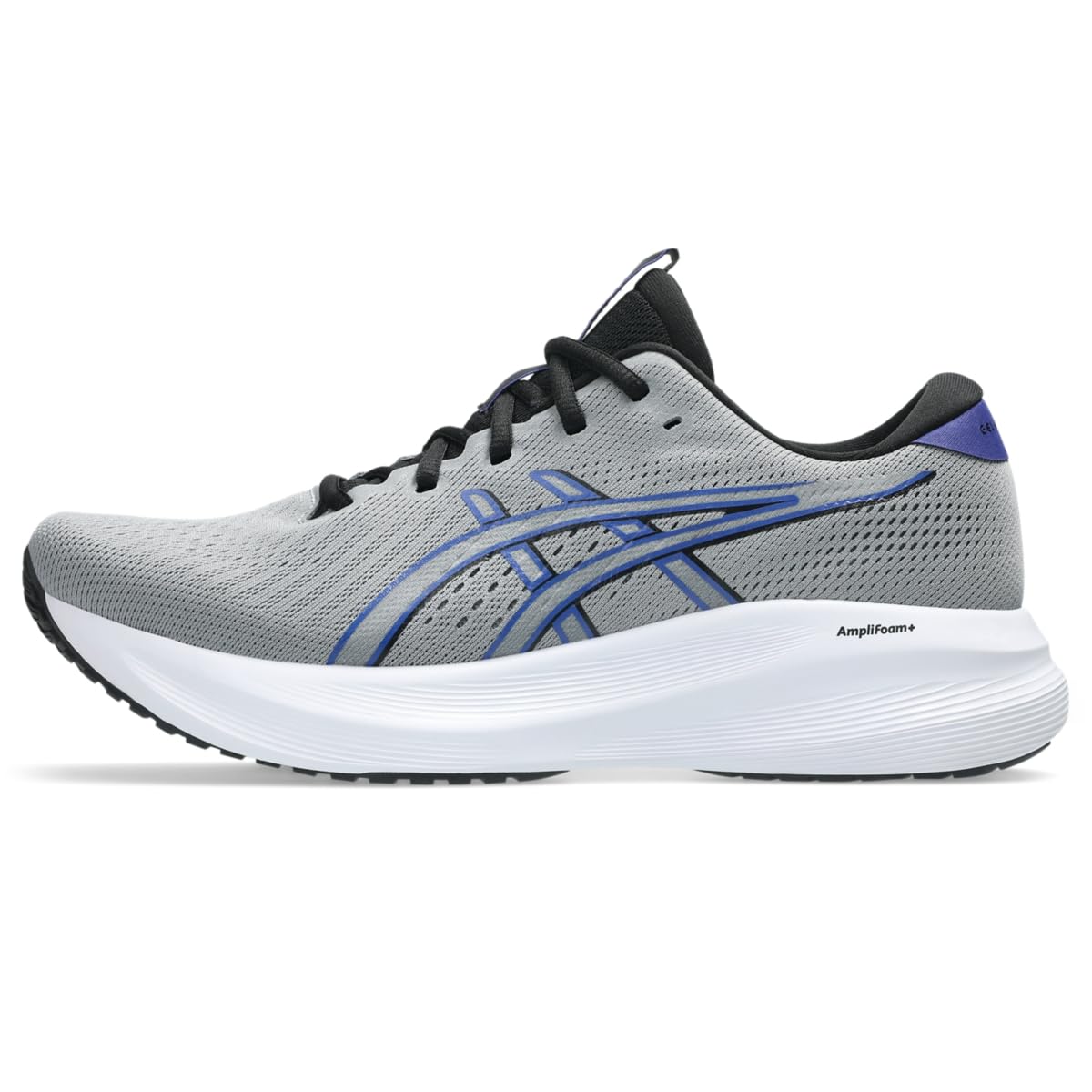
| ASICS Gel-Excite 11★ Best Overall | Everyday running and walking | Lace-up, engineered mesh upper | FF BLAST PLUS with PureGEL | Round toe, wide-foot friendly | Amazon |
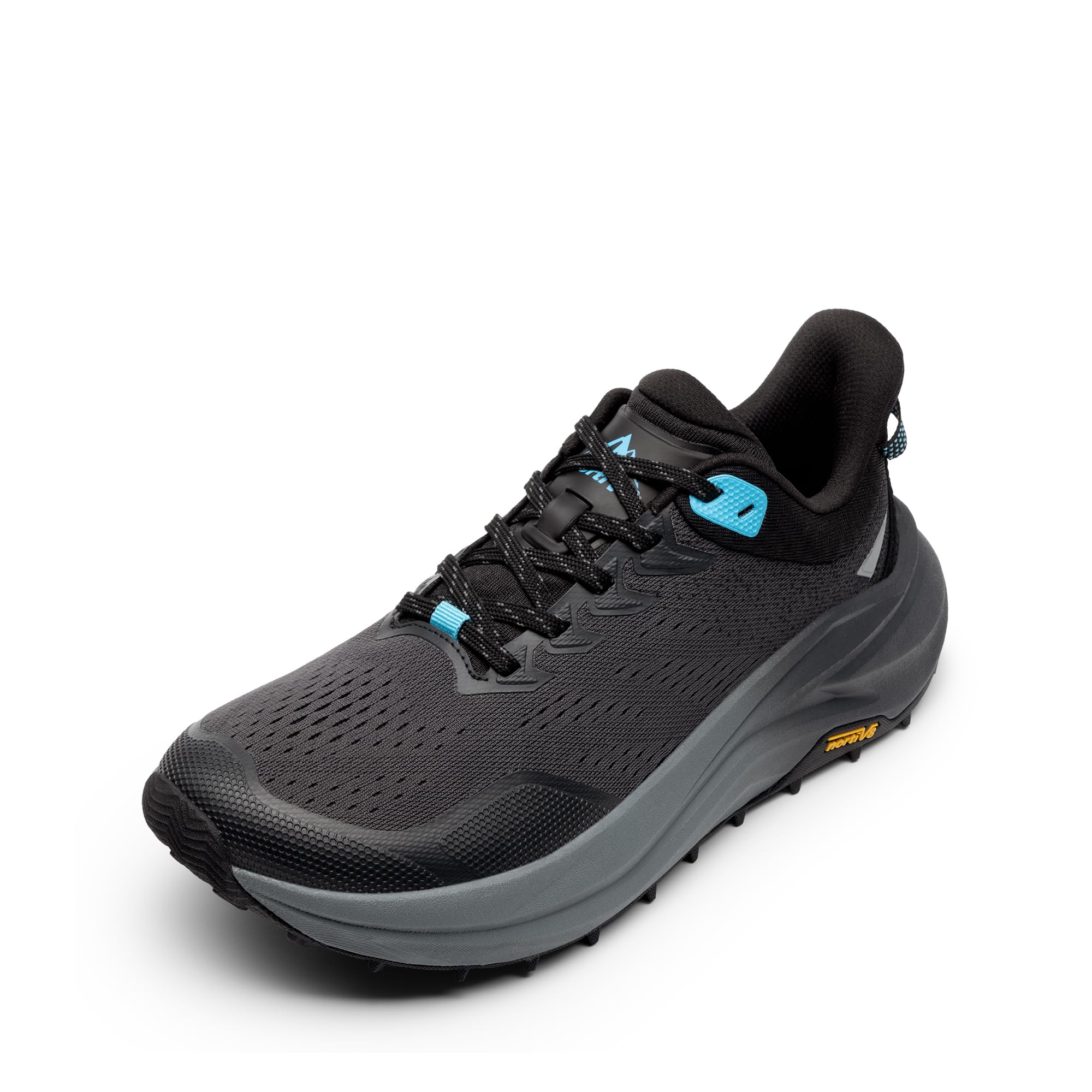
| NORTIV 8 Trail RunnerTrail Ready | Trails and gravel walking | Lace-up trail shoe | Firm midsole, welded toe bumper | Wide toe box | Amazon |
| Hike Footwear HF Stride | All-day barefoot comfort | Hands-off slip-on | Ultra-flexible thin sole | Wide toe box, zero-drop | Amazon |
| FitVille Wide Slip-On | Wide feet, easy on and off | Slip-on hiking sneaker | Supportive arch, cushioned | X-wide toe room | Amazon |
| Columbia Vertisol Trail | Trail and daily wear | Lace-up trail shoe | Engineered underfoot system | Roomy toe box | Amazon |
| ANTA PG7 | Long runs and standing shifts | Lace-up running shoe | Adaptive PG7 midsole foam | Roomy toe box | Amazon |
| Brooks Addiction Walker Suede | Long days on hard concrete | Suede lace-up walker | Firm, supportive arch | Wide 4E option available | Amazon |
Detailed Reviews
1. ASICS Men’s Gel-Excite 11 Running Shoes
Our pick — 4.5+★ from 1,500+ verified ratings; the strongest balance of quality and price.
The cushioned all-rounder that lets your foot settle in instead of sliding around.
The reason this sits at the top for blister-prone feet is simple: it takes the sting out of the ground without letting your foot float. A layer of FF BLAST PLUS foam sits under your foot, and the brand’s PureGEL insert adds a softer feel at the heel — ASICS describes it as roughly 65% softer than its standard GEL. That softer landing is what keeps a hard heel strike from jamming your foot forward into the front of the shoe, which is a common way a toe blister starts.
What wins people over is how the whole package holds together over time. Owners praise the build quality above all else, with comfort close behind, and the engineered mesh upper — a woven fabric that breathes — keeps the shoe from getting swampy on longer walks. It is genuinely flexible too, not a stiff brick. One long-time ASICS wearer on the review pages sums it up plainly: “Replaced worn-out 4-year-old ASICS Gel.” That kind of repeat loyalty tells you the shoe holds its shape rather than collapsing into a friction trap.
One honest catch: sizing runs both ways here. Plenty of buyers report it fits true to size, while others find it runs small — and small is exactly what you do not want when the goal is fewer blisters. The safe move is to size up half a step if you are between sizes or plan to wear thicker socks.
What earns it the crown
- FF BLAST PLUS foam with a PureGEL heel insert softens each landing so your foot stays planted.
- Round toe and a wide-foot-friendly fit give your toes room instead of crowding them.
- Breathable engineered mesh upper helps keep feet cool and dry on long days.
- Holds up over years — buyers routinely replace a worn pair with the same model.
Where it asks you to be careful
- Sizing is genuinely split — some find it true to size, others say it runs small.
- Lightweight flexible mesh can stretch over time, so a thicker sock may be needed.
Grab it for: runners and walkers who want cushion plus room, and anyone who wants one shoe for the road, the treadmill and the commute.
Size up if: you are between sizes or want room for extra socks — a pinched fit is the fastest route back to blisters.
2. NORTIV 8 Men’s Trail Running Shoes Wide Toe Box
A wide, foot-shaped toe box that lets your toes splay on the trail without pinching.
If your blisters live on the outside of your big toe or across the top of your foot, the culprit is usually a narrow front compartment. This NORTIV 8 gives your toes a wide, roomy box with a 5mm drop — that is the height difference between heel and toe, and a smaller number like this keeps your foot closer to level. A welded toe bumper guards the front from rocks, and reinforced eyelets with a good heel lock hold the whole foot in place. It fits your foot’s natural shape instead of forcing it into a taper.
The trail crowd has put real miles on this one. The stoutness is the thing buyers trust most, with fit coming in a close second. One hiking review reports the shoe “Held up great past 300 technical trail miles” — that is after months of rock, root and gravel. Another experienced hiker calls out the wide foot box as comparable to premium wide-toe brands at a fraction of the cost, and notes there was no break-in period at all. No break-in means less of the chafing window that plagues stiff, brand-new shoes.
The trade-off is real: the collar around the ankle is high and fairly stiff. One honest hiker found it rubbed against the ankle bone and created blister risk. If you have low ankle bones or are sensitive to collar pressure, lace the top eyelet a little looser or slip a slightly thicker sock in on the first few outings. It is not a deal-breaker, but worth knowing before your first long walk.
The foot-shaped win: room for toes to spread plus a firm midsole and welded toe guard means less side-to-side rubbing on uneven ground, and the price lands in the approachable range for a real trail shoe.
Mind the collar: the stiff, high-cut ankle collar is the one spot some buyers find press against the ankle bone — break them in gently or size your socks up.
Made for: hikers and trail walkers with wide feet or bunions who blister from narrow shoes and want cushioning without a mushy feel.
Think twice if: you need half sizes above 12 or want a shoe for the gym — the tread is built for dirt, not lateral lifting.
3. Hike Footwear HF Stride Barefoot Slip On Shoes
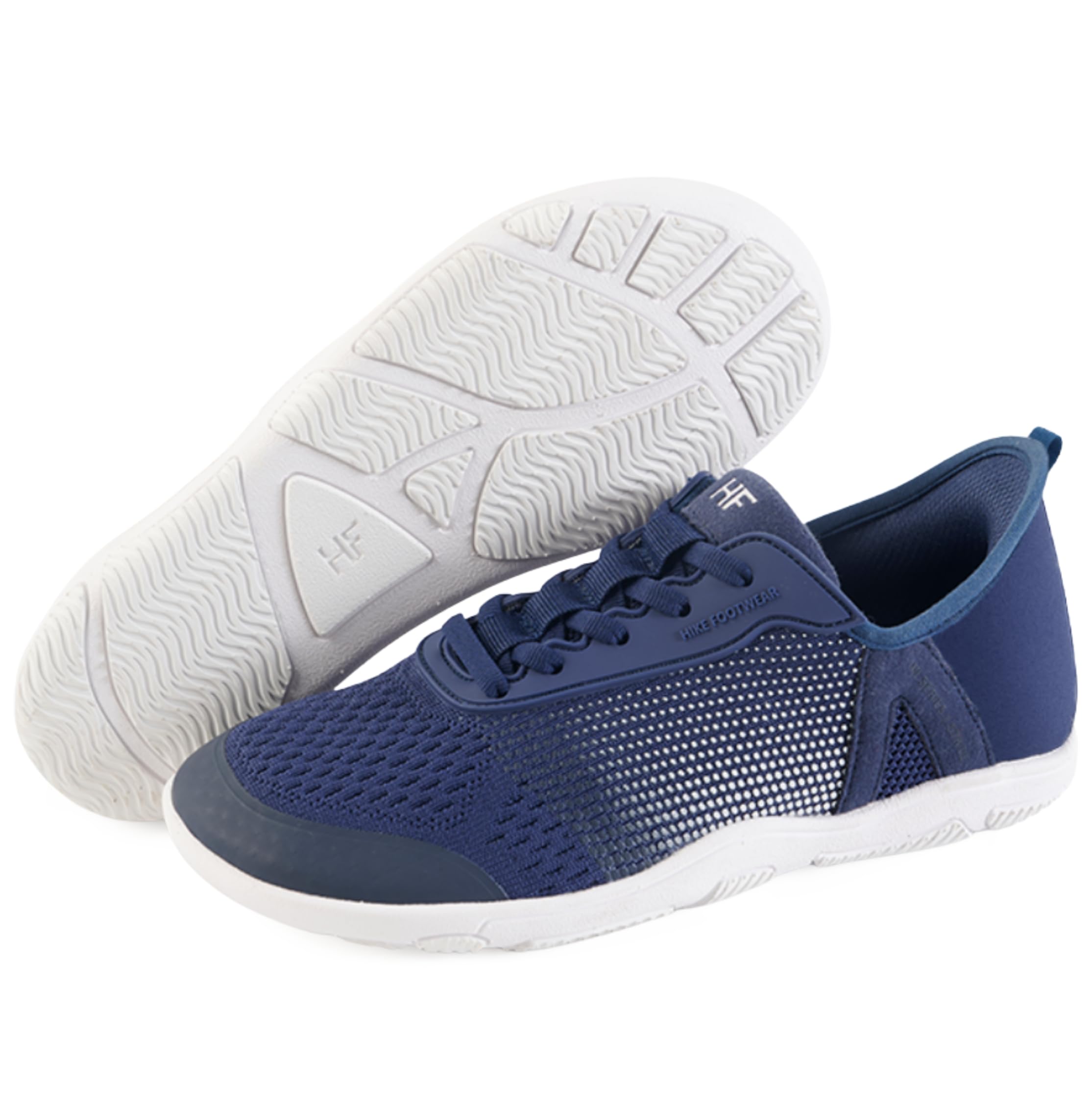
Slip them on hands-free and let your toes spread flat all day.
Barefoot shoes flip the usual logic. Instead of a thick cushion that lets your foot roll and shift, you get an ultra-flexible thin sole that lets your foot move the way it was designed to — and a wide toe box that gives every toe its own space. There is no heel drop here, so your foot sits level, and the lightweight breathable upper keeps air moving. For someone whose blisters come from cramped toes and a shoe that fights their foot, that combination of room and flexibility is the point.
Comfort is the runaway winner with this crowd, and it is not hard to see why: the shoe is light enough that you barely notice it. Among the buyers who rate it highly is a “73-year-old with bunion issues reports wide toe box genuinely accommodates toes without pinching; sized up per advice with perfect fit.” Another walker with painful neuropathy found other brands left feet throbbing after errands but these did not. The hands-off slip-on entry is a real relief too, especially if bending down to tie laces is hard on your back or knees.
The honest limit is around durability and the size-up advice. A few buyers have found manufacturing issues — a crooked tongue or an insole that slips out when you take the shoe off — and the thin sole runs cold in cold weather. Sizing up is the common fix, and the shoe wants a break-in period for anyone used to cushioned footwear. If you want a firm, structured walker, this is not it.
The flexible fit: a wide, zero-drop toe box and thin sole let your toes spread flat and your foot move naturally, which is exactly the opposite of the cramped, rigid shoes that start most toe blisters.
The honest catch: build quality is not perfect — a crooked tongue or a slipping insole can show up — and the minimalist sole does not insulate against cold ground well.
Ideal for: anyone with bunions, wide toes, or sore feet who wants an easy-on shoe with room to spread, and people who cannot bend to tie laces.
Look elsewhere if: you need cushioned support for long runs or cold-weather insulation — this is a ground-feel shoe, not a padded trainer.
4. FitVille Men’s Wide Slip-On Hiking Shoes
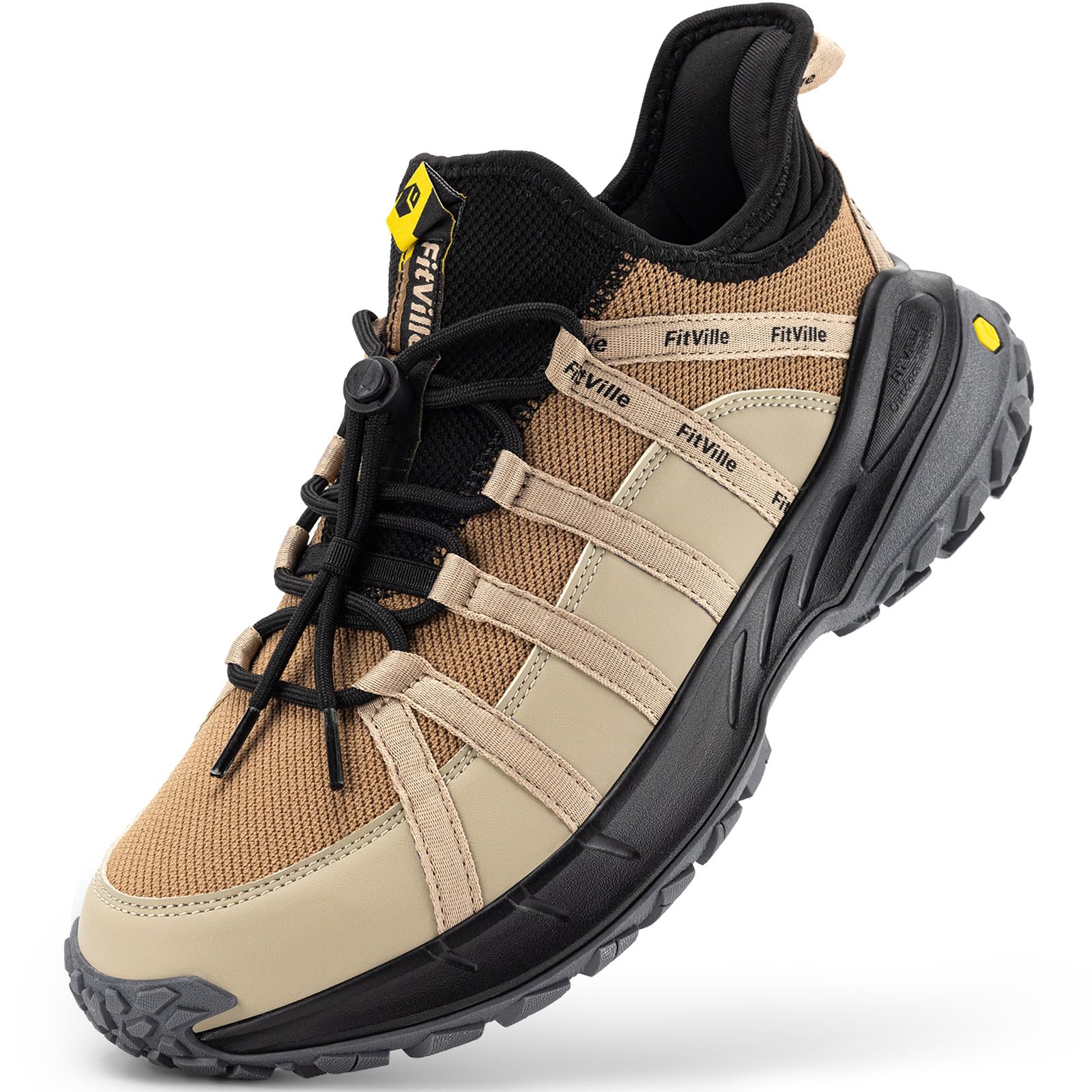
A slip-on that treats wide feet like the whole point, not an afterthought.
This is the shoe to look at if your toes have been squeezed for years. FitVille builds it in an X-wide width, and the toe box is generous enough that your toes are not pressed against the front or side walls. The slip-on cut means no lacing struggle and no lace pressure across the top of your foot — an area that takes a lot of friction in a tight lace-up. Support comes from a cushioned midsole with an arch-supporting base, and the breathable upper keeps it from feeling stuffy.
Build quality and comfort lead here, and the slip-on convenience earns its own steady share of praise. One 5-star reviewer wrote simply: “My first slip ons. They work well and are quick and easy to put on and take off. Also very comfortable.” A heavy walker in the review pages — 265 lb — found the shoe sturdy and secure and suited to power walking. And buyers with a history of toe pain from cramped shoes say they will not switch back.
The honest caution is sizing. This shoe runs small for many people — a common complaint — and the fit is a bit polarizing among wide-foot buyers. Order a half size up if you are uncertain, and pay attention to whether the described width matches the one you are choosing. A shoe that runs small squeezes the toes and heel, and that is the fastest way to turn a good walker into a rubbing one.
The wide-foot relief: an X-wide toe box and slip-on entry give your toes real room and remove lace pressure, two of the most common blister triggers.
Get the size right: the fit runs small and the width can be hit-or-miss, so sizing up is the smart move when ordering blind.
The right call for: wide-footed walkers who want an easy-on hiking sneaker for daily miles and do not want to fight laces each morning.
Skip the guesswork: confirm your width and consider a half size up — the wrong size is the one thing that turns a comfortable shoe into a rubbing one.
5. Columbia Women’s Vertisol Trail
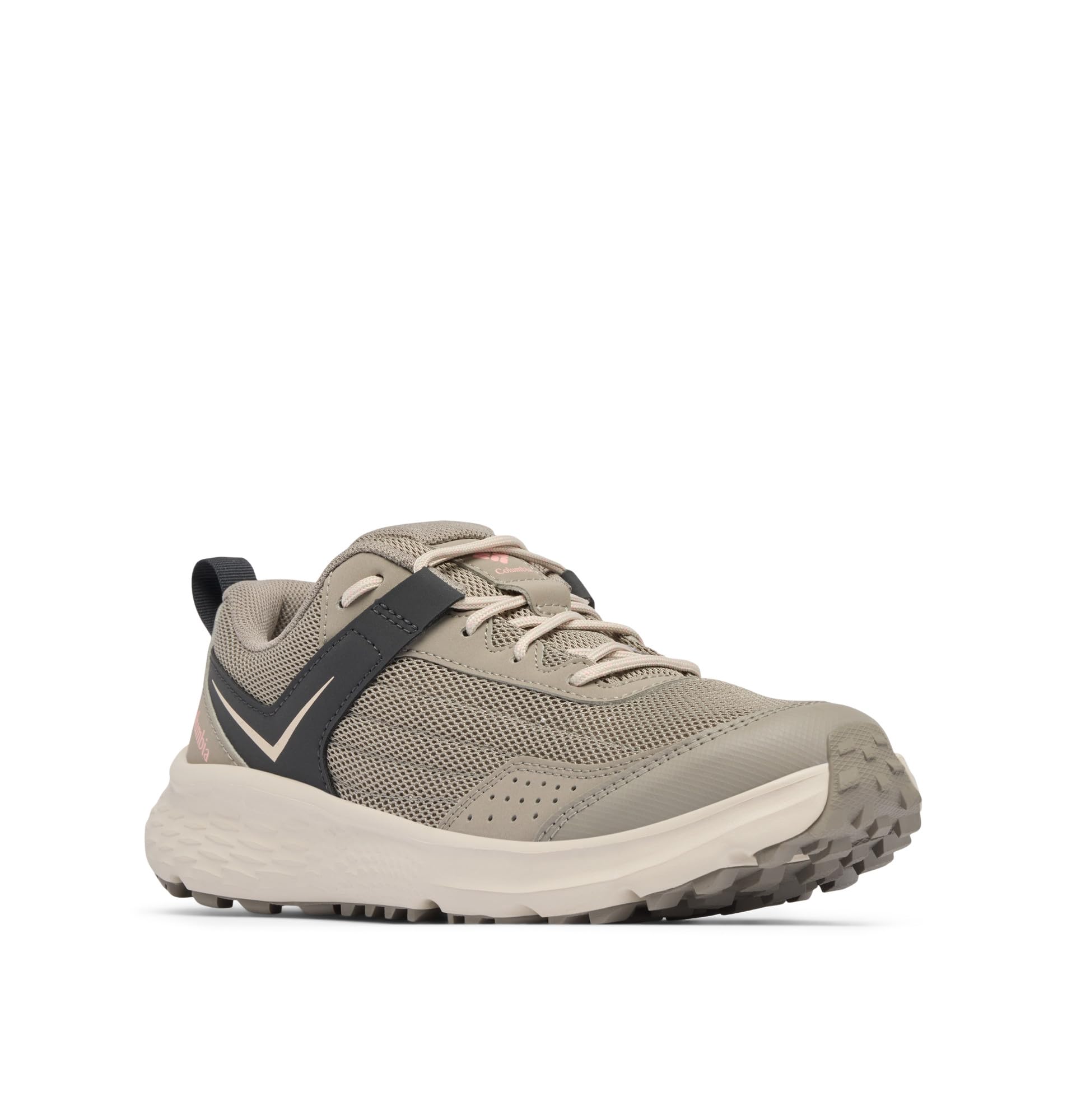
A trail shoe that grips on wet rock and stays comfortable from the first step.
For women heading onto uneven ground, this is the pick that fights both blisters and slips. The traction rubber sole grabs on slick surfaces, and an engineered underfoot system delivers cushioning, stability and rebound together. A foot that stays put instead of sliding sideways inside the shoe gets less of the friction that raises blisters. The upper keeps things breathable for all-day wear, and a roomy toe box gives your toes somewhere to go.
Quality is what buyers talk about most, and the fit gets strong reviews too — the regular width comfortably accommodates wide feet. Women with weak ankles report the arch support keeps their feet steady, and owners praise how the shoe holds up over a season of outdoor work. The standout detail shared by one hiker is that she wore them up Machu Picchu and, through heavy rain, her feet stayed dry and she did not slip once. Grip that holds on steep, wet steps means you stop bracing your toes against the front of the shoe, which is where that friction blister comes from.
The one thing to weigh is that the shoe is built for the trail, not the indoor gym or a dressy occasion. It is lightweight and needs no break-in, but if you want a shoe for a night out this is not the look. For hiking and walking, though, it earns its keep.
The sure-footed comfort: a grippy rubber sole, stable underfoot system and roomy toe box mean less slipping and less inside-the-shoe sliding, which is exactly how you cut down on friction blisters.
Know its lane: it is a trail and walking shoe — not a fashion sneaker or a gym shoe — so it earns its place outdoors rather than everywhere.
Best for: women on trails, wet cobblestones or slippery slopes who want a secure step and roomy front-of-foot fit.
Consider another pick if: you mostly walk on flat pavement and want one shoe for both work and play — this one thrives on uneven ground.
6. ANTA Men’s PG7 Cushioning Running Shoe

Soft, springy foam that absorbs long days on your feet — with a roomy toe box to match.
This is a plush, energy-returning runner built for volume: 5K to 11K easy runs, half-marathon training, and the standing shifts at work that keep you on your feet all day. The PG7 midsole uses a molecular foam that firms up under pressure and springs back when your foot lifts. There is a reflective strip for low-light visibility, and the outsole is built to resist abrasion. Comfort and springiness are the big selling points, and that forgiving feel is what keeps the pressure off the blister-prone parts of your feet.
Comfort is the thing buyers rave about, with value for money right behind it. A walker who put in 60+ miles of European cobblestones reported no sore feet at all. Joggers running 25 to 30 miles a week for six months describe the cushion as still supportive, the outsole intact. And someone on their feet for 12-hour shifts calls it the closest thing to far pricier max-cushion shoes they have found.
Here is the catch, and it is a real one: the stock insole is the weak link. A runner who logged thousands of miles in these found the original insole caused instability and pain until he swapped in a better aftermarket one, after which it became a favorite. The other quirk is that the high platform can make slow, careful walking feel a little forward-leaning. If you add a good insole, this shoe will treat you well.
The soft landing: the adaptive PG7 midsole soaks up impact with a roomy toe box on top, giving your feet a forgiving place to land through long days and long runs.
Budget for an insole: the factory insole is the weak point — swapping in a better one reportedly fixes most of the instability and makes this a favorite.
Try it if: you want max-cushion comfort for long runs or all-day standing and do not need a shoe that ranks above premium brands in outright build quality.
Plan on an upgrade: factor in a good aftermarket insole, and pair it with thicker socks if you are blister-prone in the beginning.
7. Brooks Men’s Addiction Walker Suede Walking Shoe
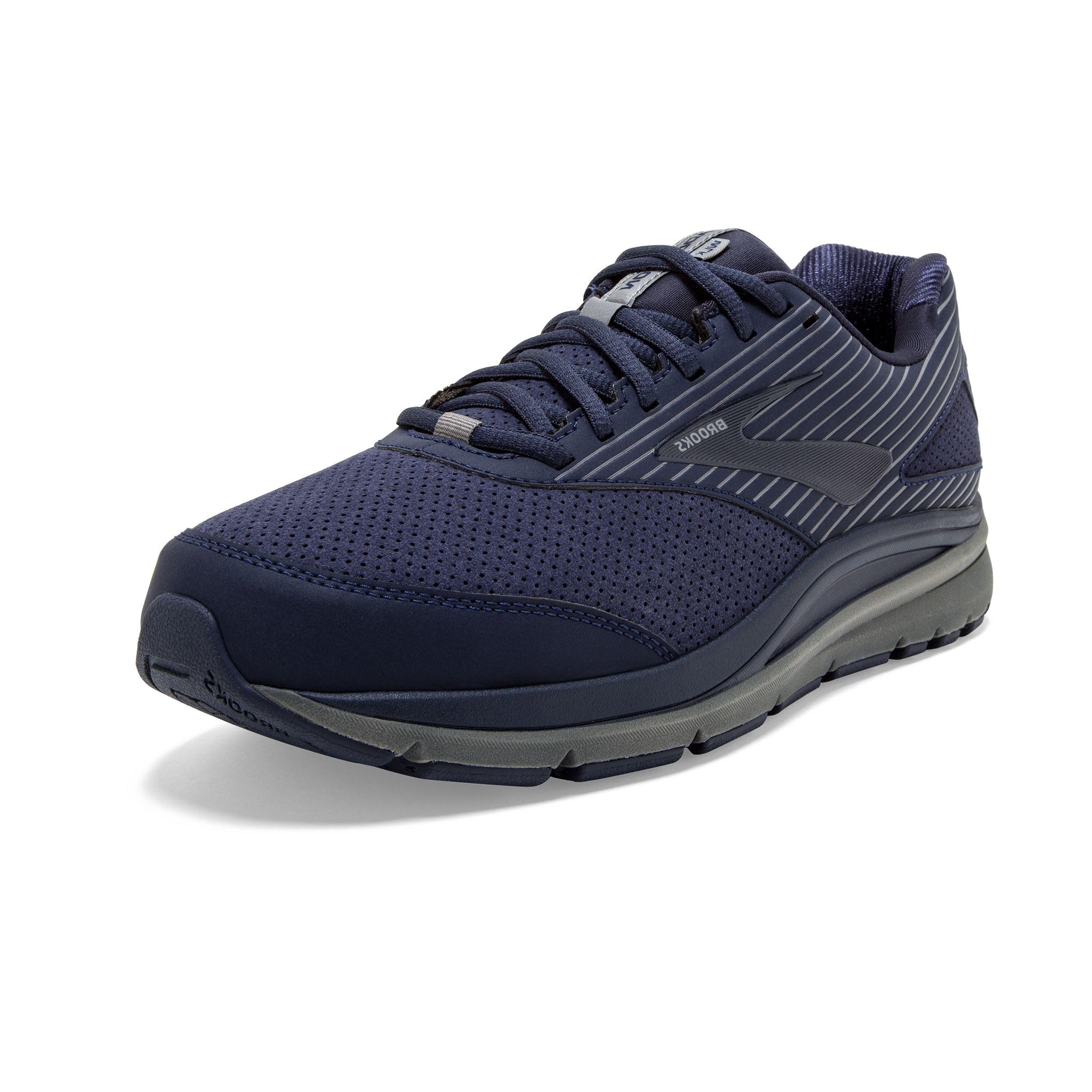
Built like a work boot for pavement — steady support and a wide 4E toe box.
This is the shoe for someone who spends hours on concrete and needs a firm, steady base underfoot. The suede upper gives it a clean, dress-it-up look, and the supportive arch keeps your ankles aligned while you walk. A firm arch and stable heel cut down on the rolling and sliding that lead to blisters on the soles and heels. Widths run up to 4E, so genuinely wide feet have a home here. It is the most premium pick of the group, and it treats your feet like all-day performance matters.
Comfort earns the most enthusiasm, with arch support coming in second. The loyal customers are people who walk long distances with foot issues and want one dependable shoe. One owner with a history of back surgeries, including an L2-S1 fusion, walked 6.27, 6.51 and 9.86 miles on NYC concrete and asphalt with zero blisters, hot spots or foot issues. Another replaced the stock liner with a custom orthotic and expects the shoe to reach 500+ miles before replacement. A statement like that tells you the support structure holds up.
Two things to weigh. The fit is genuinely mixed — some wearers find it perfect, while others find it too narrow — and a few report that the cushioning is on the firm side for very long walks. Sizing runs a touch inconsistent for some. If you invest in a wide width, this shoe rewards you with a stable, hardwearing base, but the wrong width will fight your foot.
The steady-base story: a suede upper, firm arch support and widths up to 4E make this the most supportive walker of the group for wide feet and long days on hard surfaces.
Width is the deciding factor: the fit is genuinely hit-or-miss, with some buyers finding it too narrow — get the width right and it holds up for 500+ miles.
Made for: people who walk miles on concrete and want the widest, firmest support possible, especially if you wear custom orthotics.
Skip if: you need plush cushioning for delicate, sensitive feet, or you are unsure about width — the wrong width is a real risk here.
Know the Specs
Toe box width
The toe box is the front compartment of the shoe where your toes sit. A wide one lets your toes spread flat the way they do when you stand barefoot. When toes are crowded into a narrow box, they rub against each other and the shoe wall with every step, and that is where front-of-foot blisters start. If you blister on your big toe, the tops of your toes, or the sides, a wide toe box is your first and biggest fix.
Heel drop and stack height
Heel drop is the height difference between the heel and the toe of the shoe, usually called out in millimeters. A smaller drop keeps your foot closer to level; a larger drop lifts the heel. Stack height is how much cushion sits under your foot. A lower drop with a roomy box can help people whose blisters come from their foot sliding forward. A higher stack feels softer underfoot, but it can make you feel like you are walking on a platform.
Heel lock and heel counter
A heel counter is the stiff cup at the back of the shoe that holds your heel in place. A firm counter plus a snug top eyelet stops your foot from sliding up and down inside the shoe with every step — the exact motion that wears a heel blister. When you try a shoe, see if the heel stays put as you lift your foot. If the heel lifts, the laces are likely too loose or the shoe is too wide.
Removable insoles
Some shoes come with a factory insole you can pull out; others want you to use the stock one. If you wear orthotics or arch-support inserts, you need room for them. A shoe with a removable insole lets you drop in your own, which can change both the cushioning and the fit. Buyers here swap insoles to fix comfort issues, so factor that in when you compare picks.
Common Questions
Will a wide toe box actually stop blisters?
Should I size up to prevent blisters?
Are slip-on shoes better for blisters than lace-ups?
Can I wear my own arch support inserts in these shoes?
What is heel drop, and does it affect blistering?
Are barefoot shoes harder to get used to?
How long should a walking or running shoe last before it needs replacing?
Do these shoes work for wide feet and bunions?
The Bottom Line
For most people, the winner among the best shoes for blisters is the ASICS Gel-Excite 11 — soft PureGEL cushioning and a wide-foot-friendly fit that lets your foot settle instead of sliding. If your blisters live on your toes and you want real room to spread, reach for the NORTIV 8; and if you need an easy-on barefoot shoe with a wide toe box for bunions, the Hike Footwear HF Stride is the one to try. The ASICS carries the highest-scoring spot of the group, which should give you confidence if you are ordering your first pair and want the safest bet.
How we choose
We do not accept paid placement. Every pick is matched to a real buyer and a real use-case; we do not hands-on test units.
Sources
Specifications: manufacturer listings and product documentation. Review insights: verified customer reviews, as of October 2026. Pricing: not shown on this page (it changes often); check the current price via the retailer link.
As an Amazon Associate, Aappliancez earns from qualifying purchases. This does not affect which products we feature.