Disclosure: Some links in this post are affiliate links. As an Amazon Associate I earn from qualifying purchases, at no extra cost to you. Learn more
Specs are compiled from manufacturer listings and verified buyer reviews and can change over time — please confirm the key details on the product page before buying.
Your high arch plus an inward roll is a specific problem, and the wrong shoe makes it worse, not better. You want a shoe with real arch support and a stability system that stops your foot from collapsing inward, without a slab of hard plastic under your instep. The nine picks below each pair arch support with a named stability system, listed with the spec that earns its place. The Brooks Adrenaline GTS 23 is the safest first buy for most people, and the crowd backs it — 4.5+ stars across 900+ ratings.
This guide is built by comparing the manufacturers’ published specifications and the patterns across verified customer reviews, so you get each pick’s real strengths and trade-offs instead of marketing spin.
Below you’ll find nine stability and cushioned trainers, sorted by what they actually protect against, plus a plain-English breakdown of pronation, arch support, and heel counters. Every pick here is a running shoe built for high arches and overpronation, matched to the foot it fits best.
Top Picks

How To Choose The Best Running Shoes for High Arches and Overpronation
A high arch is often a stiff arch. It doesn’t flatten and absorb shock the way a low arch does, so the impact travels up your leg — and when that stiff foot rolls inward at the end of each step, the whole chain gets pulled out of line. Stability shoes are built to catch that inward roll. The trick is finding one cushioned enough for a rigid arch without the harsh plastic post that used to define the category.
Guidance rails versus a firm medial post
Two systems dominate. Guidance rails are frames on the sides of the midsole that nudge your foot back to center as it loads, and they let the midsole stay soft underneath. A firmer medial post is a denser wedge of foam on the inner edge of the shoe that resists the inward roll directly. Rails feel smoother for most runners; a firmer post gives a more obvious correction. Both systems appear in the picks below.
Why the heel counter and heel drop matter
A rigid heel counter is the stiff cup at the back of the shoe that locks your heel down. When your heel slides, your whole stride wobbles, so a locked heel is doing half the stability work. Heel drop is the height difference between the heel and forefoot — a higher drop tends to feel easier on a tight, high arch, while a lower drop asks more of your calf and ankle.
Give the toe box room to work
A high-arch foot is often wider through the midfoot. A toe box that pinches crowds your toes together and can turn a good stability shoe into a blister machine. Some picks below are offered in wide fits, and some run generous from the start. If you wear custom orthotics, confirm the insole is removable before you buy.
How long should a pair last
Stability foams compress over time and lose their corrective edge, so replace on feel rather than tread. A pair used hard for daily running is typically retired well before the upper looks worn. Several picks here are also used for long work shifts and dog walks, so read each review’s honest note about how the outsole holds up before you assume one pair covers everything.
Side-by-Side Comparison
| Model | Best For | Stability System | Stated Weight | Toe Box Note | Amazon |
|---|---|---|---|---|---|
| Brooks Men’s Adrenaline GTS 23★ Best Overall | Everyday road miles | GuideRails | 2 pounds | Roomy, runs narrow for some | Amazon |
| Hoka Womens Arahi 8Best for Long Shifts | Long shifts on feet | H-Frame | 1.63 pounds | Roomy toe width | Amazon |
| Hoka Mens Arahi 8Best for Returning Runners | Returning runners | H-Frame | 2.19 pounds | Roomy, true to size 8 | Amazon |
| Saucony Men’s Guide 18 | Maximum cushioning | Center Path Technology | 1.87 pounds | Wide 4E available | Amazon |
| New Balance 880v15 | High arches specifically | Structured upper | 3 pounds | Reported wide | Amazon |
| ASICS Men’s GT-2000 14 | Value stability | 3D Guidance System | 1.44 pounds | Narrower than previous models | Amazon |
| ASICS Women’s GT-2000 14 | Speed walking | 3D Guidance System | 1.44 pounds | Wider toe box in wide fit | Amazon |
| New Balance Fresh Foam X Vongo V6 | Overpronators wanting cushion | Supportive medial zone | 2.1 pounds | Lots of toe box room | Amazon |
| Brooks Women’s Ariel GTS 23 | Overpronation plus low arch | GuideRails stability | 1.5 pounds | Wide-midfoot friendly | Amazon |
Detailed Reviews
1. Brooks Men’s Adrenaline GTS 23 Supportive Running Shoe
Our pick — 4.5+★ from 950+ verified ratings; the strongest balance of quality and price.
The daily trainer that steers a rolling ankle back to center without a stiff plastic post.
The Brooks Adrenaline GTS 23 is the shoe most overpronators should try first. Its GuideRails system is a pair of frames on the sides of the midsole — they catch your foot when it rolls inward and nudge it back to a straight path. Because the guidance sits on the edges rather than under your arch, the DNA Loft v3 foam underneath still feels soft. That combination is why quality draws the most praise of any trait on this shoe, with comfort close behind.
Build quality holds up under real abuse. One buyer reports using a pair for “500-600 miles with full support,” through Wisconsin blizzards and humid Caribbean hikes, on top of gym and daily work wear. The shoe weighs in at 2 pounds and comes in a Gore-Tex version that keeps rain out on wet trail days. Fit is the one wrinkle: the size runs true for many, but a share of buyers find it narrow even in men’s sizing, so a wide option is worth checking if your midfoot is broad.
Where the Adrenaline earns its top spot for high arches is the cushioning balance — plush enough to soften the road under a stiff arch, firm enough that you still feel the ground. Owners who log long days on their feet call it a dependable daily trainer, and the phrase that keeps coming up is simple: no aches, no pains. The segmented crash pad under the heel adds a forgiving landing on uneven ground too.
What lands well with owners
- GuideRails correct inward roll without a hard arch post
- DNA Loft v3 foam stays soft over long distances
- Gore-Tex build shrugs off rain and slush
- Sized for daily training at 2 pounds with a plush crash pad
What to weigh before buying
- Some buyers find it narrow even in men’s sizing
- Mesh upper runs drafty in cold weather
Start here if: you want a proven everyday stability trainer for high arches and a rolling stride, with rain-ready options in the lineup.
Think twice if: your foot is broad through the middle — size up in a wide width rather than assuming the standard fit will open up.
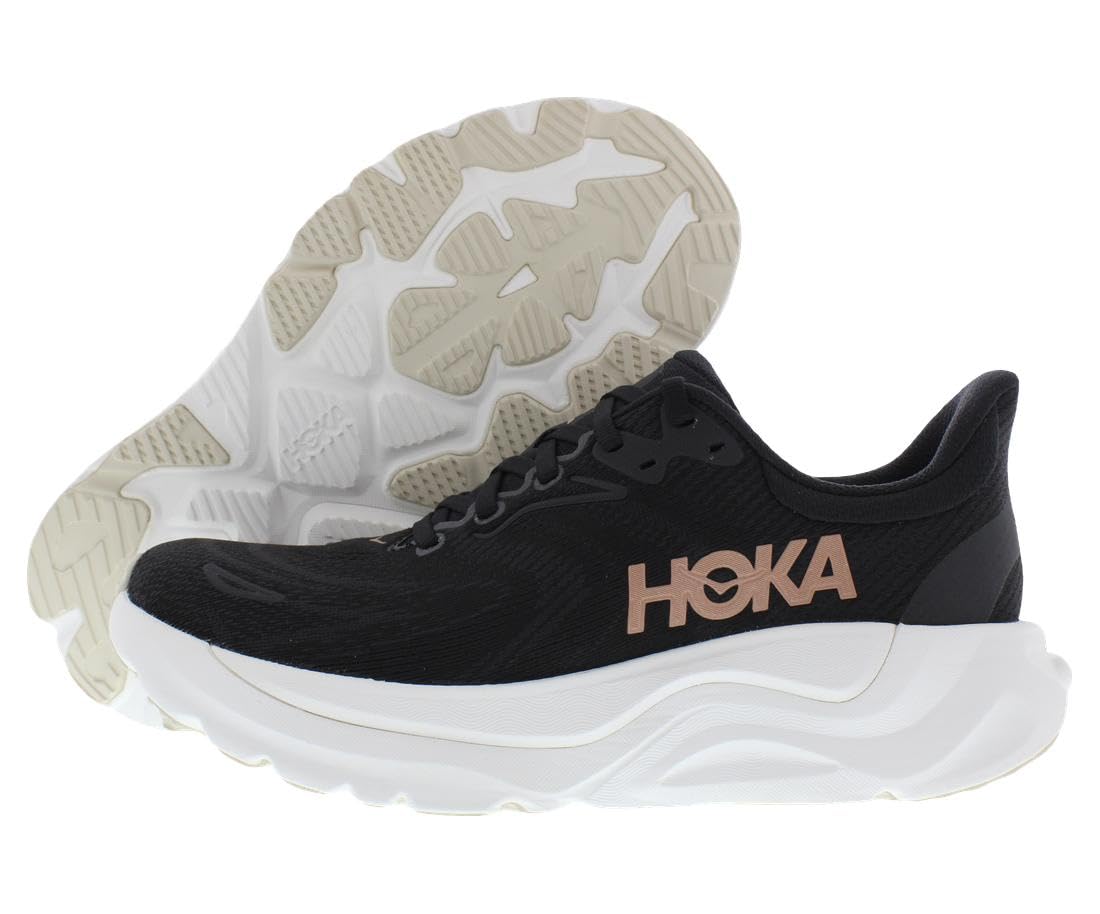
2. Hoka Womens Arahi 8
Light stability that keeps a tired foot upright all day, not just for the first mile.
Most stability shoes feel heavy and clunky. The Arahi 8 does not, and that is its whole pitch. It weighs 1.63 pounds in the women’s build, and the H-Frame is a stabilizing frame built into the midsole that steers an overpronating foot back to a smooth path. The upper is a double jacquard mesh made mostly from recycled nylon, polyester, and spandex, with reflective details for low light. Comfort is what wins people over — it dominates the feedback on this shoe by a wide margin.
Two things stand out for anyone on their feet for hours. First, the toe width is genuinely roomy, which matters when a high arch sits on a wider foot. Second, the cushioning is soft without mush — supportive enough for balance-challenged walkers who need structure but not bulk. As owners put it: “The first day I got them I wore them on my 5 mile walk and there was no need to break them in!” No blisters, no hot spots, and wide feet that don’t feel cramped.
The trade-off here is weight and a snug heel cup on some feet, not a durability problem — the outsole and interior hold up for months of daily walking. Compared with the men’s version of the same shoe, the women’s build is 1.63 pounds versus 2.19 pounds, so the lighter feel on the women’s side is real. Pick a half size up if you are between sizes, especially for a wide forefoot.
Built for the standing day: the H-Frame controls pronation while the soft midsole absorbs hospital, salon, or warehouse concrete, and the roomy toe box gives high-arched toes somewhere to go.
One note on colour: listing photos can differ from the material that ships, so double-check the exact shade if a specific tone matters to you.
Reach for this if: you are on your feet all shift and want stability that doesn’t feel like a brick under your arch.
Look elsewhere if: you want a firm, rigid correction underfoot — this shoe corrects by shaping the ride, not by pressing on your instep.
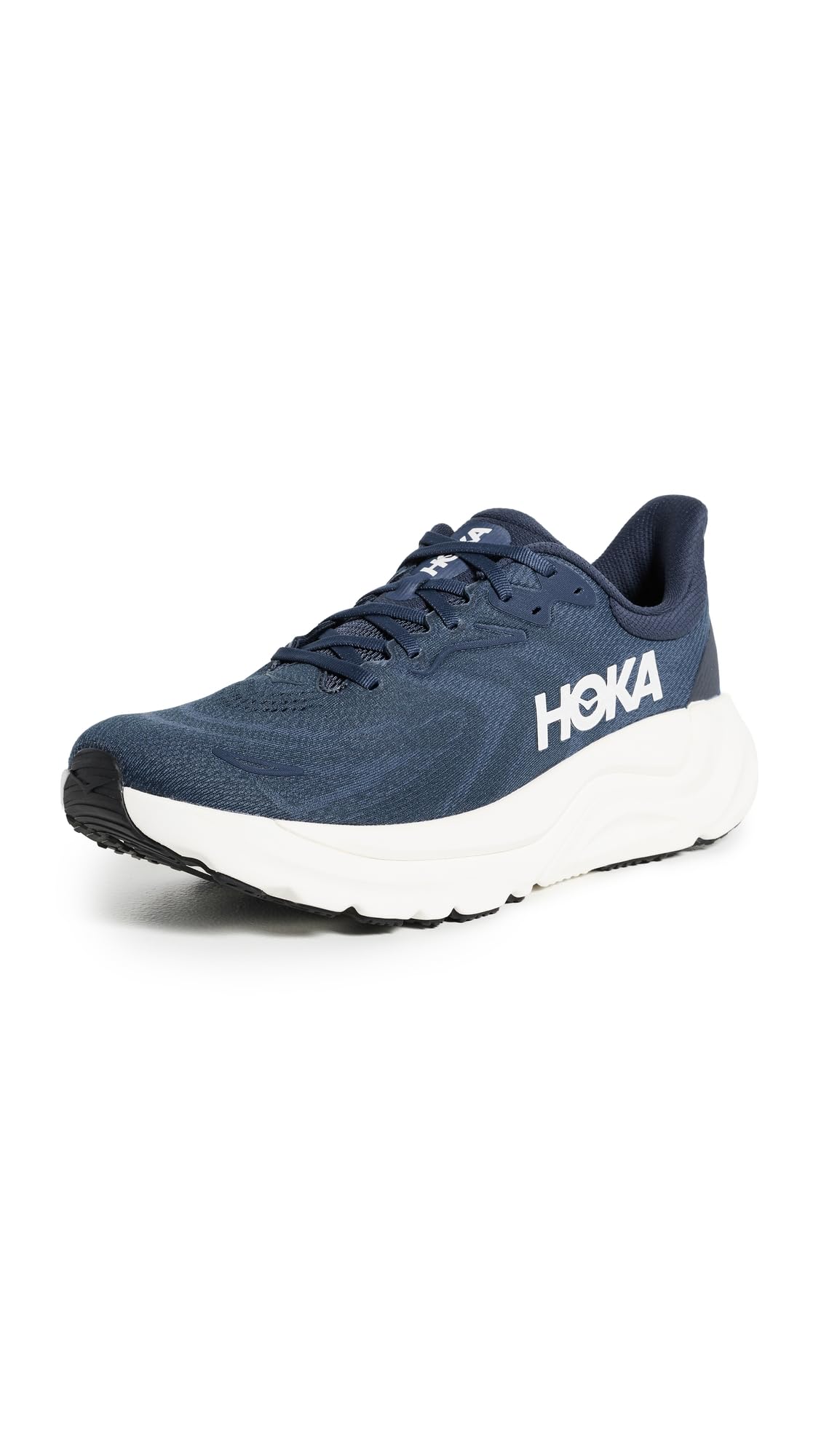
3. Hoka Mens Arahi 8
A stability shoe light enough to run in again after years away from the road.
If you stopped running because your knees and hips complained, the men’s Arahi 8 is a sensible way back. It uses the same enhanced H-Frame to fight overpronation, with a dual-density compression-molded EVA midsole and a super abrasion rubber outsole built to take miles. Weight lands at 2.19 pounds here, versus 1.63 pounds on the women’s Arahi 8 — a real gap if you are sensitive to heft. The jacquard mesh upper is made with a majority recycled content and adds reflective details.
Durability is the standout. Owners log the miles and find the shoe still standing: after 1,000 miles of daily work wear and dog walking, the sole and interior show minimal wear. Support is the second thing buyers talk about most, with praise aimed at the stable base and the secure heel cradle that keeps the foot from sliding. One runner who wears size 8 says the shoe is true to size with a roomy toe box and an arch that is prominent but soft, not a hard lump.
What the shoe does not hide is its weight — the H-Frame support and strong stabilization add heft, which a former Marine returning to running after a two-year break called the only real downside while praising pain-free miles.
Why runners keep coming back
- Minimal sole wear after 1,000 miles of daily use
- Prominent but soft arch support under a high instep
- Secure heel cradle and wide stable sole
- Great for long standing shifts and 3.5–5 miles of daily walking
Where it asks a little
- Heavier than the women’s Arahi 8 — 2.19 pounds versus 1.63 pounds
- Heel bevel takes a little getting used to
Pick this one if: you log serious daily mileage and need the shoe to last, or you’re easing back into running after a layoff.
Pick the women’s version instead if: you want the same H-Frame support in a lighter 1.63-pound build.
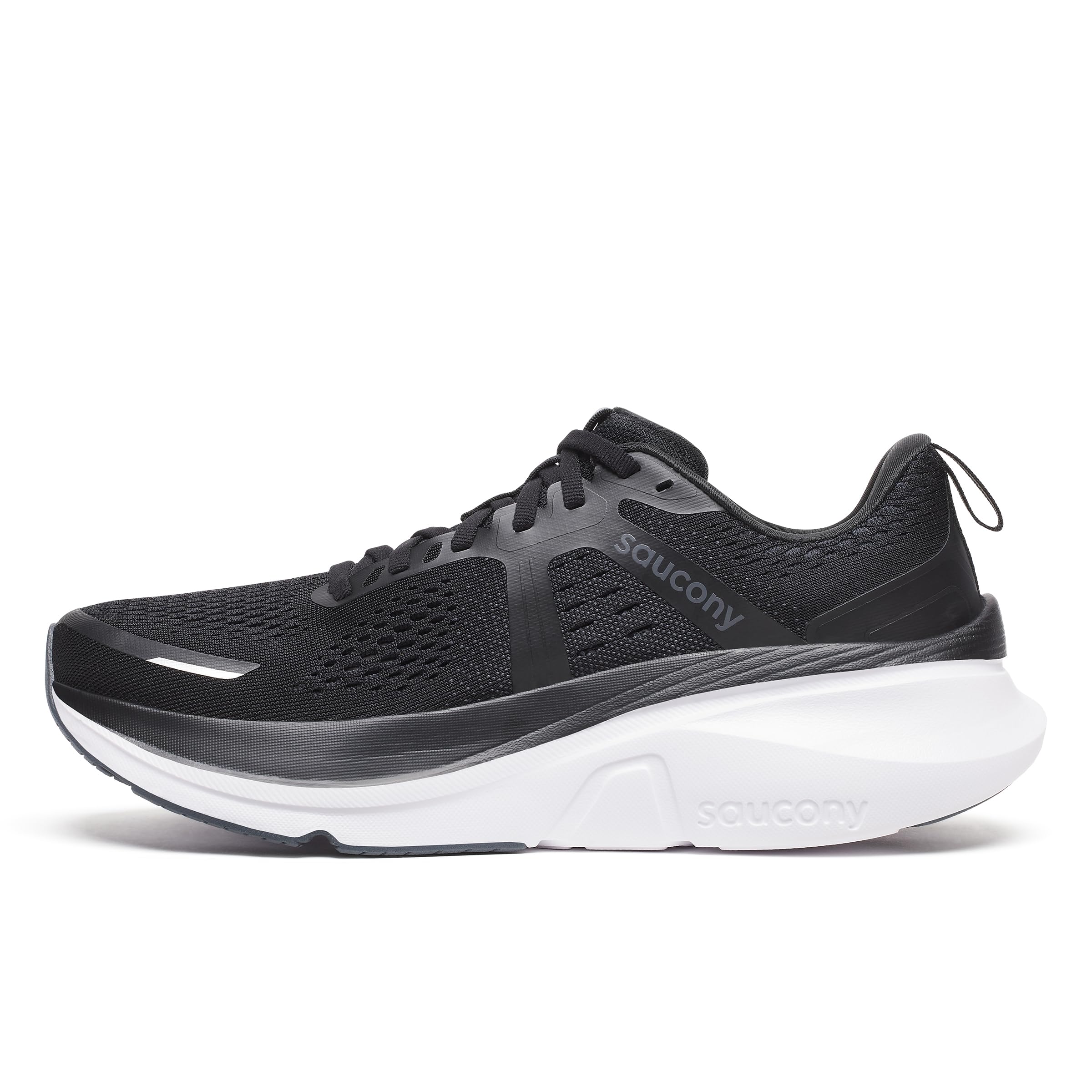
4. Saucony Men’s Guide 18 Sneaker
A rocker-bottom trainer that keeps a heavy, rolling foot centered through every step.
The Guide 18 goes after overpronation a different way than a guide rail. Its Center Path Technology keeps your foot on a standard centerline by raising the sidewalls on the shoe and building it on a rocker shape that eases your toe off. Underfoot is PWRRUN foam — soft but springy. At 1.87 pounds it stays manageable for a max-cushion trainer, and the 4E wide build gives broad, high-arch feet a real toe box to spread into.
Runners with a collapsed arch report this shoe lines up with the support of a top stability model while offering more toe room. That matters if your high arch sits on a wide forefoot. One thousand-plus mile runners call the stability “uncanny,” pointing to even heel wear as proof the correction is doing its job. Quality leads the feedback here, with fit right behind.
The honest catch is durability. A share of buyers report the soft, foam-like outsole wearing faster than they’d like, and one long-term user wore through the mesh at the big toe. If you rake in 40 miles a week, plan to retire this pair earlier than a firmer shoe. If you want maximum cushion under a stiff arch and a forgiving toe box, it is a strong value.
The ride, in plain terms: the PWRRUN foam plus rocker geometry gives a smooth roll from heel strike to toe off, which takes pressure off the front of a high, rigid arch.
Worth knowing: the upper isn’t waterproof, and the laces run long — minor annoyances next to the cushioning.
This is your shoe if: you want the softest landing in this list and a wide fit with a rocker that keeps you moving forward.
Look past it if: you run big weekly mileage and need the outsole to out-last your training block.
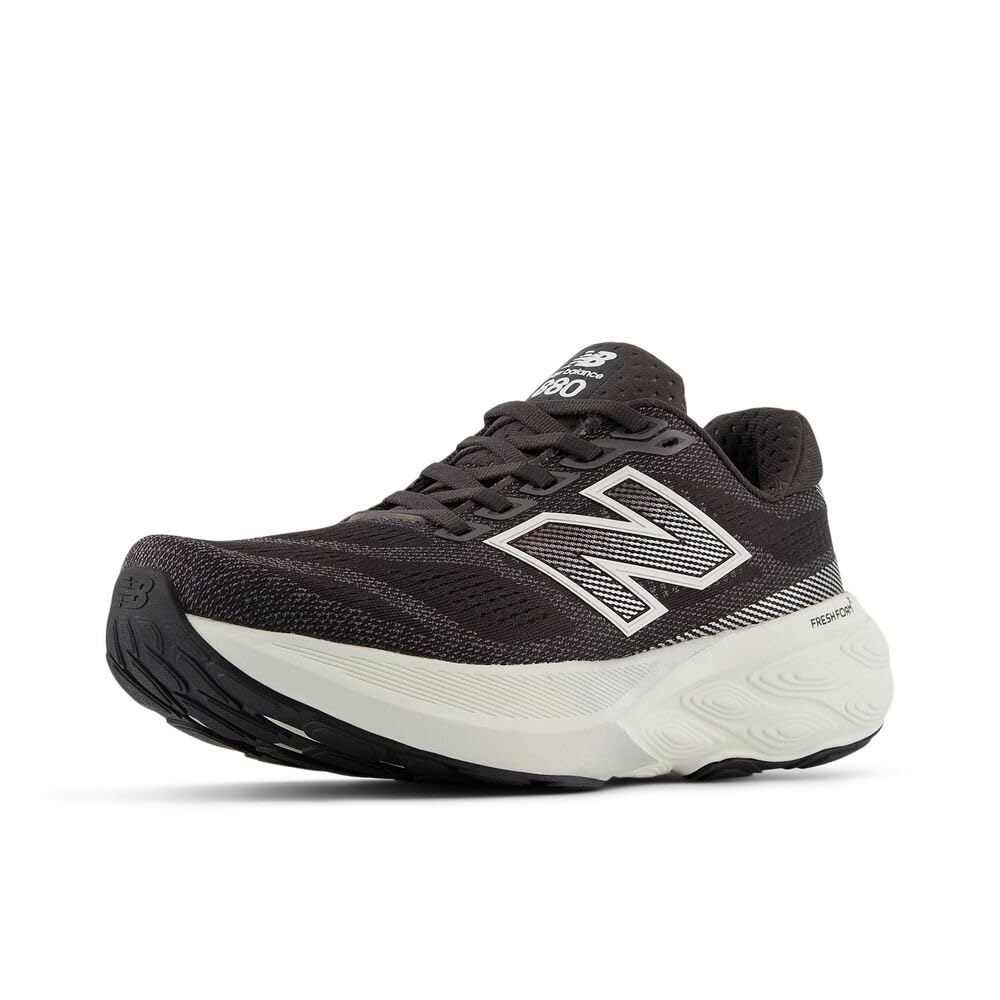
5. New Balance Women’s 880v15 Fresh Foam X
The neutral trainer that keeps turning up on the feet of high-arched runners with bad feet.
This one earns its place differently. It isn’t a full stability shoe — but its structured engineered mesh upper and Fresh Foam X midsole give a high arch cushioned support it can actually feel. Buyers specifically call out the support for high arches, and the shoe comes in a wide enough build that broad feet don’t feel pinched. Appearance leads the feedback here, with comfort barely behind it. Style aside, this is a genuine everyday trainer for running and walking.
Cushioning is the headline: the Fresh Foam X foam is soft and squishy, and owners compare it to walking on clouds. Traction holds on varied ground, and the material wipes clean — useful if you run in white. Buyers with bad feet report wearing these for running, training, and errands without complaint. One note: sizing runs small, so most people order a half size up for a normal fit, and some add heel inserts if the pair feels a touch long.
The catch is fit precision. A high-arched, overpronating foot needs a locked, supportive heel, and for a few wearers the heavy heel cushion throws off their balance or the shoe runs slightly clunky. It’s still a strong choice if you want cushioning and arch support in a neutral package rather than a rigid correction.
The daily-driver case
- Support aimed squarely at high arches
- Fresh Foam X cushioning that feels cloud-soft
- Wide, comfortable toe box for broad feet
- Material wipes clean and lasts like new
Size and fit flags
- Runs small — order a half size up
- Heavy heel cushion can feel off-balance to some
Worth grabbing if: you want cushioned arch support for high arches in a shoe you can run, walk, and stand in all day.
Hold off if: you need firm, structured correction for a strong inward roll — a dedicated stability build serves that better.
6. ASICS Men’s GT-2000 14 Running Shoes
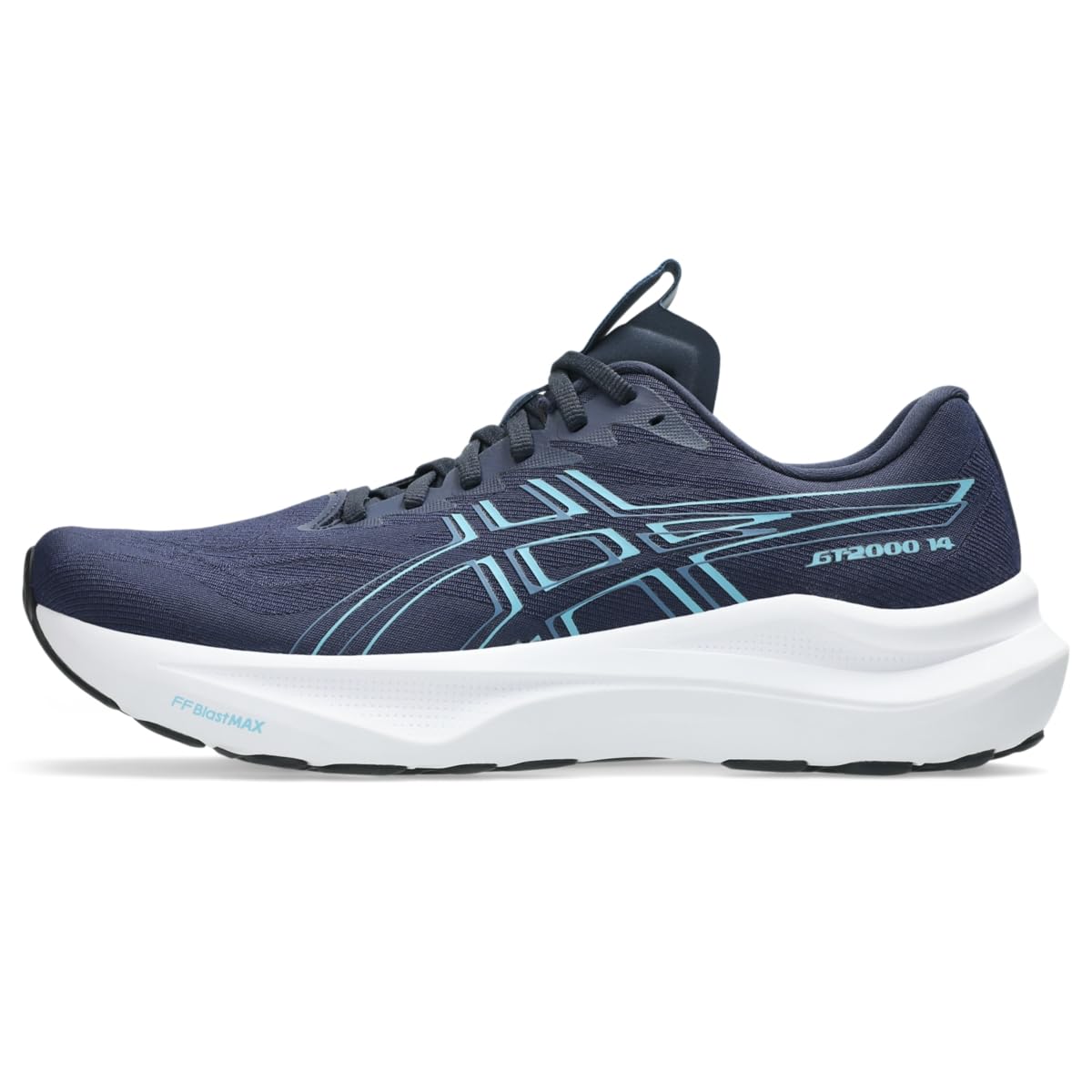
The lean stability trainer that corrects an inward roll and still feels light on the road.
At 1.44 pounds, the GT-2000 14 keeps the weight down while still supporting a foot that rolls in. It’s built specifically for overpronators — the shoe carries extra stability through its guidance system and pairs it with responsive cushioning for daily training. The ASICS literature also notes the shoe is APMA Accepted and that its carbon footprint is 27% lower than the industry average, which is the kind of concrete claim worth naming.
Owners who walk long distances find the correction lands: leg pain that showed up on long walks disappeared once they switched, and they say they’d buy the shoe again. Quality is the trait most praised on this model, with comfort next. Dressing it up is easy too — the bright colour options draw compliments. For an entry-level stability shoe, it covers the basics without fuss.
The two caveats are real. Durability is a worry, with some buyers reporting the shoe doesn’t hold up well; and the tongue is unpadded through the bottom two-thirds, which a few wearers find uncomfortable. Fit also runs slightly smaller than the previous model. For a lean, budget-friendly stability pick, those are manageable if you treat the shoe as a daily-run option rather than a do-everything pair.
Where it shines: light guidance-based pronation control at 1.44 pounds, so your foot gets corrected without hauling extra weight mile after mile.
The downside to accept: a thinner, unpadded lower tongue and reports of quicker outsole wear mean this needs replacing more often than premium picks.
Choose it if: you want straightforward stability correction and a light build on a smart budget.
Spend more if: you need a padded, plush tongue and an outsole built to survive heavy mileage.
7. ASICS Women’s GT-2000 14 Running Shoes
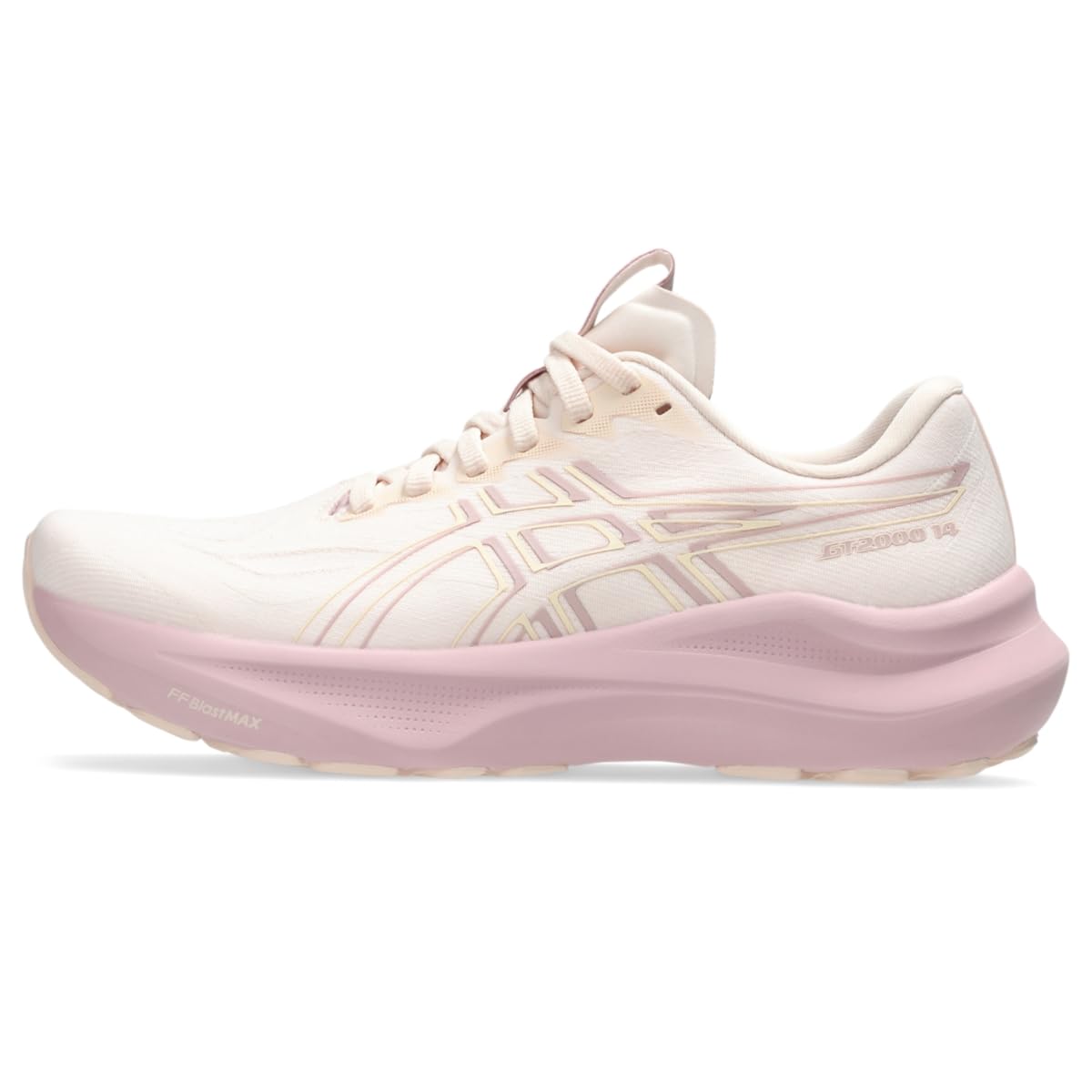
Stability built for the woman who power-walks and jogs more than she races.
The women’s GT-2000 14 mirrors the men’s build for a lighter, quicker foot: 1.44 pounds, the same stability guidance system for overpronators, and a breathable mesh upper that keeps feet cool. Its carbon footprint is listed as 29% lower than the industry average, and the shoe is APMA Accepted. Comfort is the most-praised trait here, with quality right behind — the kind of reception you want from a shoe meant to go from speed walk to jog without complaint.
One overpronator notes the stability is enough that insoles aren’t needed at all, and the shoe performs on runs and long walks alike. A wearer who upgraded from an older GT-2000 says the newer cushioning feels like foam underfoot and would buy it in every colour. Breathable mesh and a tongue that stays put round it out as a shoe you can wear all day.
But sizing and stability are not one-size-fits-all here. The medium width runs snug on some feet, and a few wearers report the stability pushed their foot to roll outward — which means it corrects for some and overcorrects for others.
The walking-week case
- Plush, responsive cushioning right from the start
- Breathable mesh upper stays cool on long sessions
- Enough stability that many overpronators skip insoles
- Versatile for jogging and speed walking alike
The fit unknowns
- Medium width runs snug on broad feet
- Stability can feel like an outward push for a few wearers
Fits best if: you want a breathable, stable shoe for faster walking and light jogging, and a wide fit serves your high-arched foot.
Skip the medium width if: your forefoot feels cramped — go up in a wide instead of forcing the snug fit.
8. New Balance Men’s Fresh Foam X Vongo V6

A plush stability trainer that adds a firm medial zone under a soft midsole.
The Vongo V6 is what you get when a shoe wants both cushion and correction. Its Fresh Foam X midsole is soft and comfortable, and a more supportive medial zone on the inner side of the shoe adds a firmer patch to hold an overpronating foot in line. The modern locked-in upper adds a second layer of support so your foot doesn’t shift. It weighs 2.1 pounds, and the toe box runs generous — a strong match for a wide, high-arched foot.
Comfort comes up a lot with this model, and so does support — buyers like feeling stable on concrete and uneven ground, and appreciate it for long hours standing at work. It also handles both walking and light jogging. One runner put significant miles on a pair and found them still feeling great. The looks are sharp too, which is a quiet bonus for a stability shoe.
The honest wrinkle is fit consistency. Some heel movement shows up if you don’t lace tight, and the built-in arch is tall enough that custom orthotics can slide sideways for a few wearers. If you rely on your own inserts and need a flatter footbed, test that first. For a runner who wants cushion with a moderated correction, though, the Vongo V6 is a solid middle ground.
Why it works for cushion seekers: the soft Fresh Foam X midsole plus the supportive medial zone gives pronation control you can feel without the stiffness of a full post.
What to watch: a heel that slips unless laced tight, and a tall built-in arch that may fight custom orthotics.
This suits you if: you want a cushioned, good-looking trainer for walking and light jogging with moderate pronation support.
Try elsewhere if: your daily setup relies on custom orthotics that need a flatter footbed to sit flush.
9. Brooks Women’s Ariel GTS 23 Supportive Running Shoe
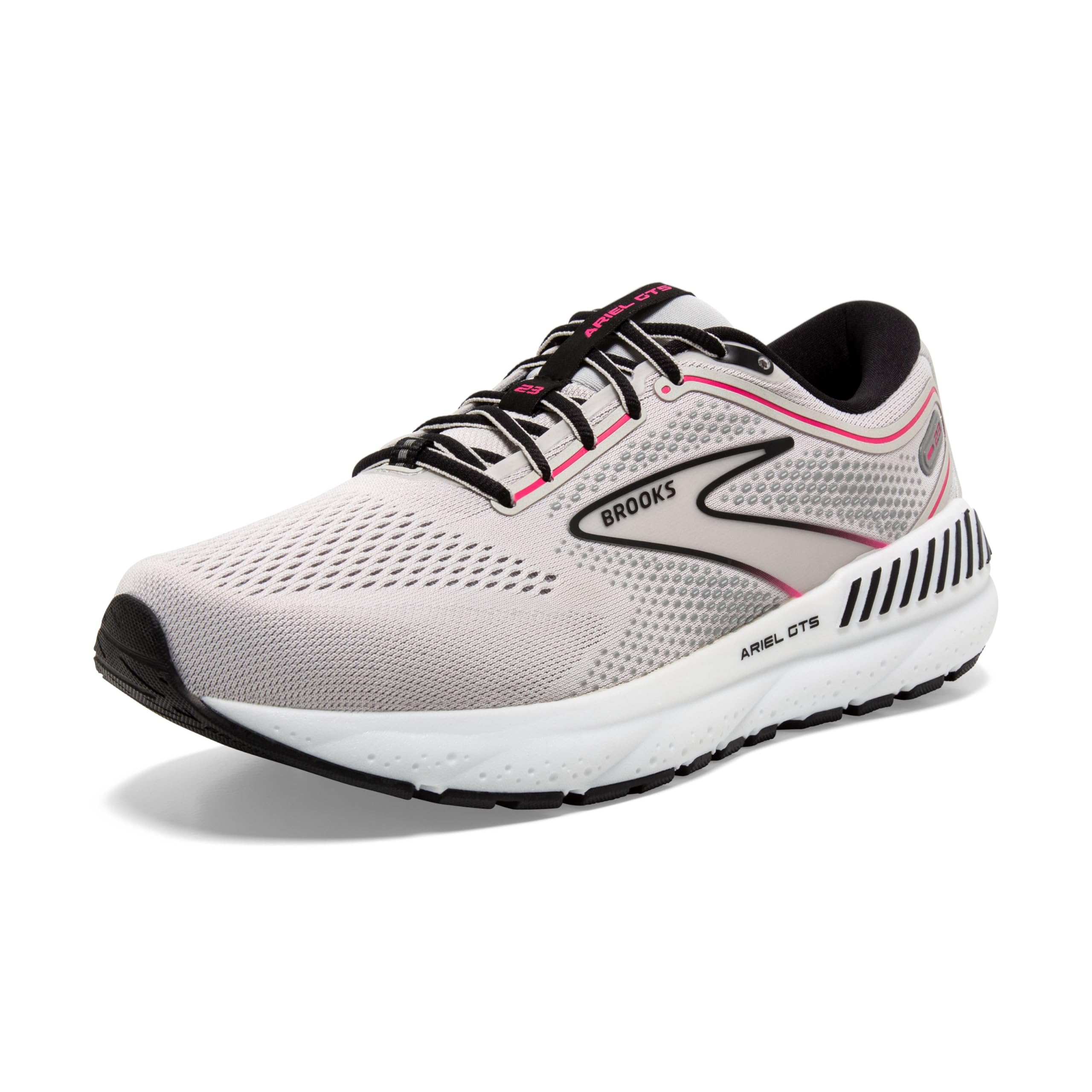
The firm, supportive shoe for a rolling ankle that needs a rigid correction, not cushion.
Think of the Ariel GTS 23 as the firmer sibling of the Adrenaline — same GuideRails approach to catching an inward roll, but built with a more rigid, supportive feel. It weighs 1.5 pounds, and the fit is where it wins buyers over most, with comfort next in line. Its firmness is intentional: for a runner with bad ankles or knees who needs stability over squish, that lack of give is exactly the point.
Owners with overpronation and low arches call it comfortable and compensating, and report it holds stable on uneven sidewalks over 8,000 to 12,000 steps a day. One wearer with wide-midfoot feet says it’s the only shoe that fits, and that it lasted about 1.5 years of daily wear in an active job. Buyers also like the neutral tones that blend with outfits. Fit runs true to size, with many going up a half size for extra room in the toe.
What you trade for that firm support is cushion. Some wearers find it heavy and slower to run in, and the firmer midsole is not for anyone who wants a plush, bouncy feel. If your priority is a stable, rigid base under a foot that rolls in, that is a fair exchange — but if you’re lighter on your feet and want more spring, the Guide 18 gives you more bounce for the same correction.
Built for a very stable stride
- Firm, supportive feel that locks a rolling ankle in place
- Fits wide-midfoot feet better than most running shoes
- Survives about 1.5 years of daily wear in an active job
- Handles long days of 8,000 to 12,000 steps on uneven ground
What firm costs you
- Heavier and slower to run in than cushioned picks
- Firm midsole not suited to anyone wanting a soft, bouncy ride
Reach for this if: your ankles roll inward hard and you want a firm, rigid base that keeps your stride stable all day.
Look at the Guide 18 instead if: you want correction paired with a softer, bouncier landing.
Know the Specs
Overpronation and stability systems
Overpronation is when your foot rolls too far inward as it lands. A stability shoe corrects it one of two ways: guide rails on the sides of the midsole that nudge the foot back to center, or a firmer patch of foam on the inner edge that resists the roll. For a high-arch foot that is also stiff, the guide-rail style tends to feel smoother underfoot because the foam beneath stays soft.
Arch support and heel counter
Arch support is the structure under the middle of your foot that stops a high instep from collapsing under load. A heel counter is the stiff cup at the back that grips your heel so it doesn’t slide. Together they hold your foot steady through the step. If your heel slides, your stride wobbles no matter how good the midsole is, so a locked heel is half the battle.
Heel drop
Heel drop is the height difference between the heel and the forefoot. A higher drop lifts the heel so the calf isn’t stretched as far on each step; a lower drop places more demand on an already-tight calf. If you feel the front of your arch or your calves working hard on flat ground, a higher drop tends to ease that. Look for the number in the specs — it tells you how the shoe will feel before you put it on.
Toe box and wide fits
The toe box is the front compartment where your toes live. A high-arch foot is often a wide foot, so a roomy or wide-width toe box keeps toes from being pushed together. Many picks here come in multiple widths; buying the right width is more important than upsizing, since a longer shoe can leave the heel sliding.
Common Questions
What is the difference between a stability shoe and a motion-control shoe?
Can I wear stability shoes if I have high arches?
How much wear should I expect from a stability running shoe?
Do I need to size up in these stability shoes?
Will a stability shoe fix my overpronation?
What does heel drop mean, and what should I pick?
Can I use my custom orthotics in these shoes?
Are these shoes waterproof?
Should I size up for wide, high-arched feet?
How many miles before replacing a stability shoe?
The Bottom Line
For most people, the best running shoes for high arches and overpronation is the Brooks Men’s Adrenaline GTS 23, because its GuideRails steer an inward roll back to center while the DNA Loft v3 foam keeps a stiff arch cushioned. If you want that same correction in a lighter, roomier package, grab the Hoka Womens Arahi 8. And for a firm, rigid base that holds a rolling ankle steady through long shifts, the Brooks Women’s Ariel GTS 23 is the one to reach for.
How we choose
We do not accept paid placement. Every pick is matched to a real buyer and a real use-case; we do not hands-on test units.
Sources
Specifications: manufacturer listings and product documentation. Review insights: verified customer reviews, as of October 2026. Pricing: not shown on this page (it changes often); check the current price via the retailer link.
As an Amazon Associate, Aappliancez earns from qualifying purchases. This does not affect which products we feature.