Disclosure: Some links in this post are affiliate links. As an Amazon Associate I earn from qualifying purchases, at no extra cost to you. Learn more
Specs are compiled from manufacturer listings and verified buyer reviews and can change over time — please confirm the key details on the product page before buying.
If your plants have stopped setting fruit, the problem is usually the second and third numbers on the label, not the first. Nitrogen grows leaves. Phosphorus and potassium are what push roots down and flowers out. The five products below cover every way to deliver those two nutrients — a balanced bloom feed, a rose-specific granule, a straight phosphorus hit, a soil-living liquid, and a hydroponic powder — so you can pick the one that matches how you actually garden. The Gaia Green 2-8-4 takes the top spot because it feeds roots and flowers in a single scoop and it is the crowd favorite at 4.5+ stars across 800+ owners.
This guide is built by comparing the manufacturers’ published specifications and the patterns across verified customer reviews, so you get each pick’s real strengths and trade-offs instead of marketing spin.
What follows is a plain-English breakdown of each pick, the mixing math that trips people up, and when to reach for a granule instead of a liquid. Read it once and you can shop the shelf with confidence — no confusing label math, just the right fertilizer for your soil and your plants.
Top Picks


How To Choose The Best Phosphorus and Potassium Fertilizer
You are not really shopping for a bag of dust. You are shopping for a ratio. The three numbers on the front are the percentage of nitrogen, phosphorus, and potassium in that order, so a 2-8-4 bag is 2 percent nitrogen, 8 percent phosphorus, and 4 percent potassium. Your job is to find the ratio that matches the stage your plants are in.
Match the ratio to the plant stage, not the plant name
A rose in full bud and a tomato setting fruit want the same thing: a nudge toward phosphorus and potassium. A bag like 2-8-4 or 4-3-2 does that gently and feeds the soil at the same time. A straight 0-45-0 is a different tool entirely — it is nearly all phosphorus with zero nitrogen or potassium, so it is a targeted correction, not an everyday meal.
Gardeners who grow in containers or hydroponic systems have a separate math to worry about. There, a powder that dissolves cleanly matters more than soil health, because there is no soil biology to feed. A mixing ratio like 1 tsp per 5 gallons tells you the concentration is designed for dilution into a reservoir, not for sprinkling by the handful.
Does the form suit your routine
Granules go on the soil surface, usually around the drip line of the plant, and get watered in. Powders and liquids mix into a watering can or reservoir. The easiest fertilizer is the one you will actually apply on schedule, whether that is monthly through the growing season or twice a month during heavy bloom.
Think about how often the label tells you to reapply. A monthly granule means one reminder on the calendar. A liquid you apply twice a month during the growing season and monthly after means a bit more attention. Neither is better — they just ask different things of you.
Side-by-Side Comparison
| Model | Best For | NPK Ratio | Form | Weight / Volume | Amazon |
|---|---|---|---|---|---|
| Gaia Green Power Bloom 2-8-4★ Best Overall | All-around bloom feeding | 2-8-4 | Powder | 2 kg | Amazon |
| Espoma Rose-Tone 4-3-2Rose Specialist | Roses and flowering shrubs | 4-3-2 | Granules | 4 lb (2-pack) | Amazon |
| Espoma Triple Phosphate 0-45-0 | Targeted phosphorus correction | 0-45-0 | Granules | 6.5 lb | Amazon |
| Great Big Roses Booster | Soil life and bloom support | Low NPK soil amendment | Liquid concentrate | 32 fl oz (makes 8 gal) | Amazon |
| Greenleaf Bud Explosion | Hydroponic flowering boost | PK bloom enhancer | Powder | 4.4 lb (makes 2000 gal) | Amazon |
Detailed Reviews
1. Gaia Green 2-8-4 Power Bloom 2kg
Our pick — 4.5+★ from 800+ verified ratings; the strongest balance of quality and price.
One scoop feeds the roots and the flowers, so you stop juggling two bottles.
The number to fix on is 2-8-4 — the lowest nitrogen of any bloom-forward pick here, with phosphorus and potassium carrying the weight. That low first number is why it suits plants you want setting fruit rather than growing more leaf. The phosphorus drives root development and the potassium supports flowering, so it works as both a root feed and a bloom feed in a single powder.
It comes as a dry powder you work into the soil or top-dress, and it feeds soil biology at the same time as it feeds the plant. That is the gap against the Espoma Triple Phosphate: the 0-45-0 is straight phosphorus with no soil-building side at all, while the Gaia carries a rounded 2-8-4 ratio. As owners put it: “We’ve got 8 foot tall tomato and pepper plants and our potato plants are incredibly healthy!” What wins people over most is raw effectiveness in the ground, with plant health running right behind it.
The honest question is quantity. It is a two-kilo bag, and heavy feeders in full season will run through it faster than a big sack. The other thing to know is the application style — powder worked into soil or top-dressed is slower and more deliberate than a sprinkle-and-go granule. That suits gardeners who feed in planned passes rather than weekly. It also holds up for growers feeding a wide mix of plants, from tomatoes and vegetables to flowers and root crops.
What it gets right
- A 2-8-4 ratio that pushes roots and bloom without overloading nitrogen
- Dry powder feeds soil biology as well as the plant itself
- Works across tomatoes, flowers, vegetables, and root development
Where you adjust
- The 2 kg bag asks for re-buying during heavy bloom season
- Powder takes a bit more measuring than a ready-to-use granule
Made for: the gardener who wants one balanced bloom feed covering roots, flowers, and fruit across a mixed plot.
Worth knowing: the bag is modest, so plan to restock if you feed a large garden through the season.
2. Espoma Organic Rose-Tone 4-3-2 (4 lb, Pack of 2)
Granules you sprinkle once a month around the drip line, no mixing bowl required.
For a rose bed, the 4-3-2 ratio runs higher in nitrogen than the Gaia above, which is why it builds canes and foliage first and then flowers. It also carries 5 percent calcium, and it is a registered Organic Input Material approved for organic gardening. You get two 4-pound bags in the pack, and it is ready to use straight from the bag with no mixing.
The routine is the appeal. Apply monthly through the growing season — generally May through September — around the drip line, then water it in thoroughly. That is a calmer job than mixing powder. And it is not only roses: the label lists viburnum, bougainvillea, clematis, and knockouts among the targets. Buyers report “noticeably healthier foliage and eventually more flowers,” which lines up with the two most-praised traits on this one being effectiveness and bloom growth.
The catch is the smell. It is natural organics, and the odor is the most-mixed point in the whole profile — strong right after applying, fading after a day or two, and further improved by rain. If you garden in a small yard or on a balcony near the door, that first evening is noticeable. Weight-wise it sits leaner per bag than the 6.5-pound Triple Phosphate, so it is easy to carry, but the two-bag pack is what gives it real coverage. Feeders with a small rose bed will get through a season on one bag and keep the other in reserve.
The easy-schedule pick: a monthly granule, ready to use, no measuring, and it does the job on roses and flowering shrubs at once.
What you tolerate: a genuine organic odor for a day or two after each application — worth it for plant results, worth planning around if your bed is close to a patio.
Choose this if: you keep roses or climbing flowering shrubs and want a set-it-monthly granule that skips all mixing.
Pass if: you cannot tolerate a strong organic smell right after feeding.
3. Espoma Triple Phosphate 0-45-0, 6.5 lb Bag

A straight shot of phosphorus for roots that refuse to push and buds that never open.
Do not treat this like the balanced blends. The ratio is 0-45-0 — zero nitrogen, zero potassium, and a full 45 percent phosphorus. That makes it a targeted correction, not an everyday feed, so it earns its keep when a plant has stalled on root growth and you want to push it hard in one direction. It is 100 percent triple phosphate with no fillers or sludges, made in the USA by Espoma.
Application is the simplest of the whole list: sprinkle on the soil and water. No mixing, no dilution, no measuring cup. At 6.5 pounds it beats the 4-pound Rose-Tone bags on weight, so a single sack stretches further across trees, shrubs, vegetables, and flowers. Owners mention it helped carrots develop better roots and pushed more flowers, with effectiveness easily the most-praised trait here.
The frustration with this one has nothing to do with the fertilizer. The recurring gripe is the packaging — the bag arriving split or ruptured in transit is the honest sore spot, and it is a shipping problem, not a formula problem. The product itself is granular and good. Order it knowing you may need to transfer it into a tub on arrival. It is the right tool for a gardener who has already fed balanced and wants to aim phosphorus at one weak spot.
Best when: the soil has food and biology already, and you want to correct a specific root or bud shortfall with pure phosphorus.
The rough edge: shipment protection is the weak link — inspect the bag on arrival before you store it.
Reach for it when: you need a concentrated phosphorus push on trees, shrubs, or root crops and want zero mixing.
Look elsewhere if: you are after an all-round bloom feed — this one brings no nitrogen or potassium to the table.
4. Great Big Roses Fertilizer Booster, 32 Ounce
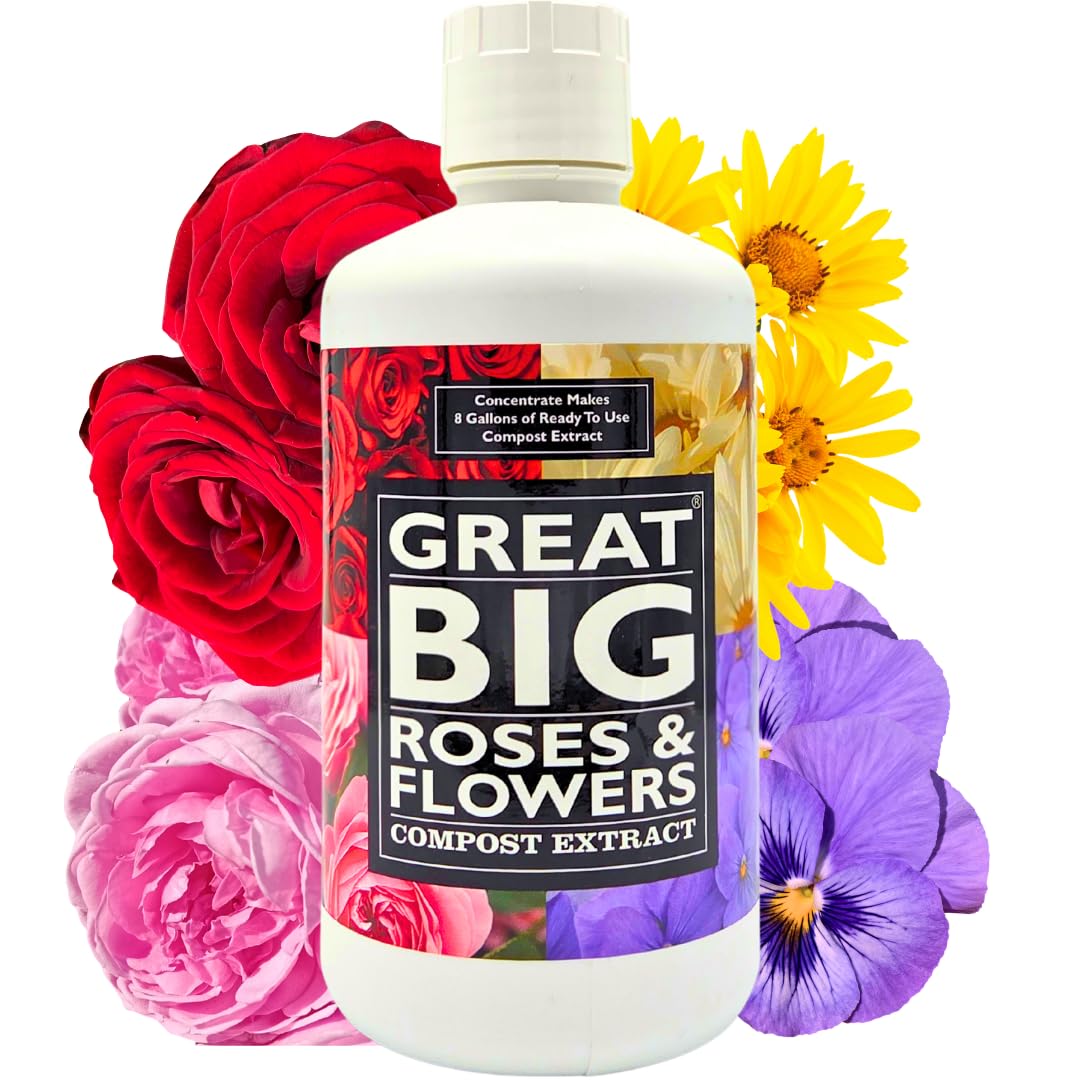
Its living compost ecology wakes up in moist soil and open up the nutrients already sitting in your beds.
This one does not compete with your NPK. Its NPK stays deliberately low because its job is different: it carries living compost ecology that sits dormant in the bottle and wakes up when it hits moist soil. That soil life goes to work making the nutrients already sitting in your beds available to the plants. In plain terms, it stacks on the granular or fish emulsion you already use rather than replacing it.
The bottle also brings humic acids to help your soil hold onto nutrients and buffer pH, plus kelp and 70+ chelated trace minerals. Trace minerals, by the way, are the small micronutrients plants need in tiny amounts. A 32-ounce concentrate makes 8 gallons of mix at 4 oz per gallon, and you pour a pint around the base of each plant — no digging, no tilling. Apply twice a month in the growing season and monthly after, or use it in early fall to rebuild soil worn down by summer heat.
What keeps this in so many gardens is effectiveness, with blooms close behind and a brilliant green color and low odor people appreciate. That said, the concentrate stretches across the whole garden, not just roses: hydrangeas, citrus, camellias, and perennials all take it well.
The living-soil angle: its real strength is waking up dormant soil so the fertilizer you already own starts working — a partner, not a replacement.
The trade-off: a genuinely low NPK means you cannot lean on this alone for a hungry rose; it wants to sit alongside your regular feed.
Reach for it if: your soil feels tired and your fertilizer seems to vanish without visible effect.
skip it if: you are hunting a single one-bottle feed — pair it with a proper bloom fertilizer for real results.
5. Greenleaf Bud Explosion PK Bloom Booster, 4.4 lb
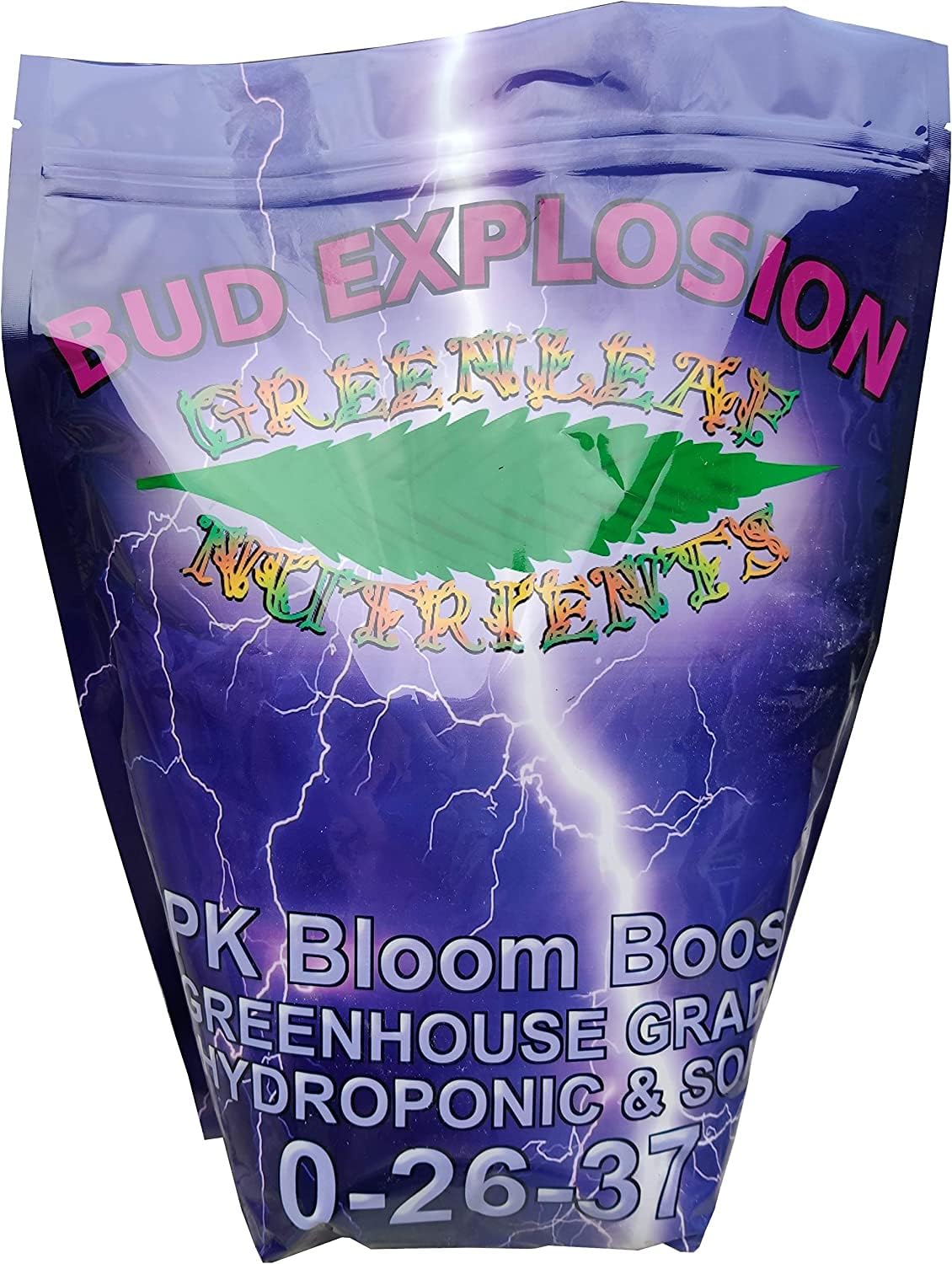
One teaspoon in five gallons, and the reservoir math stays simple all season.
This is a PK enhancer built for systems, not soil. The mix is 1 teaspoon dissolved in 5 gallons during flowering and bloom, and a 4.4-pound pail is rated to make 2000 gallons. That is the whole appeal for growers running hydroponic, aeroponic, or soil grows alike — you are dosing a reservoir on a schedule, not scooping granules by hand.
It targets the middle-to-late harvest window, pushing flowering sites and nodes in the first weeks of bloom so more sites set. It dissolves cleanly in water with no leftover residue, which matters when you are pumping that solution through lines and fittings. Customers note a noticeable difference in bloom size and density after adding it to the feed schedule, with effectiveness and plant growth the traits that carry the most weight here.
The one caution is durability. The 2000-gallon yield is the real answer to that worry: for a home system, a little goes very far. Treat it as a long-term supply and check that the pail seals tight in storage. The other thing to know is compatibility — it is formulated for all hydroponic, aeroponic, and other growing systems, so it slots into the routine you already run.
Why it earns a slot: at 1 tsp per 5 gallons for up to 2000 gallons of solution, it is a targeted bloom enhancer that barely touches your measuring spoon.
The one thing to check: storage and durability expectations vary, so seal the pail well between refills.
Choose it if: you run a hydroponic or aeroponic setup and want a clean-dissolving PK boost during flowering.
Steer clear if: you garden in beds with a watering can — this one is built for diluting into a reservoir.
Know the Specs
Reading the NPK Ratio
The three numbers on any bag are percentages in a fixed order: nitrogen, phosphorus, potassium. A 2-8-4 bag means 2 percent nitrogen, 8 percent phosphorus, and 4 percent potassium. The middle number is what drives root growth; the third supports flowering and fruiting. A ratio like 0-45-0 is almost entirely phosphorus, which is why it is a targeted correction and not a daily feed. Match the ratio to the stage your plant is in, and the rest falls into place.
Granular, Powder, and Liquid Forms
Granules are ready to use — you sprinkle on the soil around the drip line and water in, no measuring into a can. Powders and liquids are mixed to a stated dilution, such as 4 oz per gallon of water or 1 tsp per 5 gallons. The form you choose decides your routine: a monthly granule versus a twice-monthly mix. Pick the one you will not forget to apply.
Organic Amendments and Soil Biology
Some products feed the soil as much as the plant. Living compost ecology, humic acids, kelp, and chelated trace minerals target the soil itself so your existing fertilizer becomes available. These carry low NPK because their role is to open up and hold nutrients, not deliver a big nutrient punch. They work best alongside a real fertilizer, not instead of one.
Dilution and Mixing Math
Concentrates are the most efficient on paper and the easiest to get wrong. Follow the stated mix exactly — 4 oz per gallon, or a pint around the base of each plant, or 1 tsp per 5 gallons for a reservoir. A 32-ounce bottle that makes 8 gallons and a 4.4-pound pail that makes 2000 gallons are two very different tools at two very different scales.
Common Questions
What does the middle number on a phosphorus and potassium fertilizer mean?
Is a 0-45-0 triple phosphate safe to use every month?
Can I use Rose-Tone on plants other than roses?
How often should I apply a granular phosphorus and potassium fertilizer?
What is the difference between a bloom booster and a soil amendment?
Does Bud Explosion work in soil as well as hydroponics?
How long does a bag of phosphorus and potassium fertilizer last?
Why does organic fertilizer smell so strong after I apply it?
What should I check first before adding extra phosphorus to my soil?
How do I mix and store Bud Explosion between uses?
The Bottom Line
If you want one bag that covers roots and flowers without juggling products, the Gaia Green Power Bloom 2-8-4 earns the top spot on its balanced bloom ratio alone. If your plot is roses and climbing flowering shrubs, the Espoma Rose-Tone turns monthly feeding into a no-mix job. And when a single plant has stalled on root growth and needs a phosphorus push, the Espoma Triple Phosphate 0-45-0 is the targeted tool. Whichever you pick, read that NPK ratio first — it tells you exactly where in the plant that bag will work.
How we choose
We do not accept paid placement. Every pick is matched to a real buyer and a real use-case; we do not hands-on test units.
Sources
Specifications: manufacturer listings and product documentation. Review insights: verified customer reviews, as of October 2026. Pricing: not shown on this page (it changes often); check the current price via the retailer link.
As an Amazon Associate, Aappliancez earns from qualifying purchases. This does not affect which products we feature.