Disclosure: Some links in this post are affiliate links. As an Amazon Associate I earn from qualifying purchases, at no extra cost to you. Learn more
Specs are compiled from manufacturer listings and verified buyer reviews and can change over time — please confirm the key details on the product page before buying.
Here is the short answer before you scroll: the phone in your pocket is not the headset. It is the engine that decides whether a VR session feels smooth or makes you queasy. The screen refresh rate (how many times per second the image redraws) and the chip inside your phone decide whether the headset stutters or glides. Get those two wrong and a comfortable headset still feels like a slideshow. This guide separates the phones that genuinely drive VR well from the ones that only look the part on paper.
This guide is built by comparing the manufacturers’ published specifications and the patterns across verified customer reviews, so you get each pick’s real strengths and trade-offs instead of marketing spin.
Some of these picks are dedicated headsets that carry their own screen; others are open up smartphones you pair or tether to a headset. The first is the easy path, the second gives you a phone you actually carry. We will keep the two straight, so you know exactly what you are buying before you commit to any phone for vr.
Top Picks


How To Choose The Best Phone for VR
The mistake almost every first-time buyer makes is shopping by megapixels. A 50MP camera does nothing for a headset. What matters is how fast the display redraws, how sharp the image is per eye, and whether the processor can hold that frame rate without cooking itself. Here is what to weigh before you buy.
Refresh rate: the number that decides comfort
Refresh rate is measured in hertz (Hz), which simply counts how many times the screen redraws each second. A 120Hz panel redraws 120 times a second, so fast head turns stay fluid instead of smearing. Below about 90Hz, quick movements start to judder and that judder is what turns a fun session into a headache. Higher is better here, full stop.
Per-eye resolution and lens clarity
Inside a headset you look through magnifying lenses at two tiny screens, so every pixel is stretched. A headset rated at 1832 x 1920 pixels per eye gives you readable menus and legible text; sharper panels push that further. A phone driving VR over a cable or stream supplies the rendering horsepower behind that image, so a stronger chip means fewer dropped frames.
Battery, heat, and the honest catch
VR is the heaviest thing you can ask a phone or headset to do — the screen runs flat out and the chip never idles. Expect the battery to fall faster than in any other task. Phones with a 6,000mAh cell or headsets quoting 2+ hours give you a realistic session; slim foldables and older units will need a charge cable close by.
Side-by-Side Comparison
| Model | Best For | Display | Refresh Rate | Battery | Amazon |
|---|---|---|---|---|---|
| XIAOMI Poco X7 PRO 5G★ Best Overall | Gamers who want raw power | 6.67″ AMOLED, 2712×1220 | 120Hz | 6000mAh | Amazon |
| Meta Quest 2 (Renewed)Budget Entry | Budget entry into VR | LCD, 1832 x 1920 per eye | 90Hz | — | Amazon |
| Nothing Phone (3a) ProMost Distinctive | Everyday phone with a sharp screen | 6.77″ AMOLED, 120Hz adaptive | 120Hz | 5000mAh | Amazon |
| Meta Quest 3S 256GB | First headset for the family | OLED, 1832 x 1920 per eye | 60Hz | 2+ hours | Amazon |
| Motorola razr+ (2023) | Pocketable flip with a big inner screen | 6.9″ pOLED + 3.6″ external | — | 3800mAh | Amazon |
| Oculus Quest 2 256GB Set | Family play with extras included | 1832 x 1920 per eye | 90Hz | 3 hours | Amazon |
| Meta Quest 3 512GB | Best overall VR experience | 2064×2208 per eye, 4K+ | 120Hz | 2.2 hours | Amazon |
| Google Pixel Fold | Multitasking on a foldable | 7.6″ OLED, 120Hz | 120Hz | 4821mAh | Amazon |
| Nothing Phone (2) | Long battery with a clean OS | 6.7″ LTPO OLED, 1600 nits | 120Hz | 4700mAh | Amazon |
| Google Pixel Fold Bundle | Foldable with full accessory kit | 7.6″ OLED, 120Hz | 120Hz | 4821mAh | Amazon |
| AGM G3 Pro | Outdoor work with thermal | LCD, 1080×2400 | — | 10000mAh | Amazon |
Detailed Reviews
1. XIAOMI Poco X7 PRO 5G + 4G LTE (512GB + 12GB)
Our pick — 4.5+★ from 3,500+ verified ratings; the strongest balance of quality and price.
The gaming chip and 120Hz AMOLED that a tethered headset actually wants underneath it.
This is the phone to pick if you plan to pair or tether a headset, because it has the muscle for it. Cast the headset view to the phone and the 6.67″ CrystalRes AMOLED display at 2712 x 1220 acts as a sharp, glare-free mirror. The 120Hz refresh rate (the screen redraws 120 times a second) keeps menus and mirrored motion fluid. The Dimensity 8400-Ultra chip (an eight-core processor built on a 4nm process, running up to 3.25GHz) does the heavy lifting. Its Mali-G720 graphics side renders a steady frame instead of a stuttering one.
What wins people over is simply how much device you get here. Buyers report it runs Genshin Impact, Honkai Impact, Blue Archive and Once Human smoothly — a workload far heavier than most VR companion apps. The 6,000mAh battery (a measure of charge capacity) is the other quiet hero: it gives you a genuinely long session before a charge. The 90W HyperCharge charger in the box gets you back up in a hurry.
Storage is 512GB, twice the 256GB inside the Meta Quest 2, so you can hold a big local library of sideloaded content without deleting games to make room. The catch is carrier fit: it is built for T-Mobile, Mint and Tello and needs an already-activated SIM, so check your network before ordering. Add your own note that there is no microSD slot, so that 512GB is what you live with.
What earns its keep
- Dimensity 8400-Ultra with Mali-G720 graphics holds frame rate under load
- 120Hz AMOLED at 2712 x 1220 stays sharp when you mirror the headset view
- 6,000mAh battery and 90W HyperCharge mean less time chained to a cable
- 512GB of storage for a serious local game library
Where it asks you to check first
- T-Mobile, Mint and Tello only for US service — confirm your carrier before buying
- No microSD expansion, so 512GB is the ceiling
Reach for this if: you want the most rendering power and the biggest battery for the money as the engine behind a headset.
Think twice if: you are on Verizon or AT&T — this phone is tuned for T-Mobile’s network family.
2. Meta Quest 2 256 GB
The cheapest honest door into real VR, no phone or PC required.
The whole point of a standalone headset is that it is its own computer. This Quest 2 packs a 1832 x 1920 pixels per eye display, a 90Hz refresh rate and a top hand-tracking system, running every game on the headset itself. You do not need a phone at all — you put it on, and it plays. That makes it the simplest way to find out whether VR fits your life before spending more.
What people fall for is how easy it is to keep coming back. Owners describe entire workout routines built around it — a Fit XR boxing app, a Holofit rowing routine — and the habit sticks. That is the enjoyment dialed up: this is the kind of headset that gets used daily rather than gathering dust. A 90-degree field of view frames the action wide, and the silicone grip covers and PU knuckle straps keep the controllers from slipping when your palms get sweaty.
Keep in mind this is a renewed unit, and the recurring gripe is the strap bar and the stock head strap, which can feel flimsy and need adjusting. On the software side, one reviewer noted the headset would not reconnect to Wi-Fi after an update, and the value question splits both ways — some call it a bargain, others call it pricey. The 1.8 pound weight is light enough to wear for a full session. Compared to the Quest 3 512GB, the 90Hz panel here falls short of that 120Hz, but it is also a cheaper, simpler starting point.
Where the smart money goes: for a first headset, this gives you the full Quest experience and a 256GB library of games without buying a phone on top.
The honest gamble: renewed stock varies — buy where returns are painless and the strap is cheap to replace.
Best fit: a first-time VR buyer who wants the lowest-risk way in and will happily use it for exercise.
Look elsewhere if: you want the sharpest visuals — that is the Quest 3, not this.
3. Nothing Phone (3a) Pro 5G open up Smartphone, 12+256GB, Grey
A 3,000-nit screen that stays readable in direct sun and a 120Hz panel that keeps motion smooth.
If your phone doubles as your VR companion, you want a screen that holds its own in daylight and a chip that does not buckle. The 6.77″ Flexible AMOLED hits 3,000 nits peak brightness, so glare on a bright day no longer washes everything out, and the 120Hz adaptive refresh rate smooths scrolling and motion. The 2160Hz PWM dimming (a flicker-reduction technique) keeps the image comfortable on the eyes over long sessions. The Snapdragon 7s Gen 3 chip pairs with 12GB of RAM, which is a healthy foundation for streaming or sideloading VR content.
Owners praise the raw performance you get for a mid-range phone, and it is not hard to see why. A 50MP main sensor with OIS (optical image stabilisation, which steadies the shot) and a 50MP front camera make it a capable companion for capturing stills between sessions. The maker rates the 5,000mAh battery at up to 2 days of normal use. 50W charging reaches 50% in 20 minutes, so a short break covers a top-up.
The trade-off is a small one but real: a couple of owners mention the battery life falls short of the two-day claim in heavy standalone use, though they agree it charges fast enough to forgive. It is also a phone first — it cannot run a VR game on its own the way a dedicated headset can. Against the Poco X7 PRO, the 50MP front camera gives it a big photography edge over that phone’s 20MP, but the charging is slower. Its performance aspect is what most reviews talk about, and it delivers on that.
Why buyers rally around it
- 3,000-nit AMOLED stays legible outdoors and looks superb as a phone
- Snapdragon 7s Gen 3 with 12GB RAM handles streaming and multitasking
- 50MP main + 50MP front for crisp captures between sessions
- 50W charging hits 50% in 20 minutes
Realistic limitations
- Real battery life trails the two-day claim in heavy use
- Cannot run VR alone the way a standalone headset can
Where it wins: as a daily phone with a sun-proof screen that you also use as a VR companion screen.
Pick the headset instead if: you want something that plays VR without a pairing partner at all.
4. Meta Quest 3S 256GB | VR Headset — Gorilla Tag Bundle

Family-friendly VR with a stack of extras and the smoothest experience for a shared headset.
For a household where the headset gets handed around, this is the easy pick. There are two RGB color cameras for full-color passthrough, so you can see the real room around you without taking the headset off, and the whole thing works without a single cable.
What people enjoy most is simply how much fun it holds — buyers describe endless entertainment, kids who cannot put it down, and a daily-use habit that builds fast. It ships with the Gorilla Tag bundle: a Gorilla Space Program Suit and Helmet plus 2,000 SHINY ROCKS, and a 3-month trial of Meta Horizon+ for instant access to 100+ games. The 2+ hours of battery life covers a solid session.
Here is the honest hitch: the lens can fog up on some units, and a couple of customers note reliability wobbles like the occasional crash. The included head strap also tends to loosen, and one owner noted the built-in foam strap does not offer great support over long play. An aftermarket strap fixes it. Compared to the Quest 3 512GB, its display refreshes at 60Hz versus that headset’s 120Hz, so the sharper, smoother panel is a step up.
The family math: a low-fuss headset that kids and parents can all use, with a game bundle that gives you something to play on day one.
Worth knowing: budget for a better strap — the stock one is the weak link.
The right call for: parents buying a first shared headset and value the included Gorilla Tag items and trial.
Pass if: you care most about peak image smoothness — the 120Hz Quest 3 leads there.
5. Motorola razr+ | 2023 | open up | 8/256 | 32MP Camera | Blue

A flip phone with the biggest external screen in the category and a 6.9″ pOLED inside.
The reason this earns a place is the external display. It is a fully interactive 3.6″ screen — the largest, most advanced on a flip phone, per the maker — so you can text, call and check a wallet without opening the phone at all. Flip it open and you get a 6.9″ pOLED that is crisp for media, including the cast view from a headset. The Snapdragon 8+ performance is more than enough for streaming content alongside your VR setup.
What buyers love is the look and build. It has the quality of a much pricier device, and the camera holds up well in normal light. The rounded edges make it comfortable, the fingerprint reader is quick, and the hinge feels sturdy. For folding into a small pocket, it is genuinely convenient.
The trade-off is the hinge area — the screen protector can start peeling after months of use, and the fold crease is visible though easy to ignore. Durability is the point to weigh: a thin frame, multiple screens and little drop protection mean you should plan on a case. The 3,800mAh battery is smaller than the Poco X7 PRO’s 6,000mAh, and longevity is the part of this phone’s reputation that draws the most skepticism. Compared to the Quest 3S’s 60Hz, this phone’s panel is far smoother for content viewing.
Made for: people who prioritize pocketability and a big cover screen over battery headroom.
Weigh first: the hinge and screen protector need gentle handling — plan on a case from day one.
6. Oculus Quest 2 256GB
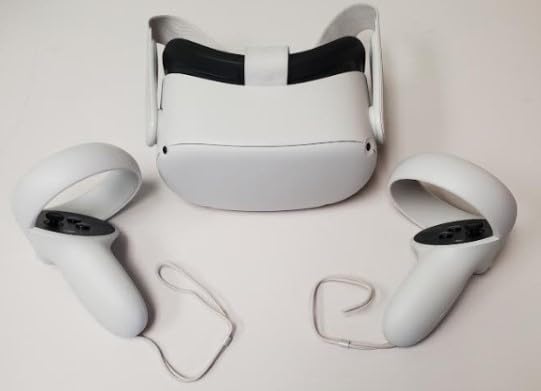
The complete Quest 2 kit with the grip covers and straps already in the box.
This is the same 1832 x 1920 per eye Quest 2 experience, but sold as a bundled set with the silicone controller covers, adjustable knuckle straps, a glasses spacer and a charging kit included. That matters if you want to hit the ground running without ordering add-ons. The 90Hz display and hand tracking do the real work, and the 256GB storage holds a deep library.
Where it shines is as a family device — kids take to it instantly, and the included grips make it easier to hand over to younger players without slippery fingers. The silicone covers resist sweat and scratches, and the knuckle straps let you relax your hand without dropping the controller. The package includes everything you need from the start: headset, two Touch controllers, two AA batteries, the silicone cover, glasses spacer, charging cable and power adapter.
The honest catch here is reliability — this bundle has the least consistent track record of the Quest options. Some units arrive never powering on, and a fair share of reviewers point out the headset not working and the return process being a hassle. The positives are real, though: those who get a good unit describe it as a family favorite and a joy to use. This is the pre-computed pick, but among the headset choices, the renewed Quest 2 above and the Quest 3S are more consistent bets.
What you are really buying: a full kit with the grips and straps included, so the extras are not a separate shopping list.
The one thing to weigh: returns are the safeguard here — buy from a seller with a clean return path.
Worth it for: someone who wants everything in one box and can afford to swap a dud if it happens.
Safer bet instead: the renewed Quest 2 above or the Quest 3S if reliability consistency is your priority.
7. Meta Quest 3 512GB, VR Without Wires, Gorilla Tag Bundle

The headset that makes everything before it look dated, with a 120Hz panel and 512GB of room.
If VR is something you actually want to live in, this is where the money belongs. The 4K+ Infinite Display adds nearly 30% more resolution than the prior generation, and the 120Hz refresh rate keeps fast head turns smooth instead of smearing. The Snapdragon XR2 Gen 2 delivers 2X the graphical processing power, and 8GB of RAM (33% more memory) shortens load times. Full-color passthrough from the dual RGB cameras blends your room into the game.
The thing everyone raves about is how much more usable it feels day to day — mixed reality turns your living room into a play space, setup is straightforward, and the natural controllers track well. The 512GB model is the one to get if you plan to stream PC VR or keep a big library. Battery runs about 2.2 hours, and you can charge while playing.
The trade-off is easy to name: the battery drains quickly under heavy load and the included head strap is weak unless heavily adjusted — most owners swap it. Heat can build up faster than a lighter headset, and the value split is honest, with some calling it pricey and others calling it the best buy in VR. The 512GB storage here is twice the 256GB of the Quest 2 and the 3S, but if you stream rather than store, the smaller capacity goes a long way.
The upgrade that justifies itself
- 4K+ Infinite Display with 120Hz refresh for genuinely smoother motion
- Snapdragon XR2 Gen 2 with 8GB RAM keeps loads quick
- 512GB storage for a large local library or PC VR streaming
- Full-color passthrough blends your real room into play
What you will want to fix
- Battery drains fast under heavy load — about 2.2 hours
- Included head strap is weak and a common swap-out
The mic drop: 120Hz, 4K+ resolution and 512GB in one wireless headset is the top of this list’s VR experience.
Only skip if: your budget is fixed and the Quest 3S covers your needs at a lower tier.
8. Google Pixel Fold 256GB

A phone that folds open into a tablet — the ideal companion screen for headset sessions.
The appeal of a foldable for VR is simple: a big second screen lets you browse game guides, message friends and manage your headset without leaving your seat. The Pixel Fold hangs a 7.6″ OLED inner screen on the Google Tensor G2 chip, with 12GB of RAM and a triple camera, so multitasking split-screen works without a hitch. open up 5G means it plays nicely with Google Fi, Verizon, T-Mobile and AT&T.
The feature people appreciate most is the fold itself — a foldable that fits comfortably in one hand and stays easy to use, plus a fingerprint reader built into the power button. Camera quality and the clean stock Android experience both get warm words. The battery is rated for 24 hours of talk time, which is solid for a folding device.
Where it stumbles: reports of screen quality problems — mostly black patches — are the most common concern, and the inner screen is fragile enough that it wants careful handling. The battery can feel short of the rating when you are driving the bigger display. Compared to the Quest 3S, you are buying a phone and a tablet in one, not a headset — but as a phone that keeps your VR world organized, it earns its keep.
The standout: the 7.6″ inner OLED, paired with split-screen multitasking, turns the phone into a genuinely useful hub for your VR setup.
One trade-off: the foldable panel is delicate — treat the hinge and screen like glass.
Suits: a dual-purpose buyer who wants a phone that doubles as a tablet for managing their headset.
Skip if: you need a rugged daily driver — the inner screen wants gentle use.
9. Nothing Phone (2) — 512GB + 12GB RAM, 6.7″ LTPO OLED

A 4,700mAh battery rated for 22.5 hours and a screen that sips power instead of gulping it.
The headline here is longevity. The 4,700mAh cell is rated for up to 22.5 hours and charges fully in 55 minutes, or via 15W Qi wireless. The 6.7″ LTPO OLED adapts its 120Hz refresh rate to what you are doing, so it preserves power when you are not actively scanning the screen. For a phone that acts as your VR-hub and communicator, that matters.
Owners describe it as the best phone they have had — a year of daily use without a case, multiple drops, and no screen, dust, water or impact damage. The software side has been refreshed with monthly updates, and the design stands out. The Glyph Interface lights up for notifications and doubles as a fill light or flashlight, which is a genuinely handy extra when you are fiddling with a headset in a dark room.
The trade-offs are ordinary: no expandable storage, and no headphone jack. Battery life is good but subject to the same drain any phone sees under heavy load. It is a phone, not a headset, so you still need a separate VR device. Against the Pixel Fold’s 24-hour talk time, the 22.5 hours here is close, and the LTPO screen helps under real use.
Where the money goes
- 4,700mAh battery rated up to 22.5 hours and full in 55 minutes
- LTPO OLED adapts 120Hz to save power
- Glyph Interface doubles as a fill light and flashlight
- Monthly software updates keep it current
Small trade-offs
- No expandable storage or headphone jack
- Still a phone — it cannot run VR alone
Best for: someone who wants a long-lived daily phone with a clean OS and a screen that saves battery.
Not for: anyone expecting a phone to replace a headset — this is the companion, not the VR engine.
10. Google Pixel Fold 256GB Phone
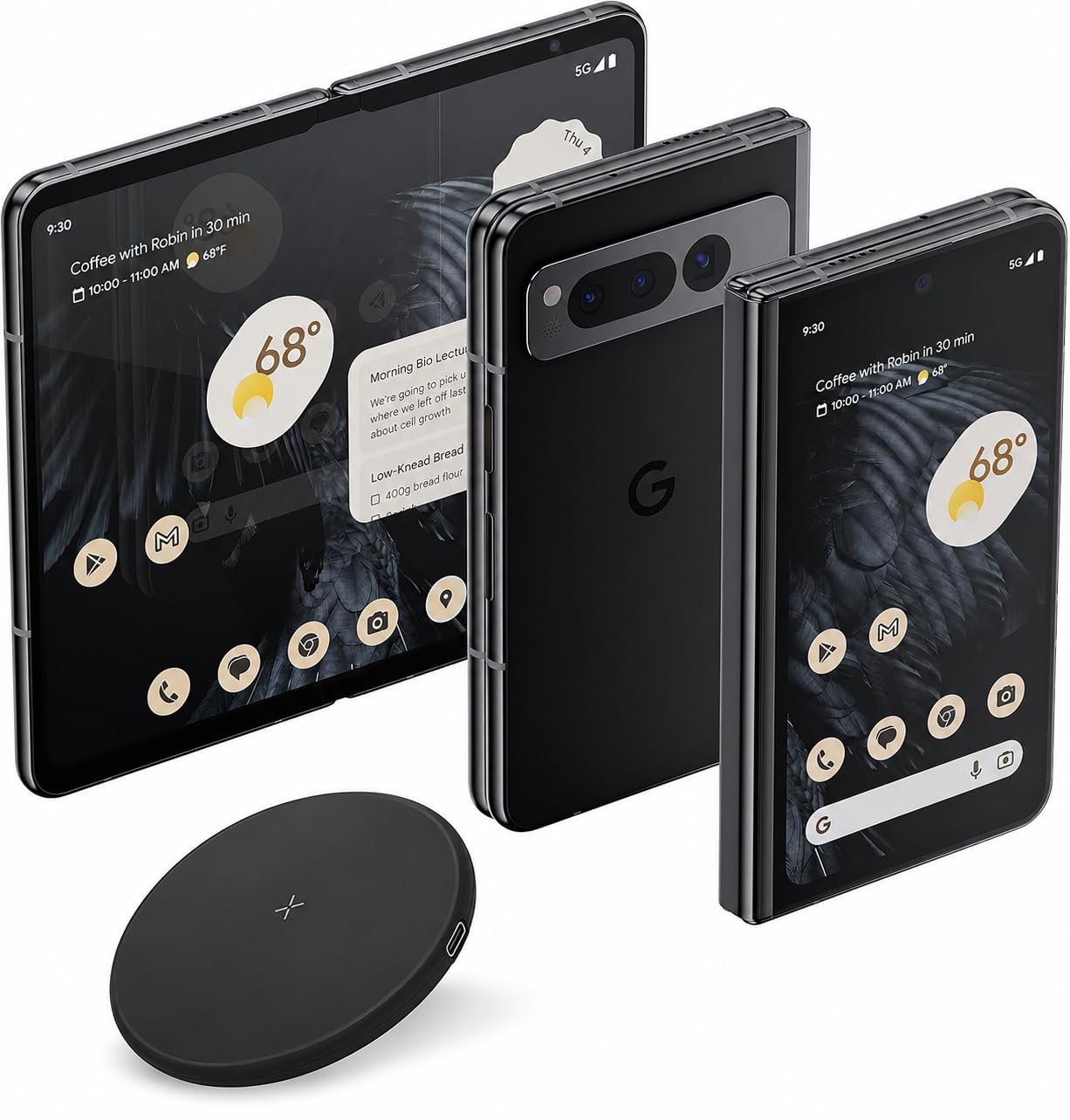
The same foldable Pixel, sold with a full accessory bundle and a wireless charging pad.
This version of the Pixel Fold bundles in the extras so you are not shopping around after. It carries the 7.6″ OLED 120Hz display at 1200 nits brightness, a 4821mAh battery rated for 24 hours, and IPX8 water resistance (a rating that covers submersion in fresh water). The Titan M2 security chip and a built-in Google One VPN handle the privacy side, and the Tensor G2 chip with Android 13 keeps split-screen multitasking smooth.
What buyers like is the form factor and the camera — the triple system of 48MP wide, 10.8MP ultra-wide and 10.8MP telephoto holds up, and the fold itself is described as a great phone. A built-in VPN and open up 5G across major carriers round it out.
The honest catch is heat: it builds up under sustained load, and one buyer using it as a motorcycle GPS saw it overheat and shut off. There are also reports of a unit arriving locked to AT&T despite the open up listing, so confirm carrier status before you buy. Its smaller review base means less of a track record than the older Pixel Fold above. And unlike the Quest 3S, there is no headset here — it is a phone that folds, and a great one for managing your VR setup.
Choose it for: the foldable form plus a bundled charging pad and full accessory set.
Check before buying: confirm the unit is truly open up and not carrier-fixed on arrival.
11. AGM G3 Pro Rugged Smartphone with Thermal Camera
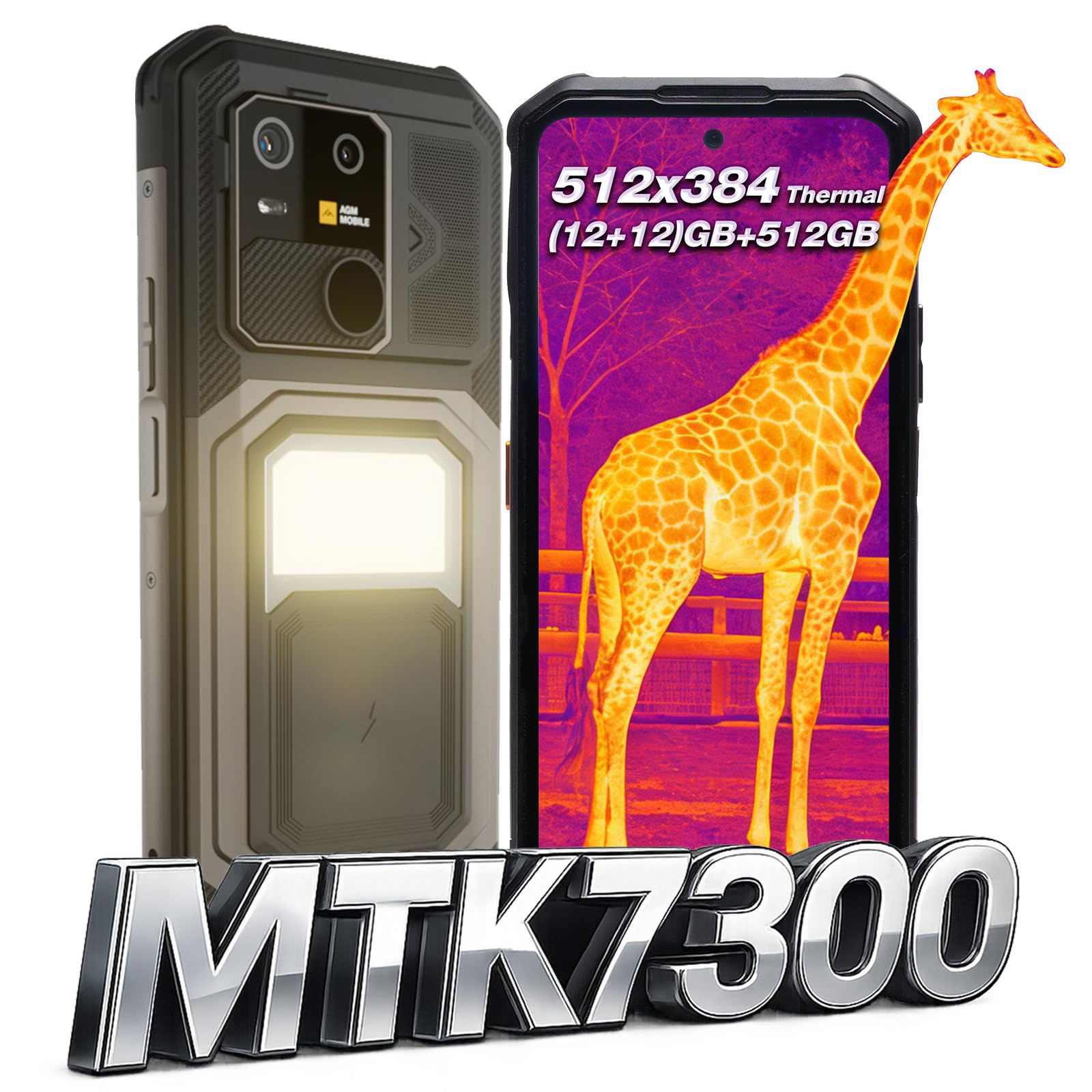
A 10,000mAh brick of a phone with a thermal camera and a built-in camping light.
This is the phone for the job site, the trail and the power outage — not the living room VR session. The 512×384 thermal camera records 25fps thermal video, so you can spot heat signatures in the dark and trace energy loss or water leaks. IP68 and IP69K ratings cover water and dust, and the reinforced frame survives drops up to 1.5 meters. The 10,000mAh battery is the real story — days of use on a single charge, with 33W charging and 18W wireless charging.
What buyers keep coming back to is the usefulness of the thermal and light combo — contractors describe finding constant uses for the thermal, and the bright camping light and flashlight get used nearly every night. The 5W speaker is loud and clear, and the MTK Dimensity 7300 chip with 24GB of total RAM (12GB physical plus 12GB virtual) and 512GB storage handles heavy field apps. The headphone jack is a welcome rarity.
The trade-off to know: at 375g it is a heavy phone, and it works on T-Mobile only in the US. The thermal resolution claim has drawn at least one complaint that the sensor is lower than advertised, so set expectations. It is also not a VR device at all — it is the rugged field phone you keep in the truck while the headset stays home.
Built for the field: IP68 and IP69K ratings, drop protection to 1.5 meters and a 10,000mAh battery that barely notices a day out.
The weight tax: 375g is heavy in the hand and pocket — a deliberate trade for the durability.
For the outdoor worker: a T-Mobile-only rugged phone whose thermal camera and camping light earn their place on the job.
Not your VR phone: this is a companion device, not a headset driver.
Know the Specs
Refresh rate (Hz)
Refresh rate counts how many times per second the screen redraws. Inside a headset or on a mirrored display, a higher number keeps fast motion smooth — a 120Hz panel redraws twice as often as a 60Hz one. Below about 90Hz, head turns smear and the result is discomfort. This is the first spec to compare.
Per-eye resolution
VR headsets list resolution per eye because you look through magnifying lenses at two tiny screens. A figure like 1832 x 1920 per eye tells you how much detail fits in each eye’s view; higher means text and menus stay readable. A phone driving the content needs the chip power to render at that sharpness without dropping frames.
Common Questions
Can I use a regular phone as a VR headset?
Does refresh rate really matter for VR comfort?
What does per-eye resolution mean on a VR headset?
How long does a VR headset battery actually last?
Do I need a gyroscope in my phone for VR?
Is a standalone headset better than a phone for VR?
Can I stream PC VR games to a standalone headset?
Will the Poco X7 PRO work on my carrier?
How much storage do I need for a VR headset?
What makes a foldable phone a good VR companion?
Why do VR headsets drain battery so fast?
The Bottom Line
For most people, the phone for vr question splits cleanly in two. If you want to actually play VR, the Meta Quest 3 512GB is the winner — a 120Hz panel, a 4K+ Infinite Display and 512GB of room for a big library, backed by 4.5+ stars across 6,000+ owner reviews. If you want the best phone to pair with a headset, grab the XIAOMI Poco X7 PRO — its Dimensity 8400-Ultra chip and 120Hz AMOLED are built for exactly that. And for an on-the-go VR companion that folds open into a tablet, the Google Pixel Fold is the one to reach for. Whichever way you go, the rule holds: refresh rate (how many times a second the screen redraws) and per-eye resolution (the pixels each eye sees) decide the experience, and everything else is a bonus.
How we choose
We do not accept paid placement. Every pick is matched to a real buyer and a real use-case; we do not hands-on test units.
Sources
Specifications: manufacturer listings and product documentation. Review insights: verified customer reviews, as of October 2026. Pricing: not shown on this page (it changes often); check the current price via the retailer link.
As an Amazon Associate, Aappliancez earns from qualifying purchases. This does not affect which products we feature.