Disclosure: Some links in this post are affiliate links. As an Amazon Associate I earn from qualifying purchases, at no extra cost to you. Learn more
Specs are compiled from manufacturer listings and verified buyer reviews and can change over time — please confirm the key details on the product page before buying.
Zone 6B is a gift and a trap at the same time. Your winters dip to around minus five degrees Fahrenheit, so anything you plant has to shrug off a real freeze. Then summer arrives with heat that can scorch a plant by August. The perennials that survive both ends of that swing — and come back without you replanting every spring — are the ones worth your money. Below you will find five picks that fit that brief, sorted by what each one actually does best in a 6B bed.
This guide is built by comparing the manufacturers’ published specifications and the patterns across verified customer reviews, so you get each pick’s real strengths and trade-offs instead of marketing spin.
Some of these arrive as live plants ready to go in the ground; others start as seed you sow yourself. That gap decides whether you see flowers this season or next. Here is how each one behaves in perennial flowers for zone 6b.
Top Picks


How To Choose The Best Perennial Flowers for Zone 6B
Start with the hardiness zone printed on the label, not the photo on the packet. A zone number tells you the coldest winter a plant is expected to survive. Zone 6B sits at the warmer half of zone 6, so a plant rated for zones 3 to 8 has plenty of cold margin above you. A plant rated only for zones 7 to 10 is gambling with your winter.
Read the sun requirement before you read anything else
A hosta tagged “full shade” wants relief from afternoon sun, which in 6B can bake a bed by mid-July. Bee balm wants the opposite — full sunlight and moist soil. Planting either one in the wrong light is the single most common reason a healthy perennial sulks instead of blooming.
Decide if you want instant structure or a seed-starting project
Live plants and bare-root crowns give you something to look at within weeks. Seed packets cost less per plant but ask for patience, and germination varies from packet to packet. If you want a bed filled this season, buy plants. If you want to cover a long border on a tight budget, seed is the smarter route.
Check what the plant does in its first year
Some perennials flower the same summer you plant them. Others, including many hollyhocks, are biennial in habit — foliage the first year, bloom the second. Expect that foliage-only first year and you will not mistake a healthy biennial for a failure.
Side-by-Side Comparison
| Model | Best For | Form | Light Needs | Hardy Zones | Amazon |
|---|---|---|---|---|---|
| 9-Pack Hosta Bare Root★ Best Overall | Filling a shady border fast | Bare root, 9 count | Full shade to half sun | 3 to 8 | Amazon |
| Bonnie Plants Lemon Balm 4-PackKitchen Favorite | Kitchen herbs and tea | Live plants, 4 count | Partial shade | 5 to 9 | Amazon |
| Bee Balm 2-Pack, Purple | Pollinator gardens in sun | Live plants, 2 count | Full sunlight | Zone specific | Amazon |
| Hollyhock Seeds 3000+ Bulk Pack | Tall cottage-garden backdrops | Seed, 3000+ count | Sunny to partial shade | — | Amazon |
| 16 Perennial Wildflower Seeds Mix | Covering a large open slope | Seed, 4 oz packet | Outdoor, spring to fall | — | Amazon |
Detailed Reviews
1. Best Deal on Amazon 9-Pack Hosta Bare Root Perennial Plants
Our pick — 4.0+★ from 550+ verified ratings; the strongest balance of quality and price.
Nine shade-ready roots that push up green leaves within days of going in the ground
This is the pick for the corner of your yard where grass gives up — the north side of a fence, the strip under a maple, the bed that only sees morning light. Hostas are rated for zones 3 to 8, which puts 6B comfortably inside their range with room on both ends. You get nine bare-root crowns in the box, and bare root means the plants ship dormant with no soil weight, so they travel cheap and wake up fast once planted.
What wins people over is speed: these roots break dormancy (wake up from their winter rest) fast. Buyers report green leaves within a day or two of planting and obvious growth by week two or three. Reviewers also describe the foliage as healthy and the packaging as clean, with no crushed crowns (the top of the root where new shoots form) or dead roots on arrival. One buyer described a set that survived several transplants and then took root under a maple in Maryland — a tough test for any shade perennial.
You get a big leafy spread: the mature plant reaches 20 to 60 inches wide, enough to fill a bare shady corner. In midsummer it sends up tall stems of mildly fragrant purple or white bell-shaped blooms for about two weeks. Foliage comes in a range of textures and green tones, though a fair number of gardeners note the plants can look alike once they fill in — buy this for the leafy mass, not for a plant-by-plant color scheme. A few roots arrive small or, in rarer cases, as a bare bundle with no crown attached, so open the box the day it lands and check each one.
What earns the top spot
- Rated for zones 3 to 8, so a 6B winter is well inside its comfort range
- Sprouts fast — green growth showing within days, filling a shade bed by week three
- Nine roots per order covers a wide strip of ground in one go
- Blooms in midsummer with fragrant purple or white bell-shaped flowers lasting about two weeks
Where it asks a little of you
- Roots can arrive small, and an occasional bundle shows up with no crown attached
- Mature clumps look much the same, so it reads as a mass planting rather than a mixed border
Go with this one: if you have shade to fill and want visible growth in the same season you plant.
Think twice: if you want a variety of colors from each individual plant — this is a green mass with purple or white flowers, not a mixed palette.
2. Bonnie Plants Lemon Balm Live Herb Plants – 4 Pack
Four lemon-scented plants that turn a shady patch into a tea supply
If your 6B garden is mostly shade and you would rather harvest something than just look at it, this is the practical choice. Four live lemon balm plants arrive in the box — you get four where the hosta pick gives you nine, because these come as potted plants rather than dormant roots. They are rated for zones 5 to 9, so 6B sits right in the middle of their range.
The plants want partial shade and regular watering, which makes them a good fit for a bed that gets sun until lunchtime and dappled light after. Leaves carry a clear lemon scent and go straight into dishes or tea. Buyers describe the plants as arriving healthy and well packaged, with no loose soil spilling in the box, and the scent coming through strong on the first rub. The upkeep is genuinely light — regular watering, and that is the whole list.
The honest catch is heat. Lemon balm is a cool-footed herb, and in a 6B summer a plant that bakes through July can fade even with steady watering. A spot with afternoon shade keeps it happier than an open sunny bed. The other thing to know is trimming: these can arrive leggy and untrimmed, so pinch them back yourself to push a bushier, fuller plant rather than waiting for the grower to do it.
The scent test: this one earns its place on smell and usefulness before looks — a plant you can actually brew from beats a prettier one you cannot.
Watering reality: plant after the last frost and keep the soil evenly moist; the four-pack suits a container row by a door as well as a herb bed.
Right for you: a shaded kitchen garden where the point is harvesting leaves for tea and cooking.
Wrong fit: a full-sun bed in the hottest part of the yard, where the plant will struggle through the peak of summer.
3. Bee Balm (2 Pack)
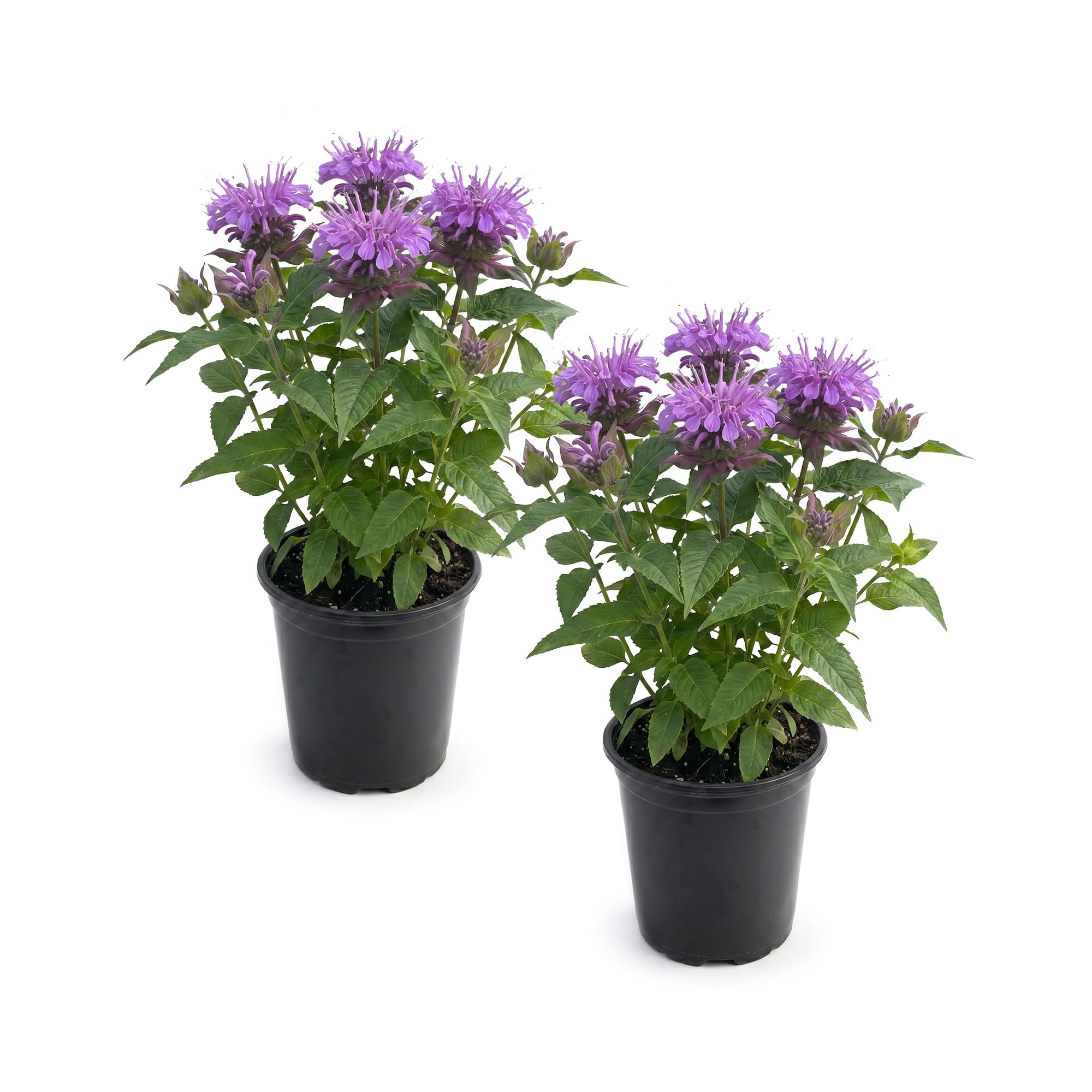
A sun-loving mint cousin that arrives tiny and then takes off
Want a sunny border humming with bees and butterflies? Bee balm is the pick. Each plant ships at about 10 inches tall and 4 inches wide in a 1-quart pot, and it will not stay that size — this perennial reaches 2 to 4 feet tall with a spread of 3 to 4 feet wide. Give it full sunlight, moist well-draining soil, and a deep watering every 1 to 2 weeks at the base, and it has what it needs.
The plant is a member of the mint family, which explains both its vigor and its habit of spreading. Buyers consistently describe the two-pack as arriving smaller than the listing photo suggests, then growing with real speed — one set bursting out of its pots within 3 months with abundant flowers. Bloom color can land deeper than pictured; a plant sold as lavender can open a rich magenta. It is a pollinator magnet either way.
What you should plan for is inconsistency between the two pots. The pattern across feedback is that one plant thrives while the other arrives weak or wilted, and a plant that ships badly in hot weather sometimes never recovers. It also carries a strong scent indoors while it waits to be planted, which is fine outside and noticeable in a kitchen. Order in mild weather if you can, and plant both pots within a day or two of arrival.
Why sun-gardeners choose it
- Grows to 2 to 4 feet tall with a 3 to 4 foot spread, so two pots fill real space
- Purple blooms draw bees and butterflies through the summer
- Light schedule — a deep watering every 1 to 2 weeks at the base
- Recovers well; plants that arrive wilted often push new growth within a week
What to plan around
- Ships small, and the two pots can differ in health on arrival
- Bloom color may run deeper than the lavender shown in the listing
- Strong scent while the plants sit indoors before planting
Made for: a full-sun pollinator bed where height and flower color matter more than instant size.
Look elsewhere: if you need two matched, full-size plants in the ground the day they arrive.
4. Hollyhock Seeds 3000+ Bulk Pack, Alcea rosea Mixed-Color
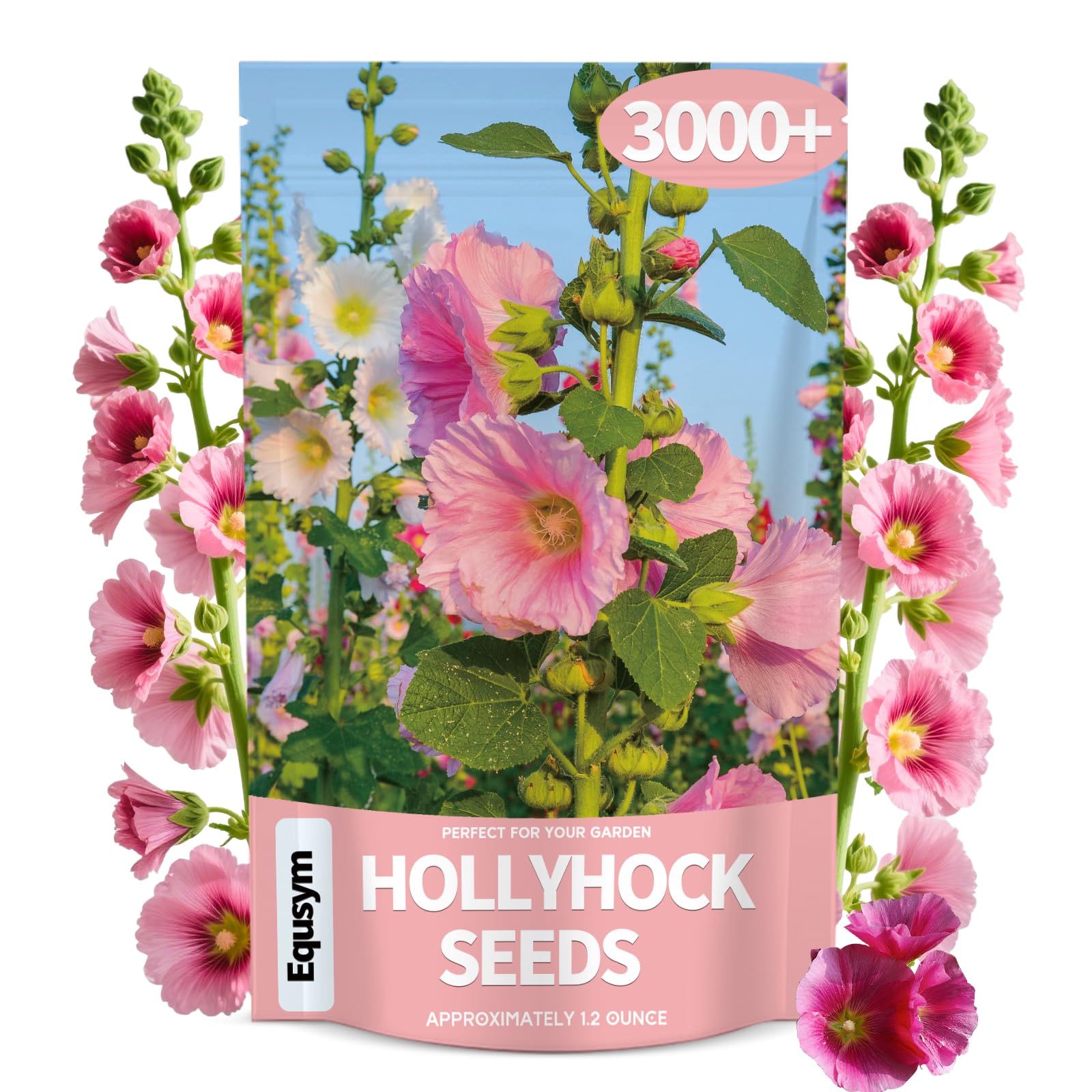
Three thousand seeds for the price of a couple of plants — and a fence line of towers
Here is the math that sells this packet: you get more than 3000 hollyhock seeds in one order, where the lemon balm four-pack gives you four plants. For a long fence or a back border you want to cover in one season, that gap is the whole argument. Sow them a quarter inch deep in a sunny spot, keep the soil moist, and let them climb — this is the plant that gives a cottage garden its vertical drama.
The reason to trust the packet is germination (how many seeds actually sprout). That is the strength the reviews keep returning to, with buyers reporting the seeds coming up in ground where nothing had sprouted before — one gardener sowed into rocky, clay-heavy, dry soil and still saw nearly every seed germinate. Sow in fall or early spring for the strongest start; a fall sowing in a neighboring zone came up vigorous and even threw buds by late July.
Set your expectations on timing, though. Hollyhocks are commonly biennial in habit, meaning foliage the first year and flower spikes the second. Some gardeners get blooms sooner, many do not, and a packet that produces almost nothing is possible if the seed sits or the soil stays cold and wet. The packet lists mixed red, yellow, pink, and white, and the plants can reach striking heights — give them a fence or a wall to lean on.
Volume play: 3000+ seeds makes this the cheapest way to cover a lot of ground, and self-seeding means the patch can return year after year once it establishes.
The patience clause: expect a foliage year before a flower year, and treat a thin first sprouting as a reason to sow again rather than a reason to give up.
Pick this: if you have a sunny fence line, a tolerance for a wait, and want maximum coverage for minimum outlay.
Skip the seed route: if you want flowers in the ground this summer — buy live plants instead of waiting on a biennial.
5. 16 Perennial Wildflower Seeds Mix for Indoor & Outdoors

A four-ounce blend built to turn a bare slope into a pollinator meadow
This is the option for the gardener with a big, awkward space — a steep bank, a strip beside a driveway, ground you cannot reasonably mow. The packet holds heirloom, non-GMO seed in a blend that includes blanketflower, gayfeather, New England aster, Siberian wallflower, Shasta daisy, lance-leaf coreopsis, sweet William, purple coneflower, white yarrow, and columbine. That mix of perennials and annuals is what keeps color coming from spring into fall.
Looks are where this blend earns its keep. Reviewers describe the flowers as genuinely striking in color, with a meadow that fills in fast once it takes — one buyer on a steep west-facing slope replaced unmowable grass and ended up with a bed neighbors stopped to admire. It blooms across a long stretch, comes in pink, yellow, purple, and green tones, and draws bees, butterflies, and birds.
Now the honest part. Germination and bloom rate swing widely with this kind of mix — sow it and you may see a spectacular meadow, or you may see patches that barely come up. One gardener found the packet far smaller than expected and did not have enough seed to fill the small containers planned. Buy more seed than you think you need, clear and prep the ground, and water daily until the seedlings establish. Prep, extra seed, and daily watering turn the 4-ounce packet into a meadow.
The case for the blend
- Heirloom, non-GMO seed in a mix of 16 varieties spanning spring to fall color
- Suits large or awkward ground — slopes, borders, unmowable strips
- Feeds bees, butterflies, and birds once it establishes
- Long bloom window from spring into fall
The honest caveats
- Germination and bloom rates vary widely from sowing to sowing
- The 4-ounce packet is smaller than some buyers expect — order extra for full coverage
- Results depend heavily on soil prep and daily watering early on
Best if: you have a large, hard-to-mow area and want a pollinator meadow in one season.
Look elsewhere: if you want predictable, uniform plants in a small tidy bed — a controlled plant like the hosta or lemon balm suits that better.
Know the Specs
Hardiness Zone
A zone number tells you the coldest winter a plant can be expected to survive, so it is your first filter in 6B. A plant rated for zones 3 to 8, like the hostas here, has cold margin on both sides of your zone. A plant rated only for zones 5 to 9, like the lemon balm, also covers 6B but with less room at the cold end. Always check that the plant’s range includes 6 before you buy.
Light Requirements
“Full shade” means a plant wants relief from direct sun, often the north side of a house or under a tree — that is the hosta’s lane. “Full sunlight” means the opposite, at least several hours of direct sun a day — that is what bee balm wants. “Partial shade” sits between them and suits lemon balm. Planting a sun-lover in shade, or the reverse, is the most common reason a healthy perennial fails to bloom.
Form: Bare Root vs Live Plant vs Seed
Bare root ships dormant with no soil, so it travels light and wakes fast — the hosta nine-pack is bare root. Live plants arrive potted and ready to plant, giving you instant structure — the lemon balm and bee balm sets. Seed is the budget route for covering lots of ground, but results follow soil prep and watering more closely, which is why the wildflower and hollyhock packets ask more of you up front.
Bloom Timing and Biennial Habit
Some perennials flower the first season, and some do not. Hollyhocks are commonly biennial — foliage one year, spikes the next — so a leafy plant in year one is doing exactly what it should. Bloom periods in the data here run from spring to fall on the lemon balm and wildflower mix, and midsummer for the hosta and bee balm. Check the bloom timing before you plant so a slow first year reads as normal, not failed.
Common Questions
Will these perennials actually come back every year in zone 6B?
How much shade can hostas really take in 6B?
Do I need full sun for bee balm to bloom?
How long until hollyhock seeds flower?
Why did my wildflower seeds barely come up?
What is the difference between bare root and a potted plant?
Can I plant lemon balm in a container on a shaded porch?
Is the wildflower mix safe to plant near a vegetable bed?
When is the best time to plant perennials in zone 6B?
Which of these is best for a pollinator garden?
The Bottom Line
For most 6B gardeners, the perennial flowers for zone 6b winner is the 9-Pack Hosta Bare Root, because it covers shade, comes back year after year, and shows green growth within days — the crowd favorite at 4.0+ stars across 500+ ratings. If you want harvest and scent in a shady spot, reach for the Bonnie Plants Lemon Balm four-pack, which gives you tea-ready leaves in a partial-shade bed. For a sunny pollinator border that fills out fast, plant the Bee Balm two-pack. To cover a long fence line cheaply, choose the Hollyhock seed packet, and for a wide slope or awkward ground, the Wildflower Mix turns it into a meadow. Match the pick to your light level and how long you will wait for blooms.
How we choose
We do not accept paid placement. Every pick is matched to a real buyer and a real use-case; we do not hands-on test units.
Sources
Specifications: manufacturer listings and product documentation. Review insights: verified customer reviews, as of October 2026. Pricing: not shown on this page (it changes often); check the current price via the retailer link.
As an Amazon Associate, Aappliancez earns from qualifying purchases. This does not affect which products we feature.