Disclosure: Some links in this post are affiliate links. As an Amazon Associate I earn from qualifying purchases, at no extra cost to you. Learn more
Specs are compiled from manufacturer listings and verified buyer reviews and can change over time — please confirm the key details on the product page before buying.
You want a P-mount phono cartridge that drops straight into your turntable’s tonearm without alignment fiddling, and you want the one most likely to sound right the first time. Two things decide that: the stylus shape, which sets how much groove detail you actually hear, and whether the cartridge is built to fit the T4P plug-in standard (a no-alignment mount for straight tonearms). This guide covers both, plus the models owners keep returning to.
This guide is built by comparing the manufacturers’ published specifications and the patterns across verified customer reviews, so you get each pick’s real strengths and trade-offs instead of marketing spin.
Below you’ll find the models worth considering, what each one does differently, and how to match a cartridge to your own turntable. Here is the practical breakdown of the p mount phono cartridge market, sorted by what actually matters when you play a record.
Top Picks

How To Choose The Best P Mount Phono Cartridge
The first thing to settle is fit, not sound. A P-mount cartridge pushes straight onto the end of the tonearm and locks with a single screw, so there is no overhang or angle to set. That is why these are sometimes called plug-and-play carts — the standard fixes the geometry for you.
Check the plug standard before anything else
P-mount cartridges are built to the T4P plug-in standard. If your turntable has a straight, thin tonearm with a square socket at the end, it takes one of these. If it has a wider headshell held by two screws, it takes a different cartridge type and a P-mount will not seat.
Elliptical versus conical stylus
The stylus is the tiny needle that rides the groove. A conical tip is a rounded cone, forgiving of worn records. An elliptical tip is shaped to touch more of the groove wall at once, which usually pulls out more high-frequency detail. The catch is that an elliptical reads a damaged record more honestly.
Stylus tip dimensions and tracking
Tip sizes are written as two numbers, such as 0.3 x 0.7 mil. The first is the narrow side that reaches deep into the groove. The second is the wider side. A finer tip generally tracks fine detail better, while a larger, rounder one is easier on the record surface.
Side-by-Side Comparison
| Model | Best For | Stylus Shape | Tip Size | Tracking Setup | Amazon |
|---|---|---|---|---|---|
| Audio-Technica AT85EP★ Best Overall | All-round plug-in upgrade | Elliptical | 0.3 x 0.7 mil | P-mount T4P | Amazon |
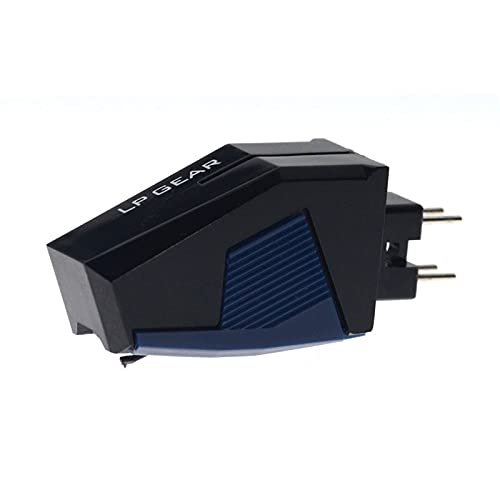
| LP Gear CFT4PSECarbon Cantilever | Carbon fiber on a budget | Spectra Elliptical | 8 × 18 µm | P-mount | Amazon |
| Cartridge and Stylus for SL BD22 / SL BD3 / SL 5 | Direct-fit replacement | Conical | 0.6 mil | P-mount | Amazon |
| Cartridge and Stylus for SL 7 / SL D21 / SL D4 | Spare on the shelf | Conical | 0.6 mil | P-mount | Amazon |
| Cartridge and Stylus for SL B210 / SL BD20 / SL BD22D | Matching a Technics model list | Conical | 0.6 mil | P-mount | Amazon |
| LP Gear CF3600LE | Warm sound on mid-fi gear | Line-contact capable | — | Screw mount, align needed | Amazon |
| LP Gear for SL-M3 / SL-Q2 / SL-10 | Top-tier detail extraction | Spectra Elliptical | 8 × 18 µm | P-mount T4P | Amazon |
Detailed Reviews
1. Audio-Technica AT85EP Turntable Cartridge
Our pick — 4.5+★ from 2,000+ verified ratings; the strongest balance of quality and price.
A T4P plug-in cartridge that revives a dormant linear-tracker with no alignment to learn.
If you own a linear-tracking turntable and the original stylus has been sitting unused for years, this is the cartridge to reach for. Its 0.3 x 0.7 mil elliptical stylus pushes into the groove with a fine profile, so the detail that a worn conical tip smears comes back. Owners describe that first play after a decade of silence as a genuine jump: buyers report that this AT85EP “brought my trusty Technics SL QD2 back to life after sleeping over the last 15-20 years!”
The engineering behind that is a dual moving magnet design paired with a para-toroidal coil, which is the part that separates the left and right channels cleanly so instruments sit in their own space instead of blurring together. It works with any linear-tracking turntable that uses the T4P plug-in connector, whichever brand made it, and the manual in the box covers the fit.
Here is the honest picture. The sound leans clear and balanced rather than bass-heavy, so if your speakers are already thin you may want a warmer cartridge. It also tracks the surface noise on worn vinyl more directly than a cheap conical tip will. Everything plugs into the arm and tightens with one small screw, which is a minute or two of work with a tiny screwdriver.
elliptical tip tracking
- 0.3 x 0.7 mil elliptical tip lifts fine detail out of the groove
- Dual moving magnet construction keeps channels cleanly separated
- Fits any brand of T4P linear-tracking arm — no alignment step
- Plug-in swap takes a minute or two with a small screwdriver
setup needs care
- Balanced voicing means deep bass is not the headline
- Elliptical tip shows up scratches a conical would gloss over
- Needs a proper break-in before it settles into its sound
upgrade pick: reviving a linear-tracking turntable that takes a T4P plug-in cartridge.
alignment fuss: your records are badly worn and you want a forgiving tip that hides the damage.
2. LP Gear CFT4PSE P-mount cartridge
A Super Carbon Fiber cantilever that widens the soundstage on a mid-priced P-mount table.
This cartridge keeps the needle steadier as the groove moves past it, because its cantilever (the thin arm that carries the stylus) is Super Carbon Fiber — a stiffer material than the usual aluminium tube. LP Gear codeveloped and designed this one with Audio-Technica, and the Spectra Elliptical diamond tip carries an 8 × 18 µm profile. In plain terms, that narrow side reaches deep enough to pick up quiet passages a chunkier conical tip rolls over.
This one suits a vintage table you want to bring forward without spending premium money. Owners mention it as “a replacement cartridge for my vintage Technics SL-5 turntable which requires a P-Mount style cartridge. It fit perfectly and sounds great.” Its carbon cantilever delivers the open, layered soundstage that separates it from plain conical carts.
The trade-off worth knowing: P-mount sockets are not all machined to the same tolerance, and an occasional table will refuse to seat the body cleanly. Sound quality gets described as richer in the highs and mids than in the low end, so a bass-heavy rig will balance out. If it seats, it is a serious step up for the money.
P-mount plug-in ease: the stiffer carbon cantilever gives it a more precise, airy read of the groove than the conical competition at this level.
fit varies by arm: it slots into a T4P arm in seconds with no alignment, but seating tolerance varies by turntable.
simple swap: a vintage P-mount table where you want more treble clarity and space between instruments.
check mount first: your tonearm socket is unusually tight or you need a guaranteed first-time seat.
3. Cartridge and Stylus for Technics SL BD22

The direct replacement for a long list of Technics linear-tracker models, conical tip included.
This one is built as a straight swap for a set of specific Audio-Technica cartridge models — AT300P, AT3482, AT3482H/U, AT3482P and AT90CD — and it lists the Technics turntables it fits by name, from the SL BD22 to the SL 5. The stylus is a conical 0.6 mil tip on a bonded round shank, which is a rounded needle shape. That makes it forgiving of older, played-in vinyl and simpler to set down correctly.
Owners describe it as a clean, functional replacement that does exactly what a replacement should. Customers note that when it was “mounted on my Technics SL-5 it works perfectly.” The metal body with a diamond tip is built to the same P-mount fit, so it snaps into the arm and tightens with one screw.
The honest limit is detail. A conical tip this shape is not the tool for extracting fine high-frequency texture, so if your records are pristine and your system is revealing, an elliptical cart will pull more out of them. For everyday listening and for keeping an older table running, it does the job without fuss.
replacement option: your Technics model is on this list and you want an exact-fit replacement with zero alignment.
verify model: you chase fine high-frequency detail and your records are in good shape.
4. Cartridge and Stylus for Technics SL 7

A model-matched spare so a worn stylus never leaves your turntable idle for weeks.
The reason to buy this cartridge is less about the sound and more about the calendar. It is the same 0.6 mil conical stylus and bonded round shank as the model above, but it lists a different set of Technics tables — SL 7, SL D21, SL D210, SL D30, SL D4, SL DD2, SL DD20, SL DD33 and SL DL1 — so check that list first. It also replaces the AT300P, AT3482, AT3482H/U, AT3482P and AT90CD carts.
The pattern among buyers is that many keep it boxed. Reviewers point out buying it “as a standby as I hate finding a stylus to be faulty and then waiting a month for a replacement.” That is a sensible move for a P-mount owner, because these cartridges are increasingly hard to find and a cartridge can fail on the first play of a record you were looking forward to.
One point worth hearing straight: the conical shape is fine for the average listener, but a listener with resolving gear will hear the difference between a conical and an elliptical tip quickly. If that describes you, step up to an elliptical model instead of stocking this one.
budget needle swap: a known-good spare sitting in the drawer removes the wait when a stylus fails mid-week.
tip wears fast: conical 0.6 mil is forgiving and easy to live with, but it trails an elliptical on fine detail.
cheap fix: your Technics model appears on this list and you want a matching cartridge ready to go.
short lifespan: you already run an elliptical cart on a revealing system and would hear the step down.
5. Cartridge and Stylus for Technics SL B210
The conical cartridge that quietly earns the strongest reputation of the Technics-fit group.
Of the Technics direct-fit replacements here, this one draws the most consistently positive owner reviews. It is a conical 0.6 mil P-mount built for Technics SL B210, SL B30, SL B300, SL BD2, SL BD20D, SL BD20, SL BD21 and SL BD22D turntables, and it also stands in for the AT300P, AT3482, AT3482H/U, AT3482P and AT90CD cartridges.
What wins people over is how completely it restores a dead turntable. Shoppers say it “repaired my unit to like new condition,” and the fit gets called exact and trouble-free — one described it as a “perfect replacement P mount cartridge for my Technics turntable” that “sounds and tracks nicely.” For a cartridge you install once and forget, that is the whole job.
Unlike the elliptical AT85EP in the top spot, this one uses a rounded conical tip, so it smooths over surface noise rather than digging into it. That is a benefit on well-loved records and a slight loss on pristine ones. Check your model against the list before ordering, because the fit is model-specific.
exact fit: the Technics models in that list, especially worn vinyl that benefits from a gentler conical tip.
light arms only: hunting maximum detail on mint-condition pressings.
6. LP GEAR CARBON FIDELITY CF3600LE phono cartridge

A warmer, punchier cartridge for a mid-fi table that needs a proper stylus.
This is a screw-mount cartridge that needs realignment when you fit it, so it is not the plug-and-play type that P-mount buyers usually start with. But it earns a place here because it is often the step up for a turntable with a standard headshell, and its voicing is thick and musical rather than clinical. Buyers report it outplays far costlier cartridges, with warm, punchy sound and secure tracking once aligned.
What it changes in practice is how forgiving it is of a basic system. It accepts multiple styli, including an AT91 conical and a line-contact, so you can move it up the range later without buying a fresh cartridge. It works well on a Stanton ST-150 with a custom phono stage, where owners note good detail, excellent bass and a natural midrange. It also revives old tables — one buyer set it up on a Garrard Type A MK II and called the sound clear and fine.
The catch is worth saying plainly: it needs careful alignment to avoid sibilance, and the wrong setup makes it sound thin and harsh until you get a turntable-specific protractor on it. It is not a true high-end cartridge, so go in expecting a strong mid-fi result, not a reference one.
carbon fiber cantilever
- Warm, punchy voicing that suits mid-fi systems
- Accepts several stylus types so it can be upgraded over time
- Secure tracking once properly aligned
break-in period
- Needs realignment — not a plug-in P-mount
- Sounds thin and hard until aligned with the right protractor
- Not a true high-end cartridge, so expectations should stay realistic
detailed sound: a standard-headshell turntable where you want warm, musical sound and are ready to align it.
needs patience: your arm takes a P-mount plug-in cartridge, or you want a set-and-play install.
7. LP GEAR cartridge and stylus for Technics SL-M3

The detail-first P-mount: carbon cantilever, Spectra Elliptical tip, and a wide open stage.
For a vintage linear-tracker that deserves its best possible sound, this cartridge leads the group on the fine stuff. Its carbon fiber cantilever keeps the stylus stable as it traces, and the Spectra Elliptical diamond carries an 8 × 18 µm profile — the narrow side reaches deep into the groove while the wide side rides the wall, so it reads finer detail than the conical carts higher up this list.
That shows up as a big, layered soundstage. Owners who compare it to the AT85EP and AT-85 find this carbon fiber and elliptical build more refined. Here it carries the same design to a wider spread of Technics models, from the SL-M3 and SL-MA1 to the SL-Q2, SL-Q300 and SL-10. Owners mention it lets them “hear more of what the grooves of the record contain,” and it is a straightforward P-mount push-on fit.
The trade-off is character: this cart is a little darker than its product photos suggest, so buy it for sound, not looks. It also asks more of the record — a scratch an elliptical tip reads is a scratch a conical would skip past. For a good-condition collection, that honesty is the point.
specific fit: your Technics model is on the list and you want the most detail these P-mounts offer.
hard to find: your records are worn enough that you prefer a hooded, forgiving tip over full detail.
Know the Specs
Elliptical versus Conical Tip
The stylus shape decides how much of the groove wall the needle touches at once. A conical tip is a rounded cone and rides a smaller contact area, so it glides over light scratches and surface noise. An elliptical tip is shaped so its narrow side reaches deeper and its wide side spreads the load, which pulls out more fine high-frequency detail. Elliptical is the detail choice; conical is the forgiving one.
Stylus Tip Size (Mil and µm)
Tip sizes come in two numbers. The AT85EP’s 0.3 x 0.7 mil means the tip is 0.3 of a thousandth of an inch on its narrow side and 0.7 on its wide side. The LP Gear models run 8 × 18 µm, which is the same spec in metric. A smaller first number usually means finer detail retrieval, while a larger, rounder tip is easier on the records.
P-Mount (T4P) Fit
P-mount cartridges, also called T4P, push onto a square socket in the tonearm and lock with one screw. The standard fixes the overhang and angle for you, so there is no alignment to do. That is why these are the easy upgrade for linear-tracking turntables. If your arm has a wide headshell held by two screws, it needs a different cartridge type.
The Cantilever
The cantilever is the thin arm that carries the stylus from the cartridge body down to the needle. It flexes as it rides the groove, so a stiffer one — like the Super Carbon Fiber on the LP Gear carts — holds the stylus steadier. Steadier movement usually means cleaner tracking and less blur between instruments.
Common Questions
How do I know if my turntable takes a P-mount cartridge?
Is an elliptical stylus better than a conical stylus?
Will the AT85EP fit a vintage Technics turntable?
Do I need to realign a P-mount cartridge after installing it?
What does 0.6 mil mean on a stylus?
How long does a P-mount cartridge stylus last?
Can I swap the stylus on a P-mount cartridge?
Why do these cartridges list specific Technics model numbers?
Will an elliptical cartridge make my old records sound worse?
The Bottom Line
For most people the answer to the p mount phono cartridge question is the Audio-Technica AT85EP, because its 0.3 x 0.7 mil elliptical stylus fits any T4P plug-in arm with no alignment and brings a silent turntable back to life. It holds 4.5+ stars across 2,000+ owners, with reviewers praising both its T4P fit and its balanced sound.
If you want the finest groove detail and your Technics model is on its list, the LP Gear for SL-M3 and SL-Q2 to SL-10 is the detail-first pick with its carbon cantilever and Spectra Elliptical tip. And for keeping a specific Technics linear-tracker running with a spare in the drawer, the model-matched cartridge for SL B210 and SL BD20 is the one to reach for.
How we choose
We do not accept paid placement. Every pick is matched to a real buyer and a real use-case; we do not hands-on test units.
Sources
Specifications: manufacturer listings and product documentation. Review insights: verified customer reviews, as of October 2026. Pricing: not shown on this page (it changes often); check the current price via the retailer link.
As an Amazon Associate, Aappliancez earns from qualifying purchases. This does not affect which products we feature.