Disclosure: Some links in this post are affiliate links. As an Amazon Associate I earn from qualifying purchases, at no extra cost to you. Learn more
Specs are compiled from manufacturer listings and verified buyer reviews and can change over time — please confirm the key details on the product page before buying.
Wood outdoors fails at the joints first. Water gets into a hairline crack in a window sill or a deck rail, freezes overnight, widens the gap, and by the next season you are looking at soft, dark timber instead of a painted edge. The fix is a bead of the right sealant or filler pushed into that gap before winter arrives. This guide covers what actually holds on exterior wood: how flexible the cured bead stays, how fast it survives rain, and which products are built to fill a void rather than just run a line between two boards.
This guide is built by comparing the manufacturers’ published specifications and the patterns across verified customer reviews, so you get each pick’s real strengths and trade-offs instead of marketing spin.
Each pick below is broken down by what it sticks to, how long it stays flexible, and the job it does best — so you can match one tube to your actual repair instead of guessing. The list below ranks the best outdoor caulking for wood by exterior performance and trade-offs.
Top Picks

How To Choose The Best Outdoor Caulking for Wood
Exterior wood moves. It swells in wet weather, shrinks in dry heat, and shifts every time the temperature crosses freezing. A sealant that cures into a hard, brittle plug will lose that fight and crack open within a season. The right product cures with give, so the bead stretches with the wood instead of splitting away from it.
Silicone versus acrylic latex on exterior timber
A 100% silicone sealant gives you the most stretch and the best water resistance, and it holds adhesion on wood through sun and freezing temperatures. The trade-off is that most silicone is not paintable, so it works best where the colour can stand on its own or where you want a clear bead that disappears against the grain. Acrylic latex is the opposite deal: it takes paint, cleans up with water, and runs through a cartridge smoothly, but it can shrink as it cures, which means a deep crack sometimes needs a second pass.
The number to read on the label: full cure time
Full cure time is when the bead stops being soft and reaches its final strength. A filler that cures in 15 minutes can be sanded and painted the same afternoon. A tube that needs 48 hours wants a dry forecast. Separate from that is rain-ready time — when the product can take a shower without washing out — and on exterior work that is the figure that saves a job when the weather turns.
When you need a filler, not a bead
If the wood itself has a gouge, a rotted patch, or a hole where a screw pulled out, a caulk line will sit on top of the damage and look wrong within a month. A wood filler is built for voids: it goes in thick, hardens, and sands smooth so the repair disappears under paint or stain. A two-part filler mixes a cream hardener into the body for a chemical bond and a non-shrinking fill, which is what you want on a sill that has started to soften.
Side-by-Side Comparison
| Model | Best For | Type | Full Cure Time | Gap / Volume | Amazon |
|---|---|---|---|---|---|
| GE All Purpose Silicone Caulk, Clear★ Best Overall | Sealing trim and sill gaps | 100% silicone | 24 hours | Max gap fill 0.38 inches | Amazon |
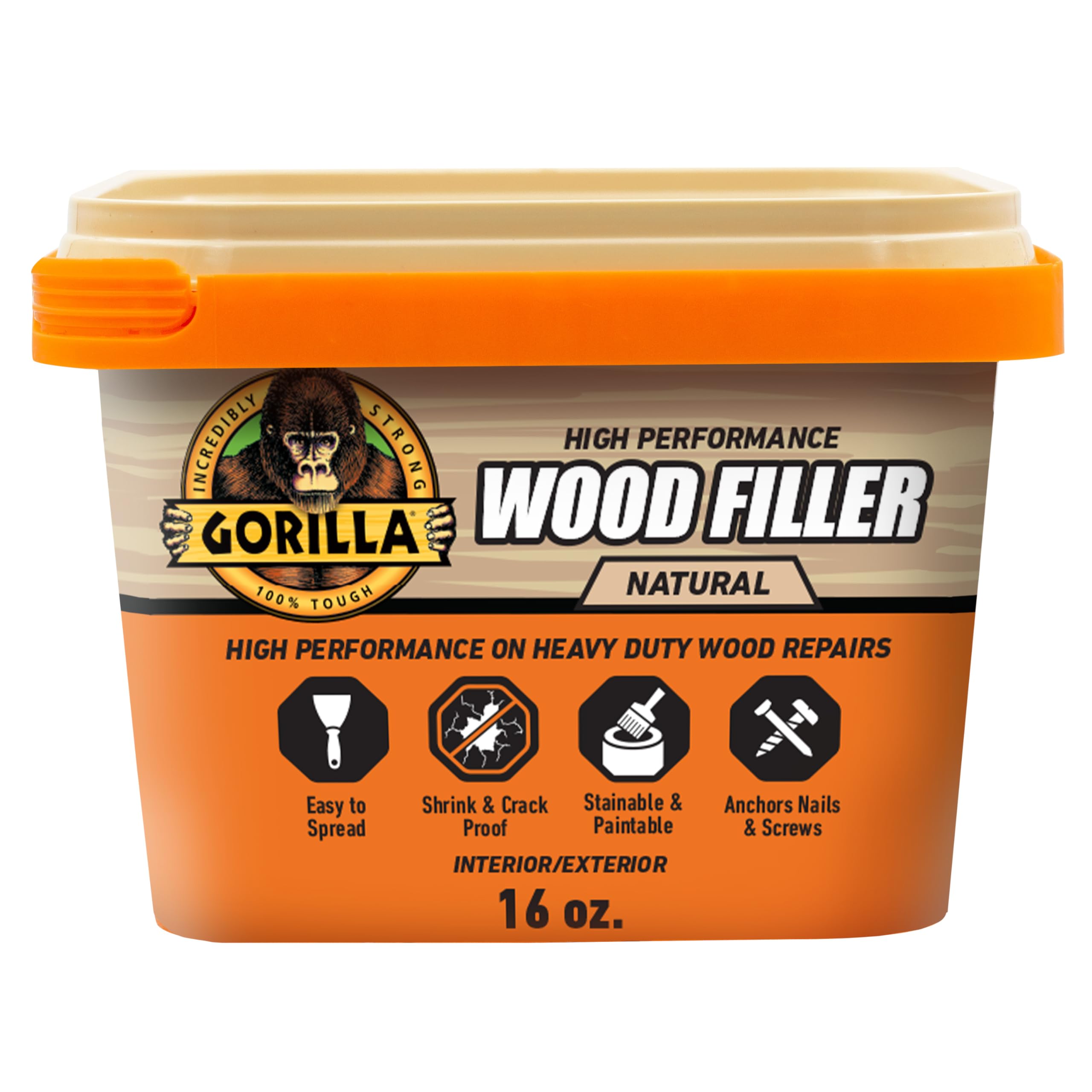
| Gorilla All Purpose Wood FillerBest Value | Gouges, cracks and holes in timber | Acrylic wood filler | —_ | 16 oz tub | Amazon |
| Brown RTV Silicone Sealant | Coloured seams on RV and metal trim | 100% silicone | 48 hours | 10.1 fl oz cartridge | Amazon |
| Bondo Wood Filler with Hardener | Rotted sills and structural voids | Two-part resin filler | 15 minutes | 30 oz plus 0.5 oz hardener | Amazon |
| DAP Alex Painter’s Acrylic Latex Caulk | Whole-house painting and siding prep | Acrylic latex | 24 hours | 10.1 oz, 12 pack | Amazon |
Detailed Reviews
1. GE All Purpose Silicone Caulk, Clear, 10 fl oz Cartridge
Our pick — 4.5+★ from 2,500+ verified ratings; the strongest balance of quality and price.
A clear silicone bead that shrugs off rain in 12 hours and cracks within one.
The headline for anyone sealing exterior timber is this: it is ready for rain exposure in as little as 12 hours, while the full cure — the point where the bead reaches final strength — takes 24 hours. That is the spec you want on a window sill or a door frame when the forecast is turning. It also fills gaps up to 0.38 inches, which covers the hairline-to-pencil-width splits that open up between a sill and a wall.
What wins people over is the quality of the cured bead. Owners seal metal to wood, wood to fibreglass, and gutter trim to a PVC roof with the same tube, and they keep coming back to how well it stays stuck. As one RV owner put it, it “goes on well, not smelly, dries quickly, sticky but not too messy,” and seals an RV window “like a champ.” The clear finish is the other quiet win — one householder filled the gap around a cord run through a wall and noted you “can’t even tell that I did anything.”
Two things to plan for. The bead skins over in 30 minutes but stays tacky, so a latex glove is the sensible way to tool the joint — bare fingers and cloth gloves will both pick up the sealant. And while many find it dispenses smoothly, a few find it stiff coming out of the cartridge, which makes a decent caulk gun worth owning. Neither is a reason to pass it up; both are just part of running a silicone bead properly.
Where the GE earns its place
- Rain-ready in as little as 12 hours and fully cured in 24 — the shortest exterior wait in this lineup.
- Fills gaps up to 0.38 inches, so it bridges real splits, not just surface seams.
- Clear finish disappears against bare or stained wood, which makes a tidy repair easy.
- Sticks across metal, wood, fibreglass, glass, tile, and cement board for one-tube versatility.
What to expect going in
- Strong eye-watering odour while curing — ventilate the area you are working in.
- The tacky skin means tooling with a glove is close to mandatory.
- Silicone rather than paint, so it will not take a topcoat the way an acrylic bead will.
Reach for this if: you are sealing exterior trim, sills, or a cord hole and want a clear bead that survives weather without a second visit.
Pick a filler instead if: the timber itself is soft or missing — this seals gaps, it does not rebuild rotted wood.
2. Gorilla All Purpose Wood Filler, Natural Finish, 16 oz Tub
The tub that rebuilds a gouged sill and disappears under stain.
Gaps between boards are one problem; damage in the board itself is another. This acrylic filler goes into cracks, gouges, and holes, and because it is water resistant and does not shrink or crack, it holds up on an exterior repair as well as an indoor one. The 16 oz tub is sized so a single sill job barely dents it — with this stuff, a little really does go a long way.
The finish is the part that sells it. It is paintable, stainable, and sandable, and it sands down close enough to the surrounding grain that the patch vanishes. It takes stain better than most people expect going in.
The honest limit is vertical work. The material is thick and pliable, and on a hanging cabinet door or a slanted face it can slump before it sets, so horizontal or well-supported surfaces behave far better. Spread it in thin layers rather than one thick blob and it dries faster with less shrinkage. It also should not be used as a flexible weather bead in a moving joint — this is a repair material, not a sealant.
Versatility is the real value: cracks, gouges, holes, and loose screws, one tub across both interior and exterior jobs.
Vertical surfaces need patience: the filler is pliable enough to slump on a hanging door, so build shallow layers and give each one time.
Who this suits: anyone fixing actual damage in exterior wood and planning to paint or stain over the repair.
Who should look at silicone instead: if your issue is a gap between two boards that will keep moving, a flexible sealant belongs in that joint.
3. Brown RTV Silicone Sealant Waterproof, 10.1 oz Cartridge
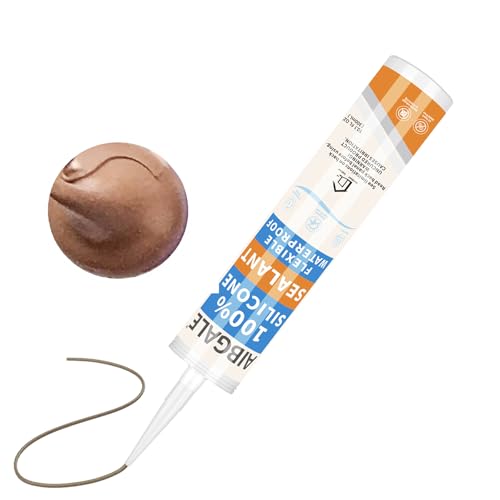
A silicone bead built for camper seams, metal trim and coloured corners.
This one is aimed at the joint where wood meets something shiny. It bonds to wood, metal, stone, ceramic, and glass, and its metallic sheen blends into aluminium, stainless, or chrome trim in a way a plain white or clear bead never will. The surface dries in 30 minutes and full cure takes 48 hours, so it is the slower of the silicone picks here — but 48 hours against the GE’s 24 is a small price for a colour that matches the hardware.
Owners describe it as far more metallic than they expected, closer to chrome or polished stainless than to a flat brown. The bead flows smoothly and sets into a firm skin quickly, and one camper owner called it “perfect for my camper and anything aluminum or stainless.” It carries an ASTM C-920 rating and resists black spots, stains, UV, heat, and constant rain without yellowing.
The catch is the shade itself. The colour reads silver-grey to many eyes rather than brown, and if you are matching warm-toned timber or a gold fitting, order with care and check the label on arrival. It also has a short working life once opened — use the tube up rather than letting it sit — and this is a job-by-job tube rather than a stock-up item.
The metallic finish is the draw: it reads as polished aluminium or chrome on trim, hinges, and RV seams.
Order the colour with care: the shade leans silver-grey rather than brown, so match it to cool-toned metal, not warm wood.
Best for: camper, RV, and metal-to-wood seams where a coloured bead needs to disappear into the hardware.
Look elsewhere for: a fast weather-ready bead or a warm-tone wood match — this one takes two days to fully cure.
4. Bondo Wood Filler 30 oz with Cream Hardener

Mix, pack, sand in 15 minutes — the filler that rebuilds soft, rotted timber.
For rotted wood, this is the serious tool. It is a two-part formula, meaning you stir the included cream hardener into the filler body so it cures by chemical reaction rather than simply drying. That gives you a permanent, non-shrinking repair that bonds to the surface and can be sanded in 15 minutes — a full cure time no caulk in this lineup comes close to. On a window sill or a door bottom that has gone spongy, that combination is the difference between fixing the wood and replacing it.
Where it shines is anywhere a flexible bead cannot go. It fills deep voids, restores a profile on exterior trim, and holds up on siding, decks, sills, doors, and furniture, and it takes paint or stain once sanded. Buyers report it curing rock-hard and holding for years, and it sands to a smooth, workable face. Pair it with a rotted-wood restorer on deeply soft timber and the repair gets structural.
The one thing to respect is the clock. It hardens quickly, which is exactly why the sanding window arrives in 15 minutes — but it also means you mix only what you can apply, because once it kicks, it is done. That same speed is what protects the finished repair from the shrinkage other fillers can show.
The chemical bond is the whole point: a permanent, non-shrinking repair that sands in 15 minutes, so a rotted sill gets rebuilt, not concealed.
Mix small and mix fast: the quick hardening is what makes the fast sanding possible, and also what leaves you no time to fumble.
Choose this when: the timber is soft, split deep, or missing a chunk and you want a repair that lasts rather than a cover-up.
Not the tool for: a narrow gap between two boards that needs to flex — this filler cures rigid and belongs in voids.
5. DAP Alex Painter’s Acrylic Latex Caulk, White, 12 Pack

Twelve tubes of paintable white for anyone repainting the whole exterior.
This is the painter’s option rather than the repair option. It adheres to wood, plaster, drywall, and masonry, cleans up with nothing but water, and is low in odour — and crucially it is paint-ready in 2 hours, with a full cure of 24 hours. So you can run a bead along trim, wait out a short coffee-and-lunch break, and get the topcoat on the same day. Twelve 10.1 oz cartridges in one contractor pack means a full house exterior does not run dry halfway.
It applies cleanly and lays down a smooth line, even on rough-cut material. Owners seal shrinking pine siding cracks with it and report no leaks through a harsh winter. Opening and closing doors during the job, the white holds on the gaps along wood, plaster, and masonry, and the seal itself is the aspect owners trust most.
The one real caution on exterior timber is shrinkage. It is an acrylic latex, so in a deep or wide crack the first pass can pull back as it dries, and the job may want a second coat weeks later to finish the seal. Use it for moderate gaps in trim and siding rather than deep, moving joints, and it earns its keep. It also needs to go down within the stated 40 to 100 degrees F window.
What the painter’s caulk gets right
- Paint-ready in 2 hours, so a repaint can follow the same day as the caulking pass.
- Twelve 10.1 oz tubes in one contractor pack cover a full exterior without a reorder.
- Water cleanup and low odour make it easy to work with around the whole house.
- Bonds to wood, plaster, drywall, and masonry — interior and exterior both.
Plan around this before you buy
- A deep or wide crack can shrink and want a second coat before the seal holds fully.
- It sets through a defined 40 to 100 degrees F temperature window, so cold snaps pause the job.
- Twelve tubes is a lot for one small sill repair.
Worth it for: a house-wide prep-and-paint job on trim and siding where water cleanup and a fast topcoat matter.
Rethink it for: one deep crack or a joint that flexes — a flexible silicone bead holds those better.
Know the Specs
Full cure time versus rain-ready time
Full cure time is when the bead stops being soft and locks into its final strength — the point you can paint, sand, or lean on it without disturbing the seal. Rain-ready time is the shorter window when the surface can take a shower without washing out. A tube that is rain-ready in 12 hours but needs 24 to fully cure is doing two different jobs on two different clocks, and reading both numbers keeps an exterior job out of trouble when the weather shifts.
Silicone versus acrylic latex, honestly
A 100% silicone sealant cures with give, so it stretches with a board as it swells and shrinks through the seasons and holds water back through sun and freezing. Acrylic latex is paintable, low-odour, and water-clean-up, which matters when the finish is the point, but it can shrink as it cures — a deep crack may want a second coat. For a moving joint outdoors, choose flexibility; for a topcoat you will paint over, choose the acrylic.
Common Questions
Can you use clear silicone caulk on exterior wood that will be painted?
How long does outdoor caulk for wood need before rain hits it?
Is wood filler or caulk better for a gap between two exterior boards?
How wide a gap will a caulk cartridge actually bridge?
Does brown silicone sealant actually match brown wood?
Why would I need a cream hardener in a wood filler?
Will acrylic latex caulk hold up outdoors through winter?
Can I caulk exterior wood in cold weather?
How much caulk do I need for a whole house exterior?
Do I need a caulk gun for these tubes?
The Bottom Line
For most exterior wood jobs, the outdoor caulking for wood winner is the GE All Purpose Silicone Caulk because it is rain-ready in as little as 12 hours and fills gaps up to 0.38 inches with a clear bead that holds through sun and freezing. If the wood itself is gouged or missing chunks, the Gorilla All Purpose Wood Filler rebuilds the surface and takes stain — and if the timber has gone soft, the Bondo Wood Filler with its cream hardener gives you a permanent, non-shrinking repair sandable in 15 minutes. Seal the joint before it becomes rot, and you may never need the filler at all.
How we choose
We do not accept paid placement. Every pick is matched to a real buyer and a real use-case; we do not hands-on test units.
Sources
Specifications: manufacturer listings and product documentation. Review insights: verified customer reviews, as of October 2026. Pricing: not shown on this page (it changes often); check the current price via the retailer link.
As an Amazon Associate, Aappliancez earns from qualifying purchases. This does not affect which products we feature.