Disclosure: Some links in this post are affiliate links. As an Amazon Associate I earn from qualifying purchases, at no extra cost to you. Learn more
Specs are compiled from manufacturer listings and verified buyer reviews and can change over time — please confirm the key details on the product page before buying.
If you need reading help but hate swapping glasses every time you glance up, a progressive multifocal pair with a photochromic tint is the shortcut worth taking — one lens handles close-up, mid-range, and distance, and it darkens outdoors on its own. The trick is matching the lens layout to your day, since the wrong zone placement forces constant head tilting.
This guide is built by comparing the manufacturers’ published specifications and the patterns across verified customer reviews, so you get each pick’s real strengths and trade-offs instead of marketing spin.
Most buyers assume every progressive reader works the same way, but the top-zone magnification and the photochromic tint are the two details that decide whether a pair feels invisible or annoying. This breakdown of the four strongest Multifocal Colored Contact Lenses helps you match a lens layout to your actual routine.
Top Picks
How To Choose The Best Multifocal Colored Contact Lenses
These are glasses with lenses that change tint in sunlight — the category shoppers often search for as reading eyewear with a colored, self-darkening lens. Before you pick a pair, get three things straight: how the lens splits your vision, how dark the tint goes, and how heavy the frame sits on your face.
Read the lens zones before you read the color
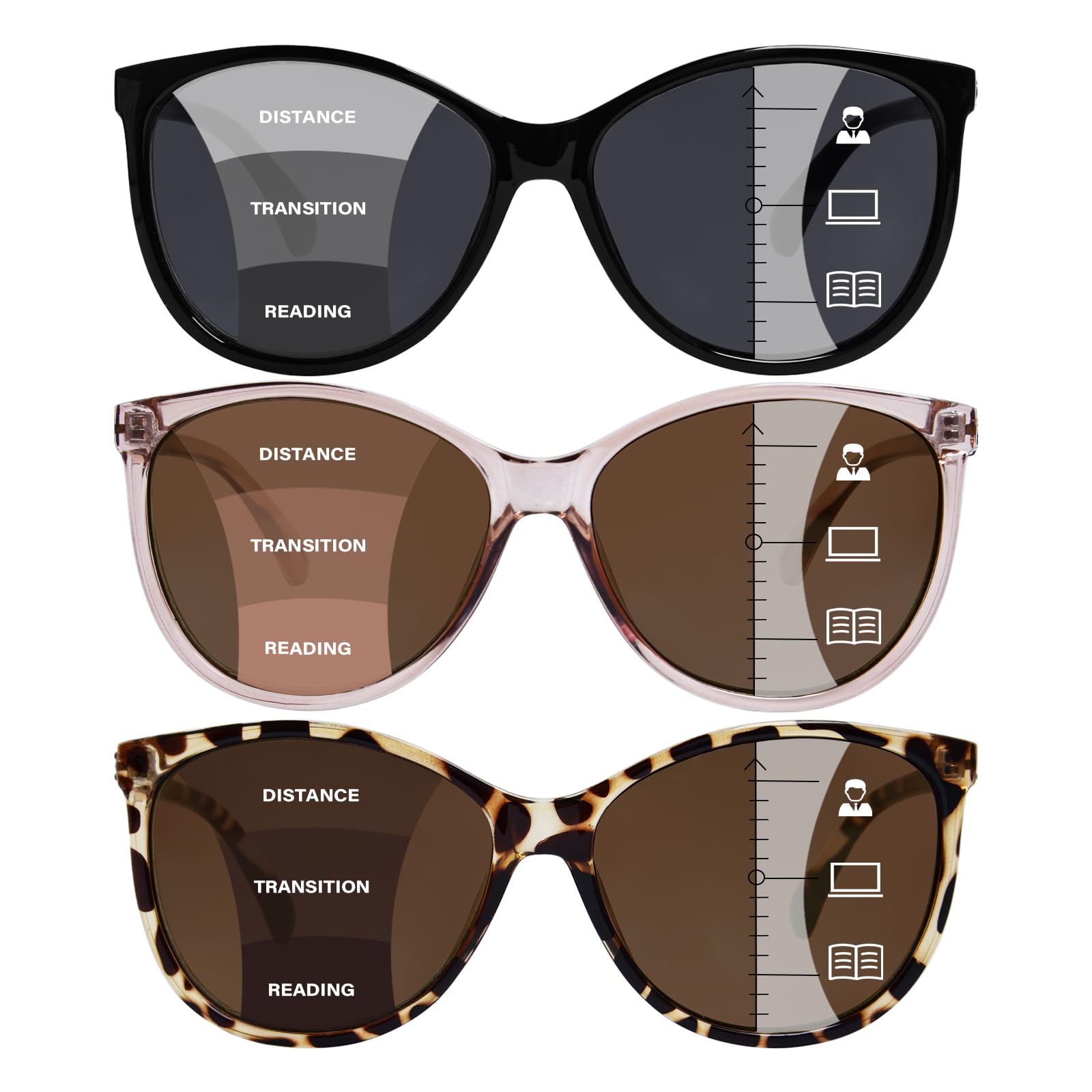
A progressive multifocal lens divides into three bands. The bottom band carries the strongest magnification for close reading. The middle band steps down for computer and TV distance. The top band is either clear or near-clear for looking far away. Where those bands sit — and how wide the middle one is — decides whether you can work at a laptop without tilting your head back. That middle band is the single most common source of buyer frustration in this category, so ask what it actually covers.
Understand what photochromic really means
Photochromic lenses darken when UV light hits them and clear up indoors. The tint is the “colored” part of the name, and it means you can wear one pair from the kitchen table to the mailbox without switching to sunglasses. The honest catch: tint depth varies, and a darker tint outdoors can feel too dark in a car, because most windshields filter UV. If you mostly drive, plan around that.
Weigh the frame in grams, not adjectives
Long-wearing progressive readers live or die on frame weight. A pair around 14 grams disappears on your nose; a heavier one leaves pressure behind the ears after an hour. Look for the weight figure or a stated material, and skip any listing that only says “lightweight” with no number behind it.
Side-by-Side Comparison
| Model | Best For | Magnification Range | Tint / Lens Type | Weight | Amazon |
|---|---|---|---|---|---|
| Progressive Multifocal Sunglasses for Women Men, Multifocus Sun Readers with UV400★ Best Overall | Outdoor sun reading | — | Multifocus sun reader with UV400 | 1.2 ounces | Amazon |
| YEIN Progressive Multifocal Presbyopic Glasses, Photochromic Gray | All-day wear, walking to desk | +0.00 top / +1.50 bottom | Photochromic gray | 14.0 g frame (2.82 ounces packaged) | Amazon |
| touk Photochromic Progressive Multifocal Reading Glasses for Women | Screen work plus outdoor tint | — | Photochromic with blue light blocking and UV400 | — | Amazon |
| ProEyes Gemini, Progressive Multifocal Reading Glasses, Zero Magnification on Top | Near-and-mid focus, clear distance | Zero on top / 1.50x bottom | Resin lens, no tint | 0.78 ounces | Amazon |
Detailed Reviews
1. Progressive Multifocal Sunglasses
The outdoor-first reader that folds down to almost nothing in a bag or pocket.
Pick this one if you read outdoors in bright sun and want a single tinted lens for both the page and the horizon. Its UV400 lens filters the sunlight band linked to long-term eye damage, so it suits long outdoor reading sessions.
The physical footprint is the surprising part. Packaged dimensions of 0.63 x 0.24 x 0.18 inches and a listed weight of 1.2 ounces make it dramatically more compact than the ProEyes Gemini case, which measures 7.83 x 2.87 x 2.48 inches — a pair you can genuinely lose in a coat pocket rather than a case you have to plan around. It is also far lighter than the YEIN frame’s 2.82-ounce packaged weight, so the trade-off runs the other direction from what you might guess.
The honest limit is depth of feedback. This listing carries a single rating at 3.0, so there is simply not enough owner history yet to tell you how the multifocus band holds up over months of daily use. Think of it as an early pick with a clean spec sheet rather than a battle-tested one — the unisex-adult sizing and the three color choices (light brown, black, and tortoise) do the work of making it broadly wearable.
The case for it: UV400 protection, a 1.2-ounce build, and a package that folds down smaller than anything else in this lineup make it the travel-and-outdoors pick.
The catch: A thin review record means you are buying on specs and reputation rather than on a deep pool of owner experience.
Best suited to: garden readers, walkers, and anyone whose reading light comes from the sky.
Less ideal for: someone who wants a long track record behind the purchase before committing.
2. YEIN Progressive Multifocal Presbyopic Glasses
Three focus bands spelled out in numbers, which is rarer in this category than it should be.
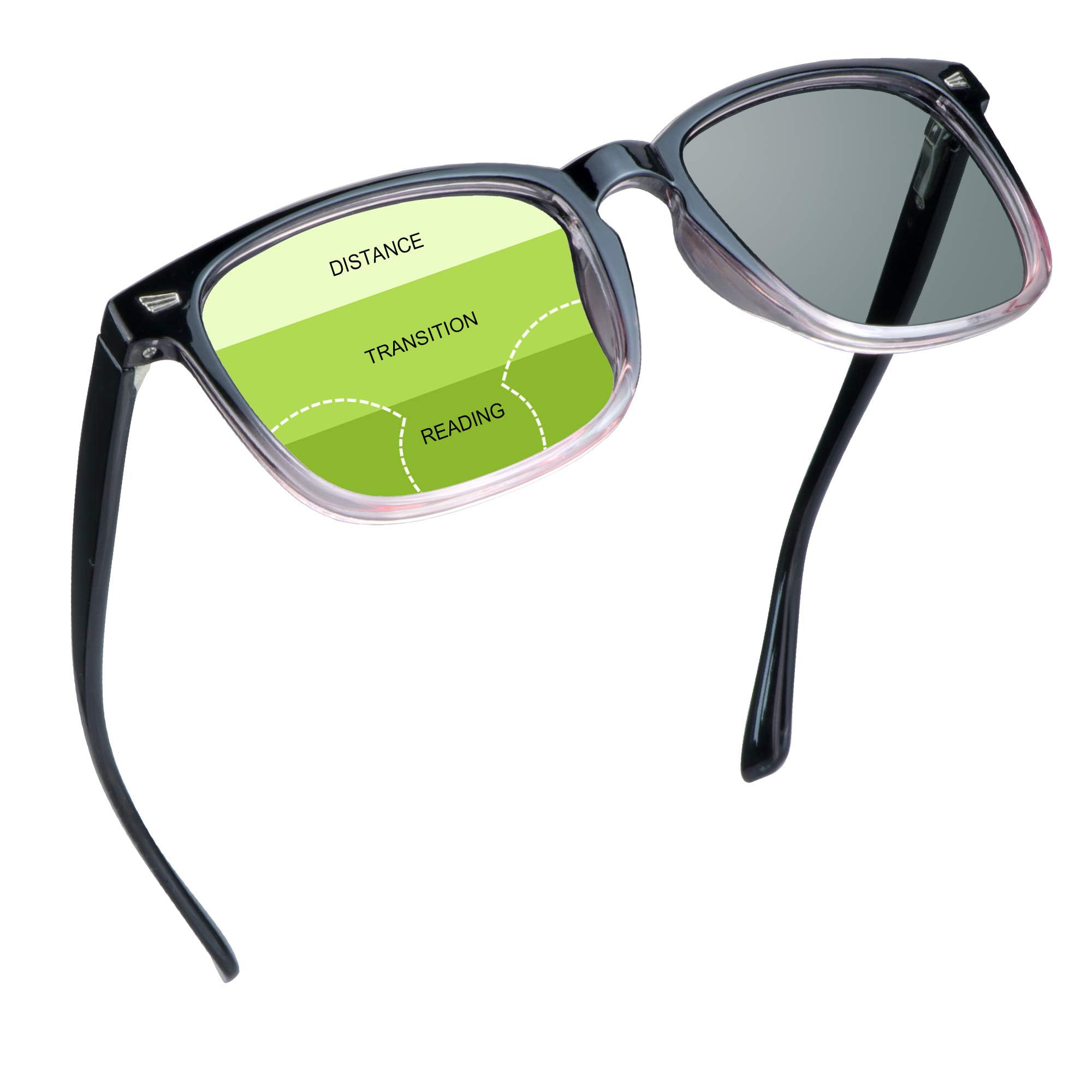
YEIN does something most competitors hide: it tells you exactly how the lens is graded. The top runs at +0.00 for distance, the middle steps up gradually for computer and TV work, and the bottom carries the full +1.50 for close reading. If you have ever bought a progressive pair blind and discovered the middle band was useless, that published breakdown is worth a lot. What wins people over here is the lens clarity and general build — quality is far and away the most-discussed trait on this listing, and it is rated positively.
Daily wear is the design goal, and the 14.0-gram frame is the reason it works. That is light enough to forget about during a long morning, and the stated construction resists pressure on the ears. The photochromic gray lens keeps things comfortable outdoors, and the clear lens carries only a slight yellow tint, so it will not throw off the color on a monitor. Buyers report the fit is immediate — as one put it, “Fit well and seem to work great.”
The recurring gripe is durability, and it is worth naming plainly: one buyer wrote that the “Frames broke in two months.” That is not the norm across the listing, but it is the weak point to handle with care — fold them deliberately, keep them in a case, and treat the hinges as the fragile part. The other thing to know is the color. The frame is listed as black purple, and buyers expecting a plain black have flagged that it reads blue rather than neutral.
What earns its keep
- Published zone numbers — +0.00 on top, +1.50 at the bottom — mean no guessing about the middle band.
- 14.0-gram frame spreads weight without ear pressure, so all-day wear is realistic.
- Photochromic gray tint handles outdoor light while the clear lens keeps monitor colors honest.
Where it asks for care
- Frame longevity is the recurring theme — a rare pair has failed early, so store them in a case.
- The black purple frame can read blue rather than black in person.
- Owners are split on whether the price reflects the value, so it is a judgment call rather than a slam dunk.
Reach for this if: you want to move from a walk outside to a laptop without swapping glasses.
Look elsewhere if: you need a frame you can fold carelessly into a bag every day.
3. touk Photochromic Progressive Multifocal Reading Glasses
Built for the desk-to-doorstep routine, with a half rim that keeps the lens light on your face.
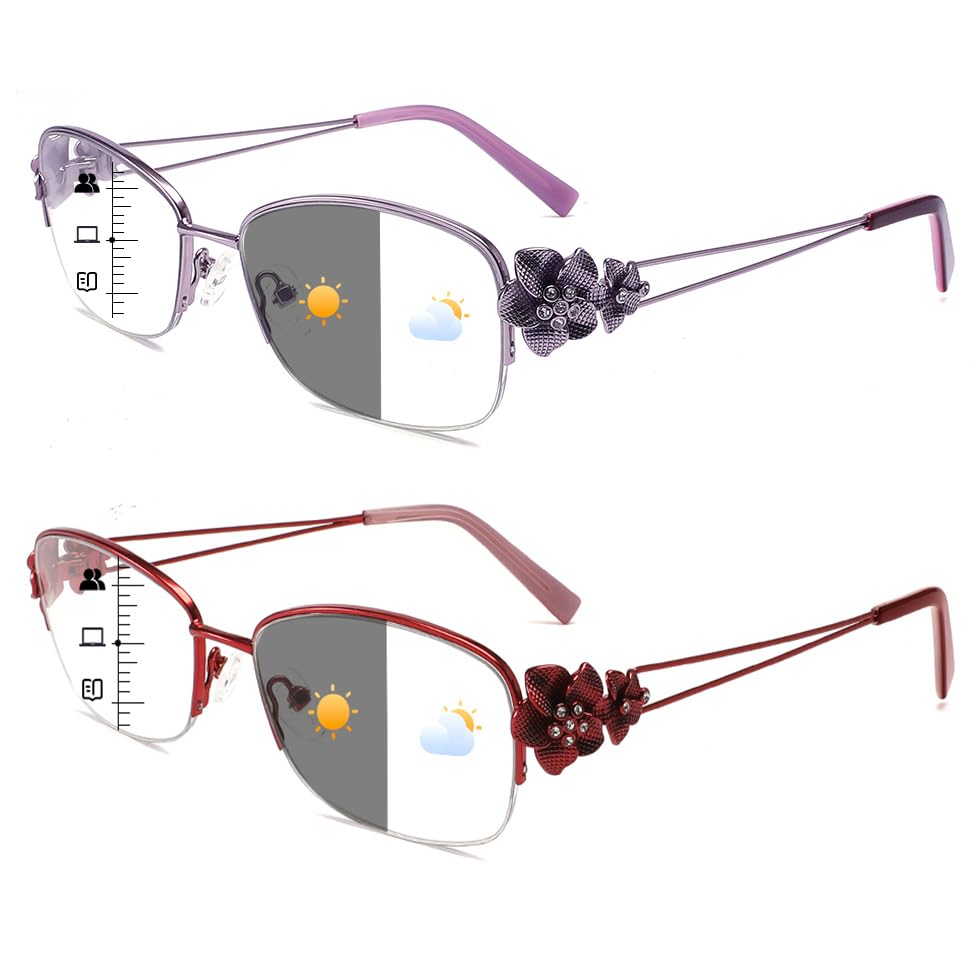
If your day is a laptop screen indoors and a bright street outdoors, this is the layout that matches it. The lens combines a photochromic progressive with blue light blocking and UV400 protection — the blue light filter cuts screen glare, and the UV400 coating blocks outdoor UV. The half rim metal frame keeps the front open and airy, which pairs well with the stated lens dimensions of 53mm wide by 37mm tall.
What people respond to most is the near-and-mid view. Owners describe using them for computer distance and close work, with one writing, “For OTC readers these are THE best. I’m bought readers for about 30 years and these are perfect. I don’t have to look over the tops. Buying another pair.” The blue light blocking earns the same praise — a screen-heavy user called the no-line layout a fit for laptop work, and the frame avoids metal skin contact.
The candid caveat is far-distance use. These are not designed as driving or distance glasses; the range that owners praise is the near and mid zone, not the horizon. If you need sharp vision far away on a regular basis, that job belongs to a dedicated pair. The frame comes in purple, gold, grey, or red, and the five-and-a-half-inch temple length suits a standard adult head rather than a narrow one.
Where it earns its place: A 53mm by 37mm lens, blue light blocking, and UV400 work together for long screen sessions that spill outdoors.
The limit to know: Distance vision is the weak zone — this is a near-and-mid pair, so a separate set handles far focusing.
Best for: women who split the day between a monitor and a bright window or street.
Think twice if: you want one pair that also handles clear far-distance focusing.
4. ProEyes Gemini, Progressive Multifocal Reading Glasses

The lightest frame here by a wide margin — and the one that asks the most of your reading habits.
A 0.78-ounce frame makes the Gemini the lightest option in this lineup, and by a clear margin — the YEIN pair comes in at 2.82 ounces packaged, so this is the one you forget you are wearing. The lens design puts zero magnification on the top band for natural distance viewing, a reading zone at the bottom, and a middle band for computer work. It is aimed at people with good distance vision or those layering it over distance contact lenses, and the resin lens adds an anti-reflective coating, scratch-resistant treatment, UV protection, and an easy-clean surface.
The honest picture is mixed, and it centers on that middle band. Owners mention reading is fine and the distance top works, but the computer zone has been the sticking point — one described having to tilt their head up to see clearly, and another said the glasses “do not work really well for me,” noting the mid range area did not feel present. The build itself draws no complaints: the pink resin frame and the included case and lens cloth round out a tidy package.
The scratch-resistant coating and anti-reflective finish are the practical wins for daily desk use, and the zero-power top band is genuinely useful if you already wear distance contacts. The catch is that this lens demands the correct head position to hit each zone — if you tend to glance at a screen without adjusting, the middle band will not meet you halfway.
Why it stands out
- At 0.78 ounces, it is the lightest frame in this comparison and easy to wear for hours.
- Zero top magnification pairs naturally with distance contact lenses.
- Resin lens carries anti-reflective, scratch-resistant, and UV protection in one build.
What to watch for
- The middle computer band is the reported weak spot — some find it hard to hold in focus.
- Reaching each zone depends on head position, so it rewards deliberate use.
- Not the pick for anyone who wants a wide, forgiving intermediate zone.
Worth it for: contact lens wearers who want a featherweight top-up at the desk.
skip it if: your work is mostly at a computer and you want the middle band to do heavy lifting.
Know the Specs
Magnification Zones
A progressive lens splits into three bands: a bottom reading zone, a middle zone for computer distance, and a top zone for looking far. The bottom always carries the strongest reading power. Some designs keep the top clear with zero magnification so it works over distance contacts or for people with good far vision — the ProEyes Gemini uses that layout. Others, like the YEIN pair, publish the exact numbers, running from +0.00 at the top to +1.50 at the bottom. Knowing which layout you want matters more than the brand name on the arm.
Photochromic Tint and UV Protection
Photochromic lenses darken when UV light hits them and clear when you step inside, which is what turns a pair of readers into something you can wear outdoors. The “colored” part of this category’s name comes from that tint. UV400 marks a lens that blocks the UV band linked to long-term eye harm. Two picks here combine that with blue light blocking for screen use. Tint intensity shifts with lighting, and because most car windshields filter UV, photochromic lenses stay largely clear behind the wheel — so do not count on them as driving sunglasses.
Common Questions
Can I wear multifocal photochromic readers over my regular contact lenses?
Do these glasses turn into full sunglasses outside?
How much magnification do I need for computer work?
Will the tint on these glasses change the colors on my screen?
How long should a pair of progressive readers last?
Are half rim frames harder to keep clean?
Do photochromic progressive lenses work behind a car windshield?
How can I tell if a progressive lens will suit my reading distance?
Can I use multifocal readers for both reading and distance at the same time?
Should I worry about blue light blocking being too strong?
The Bottom Line
If you want one dependable pick, the multifocal colored contact lenses winner is the Progressive Multifocal Sunglasses for Women Men, Multifocus Sun Readers with UV400 because its UV400 protection, 1.2-ounce build, and pocketable package make it the outdoors-first pick that stays out of the way. If you want the lightest frame and a zero-top lens for wearing over distance contacts, the ProEyes Gemini is the one to reach for. And for a screen-heavy day that spills outside, the touk Photochromic Progressive Multifocal Reading Glasses brings blue light blocking and a half rim metal frame to the desk. If you want published zone numbers so you know exactly what each band does, the YEIN Progressive Multifocal Presbyopic Glasses spells it out. With four strong options, pick the pair that matches where your eyes spend the most hours.
How we choose
We do not accept paid placement. Every pick is matched to a real buyer and a real use-case; we do not hands-on test units.
Sources
Specifications: manufacturer listings and product documentation. Review insights: verified customer reviews, as of October 2026. Pricing: not shown on this page (it changes often); check the current price via the retailer link.
As an Amazon Associate, Aappliancez earns from qualifying purchases. This does not affect which products we feature.