Disclosure: Some links in this post are affiliate links. As an Amazon Associate I earn from qualifying purchases, at no extra cost to you. Learn more
Specs are compiled from manufacturer listings and verified buyer reviews and can change over time — please confirm the key details on the product page before buying.
If you want a cereal that actually delivers vitamin D, don’t trust the front of the box. A bowl of plain flakes and a bowl of fortified flakes can look identical on the shelf, yet only one puts a meaningful amount of vitamin D in front of you at breakfast. The shortlist below separates cereals with vitamin D listed on the nutrition panel from those simply marketed as “healthy,” and ranks them by how they eat — crunch, sweetness, freshness, and whether the box is worth finishing.
This guide is built by comparing the manufacturers’ published specifications and the patterns across verified customer reviews, so you get each pick’s real strengths and trade-offs instead of marketing spin.
Start with the two columns that matter most: whether vitamin D is listed among the cereal’s nutrients, and whether the flakes survive a full bowl of milk without turning to paste. Everything else — box count, grain blend, sweetness level — is a preference you can sort out once those two boxes are ticked. The picks below cover the whole spread, from a six-box family staple to a single-serve variety pack, so you can match the bowl to the way your household actually eats.
Top Picks

How To Choose The Best Cereal for Vitamin D
Vitamin D is one of the nutrients most often added to breakfast cereal rather than found naturally in it, which means the box label — not the grain — decides whether you get any. Read the nutrition panel first and treat everything else as secondary.
Check the nutrition panel before the front of the box
A cereal qualifies for this list when vitamin D appears as a listed nutrient on the product’s own label. That is the whole test. Words like “wholesome,” “hearty,” and “natural” tell you nothing about vitamin D — they describe the grain, not the fortification. Several cereals here sit on the fortified side, and a couple are included because their grain blend and vitamin D listing work together in a hot bowl rather than a cold one.
Cold cereal versus hot cereal — the fortification split
Cold cereals are usually the ones carrying a full lineup of added vitamins and minerals, because the flakes are sprayed or coated during manufacturing. Hot cereals work differently — you cook them with water or milk, and that liquid becomes part of the bowl. If you mix a fortified instant hot cereal with milk, you are layering two sources of vitamin D into one serving. That makes hot cereal a smart choice if you already drink milk with breakfast and want the two to stack.
Whole grain grams tell you how long the bowl holds
Whole grain per serving is the clearest signal for how filling a cereal will be. A serving built on 26g or 24g of whole grain behaves differently in your stomach than a light flake cereal built on refined flour — you are less likely to be hunting the pantry an hour later. If your goal is a breakfast that carries you to lunch, weight the whole grain number heavily. If you just want a light bowl with vitamin D alongside it, whole grain matters less.
Flake hardness decides crunch at the bottom of the bowl
A hard flake resists milk. A thin flake surrenders to it. This is the single most repeated experience in the review pages for cold cereals — the flakes that stay crisp are the ones people reorder. When you are comparing two fortified cereals, look for any mention of flake texture or milk resistance, because it predicts whether the last spoonful is as good as the first.
Side-by-Side Comparison
| Model | Best For | Vitamin D Listed | Whole Grain Per Serving | Total Cereal Weight | Amazon |
|---|---|---|---|---|---|
| Basic 4 Heart Healthy Cereal★ Best Overall | Families stocking the pantry | Yes — listed on the label | 26g | 118.8 Ounce | Amazon |
| Nature’s Path Organic Heritage Flakes CerealBest Organic | Plain-flake purists | — | 23g | 32 Ounce | Amazon |
| MadeGood Granola Bites Variety 28-PackBest For Lunches | Lunchboxes and day trips | — | — | 23.8 Ounce | Amazon |
| Bob’s Red Mill 7 Grain Hot Cereal, 25-ounce (Pack of 3) | Bakers and hot-bowl eaters | — | — | 75 Ounce | Amazon |
| Kellogg’s Corn Flakes Cold Breakfast Cereal | Classic cold-flake breakfasts | Yes — part of 8 vitamins and minerals | — | 48 Ounce | Amazon |
| Nestle Cerelac, Wheat with Milk, 2.2-Pound | Starting a baby on cereal | — | — | 35.2 Ounce | Amazon |
| Sunrise Flour Mill USDA Organic Heritage 7-Grain Hot Cereal Mix, 32 oz | Organic hot-cereal loyalists | — | — | 32 Ounce | Amazon |
| Wholly Moly! 5 Grains Cereal | Quick multi-grain bowls | — | — | 70.4 Ounce | Amazon |
| Post Great Grains Blueberry Morning Breakfast Cereal | Blueberry lovers | Yes — listed on the label | 24g | 54 Ounce | Amazon |
| Cereal Cups Variety Pack | Desks, dorms, and road trips | — | — | 12 Count | Amazon |
| Cream of Wheat Instant Hot Cereal, Maple Brown Sugar, 10 Packets (Pack of 12) | Fast single-serve hot bowls | Yes — listed with calcium and iron | — | 147.6 Ounce | Amazon |
Detailed Reviews
1. Basic 4 Heart Healthy Cereal
Our pick — over 4.5★ from 550+ verified ratings; the strongest balance of quality and price.
Six boxes of flakes, clusters, cranberries, and almonds — fortified with vitamin D and built to stay crunchy
This is the pick for a household that eats cereal every morning and gets tired of running out. Six boxes of 19.8 oz each add up to 118.8 ounces of cereal in one order, which is the largest total in this lineup by a wide margin. Set that against the MadeGood Granola Bites, which total 23.8 ounces — the Basic 4 pack holds five times as much cereal in a single buy. If you are feeding two or three breakfasts a day, that gap is the whole reason to choose it.
What wins people over is the taste, and it wins by a distance — nothing else about this cereal comes close in the review pages. Buyers describe a bowl that is crunchy without being too sweet, with cranberries adding depth and the flavor balance holding up for picky eaters who normally turn their nose up at cereal. The crunch holds once milk hits it, too. The one thing to plan around is availability: this is a cereal people genuinely struggle to find in local grocery stores, and several owners buy the multipack precisely because the store shelf is unpredictable. One buyer notes the mix has “less raisins and nuts than in the past” and wishes there were more clusters, so go in expecting a fruit-and-nut sprinkle rather than a heavy pour of each.
The shelf-stable cardboard boxes keep it simple to store, and nothing here needs refrigeration. That flat 1.37-ounce package weight lines up with the MadeGood bites’ 0.85 ounces, so both ship light despite very different volumes of food — a point in favor of stocking up on this one.
What earns the top slot
- 118.8 ounces across six boxes — five times the cereal volume of the MadeGood Granola Bites pack
- 26g whole grain, 5g fiber, and 2g fat per serving with vitamin D listed on the label
- Crunch that holds up in milk, and a flavor balance buyers call not-too-sweet
- Low fat, low saturated fat, and naturally cholesterol free
Worth knowing before you buy
- Fruit and nut pieces run lighter than some owners remember from older batches
- Hard to find on grocery shelves, which is exactly why the six-pack makes sense
Reach for this if: your household goes through a box a week and you want vitamin D, whole grain, and fiber in the same reliable bowl.
Look elsewhere if: you want a heavy hand of raisins and almonds in every spoonful — the clusters run light.
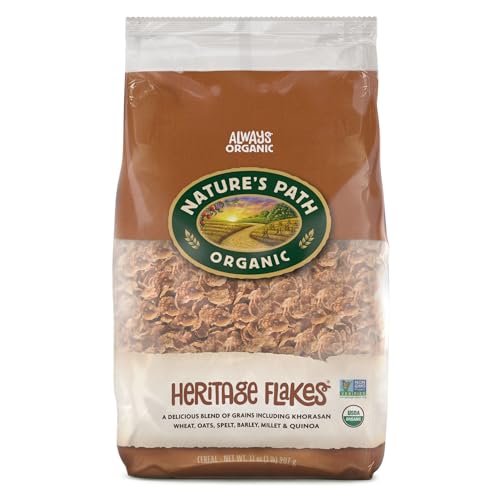
2. Nature’s Path Organic Heritage Flakes Cereal
A hard, organically sweetened flake built on six ancient grains — and it refuses to go soggy
One bag, 32 ounces, no inner box. That is the practical headline here: the ECO pac is a larger recyclable bag that skips the cardboard, which is why it feels like you are getting more cereal for the shelf space it takes up. If your pantry is crowded with half-empty boxes, this is the format that stops the waste.
The flake is the real story. Each serving delivers 23g of whole grains and 5g of protein, and the blend runs on six ancient grains including khorasan wheat. That grain bill is why the flakes come out hard and nutty rather than thin and dust-prone. Owners describe a flake that does not soak up milk easily — it takes a bit of chewing, which is exactly the trait that keeps the bottom of the bowl crunchy. Paired with the lightly sweetened sea salt and honey finish, it eats more like a proper porridge flake than a sugary children’s cereal.
Two camps show up in the reviews, and both are useful. Straight-from-the-bag eaters find it bland on its own and suggest cinnamon or fruit to wake it up — one review is blunt that it needs additions. The crowd that treats it as a base is happier: they build custom blends with nuts, seeds, honey, and dried fruit on top of it. Owners also flag freshness as the one thing that is not guaranteed — most bags arrive fresh and stay that way, but it is the trait most likely to disappoint. If you want a sweet, ready-to-eat bowl with no doctoring, this is the wrong flake; if you want a sturdy, unsweetened foundation you can flavor yourself, it is the right one.
It also happens to be the highest-volume organic pick here, edging past the Sunrise Flour Mill bag on grain count with six grains to that mix’s seven but a bigger 32-ounce format either way.
The honest trade: a bland-alone flake that rewards anyone willing to add their own sweetness, backed by 23g whole grains and 5g protein per serving and a genuinely hard texture in milk.
Buy it for the texture: if you want an organic, low-sugar flake that survives a full bowl of milk, this is the one.
Think twice if: you expect to pour a bowl and eat it plain — most owners add cinnamon or fruit first.
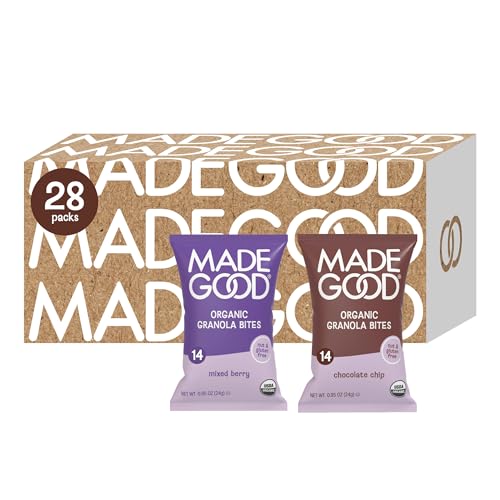
3. MadeGood Granola Bites Variety 28-Pack
Twenty-eight grab-and-go pouches that turn breakfast into a car-ride snack
You won’t eat this from a bowl with a spoon. The 28 mini pouches — 14 chocolate chip and 14 mixed berry — are 0.85 ounces each, the balance for a lunchbox or glove compartment. Each pouch has about 100 to 110 calories, enough to hold a kid or commuter until the next real meal without killing appetite. The pack totals 23.8 ounces, so it’s a compact buy that lives in a drawer, not a cupboard.
What makes this the pick for allergen-conscious households is the dedicated bakery. The granola is made in a facility free of the top allergens including nuts, gluten, and dairy, so it is safe to send to school. There is also a full serving of vegetables folded into every pouch — six hidden veggie extracts blended with gluten-free oats and the berry and chocolate pieces. That is an unusual feature in a snack this size and it is the reason parents reach for this over a candy-bar substitute.
Owners consistently point to the bite size as the best part: one pouch is the right amount to snack on, fresh and fruity, and easy to carry on hikes, car rides, and to the gym. A special-needs parent deliberately keeps a box in the trunk for car snacks because the bites are not messy. The one flaw to go in knowing about is flavor distribution — the 28-packs do not always split evenly, and one buyer opened a box to find 24 chocolate chip and 4 berry instead of the 14-and-14 split. If mixed berry is the pouch your kid reaches for first, that is the gamble on this pack.
Where it fits: school-safe, portion-controlled, and light enough at 0.85 ounces per pouch to toss in any bag. The chocolate chip and berry flavors both land, and the hidden-veggie blend is a genuine bonus rather than a gimmick.
Go in ready for: an uneven flavor split — the 28 count does not guarantee 14 of each.
Best for: parents packing lunchboxes and anyone who needs a nut-free snack that travels without crumbling.
Skip if: you need a bowl you can sit down to — this is a snack pack, not a breakfast cereal.
4. Bob’s Red Mill 7 Grain Hot Cereal, 25-ounce (Pack of 3)
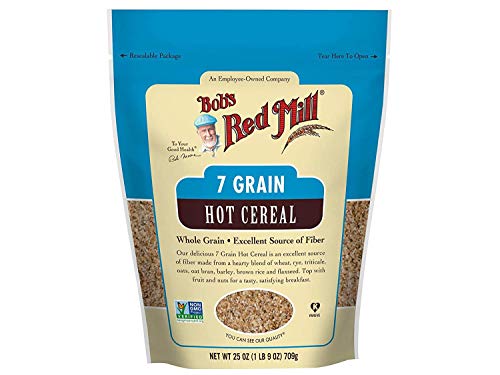
A seven-grain blend that does double duty — breakfast bowl in the morning, bread flour by afternoon
Cooks and bakers get more out of this bag than anyone else will. Mixed with stone ground wheat, oat flour, and almond meal, a 7-grain base like this becomes muffins, pancakes, and waffles — the kind of baked goods a diabetic baker can build a breakfast around. Three 25-ounce bags total 75 ounces, so you have enough to keep a hot bowl on the table and still have grain left for a loaf of multigrain bread.
The texture is nutty and coarse rather than creamy — owners are clear it is nothing like cream of wheat. That coarse grind is what makes it work in both directions. It thickens soups and stews and boosts nutrition in savory cooking, exactly the way one regular uses it. It also holds its structure inside a dough, which is why bakers who have made multigrain bread with this grain for years keep coming back to it. If you only want a smooth, quick breakfast porridge, the grind here will feel like work.
The bowl scores high on taste and texture, and its versatility draws nearly as much praise — it works as both a hot cereal and an ingredient, which separates it. One note for ground-grain shoppers: this is a cereal made from whole grains, not a bag of intact whole grains. A buyer who wanted the latter found it didn’t fit the job. Expect dense baked goods too — reviewers who bake with it say muffins and pancakes come out substantial, not light and airy.
Compare it with the Wholly Moly! 5 Grains Cereal, which has five grains versus this blend’s seven — close enough that your choice depends on if you want a quick-cook oatmeal texture or a coarser baking-grade grind.
The dual-purpose case: a 75-ounce three-pack of 7-grain blend that reads as breakfast cereal in one bowl and bread-making grain in the next.
The catch: it is ground, not intact grain, and the coarse texture is not built for anyone who wants a silky porridge.
Pick this if: you bake as much as you eat cereal and want one bag that covers both jobs.
Pass if: you wanted whole intact grains for a sprouting or soaking recipe — this is a ground cereal.
5. Kellogg’s Corn Flakes Cold Breakfast Cereal
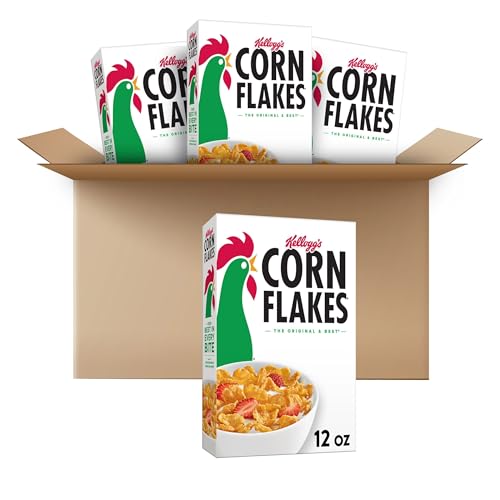
The plain, fat-free flake that carries eight added vitamins and minerals into a classic bowl
If you want the shortest ingredient list in the cold-cereal aisle, this is it. Kellogg’s Corn Flakes are simply made, and the nutrition side is the selling point: a good source of eight vitamins and minerals, plus an excellent source of iron. The cereal is cholesterol and fat free, with 0g monounsaturated and polyunsaturated fat. Four family-size 12-ounce boxes total 48 ounces, which keeps a daily-eater household supplied without a weekly store run.
The flake is toasted corn and nothing else, which is why it works in more places than a breakfast bowl. It goes into yogurt with fruit, it gets crushed over desserts, and it holds up in savory dishes rather than dissolving. That neutral character is the difference between this and the Basic 4 — where the Basic 4 is a fruit-and-nut blend with clusters, this is a single clean flake that does not fight whatever you put with it.
The people who buy this buy it on repeat, and the reason is simple: it is a plain, reliable, old-fashioned flake at a fair value. The taste draws the most positive attention by a wide margin, with value close behind. There is one quirk to know about — the four-pack does not always arrive in the printed cardboard box. Some orders show up as four individually sealed clear bags instead, which keeps the flakes fresh but looks different from the listing photo. If presentation matters and you expect the box, that is worth knowing in advance.
Very little fat, no cholesterol, and enough iron to matter make this a genuinely light bowl — the kind you can eat every morning without feeling weighed down.
The everyday appeal
- Fat free and cholesterol free, with 0g monounsaturated and polyunsaturated fat
- Good source of eight vitamins and minerals and an excellent source of iron
- Neutral flake that works in yogurt, desserts, and savory dishes as well as a bowl
- Four family-size 12-ounce boxes for a steady supply
Set your expectations
- The multipack sometimes ships as four sealed clear bags instead of the printed box
- Plain by design — if you want fruit or nuts in the bowl, add them yourself
Worth grabbing if: you want a clean, iron-rich, fat-free flake you can eat plain or pile into desserts and dishes.
Not the one if: you want a sweetened or fruit-loaded bowl straight from the box.
6. Nestle Cerelac, Wheat with Milk, 2.2-Pound
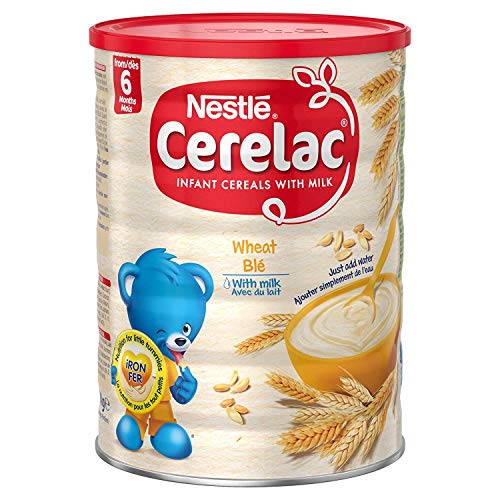
The wheat-and-milk cereal that travels from first-spoon feedings to an adult’s own breakfast bowl
Cerelac is a wheat-with-milk cereal, and the format is simple: one large 2.2-pound tin, 35.2 ounces total. It is aimed at the early feeding stage, and the manufacturer-recommended age range printed on the product is 0 to 6 months. That makes it a starting cereal rather than a general family box, so read the age guidance on the label before you buy.
Flavor is where this one earns its place in a lineup built around fortified cereals. It is a wheat and milk base rather than a fruit-loaded blend, and it lands on the sweeter, creamier end of the spectrum. That mild profile is exactly why it holds up as a first cereal — it introduces grain and milk without a lot of competing flavors. The flavor also pulls it in a surprising direction, since plenty of adults keep eating it long after the baby has moved on.
From the review pages, worth taking at face value: this cereal has a devoted following among people who grew up with it in the Philippines and now feed it to their own kids, with one noting it’s more flavorful than the Gerber version. Parents whose baby rejects other cereals report this one gets accepted. One honest caveat — the biggest complaint in reviews isn’t about the cereal but the cost, which runs higher than comparable alternatives. If you only need a small amount for early feedings, that premium is easy to absorb; if you feed it daily for months, it adds up.
Like the MadeGood bites, this one is fine to keep in the cupboard — no refrigeration needed before opening, and the tin seals back up for the next feeding.
Why parents choose it: a mild wheat-and-milk base at 35.2 ounces per tin, with a devoted following and a flavor that babies tend to accept.
The honest gripe: it costs more than the alternatives, and that is the most repeated complaint owners raise.
Suits: families introducing a first grain-and-milk cereal to a baby, and adults who want that same mild bowl for themselves.
Weigh first if: cost is your main filter, because this is the pricier route to baby cereal.
7. Sunrise Flour Mill Heritage 7-Grain Hot Cereal Mix
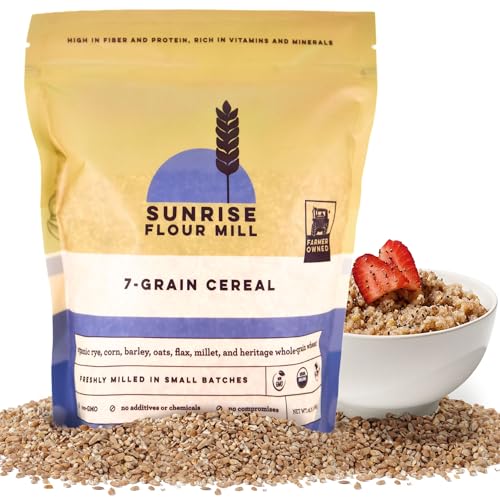
Seven organic whole grains in one bag — wheat, oats, rye, barley, corn, flax, and millet
For anyone who wants an organic multigrain hot cereal and nothing else on the label, this is the cleanest option here. It is 100% USDA organic and free from chemicals, pesticides, and herbicides, with no additives and no sugar. Each serving carries 8 grams of dietary fiber and 5 grams of protein, and the blend is surprisingly light for how filling it eats. One 32-ounce bag covers a lot of mornings.
Because the grains arrive large and intact rather than finely ground, this is a mix that behaves differently depending on how you use it. Cooked as a porridge, it lands nutty and hearty with a proper chew. Baked into a sourdough or whole grain bread, it soaks up more water than a fine-ground mix, which means you adjust hydration upward and may need a stronger flour to keep the rise. That is normal behavior for whole grains in dough, and bakers who plan for it get visible, chewable grains in the finished loaf. If you want a flour-fine, no-thinking hot cereal, another pick on this list will suit you better.
What owners keep coming back to is the chew. It is a clear step up from single-grain hot cereals like oatmeal, cream of wheat, or grits — a real change of pace rather than a different brand of the same thing. Bakers compare it favorably to finely ground non-organic blends and report better taste. Buyers also flag the inevitable caveat: this is the expensive end of the hot-cereal shelf, and the price draws the loudest complaint in the review pages. One owner puts it bluntly — for what a bag costs, it “should give you super powers.” If cost-per-bowl is your deciding factor, that is a real consideration.
Seven grains and a 32-ounce bag put this right alongside the Nature’s Path Heritage Flakes on grain count, though those two sit at opposite ends of the hot-versus-cold spectrum.
The texture case: large intact grains that chew properly in a bowl and bake into bread with visible grain — 8g fiber and 5g protein per serving, 100% organic.
The price reality: this is the priciest bowl per serving here, and owners say so without much softening.
The fit: organic-only shoppers and home bakers who want one bag that makes both a hearty porridge and a grain-rich loaf.
Skip if: you want a finely ground, no-adjustment cereal or the lowest cost per bowl.
8. Wholly Moly! 5 Grains Cereal
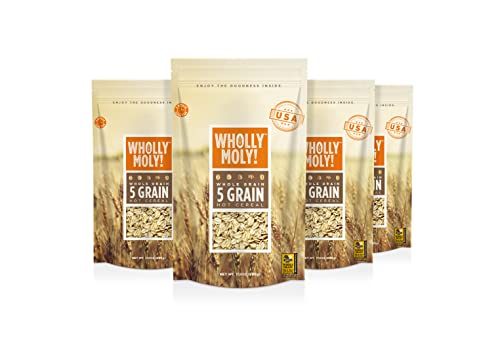
Five grains in a quick-cook oatmeal — rye, barley, oats, wheat, and Khorasan wheat in one bowl
Anyone who has watched their favorite multigrain oatmeal vanish from store shelves will recognize the appeal here. This is a quick-cook blend of five grains — rye, barley, oats, wheat, and Khorasan wheat — sold in a 70.4-ounce total, with no sugar added and whole grain council certification on the label. It is vegan friendly and made from all-natural ingredients, so it fits a clean-eating plan without a long ingredient list to parse.
The reason the grain blend matters is that it changes the bowl. A plain rolled oat gets soft and one-dimensional; a five-grain mix keeps a bit of bite and a fuller flavor. Owners describe it as a pure grain blend with a superior taste and texture — good enough to eat plain, without fruit, nuts, or yogurt stirred in. That is a high bar for a hot cereal, and it is the reason buyers who are picky about raw grains rate it so well.
The practical limitation is availability. People report that this style of multigrain oatmeal keeps getting discontinued by other brands, so finding it at all is half the reason they buy. Once they have it, it stays in the rotation — a filling, genuinely good breakfast. It also moves beyond breakfast into baking: owners use it in multigrain breads and muffins, which stretches a bag further than a bowl-a-day schedule would suggest.
Against the Bob’s Red Mill blend just above, this one trades two grains for a quick-cook format, which is the real decision point between the two.
Where it wins: a five-grain quick-cook oatmeal that eats well plain, needs no added sweetener, and slots into bread and muffin recipes too.
The snag: it is a hard-to-find product by nature, so restocking is not something you can count on at a moment’s notice.
Right for: hot-cereal regulars who want a multi-grain bowl fast and unsweetened.
Not ideal for: anyone who needs a guaranteed steady supply from a single brand, since this category is prone to disappearing.
9. Post Great Grains Blueberry Morning Breakfast Cereal
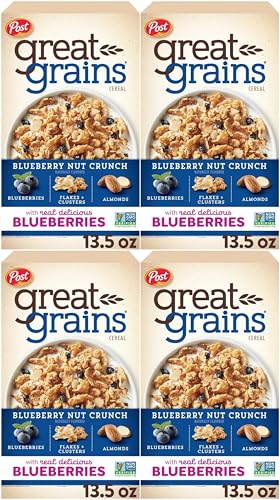
Crunchy flakes, sweet oat bits, cinnamon, and a real pour of dried blueberries
Blueberries are the reason to buy this one, and the box does not skimp on them. The bowl mixes chewy, crispy flakes with sweet oat bits, cinnamon, and plump dried blueberries — a more layered texture than a plain flake cereal can offer. Each serving carries 24 grams of whole grains and a good source of dietary fiber, with vitamin D listed on the label. Four 13.5-ounce boxes total 54 ounces, and they ship individually shrink-wrapped to hold freshness.
The formula is notably clean for a berry cereal. There is no high fructose corn syrup, no artificial flavors, and no artificial colors, and the box carries the Non-GMO Project Verified seal. That combination is why this cereal fits a heart-healthy breakfast rotation while still tasting sweet enough that nobody feels like they are eating a health food.
The blueberry flavor has a genuine following. Owners describe it as light and crunchy with plump dried fruit, and some get hooked enough to buy multipack after multipack. It works with pineapple or apple juice as well as milk, and it doubles as a dry snack straight from the box. The recurring complaint is not about taste at all — it is that the boxes run about half full, so the actual cereal is lighter than the box suggests. The cereal is also hard to find in some supermarkets, which is why the four-pack exists in the first place.
Compared with the Kellogg’s Corn Flakes, this is the sweeter, fruitier bowl — same style of flake, far more going on inside it.
The blueberry case: real dried berries, 24g whole grains per serving, cinnamon and sweet oat bits, and a Non-GMO Project Verified formula with vitamin D on the label.
Honest note: the boxes arrive about half full, so the four-pack runs out faster than the size implies.
Best for: anyone who wants a genuinely fruity, low-fat bowl with berries in every spoonful.
Consider something else if: you want the box to match the volume of cereal inside it.
10. Cereal Cups Variety Pack

Twelve single-serve cups in three varieties — eat them dry from the cup or add milk and a spoon
This is the pick for desks, dorm rooms, and glove compartments. The 12-count variety pack breaks down into 5 Honey Nut Cheerios, 4 Cinnamon Toast Crunch, and 3 Lucky Charms, all in individual cups you can eat straight from the container or pour milk into. Nothing needs measuring, no bowl needs washing, and the whole pack weighs just 2.12 pounds.
The three cereals cover a useful range — Lucky Charms with marshmallows, Honey Nut Cheerios with toasted oats and real honey, and Cinnamon Toast Crunch with its cinnamon-sugar coating. Lucky Charms is gluten free, which broadens who can eat from the pack. The cups also provide a good source of essential nutrients and vitamins, so they are not purely a sugar delivery system. Pack one in a lunchbox, take one on a trip, or keep the box at your desk for midmorning hunger.
The people who buy these are usually buying convenience, and that is exactly what they praise. Owners keep them at their desk for midmorning snacks and report the cups stayed fresh. Several note that single-serve portions are hard to find in a grocery store, which makes the pack worth having on hand. One buyer sums up the value plainly: better than buying them individually at the store. The pack is also a natural fit for care packages and college students, since it needs no preparation at all.
Where the Dormless single cups fall short of a full box is longevity — 12 cups go fast if you lean on them daily, and the 12-count format means a smaller total than the family-size boxes above.
Why it earns its place
- 12 single-serve cups across 5 Honey Nut Cheerios, 4 Cinnamon Toast Crunch, and 3 Lucky Charms
- Eat straight from the cup or add milk — no bowl, no measuring, no cleanup
- Light 2.12-pound pack that travels to work, class, or a trip
- Uses include lunchboxes, care packages, and desk drawers
Things to weigh
- 12 cups disappear quickly if you eat them every day
- Single-serve portions carry less cereal per sitting than a full bowl
Made for: dorm rooms, office desks, road trips, and lunchboxes where a bowl is not an option.
Not the one if: you want the lowest cost per serving — full-size boxes stretch further.
11. Cream of Wheat Instant Hot Cereal Maple Brown Sugar

Microwave a maple-brown-sugar bowl in about a minute, with vitamin D, calcium, and iron in every packet
Fortified hot cereal does not get more convenient than this. Each 1.23-ounce packet mixes with water or milk and goes into the microwave on high for 1 to 1-1/2 minutes, and the finished bowl is a good source of vitamin D, calcium, iron, and six essential vitamins. Twelve boxes of ten packets each total 147.6 ounces — the largest total cereal weight in this entire lineup, which is what makes it the pick for anyone eating a hot bowl every single morning.
The flavor is the draw here. Maple brown sugar lands in a narrow band between sweet and bland, and it is the trait owners describe most — the mixture of brown sugar and cinnamon comes through without tipping into candy territory. It also eats as a genuinely filling cereal rather than a thin one, the kind of bowl that holds off midmorning snacking. Because each packet is portioned, there is no measuring scoop and no guessing at serving size.
Two things are worth knowing before you commit to a full case. The first is that mixing with milk rather than water changes the bowl — the milk brings its own richness, and it also adds to what the fortified cereal already provides. The second is the cost conversation. Value for money draws mixed reactions across the reviews, and it is the same theme that shows up on the other premium hot cereals here. The owners who stick with it are the ones buying in bulk on a subscription, and that is clearly the intended way to use this pack.
Where it differs from the Sunrise Flour Mill and Wholly Moly! hot cereals is texture — those two are multi-grain and chewable, while this is a smooth, uniform porridge that microwaves to a consistent finish every time.
The minute-bowl case: 1.23-ounce packets that microwave in 1 to 1-1/2 minutes, delivering vitamin D plus calcium, iron, and six vitamins in a smooth maple-brown-sugar bowl.
The value question: it is the priciest route per packet in this lineup, and the reviews split on whether the convenience justifies it.
Reach for this if: you want a fortified hot cereal with zero prep, no measuring, and a flavor that lands between sweet and bland.
Think about it first if: you want the lowest cost per serving or a grain-heavy, chewy texture rather than a smooth porridge.
Know the Specs
Vitamin D fortification on the label
Vitamin D is added to cereal rather than naturally present in most grains, so the nutrition panel is the only place to confirm it. When a box lists vitamin D among its nutrients, that fortification was applied during manufacturing and is part of every serving you pour. The cereals here that carry it include Basic 4, Kellogg’s Corn Flakes, Post Great Grains Blueberry Morning, and Cream of Wheat Instant. For a hot cereal, your milk becomes a second source, since milk is commonly fortified on its own. If nothing on the label names vitamin D, treat the cereal as a grain and milk choice rather than a fortified one.
Whole grain grams per serving
Whole grain grams tell you how much of the original kernel survived into your bowl, and that number is the best predictor of how long breakfast holds you. A serving with 26g or 24g of whole grain behaves very differently from a light flake cereal built on refined flour — it digests more slowly and keeps you full longer. It is also the number that separates a cereal you eat because it fills you up from one you eat because it tastes good. When two fortified cereals look similar on the shelf, the whole grain figure is usually the tiebreaker that matters most.
Flake hardness and milk resistance
A hard flake resists milk, and a thin flake absorbs it. That single physical trait decides whether your last spoonful tastes like the first. Coarser, denser flakes — the ones built on whole grains and formed with less air inside — hold their shape longer and take more chewing. Thin, airy flakes go soft within a couple of minutes. If crunch at the bottom of the bowl is your priority, look for flake texture and grain density, because those two factors do the work.
Cooking method for hot cereal
Hot cereal splits into two camps. Instant and quick-cook blends are built to cook in about a minute, usually in a microwave with water or milk, and they come out smooth and uniform. Coarser multi-grain blends need longer on the stove or a soak before cooking, and they finish with a chewier, more textured bowl. The trade is time against texture — you are choosing whether breakfast is a one-minute pour or a deliberate cook. For a busy morning, the instant route is the only one you will actually keep up with.
Common Questions
Which cereals on this list actually list vitamin D on the label?
Does hot cereal with milk give you more vitamin D than cold cereal?
How long does an opened box or bag of cereal stay fresh?
Is a multi-grain cereal better than a single-grain cereal for breakfast?
Will a six-pack of cereal fit in a standard kitchen cupboard?
Are these cereals safe for a nut-free school lunchbox?
Can you eat granola bites as cereal with milk?
Do these cereals contain added sugar or artificial sweeteners?
Is an organic hot cereal worth the higher cost?
How long does a large multipack last for one person?
The Bottom Line
For most households, the pick that covers the most ground is the Basic 4 Heart Healthy Cereal, because it combines vitamin D with 26g of whole grain and 5g of fiber per serving and gives you the largest cereal volume here at 118.8 ounces across six boxes. It’s the rare fortified cereal that also tastes like something you actually want at 7 a.m. — crunchy, not too sweet, and hard to find in stores for exactly that reason.
If you want a fortified hot bowl instead of a cold one, grab the Cream of Wheat Instant, since each 1.23-ounce packet microwaves in 1 to 1-1/2 minutes and carries vitamin D, calcium, iron, and six vitamins. And for organic shoppers who want a chewable multi-grain porridge with no additives, the Sunrise Flour Mill Heritage 7-Grain is the one to reach for.
One honest nudge before you decide: if vitamin D is the whole reason you’re shopping, start with the four cereals that name it directly on the label — Basic 4, Kellogg’s Corn Flakes, Post Great Grains Blueberry Morning, and Cream of Wheat Instant — and choose based on whether your family eats cold or hot. Basic 4 is the fan favorite, holding 4.8 stars across 500+ owners — the safest buy if you want a bowl you’ll keep coming back to.
How we choose
We do not accept paid placement. Every pick is matched to a real buyer and a real use-case; we do not hands-on test units.
Sources
Specifications: manufacturer listings and product documentation. Review insights: verified customer reviews, as of October 2026. Pricing: not shown on this page (it changes often); check the current price via the retailer link.
As an Amazon Associate, Aappliancez earns from qualifying purchases. This does not affect which products we feature.