Disclosure: Some links in this post are affiliate links. As an Amazon Associate I earn from qualifying purchases, at no extra cost to you. Learn more
Specs are compiled from manufacturer listings and verified buyer reviews and can change over time — please confirm the key details on the product page before buying.
Your RV walls bake in summer and bleed heat in winter, and the fix is picking the right reflective or fiberglass layer for the surface you are actually covering. Thin foil rolls handle windows and open wall cavities fast, while real fiberglass bats and spray foam suit deeper stud bays. This guide covers seven picks matched to how you camp, from foil window covers to fiberglass batts and spray foam.
This guide is built by comparing the manufacturers’ published specifications and the patterns across verified customer reviews, so you get each pick’s real strengths and trade-offs instead of marketing spin.
Reflective rolls, fiberglass bats and spray kits each solve a different RV wall problem, so matching the material to the cavity matters more than chasing a headline number. Below you will find the strongest picks for insulation for rv walls.
Top Picks
How To Choose The Best Insulation for RV Walls
An RV wall is a thin sandwich of framing, foam and paneling, so you rarely get the deep cavity a house offers. That single fact drives every choice below: the material has to be thin enough to fit and effective enough to matter.
Thin reflective foil versus thick fiberglass
A reflective roll works by bouncing radiant heat off a shiny foil face, which is why it shines on windows and behind open wall panels. Fiberglass works by trapping still air inside its fibers, so it needs depth — the RecPro roll is 2-1/4 inches thick, which only fits a real stud bay. If your wall cavity is shallow, foil wins by default.
R-value, explained plainly
R-value is the number that tells you how well a layer slows heat movement. A higher number means more resistance, but the number only holds for the thickness it was measured at. Always check whether the R-value on the label matches the thickness you are actually installing.
Moisture, condensation and the vapor question
Warm air meeting a cold RV wall creates condensation, and trapped moisture is what ruins panels. A foil-faced roll can act as a vapor barrier when you tape the seams. Fiberglass needs a separate barrier, and spray foam seals the gap itself.
Side-by-Side Comparison
| Model | Best For | Type | Thickness | Coverage / Size | Amazon |
|---|---|---|---|---|---|
| SmartSHIELD -5mm R17 Roll★ Best Overall | Windows and camper walls | Reflective foil/foam | 5 mm | 600″L x 24″W | Amazon |
| VEVOR Double Reflective RollWidest Roll | Garage doors and RV roofs | Reflective foil/EPE foam | 3.2 mm | 600″L x 48″W | Amazon |
| SmartSHIELD -10mm R22 Roll | Large RV windows and walls | Reflective foil/PE foam | 0.4 in | 300″L x 48″W | Amazon |
| RecPro RV Fiberglass | Deep stud-bay walls | Unfaced fiberglass | 2.25 in | 83.75 sq ft | Amazon |
| USA Reflective Bubble Roll | Ceilings and greenhouses | Foil-faced bubble | 0.19 in | 125″L x 48″W | Amazon |
| 3M Thinsulate SM600L | Van walls and sound deadening | Polyester/polypropylene | 1.65 in | 100 sq ft | Amazon |
| BEEST FullStop Spray Kit | Sealing gaps and cracks | Spray polyurethane foam | 2 in | 240 sq.ft. | Amazon |
Detailed Reviews
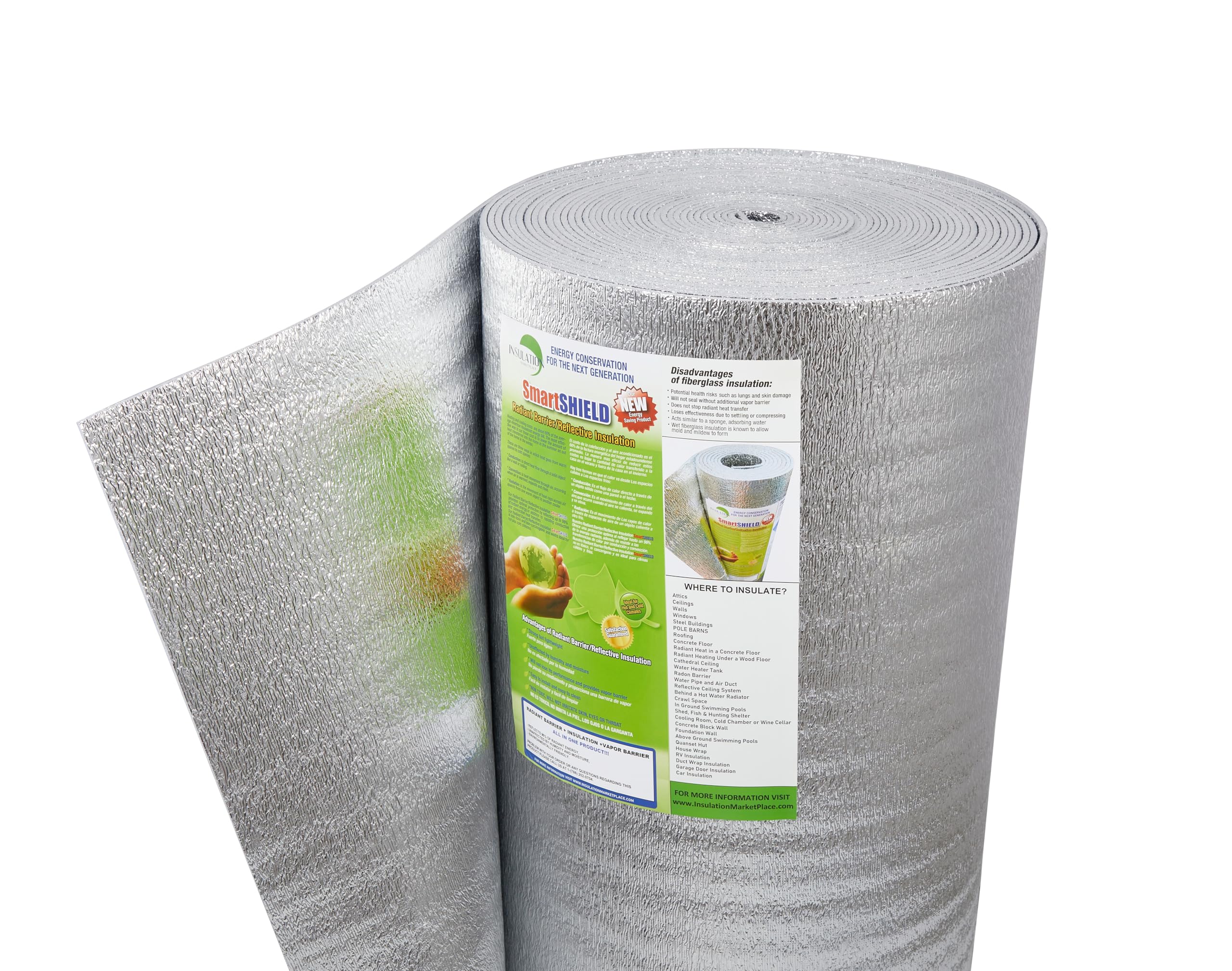
1. SmartSHIELD -5mm 24”X50ft R17 Reflective Insulation Roll
Our pick — 4.5+★ from 1,000+ verified ratings; the strongest balance of quality and price.
The roll that turns a baking camper window into a cool wall in one afternoon.
The 5 millimeter foam core on this SmartSHIELD roll is the thin, forgiving answer for anyone with shallow RV wall cavities — it slips behind paneling and stapled window covers without bulking out the frame. Its foil face reflects 95% of radiant energy, so summer sun bounces off the window cover instead of heating the panel behind it. The R17 rating sits on that 5mm build, which is why it earns the top spot for most campers.
What wins people over is how little fuss it takes. You cut it with utility scissors, tape the seams, and the foil face doubles as a vapor barrier, so condensation on the wall panel stops forming. As owners put it on the review pages, it “keeps the weather off my windows in camper during this very hot summer. My AC loved it as well.” Buyers also report success using it in fifth-wheel windows, where it keeps the interior cooler in summer and warmer in winter.
Here is the catch. The roll is listed as 24 inches wide, but one fifth-wheel owner measured theirs at 47 5/8″ against a 48″ window, so it did not sit snug. Measure twice and plan a small overlap. When you screw paneling over it, the foam compresses under the screws, so you cannot countersink deep without the screw popping through.
The strengths that earn it first place
- Thin at 5 millimeters — slides into tight wall and window frames where thicker foam will not fit.
- Foil both sides reflect 95% of radiant energy, so summer sun bounces away instead of heating the panel.
- Cuts with ordinary utility scissors and staples up, keeping the job a weekend DIY project.
- Acts as a vapor barrier to cut condensation on RV wall panels.
Where it asks for a little patience
- Falls slightly short of its listed width, so measure your opening and plan for a snug overlap.
- The foam crushes under screws, which makes neat paneling work trickier than flat foil.
Go-to for camper windows: the ideal first layer for anyone covering RV windows and shallow wall panels who wants a fast, cut-with-scissors install.
Measure before you cut: because the roll can run slightly narrow of its listed width, confirm your window or bay opening so the foil sits tight.
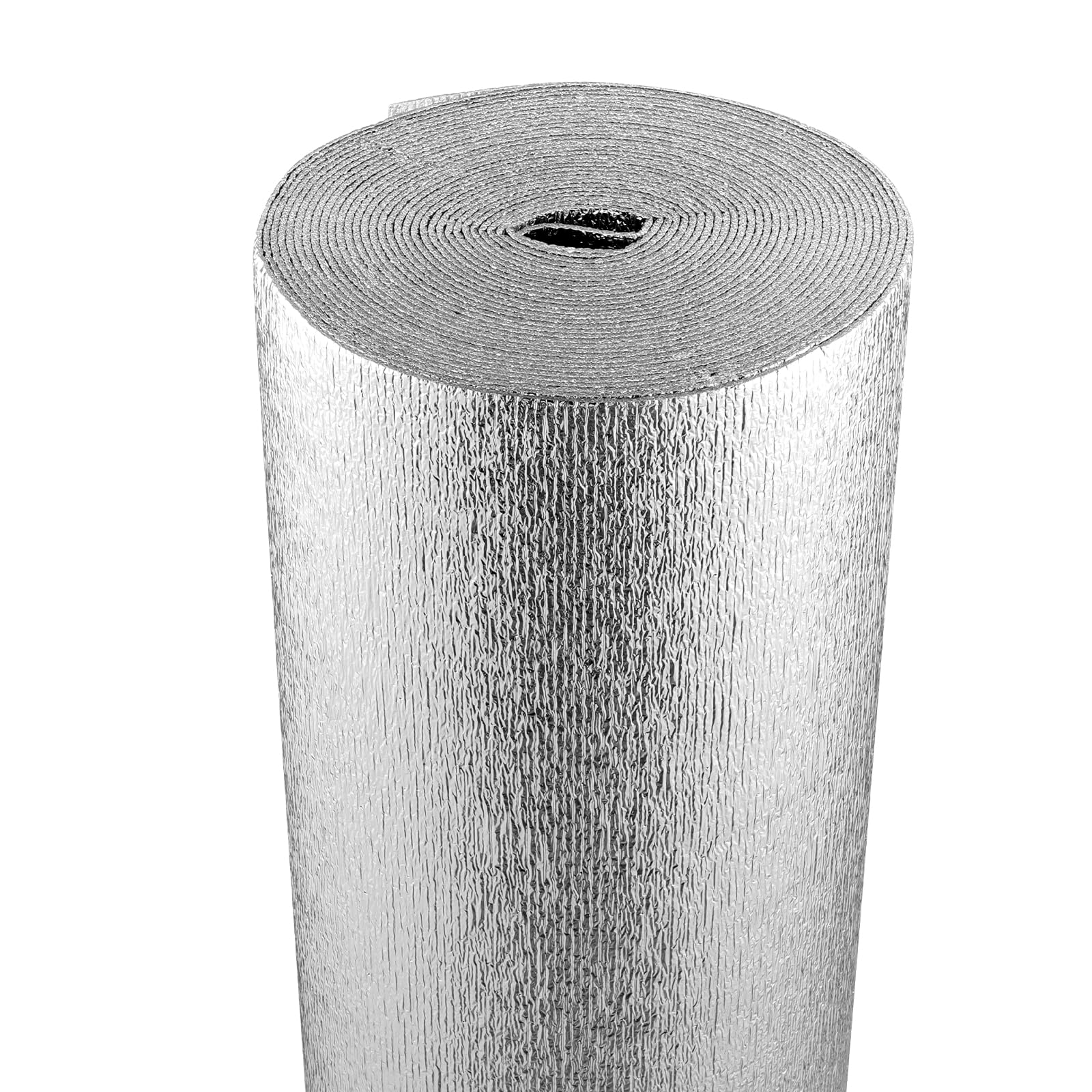
2. VEVOR Double Reflective Insulation Roll 3.2 mm 48 in x 50 ft
Double-wide at 48 inches, built to wrap a garage door or cover an RV roof in one sweep.
If you are lining a wide wall or a roof panel, the VEVOR roll gives you a 48-inch span and 50 feet of length, so you spend less time piecing together narrow strips. A 3.2 millimeter EPE foam core sits between two aluminum foil faces that reflect over 95% of radiant heat. That makes it a natural fit for flat, broad surfaces — garage doors, RV roofs, and long stretches of open wall.
What people praise most is the build quality. The 3-in-1 design combines a radiant barrier, insulation and vapor control in one layer, so you are not taping up a separate moisture sheet afterward. It is stiff enough to hold its shape in a frame, and one Tennessee owner camping in a fifth-wheel said it “made a huge difference during the this summers heat dome” — the roll stayed secure inside the frame without extra fastening. It matches the SmartSHIELD -5mm on length at 600 inches but is the wider cut at 48 inches, so it covers more wall per pass.
The honest caveat is thickness. At 3.2 millimeters it is the thinnest foam core here — the SmartSHIELD -5mm runs 5 millimeters — so expect less bulk and a bit more care when covering a deep cavity. If your wall bay is wide open and you want a heavier barrier, the -10mm roll below is the upgrade.
The width that saves time: a 48-inch span on a 50-foot roll means fewer seams on garage doors, roofs, and long RV sidewalls.
The catch on bulk: the 3.2 millimeter core is the slimmest foam in this set, so a thin layer is all you get per sheet.
Reach for this if: you are covering a wide, flat surface like a garage door, roof or long RV wall and want to skip narrow-strip piecing.
Consider the thicker roll if: your cavity is deep and you want more physical substance in a single layer.
3. SmartSHIELD -10mm 48″ x 25ft R22 Reflective Insulation Roll

The heavyweight of the foil family — 10 millimeters of foam for windows that cook your rig.
This is the version to pick when you have big west-facing RV windows and thin foil has not been enough. The core is 10 millimeters of closed-cell polyethylene foam sandwiched between engineered foil on both sides, rated R22 — the highest foil R-value in this group. The foil face also reflects 95% of radiant energy and, once the seams are taped, acts as a vapor barrier against condensation. Buyer consensus revolves around the material quality and how much heat it keeps out of the rig.
For large windows, the stiffness that some installers grumble about becomes a virtue: it holds flat against the glass without sagging. Buyers report good results using it on the interior of RV windows to cut down on sun heat, and that the heat block happens immediately.
That said, its 25-foot length is shorter than the 50-foot VEVOR roll, so if you plan to cover an entire RV sidewall rather than just the windows, plan your cuts carefully. Its 0.4 inches of thickness also needs a real bit of room behind paneling, unlike the slimmer 5 millimeter roll. This is a window-and-cavity layer, not a wall-fill material.
Where it earns its footing: R22 and a 10 millimeter foam core make it the most substantial foil roll here for large glass and open cavities.
What to know before buying: a shorter 25-foot length and a stiffer sheet ask for planning ahead on big sidewall jobs.
Pick it for big glass: owners with large RV windows and shallow open bays will get the most out of the extra foil thickness.
Not for full sidewalls on its own: the 25-foot length is short for an entire RV side, so buy by the square footage you actually need.
4. RecPro RV Fiberglass Insulation (1-Pack)

Real fiberglass bats that fill an RV stud bay instead of just wrapping it.
Every other pick on this list is a sheet you tape over a surface. This one is the opposite: unbacked fiberglass, 2-1/4 inches thick and 15 inches wide, that stuffs into the wall cavity to fill the space with trapped air. If your RV wall is gutted and you can see the studs, it is the natural fill layer.
The 67-foot roll covers 83.75 square feet, which is real wall area — enough to line a good chunk of a camper’s exterior wall. In practice, owners fitting it into wall cavities report it is clean and thick, easy to work with, and fills out stud spaces nicely. If you are splitting the bat around electrical lines, it stays workable; just wear long sleeves and wash up with cold water afterward.
Two things to weigh before you order. Fiberglass is a real material to handle — skin-sensitive folks should glove up and dust with baby powder before starting. And one reviewer called it very expensive for the coverage; as one put it bluntly, “Very expensive. Very good quality.” It is a premium buy for a small wall area with real R-value.
The full-cavity advantage: 2-1/4 inches of unbacked fiberglass fills a stud bay the way a thin foil sheet never can, at 83.75 square feet per roll.
Handling and cost: fiberglass needs gloves and care, and the coverage-to-cost ratio lands on the premium side.
Best for gutted walls: a serious fit if you have the paneling off and want genuine bat-style fill in the studs.
Stick with foil if: your panels are already up — the fiberglass wants an open bay, not a surface to tape.
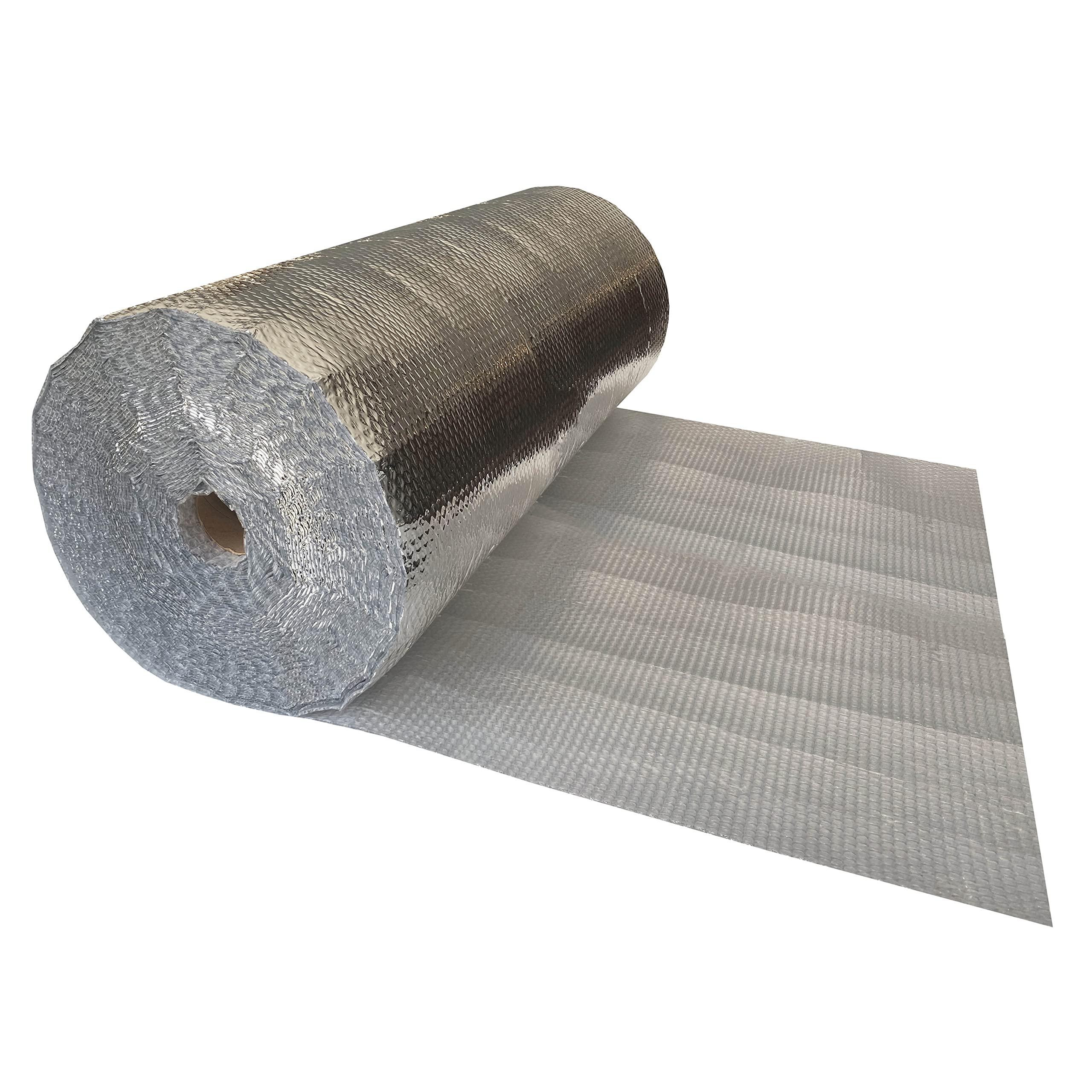
5. USA Reflective Insulation Bubble Roll, 48″ x 125′
A long bubble-foil run for lining big roofs and ceilings without running out.
When the job is a whole ceiling rather than a window, this is the roll that keeps going. It is a foil-faced bubble sheet — 3/16 inch bubble layer under a reflective outer layer — and it comes in a 48 inch by 125 foot run, the longest on this list. The air pockets inside the bubble layer are what slow heat down, and the foil face bounces radiant heat away. It handles basements, metal buildings, walls, roofs and crawl spaces equally well.
Owners keep coming back to it for the same reasons: it cuts with a scissor or knife, it installs fast, and it makes a measurable temperature difference. The quality is clearly the draw, and it works great for reflecting heat off a metal building or shed roof. Price is often called out as fair for the amount you get.
The trade-offs worth knowing are on thickness and durability. The bubble layer is thin — think of a heavy-duty packing material, not a dense foam board — and some folks wish it were sturdier underfoot. Since it is bubble core, treat it as a radiant layer over a surface rather than a rigid structural panel.
Why it earns a look for big ceilings
- 125 feet of length and a 48-inch width mean fewer seams and less waste on a large roof or ceiling.
- Cuts with scissors or a knife, so installation is quick and clean.
- Foil face reflects radiant heat, ideal for turning down the heat off a metal building or shed roof.
- Fairs fairly on cost for the total area it covers.
What the material asks you to accept
- The bubble core is thin — it is a radiant layer, not a rigid or load-bearing panel.
- Durability is a recurring quibble for buyers who want a heavier sheet.
Long-run choice: the one to grab when your insulation job is a whole ceiling or a large metal roof that would eat smaller rolls alive.
Not a structural board: if you need something to carry weight or take foot traffic, look at a denser foam instead.
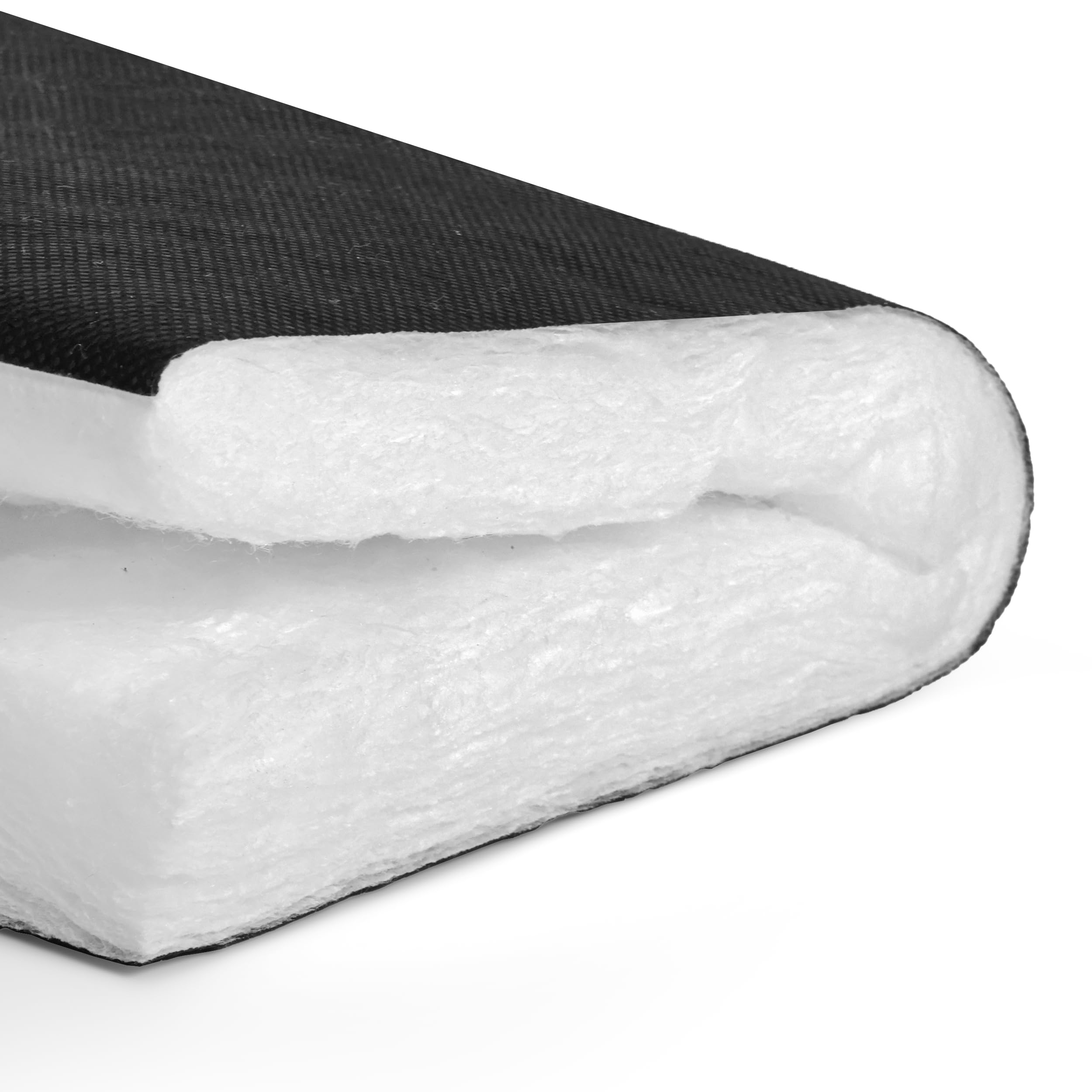
6. 3M Thinsulate SM600L Camper Van Insulation, 60″ x 240″
Lightweight lofted fiber for van walls that also matches the road noise down.
Van converters ask two things of a wall layer: keep the cabin warm while sleeping and quiet the drone of the tires. This Thinsulate roll is built for both — a 1.65 inch thick, 0.95 lbs/cubic foot lofted fiber with an R-value of 5.45 per inch. It comes at 60 inches by 20 feet (shipped in two 10-foot sections), which is enough to line door panels, headliners, van walls and under-floor spaces.
The material is polyester and polypropylene fiber, so it cuts by hand, heat-seals, and bonds to panels without needing a separate moisture layer — it is rated moisture resistant and odor resistant, too. That combination is why it is a favorite for wall and ceiling builds, and owners say it stays warm in the Alaska cold and drops road noise noticeably when installed over a floor deadener.
The real watch-out is thickness. Several folks who bought it say the delivered loft looks less puffy than the advertised 1.65 inches, and that it can compress once vac-packed. Some double up for ceilings and walls to get the result they want. Plan your coverage with doubling in mind and you will be pleased.
Insulation and hush in one roll: the 1.65 inch lofted fiber and R-5.45 per inch numbers are tuned for a comfortable cabin, and it quiets road noise too.
The thickness reality check: the loft can arrive flatter and more compressed than the label promises, so buy extra if you plan to double up.
Made for van conversions: this one is a strong pick for camper van walls and ceilings where warmth and a quieter ride both matter.
For RV gut-jobs, look elsewhere: it is sized for van panels, not deep fiberglass stud bays — pick the RecPro roll if that is your wall type.
7. BEEST FullStop Spray Foam Insulation Kit, 240 Board ft
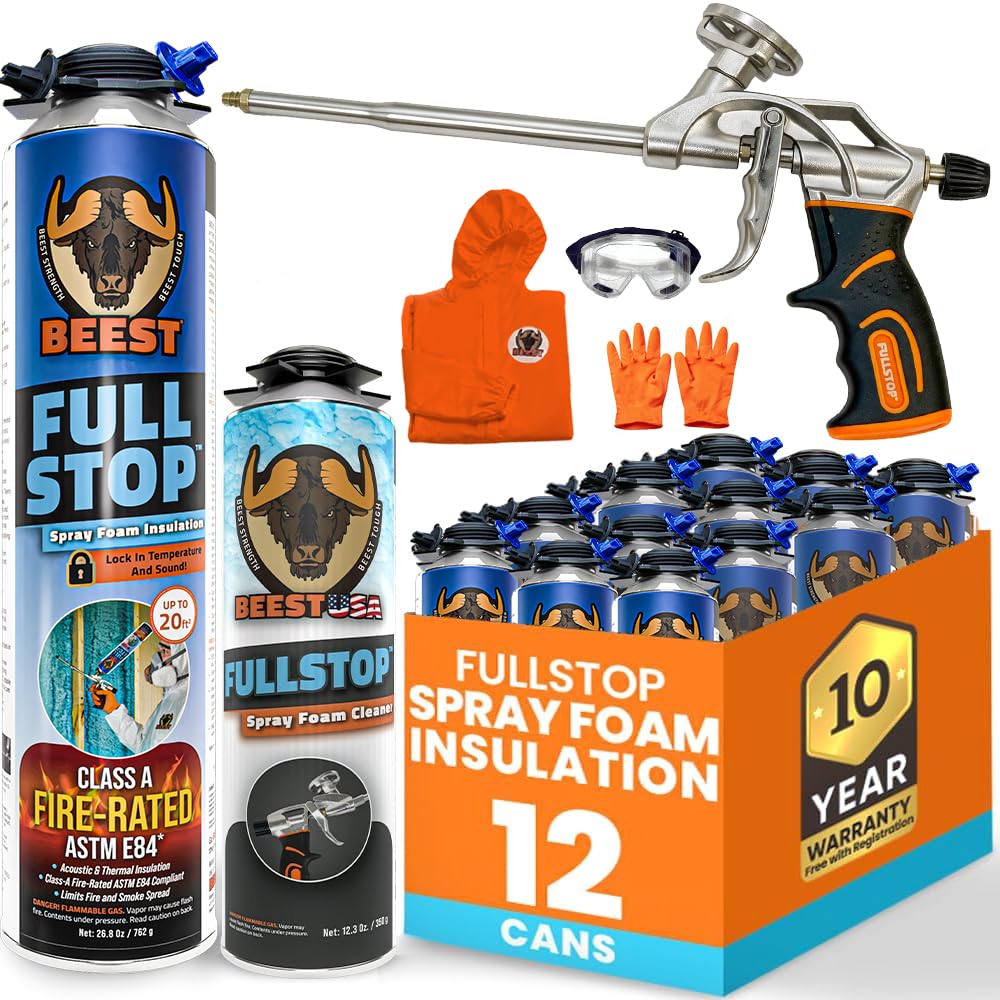
The one pick that seals the gaps and cracks foil and fiberglass leave behind.
Sheets cover flat surfaces beautifully, but the drafts come from the seams, corners and wire penetrations you cannot tape shut. That is the gap this BEEST kit fills. It is a 12-can spray foam bundle that expands into cracks and cavities, rated R-8.24 at 2 inches thick and tested to a Flame Spread Index of 0 and Smoke Developed Index of 120 — meeting Class A surface-burning criteria. It also adheres to wood, metal, drywall, concrete and brick, so it sticks to most of what an RV wall is built from.
The consensus upside is straightforward: it cures quickly, sprays evenly without drip or sag, and the gun gives you real control over the bead. For small sealing jobs on a camper wall, a 12-can kit that covers up to 240 board feet is often cheaper than calling a contractor. It also comes as a complete box — cans, applicator gun, solvent cleaner, gloves, goggles and coverall.
The honest follow-up is coverage. This stuff runs short of the label for some installers, who report getting closer to two-thirds of the claimed board feet, and expansion can vary between cans. With this level of interest the crowd is clearly happy overall, but buy by real square footage and leave margin for a second pass on a big job.
Seals what sheets cannot: it expands into gaps and wire penetrations with an R-value of 8.24 at 2 inches and a Class A flame rating.
Buy with a margin: reported coverage can fall short of the stated board-foot figure, so budget extra foam for bigger jobs.
Take it for drafts: choose this when the drafts in your rig come from corners, seams and penetrations rather than the flat wall panels.
Have a plan for overspray: spraying in tight interiors makes a mess, so tape off surrounding surfaces and wear the supplied coverall.
Know the Specs
R-value and why the thickness matters
R-value is the resistance to heat flow — a higher number means the layer slows heat better. The catch is it is measured at a specific thickness, so a material’s R-value only holds if you install it at that thickness. Thin foil can carry a high R-rating on paper because it reflects radiant heat rather than trapping air. Check the number against the installed thickness, not just the label.
Radiant barrier versus vapor barrier
A radiant barrier (a shiny surface that reflects heat) works by bouncing heat back rather than absorbing it. A vapor barrier (the moisture-stopping sheet) prevents humid air from condensing on the cold wall. Foil-faced rolls often do a bit of both when taped at the seams, while fiberglass needs a separate moisture barrier. Spray foam seals everything at once.
Common Questions
Will reflective foil insulation fit behind RV wall paneling?
Do I need a separate vapor barrier if I use reflective insulation?
What is the difference between R17 and R22 foil insulation?
Can I use foil insulation on RV windows instead of walls?
How long does a reflective insulation roll usually last?
Is spray foam better than foil for RV walls?
Can I cut reflective insulation with ordinary scissors?
Does fiberglass insulation work for an RV in winter?
The Bottom Line
For most people, the insulation for rv walls winner is the SmartSHIELD -5mm R17 Reflective Roll because its 5 millimeter core slides into tight window frames and wall panels and still reflects 95% of radiant heat. If you are covering a wide flat roof or garage door and want fewer seams, grab the VEVOR Double Reflective Roll at 48 inches wide. For gutted stud bays that need real fiberglass fill, the RecPro RV Fiberglass is the one to reach for — and if drafts are coming from gaps, the BEEST FullStop Spray Kit seals the cracks sheets miss. Each pick above is backed by verified owner reviews from campers who have already installed it.
How we choose
We do not accept paid placement. Every pick is matched to a real buyer and a real use-case; we do not hands-on test units.
Sources
Specifications: manufacturer listings and product documentation. Review insights: verified customer reviews, as of October 2026. Pricing: not shown on this page (it changes often); check the current price via the retailer link.
As an Amazon Associate, Aappliancez earns from qualifying purchases. This does not affect which products we feature.