Disclosure: Some links in this post are affiliate links. As an Amazon Associate I earn from qualifying purchases, at no extra cost to you. Learn more
Specs are compiled from manufacturer listings and verified buyer reviews and can change over time — please confirm the key details on the product page before buying.
If your arch flattens every time you stand and your ankle rolls inward with each step, the right insole can change how your whole day feels. The short answer: the PowerStep Pinnacle is the safest first buy for most flat-footed, overpronating adults, because it pairs a firm contoured arch with dual-layer cushioning and comes sized by shoe size so you do not have to cut anything. Below are seven picks sorted by what each one actually does well — firm support, slim fit, metatarsal padding, or all-day cushioning — so you can match one to your foot instead of guessing.
This guide is built by comparing the manufacturers’ published specifications and the patterns across verified customer reviews, so you get each pick’s real strengths and trade-offs instead of marketing spin.
Overpronation means your foot rolls inward too far, which strains the arch and often shows up as heel or knee ache by evening. The picks below are ranked by how firmly each one props up a low arch without wrecking your shoe fit. This breakdown of the insoles for flat feet and overpronation covers firmness, arch height, and shoe room so you can choose with confidence.
Top Picks

How To Choose The Best Insoles for Flat Feet and Overpronation
The mistake most flat-footed buyers make is reaching for the softest, squishiest insert on the shelf. A soft foam pad feels nice for ten minutes, then flattens under your body weight and gives your collapsing arch nothing to lean on. What you want is a firm shell under the arch that holds its shape, with cushioning layered on top for comfort.
Start with arch height, not cushioning
Your insole needs to fill the gap under a low or fallen arch without pressing so hard it aches. A contoured neutral arch with a deep heel cradle is the usual starting point for flat feet and mild to moderate overpronation. If a model offers several arch heights, pick the one that touches your arch evenly when you stand — not the tallest one.
Check whether your shoe has room to spare
A full-length orthotic adds thickness under your whole foot, which can tighten a snug sneaker or crowd your toes. Pull the factory footbed out first; most serious insoles are designed for shoes where that insole is removable. If your shoes are tight, a 3/4-length insert that stops before the toes is the smarter fit.
Expect a break-in period
Firm arch support rarely feels wonderful on day one. Your foot has been rolling inward for years, and propping it up uses muscles and pressure points that are not used to the work. Give a new insole short sessions at first, then build up to full days.
Side-by-Side Comparison
| Model | Best For | Arch Support | Length | Weight | Amazon |
|---|---|---|---|---|---|
| PowerStep Pinnacle★ Best Overall | Firm all-round support for flat feet | Contoured, firm with dual-layer cushioning | Full length, sized by shoe size | 3.2 ounces | Amazon |
| OUOKK Arch Support InsertsSlim Fit Pick | Slim everyday support in tight shoes | 24MM arch, three height options | 3/4 length, no cutting | 2.4 ounces | Amazon |
| VALSOLE Heavy Duty Support | Heavier users and long work shifts | High, firm arch support | Full length | — | Amazon |
| Kelaide Orthotics Arch Support | Ball-of-foot and Morton’s neuroma pain | Neutral arch with metatarsal pad | Full length | 6.74 ounces | Amazon |
| PowerStep Original | Tighter shoes and mild to moderate pronation | Contoured neutral arch, deep heel cradle | Full length, low profile | 2.4 ounces | Amazon |
| 10 Seconds 3720 Stability | Firm support with a stability plate | High arch height, firm | Full length, trim to fit | 6.88 ounces | Amazon |
| Superfeet Run Cushion Low Arch | Running and walking with low arches | Low arch, flexible support | Full length, trim to fit | 4.16 ounces | Amazon |
Detailed Reviews
1. PowerStep Pinnacle Insoles, Plantar Fasciitis Relief
Our pick — 4.5+★ from 31,500+ verified ratings; the strongest balance of quality and price.
The full-length firm arch that anchors a rolling foot without needing scissors.
The reason this one lands at the top for flat feet is simple: the arch is genuinely firm, and the heel gets dual-layer cushioning on top of it. That combination props up a collapsing arch on impact, then softens the landing. It is made in the USA and comes sized by shoe size, so a men’s 6-6.5 or women’s 8-8.5 arrives ready to drop in with no trimming required.
Firm is the theme throughout, and buyers report that very quality is what finally helped: “One buyer with plantar fasciitis credits the firm, non-gel arch with roughly 65% pain relief and no heel pain after 90-minute daily cardio.” Durability is a recurring theme, with one pair reported to last roughly three years. Comfort is the thing owners talk about most, and the arch support ranks right near the top of what they single out.
Here is the honest catch: the same firmness that steadies your foot can feel unforgiving in the first week, and flat-footed wearers notice pressure under the arch while it adapts. Thickness is the other fit note — a snug gym shoe can feel tighter once these are in. Pull your factory footbed out and give them a few short days before judging.
What earns its place up top
- Contoured arch paired with a deep heel cradle for stability on every step
- Dual-layer cushioning under the heel to soften impact
- Sized by shoe size — no trimming, no guesswork
- Made in the USA with a 30-day money-back guarantee and HSA/FSA eligibility
Where it will not suit everyone
- Firm feel takes getting used to for a flat arch
- Adds thickness, so tight shoes may need more room
- Best in shoes with a removable factory insole
Reach for this if: you want a proven, firm full-length orthotic that arrives pre-sized and ready to wear in running, walking, or work shoes.
Think twice if: your everyday shoes are already snug and you cannot spare any room under the toes.
2. OUOKK Arch Support Inserts
Barely-there support for the shoes you cannot afford to tighten.
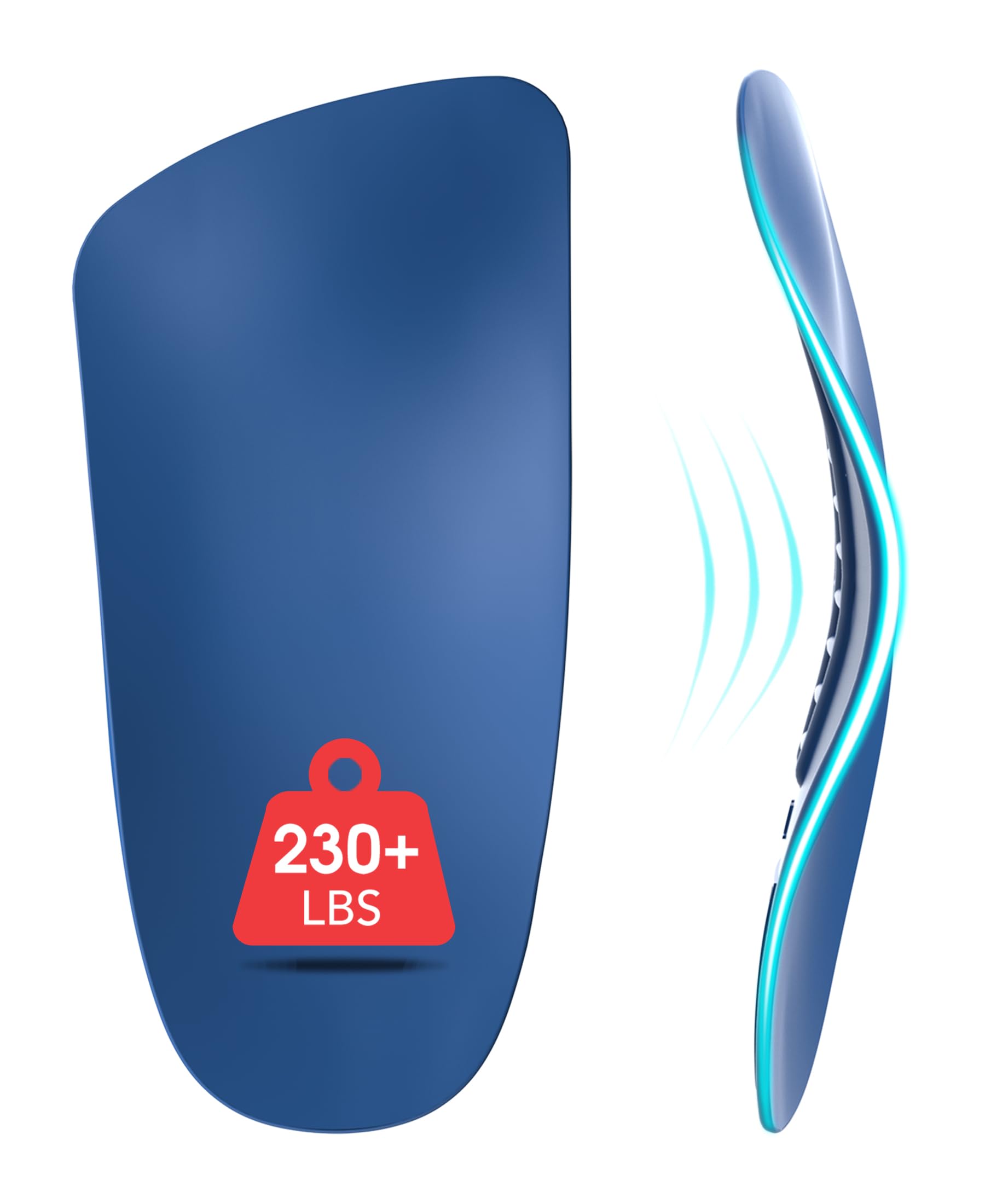
If your problem is not the arch itself but the space around it, this is the pick to look at. It delivers a 24MM ergonomic arch in a 3/4-length insert that stops before the toes, so it does not crowd the toe box or force you into bigger shoes. It arrives in three arch heights, so you can match the lift to your own foot instead of taking whatever one height a brand decided to make.
The construction is a premium bio-plastic arch with a thickened center and soft thin edges, and The maker rates it for 230+ lbs with a lifespan of two years or more.. What wins people over is the quality of the build, with arch support running a close second in what buyers bring up. As the pages put it: “They’re thin, so they don’t take up too much space inside the shoe, but at the same time they provide good arch support.”
The trade-off is reach. Because it stops at the ball of your foot, this insert supports the arch and nothing under the heel or toes — good for swapping between tight shoes, less useful if you want full-foot cushioning. Getting the arch height right matters here too; pick the height that matches your foot, not the tallest one in the box.
Best for tight footwear: indoor flats, dress shoes, and hiking boots that leave no room for a thick full-length orthotic.
The honest limit: partial-length coverage means the heel and ball of the foot go uncushioned.
Pick this one: if thin-and-discreet matters more to you than full-foot padding, and you want to choose your own arch height.
Leave it: if you need heel cushioning or metatarsal padding built into the same insert.
3. VALSOLE Heavy Duty Support Pain Relief Orthotics
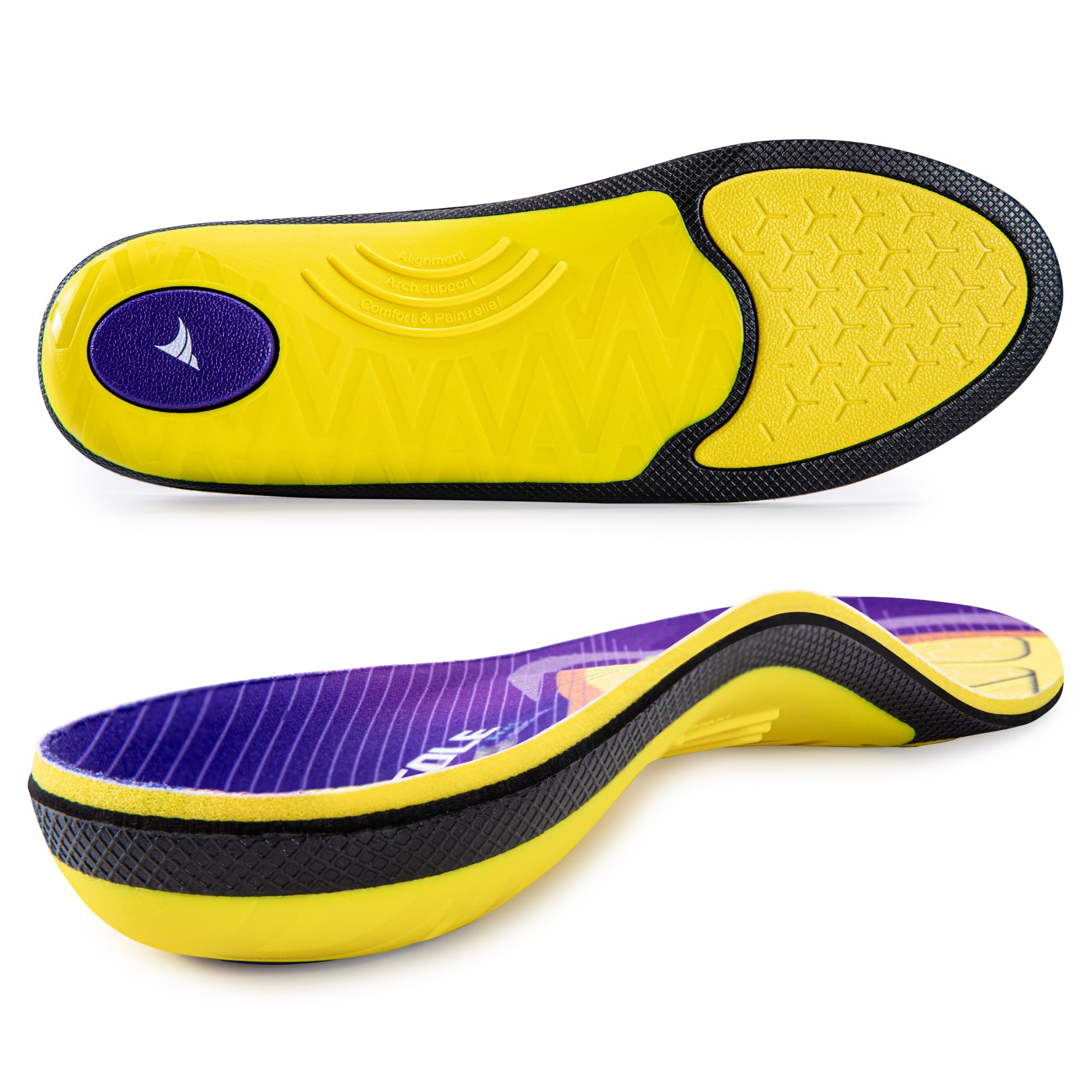
Built for the twelve-hour shift crowd who flatten every insole they touch.
For a heavier body weight or a job that keeps you standing all day, this one is rated for 220+ lbs with a high, firm arch that holds its shape under load. Owners mention: “One buyer on their feet 12–16 hours a day reports instant relief from sharp heel pain, calling the arch firm yet spongy.” It also puts a cushioned layer over a firm arch, so the pressure spreads rather than concentrates.
Quality is the thing owners praise most here, with comfort right behind it. The firm-but-spongy feel shows up again and again — enough support to carry a big frame through a long shift without turning to mush. If you are used to squishy foam, this will feel like a different class of product.
The compromise is fit and firmness. Some find the arch too rigid at first, and a few note their feet slipping in the shoe once the insert is added — thicker socks or a shoe with more volume help. Expect to loosen laces and give it a break-in stretch before it feels natural.
Why long-shift workers like it
- Rated for 220+ lbs of body weight
- High, firm arch that resists collapsing
- Cushioned layer over the arch for pressure relief
- Durable enough to survive heavy daily use
The compromises to expect
- Firm feel needs a break-in period
- Some find feet slip once inserted
- Better in boots and roomy sneakers than tight shoes
Worth it for: anyone heavy on their feet all day who wants a high, firm arch that can take the load.
Not ideal for: tight dress shoes or buyers who want a soft, gel-like cradle under the arch.
4. Kelaide Orthotics Arch Support Metatarsalgia Insoles

The one that also looks after the ball of your foot, not just the arch.
Flat feet and a collapsed arch often bring ball-of-foot pain, Morton’s neuroma, or metatarsalgia along for the ride. This full-length insert puts a metatarsal pad under the ball of the foot and a neutral arch underneath, so it addresses both at once. A soft foam layer and breathable fabric sit on top to cut heat and friction.
Comfort is what buyers bring up most, with build quality close behind. The pages read like this: “One buyer says the metatarsal pad eases Morton’s neuroma pain while the arch still supports well.” Another owner writes, “Another with plantar callouses who could barely step on the floor says the inserts have them moving normally again.”
The honest note is width and acclimation. Several wearers find them too narrow for a normal-width slipper, and first-time metatarsal users usually need short sessions before wearing them all day. If your shoes already have thick factory cushions, keep those underneath or the insert can shift.
Where it stands out: combined arch and metatarsal support in one full-length insert, with a breathable top layer for warm feet.
What to watch: narrow fit and a break-in period for the metatarsal pad.
Right for you: if ball-of-foot or neuroma pain rides along with your flat arches and you want both addressed together.
Keep looking: if you have wide feet and need an insert that fills a broader shoe without pinching.
5. PowerStep Original Insoles, Arch Pain Relief Orthotics

Same firm support as the top pick, sliced thin enough for tighter shoes.
This is the lower-profile sibling of the Pinnacle, built as a total-contact full-length insole for shoes that leave less room — athletic, walking/running, work, and casual dress styles. It keeps the contoured neutral arch and the deep heel cradle while cutting the bulk, and at 2.4 ounces it is light enough that you forget it is in there. It is also designed for mild to moderate pronation, which is the everyday version of the inward roll that flattens your arch.
Fit is the aspect owners bring up most, tied with pain relief. A wearer in wide Brooks Adrenaline reports the “heel does not move” and says they would buy again. Several note the insole runs a touch short and wide, so if you are between sizes, sizing up and trimming the tip is the standard fix, just as with the Pinnacle sizing above.
The recurring gripe is firmness — it feels hard to some feet at first, which is the same firm-arch trade-off that comes with the Pinnacle. Give it short sessions, pair it with comfortable shoes, and the support starts to feel like an anchor rather than a hard lump. Made in the USA with a 30-day money-back guarantee.
The case for the Original
- Low-profile design fits tighter shoes and dress styles
- Contoured neutral arch with a deep heel cradle
- Light 2.4-ounce build you barely feel
- Designed for mild to moderate pronation
Where it gets hard
- Firm feel takes getting used to
- Runs short and wide, so sizing up and trimming may be needed
- Best in shoes with a removable factory insole
Go here if: you want PowerStep firmness but your shoes are too tight for the Pinnacle’s deeper profile.
Skip the swap: if you have plenty of room and would rather have the extra cushioning of the top pick.
6. 10 Seconds 3720 Stability Insole

High arch height and a stability plate for feet that need extra firmness up top.
The spec sheet on this one reads like a support-lover’s checklist: high arch height, firm arch support, firm cushioning, and high shock absorption, all built around a stability plate. The full Poron cushioning foam spreads impact across the whole foot rather than just the heel. It is trim-to-fit, so you cut it to your shoe, and at 6.88 ounces it has real substance underfoot.
Comfort and pain relief are what buyers mention most, and the carbon fiber insert gets credit for even pressure across the arch. The maker points this model at high arches and everyday comfort, yet owners with collapsed arches still report it working — as the pages put it, “They work!! I need a few more pairs so I don’t have to keep switching from shoe to shoe.”
The catch is cushioning and, over time, durability. Several find the padding minimal and add their own extra cushion at the ball of the foot, while a few report the construction feeling flimsy after a stretch of use. If you want a plush, pillow-soft feel, this is not it — it is a firm, stable platform.
What makes it different: a stability plate plus full Poron foam for firm, even support across a high arch.
What it asks in return: you get firmness and stability, not plush padding, and durability is mixed over the long haul.
Choose this: if you want a high, firm arch with a stability plate and do not mind trimming to fit.
Better elsewhere: if you want a soft, cushion-heavy insole or expect plush padding under the ball of the foot.
7. Superfeet Run Cushion Low Arch Insoles
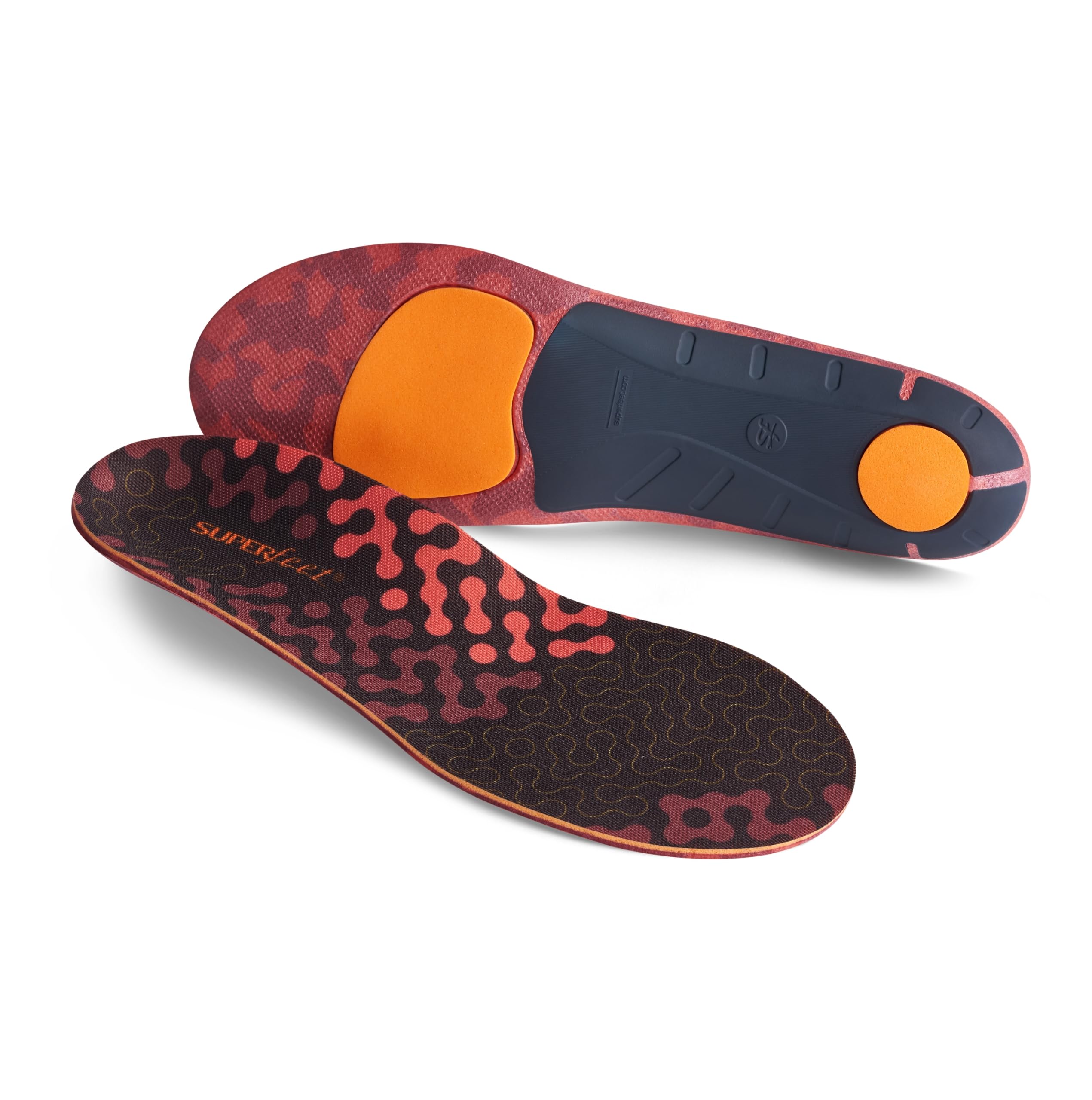
Low-arch support tuned for the running shoe crowd who still put in miles.
Built for running and walking footwear with a roomy to moderate fit, this one delivers flexible support under a low arch rather than a rigid block. The patented Adaptive Comfort Technology flexes with the foot for an efficient heel-to-toe roll, and a Moisturewick top cover helps keep odors down and feet fresh. It comes trim-to-fit, with a medium heel cup depth and a 4.16-ounce build.
Fit and foot pain relief are the two things owners talk about most. Flat-footed wearers in particular call it out — One flat-footed runner reports arch and tendon pain “subsided completely” after two months of running in them. and another flat-footed buyer stands on concrete all day and calls the cushion and support great.
The honest side is durability and value. A few report the insoles coming apart after limited use, and some question whether the price is justified while others say it is. This is the one pick best suited to dedicated runners and walkers who care about a flexible low-arch platform — not a budget shopper hunting for padding alone.
Where it shines: flexible low-arch support and odor-fighting Moisturewick fabric for running and walking shoes.
The caveat: mixed reports on long-term durability and whether the price is fair.
Best fit for: runners and walkers with low arches who want flexible support that flexes with the foot.
Look elsewhere if: you want the most durable or best-value insert and durability is your top concern.
Know the Specs
Arch height and firmness
Arch height is how far the shell rises under your foot; firmness is how much it resists your weight. A high, firm arch (like the 220+ lbs rated VALSOLE or the 24MM OUOKK) props up a collapsing foot, while a flexible low arch (like the Superfeet Run Cushion) lets the foot roll naturally. Flat feet generally need enough firmness to stop the inward roll; a soft, gel-like insert tends to give way under load.
Full length versus 3/4 length
Full-length insoles support the entire foot but add thickness from heel to toe, which can squeeze a snug shoe. A 3/4-length insert (like the OUOKK) stops before the toes, saves space in tight shoes, and swaps between pairs without trimming. If your shoes are roomy, full length gives the most support; if they are tight, 3/4 keeps them wearable.
Metatarsal pads and ball-of-foot pain
A metatarsal pad sits under the ball of the foot to take pressure off the metatarsal bones and a pinched nerve (Morton’s neuroma). If your flattened arch comes with a burning or stinging ball of the foot, a full-length insert with a built-in metatarsal pad (like the Kelaide) targets that spot; a plain arch support does not reach it.
Trim to fit versus sized by shoe size
Some insoles arrive sized to your shoe and need no cutting (the PowerStep Pinnacle, for example). Others are trim-to-fit, meaning you cut them to match your existing footbed with scissors. Trim-to-fit gives a custom fit but takes a minute and a steady hand; sized-by-shoe-size is drop-in simple. If you are between sizes, sizing up and trimming down is the usual approach.
Common Questions
Do insoles actually help flat feet and overpronation?
Will a full-length insole fit inside my shoes?
How long does it take to get used to a firm arch insole?
Should I choose high arch or low arch support for flat feet?
What is the difference between a metatarsal pad and arch support?
Do I need to trim my insoles, and how do I do it?
Can I wear the same insole in different pairs of shoes?
Are insoles for flat feet worth the money?
Will a firm insole make my feet hurt at first?
Can children or teens use these insoles?
The Bottom Line
For most flat-footed, overpronating adults, the insoles for flat feet and overpronation winner is the PowerStep Pinnacle — a firm contoured arch and dual-layer cushioning sized by shoe size so it just drops in. If your shoes are tight, the OUOKK 3/4-length slim fit saves space without forcing you into bigger shoes. And if ball-of-foot or neuroma pain rides along with your flat arches, the Kelaide metatarsal pad covers both spots. The Pinnacle holds the higher score while the VALSOLE has more ratings behind it — but for a safe first buy, the firm PowerStep arch is the soundest bet for feet that roll inward.
How we choose
We do not accept paid placement. Every pick is matched to a real buyer and a real use-case; we do not hands-on test units.
Sources
Specifications: manufacturer listings and product documentation. Review insights: verified customer reviews, as of October 2026. Pricing: not shown on this page (it changes often); check the current price via the retailer link.
As an Amazon Associate, Aappliancez earns from qualifying purchases. This does not affect which products we feature.