Disclosure: Some links in this post are affiliate links. As an Amazon Associate I earn from qualifying purchases, at no extra cost to you. Learn more
Specs are compiled from manufacturer listings and verified buyer reviews and can change over time — please confirm the key details on the product page before buying.
If you want the cheapest way to close off the underside of a mobile home, the answer is a box of interlocking vinyl skirting panels you cut and fit yourself. That is the short version. The long version is that panel height decides almost everything — too tall and you fight it, too short and you are left staring at a gap under the rim — so the first pick on this list is the 35-inch vinyl panel set that covers more ground than a standard 28-inch box.
This guide is built by comparing the manufacturers’ published specifications and the patterns across verified customer reviews, so you get each pick’s real strengths and trade-offs instead of marketing spin.
Below you will find seven ways to skin a skirt, from a 35-inch vinyl panel pack to a fiber-cement shingle that replaces old tile look-alikes to a shear that cuts cement board without a dust cloud. Read on for the inexpensive siding options that actually make sense for a mobile home or a small exterior project.
Top Picks

How To Choose The Best Inexpensive Siding Options
Cheap siding is a straightforward purchase once you accept one thing: you are almost always buying panels or shingles, not a finished installation. The savings come from doing the measuring, cutting, and nailing yourself. So the question stops being “which brand” and becomes “which panel shape covers my opening with the least waste.”
Panel height and how much you have to cut
Measure from the ground up to the bottom of your home’s rim. A 28-inch panel is the common replacement size on older mobile homes. A 35-inch panel buys you extra so you can trim down to a slope or uneven grade rather than coming up short. The 35-inch box covers 13.3 linear feet per pack and can be trimmed shorter on site, so extra height is a buffer, not a problem.
Vented versus solid panels
Vented panels have openings that let air move under the home, which several manufacturer notes call out as the reason they exist. Some building codes do not permit vented skirting, so confirm with your local inspector before you order a truckload. Solid panels are the safer default where ventilation is handled elsewhere.
Mil thickness tells you how much it bends
Skirting is sold by mil thickness — a mil being one thousandth of an inch. A 40 mil panel is stiffer stock than thin economy panels, so it holds a straight line between posts and shrugs off a string trimmer nick. That is exactly the damage old trailers show: holes and tears at the mower line.
If you are shingling instead of skirting
Fiber-cement shingles cost more per square foot than vinyl, but they can replace a damaged patch of old tile-look siding instead of re-cladding the whole wall. Weight matters: a bundle is heavy enough that you plan a helper. And cutting fiber cement is the one job worth a dedicated tool, because the dust is fine and travels.
Side-by-Side Comparison
| Model | Best For | Panel Height | Panels per Pack | Material | Amazon |
|---|---|---|---|---|---|
| FIRE ROSE Vinyl Underpinning 16″ x 35″★ Best Overall | Taller skirts on uneven ground | 35 in | 10 | Vinyl | Amazon |
| GAF WeatherSide Purity Wavy Fiber-Cement ShinglesVintage Match | Matching old asbestos-tile walls | 12 x 24 shingle | 18 bundles | Fiber-Cement | Amazon |
| WEN Variable Speed Siding Shear (3670) | Dust-free cutting of cement board | — | — | Steel blade tool | Amazon |
| Mobile Home Solutions Vented 16″ x 28″ | Direct replacement of worn panels | 28 in | 10 | Vinyl, 40 mil | Amazon |
| HYWMLY Vented 16″ x 46″ | Full-height skirting on tall piers | 46 in | 8 | Vinyl | Amazon |
| Mobile Home Solutions Solid 16″ x 46″ | Non-vented code requirements | 46 in | 8 | Vinyl, 40 mil | Amazon |
| Polaris Homeside Select Double 7″ Cedar Shake | Cedar-shake look on a budget | 15-3/8 in | 10 | Vinyl | Amazon |
Detailed Reviews
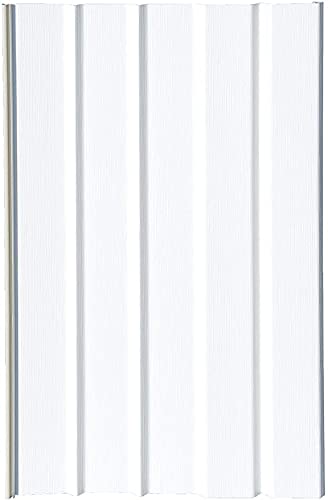
1. Mobile Home Skirting Vinyl Underpinning Panel 16″ W x 35″ L Pack of 10
Our pick — 4.5+★ from 850+ verified ratings; the strongest balance of quality and price.
Thirty-five inches of trim-ready vinyl, so a sloping yard stops stealing your panel.
Here is the number that settles most skirting arguments: 35 inches. That is five inches more panel than the 28-inch replacement boxes, and on a run of ground that rises and falls, those extra inches are what let you cut a clean line instead of coming up short at the high corner. Ten panels per box cover 13.3 linear feet, and each one is pre-cut to 35 inches so you trim down rather than splice up. The panels are solid white vinyl with an interlocking edge that slides together during install.
The build quality is the reason this one sits at the top. Forty-eight customer reviews on this listing single out quality, and it shows in how the panels stand on edge while you line up a track. — stiff enough to stand on edge while you line up a track, with a solid finish that wipes clean with a dry cloth. Pair that with the interlocking edges and a first-timer can finish a skirt without a helper. As one buyer reports, “These panels are easy to install and look great” — from someone who had never installed skirting before. The taller 35-inch panels also make the finished skirt look more like a continuous wall than a row of vents.
Where it bites: this is a panel, not a kit. There are no tracks, corners, or trim in the box, so if your existing rails are rusted out you are buying those separately. The panels are also easy to damage in transit, so inspect each one before you hang it. And one thing this box does not do is vent. If your local code requires airflow under the home, look at a vented box instead.
What earns its spot
- 35-inch panel height leaves material to trim on sloped ground
- Interlocking edges let one person hang the run
- 10 panels cover 13.3 linear feet per box
- Solid white finish wipes clean with a dry cloth
Where it asks more of you
- No tracks, corners, or trim included — panels only
- Not vented, so check code before ordering
- Vinyl panels need gentle handling to avoid cracks
Strongest fit: someone re-skirting an older mobile home who wants extra height to work with and can reuse existing tracks.
Look elsewhere: if your inspector wants vented skirting or your rails are already shot.
2. GAF WeatherSide Purity Wavy Fiber-Cement Siding Shingles 18 Bundle
The patch job that pretends the last sixty years never happened.
Replacing a handful of broken wavy shingles on a mid-century wall is a nightmare if you cannot find the shape. This bundle solves the shape problem. The 12×24 shingles are made to match the size and look of old asbestos siding, so a patch blends into the surrounding wall instead of standing out as the new kid. They come 18 bundles to the lot, pre-primed at the factory and ready for paint.
The safety angle is the headline here. These shingles are UL Classified to ANS/UL723 and non-combustible per ASTM E136, and they contain no asbestos — a real concern when you are tearing off old wavy tile that may date to an era when asbestos was standard. The fiber-cement body resists warping, rotting, UV degradation, and termite damage, which is a fair bit of insurance for an exterior wall. Matching is what buyers praise most here, and it is the whole reason this product exists.
Installation is honest work but not complicated: pull the old shingle, nail the new one in place, paint to match. No caulking at the joints, which saves a fiddly step on a ladder. The trade-off is weight and pace. A bundle of fiber cement is heavy stock, so plan on two people moving it, and remember that this is a repair product, not a whole-house budget solution. The cost per square foot on fiber cement sits above vinyl, so use it for the patch, not the whole wall.
Why it earns the shelf space: there is no cheaper way to make a patched wall look original — the shingle shape matches the old asbestos profile without the asbestos.
Reach for this if: you are patching a vintage wall and need the wavy profile to match.
One catch: heavy bundles mean a helper and a slow afternoon.
3. WEN Electric Fiber Cement and Siding Shear 3670

Cuts cement board without the dust cloud that makes you wear a respirator.
The spec that matters here is the 1/2-inch (13mm) maximum cutting capacity — that is the thickness of board it will shear through, and it covers standard fiber-cement lap siding. The head swivels a full 360 degrees so you can follow a run of siding without twisting your wrist, and the pressure-sensitive trigger runs from 0 to 2500 strokes per minute. At 4.7 pounds it is light enough to hold overhead for a notch.
What it changes in practice is the mess. Cutting fiber cement with a saw throws fine silica dust into the air, which is why so many DIYers dread the job. This shear cuts by force instead, so shavings fall as coils rather than hang in the air. Buyers report it “cuts 1/4in Hardie fiber cement siding cleanly with very little dust,” which matches the product’s OSHA-compliant framing. It also runs quieter than a saw, so a job in a carport or a basement stays tolerable.
Be straight about the limits. The shear has no guide, so the shavings can curl up into the cut line and you brush them aside as you go. It wants a strong push, and on thicker trim it can tear the edge instead of slicing it clean — there is a reason the maker sells a separate trim tool. Best results come from supporting both sides of the cut and lifting slightly while running it. That is a technique adjustment, not a defect, but it is the reason a first pass may look rough.
Where it pays off
- 1/2-inch cutting capacity handles standard fiber-cement lap siding
- 0 to 2500 strokes per minute on a pressure-sensitive trigger
- 360-degree swivel head follows a siding run
- 4.7 pounds and a 6-foot cord
- Two-year warranty and reversible steel blades
Technique it demands
- No guide, so shavings need brushing off the cut line
- Thick trim can tear at the edge
- Needs both sides of the cut supported for a clean line
Compact choice for: a DIYer facing a small run of Hardie lap siding who wants the dust gone.
The honest ceiling: it is a small-project cutter, not a whole-house shear.
4. Mobile Home Skirting Vented White Panels 16″ Wide X 28″ Tall

The box you buy when the old ones have mower holes and the park wants them fixed.
If you are repairing rather than rebuilding, the 28-inch height is the familiar one. These panels are cut to 28 inches, which is the size most mobile home tracks were designed around, and they can be trimmed shorter on site if your ground line runs high. Ten panels per box, each 16 inches wide, in a 40 mil stock that holds its shape between rails. They are vented, so air moves under the home.
What buyers talk about most is how easy these are to work with, and that tracks with the replacement role. They slot into original tracks rather than fighting them, and the white matches the surrounding skirt closely enough that a patched run does not read as a patch. Several owners specifically note these are the fix for panels worn through by weed eaters and foot traffic.
Two things to weigh before you click. First, these are vented, and not every park or code inspector permits vented skirting — check before you buy a box of ten. Second, white means white: the colour in real life reads brighter than the listing photo suggests, and more than one buyer was surprised by that. If your existing skirt is an off-white or cream, expect a slight mismatch. The 5-pound box is light and easy to handle, but panels still ship loose, and a box can arrive with a cracked piece.
The repair calculus: you are not improving the skirt, you are restoring it — and for that job the 28-inch size and the interlocking edges do the work.
Suits: the owner patching a single run of holed panels who wants the original size.
Reconsider if: your code requires solid panels, or your skirt is not bright white.
5. HYWMLY Mobile Home Skirting Vinyl Underpinning Vented Panel White 16″ W x 46″ L (8 Pack)

Forty-six inches, double what a short panel gives you, and it splits into two.
Height is the whole proposition here. Each panel is 16 inches wide by 46 inches long, and the maker notes it can be cut down to make two 23-inch panels. So one box of 8 can become sixteen short panels, which is the flexible middle ground between the 28-inch and 35-inch replacements. The stock is white vinyl, pre-finished, and the panels are meant to be trimmed on site to fit your actual grade line.
The build is what sells it — quality is the trait owners bring up most, and the interlocking edge means the panels line up into a continuous face rather than a row of separate sheets. Owners mention the pieces lock together cleanly and the lengths arrive true to the measurements, with the white matching existing skirt closely. The 8-pound box is a manageable lift and the panels ship protected against shipping damage.
Do not miss the vented caveat, because it is printed on the product: these panels are vented, and some building codes do not allow vented skirting. That is not a flaw in the panel, it is a code question you answer before you order. The 8-pack also covers less run than a 10-pack at the same height, so measure your perimeter carefully and account for cuts and corners.
The reason it is on the list
- 46-inch panels can split into two 23-inch pieces
- Interlocking edges line up into a continuous face
- White finish blends with existing vinyl skirting
- 8 panels per box for taller openings
The fine print
- Vented — confirm local code first
- 8 panels per box means more perimeter math
- Cutting on site takes a careful hand and a straight edge
Built for: a home on tall piers where a 28-inch panel leaves a gap at the bottom.
Different route if: you need solid panels or your code bans vents.
6. Vinyl Skirting White Solid Panels 16″ Wide by 46″ Tall

Solid vinyl at 40 mil, for codes that do not want your skirt talking to the wind.
Forty mil thickness is the number to hold onto. That is the panel’s thickness in thousandths of an inch, and it makes these stiffer than the thin economy sheets that flutter and crack at the first weed trimmer. Eight panels per box, each 16 inches wide and pre-cut to 46 inches tall, so you trim down on site rather than cut-and-splice. Solid panels, no vents — which is the deciding difference between this box and the vented HYWMLY pack at the same height.
Practical notes from the dirt: the panels hold up in bad weather once they are up, they trim easily to length, and the material is stiff enough to stay put after a bad storm rather than sagging. If you are replacing storm-damaged panels you can match the run and move on. The 46-inch height means these are the taller option, better suited to a home on piers than a skirt hugging the ground.
What to plan for. Solid panels mean no ventilation through the skirt, so if your home relies on airflow under the floor, plan another way to vent it. The box is a panel-only purchase — tracks, corners, and trim come separately and that is where a skirting project quietly grows in cost. And while the panels are stiff, they are still vinyl; cutting a clean edge on a 46-inch run takes a sharp blade and a steady hand.
What you are buying: heavier, solid vinyl that stands still in wind and takes a beating from a string trimmer without holing out.
Who it is for: anyone whose code or climate makes vented skirting a non-starter.
Take this one if: you want unvented panels at 40 mil and have 46 inches of height to cover.
Keep looking if: your home needs under-floor airflow through the skirt.
7. Polaris Homeside Select Double 7in. Cedar Shake Vinyl Siding

Cedar-shake looks without cedar-shake upkeep, and the seams disappear.
The texture is the sell. Each panel is moulded from dozens of real cedar shakes, so the surface reads as grained wood rather than flat sheet stock. Ten pieces per box cover 50 square feet and 480 linear feet, at 37 pounds per box, with a panel height of 15-3/8 inches. The Tru-Lock locking system and random seams are what keep the pattern from lining up into rows the way cheap shake vinyl often does.
What everyone praises is the look — granite gray is the colour listed here, and owners describe the finish as a convincing accent on gable ends and entry walls. Quality sits right behind appearance: the material is thicker than most vinyl siding, so seams nearly vanish and the panels feel substantial. If you are re-facing a wall for curb appeal rather than re-skirting a trailer, this is the closest budget route to a shake look without real wood.
The honest catch is installation pace. Multiple lock points are what make the seams look good, and they are also what make the panels slow to position — you have to seat each one properly before it clicks. The short 48-inch piece length is more fiddly than long traditional siding runs, and a metal or grinding wheel cuts this thickness poorly. Allow about 20% extra material for waste, especially on gable ends where corners eat panels.
Gets the neighbours looking
- Texture moulded from dozens of real cedar shakes
- Tru-Lock system with random seams
- 10 panels per box covering 50 square feet
- Thicker than most vinyl siding — seams nearly vanish
Slows the install
- Multiple lock points make positioning fiddly
- Short 48-inch pieces are slower than long runs
- Thick stock resists metal and grinding wheels
Worth choosing for: gable ends and accent walls where a cedar-shake look matters more than speed.
Out of its depth if: you are cladding a whole wall and want long, quick panel runs.
Know the Specs
Mil Thickness on Vinyl Panels
A mil is one thousandth of an inch, so “40 mil” means forty of those, or about four hundredths of an inch. That sounds tiny, but it is the difference between a panel that flutters and cracks at the first weed trimmer pass and one that holds its line between posts. Thin economy panels are the source of most skirting horror stories: they sag, they crack at the frost line, and they show every mower nick. When you buy a skirting box, check the mil figure first — it is the clearest marker of how the panel will behave after two winters.
Panel Height and Coverage
Skirting is sold by panel height, and the three common sizes are 28 inches, 35 inches, and 46 inches. A 28-inch panel is the replacement standard on older mobile homes. A 35-inch panel buys extra length so you trim to a sloping grade instead of coming up short. A 46-inch panel can be cut down to two 23-inch pieces, giving you more material per panel and the flexibility to cover a taller opening. Coverage per pack runs 13.3 linear feet for the 10-panel 35-inch box, so measure your perimeter in linear feet and add for corners and cuts.
Common Questions
Will a 28-inch panel fit the original tracks on my mobile home?
Is vented skirting allowed by building codes?
How many panels do I need for my mobile home?
How do I cut vinyl skirting panels without cracking them?
Can fiber-cement shingles replace old asbestos siding?
Is a siding shear better than a saw for cutting fiber cement?
Do siding panels come with tracks and trim?
Will vinyl skirting survive a bad winter?
Can I mix vented and solid panels on the same home?
How much extra siding should I buy for waste?
The Bottom Line
For most buyers looking at inexpensive siding options, the answer is the FIRE ROSE 35-inch vinyl underpinning panels, because extra height means you trim to fit rather than cutting corners on a sloping yard. If your skirt is solid and you just need to patch holes, the 28-inch vented replacement box drops into original tracks and matches the run. And for a cedar-shake look on a gable end, the Polaris Homeside Select shake siding is the one to reach for — just budget for the J channel and allow 20% waste.
Whichever way you go, measure your perimeter, confirm your code on venting, and buy one more box than the math says. That is the whole game with cheap siding: the panels are the low-cost part, and the fit is what makes you happy two winters from now.
How we choose
We do not accept paid placement. Every pick is matched to a real buyer and a real use-case; we do not hands-on test units.
Sources
Specifications: manufacturer listings and product documentation. Review insights: verified customer reviews, as of October 2026. Pricing: not shown on this page (it changes often); check the current price via the retailer link.
As an Amazon Associate, Aappliancez earns from qualifying purchases. This does not affect which products we feature.