Disclosure: Some links in this post are affiliate links. As an Amazon Associate I earn from qualifying purchases, at no extra cost to you. Learn more
Specs are compiled from manufacturer listings and verified buyer reviews and can change over time — please confirm the key details on the product page before buying.
If your toes go numb or your pinky rubs raw an hour into a descent, the shoe is the problem — not your feet. The picks below all put real volume across the forefoot, and each one is a different answer to the same question: how much room do you actually need, and how much grip and cushion are you willing to trade for it?
This guide is built by comparing the manufacturers’ published specifications and the patterns across verified customer reviews, so you get each pick’s real strengths and trade-offs instead of marketing spin.
Below you’ll find the roomiest options plus the fit notes that decide whether a pair actually works for your foot. This breakdown of the hiking shoes for women with wide feet is built around those fit details, not brand names.
Top Picks


How To Choose The Best Hiking Shoes for Women With Wide Feet
A wide foot usually fails inside a hiking shoe in one of three places: the toe box pinches the little toe, the midfoot squeezes the widest part of your foot, or the heel lifts because you sized up to buy room you never got up front. Fixing all three at once is what separates a shoe that works from one you tolerate for a season.
Toe box shape beats the size number
A shoe labeled wide is not automatically roomy at the front. What you want is volume that flares outward at the toes instead of tapering to a point. The Altra Lone Peak 8 uses its FootShape design, which the maker describes as its roomiest toe box with space through the midfoot, so your toes can sit in a natural splay rather than a wedge. If your problem is a bunion or a wide across-the-toe measurement, start there.
Heel lock versus forefoot room
Plenty of wide-footed hikers size up and then slide forward on every descent. The fix is a shoe that is wide up front and snug at the heel. The Merrell Speed Strike 2 shows this pattern in its reviews — owners describe a wide toe box with room above the foot, and some drop half a size to keep it settled. Look for that combination: generous at the toes, locked at the ankle.
Waterproofing that survives a real trail
A waterproof membrane (a thin barrier built into the upper that blocks water but lets sweat vapor pass) is worth having on wet grass and cold mornings. Be honest about which shoe you are buying, though. The Columbia Strata Trail Mid is sold as waterproof, and most owners stay dry, but water resistance is the one trait where opinion splits. Read the model name, not the aisle sign.
Grip and cushion for how you actually hike
Lug depth and rubber compound decide whether a wet rock slab feels planted. Cushioning decides whether your knees still like you at the trailhead. A zero-drop shoe like the Altra Lone Peak 8 sits you level heel to toe, which some hikers love and others find takes an adjustment period. Figure out which camp you are in before you buy.
Side-by-Side Comparison
| Model | Best For | Weight | Toe Box | Waterproofing | Amazon |
|---|---|---|---|---|---|
| Columbia Strata Trail Mid Waterproof★ Best Overall | Wet-weather day hikes | — | Generous | Waterproof | Amazon |
| The North Face Altamesa 500Deepest Cushioning | All-day cushioning | 3 pounds | Roomy | — | Amazon |
| Merrell Speed Strike 2Lightest Wide Fit | Travel and light trails | 1.5 pounds | Wide | Water resistant | Amazon |
| New Balance Dynasoft Tektrel V1 | Paved-to-dirt transitions | — | — | — | Amazon |
| Columbia Konos TRS | Everyday trail walking | — | — | Water resistant | Amazon |
| The North Face Altamesa 300 | Standing and walking all day | — | Roomy | — | Amazon |
| Altra Lone Peak 8 | The widest toe splay | 10.7 oz / 303 g | Roomiest | — | Amazon |
| New Balance Fresh Foam X Hierro V8 | Color choices and cushion | 1.5 pounds | — | — | Amazon |
| KEEN Targhee 4 Low | Crossover to work and garden | — | Wide toe and midfoot | Waterproof | Amazon |
Detailed Reviews
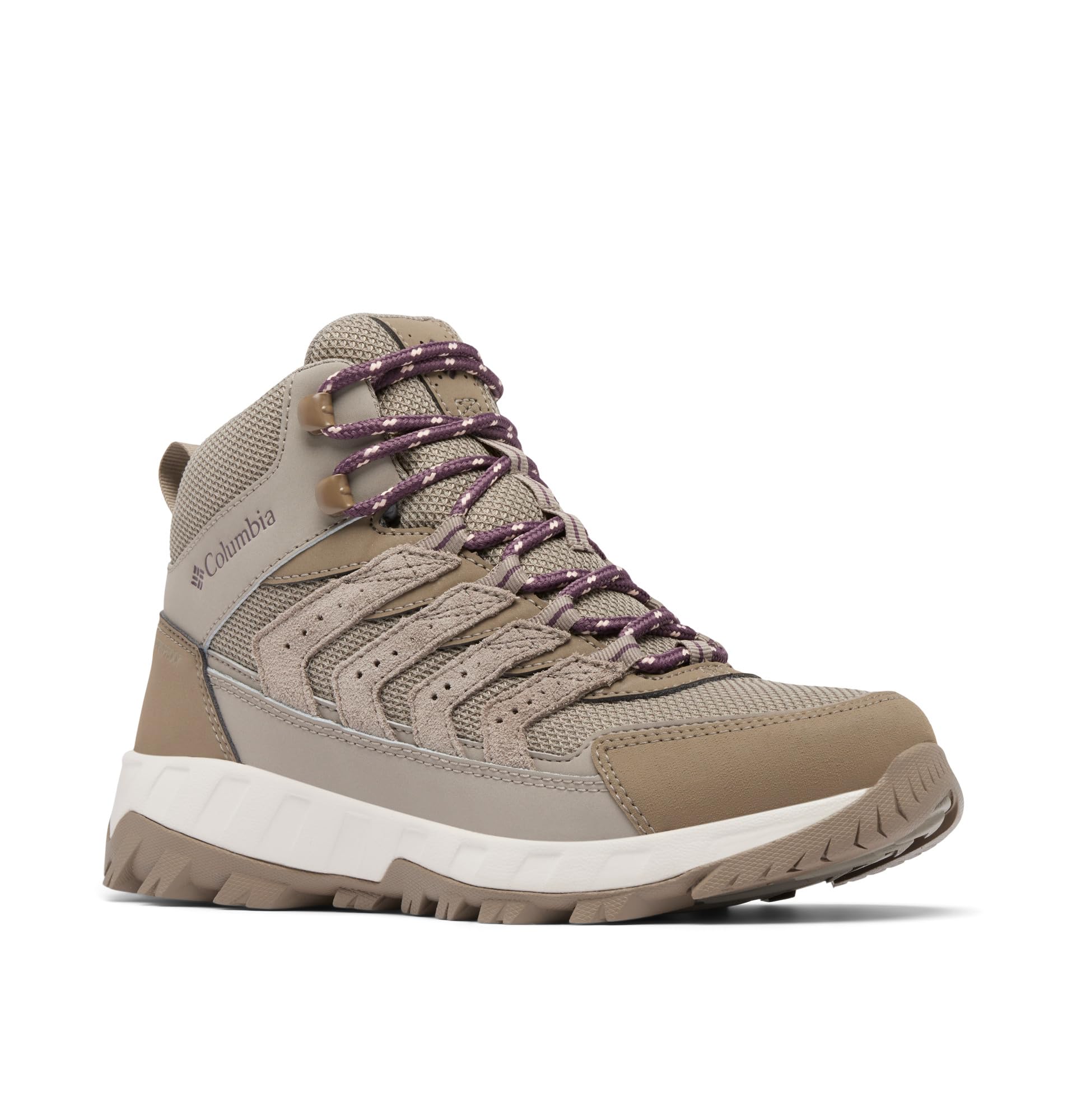
1. Columbia Men’s Strata Trail Mid Waterproof
Our pick — 4.5+★ from 1,000+ verified ratings; the strongest balance of quality and price.
A mid-cut waterproof hiker that opens up across the toes without swallowing your heel.
The standout is the extra width built into the forefoot. The toe box is generous enough that your toes sit flat instead of stacking, and this is a real advantage for a wide foot on a long descent. Owners also describe it as needing no break-in — the shoe is comfortable straight from the box.
It is a mid-cut shoe, so the collar rises above your ankle bone and holds it in place on uneven ground. The trade-off is warmth, and this model leans warm. That suits cold morning starts and three-season hiking; it will feel stuffy on a hot exposed climb. The black colorway hides trail dust well.
Water resistance is the one place where feedback splits. Most owners stay dry through rain and long hikes, and buyers report: “Completely in love with these shoes, i have been hiking with these, also driving my bike around with heavy rain, not a single drop leaked, they still look quite new even after a couple months of every day use”. But there is a dissenting view from someone who found them no better than a tennis shoe in wet conditions. If you hike in sustained rain, treat the waterproofing as a bonus, not the headline feature.
Where it earns its place
- Generous toe box with real forefoot volume for wide feet
- Waterproof build that holds up in heavy rain for most owners
- No break-in period — comfortable from the start
- Mid-cut collar supports the ankle on rough terrain
What to weigh first
- Runs warm, so it can feel stuffy on hot exposed climbs
- A small number of owners find the water resistance weaker than advertised
Best for: wet-weather day hikes where ankle support and toe room both matter.
Think twice if: you hike in hot, humid conditions and want maximum breathability.
2. THE NORTH FACE Women’s Altamesa 500 Trail Running Shoe
Thick padding underfoot and a roomy front end for wide feet that pound the pavement all day.
The Altamesa 500 is heavy for a trail runner at 3 pounds, and that weight buys you a plush, well-padded sole. Owners describe walking for hours on concrete without the soreness they get from firmer shoes. The mesh upper is described as sturdy rather than flimsy, and the toe cap defends the front of a wide forefoot against roots and rocks.
Where it wins people over is the comfort underfoot. Owners mention: “These are the most comfortable shoes I’ve ever worn in my life! I can walk long distances with these even with plantar fasciitis.” The thick padding and slight heel-to-toe roll make long days on concrete feel shorter. Compared with the Merrell Speed Strike 2, this shoe is heavier — 3 pounds versus 1.5 pounds — and larger overall, so it is the cushier choice rather than the lightweight one.
The catch is the toe box shape. It is roomy, but several owners with narrow feet find it fits slightly big rather than snug. If your wide measurement is at the ball of the foot and you also have a narrow heel, go true to size rather than sizing up, or you will trade toe room for heel lift.
What stands out: the cushioned sole and padded bottom make it a strong pick if your wide feet need softness underfoot more than speed.
Worth knowing: at 3 pounds it is noticeably heavier than the Merrell alternative, so it suits walking and light trail days over fast technical descents.
Pick it when: your wide feet need maximum padding and you spend long hours on hard surfaces.
Pass it over if: you want a featherweight shoe for quick, technical trail runs.
3. Merrell Women’s Speed Strike 2
A wide-toe trail shoe that weighs 1.5 pounds and packs flat for travel.
At 1.5 pounds and 12 x 8 x 4.5 inches, the Speed Strike 2 is a different animal from the North Face Altamesa 500. It is smaller and lighter, and that difference shows in the details: roughly 1.5 pounds versus 3 pounds is a real gap in hand, and the 12-inch length slides into a daypack more easily than the 14-inch North Face. For travel and city walking, that compactness is the point.
Merrell builds this from 100% recycled materials in the laces, webbing, mesh lining and footbed cover, plus a 50% recycled removable EVA foam footbed (EVA is a lightweight foam that cushions your step). Owners describe it as comfortable straight from the start, and customers note: “I bought them to hike in Colorado and they are perfect! Fit is true to size.They are so comfy and no breaking in necessary – no blisters!” The wide toe box has room above the foot without looking clunky.
The honest trade-off is durability. Some owners have the fabric around the ankle wear through quickly, though the arch support is a genuine strength — especially for flat-footed hikers. It is water resistant rather than waterproof, so it shrugs off damp grass but not a stream crossing. It also runs wide, and a few owners drop half a size to keep the heel from lifting.
The lightness story: at 1.5 pounds with a wide toe box, this is the travel-friendly pair that won’t weigh down your carry-on.
The honest limit: durability is mixed, and the fabric near the ankle is the wear point to watch on hard-use seasons.
Reach for this if: you want a light, wide shoe for city walking and light trails that packs easily.
Look elsewhere if: you need a waterproof hiker or expect the same lifespan as a heavier boot.
4. New Balance Dynasoft Tektrel V1

An aggressive lug pattern meant to bite on both pavement and loose dirt.
This one earns its spot on grip. The Tektrel uses an aggressive lug design on the outsole that is built to hold both pavement and dirt, and a performance midsole absorbs impact mile after mile. That combo suits hikers who split mileage between pavement and dirt and want one shoe for both.
The shoe is aimed at unpaved paths and gives you the look of a lifestyle sneaker with trail-ready function. New Balance positions it as built for confidence on rough ground, and the midsole is the part that turns a long walk into a comfortable one. It is a newer listing with a small pool of early feedback, so the picture is still forming on long-term durability.
If you need maximum toe room on day one, this is the wildcard pick — the data doesn’t pin down its forefoot volume the way the Altra Lone Peak 8 does, so try it on with your thickest hiking socks. The upside is a well-mannered trail sneaker with a running-grade midsole from New Balance.
Why it’s on this list
- Aggressive lug outsole grips both pavement and dirt
- Performance midsole softens impact on long miles
- Lifestyle look works for everyday wear too
The fine print
- Toe box width is not spelled out, so fit is less certain for very wide feet
- Fewer long-term reviews to judge durability
Good match for: hikers who split their mileage between road and rough trail and want one shoe for both.
Be cautious if: you need a documented wide toe box and want to know the fit before ordering.
5. Columbia Women’s Konos TRS
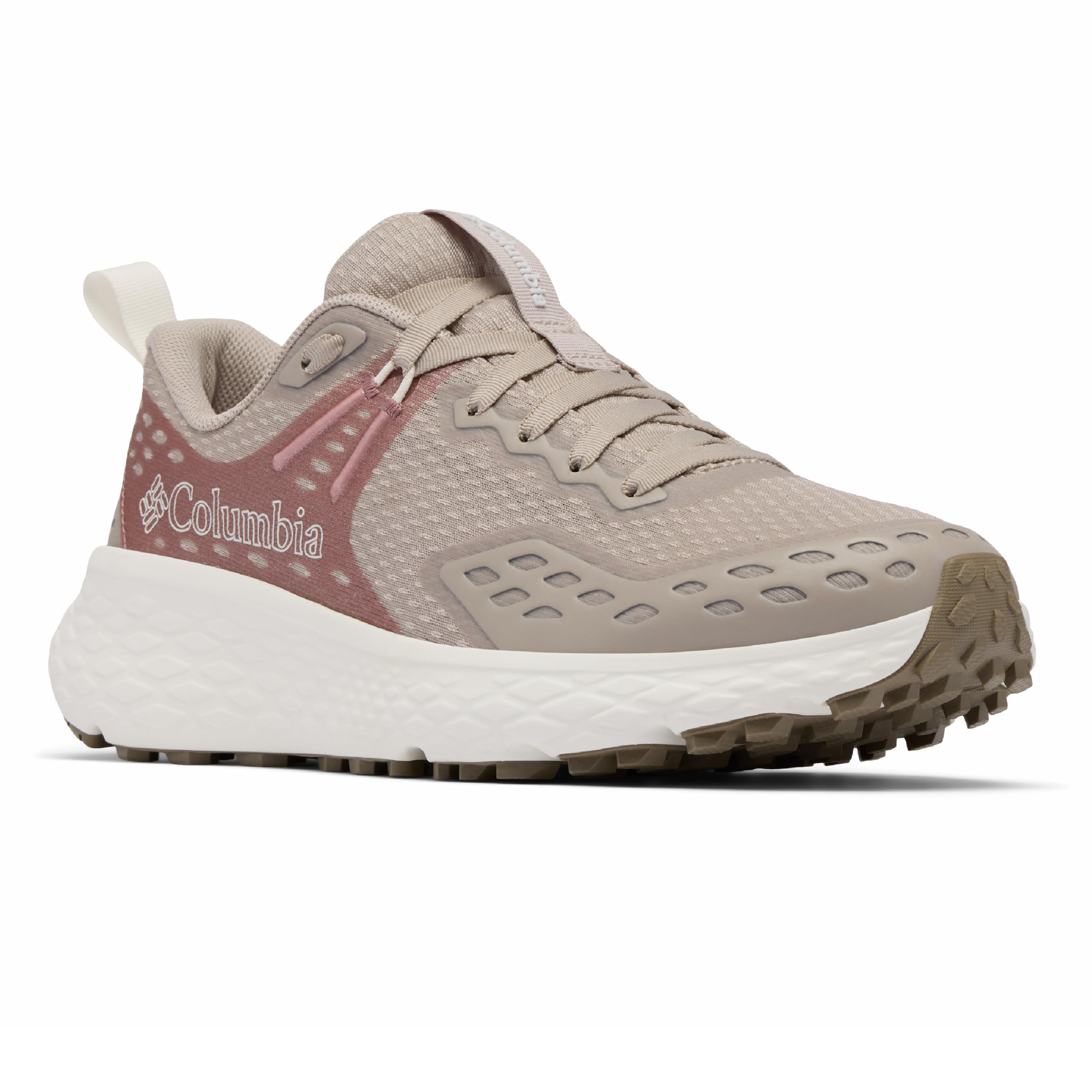
A lightweight mesh trail shoe that grips wet surfaces and stays breathable.
The Konos TRS pairs a breathable mesh upper with no-sew overlays, which are reinforced panels bonded on without stitching to add durability and support. Underfoot, Columbia combines cushioning, stability and traction into one system that is meant to work wet or dry. Owners call it very comfortable, citing the cushioning and light build most often.
Traction is the strong suit on wet ground. Buyers describe good grip on slippery winter roads and wet surfaces, and one long-term owner wore the pair for nearly a year of sturdy use. Owners also single out the color options as a reason they bought it. Arch support is solid enough for everyday trail walking.
The fit is the part to think about. Some owners with very wide feet find it too narrow, so if your width is significant, size up half a size or look at a shoe with a documented wide build. The other caveat is water resistance — most owners stay dry on damp trails, but the branding over-promises for at least one buyer who found water getting in above the toe.
What buyers keep coming back to: the wet-weather traction and light, breathable build make it a comfortable everyday trail shoe.
Read before you buy: fit runs toward narrow for very wide feet, and water resistance is not guaranteed in sustained rain.
Made for: wet, mild-weather trail walks where grip and breathability matter most.
skip it if: your feet run extra wide or you need true waterproofing in heavy rain.
6. THE NORTH FACE Women’s Altamesa 300 Trail Running Shoe

A roomy-toed trail shoe built to absorb shock through a long standing shift.
The Altamesa 300 leans on its high-rebound midsole — foam that springs back so your foot does not take the full hit. Nurses and teachers who stand all shift rate its shock absorption and comfort highly. The roomy toe box gives wide feet space to sit without cramping and the shoe looks good enough to wear off the trail too.
Sizing needs thought. Most people stay true to size, but some reviewers point out it runs a bit big. If you have slightly wide feet and normally buy true to size, going half a size up works for some and overshoots for others. Try it at your normal size first.
Arch support is where the shoe divides people. Some find it well-supported; others need more and swap in inserts. That is a common pattern in this category, and it is easy to fix. The other quirk owners mention is an initial squeak from the outsole that fades with use.
The main draw: real shock absorption and a roomy toe make it a friend to nurses, teachers and anyone on their feet for a full day.
Try before you decide: arch support is on the softer side, so budget for an insert if you need firmer support.
Choose this when: your wide feet need shock absorption for long days standing and walking.
Look at the Altamesa 500 instead if: you want even more padding underfoot.
7. ALTRA Women’s Lone Peak 8 Trail Running Shoe

The widest toe splay on this list, in a zero-drop trail shoe built to move naturally.
If your forefoot is the problem, start here. Altra calls this its roomiest toe box, with space through the midfoot and a zero-drop platform — heel and forefoot sitting level, 0 mm of drop — so your foot moves the way it naturally would. Owner after owner confirms the toe box does the work; for wide, flat feet that means no more pinching on steep, rocky descents.
The outsole is a MaxTrac rubber with TrailClaw lugs — angled grips placed under the ball of your foot to add bite on loose dirt and rock. Combined with the 10.7 oz / 303 g weight, it is light enough for long hikes and stable enough to keep your heel from rolling. Cushioning is a moderate mid-level stack, so you feel the trail without every pebble hitting your sole.
The honest caveat is durability and wet-rock grip. The upper can wear at the side where it meets the outsole after long mileage, and grip on wet roots and rock is mediocre compared with drier conditions. Ordering half a size up is common advice, and delivery can be slow.
Why wide-footed hikers swear by it
- Roomiest toe box on this list, with space through the midfoot
- Zero-drop 0 mm platform for natural foot alignment
- TrailClaw lugs add traction under the ball of the foot
- No break-in period reported by most owners
Where it asks patience
- Grip on wet rock and roots is not its strong suit
- Upper can wear where it meets the outsole after heavy mileage
- Delivery can take longer than expected
The fit that finally fits: pick it if your toes need the absolute most room and you like a level, low-drop feel underfoot.
The honest limit: expect to trade some durability and wet-rock grip for that roominess.
8. New Balance Women’s Fresh Foam X Hierro V8

A colorful trail runner that pairs cushioned comfort with a rugged Vibram shell.
The Hierro V8 wraps New Balance’s Fresh Foam X cushioning in a Vibram Eco-Step Natural outsole, a rugged rubber shell that protects the sole and adds traction. A breathable, lightweight upper keeps it from feeling bulky on the trail. Owners rate the appearance highly — the colors are a genuine draw if you want a trail shoe that looks like a lifestyle sneaker.
Comfort and cushioning are the other strengths, with solid arch support for everyday hiking and walking. It handles varied trail and path use without complaint. At 1.5 pounds it stays light on the foot for a cushioned trail runner.
Two things to watch. The fit gets mixed feedback — some owners find it true to size, others say it runs small, so measure your foot before ordering. The tongue can also slide down on some feet, which affects the feel at the top of the instep. Neither is a dealbreaker, but try it with your hiking socks on.
The draw: Vibram grip, Fresh Foam cushioning and a strong color selection make it a versatile everyday trail pick.
The catch to check: sizing is inconsistent and the tongue can slide, so fit needs confirming.
Best suited to: hikers who want cushioned trail comfort and a good-looking color to go with it.
Second-guess it if: you want predictable sizing or a fixed tongue that won’t slip.
9. KEEN Targhee 4 Low

A truly waterproof low hiker with a wide toe and midfoot that hugs a narrow heel.
Keen builds this to stay dry. A KEEN.DRY membrane inside the shoe blocks water while letting sweat escape, and a water-repellent treatment covers the outside. The sole uses a glue-free KEEN.FUSION bond and a KEEN.RUGGED outsole that Keen says is built to resist abrasion so the lugs stay sharp. Owners confirm the dry-foot result, including through wet, muddy weekends.
The fit is where this one shines for wide feet. It has a wide toe box and midfoot with room to spread, plus a roomy heel that holds steady without excessive slip. Most people take true to size, though a handful find it runs slightly long and prefer thick socks or an insert. No break-in is needed, and it works for hiking, work, gardening and everyday wear.
The honest downside is the tongue, which sits bulky and can press on the top of your foot after a few miles — an issue that gets worse for a high instep. Some owners also report sole delamination after a stretch of years, though that experience is not universal. Pair it with thick hiking socks and you get a supportive, durable waterproof hiker.
What it does well
- Wide toe box and midfoot with a roomy heel that holds
- Truly waterproof KEEN.DRY membrane keeps feet dry
- No break-in needed and comfortable from day one
- Abrasion-resistant outsole designed to stay durable
Where to check your fit
- Bulky tongue can press on the top of the foot on longer hikes
- Sole delamination reported in some units after years of use
The dry-foot choice: ideal for wide-footed hikers who hike in wet weather and need a true waterproof shoe.
Fit note: a high instep may feel the bulky tongue, so lace it carefully or size for thicker socks.
Know the Specs
Toe Box and Forefoot Volume
The toe box is the front chamber of the shoe where your toes sit. For a wide foot, the shape matters as much as the width — a box that flares outward lets your toes splay, while one that tapers squeezes the little toe and the outside edge. When a listing says “roomy toe box” like the Altra Lone Peak 8, take it as a sign of forefoot volume, but confirm it fits your specific foot with socks on.
Drop and Cushioning
Drop is the height difference between your heel and your forefoot, measured in millimeters. A zero-drop shoe like the Altra Lone Peak 8 sits level at 0 mm, which some hikers find natural and others need time to adapt to. Cushioning is the foam thickness underfoot — a thick cushioned shoe like the North Face Altamesa 500 absorbs impact for long days, while a lower stack gives more ground feel and stability on rough terrain.
Common Questions
How do I know if a hiking shoe is actually wide enough for my foot?
Should I size up in hiking shoes for women with wide feet?
Is zero drop better for wide feet?
What is the difference between waterproof and water resistant hiking shoes?
Do wide hiking shoes work for flat feet?
How long should hiking shoes last with regular use?
Can I use trail running shoes instead of hiking shoes for wide feet?
Do I need special socks for hiking in wide shoes?
How grippy are these shoes on wet rock?
The Bottom Line
For most wide-footed hikers, the best balance of toe room, ankle support and wet-weather readiness is the Columbia Strata Trail Mid — a mid-cut waterproof shoe that opens up across the toes and stays comfortable without a break-in. If you want the absolute widest fit and a level zero-drop platform, the Altra Lone Peak 8 is the roomiest of the bunch. And for truly waterproof protection with a wide toe and midfoot, the KEEN Targhee 4 Low is the one to reach for.
How we choose
We do not accept paid placement. Every pick is matched to a real buyer and a real use-case; we do not hands-on test units.
Sources
Specifications: manufacturer listings and product documentation. Review insights: verified customer reviews, as of October 2026. Pricing: not shown on this page (it changes often); check the current price via the retailer link.
As an Amazon Associate, Aappliancez earns from qualifying purchases. This does not affect which products we feature.