Disclosure: Some links in this post are affiliate links. As an Amazon Associate I earn from qualifying purchases, at no extra cost to you. Learn more
Specs are compiled from manufacturer listings and verified buyer reviews and can change over time — please confirm the key details on the product page before buying.
If your pasta turns to paste the second it hits the water, the problem is usually the box, not your timing. The imported pasta worth your pantry shelf is the one that holds a real al dente bite after the full cooking time, and the Rustichella d’Abruzzo Bucatini does exactly that — the crowd favorite at 4.5+ stars across 800+ ratings. This guide separates the real Italian imports from the shelf-stable imposters, so you spend once and cook well.
This guide is built by comparing the manufacturers’ published specifications and the patterns across verified customer reviews, so you get each pick’s real strengths and trade-offs instead of marketing spin.
You will see which shapes suit thick sauces, which keep their bite in soup, and which short-cut sheets save you a boiling pot entirely. Below is everything you need to pick the right bag of imported pasta from italy.
Top Picks

How To Choose Imported Pasta From Italy
The single biggest mistake buyers make with Italian imports is judging by the shape on the front instead of the two lines that actually matter: the wheat and the cut. Get those right and the sauce does the rest. Here is what to weigh before you commit a pantry shelf to a brand.
Start with the grain, not the picture
Real Italian pasta is made from durum wheat semolina (a hard, coarse-ground wheat that keeps its structure when boiled). Look for that phrase on the ingredients panel. A bag built on semolina holds its shape instead of turning slack in the water, which is the difference between a noodle you can twirl and one that collapses on the fork.
Bronze-cut versus smooth-surfaced
A bronze die (a metal plate the dough is pushed through) leaves a slightly rough, chalky surface. That roughness is what grips a heavy ragù or a thick tomato sauce instead of letting it pool at the bottom of the bowl. Smooth, slick pasta is easier to overcook and tends to shed sauce.
Match the shape to the sauce in your pot
Hollow shapes like bucatini trap sauce inside the tube, so they suit thick pork-and-tomato sauces. Tiny shapes like ditalini are built for brothy soups and bean dishes. Long, thin strands like angel hair want light sauces or oil, because a heavy ragù swamps them. Sheets are for layering — and oven-ready sheets change the whole bake.
Think about cooking time and the pot you own
Faster-cooking shapes save a weeknight, but they also punish a minute of inattention. Set a timer for the lower end of the package window and taste early. A dry Italian import keeps a firm center well past the printed minute count, so you have slack — a softer domestic box does not.
Side-by-Side Comparison
| Model | Best For | Form | Cooking Style | Pack Size | Amazon |
|---|---|---|---|---|---|
| Rustichella d’Abruzzo Bucatini (4 pack)★ Best Overall | Thick tomato sauces and Amatriciana | Hollow long strands, 500g bags | 10-12 minutes on the stove | 4 bags | Amazon |
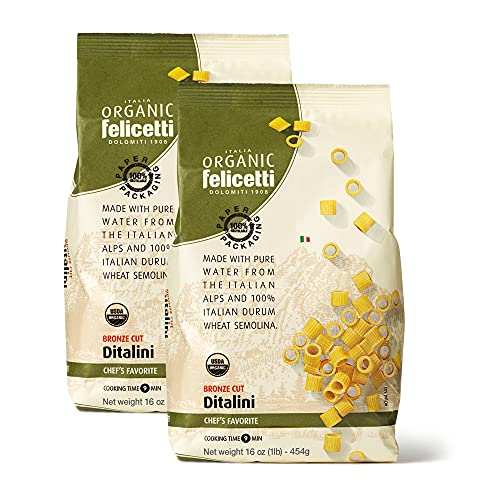
| Organic Felicetti Ditalini (2 pack)Soup Specialist | Soup, minestrone and pasta e fagioli | Small organic durum wheat tubes | Stovetop, holds al dente | 2 packs, 16oz each | Amazon |
| Tuscanini Oven Ready Lasagna (3 pack) | Layered baked lasagna without boiling | Flat oven-ready sheets | No boil, bakes straight in the oven | 3 packs, 17.6oz each | Amazon |
| Colavita Capellini Angel Hair | Light sauces, seafood and broth | Thin long strands | Quick-cooking on the stove | 1 lb bag, 96 Ounce total | Amazon |
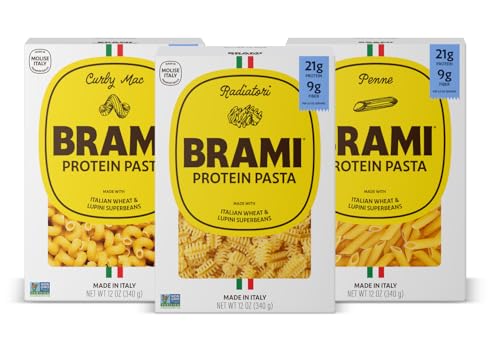
| Brami Italian Protein Pasta (3 pack) | Higher protein, lower-carb bowls | Mixed shapes, semolina plus lupini | Quick cook, bronze cut | 3 packs, 12oz each | Amazon |
Detailed Reviews
1. Rustichella d’Abruzzo Bucatini Pack of 4
Our pick — 4.5+★ from 800+ verified ratings; the strongest balance of quality and price.
A hollow strand that catches every drop of thick ragù instead of letting it slide off.
Bucatini is spaghetti with a tunnel running down its center, and that tunnel is the whole reason to buy this bag. Rustichella d’Abruzzo builds it from durum wheat semolina and water, with nothing else on the label — a two-ingredient pasta that cooks in 10-12 minutes. The hollow core fills with sauce as it simmers, so each forkful arrives wet instead of dry. It is the shape Romans reach for with Amatriciana, and it suits any thick tomato-based pot you have going.
Two things win people over most here: the overall quality and the flavor, in that order. The texture lands where an Italian import should — a chew that reads as al dente rather than underdone. A set of four 500g bags holds up in the pantry, and the sealed bags arrive fresh. At a combined 4.4 pounds, this is a real family-of-four supply rather than a single dinner: compare that to the 1 pound of Felicetti ditalini here and you can see the scale difference. Buyers report “17.5-oz bags, 4-pack, fresh packaging,” which matches the smaller 500g bag format.
Here is the honest friction point: value for money is the one topic that splits opinion. Some shoppers find it steep against a grocery-store box, and that reaction is fair — you are paying for the drying method and the wheat, not the packaging. The same voices that grumble about cost tend to come back and admit it. As one of the more honest reviews put it, “this pasta really is worth the price. I was hoping it was all marketing hype, but it’s actually noticeably great.”
What earns its keep
- The hollow center holds sauce inside the strand — no dry mouthfuls at the bottom of the bowl.
- Just durum wheat semolina and water, so there is nothing artificial to taste around.
- Sets in 10-12 minutes and keeps its bite if you run a minute over.
- Four 500g bags keep a household stocked through several big pasta nights.
Where it asks more of you
- Cost is the sticking point — it sits well above a supermarket box and a few shoppers hesitate.
- Bucatini is a thicker strand, so it wants a sauce with body; a thin oil dressing will not make the most of the tube.
Grab it if: you make a proper ragù or Amatriciana and want a strand that carries sauce into every bite.
Hold off if: a thin, light-oil sauce is your weekly default — a slimmer cut will serve that better.
2. Organic Felicetti Ditalini Pasta 2 Pack
Tiny organic tubes that stay firm in a simmering pot instead of dissolving into porridge.
Ditalini is the little thimble shape that makes a pot of pasta e fagioli or minestrone read as authentic rather than improvised. Felicetti makes this one from 100% fine organic durum wheat grown in Italy, and the family has been doing it in the Dolomites since 1908 across four generations. The brief is simple: al dente that holds past the cooking time, no sticking, no boiling over. For a soup where the pasta sits in hot broth as you finish the pot, that stubbornness is the feature you are buying.
What lands hardest with cooks here is taste — the gentle, rounded flavor of the wheat carries through a brothy bowl rather than going starchy. Versatility runs close behind: this is the shape for soup, for bean dishes, and for the small-town shopper who simply cannot find organic ditalini on a local shelf. “Finding ditalini pasta is a bit tricky where I live,” one buyer notes, and it made their soup “very delicious and authentic.” The 2-pack of 16-ounce packs works out to 32 ounces total, roughly a third of the volume in the Colavita bag above, so this is a soup-pan supply rather than a bulk pantry buy.
The practical trade-off is that value sits on an honest knife-edge: a few shoppers question the cost against local options, while others land on “doesn’t feel overpriced for 2 packages.” That is the right way to read it — you are paying for an organic Italian import that is genuinely difficult to source locally. If soup is not on your menu, this shape will linger unused; if it is, this is the bag that earns its shelf space.
Where it surprises: it holds structure in a simmering pot far better than the small pasta you grew up with, so your soup finishes with distinct little tubes instead of a cloudy, thickened base.
The catch to know: a 2-pack is built for soup season, not a bulk-buy household — committed soup makers will finish it faster than they expect.
Reach for this if: minestrone, pasta e fagioli, or a bean-heavy brothy pot is part of your regular rotation.
Look elsewhere if: you want one bag that covers every sauce night — this shape is a soup specialist, not an all-rounder.
3. Tuscanini Oven Ready Flat Lasagna 3 Pack

Skip the boiling pot entirely — these thin sheets go into the dish dry and bake through.
If the worst part of lasagna night is wrestling slippery sheets out of a boiling pot, this is the box that ends it. Tuscanini makes flat lasagna from premium durum wheat, and the sheets are oven-ready: no cooking, no boiling, straight into the pan. They are certified kosher and Yoshon, with no artificial flavors or ingredients. Because the sheets are thin, you can stack three or more layers without the final slice turning into a brick of pasta — exactly what you want for a bechamel-and-bolognese bake.
One pack holds 24 tarot-card-shaped noodles, and the rough math from the review pages is useful: three sheets per layer yields two medium lasagnas or one and a half full ones per box, or 4.5 to 6 lasagnas across the 3-pack. That is a serious amount of baked dinner for one purchase. The sheets also soak up sauce as they bake, so a slightly wetter sauce is your friend here. “I can actually make a 7 layer lasagna,” one cook reports, which is the whole point of a thin, no-boil sheet.
The honest split is texture. Most bakes come out tender and easy to slice, but no-boil pasta is a different animal from fresh sheets, and not every lasagna maker loves the trade. The shape is also on the small side and square — you can layer it, but anyone raised on long traditional sheets may miss the full-length look. If you want the mess-free trade, it pays off; if you insist on a classic sheet, buy the boiled kind.
Why it earns a slot
- No boiling step means one less pot, one less splash, and a much faster assembly.
- Thin sheets let you stack three or more layers without an overly thick slice.
- 24 noodles per pack, with roughly 4.5 to 6 lasagnas across the 3-pack.
- Certified kosher and Yoshon with no artificial flavors.
What you give up
- The sheets are square and short rather than full traditional length — layering handles it, but the look is different.
- No-boil texture is not for everyone; cooks who want classic boiled body may be disappointed.
Best for: a weeknight lasagna where you want layers in the pan in minutes and leftovers for days.
Skip if: you want a long, traditional boiled sheet and consider the no-boil texture a downgrade.
4. Colavita Capellini Angel Hair Pasta, 1 lb Bag

The thin, fast-cooking strand for garlic-and-oil nights when the pot is already boiling.
Capellini is angel hair, and angel hair is the pasta you reach for when the sauce is already in the pan. Colavita makes this one in Italy from 100% durum wheat semolina using traditional methods, which is why it keeps a firm bite at a thickness most angel hair loses. The 6-pack format here totals 96 ounces — three times the total volume of the Felicetti ditalini above, so it is a genuine pantry stock rather than a single pasta night. Light sauces, seafood, pesto, broth, and a garlic-and-olive-oil toss all suit it.
What earns the most praise is the pasta’s overall quality, closely followed by flavor and quick cooking time. It is a genuinely thin strand — cooks notice it is “truly angel hair size” — so it coats evenly and does not billow over the edge of the pot. The bulk format also opens up a few oddball uses: it works broken into small bits as a vermicelli stand-in, and it holds up as a base for a quick noodle bowl. That versatility is uncommon in a long thin cut.
The one honest caveat is the ingredient panel: the verdict on the details is split, with some buyers satisfied and others noting it is fortified rather than pure semolina. If you want nothing but wheat and water, this is not that bag. If you want a dependable, fast-cooking Italian strand at a family-friendly scale, it delivers well past its category.
The real edge: a thick strand cooks slow and a thin one cooks fast, which is the whole appeal here on a weeknight — set the timer and the sauce can be ready at the same moment.
Watch the ingredient line: the flour detail is where opinions diverge, so read the panel if you are strict about fortification.
Your pick if: you cook a lot of light, oil-based, or broth-based dishes and want a fast strand on hand.
Not the one if: an unfortified, pure-semolina ingredient list is a hard requirement for you.
5. Brami Italian Protein Pasta Variety
An Italian semolina pasta that quietly carries real protein without the usual low-carb chalk.
Most protein pastas taste like penance. Brami’s version is made in Molise, Italy, from just two ingredients: Italian durum semolina wheat for the al dente bite, and lupini beans for the protein and fiber boost, blended with mountain spring water. Nothing else on the list — no fillers, gums, isolates, or concentrates. Each 3.5-ounce serving delivers about 21g of protein and 9g of fiber, all from the semolina and lupini beans. The bronze die cut leaves a rough surface that grips sauce, which is a detail big-batch producers usually skip.
Flavor is what lands, and the pasta quality follows close behind. It cooks quickly and the different shapes make it easy to rotate through the week. For a diabetic household managing carbs, the lower net carb profile is the main draw, and reviewers respond well to it. The texture reads as near-normal pasta, not the stiff, starchy mouthfeel that turns people off high-protein brands. There is a small trade: it is not identical to a standard semolina pasta, and one taster sums it up as “almost as good” rather than a dead match.
Cost is the one real hesitation — a small number of buyers find the per-box price steep compared to their local grocery. Weigh that against what you get: 21 grams of protein and 9 grams of fiber per serving from a bronze-cut Italian pasta. On the whole, this is a fair trade if protein and fiber are your goals, and a costly one if they are not.
Why cooks keep it: the bronze-cut surface and the protein content work together — sauce clings the way it should, and the bowl actually fills you up more than a plain semolina noodle does.
Where it costs you: the price per box is the recurring hesitation, so buy with a goal in mind rather than as an everyday replacement.
Worth it for: anyone building more protein and fiber into meals without giving up real Italian pasta texture.
Less compelling for: a household that just wants cheap, everyday semolina and will not notice the extra protein.
Know the Specs
Durum Wheat Semolina
Durum wheat is a hard variety, and semolina is the coarse flour ground from it. It is the ingredient that keeps a pasta strand firm in boiling water instead of going slack. When you see “100% durum wheat semolina” on the label, expect a chewier, springier bite — and a pasta that holds al dente longer than a soft-wheat box. Plain “wheat flour” is a cue to look elsewhere.
Bronze Die vs. Smooth Extrusion
A bronze die is a metal plate the dough is forced through, which leaves a slightly rough, chalky surface. That roughness is what gives a sauce something to grab. Smooth, Teflon-extruded pasta has a slicker finish and lets sauce slide off. If sauce clinginess matters to you, look for the words bronze die or bronze cut on the package.
Oven-Ready (No-Boil) Sheets
Oven-ready lasagna sheets are thin, partially dried sheets you layer into the pan without boiling first. They hydrate from the moisture in your sauce as they bake. The upside is one less pot and faster assembly. The trade-off is a slightly different texture from classic boiled sheets, and they need a sauce with enough moisture so they do not dry out in the oven.
Pack Format and Total Weight
The number of bags matters as much as the pasta in them. A 4-pack of 500g bags is a bulk supply, while a 2-pack of 16-ounce packs is a soup-pan amount. Check the total ounces to compare across brands — a bag that looks bigger can weigh less once you do the math. Buy the format that matches how fast your household actually cooks.
Common Questions
How long does imported Italian pasta last in the pantry?
Is Italian imported pasta actually different from a grocery store box?
What is bucatini and what sauce goes with it?
Do oven-ready lasagna sheets really need no boiling?
What is ditalini best used for?
Is high-protein pasta actually good for you?
How do I stop angel hair from clumping together?
Can I use Italian imported pasta for cold pasta salad?
Why does imported pasta cost more than the boxed grocery brand?
The Bottom Line
For most kitchens, the imported pasta from italy that earns its place is the Rustichella d’Abruzzo Bucatini — a two-ingredient durum semolina strand whose hollow center carries sauce into every bite, and one that holds its al dente chew when you run over the timer. If soup is your comfort food, the Organic Felicetti Ditalini is the organic Italian shape that stays firm in a simmering pot. For a lasagna night with no boiling pot to wash, the Tuscanini Oven Ready sheets get layers into the pan in minutes, and if you want more protein and fiber in a real Italian pasta, the Brami variety pack delivers roughly 21g of protein per serving without the chalky texture.
How we choose
We do not accept paid placement. Every pick is matched to a real buyer and a real use-case; we do not hands-on test units.
Sources
Specifications: manufacturer listings and product documentation. Review insights: verified customer reviews, as of October 2026. Pricing: not shown on this page (it changes often); check the current price via the retailer link.
As an Amazon Associate, Aappliancez earns from qualifying purchases. This does not affect which products we feature.