Disclosure: Some links in this post are affiliate links. As an Amazon Associate I earn from qualifying purchases, at no extra cost to you. Learn more
Specs are compiled from manufacturer listings and verified buyer reviews and can change over time — please confirm the key details on the product page before buying.
You want a hibiscus that comes back every spring, not a bare stick that sulks in a box for a month. With hardy perennial hibiscus, the plant has to arrive alive, break dormancy in the ground, and flower in its first season. The five plants below are the ones worth your money, sorted by what each one actually does well.
This guide is built by comparing the manufacturers’ published specifications and the patterns across verified customer reviews, so you get each pick’s real strengths and trade-offs instead of marketing spin.
Shipping size is the number that decides whether you see flowers this season — a 2-to-3-foot plant already has a head start, while a 4-inch starter needs a full year to catch up. Here is the honest shortlist for best hardy perennial hibiscus.
Top Picks


How To Choose The Best Hardy Perennial Hibiscus
The listing photo shows a mature shrub in full flower; the box holds a much younger plant. Every seller shows a mature shrub in full flower, and every seller ships something far younger. Your job is to close that gap before you buy.
Start with the shipped height, not the mature height
A plant that ships at 2 to 3 feet tall already has woody growth and a root system behind it, so it can flower in its first summer. A 4-inch starter is a rooted cutting that needs a season just to establish. Both are legitimate products, but only the 2-to-3-foot plant blooms this year.
Check the USDA zone against your own winter
Hardy hibiscus is rated by USDA hardiness zone — a number that maps to the coldest winter temperature a plant survives. Plants rated for zones 4 through 9 handle a real freeze and come back from the crown. Anything outside your zone number is a gamble, not a perennial.
Decide between Rose of Sharon and swamp hibiscus
Rose of Sharon (Hibiscus syriacus) grows into a woody shrub with a trunk and stays up through winter. Hibiscus moscheutos dies back to the ground each fall and returns bigger the next year. Both are called hardy hibiscus, and they are not the same plant in the ground.
Factor in water and sun before you plant
These plants want full sun and soil that stays evenly moist. A spot that bakes dry in August will cost you buds, no matter how healthy the plant was on arrival. Choose a moist, full-sun bed before you order, not after the box lands.
Side-by-Side Comparison
| Model | Best For | Height Shipped | Mature Height | Hardiness | Amazon |
|---|---|---|---|---|---|
| Diana Hardy Hibiscus (DAS Farms)★ Best Overall | Blooms in year one | 2–3 feet | 10 feet | Zones 5–9 | Amazon |
| Proven Winners Blue ChiffonTop Performer | Big flowering shrub | 2-gallon pot | 96 inches | Zones 5–9 | Amazon |
| American Plant Exchange Althea Pink | Pink blooms, pet-safe yard | 1–2 feet | 8 feet | — | Amazon |
| Bluebird Rose of Sharon | Blue-to-pink color shift | 8–12 inches | — | — | Amazon |
| Luna Mix Starter Plant | Budget starter, zones 4–9 | 4 inches | — | Zone 4 | Amazon |
Detailed Reviews
1. Diana Hardy Hibiscus
Our pick — 4.0+★ from 100+ verified ratings; the strongest balance of quality and price.
Arrives already hip-height and budding, so you skip the stick-in-a-box stage entirely.
This is the one to buy if you want flowers in your first summer rather than your second. It ships at 2 to 3 feet tall in a gallon container, double boxed — meaning the plant travels inside two cardboard shells so the stems do not snap in transit. That is a real head start over the 8-to-12-inch and 4-inch starters further down this list.
At 5 pounds and 10 feet of expected mature height, it reads as a serious shrub rather than an experiment. Compare that to the American Plant Exchange Althea Pink, which ships heavier at 13 pounds but tops out at 8 feet — the Diana goes taller on a lighter shipped parcel. It thrives in zones 5 through 9 with full sun, needs regular watering, and is listed as organic material with extended bloom time through summer.
What wins people over is how quickly it settles in. The growth reports are the loudest theme in this plant’s feedback, followed closely by quality and appearance, with buyers describing a plant that arrives green with healthy white roots and blooms a few weeks after transplanting. As buyers put it: “The plant arrived green and healthy. Transplanted without any issues.” The one honest wrinkle is color — this cultivar is sold as Diana white, and a pure white bloom is what most gardens get, though a stray yellow flower can surface from an unpollinated seed. Plan the bed for white and you will not be disappointed.
Where it earns its keep
- Ships 2 to 3 feet tall in a gallon pot — bloom-ready the first season
- Double-boxed packing keeps stems intact through shipping
- Rated for zones 5 through 9, so a real winter does not kill it
- 30-day transplant guarantee when you follow the included planting instructions
What to plan around
- Deciduous — expect bare branches in winter, not an evergreen shrub
- Color can drift on an occasional plant; plan the bed for white
- Wants regular watering, not a dry bed
Reach for this if: you want the highest odds of real blooms this season and a plant that already has height on its side.
Look elsewhere if: you need a plant that stays green through winter — this one drops its leaves.
2. Blue Chiffon Rose of Sharon
The biggest plant on this list, and the only one that turns into a proper flowering shrub.
Proven Winners ships this in a 2-gallon pot, and the mature size is the reason to pick it: 48 to 72 inches wide by 96 to 144 inches tall. That is a shrub you plant as a screen or a garden anchor, not a border filler. Bloom runs spring through fall, and it takes full sun to part shade — a wider tolerance than the full-sun-only plants here.
The weight tells the same story. At 8.8 pounds it arrives as established root-and-soil mass, so transplant shock is shorter than with a bare-root cutting. Blue Chiffon is a Rose of Sharon (Hibiscus syriacus), meaning it keeps a woody framework through winter rather than dying back to the crown the way Hibiscus moscheutos does. Expect foliage loss in winter and new growth early spring, and note that plants are trimmed at shipping time to promote plant health — so a box of cut-back stems is normal, not damage.
Quality and appearance are the two things that carry this plant’s reputation, and the flowers keep coming with buds opening in waves rather than one burst. The honest caveat is that a plant this size is more sensitive to a rough transit — roots can shift out of the soil and blooms can drop after a hot ride, so open the box the day it lands and water it before you do anything else.
Why gardeners pick it: 96 to 144 inches of mature height with a 96-to-144-inch spacing recommendation means one plant fills a gap that would take three smaller ones.
The fair warning: a 2-gallon shrub shipped dormant in winter looks like bare sticks on arrival. That is the plant resting, not failing.
Choose it when: you want a structural shrub with months of bloom and can give it room to spread.
Think twice when: you have a tight bed — 48 to 72 inches of spread needs space.
3. Hibiscus Althea Pink Rose of Sharon
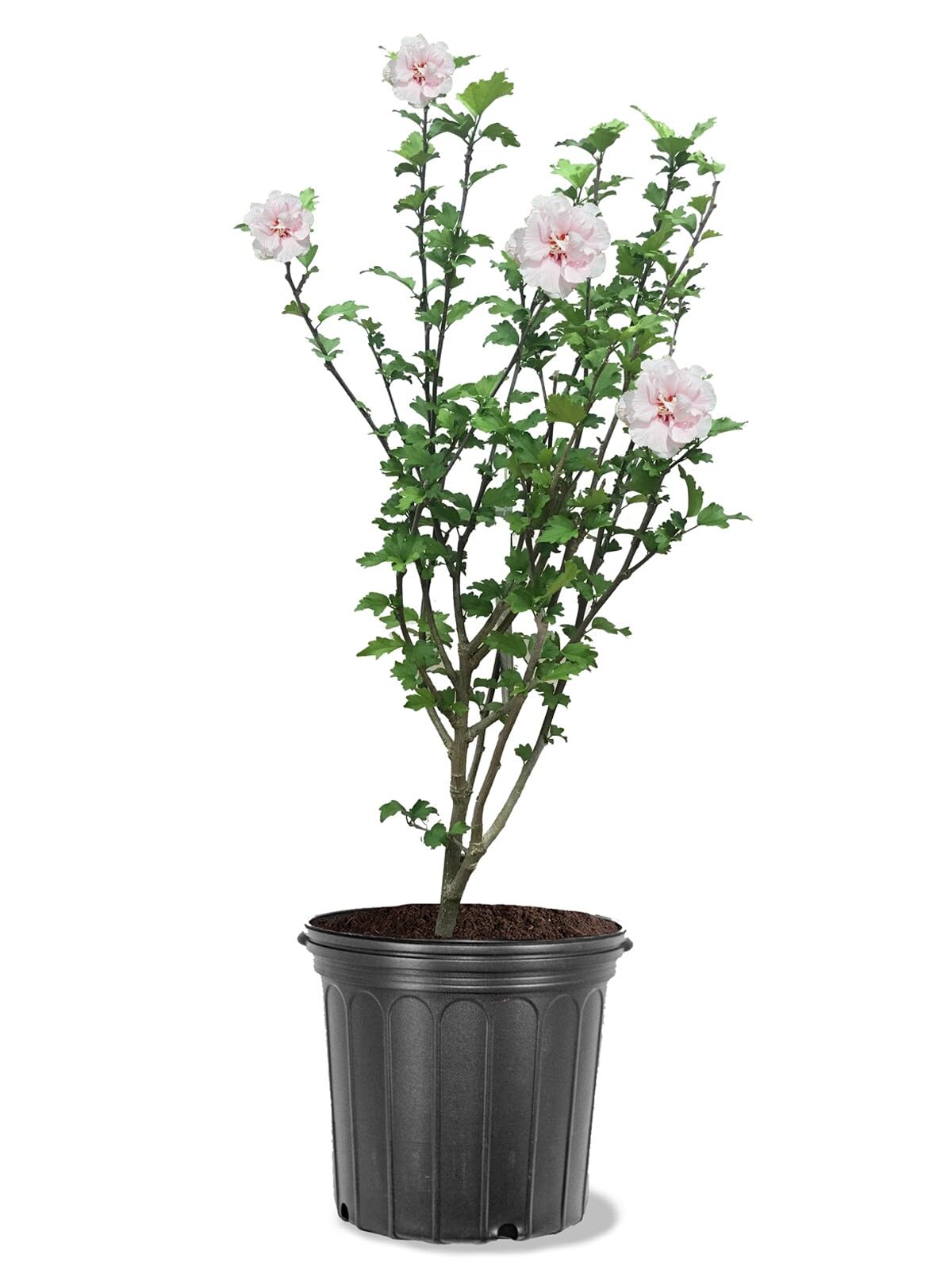
A pink-flowered shrub for a yard with dogs, since this one is listed as pet-friendly.
If pink is the color you actually want in the border, this Althea delivers it from summer into fall. It arrives 1 to 2 feet tall in a 10-inch pot and grows toward 8 feet, with moderate watering needs rather than the constant-moisture demand of a swamp hibiscus. It attracts pollinators, which matters if you are planting near a vegetable bed.
The weight here is worth knowing before the box lands on your porch. At 13 pounds this is the heaviest plant on the list — heavier than the Diana at 5 pounds — because you are paying for a 3-gallon root ball, not stems. That is a plant built to establish fast. On height it gives ground, though: 8 feet expected against the Diana’s 10 feet, so pick your trade-off between a beefier root mass and a taller eventual shrub.
Two practical notes pull in opposite directions. The pet-friendly designation, verified against ASPCA guidelines according to the manufacturer, is a genuine relief in a household with a dog that chews shrubs. The catch is that feedback on this specific listing is thin enough that you should treat it as an unproven newcomer and plant it where you can watch it closely for the first month.
Best fit for: a pet-owning household that wants pink summer-to-fall bloom and a substantial root ball on arrival.
Weigh this first: fewer buyer experiences to lean on than the Proven Winners shrub, so plant it where you can keep an eye on it.
4. Bluebird Hardy Hibiscus

The blue-flower gamble — gorgeous if it takes, and it does not always take.
Bluebird is a Rose of Sharon that opens bright pink, fades to purple, then settles on blue — three colors from one shrub across a single bloom cycle. It ships at 8 to 12 inches tall in a 3 1/2-inch pot, which is a small plant with a small root ball. Expect an 8-to-12-inch plant in a 3 1/2-inch pot, and the pink-to-purple-to-blue shift is unlike anything else on this page.
This is where the honesty has to get real. Plant condition is the most-discussed subject in this listing’s feedback, and the reports split down the middle: some plants arrive well-rooted, well-packed and push new growth within days of going in the ground, while others never establish at all and are gone inside a month. Buyers report the size can shock them too — “For 30 something dollars I received three little one and a half inch sticks.” Order it knowing you are buying a young plant that needs watering discipline, not a shrub you can ignore for a fortnight.
The upside is real for a patient gardener. Regrowth after rabbit damage has been reported, and in warm Southern gardens the plant can be producing flowers by May with rain and a light feed. It wants full sun and moderate watering, and a slow first year usually means a heavier bloom the second.
The real appeal: a bloom that shifts pink to purple to blue on the same plant, which is a color show no white or pink cultivar here can match.
Know what you are buying: an 8-to-12-inch plant in a 3 1/2-inch pot needs coddling for its first weeks — consistent water, full sun, and patience.
Worth your money if: you want that blue shift and you are willing to nurse a small plant through establishment.
Pass if: you want a plant that arrives big enough to shrug off a missed watering.
5. Hardy Hibiscus Luna Mix Live Starter Plant, 4-8 Inches
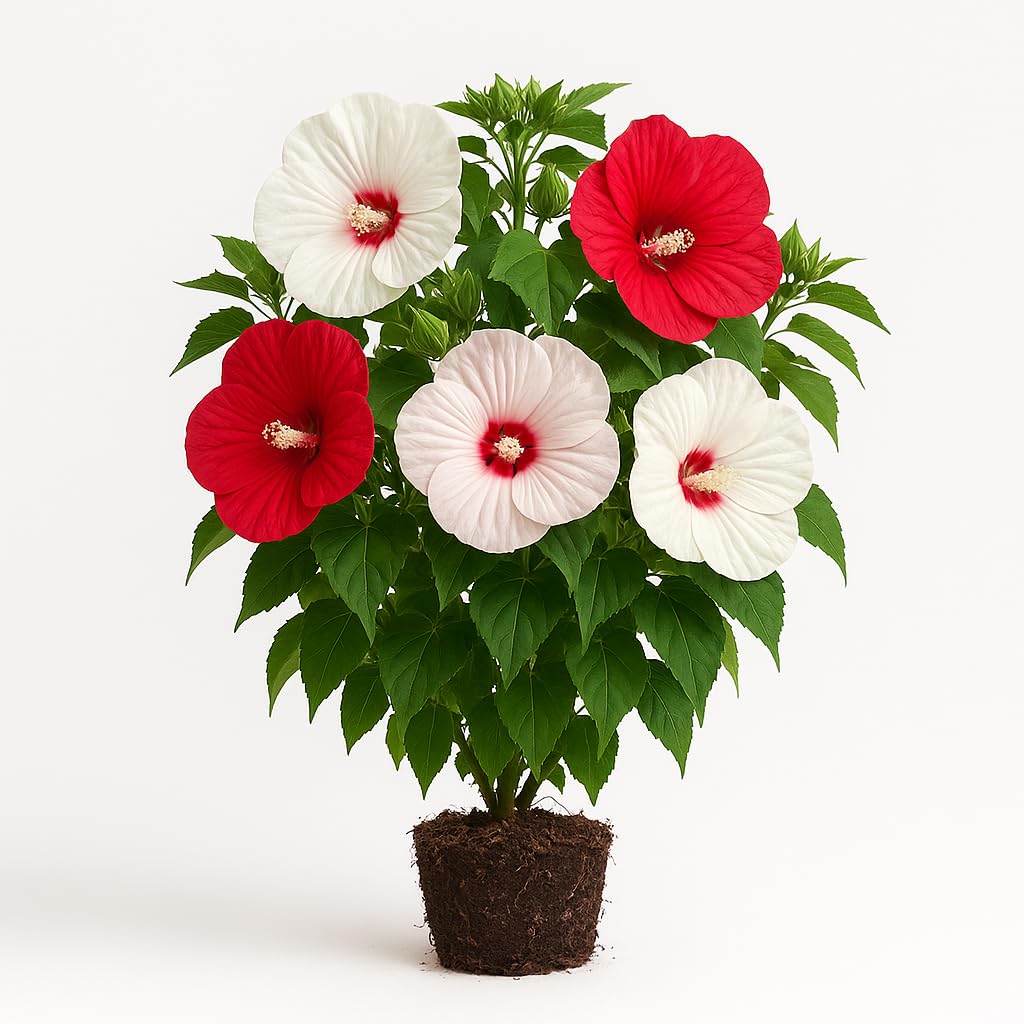
A bare-root Luna mix for the gardener who will happily wait a year for the show.
Luna Mix is a Hibiscus moscheutos, the swamp hibiscus that dies back to the ground every winter and returns bigger each spring. It ships as a rooted starter around 4 inches tall with no pot, ready to go straight into a bed or a large container. Rated for USDA zones 4 to 9, it handles the coldest winters on this page.
You are buying a 4-inch bare-root starter, not the dinner-plate blooms it will eventually make. Luna produces dinner-plate-sized blooms from midsummer to fall, and it wants full sun of about 6 or more hours a day plus regular watering to keep loam soil evenly moist. Give it that and it is a low-maintenance plant that feeds lightly through the growing season and gets cut back after frost.
Now the part that makes this a budget gamble rather than a safe bet. The listing photos show a mature plant, and the starter you open is far from that — owners mention being disappointed by how small the arrival is, with the plant measuring under a foot in at least one case. An occasional order also misses on quantity or arrives without a color tag, so you may not know what bloom shade you have until midsummer. If you can accept a young plant and a wait, the zone-4 cold tolerance makes it the toughest option here.
The case for the cheap seat
- Rated to USDA zone 4 — the cold hardiest plant on this list
- Takes full sun in beds or large containers
- Dinner-plate blooms from midsummer through fall once established
Set your expectations
- Ships as a 4-inch bare-root starter, not the mature plant in the photo
- Color is a mix, so the bloom shade is a surprise
- Wants consistent moisture — dry soil costs you buds
Grab it if: you garden in a cold zone and want the biggest flowers for the smallest outlay, patience included.
Skip the wait if: you expect a plant that flowers the week it arrives.
Know the Specs
USDA Hardiness Zone
The zone number tells you the coldest winter a plant survives in the ground. A plant rated to zone 5 handles a colder winter than one rated to zone 9. Check your own zone before you order, because a hibiscus outside its range will not return the following spring.
Shipped Height vs. Mature Height
Shipped height is what arrives in the box; mature height is what the plant eventually becomes. A plant shipped at 2 to 3 feet can bloom in its first season, while a 4-inch starter usually needs a full year to settle. A 2-to-3-foot plant and a 4-inch starter are both legitimate; only the taller one blooms this year.
Rose of Sharon vs. Hibiscus moscheutos
Rose of Sharon (Hibiscus syriacus) builds a woody trunk and keeps its framework through winter. Hibiscus moscheutos dies back to the crown each fall and regrows from the ground. Both are sold as hardy hibiscus, and the difference decides how your bed looks in January.
Potted, Gallon, and Bare-Root
A gallon or 2-gallon pot arrives with soil and an established root ball, which shortens transplant shock. A bare-root starter arrives with protected roots and no soil, which is lighter and cheaper but slower to establish. The pot size is the clearest signal of how much head start you are buying.
Common Questions
Will a hardy hibiscus come back every year in my garden?
How tall should the plant be when it arrives for me to see flowers this year?
What is the difference between Rose of Sharon and the swamp hibiscus?
How much sun does a hardy perennial hibiscus need?
Why did my hibiscus arrive as bare sticks with no leaves?
Can I grow a hardy hibiscus in a container instead of the ground?
Is Rose of Sharon safe to plant in a yard with dogs?
How often should I water a newly planted hibiscus?
Does a transplant guarantee cover a plant that dies?
The Bottom Line
For most gardeners, the hardy perennial hibiscus that wins is the Diana Hardy Hibiscus, because it ships at 2 to 3 feet tall in a gallon container and blooms within weeks of transplanting. If you would rather have a large structural shrub with months of flowering, the Proven Winners Blue Chiffon grows to 96 to 144 inches and shrugs off a rough winter in zones 5 through 9. And if you garden in a cold zone and want the biggest flowers for the least outlay, the Luna Mix starter is rated all the way down to zone 4 — just plan on waiting a season for the show.
How we choose
We do not accept paid placement. Every pick is matched to a real buyer and a real use-case; we do not hands-on test units.
Sources
Specifications: manufacturer listings and product documentation. Review insights: verified customer reviews, as of October 2026. Pricing: not shown on this page (it changes often); check the current price via the retailer link.
As an Amazon Associate, Aappliancez earns from qualifying purchases. This does not affect which products we feature.