Disclosure: Some links in this post are affiliate links. As an Amazon Associate I earn from qualifying purchases, at no extra cost to you. Learn more
Specs are compiled from manufacturer listings and verified buyer reviews and can change over time — please confirm the key details on the product page before buying.
You pour it into a near-empty tank, drive a few miles, and the shudder at the stop light either fades or it does not. That is the whole promise of a gas tank cleaner. The picks below separate the bottles that genuinely dissolve carbon from injectors and intake valves from the ones that mostly smell like solvent.
This guide is built by comparing the manufacturers’ published specifications and the patterns across verified customer reviews, so you get each pick’s real strengths and trade-offs instead of marketing spin.
Start with how much gasoline one bottle treats, then check whether it also stabilizes fuel, because those two details decide how you use it all season. This breakdown of the gas tank cleaner market covers dose rates, engine types, and the honest limits of each bottle.
Top Picks

How To Choose The Best Gas Tank Cleaner
A fuel system cleaner is not one product with one job. Some bottles target carbon buildup on injectors and intake valves. Others carry moisture out of the tank and keep gasoline from going stale. Know which problem you have before you buy, because a stabilizer will not fix a rough idle and a strong detergent will not protect a mower that sits for eight months.
Read the treat rate before the label hype
The treat rate tells you how much gasoline one bottle handles — 1 ounce per 5 gallons is a common maintenance dose. A concentrate that treats more gallons goes further per bottle, which matters if you add it at every fill-up. Match the rate to your tank size so you are not guessing at the pump.
Maintenance dose versus shock dose
A maintenance dose keeps a healthy engine clean when you add it regularly. A shock dose is a stronger mix used once to clear a real problem, like an engine that sat for a season or an idle that bounces. Some bottles handle both jobs depending on how much you pour, so check the directions on the can rather than assuming.
Does your engine use port injection or direct injection
In a port-injected engine, fuel washes over the intake valves, so a tank additive reaches them directly. In a direct-injected engine, fuel sprays straight into the cylinder and never touches the back of the valves. That gap is why some labels list older engine types, and it is worth knowing which layout sits under your hood.
Marine, small engine, or daily driver
Outboards, motorcycles, and mowers often sit for weeks or months between runs, which lets fuel varnish form. A cleaner built for that pattern matters more than peak detergent strength. A daily-driven car mostly needs injector cleaning and steady combustion, so a concentrated injector formula earns its place.
Side-by-Side Comparison
| Model | Best For | Volume | Treat Rate | Primary Job | Amazon |
|---|---|---|---|---|---|
| Quicksilver Quickleen★ Best Overall | All-season marine and auto upkeep | 12 fl oz | 1 oz per 5 gal | Removes carbon deposits | Amazon |
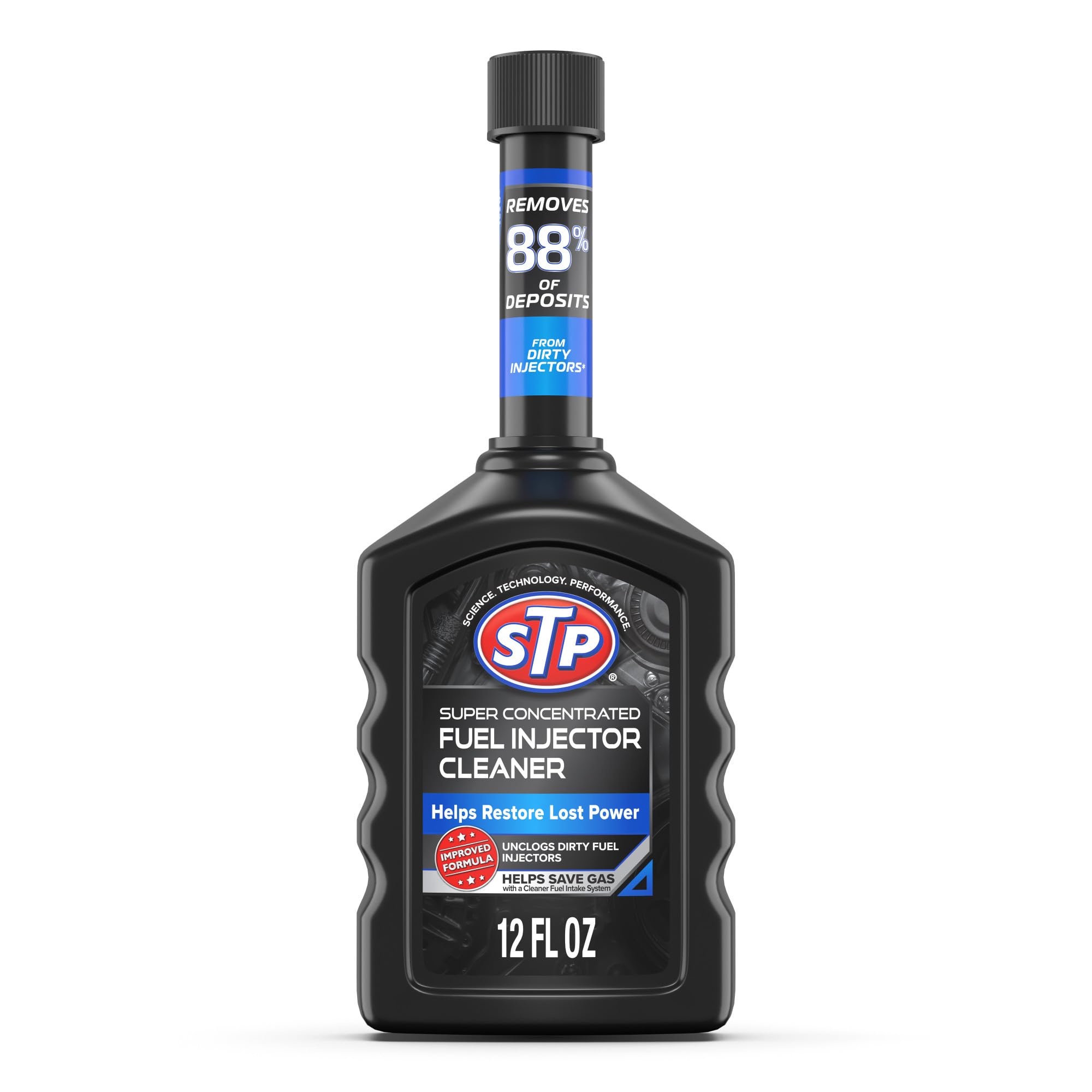
| STP Super Concentrated Fuel Injector CleanerBest for Injectors | Daily drivers with clogged injectors | 12 oz | — | Unclogs fuel injectors | Amazon |
| Liqui Moly Truck Series Complete | Trucks and higher-mileage engines | 500 ml | — | Cleans injection and combustion | Amazon |
| Berryman 7516 High Mileage | Neglected and high-mileage engines | 15 fl oz | 1 oz per gal (per review) | Dissolves residue and carbon | Amazon |
| Liqui Moly Jectron 2-Pack | Repeat injector maintenance | 2 bottles | — | Injection cleaning | Amazon |
Detailed Reviews
1. Quicksilver Quickleen Engine and Fuel System Cleaner
Our pick — 4.5+★ from 950+ verified ratings; the strongest balance of quality and price.
Dose it by the ounce, pour it at every fill-up, and the math never gets complicated.
The measure that sells this bottle is simple: 1 ounce treats 5 gallons of gasoline, so a 12 fluid ounce can handles roughly twelve fill-ups of a five-gallon tank. That makes it a maintenance tool you keep in the boat locker or the trunk, not a once-a-year rescue bottle. It is built for all grades of gasoline and ethanol-blend fuel, which matters because ethanol is exactly what draws moisture into a tank that sits.
What it actually does inside the engine is break down carbon deposits from carburetors, injectors, intake valves, spark plugs, piston crowns, and cylinder heads. It also works to prevent engine knocking and piston seize-up, the two failures that turn a cheap fix into a rebuild. Engines that have sat are where this earns its keep — a Mercury outboard that idled poorly after a long layoff ran smooth and strong again on a shock mix, and the same owners keep adding it every fill-up afterward.
As owners put it: “followed directions, failed emissions test, applied this to empty gas tank, cleaned entire systems and valves. Passed emissions after traveling 50 miles. Would buy again.” That is the pattern across the board — the cleaning effect is the headline, with value for money following close behind, since a few dollars of additive beats a shop bill by a wide margin.
The catch is genuinely worth knowing before you buy. Quickleen is a cleaner, not a fuel stabilizer, so an engine going into long storage still needs a separate stabilizer added alongside it. A few buyers also open the shipping box to find the bottle has leaked in transit, so check the cap and the packaging on arrival. And the effect is honest but not dramatic — it cleans a dirty system rather than turning a tired engine into a new one overnight.
Why Owners Keep Rebuying It
- The treat rate is easy to dose — 1 ounce per 5 gallons of gasoline covers a routine fill-up.
- Carbon removal reaches carburetors, injectors, intake valves, and piston crowns, not just injectors.
- Safe for all grades of gasoline and ethanol-blend fuel, so you do not have to hunt for ethanol-free gas.
- Cleaning effectiveness plus value for money carry the most weight among buyers who use it routinely.
The Fine Print To Check
- Contains no fuel stabilizer, so long-term storage needs a second product in the tank.
- Some shipments arrive with leakage around the bottle, so inspect it when it lands.
- Needs to be added at every fill-up to keep a clean system clean.
Reach for this if: you run an outboard, a small engine, or a daily driver and want one bottle that cleans deposits and keeps a clean system clean.
Buy a stabilizer too if: your engine sits for months at a stretch — this cleaner will not preserve the fuel while it rests.
2. STP Super Concentrated Fuel Injector Cleaner
A single bottle aimed squarely at clogged injectors, with jet fuel in the carrier.
If your car stumbles on acceleration and the injectors are the suspect, this is the bottle that targets them by name. It is a super concentrated formula built on a high quality carrier of active ingredients, made with jet fuel and safe for all gasoline engines. The 12 ounce size is the part note — it offers cleaning for trucks and large vehicles, and it is a size that does not turn up on every store shelf.
The proof owners point to most is performance, plain and simple. Throttle response picks up after a tankful, acceleration feels sharper, and the difference is easy to notice. A three-year-old car without highway driving is one of the real-world cases here: a three-year-old short-trip car went from 33 MPG to 39 MPG after one bottle.
Where it falls short of the Quicksilver bottle above is breadth. STP names fuel injectors and restores lost power — it does not claim to reach carburetors, piston crowns, or cylinder heads, so a grossly neglected fuel system may want a wider-spectrum cleaner. It is also a one-and-done dose rather than something built for every fill-up, so treat it as a cure for a symptom instead of a maintenance habit.
Straight read: a sharp, focused injector cleaner with a jet-fuel carrier, best used when one specific symptom — hesitation, weak acceleration — is pointing at dirty injectors.
What to expect: an honest jump in drivability, not a guaranteed MPG miracle every time. Some owners notice throttle response improve first and see fuel numbers move later, if at all.
Pick it when: your daily driver or truck is sluggish, the injectors are the likely culprit, and you want a concentrated one-tank treatment.
Pass it over when: the whole fuel system has been neglected for years — a broader cleaner reaches more components.
3. Liqui Moly Truck Series Complete Gasoline System Cleaner

One 500 ml bottle that reaches the injectors, the intake valves, and the combustion chamber.
The job description is wider than an injector-only bottle: it cleans the injection system along with the intake valves and the combustion chamber, all from a single pour into the tank. It improves performance, prevents corrosion in the fuel system, and normalizes fuel compensation and exhaust emissions values — three separate jobs that make it useful where a check engine light or a smog test is on the line. The 500 ml bottle is the whole delivery: one item, one pour.
For a high-mileage truck, the effect is easy to spot. A 2008 Silverado 1500 with 225k miles shook at stop lights with a fluctuating idle; half a tank in, the shake was gone and the idle sat steady. That is a first-time fuel-injection-cleaner user, which tells you the bottle does not need a skilled hand to work. Owners also mention timing it to annual oil changes, adding it before filling so the fuel agitates and mixes it on the way in.
One quirk deserves a mention. Liqui Moly’s own description points to port-injected and carbureted engines, yet drivers report it working in their direct-injected trucks with no issues — the spec sheet reads older than the real-world use. Its practical limit is the bottle size: 500 ml is a single treatment, so regular users will be buying often. Compared with the STP bottle above, this one covers more of the engine’s surfaces in one dose.
The real value: three cleaning targets plus corrosion prevention in one 500 ml pour, which suits trucks and higher-mileage engines better than a single-purpose injector bottle.
The catch: 500 ml is one treatment per bottle, and the manufacturer’s engine-type wording reads out of date against how buyers actually use it.
Suits you if: you own a truck, a high-mileage engine, or a car facing an emissions check and want a cleaner that covers injectors, intake valves, and the combustion chamber.
skip it if: you want a bottle for weekly top-offs — one pour per can goes down fast.
4. Berryman 7516 High Mileage Fuel System Rejuvenator

Built for the motorcycle that sat three years and the truck past 200k miles.
Berryman leans on HEST — High Energy Solvent Technology, a Berryman exclusive that uses strong solvents instead of weak carriers and diluents like mineral spirits or kerosene. In plain terms, that means a harsher, more aggressive clean than a mild additive. It dissolves fuel residue and carbon deposits, disperses moisture, and stabilizes gasoline, so it protects a tank that sits as well as cleaning one that runs.
The 15 fl oz pour-in metal can handles all 2-stroke and 4-stroke marine and small gas engines as well as four-stroke vehicles. A Victory Hammer motorcycle that sat three years with no throttle power and a quoted fuel filter job cleared its hesitation after a short run on a concentrated mix and pulled like new. High-mileage vehicles are its natural home, with a 2008 F-250 and a V10 Dodge Ram both showing a noticeable difference.
The honest trade-off is that stronger solvent chemistry demands more care. Treat it as the deep clean you give a neglected engine, then step back to a gentler maintenance bottle for ongoing use.
Why it earns its label: strong HEST solvents dissolve residue and carbon while the same can disperses moisture and stabilizes the fuel — three jobs in one 15 fl oz pour.
The honest limit: aggressive chemistry is a shock treatment, not a routine top-off, and it will not reach the intake valves on a direct-injected engine.
Go here if: a bike, boat, or high-mileage truck has been sitting or running rough and you want an aggressive one-tank clean plus some fuel stabilization.
Look elsewhere if: you are chasing a problem on a newer direct-injected car — the bottle cannot reach those valves.
5. Liqui Moly Jectron Gasoline Fuel Injection Cleaner 2-Pack

Two bottles of injector cleaner for the driver who wants a repeat dose on hand.
The draw here is quantity plus a clean list of outcomes: lower fuel consumption, cleaner combustion, smoother idling, and better throttle response. That is what a focused injector cleaner is supposed to deliver, and having two bottles means you can run a treatment now and another a few months down the line without reordering. It is a straightforward gasoline fuel injection cleaner aimed at the injectors rather than the whole fuel system.
Owners describe the effect as smoother running and easier starting. A Can-Am Spyder that was missing and sluggish, acting as if it were running out of gas, straightened out within a couple of miles of one Jectron bottle. Trucks report mileage climbing and a little more power across two separate treatments. Starting issues that had nagged for a while cleared up, which is the kind of fix that keeps people coming back to the same bottle.
Set it against the Quicksilver bottle at the top and the difference is scope: Jectron concentrates on injection cleaning and combustion quality, without the carbon removal across carburetors and piston crowns that Quickleen covers. Its other limit is lifters — a four-cylinder turbo owner found it quieted lifters only a little. If your noise is valvetrain rather than injection, this bottle is the wrong tool, and one bottle per treatment means the 2-pack is the sensible way to buy it.
Buyer’s summary: reliable injector cleaning and smoother idling, in a two-bottle pack that suits a maintenance schedule rather than a single rescue.
Honest note: it is an injection and combustion cleaner, so it will not lift a noisy valvetrain — that is a different job.
Best for: drivers who already trust an injector cleaner and want two bottles for repeat treatments at a lower cost per bottle.
Not the fix for: lifter noise or a full fuel-system overhaul — the formula stays in the injection lane.
Know the Specs
Treat Rate — Ounces Per Gallon
The treat rate tells you how much gasoline one bottle cleans. A rate like 1 ounce per 5 gallons means a 12 ounce bottle handles about twelve five-gallon fills, so it stretches across a season of driving rather than a single tank. Pour too little and you get a weak maintenance dose; pour a concentrated shock mix and you are using it once to clear a real problem. Always check the can’s directions rather than guessing at the pump.
Carbon Deposits and Where They Sit
Carbon buildup collects on injectors, intake valves, spark plugs, piston crowns, and cylinder heads, and it is what causes a rough idle, hesitation, and knocking. A cleaner that names more of those surfaces reaches more of the problem. The catch is direct injection — where fuel sprays straight into the cylinder and never washes the back of the intake valves, so a tank additive cannot clean them no matter how strong it is.
Detergent Strength and Solvent Type
Not all carriers are equal. Some formulas use strong solvents, like Berryman’s HEST line, while others lean on milder carriers such as mineral spirits or kerosene. A stronger solvent clean is more aggressive on deposits but better suited to a neglected engine as a one-time treatment. A milder formula is easier to use at every fill-up for ongoing upkeep.
Cleaner Versus Stabilizer
A cleaner dissolves deposits; a stabilizer keeps gasoline from going stale while an engine sits. They are two different jobs, and some bottles only do the first. If your mower, boat, or bike sits for months, check whether the formula includes a stabilizer — Quickleen does not, so it needs a partner product for storage. A bottle that does both saves you a second purchase.
Common Questions
How much gas tank cleaner do I add to a full tank?
Will a gas tank cleaner clear a rough idle and hesitation?
Do I need a separate fuel stabilizer if I use a cleaner?
Can a fuel system cleaner help a car pass an emissions test?
Is a gas tank cleaner safe for ethanol-blend fuel?
Will injector cleaner work in a direct-injected engine?
How often should I add fuel injector cleaner?
Can a fuel cleaner fix a fuel gauge that reads wrong?
Is Berryman 7516 as strong as it sounds?
Will a fuel cleaner quiet noisy lifters?
The Bottom Line
The strongest all-rounder here is the Quicksilver Quickleen, because its 1 ounce per 5 gallon rate makes it a bottle you actually use at every fill-up, and it cleans carbon from carburetors, injectors, intake valves, and piston crowns while staying safe on ethanol-blend fuel. If your problem is injector-specific hesitation, the STP Super Concentrated Fuel Injector Cleaner is the focused one-tank fix, and the Berryman 7516 is the deep clean for an engine that sat or passed 200k miles. For repeat maintenance, the Liqui Moly Jectron 2-Pack keeps a spare bottle on the shelf — and given how consistently owners come back to these bottles, buying the two-pack up front is the practical move.
How we choose
We do not accept paid placement. Every pick is matched to a real buyer and a real use-case; we do not hands-on test units.
Sources
Specifications: manufacturer listings and product documentation. Review insights: verified customer reviews, as of October 2026. Pricing: not shown on this page (it changes often); check the current price via the retailer link.
As an Amazon Associate, Aappliancez earns from qualifying purchases. This does not affect which products we feature.