Disclosure: Some links in this post are affiliate links. As an Amazon Associate I earn from qualifying purchases, at no extra cost to you. Learn more
Specs are compiled from manufacturer listings and verified buyer reviews and can change over time — please confirm the key details on the product page before buying.
If your garden is mostly shadow — under a maple, along a north wall, behind the garage — the deciding factor isn’t how pretty a plant looks in the listing photo. It’s whether that plant can leaf out, flower, and come back next spring in low light with almost no sun at all. Every pick below is a live plant or bare-root perennial that belongs in a Zone 7 shade bed, and each one is chosen for how reliably it establishes in that specific situation.
This guide is built by comparing the manufacturers’ published specifications and the patterns across verified customer reviews, so you get each pick’s real strengths and trade-offs instead of marketing spin.
The picks are grouped by the job they do in a shady bed, from bold hosta foliage to ferns that stay green through winter. Each entry names the plant’s hardiness range, its sun requirement, and the one growing habit that decides whether it suits your spot — so you can match a plant to your soil before you order anything. That is how you build a full shade perennials zone 7 bed that fills in instead of fizzling.
Top Picks

How To Choose The Best Full Shade Perennials Zone 7
In a Zone 7 shade bed, buying by flower color is the mistake that kills plants fastest. A plant’s light requirement, its hardiness range, and whether it ships as bare root or in a pot decide far more about whether it survives than the bloom on the label. Zone 7 gives you mild winters and hot, humid summers — and that combination is what separates the plants that sulk from the ones that spread.
Read the light requirement before anything else
Full shade means the plant tolerates less than a few hours of direct sun a day, while part shade means it wants some sun but protection from the harshest afternoon heat. A hosta or a fern labeled full shade will scorch in a Zone 7 bed that bakes from noon onward. Check where your shadow actually falls in midsummer, not in April, because the sun angle changes a lot by July.
Match the hardiness range to your zone
Hardiness zones describe the coldest winter a plant survives, and Zone 7 sits in the middle of the range. A plant rated for zones 3 to 8 has plenty of cold tolerance for you, while a shrub rated 5 to 9 also handles your summer heat. When a listing shows only one number, treat it as the cold limit, not the full range.
Bare root versus potted plants
Bare-root plants ship as dormant roots with little or no soil, so you plant them and wait for the first sprouts. Potted plants arrive already leafed out and cost more to ship because of the weight and the soil. If you want a bed that looks established this season, potted plants get you there faster; if you are filling a large area, bare-root bundles stretch much further.
Side-by-Side Comparison
| Model | Best For | Light Requirement | Hardiness Zones | Mature Height | Amazon |
|---|---|---|---|---|---|
| 9-Pack Hosta Bare Root★ Best Overall | Fast green fill under trees | Full Shade / Half Shade | 3 to 8 | 20–60″ spread | Amazon |
| Helleborus ‘Blue Diamond’Winter Bloomer | Winter interest in a pot or border | Part to Full Shade | — | 24 inches | Amazon |
| Complete Shade Bulb GardenBed Filler | Filling a whole bed at once | Shade to Part Shade | 3-9 | — | Amazon |
| Brunnera Jack of Diamonds | Blue spring flowers and shaped foliage | Shady location | — | 16 inches | Amazon |
| Lily of the Valley (10 Pips) | Fragrant groundcover in deep shadow | Shade Loving | 2a–8b | — | Amazon |
| Heuchera Shades of Purple | Purple color where little else grows | Partial to Full Shade | Zone specific | 18–24 inches | Amazon |
| Astilbe Avalanche | White plumes for borders and cutting | Part to Full Shade | 3 to 8 | 22 inches | Amazon |
| Autumn Fern (1-Gallon Pot) | Evergreen edging along a path | Partial Shade | 7 | — | Amazon |
| Bleeding Heart (4 Plants) | Heart-shaped spring color | Partial to Full Shade | 3–9 | — | Amazon |
| Japanese Painted Fern (2 Pots) | Silver and burgundy accents | Partial to Full Shade | 3 to 8 | 1–2 ft | Amazon |
| Blue Chiffon Rose of Sharon | A flowering shrub at the shade edge | Full Sun to Part Shade | 5-9 | 96–144 inches | Amazon |
Detailed Reviews
1. Best Deal on Amazon 9-Pack Hosta Bare Root Perennial Plants
Our pick — 4.0+★ from 550+ verified ratings; the strongest balance of quality and price.
Nine hosta roots that push green leaves within days of going in the ground.
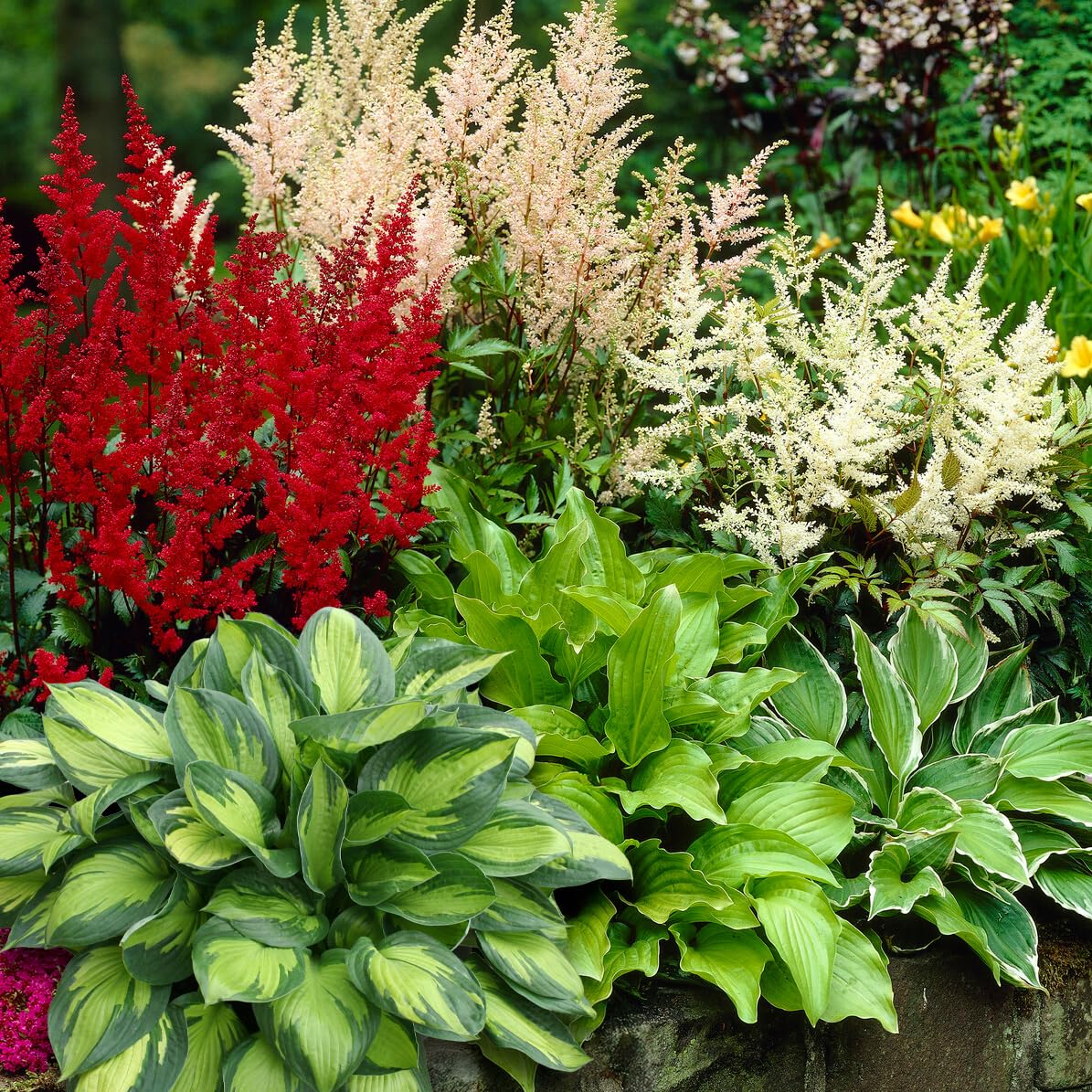
Hostas are the backbone of any Zone 7 shade bed, and this bundle gives you nine divisions in one order. Each plant spreads 20–60 inches, so a single pack can carpet the foot of a maple or the bare strip along a north-facing foundation. The label lists zones 3 to 8, which puts your Zone 7 garden comfortably inside the plant’s cold range. Purple or white bell-shaped blooms rise on tall stems in midsummer and hold for about two weeks.
What wins people over is how fast these roots break dormancy. Owners describe leaves unfurling almost the day after planting, with the whole bundle healthy on arrival and no dead divisions in the box. For filling a large shaded area in one season, nine of them cover far more ground than the single-plant listings — this pack holds 9 Count against the 1 Count you get from a single-pot seller. The shade tolerance is genuine too: full shade or half sun, either one works.
The honest catch is root consistency. Buyers report that 8 of 9 roots were in packages in great sprouted shape and the 9th was just bundle of roots with no plant or crown attached. Others find the divisions small on arrival. They do grow fast once settled, but expect a compact starter rather than a mature clump. Give them consistent moisture and let them establish.
What earns its keep
- Nine divisions per order — enough to line a whole shaded border
- Foliage spread of 20–60 inches fills bare ground quickly
- Rated for zones 3 to 8, so Zone 7 winters are no threat
- Works in full shade or half sun, giving you placement flexibility
Where it asks patience
- Divisions arrive small and take a season to reach full size
- An occasional root ships without a crown attached
- Color variety is limited to green foliage with purple or white blooms
Reach for this if: you have a wide shaded area and want the cheapest way to green it in one season.
Steer elsewhere if: you want a plant that already looks full the day it arrives — go potted instead.
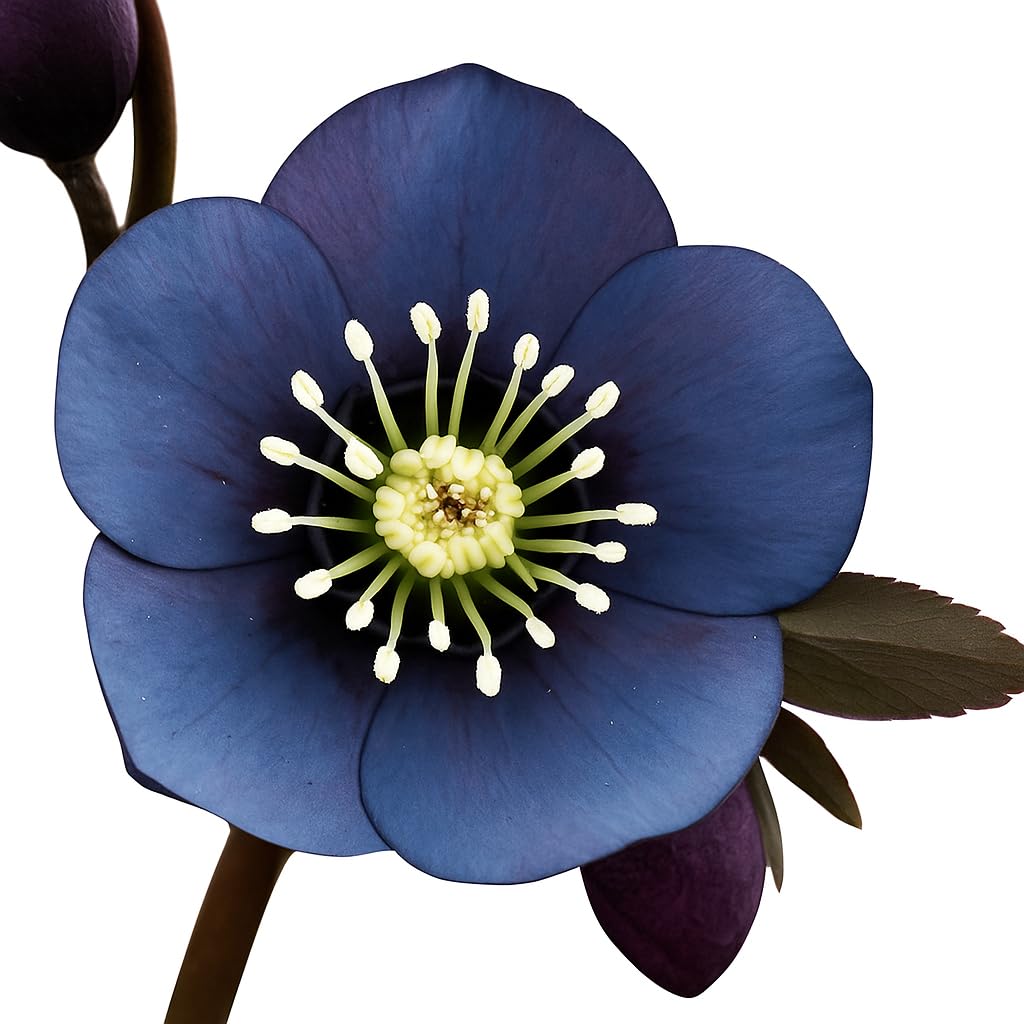
2. Perennial Farm Helleborus Winter Jewels ‘Blue Diamond’
A Lenten rose that flowers when almost nothing else in the shade bed will.
Lenten roses bloom in the cold months, and the double bluish-purple flowers on Blue Diamond are why people plant them near a door or a pergola — somewhere you walk past in late winter. Each plant reaches 24 inches, which puts it taller than the 16-inch Brunnera further down this list, so it holds its own at the back of a mixed shade bed. It arrives as a live quart pot and grows in part to full shade in woodland soil.
The purchase experience is what sets this seller apart. Plants come packed so they actually arrive intact and ready to plant, with well-marked pots and well-formed leaves. One happy owner has two in a pot under a pergola near the door, paired with hosta in separate pots, and is waiting on that first bloom. Deer tend to leave helleborus alone, a plus for beds that back onto woods.
Cold tolerance is the one spec worth checking yourself before you commit — the listing does not print a hardiness zone range. Ask the seller to confirm Zone 7 suitability if your winters run cold. Moisture matters too: hellaborus wants moderate watering and well-drained soil, not a bog.
Why it made the cut: early-season color in a shady spot is rare, and this one delivers layered blue-purple blooms on a 24-inch plant that shrugs off deer.
Plan around this: confirm the hardiness rating for your exact zone before ordering, and keep the soil draining rather than soaking.
Your move if: you want something flowering in the cold months near a path, door, or patio.
Look past it if: you need a proven printed zone range on the label before you buy.
3. Complete Shade Perennial Flower Bulb Garden — 30 Bulbs
Thirty bulbs split between two shade workhorses, so one order greens a whole bed.
You get 30 bulbs total — 15 Mixed Hosta plus 15 Mixed Astilbe — where a single-plant seller ships you just 1 Count. That volume is why this suits someone staring at a bald shaded patch. The hostas give you bold textured foliage, and the astilbe adds upright plumes (tall flower spikes) for contrast and height. Together they keep a low-light bed busy from spring into summer, and the label rates them for zones 3 to 9 (the USDA cold-hardiness map).
Growth is what people talk about. Sprouts appear fast, with owners describing new growth almost doubling in a couple of days and the roots arriving moist and healthy with no dried-out losses. An experienced gardener’s take is that the two varieties arrive in separate labeled packages with large, healthy roots — plant in light shade and expect full size in a season or two. Light mulch helps; overwatering does not.
Not every bulb performs. One buyer counted 12 astilbe and 12 hosta sprouting from the 30 and called 24 out of 30 a fair result. Another found only 10 hostas up from 15 and just 3 varieties, so expect some gaps and less variety than the mix implies. The per-bulb cost still makes it worthwhile.
The honest read: 30 roots for the price of a couple of potted plants, with fast sprouting and healthy arrivals — the bulk value is the whole point.
Set your expectations: not every bulb comes up and the variety is thinner than the label suggests, so plant a little denser than you think you need.
Worth your order if: you’re planting a fresh shade bed from scratch and want volume.
Pass if: you want a guaranteed full count of individually named varieties.
4. Brunnera Macrophylla Jack of Diamonds

Tiny sky-blue flowers in spring, then heart-shaped leaves that hold shape all summer.
Brunnera is one of the earliest bloomers in a shaded garden, and its little blue flowers are why it carries the name False Forget-Me-Not. The foliage is the real draw though — heart-shaped leaves that overlap in a mounded habit, said to look best with dark mulch around it. It reaches 16 inches, shorter than the 24-inch helleborus above, which makes it the front-of-bed choice. This one ships as a live plant at a 4.5-inch pot size, so no germination wait.
Owner experience is uniformly warm: plants arrive packaged well, alive and green, looking just like the picture. One buyer liked it enough to order a second, and another called it prettier in person than expected, with only minor crisping at the leaf edges that didn’t affect the plant. The seller lists it as U.S.-grown and deer-resistant, both useful for a bed that borders woodland.
Care is where it asks attention. The crown sits low and needs protection from foot traffic and small shovels once it’s cut back. Water into the soil, not over the foliage, and mulch around the base. Cut the foliage back in late autumn and it returns each year.
Reasons it earns a spot
- One of spring’s earliest bloomers — blue flowers before most perennials wake
- Heart-shaped foliage holds shape and strength through the whole summer
- Ships as a live plant, ready to go in the ground
What to watch
- The buried crown is vulnerable to a careless shovel or footstep
- Foliage can crisp at the edges if water lands on the leaves
Buy it for: the front of a shaded bed where you want shaped foliage and early blue flowers.
Skip it for: high-traffic ground where the low crown gets trampled.
5. Lily of the Valley — 10 Bare-Root Pips
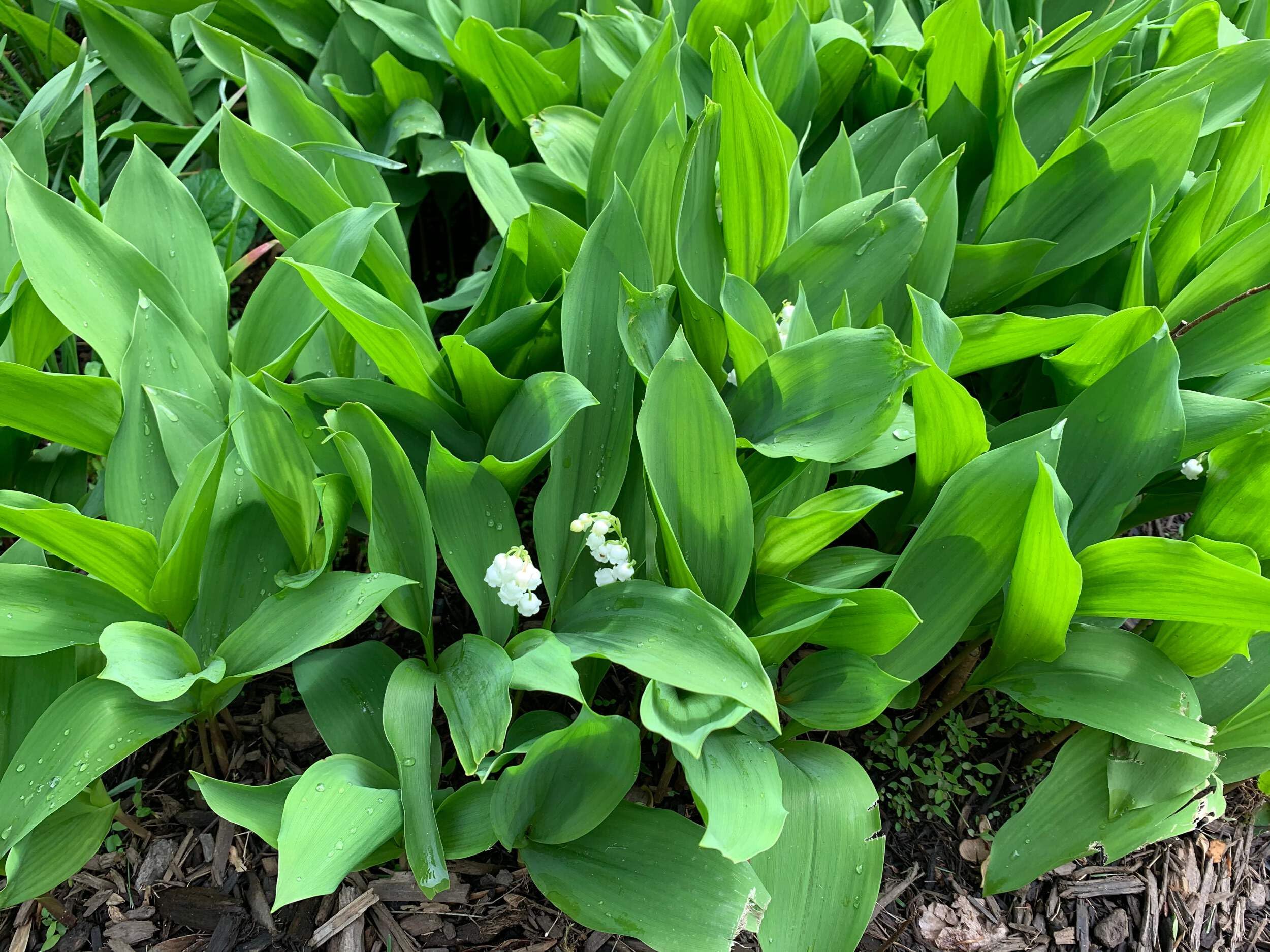
Ten bare-root pips that turn a dark corner into fragrant white groundcover.
This is the plant for the spot where nothing else survives — deep shadow under a shrub, a shaded strip behind the shed. The listing rates it for growing zones 2a through 8b, which covers Zone 7 with room to spare on both ends. You get 10 pips per order, bare-root, with leaves, stems, and roots but no soil. White fragrant blooms arrive in spring, and the plant is listed as pollinator-friendly and a natural groundcover.
The one owner so far ordered without realizing these were neither bulbs nor seeds, then planted all of them and reported every one thriving. That fits the plant’s reputation: pips are forgiving once they’re in the ground, and they spread. The fragrance is the real reason to plant them near a path or a doorway you pass often.
One thing to keep in mind is that groundcovers spread. Lily of the valley fills territory well, which is either exactly what you want or a reason to give it a boundary in a mixed bed. It ships bare-root, so expect to plant now and see action as the season warms.
Pick it if: you want fragrance and quick spread in the darkest corner of the yard.
Reconsider if: your bed is tightly planted and you’d rather nothing roam.
6. Heuchera (Coral Bells) — Shades of Purple
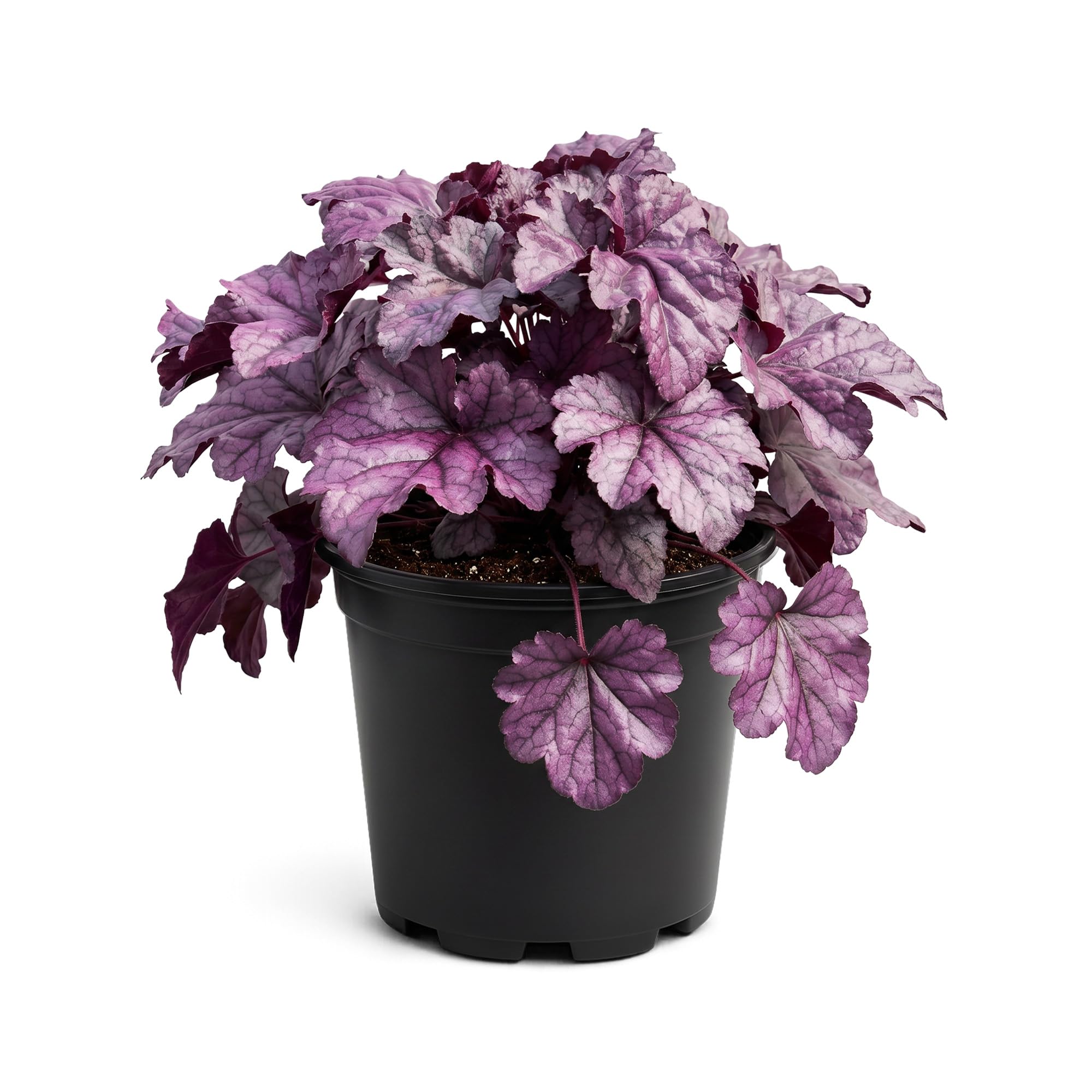
Deep purple foliage for a shaded spot where nothing else wants to grow.
Color alone earns coral bells its spot. The deep purple and maroon leaves form a compact mound around 18–24 inches tall with a 12–18 inch spread, so it fits a tight border. Its purple deepens in shade, so a spot out of direct sun brings out the richest leaf color. Set one against green hosta foliage and the contrast does the work for you. It takes partial to full shade and wants well-drained soil enriched with organic matter (compost or leaf mold).
The living plant is the gamble here. Owners who get a good one rave about it — a sturdy plant that held up through a brutally hot summer in a shady spot where nothing else wanted to grow, with dark green leaves and purple undersides. Others open the box to a plant that shows up wilted or fails to revive. Watering in carefully and giving it a day of shade after arrival helps it settle.
Size is the second thing to plan for. Some plants arrive noticeably smaller than the listed 10-inch height, so a pot from this seller is a starter, not a showpiece. Check your zone on the listing before you commit, and keep the soil evenly moist without letting it sit wet.
The real draw: foliage color that deepens in shade, forming a compact 18–24 inch mound that carries the bed when flowers are done.
Known variable: live-plant condition and size can disappoint on some orders, so treat the first weeks as settling-in time.
Order it when: purple foliage is the missing note in your shade bed.
Hold off if: you need a guaranteed large plant on day one.
7. Votaniki Astilbe Avalanche Bare Root

Tall white flower spikes that bring height and a soft scent to shaded borders.
Astilbe earns its keep for two things: the airy white plumes and the fact that it flowers where most shade plants only leaf. This one reaches about 22 inches with a balanced spread, lands between May and June for bloom, and happily takes part shade to full shade. The plumes work in borders, woodland beds, and fresh cut arrangements, where the long-lasting blooms add height and softness to a bouquet. It wants rich, moist loam and rates for zones 3 to 8 — a natural fit for Zone 7.
Plant bare roots 2–3 inches deep with 18–24 inch spacing, then mulch to hold moisture through summer. Consistent moisture is the key — this is not a plant for a bone-dry spot, so give it a home where the soil stays damp. It tolerates consistent moisture well, which makes it a fit near a water feature or a low spot that drains slowly.
Variety comes one plant at a time here. You get a single bare-root in the order, so build the drift by buying several rather than expecting a clump in one box. Space them at planting and you’ll have a proper row of plumes by the following season.
Why it fits a shade border
- White plumes in May and June when shaded beds are otherwise quiet
- 22-inch height layers behind lower foliage plants
- Cuts well for indoor arrangements
- Zones 3 to 8 covers Zone 7 comfortably
Worth knowing before you order
- One bare root per order — you’ll need several for a drift
- Needs consistently moist soil, not a dry bed
Go for it if: you want white plumes at 22 inches in a moist, part-shade border.
Think twice if: your soil drains fast and dries out between waterings.
8. Autumn Fern Plants Live Outdoor — 1-Gallon Pot

The rare fern that stays green through a Zone 7 winter and edges a path beautifully.
This one is built for Zone 7 specifically. The listing states the fern lives year-round in garden borders and edging where hardiness Zone 7 applies, so you’re not gambling on cold tolerance. It ships as a real plant in a 1-gallon nursery pot, so it goes into the ground ready to grow rather than waiting to sprout. Line it along a path, use it as a landscape border or groundcover, or drop it into a pot for a shaded patio corner.
Owners describe these as vigorous growers that go beyond expectations — healthy, large plants that push new shoots almost immediately, and one buyer reports the fern living 10–15 years in the ground. The packaging matters too: fronds arrive undamaged in a spacious box, and the pot is bagged to hold soil moisture. The seller also donates part of each sale to shelter animal placement.
Part shade is this plant’s balance, so place it where it catches morning sun but dodges the worst afternoon heat. Steady moisture keeps the fronds (the leafy fern-like stems) fresh through summer. The one catch is size: a 1-gallon pot is a decent start, not a mature clump, so give it a full season to fill out.
Best trait: Zone 7 hardiness stated openly, backed by owners reporting healthy, large arrivals that push new growth right away.
The trade-off: a 1-gallon start needs a season to size up — buy two if you want instant visual weight.
Made for: edging a path or patio in Zone 7 where you want greenery that survives winter.
Not the pick if: you want a fully mature fern clump the day it arrives.
9. 4 Purple Red Bleeding Heart Live Plants

Heart-shaped blooms on four starter plants for the shaded bed you already love.
Bleeding hearts are named for the obvious — dangling heart-shaped flowers that bring seasonal color to shaded beds in spring and summer. This listing sends four plants, each 4–6 inches tall, so you’re buying starters rather than mature specimens. They take partial to full shade and want well-drained soil kept consistently moist, especially in cooler climates. The label rates them for zones 3 to 9.
Growth is uneven in the early weeks. Some plants arrive upright and green, take root within days, and push new leaves. Others are slower or won’t make it — a four-plant order that loses one is common. The upside is the low per-plant cost and the fact that a healthy bleeding heart spreads and returns in later seasons.
Expect tiny plugs on arrival. Buyers describe them as teeny starter plugs that are healthy-looking but small, and one measured just 2 inches. Give them a sheltered nursery spot or a pot for the first season until they size up, then move them into the border once they’ve got roots under them.
Why plant them anyway
- Heart-shaped blooms add spring color to a shaded bed
- Four plants per order, more value than a single specimen
- Zones 3–9 covers Zone 7 clearly
Set your expectations
- Plants arrive as small starter plugs, not mature clumps
- Not every plant in a four-pack survives the first weeks
Buy it when: you can nurse small plugs along in a pot before planting out.
Look elsewhere if: you expect four ready-to-flower plants in the box.
10. Japanese Painted Fern + Athyrium Niponicum — 2 Pint Pots
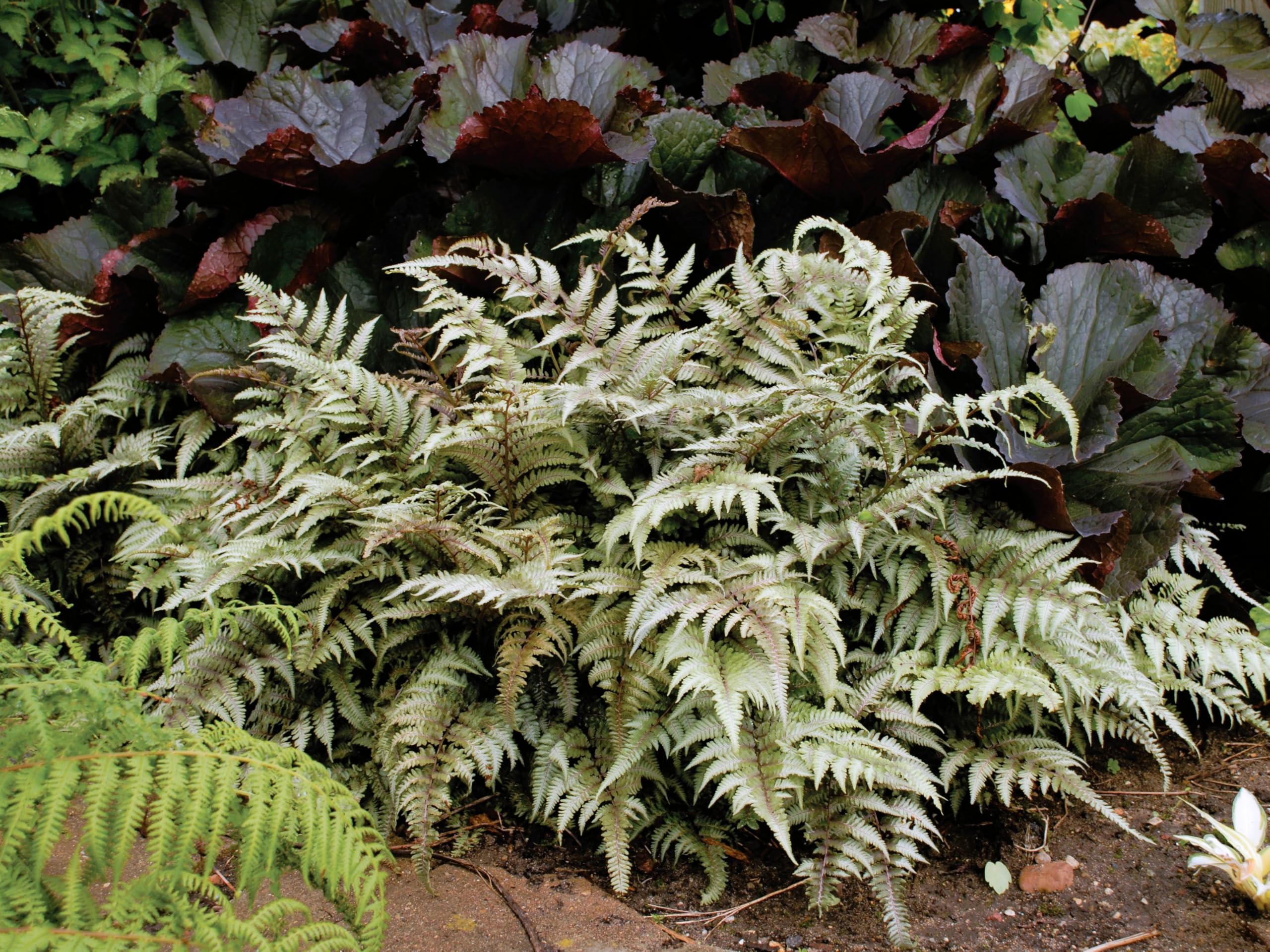
Silver and burgundy fronds that brighten a dim shade garden better than any flower.
Few low-growing plants bring color like the Japanese painted fern. Its soft gray-green fronds carry silver and burgundy shading, and the effect is to lift a dark corner where green-on-green goes flat. It was named Perennial Plant of the Year in 2004, an award growers use as a reliability benchmark. Mature height is 1–2 feet, it’s deciduous, and it wants part to full shade in moist, well-drained soil, which makes it a fit for a shaded bed near a stream or pond in Zone 7.
The shipping operation is unusually careful. Every order is inspected and trimmed, wrapped in moist paper and sealed to hold moisture, then packed in a box stabilized with craft paper and air pillows. Owners describe plants arriving perfectly packaged, still moist, with no brown spots or broken pieces, and the seller has a loyal base of repeat customers who keep coming back order after order.
Slow growth is the honest trade-off. This is a slow-spreading fern, so it won’t fill a gap overnight, and some orders arrive smaller than the photographs suggest. A 14-day guarantee from delivery covers you if something goes wrong, but you do need to report problems promptly with evidence.
Why it earns the spot: burgundy and silver fronds at 1–2 feet are a color accent you can’t get from hostas or heuchera, shipped with the kind of care that actually protects the fronds.
The catch: slow to spread and sometimes smaller than pictured — plant it as an accent, not a filler.
Choose it for: a shaded focal point where silver and burgundy fronds do the color work.
skip it if: you need fast coverage of a large area this season.
11. Proven Winners Blue Chiffon Rose of Sharon (Hibiscus)

The tall flowering anchor for the sunny edge of your shade bed.
Rose of Sharon is the tall piece that frames a bed rather than fills it. Blue Chiffon grows to 48-72 inches wide and 96-144 inches tall, so it reaches a height no perennial on this list will, and it blooms spring through fall — a far longer window than the summer-only bloomers above. It wants full sun to part shade, so plant it at the sunny edge where your shade begins, not in the deepest shadow. It rates for zones 5-9 and is deciduous, leafing out again each spring. Ships dormant in winter through early spring.
Quality and bloom are what owners talk about most — the shrub goes well beyond what people expect, blooming continuously with lots of buds. Plant one within a day of arrival, water it in, and you can have multiple flowers opening within a couple of weeks. The seller ships a 2-gallon plant, so you’re starting with real size rather than a plug. Give it the recommended 96-144 inch spacing and it has room to spread.
The honest catch is shipment condition. Some shrubs arrive larger but rougher, with roots out of the soil and yellowed leaves — the plant recovers when you trim and water it, but it can look ragged in the carton. Keep the root ball moist through shipping and plant promptly to give it the best start.
What it gives you: 96-144 inch height and spring-to-fall bloom in one shrub — an anchor plant that no 24-inch perennial can match.
Where it’s demanding: it wants full sun to part shade, not deep shade, so it only fits the bright edge of your garden.
For you if: you want a tall, long-blooming focal point at the sunny boundary of the bed.
Wrong plant if: your spot is true deep shade — this one needs sun to flower.
Know the Specs
Sunlight Exposure
Sunlight exposure tells you how much direct sun a plant tolerates each day. A listing marked “full shade” means the plant does best with very little direct sun, while “part shade” asks for some sun but shelter from the hottest hours. Zone 7 summers can be brutal in a bed that bakes from noon onward, so read this line before you buy. A plant marked for full shade placed in a sunny spot will scorch; a sun-worshipper tucked in deep shadow will sulk and refuse to flower.
USDA Hardiness Zones
A hardiness zone is a measure of the coldest winter a plant survives — Zone 7 is the middle range, mild enough for many perennials and cool enough to keep them dormant through the cold months. When a listing shows a range like 3 to 8, that plant handles winters on both sides of you. If a listing shows only one number, treat that as the cold limit and confirm the range before you commit. Zone 7 border plants generally sit comfortably in a 3-to-9 range.
Mature Plant Height and Spread
Height and spread decide where a plant goes in your bed — tall plants anchor the back and short ones edge the front. Coral bells form a compact mound around 18–24 inches, while Rose of Sharon reaches 96-144 inches and dwarfs everything else in the listing. A 16-inch Brunnera and a 24-inch Lenten rose layer together nicely by contrast. Match the mature height to your bed’s depth so one plant doesn’t swallow another.
Bare Root vs. Potted Plants
Bare-root plants ship as dormant roots with little or no soil and are cheaper to send, but you plant them and wait for sprouts. Potted plants arrive leafed out and ready to go, which makes them better for a bed you want to look established now. Bare-root makes sense when you’re filling a large area and need quantity; potted is the tool for filling a single prominent gap.
Common Questions
Will these perennials survive a Zone 7 winter?
How much direct sun can full-shade perennials actually take?
How long until bare-root plants sprout?
What is the difference between bare-root and potted plants?
Why did only some of my bulbs come up?
Can I plant these in containers instead of the ground?
How do I keep my shade bed from frying in summer?
Do deer eat these shade perennials?
Is Rose of Sharon a good fit for a shade bed?
How close together should I plant a shade border?
The Bottom Line
For most shoppers building a shaded Zone 7 garden, the full shade perennials zone 7 winner is the 9-Pack Hosta Bare Root. One order gives you nine divisions (bare-root plants, shipped without soil), rated zones 3 to 8 and spreading 20–60 inches. It costs well below what nine potted plants would run, and owners mention green leaves within days. That makes it the fastest way to cover the most ground with the least fuss. If you want winter bloom, the Helleborus Blue Diamond adds early-season color where little else will. For a tall flowering anchor at the sunny edge, reach for the Blue Chiffon Rose of Sharon. Its 96-144 inch height dwarfs every perennial on this list.
How we choose
We do not accept paid placement. Every pick is matched to a real buyer and a real use-case; we do not hands-on test units.
Sources
Specifications: manufacturer listings and product documentation. Review insights: verified customer reviews, as of October 2026. Pricing: not shown on this page (it changes often); check the current price via the retailer link.
As an Amazon Associate, Aappliancez earns from qualifying purchases. This does not affect which products we feature.