Disclosure: Some links in this post are affiliate links. As an Amazon Associate I earn from qualifying purchases, at no extra cost to you. Learn more
Specs are compiled from manufacturer listings and verified buyer reviews and can change over time — please confirm the key details on the product page before buying.
Buying a maple sapling online is a gamble on one thing: whether it arrives alive and keeps growing after you put it in the ground. The picks below are sorted by how reliably they do exactly that — how fast they put on height, how healthy the roots arrive, and how well they handle their first winter. If you want the shortest path from a box on your porch to shade over your yard, the Autumn Blaze is the one to start with.
This guide is built by comparing the manufacturers’ published specifications and the patterns across verified customer reviews, so you get each pick’s real strengths and trade-offs instead of marketing spin.
You will see how much height each maple reaches at maturity, which growing zones it actually tolerates, and what arrives in the box — so you can choose a tree that fits your yard and your patience level. Here is the honest breakdown of the best fast growing maple tree options you can order today.
Top Picks
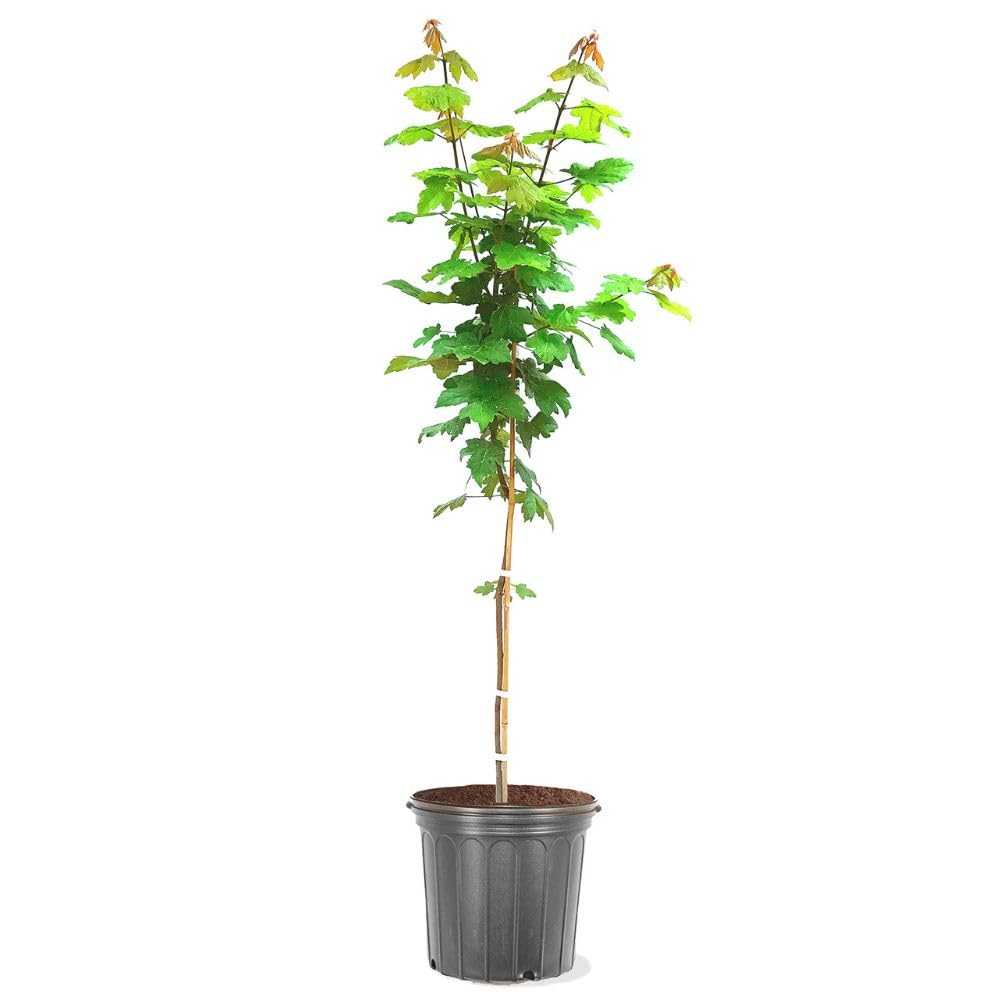

How To Choose The Best Fast Growing Maple Tree
The single biggest mistake maple buyers make is shopping by the photo. Every listing shows a full, leafy mature tree. What actually lands on your porch is a young sapling in a box, and what determines whether that sapling becomes shade is a short list of specs — not the picture.
Start with your USDA zone, not the variety
USDA Hardiness Zones are a cold-hardiness map, and a maple that sits outside its zone range will struggle or die in its first hard winter. A tree rated for Zones 3 through 8 handles cold down to that zone’s lowest expected winter temperature. If your zone sits inside that window, the tree has a real chance. If not, pick a different maple.
Growth rate means years, not weeks
“Fast growing” on a maple listing refers to how quickly it puts on height across a full season, not how fast leaves appear after shipping. A fast grower still needs full sun, regular water in its first few years, and well-draining soil to move. Expect the first season to be about establishment — roots first, height second.
Match the shipped size to your patience
A 12-24″ tall bareroot sapling and a 2-3 foot potted tree are two very different starting points. Bigger shipped size means less waiting for a canopy. Bareroot means the roots ship without soil, which keeps shipping cost and weight down but asks more of the plant on arrival. Neither is wrong — they just suit different buyers.
Read the agricultural shipping restrictions first
Live plants carry state-level shipping limits, and some maples cannot be sent to California, Arizona, Alaska, or Hawaii. Check the listing’s restriction line before you fall in love with a variety, because a tree that cannot legally reach your state is a refund, not a shade tree.
Side-by-Side Comparison
| Model | Best For | Mature Height | Hardiness Zones | Shipped Size | Amazon |
|---|---|---|---|---|---|
| The Maple Autumn Blaze Tree, 1 gal Nursery Pot★ Best Overall | Fastest route to fall color and shade | 50 feet | 3–8 | 1 gallon nursery pot | Amazon |
| Autumn Blaze Maple Tree — Acer x Freemanii, 1 GallonRoots First | Established roots in a potted tree | 50 feet | 3–8 | 1 gallon potted | Amazon |
| American Red Maple Shade Tree by DAS Farms | Big shade tree with the most owner experience behind it | 60 feet | 3–9 | 3 feet tall, boxed | Amazon |
| American Sugar Maple by DAS Farms | Tapping for syrup later, native shade | 60 feet | 3–9 | 2–3 feet tall, gallon container | Amazon |
| American Red Maple Shade Tree — Second Listing | Second shot at the same red maple | 60 feet | 3–9 | 3 feet tall, boxed | Amazon |
| 2 Red Maple Trees — 12-24″ Bareroot | Two saplings to hedge your bets | — | — | 12–24 inches, bareroot | Amazon |
Detailed Reviews
1. Maple Autumn Blaze 1 gal Nursery Pot
Our pick — 4.0+★ from 80+ verified ratings; the strongest balance of quality and price.
The 40-50 footer that turns orange and red without asking much of you.
A mature canopy of 40-50 feet tall and 30-40 feet wide is the payoff here, and it arrives on a tree the grower lists as a fast grower. That width is what makes it a shade tree rather than a lawn ornament — it spreads into a rounded, symmetrical crown that actually covers ground.
What wins buyers over is growth, and it wins by a wide margin over every other thing they talk about. Spring-to-fall is the planting window, so you are not locked into one narrow week of the year to get it in the ground. Fall color runs green into bright orange and red, and the listing rates it for Zones 3 through 8 — a cold-hardiness range broad enough to cover most of the country. Once established, the listing rates it moderately drought-tolerant, so a dry spell after the first few years won’t kill it.
The catch is geographic: agricultural law blocks shipment to California, Arizona, Alaska, and Hawaii. If you live in any of those four states, this is not a tree you can buy, full stop. The other honest note is the 5-pound shipping weight — this is a young potted tree, not a sapling you can tuck in a backpack, so plan to plant it the day it lands. As owners put it, the arrival can look alarming: “This came as a bald stick,” one wrote before noting the tree pushed growth anyway. A dormant or shipping-stressed maple is normal, and green wood under the bark is the real test.
Why this one leads the list
- 40-50 feet tall with a 30-40 foot spread — real shade, not a novelty
- Fast growth rate and a spring-to-fall planting window
- Moderately drought-tolerant once established
- Rated for Zones 3 through 8
Where it will not work
- Cannot ship to CA, AZ, AK, or HI under agricultural law
- Arrives as a small potted tree that can look like a bare stick
Reach for this if: you live outside those four restricted states and want the quickest jump from sapling to a broad, colorful canopy.
Look elsewhere if: you are in California, Arizona, Alaska, or Hawaii — the shipping restriction is absolute, so pick a variety that can legally reach you.
2. Autumn Blaze Maple Tree 1 Gallon
Same 40-50 foot ceiling as the leader, but sold on the strength of a potted root system.
If the phrase “established roots” is what sold you, this is the listing built around it. It ships in a 1 gallon pot with a root system already settled into soil, and the mature size — 40-50 feet high by 30-40 feet wide — matches the Autumn Blaze above. It is an Acer x Freemanii, the hybrid cross that carries the Autumn Blaze name, and it wants full sun and moderate watering.
Where this one earns its place is what happens after winter. Owners describe trees that come through their first cold season and push new leaves on the other side, and appearance is the second thing they bring up after growth. That survival-through-winter story is the whole point of paying for a potted, established-root tree over a bareroot stick. The listing also notes plants ship dormant in winter months, so a leafless box in January is the plan, not a problem.
Set your expectations on size, though. As one owner put it after a full year: “Came in a well packaged box. Rather small but see the progress in the picture after 1 year.” That is the honest shape of this purchase — small on arrival, visible progress after a season. The listing says plainly that the photos show mature plants, not what ships, so judge it by the 1 gallon pot description rather than the canopy in the image.
The winter-survival bet: everything about this listing points at a tree that gets through its first cold season and leafs out on the far side — the reason to choose a potted, established-root maple over a cheaper bareroot sapling.
Size reality check: the photos are mature plants and the tree that lands is small, so the first season is about rooting, not shading the patio.
Pick this when: you want the Autumn Blaze look and you are willing to trade a small first-year tree for roots that are already in soil.
Think twice if: you expect a full-canopy tree in the box — the listing is explicit that the pictures show mature plants.
3. American Red Maple Shade Tree

A 60-foot native shade tree that ships boxed, three feet tall, and ready for the ground.
Here is the number that separates this tree from both Autumn Blazes: 60 feet at maturity versus their 50. It also carries a 6-pound shipping weight against their 5, which tracks — a taller starting tree is a heavier box. The zone range is wider too, rated for Zones 3 through 9 with full sun, so more of the country can plant it than the Zones 3-8 Autumn Blaze.
The acreage of owner experience behind this red maple is what makes it easy to recommend. Growing and tree quality are neck and neck as the two things owners talk about most, and both read positive across the board. Leaves sprouting within a week of arrival is the recurring story, and the listing describes the tree as deer resistant and pet friendly. DAS Farms also covers a successful transplant for 30 days if you follow the included planting instructions with the right location and water.
One instruction is non-negotiable: do not repot it into another container — this tree goes straight into the ground. Size is also the one mixed note in the feedback, with some owners finding it smaller than expected, so measure your space for a 60-foot tree before you order rather than after. Deciduous means no leaves in winter, and the listing is honest that dormant winter shipments leaf out in spring under the same conditions.
The case for the red maple
- 60 feet at maturity — the tallest ceiling in this lineup
- Grows in Zones 3 through 9 with full sun
- Deer resistant and pet friendly, per the listing
- 30-day transplant assurance when instructions are followed
The fine print
- Must go in the ground — no repotting into a container
- Some owners find the shipped tree smaller than they pictured
Best match for: a yard with room for a 60-foot tree and a buyer who wants the variety with the deepest track record behind it.
Wrong fit if: you planned to keep it on a patio in a pot — this one is ground-only.
4. American Sugar Maple

The native maple you tap for syrup later, shipped double boxed at 2 to 3 feet.
Sugar maple is the species behind maple syrup, and this one ships at 2 to 3 feet tall in a gallon container, double boxed for safe transport. Zones 3 through 9 with full sun and regular water, and DAS Farms backs the transplant for 30 days if you plant according to the included instructions.
Green, yellow, and orange is the color story, and it is a native tree rather than a hybrid, which matters if you are planting for the local ecosystem. One buyer got a clearly bigger tree than the listing promised: “Sugar maple arrived via UPS in a 4.5ft box, 4ft tall, strong, healthy, green, moist, with healthy roots.” That is the good version of the delivery — but it is not the guaranteed one.
The honest risk with this species is arrival quality, and there are two very different experiences in the feedback. One noted the tree arrived smaller than advertised with no limbs, looking like a stick in a bag of dirt, and another flagged slow growth. Those sit against the strong-roots delivery above, which tells you the outcome depends on the season, your state, and how far it travels. If you want a guaranteed-fast result, the Autumn Blaze is the safer pick; sugar maple is the longer, slower, native choice.
What it is really for: a native sugar maple you plant now and tap years down the road — the 60-foot mature height and syrup-bearing species are the whole reason to choose it over a faster hybrid.
The arrival gamble: some sugar maples land strong and leafy, others as a small bare stick, so buy knowing the first season is a wait-and-see.
Choose it for: the native species and the long game — the tree that eventually gives you syrup, not the fastest shade on the block.
skip it if: you want speed and certainty from day one; the growth on this species can be slow and the arrival quality varies.
5. American Red Maple Shade Tree 2-3 Feet
A second red maple listing with the same 60-foot build and the same ground-only rule.
This DAS Farms red maple mirrors the pick above on almost every line — 60-foot expected height, 6-pound shipping weight, Zones 3 through 9, full sun, and the same deer-resistant, pet-friendly, air-purifying notes. It ships as a 3-foot-tall boxed tree and asks for regular watering and adaptable soil. If you are comparing the two red maple listings side by side, the specs will not separate them for you, which is worth knowing before you spend time hunting for a difference.
What owners experience is a tree that takes off. New leaves within a week of arrival is the pattern, and health and appearance come up right behind growth and tree quality in the feedback. This variety handles cold and heat across its zone range, which is why the 3-through-9 rating covers so much ground. The one thing you cannot do is leave it in a pot — the listing is clear it goes in the ground, not another container.
Size is the honest caveat, and it is the only mixed signal in a body of feedback that otherwise runs positive: some find the tree smaller than the description led them to expect. That is a fit question, not a flaw — a 3-foot boxed sapling is exactly what it is, and the 60-foot tree is years away. Plant it where that 60-foot ceiling fits and the size question answers itself.
Why it still earns a place: identical bones to the other red maple — same 60-foot height, same zone range, same deer-resistant listing — so you get the same proven shade tree from a second listing.
Where it asks for care: ground only, and a few buyers picture a bigger tree than the 3-foot boxed sapling that actually lands.
Fits you when: this listing is available and you want the red maple’s 60-foot canopy and Zone 3-9 range with deer resistance.
Not for you if: you only have a container or balcony — this tree needs soil and open ground.
6. 2 Red Maple Trees 12-24″

Two 12-24″ bareroot red maples — plant both and let the stronger one win.
This is the hedging play. You get two red maple trees rather than one, each roughly 12-24 inches tall and shipped bareroot — meaning the roots travel without soil around them. Bareroot keeps the package light and the price low, but it asks the tree to establish from bare roots instead of settled potting soil. At 12-24 inches these are true saplings, the smallest starting point in this lineup and the furthest from shade.
The listing covers the essentials for a young tree: fast-growing, deciduous with a fall color show in red, partial sun, and listed as low maintenance with GMO-free material features. Two trees also solves a real problem — if one sapling struggles, you still have a second in the ground. For a privacy line or a pair framing a driveway, buying two at once saves you a second order and a second shipping wait.
Push the honesty button here: a bareroot 12-24 inch sapling is the longest wait to a canopy of anything on this page, and the Autumn Blaze and DAS Farms trees ship substantially larger. That is the trade — a lower entry point and a spare tree in exchange for slower visible progress. Plant them where you will see them every day, because the first season is roots, not height.
Go this route if: you want two trees for a pair or a hedge and you are comfortable starting small to keep the entry cost down.
Look higher on the list if: you want a bigger tree in the box and faster shade — the potted and boxed 2-3 foot picks above ship noticeably larger.
Know the Specs
USDA Hardiness Zones
A zone number tells you the coldest winter a tree is rated to survive. A map is behind it: Zones 3 through 8 (the Autumn Blaze range) covers colder climates than Zones 3 through 9 (the DAS Farms maples), so the wider 3-9 rating opens the tree up to warmer regions too. Match the zone to your address before you buy, because the wrong zone is the most common reason a maple fails its first winter.
Mature Height and Spread
Mature height is how tall the tree gets once it is grown, not what ships. The Autumn Blaze trees top out around 50 feet with a 30-40 foot spread; the American Red and Sugar maples reach 60 feet. Height affects more than looks — it decides whether the tree fits under power lines and how far its shade reaches across a lawn. Measure your space for the mature number, not the sapling.
Shipped Size and Root Form
What lands on your porch comes in one of two forms. A potted or gallon tree arrives with roots already in soil, which is gentler on the plant and usually a larger starting tree. A bareroot tree ships with bare roots and no soil, which is lighter and cheaper but asks more of the plant on arrival. Potted and boxed trees start you closer to a canopy; bareroot saves money and often comes as a multi-pack.
Growth Rate and Dormancy
“Fast growing” describes seasonal height gain across years, not days. A dormant tree — one with no leaves — is normal in winter shipping and not a sign of death; green wood under the bark is the test. Expect the first season to favor root establishment over top growth, with the real push coming once the tree is settled in well-draining soil and full sun.
Common Questions
Which maple grows fastest for shade in a yard?
Can a maple tree ship to California, Arizona, Alaska, or Hawaii?
Is a bareroot maple harder to plant than a potted one?
My maple arrived as a bare stick with no leaves — is it dead?
How tall will these maples get, and how far apart should I plant them?
Do I need full sun for a maple to grow fast?
What does the 30-day transplant guarantee actually cover?
Is the sugar maple the same as the red maple for syrup and shade?
Should I repot a shipped maple into a bigger container?
How much water does a young maple need after planting?
The Bottom Line
For most buyers, the fast growing maple tree to start with is the Autumn Blaze in the 1 gallon nursery pot — a fast grower rated for Zones 3 through 8 that reaches 40-50 feet with a 30-40 foot spread and colors up orange and red. If you want the deepest track record and a taller 60-foot ceiling, the DAS Farms American Red Maple is the safer long-game pick, provided you plant it in the ground. And if you would rather plant two small saplings and keep the entry cost down, the 2-pack bareroot red maples give you a spare in the ground. Whichever you choose, plant the day it lands, water it through the first few years, and give it the mature width its listing promises.
How we choose
We do not accept paid placement. Every pick is matched to a real buyer and a real use-case; we do not hands-on test units.
Sources
Specifications: manufacturer listings and product documentation. Review insights: verified customer reviews, as of October 2026. Pricing: not shown on this page (it changes often); check the current price via the retailer link.
As an Amazon Associate, Aappliancez earns from qualifying purchases. This does not affect which products we feature.