Disclosure: Some links in this post are affiliate links. As an Amazon Associate I earn from qualifying purchases, at no extra cost to you. Learn more
Specs are compiled from manufacturer listings and verified buyer reviews and can change over time — please confirm the key details on the product page before buying.
Cherry wood rewards you for doing less. Most people come to this page wanting one answer: which finish gives cherry that deep, warm, reddish-brown glow without turning it muddy or blotchy. The short version is that cherry darkens beautifully on its own, so the finishing products that work best are the ones that feed the grain and let light through, not the ones that paint a color on top. Below you get five proven options, each for a different job around the house.
This guide is built by comparing the manufacturers’ published specifications and the patterns across verified customer reviews, so you get each pick’s real strengths and trade-offs instead of marketing spin.
A can of gel stain, a wipe-on oil, a Danish oil, and a water-based topcoat all behave differently on cherry, and picking the wrong one is the mistake most beginners make. That is why this breakdown of the finishes for cherry wood sorts the five picks by the exact job each one does best.
Top Picks
How To Choose The Best Finishes for Cherry Wood
Cherry is a closed-grain hardwood that starts pale and deepens to a warm reddish brown as it ages and meets light. That natural shift is why the goal with cherry is rarely to add color from scratch. The goal is to protect the wood and bring out its depth without blotching or a muddy, painted-on look.
Stain versus oil versus topcoat
These are three different jobs. A stain adds color, an oil feeds and deepens the wood from the inside, and a topcoat creates the protective film on the surface. A penetrating oil like the Tried & True Varnish Oil soaks into the pores and leaves a softer, more natural look, while a heavy-bodied gel stain sits closer to the surface and lays down a more even color. If your piece already has the color you want and just needs shielding from spills and everyday knocks, you want a topcoat like the Varathane Spar Urethane, not a stain at all.
Why blotching happens and how to dodge it
Blotching is when stain soaks into some patches of wood faster than others, leaving a splotchy, uneven look. Cherry is less blotch-prone than pine or maple, but the risk is real. Heavy-bodied gel stains help here because they do not penetrate as deeply as thin liquid stains, which is exactly why the General Finishes gel stain is a favorite for getting an even appearance on difficult woods. A test patch on the underside of your piece shows how the stain takes before you commit.
Reading coverage before you buy
Coverage is printed as a square-footage range or a per-volume figure, and it is the number that decides whether one can finishes your project or you run out halfway through. A gel stain listed at 300 to 500 square feet covers a lot of cabinet faces; a wipe-on oil listed at 2.5 to 3 square feet per 8 fluid ounces means you are buying a small touch-up bottle, not a whole-furniture can.
Side-by-Side Comparison
| Model | Best For | Base | Finish Look | Coverage | Amazon |
|---|---|---|---|---|---|
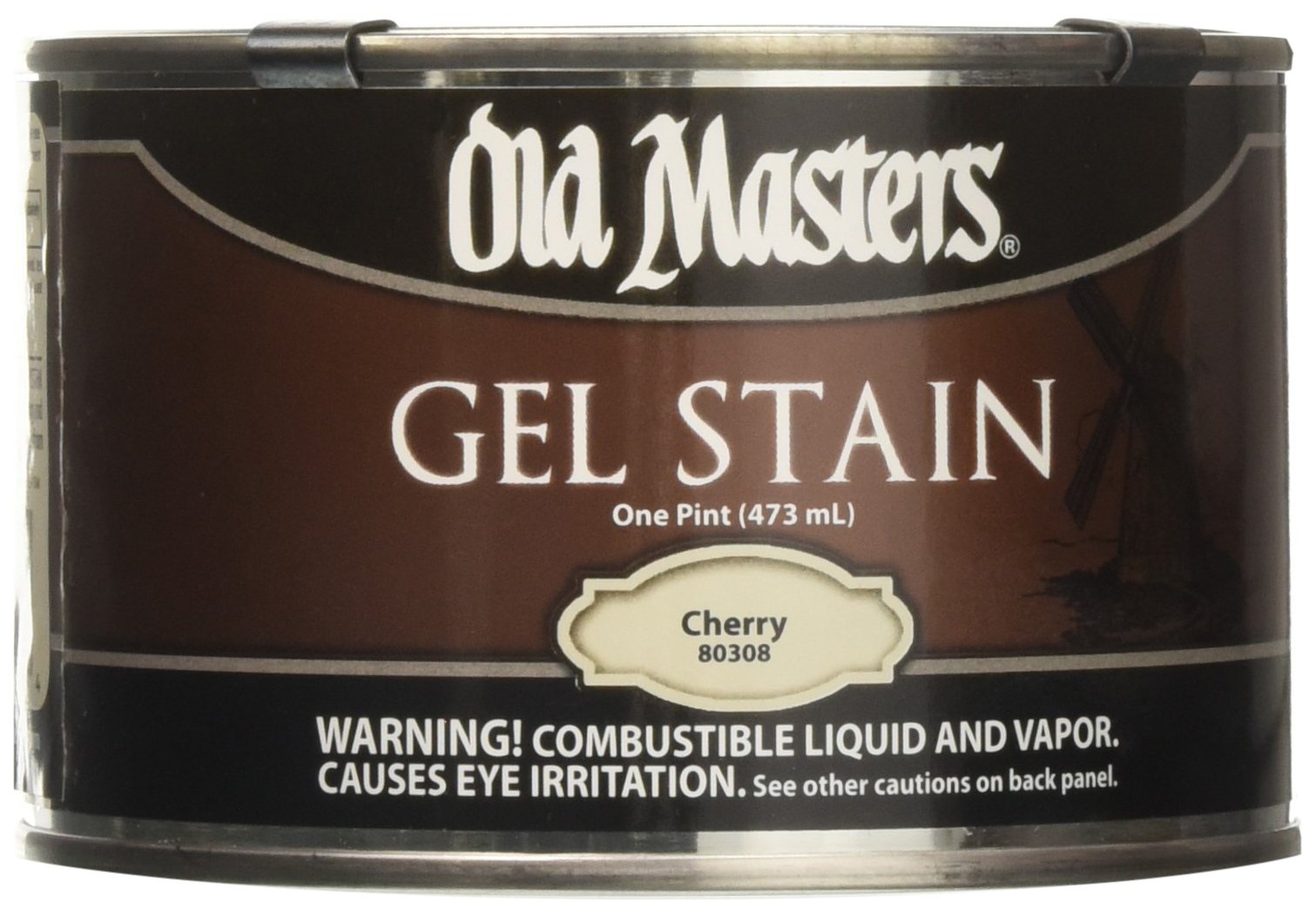
| Old Masters 80308 Oil Based Gel Stain, Cherry★ Best Overall | All-round staining jobs | Oil-based | Matte | 300–500 sq ft | Amazon |
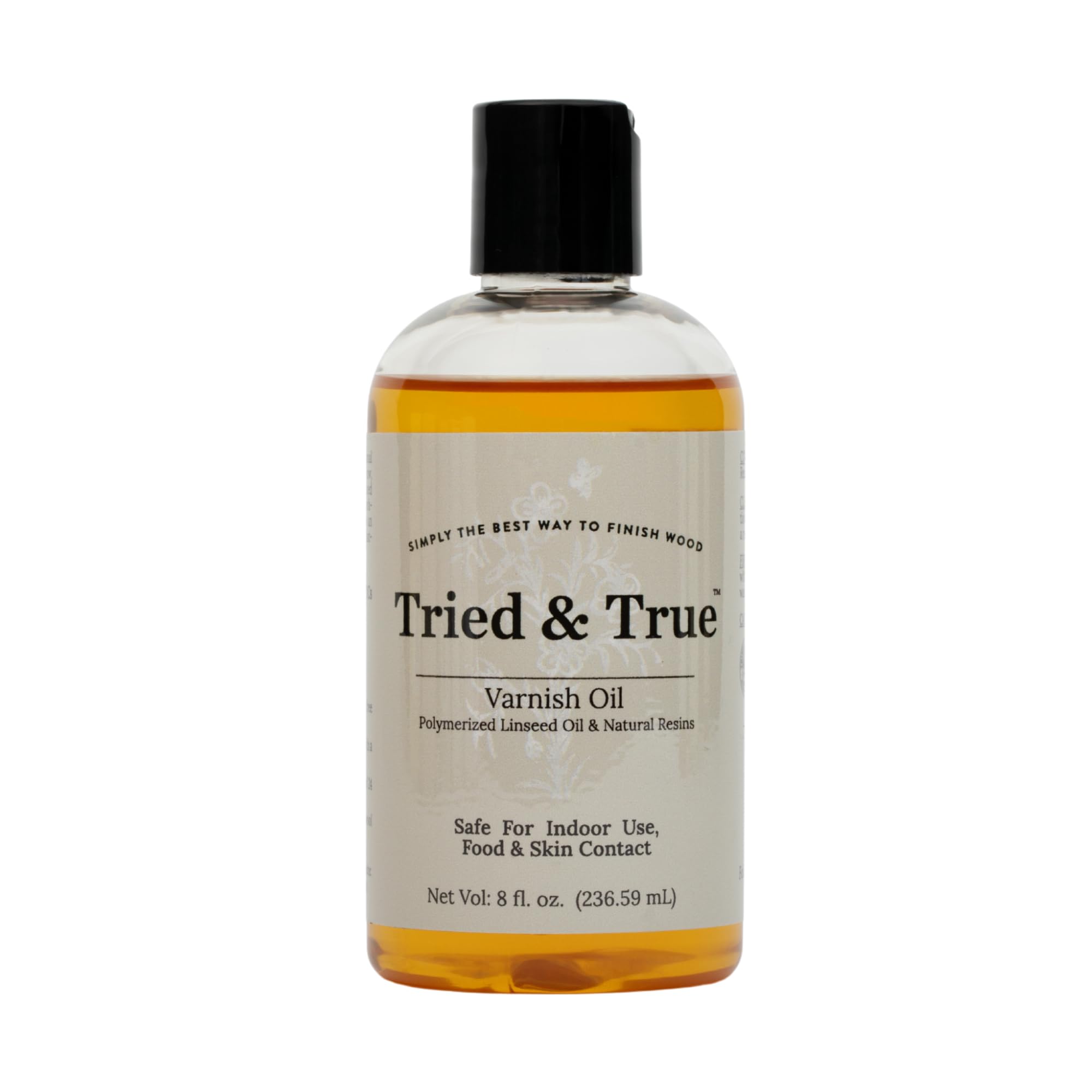
| Tried & True Superior Varnish Oil & SealerFood-Safe Pick | Food-contact pieces | Linseed oil & pine resin | Sheer | 2.5–3 sq ft per 8 fl oz | Amazon |
| General Finishes Oil Base Gel Stain, Georgian Cherry | Even color on tricky woods | Oil-based | Satin | 35–50 sq ft | Amazon |
| Watco 65241 Danish Oil, Cherry | Restoration work | Oil-based | Hand-rubbed | Up to 170 sq ft | Amazon |
| Varathane Outdoor Spar Satin Urethane | Outdoor and UV exposure | Water-based | Satin | 87 sq ft | Amazon |
Detailed Reviews
1. Old Masters 80308 Gel Stain Cherry
Our pick — 4.5+★ from 950+ verified ratings; the strongest balance of quality and price.
The pint that covers the most project ground for the least fuss — and the crowd favorite here, sitting at 4.5+ stars across 900+ ratings.
If you want one can that handles the most jobs on cherry, this is the pick. It is a gel stain, meaning a thick, jelly-like stain that clings to the surface instead of running, so it stays where you put it and does not drip down cabinet faces. The 16-fluid-ounce pint carries a coverage range of 300 to 500 square feet, the widest span in this whole group — and twice the liquid of the Tried & True 8-ounce bottle, which is exactly the difference between a cabinet run and a touch-up job.
What wins people over is coverage, followed closely by the color. Owners describe a rich, easy color that can be layered to hit the exact shade they want, and it is often mentioned right next to General Finishes gel stain as an equal performer. One buyer note worth passing along, from someone who used it on garage doors: “Gel stain arrived early. Great for fiberglass; quart covered 2 single + 1 double garage door.” That fiberglass compatibility is a real bonus for cherry-adjacent work, because it means the same can handles your woodwork and your metal or fiberglass trim without a separate product.
The honest catch is shade. Cherry gel stain runs dark, and a few people found it came out darker than they pictured, with one noting it lands “almost black” in heavy coats. That is a product of the matte, buildable formula — thin coats and a test patch on scrap keep you in the warm reddish-brown zone instead of overshooting. It also finishes matte, so if you want a shine you will add a topcoat over it. Compared with the General Finishes container, this one is physically larger at 4.25 x 4.25 x 2.69 inches versus 2.88 x 2.88 x 3 inches — more stain in the jug for bigger projects.
What Earns It First Place
- 300–500 square feet of coverage — the widest range here by a wide margin
- Gel consistency clings instead of running, so it works on vertical cabinet faces
- Bonds with metal and fiberglass too, so trim and doors match your woodwork
- Layers from a light wash to a full rich Cherry without going patchy
Where It Asks For Care
- Cherry shade runs dark — thin coats and a scrap patch keep it controlled
- Matte finish out of the can, so a separate topcoat is needed for any gloss
Grab this one: anyone finishing cabinets, doors, or a large surface who wants one can to do the whole job.
Look at the Tried & True instead: if your project is a small food-contact piece where a wipe-on oil suits better than a gel.
2. Tried & True Superior Varnish Oil 8 oz.
The finish you would put on a cherry bowl you actually eat out of.
This one is built for pieces that live close to your hands and your food. It is a blend of linseed oil and natural pine resin — think of it as a plant-based oil that hardens into a soft protective shell — and it is made for interior woodwork, big and small. The maker states it is safe for food-contact items such as fruit bowls and countertops, and also safe as a finish on wooden toys and pet items, which is a narrow and useful lane that a heavy gel stain simply does not fill.
The way you apply it is the whole story. You rub a thin coat on with a lint-free cloth (a rag that leaves no fibers behind) at room temperature, let it sit for a minimum of 60 minutes, then rub it in briskly until the surface feels dry, and let it cure for at least 24 hours. Doing that repeatedly builds depth instead of color, and as owners put it, the finish is “better than expected” on grain that just wants to be warmed up — one reviewer noted five thin coats gave a mesquite desk real depth, applied in Phoenix summer heat with no curing trouble. Because it seals over milk paint and works on bare wood, over an existing stain, or on natural oil finishes, it is a flexible choice for a single fussy heirloom rather than a whole kitchen.
Here is the reality check: the bottle is 8 fluid ounces with a listed coverage of 2.5 to 3 square feet per 8 fluid ounces, so this is a small-project product, not a whole-cabinet can — that is half the liquid of the Old Masters pint above. It is also the heaviest container of the group at 8 ounces, versus the General Finishes at 7.2 ounces, though the difference is trivial in hand. And it demands patience on open-pored woods, so sand and seal those first or the oil sits in the pores.
Best used as: a wipe-on finishing ritual for one prized piece — a bowl, a box, a small tabletop — where you want natural warmth and a food-safe surface over a fast, big-coverage job.
Time cost: a 60-minute dwell and a 24-hour cure, so plan it as a weekend project rather than a same-day one.
Reach for this if: the piece will touch food or hands, and you want a soft, natural sheen rather than a glossy shell.
Look elsewhere if: you are covering large cabinet faces or open-pored wood that you have not sealed first.
3. General Finishes Gel Stain Georgian Cherry

When cherry dining chairs need to match a Georgian Cherry table, this is the can that gets them there evenly.
The defining trait here is body. This is a heavy-bodied gel — thick enough that it does not sink far into the wood the way a thin liquid stain does — and that is exactly what makes it such a steady hand on difficult, uneven surfaces. It is the gel stain that carries the most “finishing feel” of the whole General Finishes line, which means it lays down a lustrous look rather than a flat, soaked-in one. The half-pint container is the smallest format in this group at a 35 to 50 square foot coverage, so read that as a targeted-project amount, not a whole-furniture bucket.
The touch-up crowd swears by it, and buyers report a Georgian Cherry match landing perfectly over light oak dining sets, applied in two coats with a lint-free mini roller and left to dry 24 hours between coats with no wiping. It is the stained-cabinet rescuer too — one kitchen job went Java on the cabinets and Georgian Cherry on the baths, and covered 1990s light oak cabinets with four stain coats that owners described as looking new again. Getting a more even appearance on difficult woods like aspen or pine is the whole point of the heavy body, and the color coverage is broad enough that owners used it to unify everything from unfinished and finished wood to zinc and formica in one to two coats.
Two honest limits. It dries slowly between coats, and a slow dry is the price of that even, stress-free color — owners built in 24 hours between stain coats and 48 at the end. It is also a color-laying product, so thick applications can bury fine grain; sanding before and working in thinner passes keeps cherry’s grain readable. Measuring 2.88 x 2.88 x 3 inches and weighing 7.2 ounces, it is smaller and a touch lighter in the hand than the Old Masters 4.25 x 4.25 x 2.69-inch container, so it is a reasonable shelf companion and not a bulk buy.
Why It Wins Touch-Ups
- Heavy body sits on the surface for an even, controlled coat
- Georgian Cherry color holds a rich, dark reddish-brown look
- Wipes on cleanly with cloth or foam — no drips or splashes
Set Your Expectations Right
- Slow to dry between coats — a 24-hour pause is typical
- Full coverage can hide fine grain; work thinner for a visible figure
Your match: anyone recoloring a dining set, a cabinet run, or a single piece that needs to blend with existing cherry furniture.
Not your match: a quick one-hour touch-up where you cannot spare overnight drying time.
4. Watco 65241 Danish Oil Wood Finish, Quart, Cherry

The quart for breathing new life into old, dry cherry without stripping it back to bare wood.
Danish oil is a blend of oil and varnish in one bottle — the oil soaks in and feeds the wood while the varnish leaves a light protective film on top. That combination makes it a natural fit for tired interior furniture: bare, stripped, or sanded wood, and it covers up to 170 square feet from a single 32-fluid-ounce quart, the largest liquid volume here. It is oil-based and dries to the touch in as little as six hours, and many projects can be finished in under an hour per coat, so you can work in sessions without the piece sitting wet overnight.
Owners use it on restoration projects and tend to report consistent, predictable results, with the product doing exactly what the label says. It gives off that rich, warm, hand-rubbed glow that suits cherry’s natural tone rather than fighting it, and it protects against spills, abrasion, chipping, and peeling. Applied with a staining pad on a hard-to-find color worked out well for owners finishing a mahogany door, who noted a thin coat of 15 to 20 minutes per pass, with runs wiping off easily because the wood simply drinks it in.
Two things to know going in. It is not really a stain in the color sense, so expecting it to turn maple cherry is a stretch — owners who tried it on maple found a reddish tint they did not love and said it would suit actual cherry better, so test on your wood first. And it needs the longest cure before normal use or before you topcoat it. If you want it to dry fast and behave like a finish you can sit on within hours, this is not that product. At 2 pounds and 32 fluid ounces, it is the biggest container in this group by volume, so one quart genuinely does go a long way.
Who it is built for: a refinisher reviving old cherry furniture or trim who wants a warm, natural, hand-rubbed look and does not mind a slow cure.
The real caveat: on wood whose natural tone is far from cherry, expect a reddish tint rather than a color match — a scrap test settles it.
Choose this when: the wood is genuine cherry or already close to it, and you want to restore depth without a colored stain.
Pass on it when: you need a fast-drying, sit-on-it-today finish or a heavy color shift.
5. Varathane Outdoor Spar Satin Urethane

A clear-coat built for the pieces that live outside and take the sun head-on.
This is not a color product — it is the protective topcoat you put over a finish so the sun does not bleach it and rain does not soak it. It is a water-based spar urethane, meaning a clear film-forming sealer made for exterior wood surfaces such as furniture, doors, windows, fences, and trim. It dries to the touch in just 30 minutes, covers up to 87 square feet per quart, and you can recoat after two hours, which the maker notes is fast enough to apply three coats in a single day. Cleanup is soap and water, so no solvents or special rags.
Owners describe a finish that goes on completely clear and stays that way. It enhances grain without altering color and seals against water, and the weather and UV resistance is the whole reason to pick it over a plain interior topcoat — the non-yellowing formula keeps the wood looking right longer instead of drifting amber. A clear coat of it sealed a crackle-painted bench; elsewhere it was used as the clear topcoat on cornhole boards that live outdoors, where the color held and the water resistance did its job over a design. It is low odor and dries without leaving brush strokes, with a foam brush or sponge giving the smoothest result.
The honest trade-off is that water-based spar urethane and oil-based spar varnish do not age the same way — this one leans toward the easier, faster, low-odor experience, and the durability question gets divided responses depending on how much constant sun and weather the piece faces. It also goes on thin and dries very fast once you start, so work quickly and keep a wet edge. At 946 milliliters and a listed weight of 1 kg, it is a substantial can, so a single quart is plenty for that furniture set or door.
What It Handles Best
- Dries to the touch in 30 minutes and recoats after 2 hours
- Non-yellowing clear finish keeps cherry tone true under the sun
- Water-based formula cleans up with plain soap and water
- Low odor and no brush strokes on wood surfaces
The Honest Trade-Off
- Durability in constant sun is a judgment call versus oil-based spar varnish
- Thin, fast-drying coat demands quick, even passes with a foam brush
Built for this: outdoor furniture, doors, trim, or any cherry piece that faces sun and weather and needs a clear shield.
Wrong tool for: adding color to bare wood — this seals, it does not stain.
Know the Specs
Base Material: Oil-Based vs Water-Based
Oil-based products, like the gel stains and the Danish oil here, sink into the wood and tend to deepen the grain and warm the color, which suits cherry’s natural reddish-brown tone. Water-based products, like the Varathane Spar Urethane, sit on top as a clear film and dry with water cleanup. Cherry can absorb oil unevenly, so test any oil product on scrap; a water-based topcoat goes on more evenly but adds no color.
Coverage: Read It Before You Buy
Coverage tells you how much surface one container finishes, quoted either as a range or a per-volume figure. A wide range such as 300 to 500 square feet means it handles a whole cabinet run; a small figure like 2.5 to 3 square feet per 8 fluid ounces means a touch-up bottle. Buying too little means a second trip mid-project and a color-match risk, so check the coverage number against your square footage before checkout.
Common Questions
Do I need to stain cherry wood at all?
Will a Cherry finish turn my wood red or orange?
Can I use an outdoor urethane on indoor cherry furniture?
How do I stop gel stain from drying too dark on cherry?
What is the difference between Danish oil and a gel stain?
How long should I wait between coats of these finishes?
Is Tried and True Varnish Oil safe for a cherry salad bowl?
Do I need a topcoat over a gel stain or an oil finish?
Which finish covers the most surface in one container?
Why is my gel stain taking so long to dry?
The Bottom Line
For most people working with cherry, the finishes for cherry wood winner is the Old Masters 80308 Oil Based Gel Stain because it covers the most surface at 300 to 500 square feet, clings to vertical faces without dripping, and builds color in controllable layers — and it is the crowd favorite at 4.5+ stars across 900+ ratings. If you want a food-safe, wipe-on finish for a bowl or box, grab the Tried & True Superior Varnish Oil. For evening out a tricky cabinet run, the General Finishes Georgian Cherry gel stain is the one to reach for. And for restoring tired cherry without adding color, the Watco Danish Oil does the job with the largest quart in this lineup. Pair whichever you choose with a UV-resistant clear topcoat like the Varathane Spar Urethane for any piece that sits outdoors, since a cherry project only stays rich when it is sealed against the sun.
How we choose
We do not accept paid placement. Every pick is matched to a real buyer and a real use-case; we do not hands-on test units.
Sources
Specifications: manufacturer listings and product documentation. Review insights: verified customer reviews, as of October 2026. Pricing: not shown on this page (it changes often); check the current price via the retailer link.
As an Amazon Associate, Aappliancez earns from qualifying purchases. This does not affect which products we feature.