Disclosure: Some links in this post are affiliate links. As an Amazon Associate I earn from qualifying purchases, at no extra cost to you. Learn more
Specs are compiled from manufacturer listings and verified buyer reviews and can change over time — please confirm the key details on the product page before buying.
If you are tired of dragging a hose to the same giant planter every single day, the fix is not more water — it is what you bury around the roots. A good filler for large planters holds moisture down where roots drink, lets the extra drain away, and keeps the soil from baking into a brick under the summer sun. Get that layer right and a big pot can go days between waterings instead of hours.
This guide is built by comparing the manufacturers’ published specifications and the patterns across verified customer reviews, so you get each pick’s real strengths and trade-offs instead of marketing spin.
Big containers fail for one boring reason: water runs straight through or sits and rots. What follows is a practical shortlist of the best filler for large planters, covering moisture-holding mulch, drainage grit, and aeration media so you can match the material to the pot you actually own. The best filler for large planters keeps roots evenly damp without turning the bottom of the pot into a swamp.
Top Picks
How To Choose The Best Filler for Large Planters
Think of a large planter as two zones. The top layer is the mulch — the stuff you see, which blocks sun and slows evaporation. The lower layer is the structure — the grit or chips mixed into soil so water can move down and air can move in. Most disappointing big pots are missing one of those two jobs.
Decide if you need a topper or a mixer
A mulch-style filler sits on the surface and shields exposed soil from direct heat and sunlight, which is why it cuts how often you water. A drainage-style filler gets blended into the potting mix so excess water escapes instead of pooling around the roots. Many gardeners run both: chunky chips on top, gritty rock worked through the middle.
Do the volume math before you buy
Compressed blocks look small on the shelf and then double or triple once you add water, so expansion volume is the number that matters. Check the stated volume on the listing and compare it to the capacity of your pot. Overfilling a container with pure mulch can leave roots sitting in a layer that never dries out.
Weigh the mess factor
Gritty volcanic media and clay pebbles usually arrive dusty and need a rinse before they touch a drain or a windowsill. That is normal, not a defect — but it is a real twenty-minute chore, and it is worth knowing about before the bag is open in your living room.
Side-by-Side Comparison
| Model | Best For | Form | Stated Volume | Weight | Amazon |
|---|---|---|---|---|---|
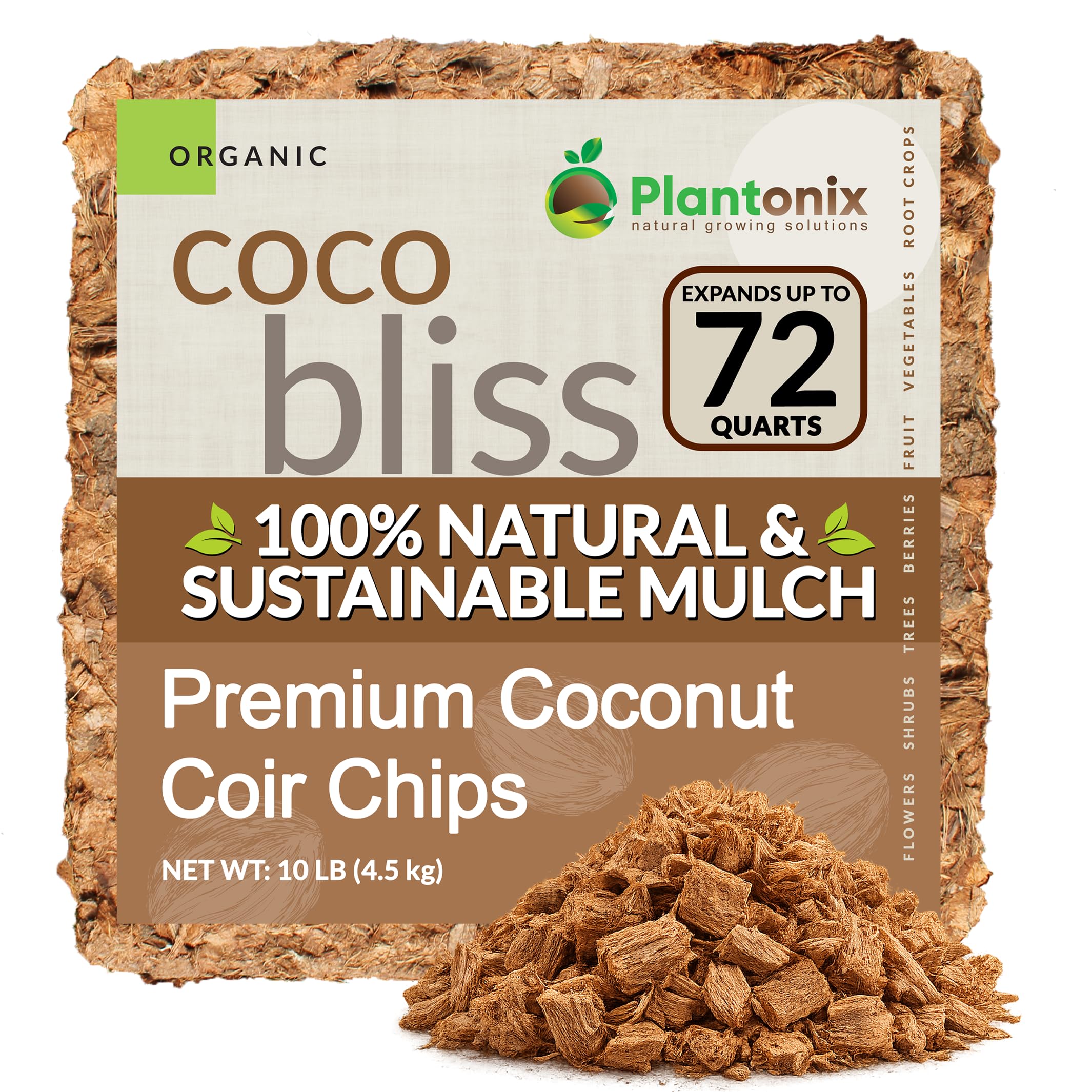
| Coco Chips Mulch Brick (10lbs)★ Best Overall | Mulching the top of big outdoor pots | Compressed brick | 15 gallons | 10 lb block | Amazon |
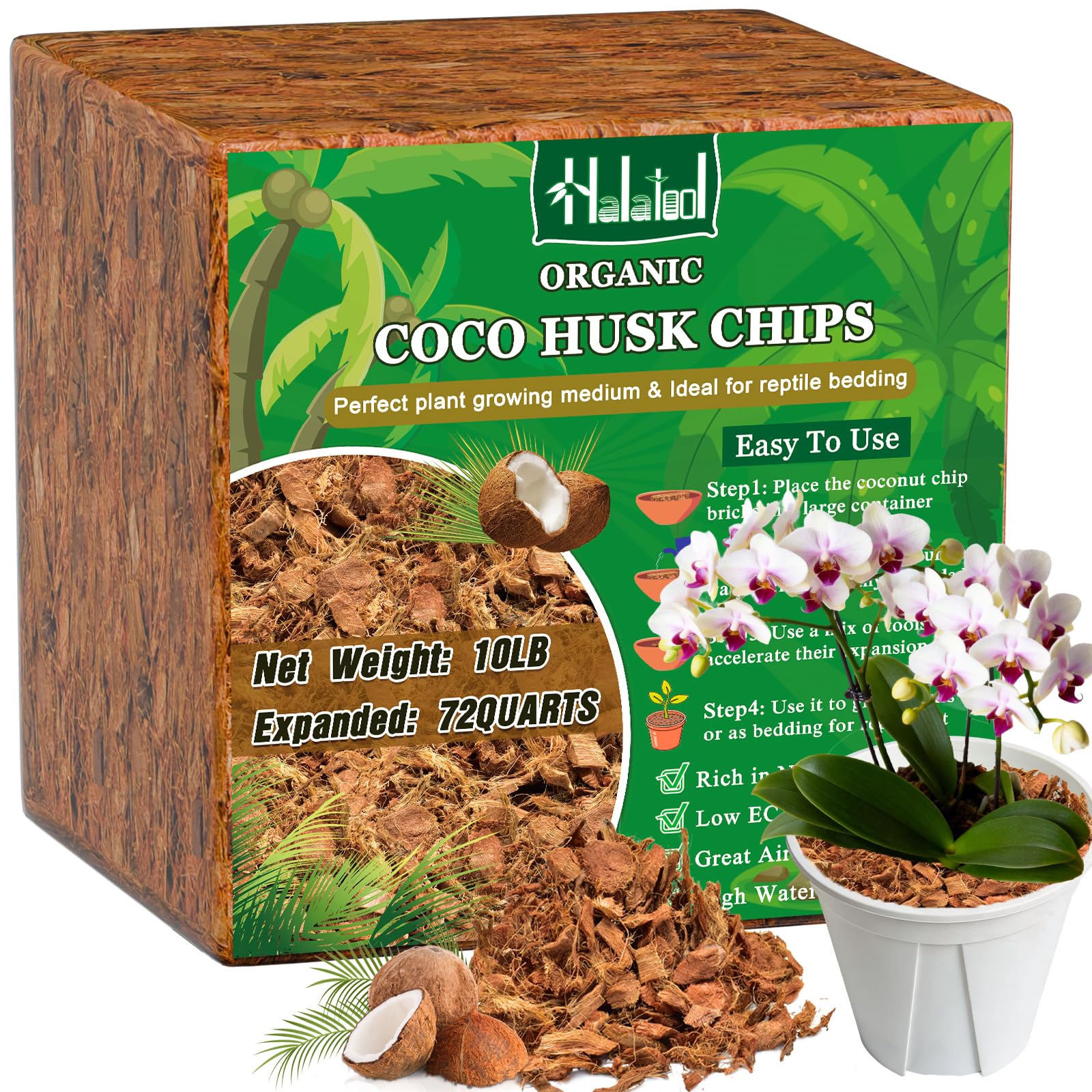
| Halatool 10LBS Coco Husk ChipsBest for Moisture Lock | Root-zone mulch that stays put in wind | Compressed brick | 72 quarts | 3.87 kg | Amazon |
| 7lb Mix Horticultural Lava Rock Pebbles | Drainage for succulents, cacti and aroids | Loose gritty mix | 7 liters | 3.51 kg | Amazon |
| 20 QT Professional Grade Horticultural Perlite | Lightening heavy potting soil | Loose coarse perlite | 20 quarts | 4.62 kg | Amazon |
| Voulosimi Clay Pebbles (18LB) | Reusable hydroponic and semi-hydro setups | Loose clay pebbles | — | 17.69 pounds | Amazon |
Detailed Reviews
1. Coco Chips Mulch Brick (10lbs)
Our pick — 4.5+★ from 350+ verified ratings; the strongest balance of quality and price.
One brick, fifteen gallons of mulch, and a lot less time spent holding a hose.
For anyone filling a half-barrel, a raised bed, or a line of big terracotta pots, this is the most forgiving place to start. It is a single compressed 10 lb block of coconut husk chips, and once you add water it expands into a stated 15 gallons of loose medium. That expansion is the whole appeal. You store a brick in a cupboard, hydrate it in a wheelbarrow, and end up with enough top-dressing to cover a serious amount of exposed soil.
The job it does is evaporation control. The chips sit on the soil surface and shield it from direct heat and sunlight, so the mix underneath stays damp and cooler instead of crusting over. That is also why it earns the top spot here — quality is the aspect it wins on above everything else, and the value story runs a close second. Owners describe it in plain terms, with with reviewers calling it mulch that “saved my peach tree” and pushed out new growth. It also draws a following among hoya growers who use the straight chips as their whole medium, pre-soaking first and repurchasing.
Expect a working mulch, not a decorative showpiece. The block is not uniformly chunky — it carries a fair amount of fine coir (the soft, dust-like coconut fiber) mixed in with the bigger pieces, and buyers report the odd white fibrous fleck showing up in the mix. That is not a reason to stop buying; it just tells you this is built to do a job. The other practical catch is hydration time, so plan on soaking it well before it goes anywhere near a plant.
What works in the real world
- One compact 10 lb brick hydrates out to a stated 15 gallons, so storing it takes almost no space before use
- Shields exposed soil from heat and sun, which is exactly the mechanism that slows how fast a big pot dries out
- Coconut husk stays light and airy rather than compacting the way some wood mulches do
- Simple routine: hydrate the block, spread the chips, done
Worth knowing before you open it
- Texture runs chunky-plus-fine rather than uniform, so it is not a tidy ornamental topper
- Occasional white fibrous flecks mixed through the chips
- Needs a proper soak to fully break apart, so allow time before planting day
Reach for this one if: you want to cover the surface of several large containers and cut down how often you water them.
Look elsewhere if: you need a filler blended down through the soil for drainage — this is a topping, and the gritty picks below handle that job.
2. Halatool 10LBS Coco Husk Chips
The mulch that stays put through a windy afternoon beats the mulch that ends up on the lawn.
This one covers more ground than the pick above it. Both are compressed coconut husk, but the Halatool brick states a 72-quart expansion (72 quarts is about 18 gallons of loose mulch), and it carries more weight at 3.87 kg versus 3.51 kg for the lava rock mix below — a difference you feel when you lift the box, and one that matters when you are carrying it across a yard. The stated brick dimensions are 11.81 by 11.81 by 5.11 inches, so it stores flat in a shed.
What owners keep coming back to is how well it holds moisture without shifting. It gets used as a root-zone mulch (a layer spread over the soil around the roots) on top of a cardboard or paper layer, and owners mention it suppressed weeds, kept the soil cool, and stayed exactly where it was put through wind, weeding, and watering. In a hot summer it is the difference between watering daily and watering occasionally — one gardener reported vegetable planters holding moisture through 95 degree weather that would otherwise have needed daily watering. Chunky quarter-sized chips dominate, with roughly a 70/30 split of large chips to fine coir, and it expands to fill most of a 25-gallon tote. Aroid growers (people who grow plants like monstera) like the chunk size for chunky monstera mixes and note it holds moisture without producing mildew.
The honest trade-off is fine coir. If you want a bag of uniformly large chips, this is not that — the fine material comes along with the chunks, and the biggest practical gripe is simply that a larger package would suit heavy users better. For targeted root-zone mulching, though, the quality is the thing that wins people over, followed closely by value.
Wind-proof topping: the chips lock together well enough to stay in place through watering and gusts, which is not something every light mulch manages.
Best suited to: outdoor vegetable and citrus planters that need steady moisture through a hot stretch.
Think twice if: you want perfectly uniform jumbo chips — this brick deliberately mixes fine coir in with the chunks.
3. 7lb Mix Horticultural Lava Rock Pebbles

For the pots that rot when you love them too much, this is the drainage half of the equation.
Where the coco picks sit on top, this mix goes down into the soil. It is a stated 7 liters of volcanic gritty mix arriving at 3.51 kg, sold as a potting soil amendment for succulents, cacti, and bonsai. The formulation is built around one idea — move water through the root zone fast so drought-loving plants never sit wet. It can also be blended into ordinary soil to improve drainage, and it doubles as a colorful top dressing for terrariums and fairy gardens.
Houseplant growers have quietly adopted it as a budget stand-in for pon, the pricier semi-hydro growing medium. The reports are consistent: alocasias and aroids take to it, it drains well while still holding enough moisture, and it aerates roots properly. One grower who could not root corms in perlite, stratum, or moss got roots by planting them in this rock with root drops and fertilized water. It also gets credit for discouraging gnats from breeding in pots, and the colors shift when the medium is wet, which makes top dressing easy to read.
Budget a rinse, and then some. The mix arrives dusty — the recurring complaint is sediment (fine dirt and grit that settles out of the mix), and the sharpest warning comes from collectors who spent roughly two hours sifting a bag and found debris and tiny blue plastic bits. In an apartment, that sediment is a genuine problem because you cannot wash it down the drain without risk. Rinse outdoors in a bucket and let it settle before anything goes near a sink.
Real-world payoff: drought-tolerant plants get the fast-draining, well-aerated root zone they need, and the medium stays functional as a decorative top dressing too.
Fits best: succulent, cactus, and alocasia collections where overwatering is the constant risk.
skip it if: you cannot rinse a dusty medium outside — the sediment and stray debris are the trade-off here.
4. 20 QT Professional Grade Horticultural Organic Perlite

Big, chunky perlite that keeps a heavy potting mix from packing into concrete.
Heavy soil in a large planter is the quiet killer — it compacts, water stops moving, and roots suffocate. This is the stated 20-quart bag of coarse horticultural perlite that solves that. It arrives at 4.62 kg in a 640-ounce unit, and the whole point of the material is porosity: it opens up a dense mix so excess water can drain away from the roots instead of sitting on them. It is rated professional grade, and it will not weigh down the root mass the way a fine, heavy amendment can.
The size is the headline, and it is the reason this bag earns a spot over generic perlite. Owners describe it as consistently large and chunky, which is exactly what you want when you are building a chunky aroid potting mix — uniform coarse pieces create air pockets that fine perlite simply cannot. A houseplant grower called it the key ingredient for a chunky aroid mix and was glad to find perlite that stays large from bag to bag. It also works as a straightforward drainage boost for cactus and succulents, and the appearance matches the listing photos.
The bag is the weak point. It arrives fairly flimsy, so transferring it into something sturdier right away is a sensible first move. As for the dust — that is the complaint you will read about most, but it is far from universal. Many customers note no meaningful dust issue at all, and one noted that the contents contained debris like stray pieces of foam and pottery that were easy to pick out by pan-shaking rather than rinsing under a tap.
Why it earns its place: coarse, uniform pieces are what make a chunky potting mix actually aerate, and this bag delivers that consistently from top to bottom.
Pick this up when: you are mixing your own chunky blend for aroids, succulents, or any pot where the soil currently drains badly.
One caveat: the bag is thin and flimsy, so rehome the perlite the day it arrives to avoid a spill.
5. Voulosimi Clay Pebbles Hydroponic Rocks (18LB)

Buy it once, rinse it, and it keeps working season after season.
Clay pebbles are the only filler on this list you can pull out, clean, and use again — which is why an 18 lb box at 17.69 pounds makes sense for anyone running hydro or semi-hydro long term. These are stated as 0.3 to 0.5 inch, non-toxic, sterile, and pH neutral, with the balanced capillary action clay naturally provides. Set them in a net pot or a tray and they wick moisture upward to the roots while keeping the growing zone open to air.
Versatility is what keeps them in the rotation. Owners use them in lotus planters, bioactive frog enclosures, deep water culture buckets, and as a wicking layer that pulls moisture from a water tray up into a plant pot. Quality and value are the two things this box wins on most, and the longevity reports are genuinely encouraging — one grower reused the same pebbles for three growing seasons with no breakdown. In a six-inch net pot, the pebbles block light into a five-gallon bucket and stay clean. Switchers from other brands notice they are lighter and slightly larger.
Set aside prep time, because this is the dustiest entry here. Rinsing outside and soaking for a full day until the water runs clear is the standard routine before use, and it takes around twenty minutes even when you are efficient. Sizing is also mixed — counts vary between roughly 8 and 16mm rather than landing at one uniform size, and a small number of pebbles arrive cracked, which is normal for a heavy 18 lb box in transit. Neither stops them working; both shape how the first session goes.
Where they pull ahead
- Reusable across multiple seasons, so one box covers years of hydro setups
- pH neutral and sterile, which takes the guesswork out of water chemistry
- Lighter than some competing clay brands while running slightly larger in size
- Blocks light in net pots and wicks moisture upward to roots
Plan for this first
- Arrives very dusty and needs an outside rinse plus a long soak before use
- Pebble sizes vary across a range rather than one exact size
- A few cracked pebbles in a heavy box are normal, not a defect
The case for it: long-term hydro and semi-hydro growers get a medium that survives clean-up and goes straight back to work.
Not the one for you if: you want zero prep — budget a full soak and an outdoor rinse before the first use.
Know the Specs
Expansion Volume and Yield
Compressed bricks are sold flat and small, then swell once water is added, so the yield number is the honest measure of what you get. Look for a stated volume — a brick listed at 72 quarts is meant to fill a much larger space than the box suggests on the shelf. Match that figure against your container capacity so you are not left short mid-project.
Grit Size and Porosity
Particle size decides whether a medium aerates or compacts. Coarse, chunky pieces leave air pockets that keep roots breathing and let extra water escape downward. Fine material fills those gaps and packs tight. For a large planter that stays wet too long, coarse grit worked into the mix is usually the fix.
pH Neutrality and Reusability
A pH neutral medium means it should not swing the acidity of the soil around it, which keeps things predictable across a season. Reusable materials like clay pebbles can be rinsed and returned to service again and again, while organic mulches break down over time and need topping up.
Weight and Handling
Heavier media stay in place better on a windy balcony, while lighter mixes are easier to carry and spread. A 10 lb block that expands into 15 or 72 quarts travels much more easily than the same volume of loose material in a sack.
Common Questions
Can I fill a large planter with coco husk chips alone?
How long does it take a compressed coco brick to expand?
Do I need to rinse lava rock pebbles before putting them in a pot?
Is perlite or lava rock better for drainage in a large container?
How much mulch do I need to top a big planter?
Will clay pebbles help a planter that stays too wet?
Does coco husk mulch blow away on a balcony?
How often should I replace filler in an outdoor planter?
Can I mix perlite and coconut husk chips together?
The Bottom Line
For most people filling big containers, the winner among the best filler for large planters is the Coco Chips Mulch Brick, because a single 10 lb block expands to a stated 15 gallons of moisture-holding mulch that shields exposed soil from heat and sun. If steady moisture through a hot, windy summer is your priority, the Halatool Coco Husk Chips covers more ground at 72 quarts and stays put. And for pots that rot because the soil never drains, the 7lb Lava Rock Pebbles grit is the one to work into the mix. Whatever you choose, hydrate or rinse it before it meets a plant — that single prep step is what separates a filler that works from one that sits there doing nothing.
How we choose
We do not accept paid placement. Every pick is matched to a real buyer and a real use-case; we do not hands-on test units.
Sources
Specifications: manufacturer listings and product documentation. Review insights: verified customer reviews, as of October 2026. Pricing: not shown on this page (it changes often); check the current price via the retailer link.
As an Amazon Associate, Aappliancez earns from qualifying purchases. This does not affect which products we feature.