Disclosure: Some links in this post are affiliate links. As an Amazon Associate I earn from qualifying purchases, at no extra cost to you. Learn more
Specs are compiled from manufacturer listings and verified buyer reviews and can change over time — please confirm the key details on the product page before buying.
If your border goes flat the moment the first frost hits, dwarf maiden grass and its close ornamental cousins hold their form through cold and keep a living screen standing all winter. This guide narrows the field to five proven performers and matches each one to your soil, your light, and how much watering you are willing to do.
This guide is built by comparing the manufacturers’ published specifications and the patterns across verified customer reviews, so you get each pick’s real strengths and trade-offs instead of marketing spin.
You will see which varieties stay compact, which tolerate part shade, and which need a spot in full sun only. We have organized the five picks so the one with the strongest overall track record leads the list — and by the end, choosing a best dwarf maiden grass for your border or rock garden will feel straightforward.
Top Picks


How To Choose The Best Dwarf Maiden Grass
The biggest mistake new buyers make is picking a grass by how tall it looks in a photo. Mature height is what actually determines whether the plant stays a compact border edger or turns into a four-foot hedge. Every pick on this list has a published height and spread — check that number against the space you are planting into before anything else.
Match the mature height to the space you actually have
Dwarf varieties top out around 4 to 6 inches, which suits rock gardens, path edges, and tight container rims. Taller sorts such as zebra grass reach 4 to 8 ft., so they work as privacy screens rather than tidy borders. If you plant a tall grass in a small gap, it will swallow whatever sits beside it.
Check USDA hardiness zones and light exposure
Each listing names a hardiness zone range — the coldest winter the plant tolerates — and a light requirement. A grass listed as full sun and partial shade is flexible; a spec that lists only full sun needs at least six hours of direct light. Bare-root and container plants shipped outside their zone often arrive damaged, and a listed zone is the fastest gauge.
Factor in water needs and how fast the plant establishes
Most ornamental grasses list moderate watering, and several are drought tolerant once the root system takes hold. That second part matters: the first season in the ground is the thirsty one. A 4-inch container gives the plant a head start on an established root ball, while bare plants take longer to show movement.
Side-by-Side Comparison
| Model | Best For | Mature Height | Hardiness Zones | Light | Amazon |
|---|---|---|---|---|---|
| Zebra Grass 3 Plants in 3 Separate 4 Inch Containers★ Best Overall | Privacy screens and back borders | 4–8 ft. | 4–9 | Full Sun, Partial Shade | Amazon |
| 3 Hamlen Grass in 4 Inch ContainersBest Fall Color | Golden fall color and shrub contrast | — | 4 | Full Sun, Partial Shade | Amazon |
| Feather Reed Grass Karl Foerster | Drought-prone beds and prairie-style plantings | — | 3 | Drought Tolerant | Amazon |
| Perennial Farm Liriope ‘Variegata’ | Shaded borders and edging | 12 inches | 4–10 | Part Shade to Full Shade | Amazon |
| Dwarf Mondo Grass (Florida Foliage) | Rock gardens and tight edging | 4–6 inches | — | Full Sun | Amazon |
Detailed Reviews
1. Zebra Grass 3 Plants in 3 Seperate 4 Inch containers
Our pick — 4.0+★ from 100+ verified ratings; the strongest balance of quality and price.
The tall screen that ships as three separate pots, ready for immediate planting.
Three 4-inch containers of zebra grass arrive fully rooted and ready to go straight into the ground. You get banded, striped foliage that reaches 4 to 8 ft. at maturity — enough to block a sightline from a patio or mask a fence line. The zone range covers 4 through 9, and the plant takes full sun or partial shade, so it fits a wide strip of the country.
What wins people over is growth: owners talk about these plants settling in and putting on height, not just surviving the shipping box. One buyer reports, “Beautiful plant. I bought 24 containers of the Zebra grasses over the last 3 months. All are thriving.” The mossy, well-wrapped packaging is mentioned repeatedly, which matters for bare-root shipping because soggy or crushed soil is where most mail-order plants fail. Bloom time lands in late summer, when the plumes rise above the striped blades.
Here is the honest catch. Zebra grass is clumping but vigorous, and that 4 to 8 ft. height means it needs a back-border or screen position, not a foreground gap. It also wants moderate watering during establishment, so a spot far from the hose will cost you a season of dragging cans. The seed size aspect gets mixed feelings from buyers; that is aesthetic, not a plant-health issue.
Where it earns its place
- Three rooted 4-inch plants give you a screen faster than a single specimen
- 4 to 8 ft. mature height handles privacy and backdrop duty
- Zones 4 through 9 and partial-shade tolerance widen the planting window
- Late-summer bloom adds vertical interest above the striped foliage
Where it asks more of you
- Needs a back-border or screen slot, not a tight foreground plant
- Moderate watering during establishment
- Seed size draws mixed opinions on appearance
The right buyer: someone who needs a quick privacy screen in a sunny-to-part-shade bed and can water through the first season.
Think twice if: you are filling a narrow edging strip, where an 8 ft. grass will crowd everything beside it.
2. 3 Hamlen Grass in 4 Inch Containers/Dwarf Fountain Grass
Buff plumes arching over golden-russet blades — the fall transformation is the whole point.
Hamlen grass gives you fluffy, buff-colored plumes that arch above the foliage, then foliage that turns golden-russet in fall. Set three of them among shrubs or run them along the back of a perennial bed, and you get contrast against solid green neighbors when everything else is fading. The package is a 3-count of 4-inch containers grown on the seller’s own farm in Rock Island, Tennessee.
Plant quality is the thing buyers praise most, and it tracks with the shipping experience — these arrive as established containers, not slips. What buyers consistently describe is size on arrival being bigger than the listing photo suggested. The seller backs the plants with a five-day guarantee, though that guarantee does not cover plants ordered outside their recommended zone, and shipping in severe heat or cold can arrive non-viable. Plan around mid-to-late spring when you can.
The trade-off to weigh is that this variety is rated for zones down to 4, so colder gardens need to check that number before ordering. Some buyers report plants that did not survive, which is the one thing to watch when mail-ordering live material in extreme weather. The upside is a plant that handles sandy soil and moderate watering without fuss.
Why it works: the golden-russet fall turn is a genuine four-season payoff, and the buff plumes give you cut-flower material without a second plant. Three pots in one order means you can spread them across a bed or cluster them for impact.
What to watch: confirm your zone before you buy. The seller’s guarantee is void for plants outside their recommended range.
Reach for this if: you want fall color and arching plumes in a bed that needs contrast against solid-green shrubs.
Look elsewhere if: you are ordering in a severe heat wave or deep cold snap, where live shipping is a gamble.
3. Feather Reed Grass Karl Foerster

A single pot rated down to zone 3, built for dry beds and cold wind.
Karl Foerster is the grass you plant when your bed bakes in summer and freezes in winter. It carries a drought-tolerant label and a USDA zone 3 rating — the coldest-hardiness figure on this entire list. One 4-inch container per order means you buy exactly the count you need.
Appearance and growth are what earn this plant its following. The review pages sum it up in a buyer’s words: “Compared to the exact same plants I bought from Lowes, these ones were not only fuller, healthier and still alive & doing well 2 years later–the one’s from Lowes are dead.” A large-scale planting report describes 30 bare plants going in the ground in about an hour with a drill-auger, most of them doubling or tripling in size across a summer on drip irrigation.
Now the caveat, and it is the highest-count issue in the feedback: plant quality is mixed, and several orders arrive small. The maker also lists spring and winter as bloom periods, so do not expect midsummer fireworks in year one. If a full, instant clump is what you are picturing, this pot will disappoint on arrival day.
The case for it: zone 3 hardiness plus a drought-tolerant rating is a rare combination for an ornamental grass, and the rapid establishment record makes it a practical choice for large beds and prairie-style plantings.
The honest limit: plants ship small. Expect a modest first season and judge it the following spring.
Built for: dry, exposed sites and gardeners in cold zones who need a plant that shrugs off winter wind.
Not for: anyone who needs a full, instant clump to fill a hole in the border this weekend.
4. Perennial Farm Liriope M. ‘Variegata’ (Variegated Lilyturf)
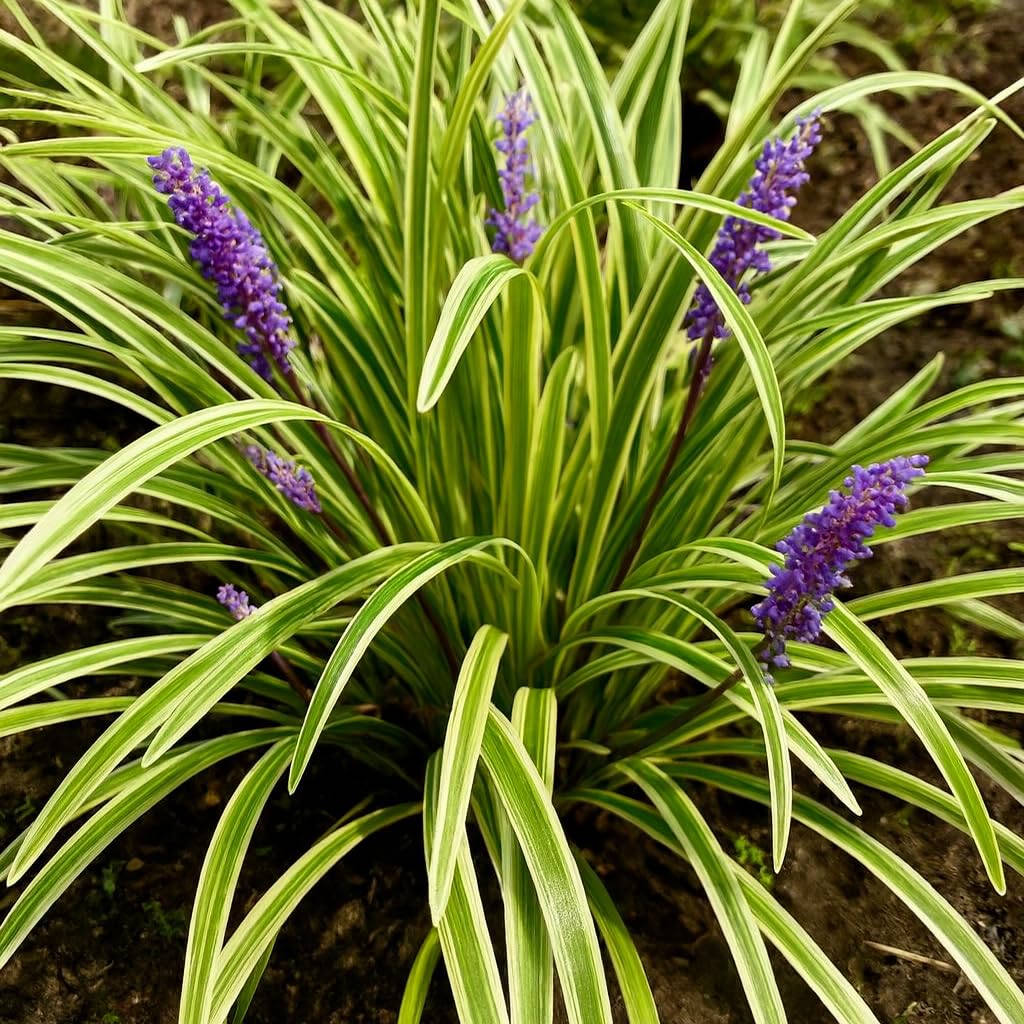
Shade-tolerant edging with striped green-and-cream leaves that hold color all year.
Most ornamental grasses want sun. This lilyturf takes part shade to full shade and still delivers variegated green-and-cream foliage — a striped leaf that gives texture where flowering perennials sulk. It reaches 12 inches, stays compact and clumping, and it is rated hardy across zones 4 through 10, the widest zone spread here.
Lilac-purple flower spikes rise above the foliage from summer into fall, and the plant ships as a single fully rooted 4-inch pot ready for immediate planting. Quality is the thing everyone raves about, and it comes through in the shipping detail — one order of 20 plants arrived moist, uniform, and unbroken, with no wilting. Buyers also describe repeat orders after the first plants took hold.
Two real catches. First, orders shipping between November 1st and March 1st may arrive dormant and trimmed — so the plant looks bare but is not dead. Second, the seller will not ship to Alaska, Arizona, California, Colorado, Idaho, Montana, Nevada, Oregon, Utah, Washington, or Hawaii, which rules this out for a lot of gardeners. Bloom volume draws mixed reports, so plant it for the foliage first.
What earns the spot
- Shade tolerance as a ground cover and edger
- Year-round variegated green-and-cream foliage
- 12-inch mature height suits walkway edging and containers
- Widest zone range on this list at 4 through 10
What to plan around
- Restricted shipping to eleven states including CA, OR, WA and HI
- Winter orders may arrive dormant and trimmed
- Some plants produce few flower spikes
Your pick when: the bed sits in shade and you want a low, striped edger that does not brown out.
skip it if: you live in one of the restricted states — the plant simply will not ship to you.
5. Dwarf Mondo Grass Ophiopogon Nanus
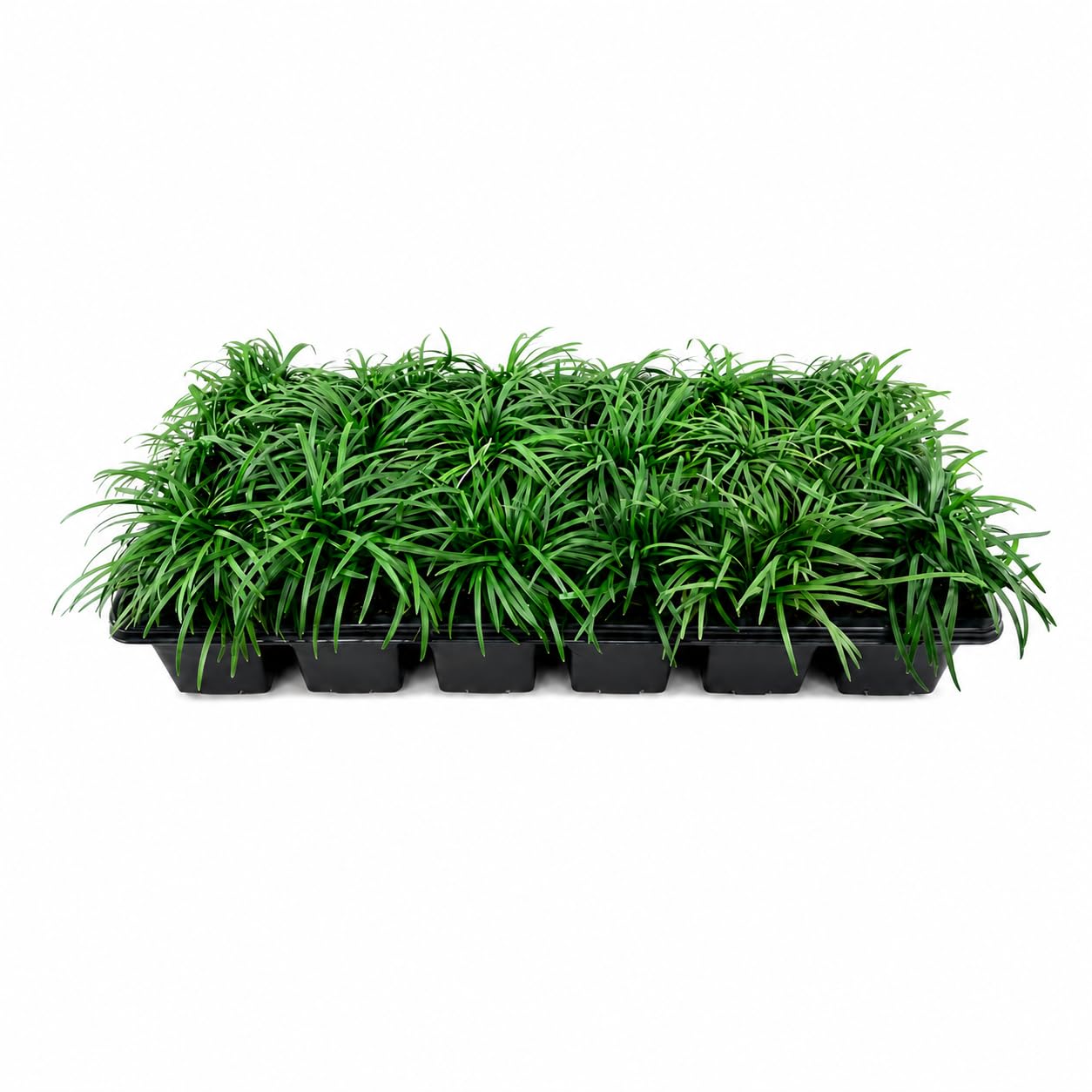
Four to six inches tall, evergreen, and built for tucking between rocks.
Dwarf mondo grass reaches only 4 to 6 inches tall and 4 to 6 inches wide, which makes it the tightest plant here by a wide margin. The dark green clumps stay evergreen and work as edging, rock garden filler, or a lush low groundcover. It is a dwarf form at roughly half the size of the regular species, with thinner leaves than the lilyturf it resembles.
Healthiness and plant quality are what buyers rave about, and the packaging deserves part of the credit — trays arrive with moist soil and every blade still green, even plants from the bottom of the tray. True-to-size 4-inch containers show up as promised. It is drought tolerant once established, but the seller is explicit that a regular watering schedule is needed while the root system matures, and pruning old foliage keeps the clumps tidy.
The trade-off is speed and site. Slow, clumping growth means this is not a plant that fills a bed in one season — you buy it for structure and repeat it for coverage. The listing specifies full sun, so deep shade is not its spot.
Where it wins: the 4 to 6 inch height is genuinely small enough to slip between rocks or line a path, and evergreen foliage keeps that structure through winter.
Where it costs you: slow growth means a single pot does little; you need a run of them for real coverage.
Made for: rock gardens, path edges, and container rims where anything taller would look out of scale.
Worth knowing: buy in multiples if you want coverage — the clumps spread slowly.
Know the Specs
Mature Height and Spread
This is the number you plant by, not the height on arrival. A grass listed at 4 to 6 inches stays a compact edger or rock-garden filler, while 4 to 8 ft. is a screen. Some listings also give a width — the mondo grass runs 4 to 6 inches in both directions, so it forms a tight clump rather than a spreading mat.
USDA Hardiness Zones
A zone is the coldest winter a plant is expected to survive, on a national scale — zone 3 handles deeper cold than zone 9. A wider range means more flexibility. Liriope lists 4 through 10, zebra grass 4 through 9, feather reed down to 3, and Hamlen grass to 4. Ordering outside a plant’s listed zone is the fastest way to lose it.
Light Requirements
Full sun means roughly six or more hours of direct light; partial shade means some relief from the hottest part of the day. Shade-tolerant grasses are the exception — the liriope listing names part shade to full shade, which is what makes it useful under trees where most ornamental grasses fail.
Container Size and Watering
A 4-inch container means the plant ships rooted in soil, which usually settles faster than a bare-root slip. Most grasses here list moderate watering, and the mondo grass and feather reed are drought tolerant once established — but “once established” is the whole phrase: the first season still needs a regular schedule.
Common Questions
Is dwarf maiden grass the same as dwarf mondo grass?
Can I plant ornamental grass in partial shade?
How long does it take for mail-order grass to establish?
Will my grass survive being shipped in hot or cold weather?
Why did my liriope arrive trimmed and bare?
Can liriope be shipped to California or Oregon?
Which ornamental grass is best for a privacy screen?
Do these grasses need a lot of watering once they are in the ground?
What is the difference between zebra grass and feather reed grass?
How many plants do I need for a border edging?
The Bottom Line
For most gardens, the strongest overall choice here is the Zebra Grass 3 Plants in 3 Separate 4 Inch Containers — three rooted pots, a 4 to 8 ft. mature height for real screening, and a zone range from 4 through 9 that covers most of the country. If you need a plant that laughs off dry soil and hard cold, the Feather Reed Grass Karl Foerster carries the drought-tolerant label and a zone 3 rating. And for a shaded edging strip where nothing else will hold color, the Perennial Farm Liriope ‘Variegata’ is the one that keeps its stripes all year.
One practical note: order live plants when the weather is on your side — below 32 F or above 95 F, shipped material may arrive non-viable. Mid-to-late spring is the window the growers themselves point to, past the danger of hard frost, and it is the difference between a plant that sulks and one that takes off.
How we choose
We do not accept paid placement. Every pick is matched to a real buyer and a real use-case; we do not hands-on test units.
Sources
Specifications: manufacturer listings and product documentation. Review insights: verified customer reviews, as of October 2026. Pricing: not shown on this page (it changes often); check the current price via the retailer link.
As an Amazon Associate, Aappliancez earns from qualifying purchases. This does not affect which products we feature.