Disclosure: Some links in this post are affiliate links. As an Amazon Associate I earn from qualifying purchases, at no extra cost to you. Learn more
Specs are compiled from manufacturer listings and verified buyer reviews and can change over time — please confirm the key details on the product page before buying.
If you want a shrub that stays low, keeps its leaves all winter, and never turns into a wall of green you have to prune twice a year, the answer is picking a plant whose mature height is already small — not fighting a big one with clippers. Every pick below tops out at two feet or under in the ground, so the size you plant is roughly the size you keep.
This guide is built by comparing the manufacturers’ published specifications and the patterns across verified customer reviews, so you get each pick’s real strengths and trade-offs instead of marketing spin.
Below you will find five compact evergreens sorted by what they actually deliver — foliage quality, cold hardiness, and how much plant shows up at your door. This breakdown of the dwarf evergreen shrubs under 2 feet makes clear which one suits a low border and which one suits a pot by the porch.
Top Picks
How To Choose The Best Dwarf Evergreen Shrubs Under 2 Feet
The height limit on these plants is the whole reason you are shopping in this narrow shelf. A shrub that matures at two feet fills the front of a bed without swallowing your windows. Get the sun and the pot size right first, and the rest of the decision gets easy fast.
Mature Height Versus What Arrives In The Box
Every listing carries two very different height numbers, and mixing them up is the number one reason buyers end up annoyed. Mature height is the size the plant reaches after years in the ground. Shipping size is the tiny plant in the nursery pot on day one. A shrub with a two-foot mature height can still arrive as a compact starter plant — that is normal, not a defect.
Read the mature spread too, not just the height. A plant that stays 2 feet tall but spreads 3 feet wide will crowd a narrow walkway edge long before it ever gets tall.
Hardiness Zones Decide Whether It Lives Through February
A USDA hardiness zone is a numbered cold band — the lower the number, the colder the winter a plant tolerates. A zone 7 shrub handles winter in a zone 7 yard. Plant that same shrub two zones colder and the cold can take it out, no matter how healthy it looked in autumn.
Know your zone before you click buy. It is the single spec that separates a plant that comes back every spring from one that quietly dies in its first cold snap.
Pot Size Tells You How Much Plant You Get
Nursery pots are measured in gallons, and that volume is a rough signal of root mass. A 1 gallon pot is a modest starter. A 2.5 gallon pot is a noticeably more established root ball, which usually means less babying in the first season.
Bigger pots also weigh more in transit — these ship as living cargo, so a heavier box generally means more soil and more roots rather than more leaves.
Sun, Water, and Deer Pressure
Match the plant to the light your spot actually gets. Some of these want full sun and shrug off drought. Others sulk in harsh afternoon sun and prefer partial shade. Neither is better — they are different tools for different corners of the yard.
If deer roam your property, that is its own filter. A few of these carry deer resistance on the label, and a low evergreen that deer ignore saves you a season of spray-and-hope.
Side-by-Side Comparison
| Model | Best For | Mature Height | Pot Size | Hardiness Zones | Amazon |
|---|---|---|---|---|---|
| Dwarf Burford Holly★ Best Overall | Glossy low hedge | 8 feet | 2.5 gallon | 7-9 | Amazon |
| 1G Silverado SageDrought Champion | Dry, sunny borders | — | 1 gallon | — | Amazon |
| Perfect Plants Jubilation Gardenia | Fragrant white blooms | 3-4 feet | 1 gallon | 7-10 | Amazon |
| Proven Winners Sprinter Boxwood | Shaping and topiary | 24-48 in | 2 gallon | 5-9 | Amazon |
| Pieris jap. ‘Cavatine’ | Shade and deer pressure | 2 feet | #2 container | 5-8 | Amazon |
Detailed Reviews
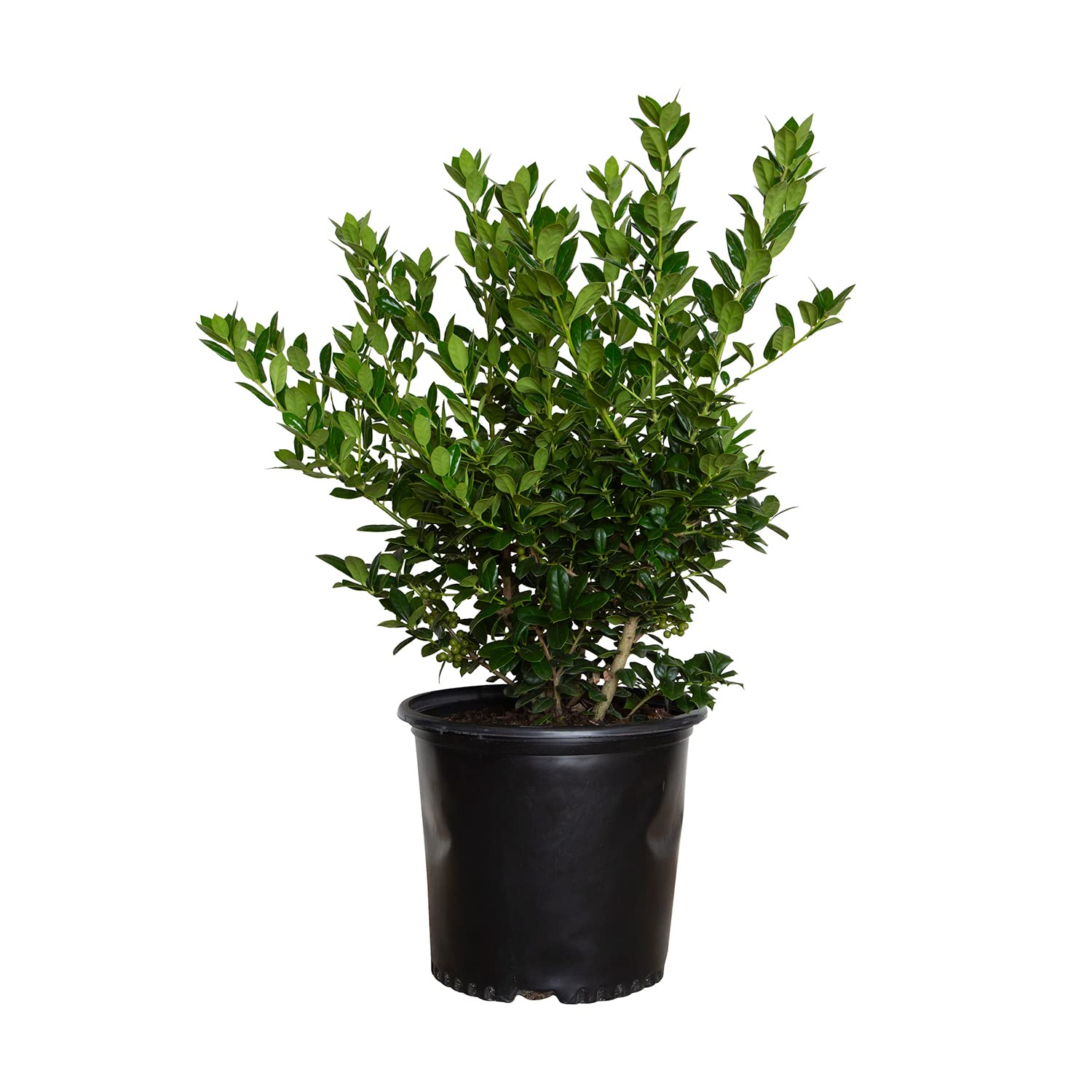
1. Dwarf Burford Holly (2.5 Gallon)
Deep glossy leaves, a bigger pot, and the healthiest arrivals in this whole group.
The spec sheet leads with the pot: 2.5 gallons of soil with a plant fully rooted in it, shipped that way. That is the largest nursery pot on this list, and it shows in the box weight — 15 pounds, against 4 pounds for the Jubilation Gardenia above. More soil and more root ball means a plant that settles into your bed fast instead of spending a season recovering from the trip.
What wins people over is the foliage quality, and the arrival health runs right behind it. The leaves come in that deep, polished green holly shade, and the plant lands at your door healthy and undamaged. As buyers put it, “I installed them almost a month ago and they are happy.” That is the whole pitch here: a shrub that goes in the ground looking like it belongs there.
Here is the honest catch, and it is a big one for this particular shelf. The listing puts the mature size at 6-8 feet tall and 8-10 feet wide — this is a dwarf holly only relative to the standard Burford, not a two-foot plant. If you need a true knee-high evergreen for a walkway edge, read the Pieris and Boxwood entries below instead. Buy this one as a low-ish hedge you will keep clipped, in zones 7-9, and it earns its keep. Berry production depends on whether the plant you receive is male or female, and the seller ships either.
What earns it first place
- The 2.5 gallon pot is the largest here — an established root ball from day one
- Glossy deep green leaves hold their color through winter in zones 7-9
- Arrives healthy and intact, with foliage quality as its standout strength
- Tolerates little to no watering once established
Where it bends the brief
- Matures at 6-8 feet tall and 8-10 feet wide — not a true two-foot dwarf
- Cannot ship to Hawaii or Alaska
- You do not choose male or female, so fall berries are a coin flip
The right yard for it: a zone 7-9 property that wants a dense, glossy green hedge it can shear to a low line each spring.
Look past it when: your plan is a genuinely two-foot specimen, because the mature spread reaches 8-10 feet.
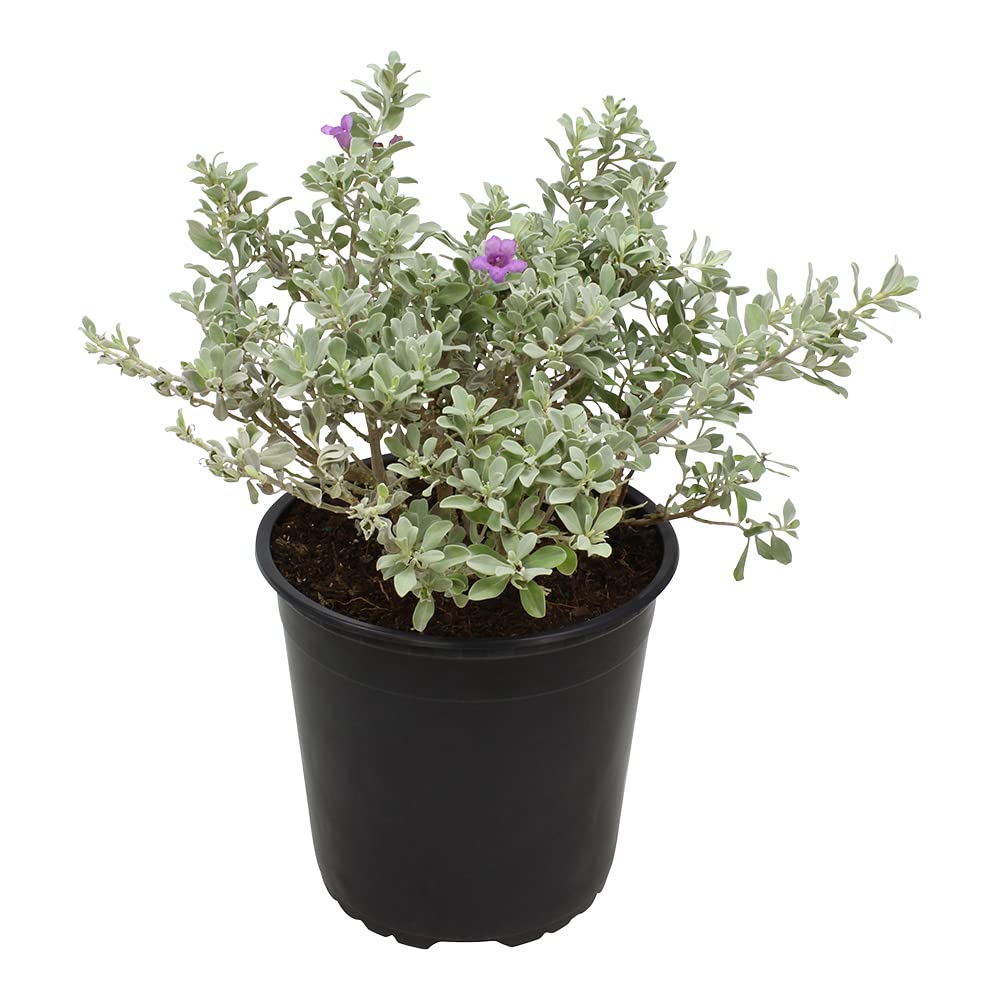
2. 1G Silverado Sage Plant
The shrub that shrugs off a baking sun and still looks silver-blue doing it.
For a hot, dry strip along a driveway, the Silverado sage is the most forgiving plant on this list by a wide margin. It wants full sun, it tolerates drought, and it does not need a drip line to look good. Group it with other drought-tolerant evergreens and it just quietly does its job, season after season.
Arrival health is the thing owners talk about most, and appearance is a close second. The plant comes packed with care in a 1 gallon nursery pot, ready to drop into a bed or pop into a decorative planter for the porch. As one purchase sums up, it arrived “larger and more mature sized than expected” — a pleasant reversal of the usual live-plant letdown. The winter blooming period and lavender-toned flowers add a soft color note to an otherwise foliage-driven border.
The recurring gripe is size, and it cuts both ways. Plenty of buyers are delighted with the volume of plant they get, while others find theirs smaller than the listing promised. A few boxes arrive with broken branches after the trip. Neither is a reason to write off the plant — it is a shipping-luck issue, and this is a shrub that recovers quickly once it is in the ground with sun on it. Give it a permanent spot and it rewards you with a low, silvery mound that asks almost nothing.
Best fit out there: water-wise front yards and sun-baked borders where a plant has to survive inattention and still look interesting.
Set the expectations right: it is a 1 gallon starter, so judge it a season from planting, not the day the box opens.
Reach for it if: your soil bakes and your hose lives in the shed.
Give it a miss if: you want a plant that arrives already full-sized — set it in the ground and let a season pass.
3. Perfect Plants Jubilation Gardenia Live Plant, 1 Gallon
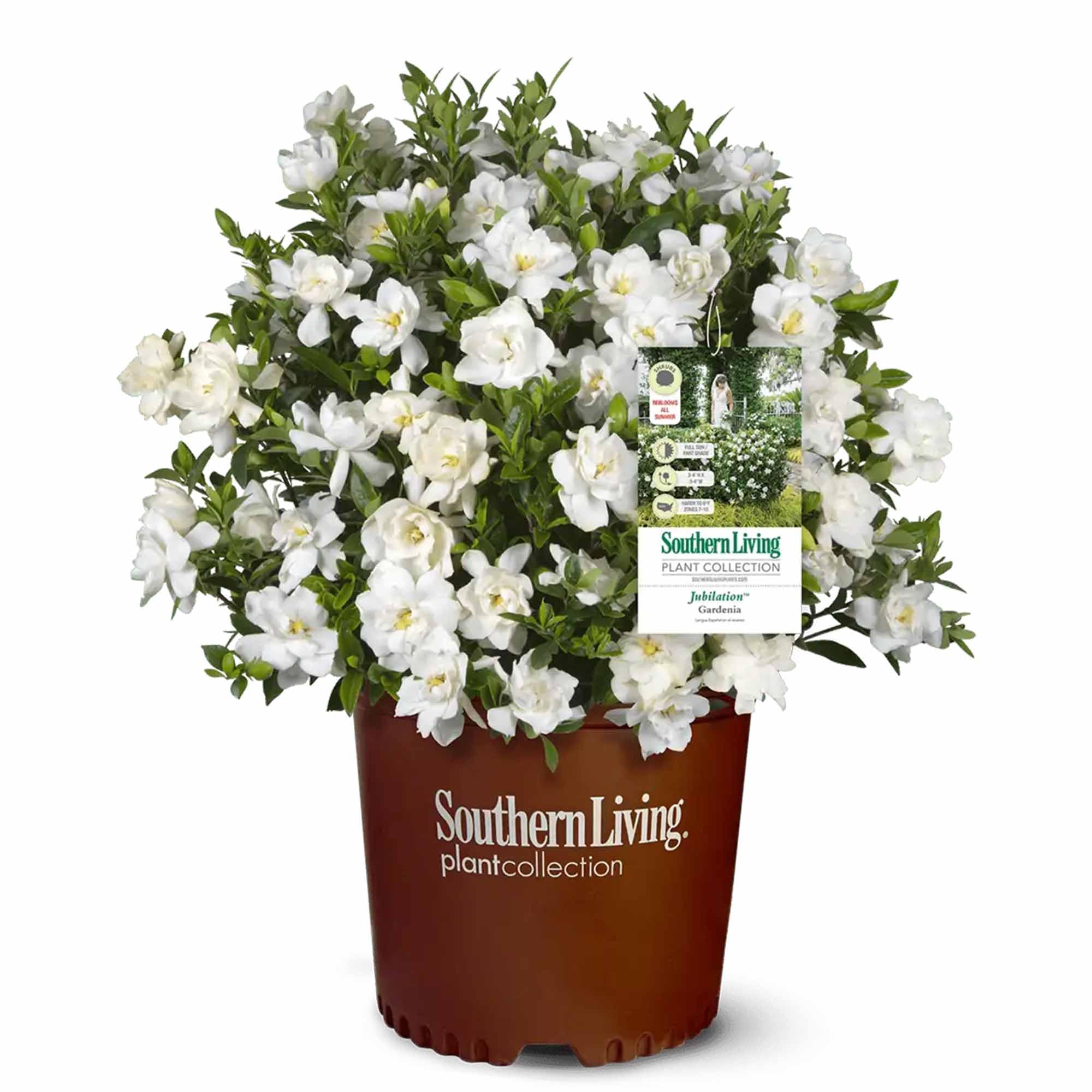
White flowers with that unmistakable gardenia scent, from late spring into fall.
If you want a low evergreen that does something beyond holding green leaves, this is the one. The Jubilation gardenia blooms from late spring through fall — one of the longest bloom windows of any gardenia variety — and the flowers carry the sweet, heavy gardenia fragrance that people plant these for. The dark green foliage keeps its structure through winter, so the plant looks intentional even when nothing is flowering.
It stays tidy and rounded at roughly 3 to 4 feet tall and wide, which keeps it within reach of a small garden or a large container. Hardy in zones 7-10, it prefers well-drained soil and full to partial sun. The label also lists it as deer resistant, disease resistant, and a pollinator attractor. Plant quality and overall appearance are what draw the praise — glossy, lush leaves on a well-cared-for plant that arrives better than the listing photo suggests.
Two honest notes before you commit. First, this is a 1 gallon pot and 4 pounds on the scale — the lightest plant here — so expect a starter, and two feet of mature height is a long way off on day one. Second, gardenias are the fussier plant on this list: health and bloom results run mixed, and a plant that ships rough can take a couple of weeks to turn around. One that arrived looking battered was blooming and beautiful a couple of days later. Buy it for the scent and give it well-drained soil, and it delivers. California and Arizona residents cannot order it at all.
Pick this one for: a porch-side pot or a border you want to smell as much as see, in zones 7-10.
Think twice if: your winters run colder than zone 7 or you live in California or Arizona, where shipping is restricted.
4. Proven Winners 2 Gallon Sprinter Boxwood
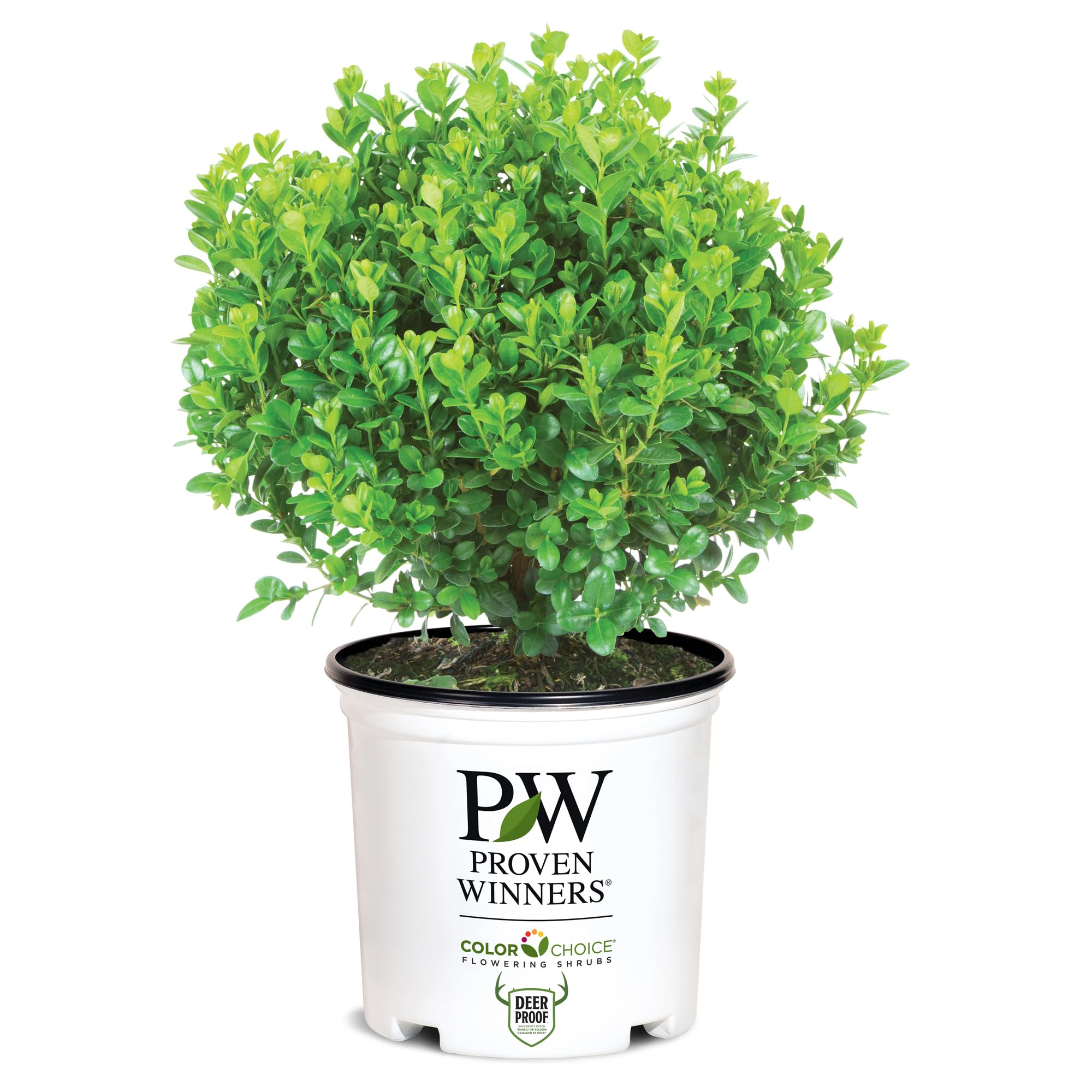
A low boxwood that takes a trim like clay and grows back faster than you expect.
Boxwood is the plant you buy when you want to shape something, and the Sprinter is built for exactly that — a tight, dense habit that matures at 24-48 inches wide and 24-48 inches tall. The listing recommends spacing plants 24 inches apart, so a low hedge for a walkway edge is well within what this plant can do. It takes full shade through part sun, which makes it one of the few picks here that will hold up under a north-facing foundation.
Quality and health drive the praise on this one, with fast growth right behind. The plants arrive full and green, upright in a sturdy box, rooted in moist mulch inside a branded Proven Winners container. One buyer put 15 in the ground about 3 weeks ago and reported they all settled in fine. Others say the new growth came quickly enough to shape into topiaries, and one plant showed no yellowing on any leaf at all. For a zone 5-9 yard, that is a lot of cold tolerance in a compact, low-maintenance package.
Now the part this listing is honest and slightly confusing about at the same time. The technical data lists an expected plant height of 48 feet, while the descriptive copy puts the mature size at 24-48 inches — trust the inches. The other genuine complaint is size on arrival: some buyers find the plants very small against a photo that implies more. It is a 2 gallon pot, not a mature hedge, and that is the fair way to read it — the plant fills out quickly once it is in the ground.
Why it holds its spot
- 24-48 inch mature spread holds a low, tight hedge line without constant cutting
- Zones 5-9 gives it cold tolerance the holly and gardenia cannot match
- Shapes beautifully — topiary, low border, or clipped edging
- Arrives green, rooted, and upright in a sturdy box
The size conversation
- Some plants arrive much smaller than the listing photo suggests
- A 2 gallon pot delivers a starter plant, not a finished hedge
- The 48-foot figure in the data is a listing error — the real mature size is 24-48 inches
Made for: anyone who wants to clip a shape — a neat low hedge, a pair of topiary balls, or a shaded foundation row.
Skip the photo comparison: measure the 2 gallon pot in your mind, not the image on the listing.
5. Pieris jap. ‘Cavatine’ (Cavatine Dwarf Andromeda)

A genuinely two-foot evergreen that blooms white in April and deer walk right past.
This is the pick that actually honors the two-foot promise. The Cavatine andromeda matures to 2 feet tall with a 2-3 foot spread, and its habit is described as much tighter than a traditional andromeda — so what you plant is what you keep. It takes partial shade, which puts it right under windows and along shaded walkways where a sun-lover would struggle.
The white bell-like flowers bloom in April and last on a plant that holds color year round. It ships fully rooted in a #2 container, ready to go in the ground on arrival as long as the weather cooperates. Quality is what stands out, with health right behind it — and one detail deserves a mention here because it matters more than any spec on the page: a buyer in a hard New York zone 7a winter had their plant come through untouched, then bloomed beautifully the following spring. They also noted the heavy deer pressure that winter left it alone entirely.
The one realistic risk is transit. Plants move as living cargo, and a box that gets mishandled can arrive battered — one arrived upside down, looking rough but technically healthy. That is a shipping-luck story, not a plant-quality story, and the plant’s resilience in a cold winter suggests it recovers well. Give it partial shade, moderate water, and a zone 5-8 yard, and you have a true dwarf evergreen that adds spring flowers and shrugs off both cold and deer.
The real spec: 2 feet tall, 2-3 feet wide, zone 5-8, and blooms in April — the only pick here built to that exact low profile.
Best for: shaded borders and deer-heavy properties in zone 5-8 where a true two-footer is the requirement.
Know before you buy: it is a shade plant that wants moderate water — a baking full-sun spot is the wrong home.
Know the Specs
Mature Height And Spread
Mature height is what a plant reaches after years in the ground — not the size of the box that arrives. A shrub labeled at 2 feet will stay around knee height for its whole life, while one labeled 8 feet will eventually need clipping to stay low. Read the spread too, because a narrow plant with a 3-foot spread will crowd a walkway even at knee height.
USDA Hardiness Zones
A hardiness zone is a numbered cold-tolerance band. Lower numbers mean colder winters. A zone 5 plant handles more winter than a zone 8 plant, and growing a warm-climate shrub outside its band risks losing it in the first hard freeze. Check your zone first, then filter the list by it.
Nursery Pot Volume
Nursery pots are measured in gallons, and the volume reflects root mass rather than leaf count. A 1 gallon pot is a small starter. A 2 to 2.5 gallon pot holds more soil and a larger root ball, which generally means a shorter adjustment period after planting. Larger pots also weigh more in transit.
Sun Exposure And Water Needs
Sun exposure tells you where the plant wants to live — full sun, partial shade, or full shade. Moisture needs tell you how much watering it asks for once established. Match both to your spot, and a low evergreen settles in with little fuss. Ignore them and even a healthy plant can struggle.
Common Questions
Why does a dwarf shrub arrive so small if it matures taller?
Will a dwarf evergreen survive winter in my zone?
Do these shrubs need full sun or shade?
Will a low evergreen set in a planter instead of the ground?
Can I order these if I live in Hawaii, Alaska, California or Arizona?
How long does a dwarf evergreen take to establish after shipping?
Is the pot size or the plant size more important when choosing?
Will deer eat a dwarf evergreen shrub?
Why do some listings show two different height numbers?
Do these dwarf evergreens bloom or are they just foliage?
The Bottom Line
For most readers, the dwarf evergreen shrubs under 2 feet winner is the Dwarf Burford Holly — a 2.5 gallon pot with a plant strong and healthy on arrival, ideal for a glossy green low hedge in zones 7-9. If a genuinely two-foot plant is the non-negotiable requirement, the Cavatine Andromeda is the one that actually keeps that promise, blooming white in April and shrugging off heavy deer pressure. For a sun-baked, dry border that asks nothing of your hose, reach for the Silverado Sage — the plant that keeps coming back when everything else is thirsty.
How we choose
We do not accept paid placement. Every pick is matched to a real buyer and a real use-case; we do not hands-on test units.
Sources
Specifications: manufacturer listings and product documentation. Review insights: verified customer reviews, as of October 2026. Pricing: not shown on this page (it changes often); check the current price via the retailer link.
As an Amazon Associate, Aappliancez earns from qualifying purchases. This does not affect which products we feature.