Disclosure: Some links in this post are affiliate links. As an Amazon Associate I earn from qualifying purchases, at no extra cost to you. Learn more
Specs are compiled from manufacturer listings and verified buyer reviews and can change over time — please confirm the key details on the product page before buying.
If your eyes feel gritty and tired by late afternoon, the fix is usually a lens that cuts glare without painting your whole screen yellow. The five pairs below cover that spread well, from clear-lens everyday frames to heavy orange filters built for welding and screen marathons. One crowd favorite sits at 4.5+ stars across 34,000+ owners, and it earns the top spot on weight alone.
This guide is built by comparing the manufacturers’ published specifications and the patterns across verified customer reviews, so you get each pick’s real strengths and trade-offs instead of marketing spin.
You will see exactly how lens tint, frame weight, and fit change what these glasses do for you. Below is a straight read on the best computer glasses for long workdays, late-night gaming, and everything in between.
Top Picks


How To Choose The Best Computer Glasses
The single decision that shapes everything else is lens tint. Clear lenses keep your screen looking normal and let you forget you are wearing anything. Orange and amber tints block far more of the blue end of the spectrum, but they change how colors look and can make green traffic lights hard to read. Decide that first, then sort the rest.
The weight question nobody checks until week two
A frame you feel on your nose is one you take off by lunch. One pair here weighs 0.63 ounces and another weighs 3.21 ounces, and that gap is the difference between forgetting you have them on and noticing the pressure behind your ears. At eight hours a day, the 0.63-ounce versus 3.21-ounce gap matters more than frame styling.
How much blue light do you actually need to filter
Clear-lens pairs filter the blue end of the spectrum without a yellow cast, which suits design work, photo editing, and anyone who needs accurate color. Heavy filters that advertise a specific blocking percentage suit long gaming sessions and night owls. Neither is better — they solve different problems.
Fit width and wearing them over your prescription pair
A frame width of 143mm is built for medium-width faces, and that measurement is your best clue to whether a pair will pinch or slide. If you already wear prescription glasses, look for frames described as wearable over them rather than guessing from the photos.
Side-by-Side Comparison
| Model | Best For | Lens Tint | Frame Weight | Blue Light Blocking | Amazon |
|---|---|---|---|---|---|
| ANRRI Lightweight Computer Glasses★ Best Overall | All-day everyday screen work | Clear, no yellow tint | 0.63 oz | Filters blue light and reduces glare | Amazon |
| Infield Terminator UV-400 Safety GlassesStrongest Filter | Heavy screen sessions and UV protection | Orange | — | 100% filter effect from 400 to 490 nm | Amazon |
| livho High Tech Blue Light Blocking Gaming Glasses | Gaming and glare from oncoming traffic | Slight yellow tint | 3.21 oz | Anti-glare blue light lens | Amazon |
| ZanyLen Blue Light Blocking Glasses Men | Professional looks that pass as readers | Clear with coating | — | Blue light blocking coating | Amazon |
| GUNNAR Vertex Blue Light Reading Glasses | Readers who want magnification plus filtering | Slight yellow tint | — | Blocks 65% blue light | Amazon |
Detailed Reviews
1. ANRRI Blue Light Glasses
Our pick — 4.5+★ from 34,000+ verified ratings; the strongest balance of quality and price.
The featherweight that disappears on your nose and keeps your screen its normal color.
Start with the number that makes this pair easy to live with: 0.63 ounces. That is the whole frame, lenses included, which means you can wear it through a full workday without the bridge-of-your-nose ache that heavier frames cause. For context, the livho pair below tips the scale at 3.21 ounces.
Clear lenses are the other reason this one wins so many long-term desk workers. They filter blue light and knock down screen glare without the yellow tint, so spreadsheets, photos, and video calls all look the way they are supposed to look. The classic square frame measures 143mm wide, which is built for medium-width faces, and owners regularly say it sits comfortably over their regular prescription glasses.
The trade-off is long-term cosmetics rather than daily function. As one buyer put it: “After a few years of use the plastic layer throughout the glasses starts to peel.” That is a wear complaint shared across most coated plastic frames, not a defect story, and the black finish hides it well. For reference, the Infield orange pair below blocks far more of the spectrum but changes how everything looks — this ANRRI keeps colors honest instead.
Where this pair earns its keep
- 0.63 ounces means it stays on your face all day without pressure
- Clear lens keeps screen colors accurate while filtering blue light and glare
- 143mm width fits medium faces and layers over prescription frames
- Backed by a lifetime warranty
What to expect after heavy use
- Coating can peel after a few years of daily wear
- Square frame sits in one classic shape, so styling is limited
Reach for this if: you want the pair that vanishes on your face and leaves your screen looking normal.
Look elsewhere if: you need maximum blue-light blocking and can tolerate an amber view.
2. Infield Terminator UV-400 Safety Glasses
The heavy filter you reach for when screen strain is winning the day.
The spec to lock onto here is UV-400, which means full protection across the ultraviolet spectrum up to 400 nm. That is sunlight UV as well as the blue band. Infield rates the filter at 100% effect across 400 to 490 nm, the range where most screen and LED light sits, so this pair cuts hard rather than lightly.
That strength comes with an orange tint you cannot hide. It enhances depth perception and contrast, and for some buyers that is the whole point — dentistry and similar detailed work show up in the maker’s own listed uses. For ordinary desk work it also means colours shift. One long-term result worth knowing: green traffic lights can become hard to read, so keep these off your driving rotation.
The frame is rimless polycarbonate with a self-adjusting nose rest and telescoping arms, which is how it manages to fit a wide spread of head shapes without pinching. Buyers report it blocks a substantial amount of blue light and feels comfortable for screen work, with the orange tint as the single thing that puts some of them off. Weigh the trade honestly: stronger filtering means more color distortion, every time.
The case for the orange: near-total filtering is genuinely useful for long screen sessions or for anyone working under blue-heavy lighting. Reviewers with larger heads note the arms telescope out to accommodate them.
Where it costs you: the tint rules out color-critical work, and the lower edge sits slightly low on some faces. The ear pieces are also snug enough that a few buyers treat them gently.
Go this way if: maximum blue-light and UV blocking matter more to you than accurate colors.
One thing to plan around: it is a specialty filter, not an everyday clear pair.
3. livho Blue Light Blocking Gaming Glasses
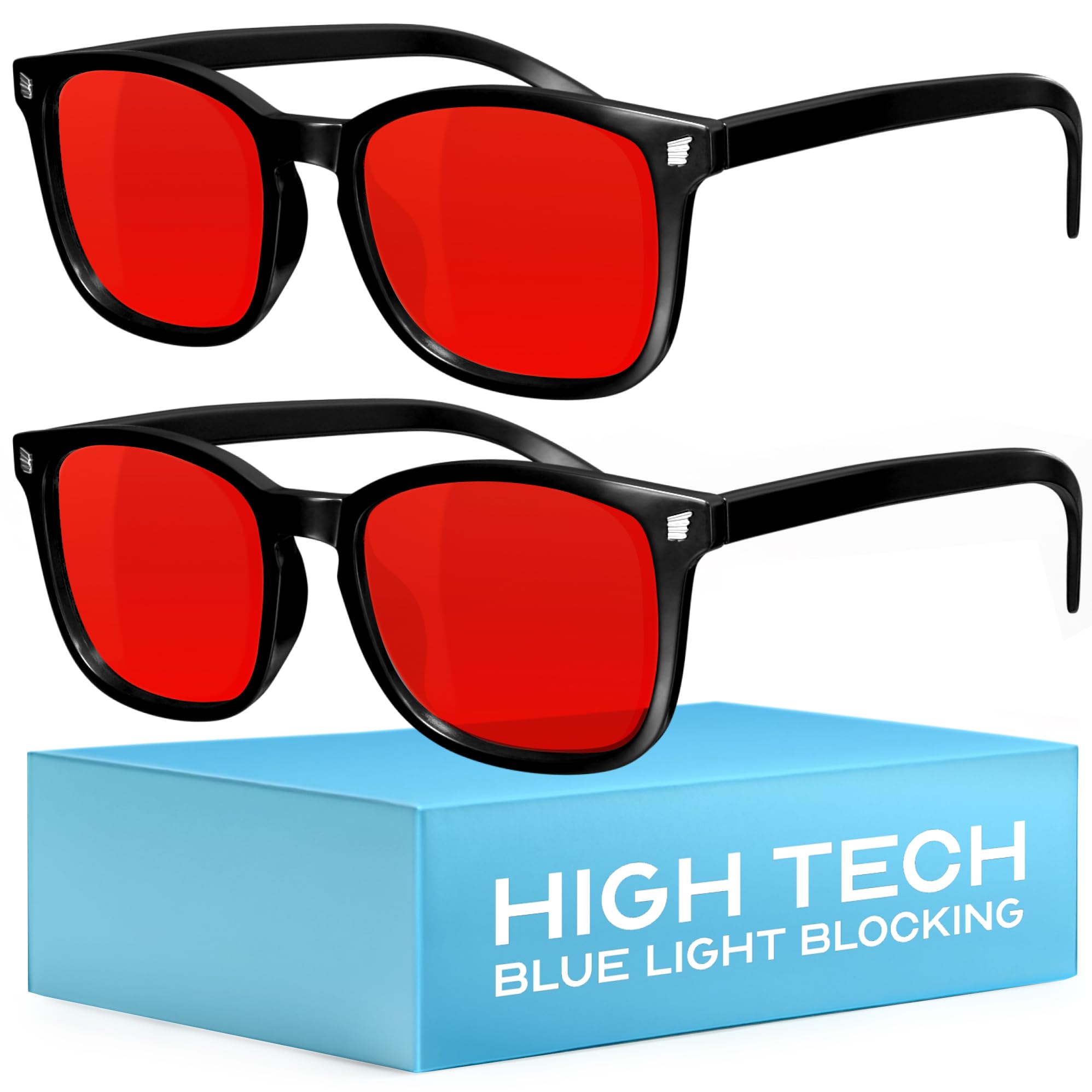
Two pairs in one box, built for the desk chair and the driver’s seat.
This is the pair split-tested in the same household two ways: one frame for daytime screen glare, the other kept for night driving. The anti-glare lens pulls color toward a slight yellow, which is mild enough that owners say colors stay close to accurate. What wins people over is the eye relief: less strain and fewer headaches after an eight-hour desk shift.
The frame is ultra-lightweight flexible nylon, so it holds up to being tossed into a bag. At 3.21 ounces it is noticeably heavier than the ANRRI above, and that weight sits more toward the ears than the nose. On fit, the mixed feedback is worth reading plainly: some faces get a great result, others find the shape sits differently — that is a face-shape question, not a build problem.
The red-lens label oversells the tint. Clear lenses cannot block the whole blue range without going amber, so expect filtering on the specific wavelengths that cause glare rather than a total blackout. As owners mention: “Huge difference working behind the desk for 8 hrs a day!!” The included cases are on the basic side, though that affects the packaging, not the lenses.
Why the two-pack works: keep one pair at the desk and one in the car and you stop moving glasses between rooms. The flexible nylon frame shrugs off casual handling better than a rigid plastic one.
The honest caveat: this is a bigger, heavier frame than the featherweight pick above, so very small faces may find it skates.
Best used as: a desk-and-car pair you do not have to think about, one on each side of your day.
Think twice if: you want a barely-there frame or fully clear lenses.
4. ZanyLen Blue Light Blocking Glasses
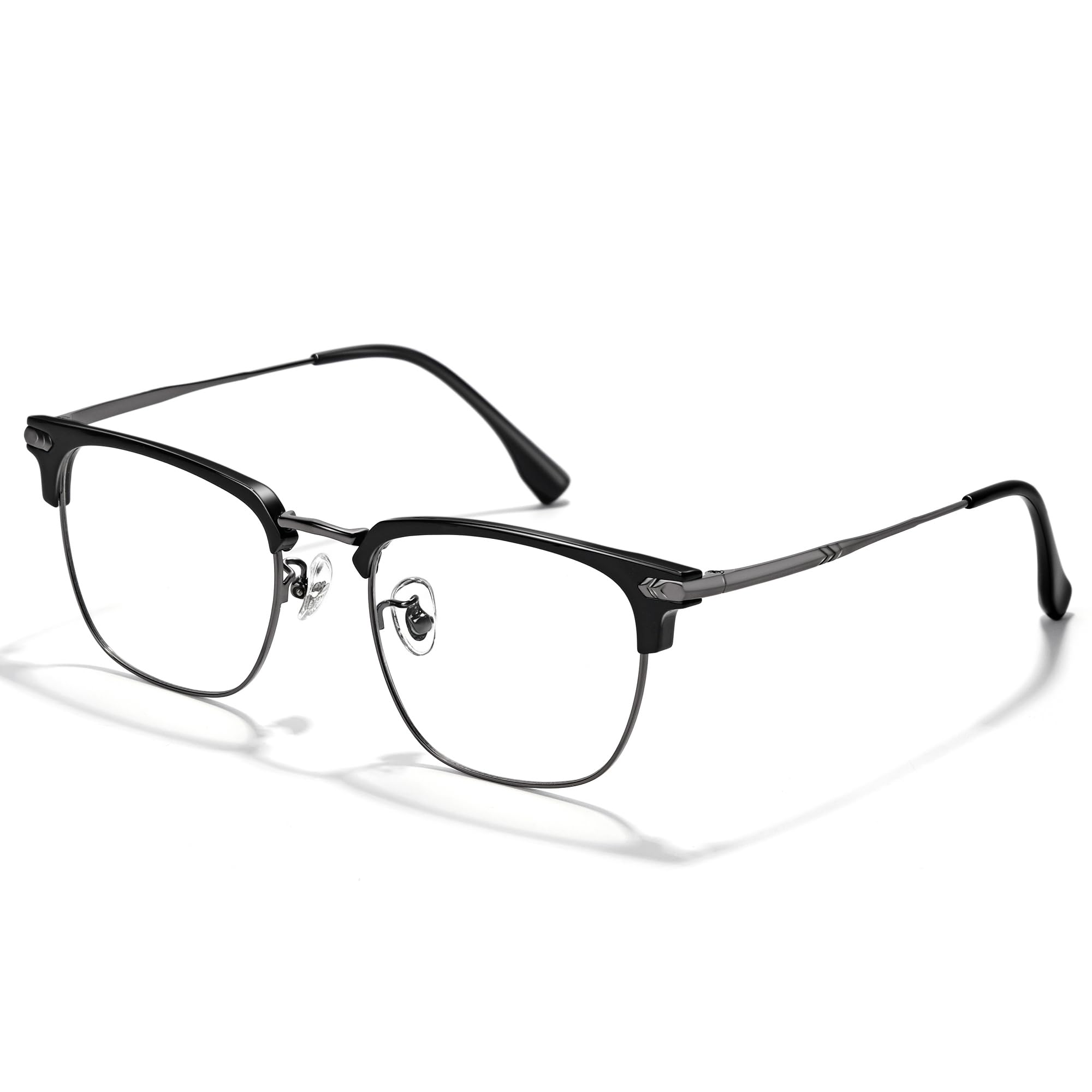
The pair that looks like normal eyewear, so nobody at the meeting asks about it.
ZanyLen builds this frame around layered lens coatings rather than a strong tint. You get an anti-scratch coat, a blue-light blocking coat, an anti-reflective layer on both lens surfaces, an anti-glare layer for poor lighting, and a UV400 stack for UVA and UVB. That combination means the lenses stay clear enough to look like ordinary readers while still working the blue band.
Appearance is the quiet strength here. Owners say the pair passes as actual readers instead of budget blue-light glasses, which matters if you wear them at a client desk or on camera. The frames also fit well and sit lightly enough for long stretches, and the anti-reflective coating helps cut haze in dim rooms where raw lens glare gets annoying.
The one thing to guard against is handling. Owner feedback on the material splits — some call it strong, others find the frame flimsy, and one buyer’s pair broke within a couple weeks. Treat them like eyewear rather than something you toss loose into a backpack, and you get a pair that works without announcing itself.
What the coating stack buys you: anti-reflective on both sides means less bounced light in your eyes, which shows up most when you are working in a dim room or facing a bright window.
The one weak point: durability is the split opinion in this frame, so a hard case is worth having.
Pick this one if: you need screen glasses that still look like the glasses you would normally wear to work.
Handle with care if: your glasses live loose in a bag.
5. GUNNAR Vertex Blue Light Reading Glasses
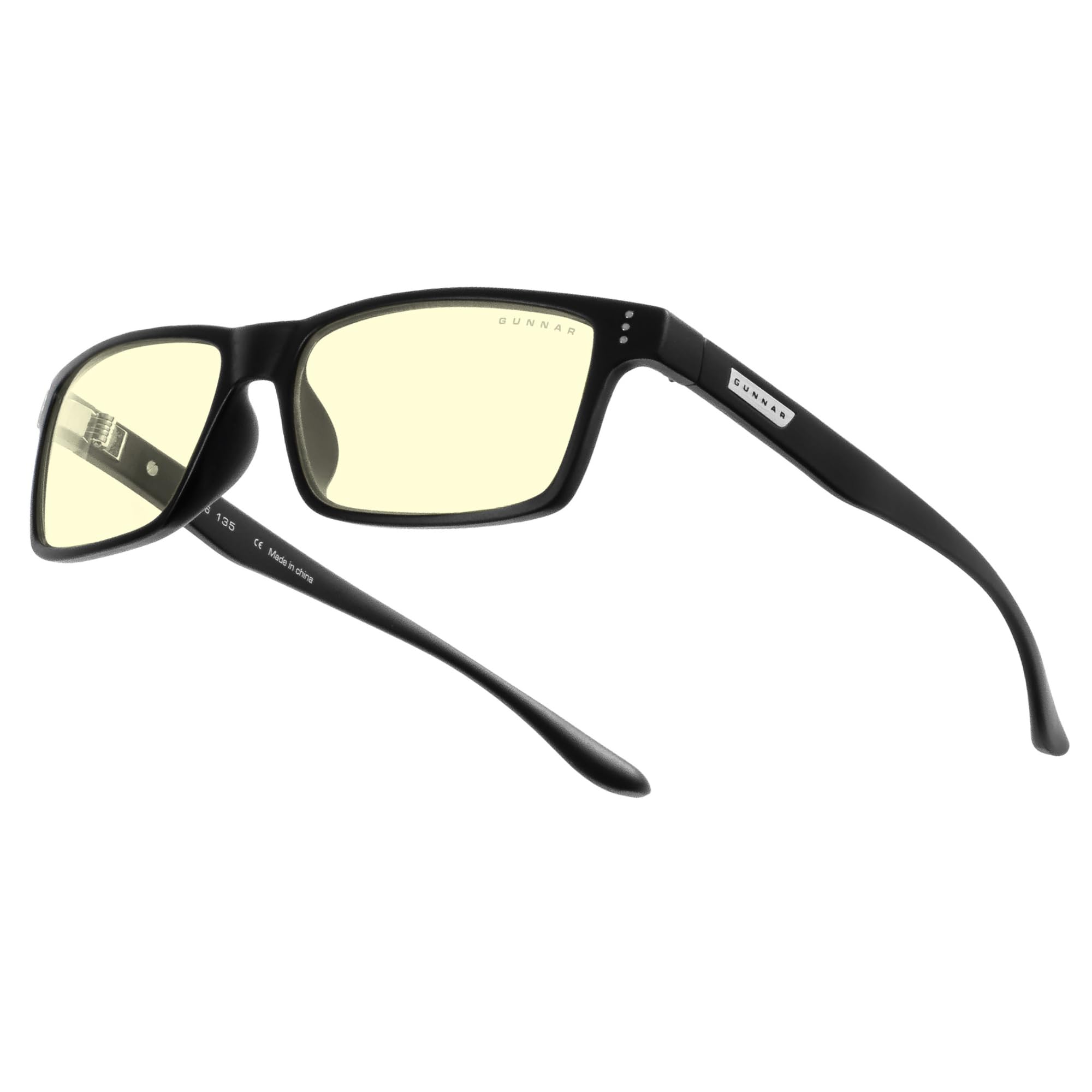
Reading magnification and blue-light filtering built into one premium lens, at a premium price.
GUNNAR is the only pair here that combines magnification with filtering, blocking 65% of blue light, a stated figure rather than a vague “blocks blue light.” For anyone who already needs reading power at the desk, that solves two problems in one frame. The slight yellow tint is deliberate, and one user calls it “more preferable in environments with Florescent lighting as well.”
The optical quality is where the premium tag earns its place. The lenses are made from advanced polycarbonate with a scratch-resistant hard coat, and the optical design is meant to sharpen detail while easing focus. A heavy PC user covers online university and gaming on this same pair, calling the blue light blocking strong enough that Windows Night Light became unnecessary. A software developer of three decades uses them daily.
The honest catch is two-part. The lenses lack an anti-glare coating on the front, so reflections show up during presentations and some users simply take them off to present. Lenses also scratch easily if you skip the case. And one reviewer flagged a blue after-image effect that proved too distracting to keep them — a misfit for some eyes, not a pattern.
What you are paying for: real optical magnification paired with 65% blue-light blocking, plus a hard coat that resists ordinary scratching.
The honest limit: no anti-glare on the lens face means reflections in bright, presentational settings.
Worth it if: you want magnification and blue-light filtering without stacking two pairs on your nose.
Skip if: you only need a clear screen and no reading power.
Know the Specs
Lens tint and light transmission
Clear and lightly tinted lenses pass the full visible range while filtering the blue end, so screen colors stay accurate. Orange and amber tints block far more of the spectrum but shift how everything looks, and can make green traffic lights hard to read. Choose the tint before anything else.
Blue-light filtering versus UV protection
These are two different jobs. Blue light is the 400 to 490 nm band that comes from screens and LED lighting, while UV protection covers sunlight across a wider range. A pair rated UV-400 handles the ultraviolet end fully, and a blue-light coating handles the screen end.
Frame weight and daily comfort
Weight in ounces is your best predictor of whether you keep a pair on. A 0.63-ounce frame fades from awareness within minutes, while a 3.21-ounce frame is something you notice near your ears after a few hours. For all-day wear, the 0.63-ounce frame is the easier one to keep on.
Frame width and fit
A stated width of 143mm points to a medium-sized face where the temple arms sit flush rather than pinching. Wider frames need telescoping or flexible arms to fit larger heads. If you wear prescription glasses, look for frames described as sitting comfortably over them.
Common Questions
Do computer glasses actually help with eye strain?
Will clear blue-light lenses really block anything without a yellow tint?
Can I wear these over my normal prescription glasses?
Do blue light glasses help you sleep better?
What does UV-400 mean on a pair of computer glasses?
Are orange lenses worth it for office work?
How long do computer glasses typically last?
Do I need reading magnification in computer glasses?
Is heavier always worse for glasses?
What is the difference between a gaming pair and a reading pair?
The Bottom Line
The winner on this list is the ANRRI Lightweight Computer Glasses, because it combines a 0.63-ounce frame with clear lenses and a lifetime warranty — the one combination that lets most people forget they have a pair on. If you want stronger filtering and can live with an orange cast, the Infield Terminator UV-400 blocks the full 400 to 490 nm blue band. And for anyone who reads their screen at close range, the GUNNAR Vertex pairs magnification with 65% blue-light blocking.
One honest nudge: the ANRRI sits at the top for a reason, but it is also the quietest performer on paper. It earns its place on wearability rather than looks, so if you want the least fuss in your daily routine, start there.
How we choose
We do not accept paid placement. Every pick is matched to a real buyer and a real use-case; we do not hands-on test units.
Sources
Specifications: manufacturer listings and product documentation. Review insights: verified customer reviews, as of October 2026. Pricing: not shown on this page (it changes often); check the current price via the retailer link.
As an Amazon Associate, Aappliancez earns from qualifying purchases. This does not affect which products we feature.