Disclosure: Some links in this post are affiliate links. As an Amazon Associate I earn from qualifying purchases, at no extra cost to you. Learn more
Specs are compiled from manufacturer listings and verified buyer reviews and can change over time — please confirm the key details on the product page before buying.
You want an edge you can trust before you step on the ice or pull a knife out of your pocket — and you want it without driving to a shop every week. That is the whole decision here. A good sharpener for your skates or blades has to cut a real bevel (the angled edge that bites), hold it consistently, and survive living in your bag.
This guide is built by comparing the manufacturers’ published specifications and the patterns across verified customer reviews, so you get each pick’s real strengths and trade-offs instead of marketing spin.
Below you will find skate-rink tools, pocket diamond hones, and one ductwork cleat tool that belongs in a metal shop rather than a skate bag — because that is the range this search actually throws up. Read the fit, not just the grit, and you will land on the right tool for your own skate or blade: the picks below make the cleat sharpener decision straightforward.
Top Picks

How To Choose The Best Cleat Sharpener
The word “cleat” points at two completely different jobs, and mixing them up is the fastest way to buy the wrong tool. In hockey, the cleat is the blade edge that has to bite into the ice — you sharpen it with a hollow-cutting stone. In HVAC sheet metal, a cleat is the folded clip that joins two duct sections — you seat it with a magnetic clip tool. Know which one you are shopping for before you compare grit numbers.
Start with the edge you already own
If you skate, the number that governs how the blade feels is the radius of hollow. A shallower hollow (a larger radius) gives you more glide and more forgiveness; a deeper hollow bites harder and turns quicker. Tools are built for one radius, so match the tool to the hollow you skate on rather than buying the first stone you see. A 1/2″ radius of hollow tool is a common all-round choice for adult recreational skaters.
Grit decides repair versus polish
A coarse grit — typically 400 — takes metal off fast so you can reset a rolled edge or a nick. A fine grit — typically 600 — polishes that fresh edge so it cuts cleanly. Many pocket tools give you both sides for exactly this reason. Skating stones are usually diamond grit throughout, because diamond cuts hard steel without needing oil or water.
Carry and casing matter more than you think
A sharpener only helps if it is in your bag when the edge goes dull, so carry shape decides the buy. A folding body that slips into a pants pocket, a lanyard hole, or a small storage case all decide whether the tool travels or sits in a drawer. Ask yourself where it will actually live — skate bag, tackle box, or tool pouch — and buy for that shape.
Side-by-Side Comparison
| Model | Best For | Grit | Weight | Format | Amazon |
|---|---|---|---|---|---|
| SHARPAL 178N 3-In-1★ Best Overall | Knives, serrations and hooks in the field | Fine, 600 grit (25 micron) | 0.14 kg | 3-in-1 rod in aluminum handle | Amazon |
| ACCUFLI Skate Blade SharpenerRink-Bag Regular | Skate touch-ups between pro sharpenings | Fine | 16 ounces | Honing stone plus ceramic refiner and case | Amazon |
| 400/600 Grit Portable Pocket Diamond | Pocket and tackle-box honing on a budget | 400 coarse / 600 extra fine | 4 ounces | Folding double-sided stone plus hook files | Amazon |
| Magnetic TDC & TDF Duct Clip Tool | Seating duct cleats in tight sheet-metal work | — | — | 4″ handle with two magnets | Amazon |
| Handheld Hockey Ice Skate Sharpener | Cutting a real hollow on hockey blades | Diamond | 1.6 ounces | Handheld stone with thumbscrew centering | Amazon |
Detailed Reviews
1. SHARPAL 178N 3-In-1 Pocket Knife Sharpener, 4-Inch 600 Grit
Our pick — 4.5+★ from 700+ verified ratings; the strongest balance of quality and price.
Three sharpening surfaces folded into one aluminum handle, ready for any edge in your bag.
The reason this one sits at the top is a simple number: 600 grit, 25 micron monocrystalline diamond. In plain terms, that is a fine abrasive bonded onto the rod — fine enough to polish a working edge without gouging it. You get three jobs in one tool: a 4-inch round rod for straight edges, a 3.5-inch tapered rod for serrations and gut hooks, and a sharpening groove for fishhooks and pointed tools. It sharpens dry, so no water or oil bottle has to come along.
You get more control on a long blade because this tool carries more working rod than the 5.16-inch folding pocket sharpener lower down this page. The whole tool measures 9.25 inches, and that extra reach makes the round and tapered rods easier to steer along a long edge. At 0.14 kg it is light enough to live in a pouch yet heavy enough to feel like a real tool in the hand. Both rods stow inside the aluminum handle when you are done, and the lanyard hole plus storage pouch keep it clipped to a pack.
Know this before you buy: the diamond rod cuts aggressively. Several owners call that a plus for fixing a damage nick fast, but a heavy hand can take off more steel than you wanted on a fine blade. The other quirk is assembly. The threaded insert in the handle has to sit one specific way for both hones to tighten together. Flip the insert around and everything screws in securely from then on.
What it does well
- 600 grit, 25 micron diamond polishes a clean edge without oil or water
- Round rod, tapered rod and hook groove cover straight, serrated and hooked edges
- Both hones stow inside the handle; lanyard hole and pouch included
- Backed by a 3-year defect warranty for non-commercial use
Where it takes some care
- The diamond rod removes metal fast — go light on fine pocket blades
- The handle insert sometimes needs flipping before both hones tighten
Worth it if: you hunt, hike, fish or carry a knife and want one compact tool for straight edges, serrations and hooks.
Not it: you only need a flat bench stone for the kitchen drawer — this rod shape is built for field edges.
2. ACCUFLI Skate Blade Sharpener
The skate-bag touch-up kit that keeps a dull edge alive until your next pro sharpening.
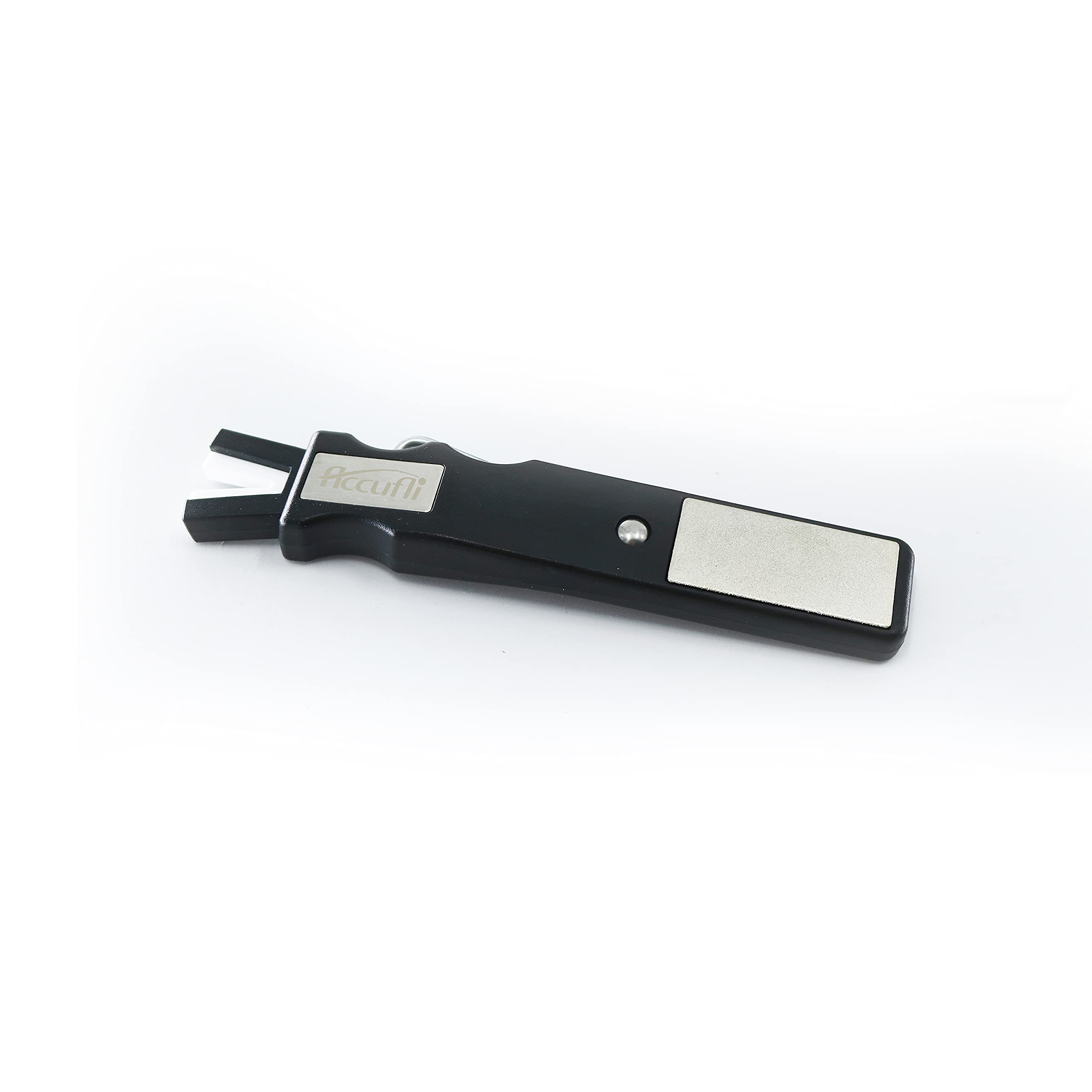
Two surfaces do the work here. A diamond grit honing stone handles quick edge setting and knocks off burrs, dirt and rust from a blade. A ceramic refiner then smooths the edge so it cuts cleanly rather than grabbing. There is also a shoelace hook built into the kit, which is a small thing until you are the one lacing up in a cold rink lobby. Everything packs into a compact plastic case, so it does not get lost at the bottom of the bag.
Light is the wrong word for it. At 16 ounces this is a substantial tool — compare it with the folding 4-ounce diamond sharpener further down and it is four times the weight. That heft is fine sitting on a bench at home; it is not the thing you slip in a jacket pocket. So the real question is where your skate-care happens. If it happens with the bag open on a bench before a session, the mass is a non-issue.
Be clear about what it will not do. Figuring skaters treat it as an interim tool between trips to a professional sharpen — it maintains an edge rather than rebuilding one from a deep hollow. Buyers report the honest usage pattern plainly: a couple of swipes down the blade to clear burrs and it is done. If you expect a full grind reset in your kitchen, you are asking the wrong tool to do the wrong job.
The real strength: blade maintenance between professional sharpenings. A quick swipe keeps a working edge alive and stops a small burr becoming a big repair, which is what most recreational skaters actually need.
Think twice if: you want pocket carry. Sixteen ounces and a kitted case are built for a bench, not a jacket.
Your move if: you skate a few times a week and want to stretch the gap between paid sharpenings.
Pass if: you are chasing a full hollow rebuild — that still needs a machine or a dedicated hollow stone.
3. 400/600 Grit Double Sided Sharpener

Coarse on one side, fine on the other, folding small enough to vanish in a tackle box.
Four pieces arrive, not one: two folding diamond stones and two diamond hook files. The stones are double-sided — a 400 grit coarse side for setting an edge fast and a 600 grit extra-fine side for honing it smooth. The hook files carry a double-sided groove flat design, with one groove on the front and two on the back, cut to fit fish hooks, darts and leather needles. Dry use only; no oil, no water bucket to carry.
At 5.16 inches folded, it is built to disappear into a pocket. Weight sits at 4 ounces, which makes it a genuine pocket resident rather than a bench tool. That makes it a real contrast with the SHARPAL above: the SHARPAL’s 9.25 inches gives you long rods for control, while this one trades reach for a body that folds into 5.16 inches of pocket-sized package. The fan-shaped folding shell protects the abrasive face from chipping in transit.
What wins people over is the sharpening performance — the 400 side genuinely brings a blade back, and the 600 side leaves it keen enough to shave. What is less convincing is the handle feel. The ABS grip is lightweight and comfortable in the hand, but it earns a flimsy reputation in places; treat it as a pocket tool, not something to lean your body weight into. Sharpening performance carries the day, and the value per piece is hard to argue with.
The best part: two grits and two hook files in one pocket kit. A 400 side to repair and a 600 side to polish means one tool handles the whole job — and it works on garden shears and pruning blades as readily as a pocket knife.
The honest catch: the handle is the weak link. It is light and comfortable, but it does not feel like it will take a lot of force, so let the diamond do the cutting rather than your grip.
Reach for this if: you want a cheap, genuinely capable pocket hone for knives, hooks, shears or craft blades.
Look elsewhere if: you need a heavier handle for sustained pressure work on hard steel.
4. Magnetic TDC & TDF Duct Clip Tool
A sheet-metal cleat seater for ductwork — a different kind of cleat entirely.
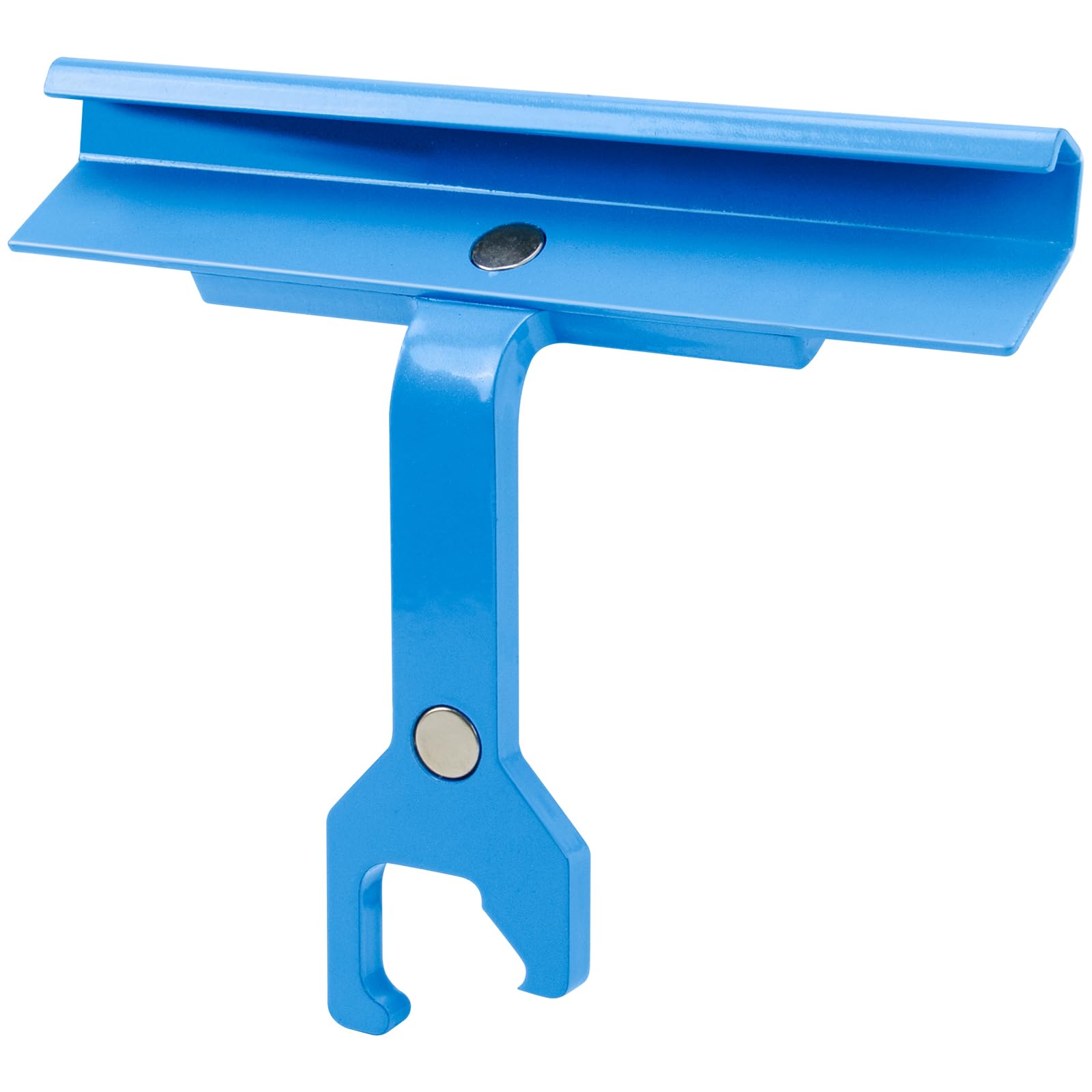
If you searched “cleat tool” and landed in HVAC territory, this is your product. It seats TDC and TDF clips (the folded metal tabs that lock duct sections together) into duct joints without bending or scratching the seam, which is what keeps a duct run airtight. The 4-inch short handle is a deliberate design choice — it reaches the cramped spots where a duct joint hides. There is also a built-in cleat remover, so you can correct a misaligned clip without hunting for a second tool.
Two magnets do the holding. A jaw magnet grips the cleat in place while you position the joint, and a handle magnet lets you stick the tool to a metal duct for vertical storage so it is not lost in a cluttered bag. The body is industrial-grade reinforced steel with a rustproof blue coating, and the high-visibility blue finish makes the tool easy to spot on a dim job site.
The gripe that shows up is the magnets themselves — they can work loose from their seats over hard use. A dab of glue behind a loose magnet puts it right, but it is the one thing to keep an eye on. Some clips also seat more willingly than others in the jaw. For a commercial or residential duct installer, the jaw magnet and 4-inch handle cut the time spent fumbling a clip into a tight joint.
Where it shines: awkward duct joints. The compact 4-inch handle plus the jaw magnet lets you hold a clip in place at arm’s length, which is exactly the reach problem a duct crew fights all day.
Watch for: the magnets working loose. Glue them back and the tool is solid again — a minor fix on an otherwise well-made steel body.
Right pick for: HVAC installers seating TDC/TDF clips in tight duct connections.
Wrong pick for: anyone looking to sharpen a skate or a knife — this is a metal-seating tool, not an abrasive.
5. Handheld Hockey Ice Skate Sharpener (1/2″ Radius of Hollow)

A hand tool that carves an actual hollow into a hockey blade, no rink machine needed.
Most hand sharpeners just dress an edge. This one cuts the hollow — the curved groove a powered grinder normally leaves behind — using an abrasive diamond grit stone. Adjustable thumbscrews keep that stone centered on the blade, which is the detail that makes every pass repeatable instead of drifting. The industrial hard plastic handle is shaped so it will not scratch or dull the blade as you work down the steel.
Weigh up the 1/2″ radius of hollow (the curve ground into the blade, which sets how deep the groove runs). A larger radius means a shallower groove, and that gives you more glide and more forgiveness underfoot. That is why a 1/2″ cut suits adult recreational skaters who want stability rather than maximum bite. Skaters who prefer a deeper bite typically skate on a smaller radius. Match the tool to the hollow you already trust and the transition is smooth.
Effort is the trade. You need a run of straight passes — do not expect a single swipe to fix a dull blade — and the diamond stone leaves steel dust on the blade that wants a wipe with a rag afterwards. The upside is genuine independence from the rink queue, and the tool is built to survive the abuse of a busy hockey household. As one satisfied skater described the routine, a couple of strokes take the burrs off a blade so you can get on the ice instead of waiting at the shop: “Only swipe it down your blade once or twice to get burrs off. Works great!” That is the trade this tool offers: a few minutes of passes at home instead of a wait at the rink shop.
The defining trait: it cuts a hollow rather than just polishing an edge. The diamond stone plus the centering thumbscrews is what makes that repeatable, and it is the same motion a grinder makes, just slower and by hand.
The honest limit: it rewards a steady hand. A novice can struggle to keep a clean edge on the first few tries, and the diamond dust means you keep a rag close.
Best suited to: a skater who wants a real hollow at home and skates often enough to make the passes worth it.
Better to skip if: you have never touched a skate blade and only need the occasional burr cleanup — the ACCUFLI covers that with less technique.
Know the Specs
Radius of Hollow (ROH)
The curve a skate sharpening leaves in the bottom of the blade, measured as the radius of the circle that would form it — a 1/2″ radius of hollow means the groove follows a half-inch circle. A shallower hollow gives more glide and forgiveness, a deeper hollow bites harder. Match the tool to the hollow you skate on.
Diamond Grit
Diamond abrasive is bonded onto a metal rod or stone and cuts hard steel quickly, dry and without oil. Grit numbers describe how coarse the abrasive is: 400 is a coarse side for resetting an edge fast, 600 is a fine side for polishing it smooth. Many pocket tools carry both so one body covers repair and honing.
TDC and TDF Cleats
In HVAC ductwork, a TDC or TDF clip is a folded sheet-metal cleat that locks two duct sections into an airtight seam. A magnetic cleat tool holds that clip in the jaw while you seat it in a tight joint, so the seam stays straight and leak-free. This is a completely separate job from sharpening a blade.
Portability and Carry
A folding body, a lanyard hole, a pocket case or a magnetic handle all decide whether a tool leaves the house. A bench stone that never travels is no help on the ice. Buy a shape that fits where you actually use it — pants pocket, tackle box, or duct tool bag.
Common Questions
Is a cleat sharpener the same as a skate sharpener?
What radius of hollow should I pick for my skates?
Do I need to use oil or water with a diamond sharpener?
Will a handheld tool give the same edge as a rink sharpening machine?
What is the magnet for on the duct clip tool?
Should I use a diamond rod on serrated blades?
How do I care for a diamond stone so it keeps cutting?
Can I sharpen a knife with a puck sharpener instead?
The Bottom Line
The strongest pick for most readers is the SHARPAL 178N 3-In-1, because its 600 grit diamond rod, tapered hone and hook groove cover straight, serrated and hooked edges in one tool that stows in its own handle. If you skate, the Maintain the Edge Handheld Sharpener is the one that cuts a real 1/2″ hollow rather than just dressing an edge. For blade maintenance between paid sharpenings, the ACCUFLI covers it with a diamond stone, ceramic refiner and a carry case. And if “cleat” means ductwork to you, the ERETOW magnetic clip tool gets the clip seated in tight joints. Match the tool to your edge: a 1/2″ hollow stone for hockey blades, a 400/600 diamond hone for knives and hooks, a magnetic clip tool for duct cleats.
How we choose
We do not accept paid placement. Every pick is matched to a real buyer and a real use-case; we do not hands-on test units.
Sources
Specifications: manufacturer listings and product documentation. Review insights: verified customer reviews, as of October 2026. Pricing: not shown on this page (it changes often); check the current price via the retailer link.
As an Amazon Associate, Aappliancez earns from qualifying purchases. This does not affect which products we feature.