Disclosure: Some links in this post are affiliate links. As an Amazon Associate I earn from qualifying purchases, at no extra cost to you. Learn more
Specs are compiled from manufacturer listings and verified buyer reviews and can change over time — please confirm the key details on the product page before buying.
If you want the short answer: the Armstrong Blu-Trac HP is the tire to buy first. It grips like a performance tire, quiets down on the highway, and carries a 149 mph speed rating, all without the big-brand sticker. The other ten picks here each win on something specific — a longer treadwear number, a higher load limit, a taller sidewall for a smaller rim. The real job is matching one of those numbers to your car, your commute, and the way you actually drive.
This guide is built by comparing the manufacturers’ published specifications and the patterns across verified customer reviews, so you get each pick’s real strengths and trade-offs instead of marketing spin.
Cheap tires fail in predictable ways, and nearly all of them trace back to a number you can read before you buy: treadwear, load index, or speed rating. My guide to cheap all-season tires explains each of those numbers in plain English so you pick right the first time.
Top Picks

How To Choose The Best Cheap All-Season Tires
Budget tires are not a single quality tier. Some are genuinely good rubber sold at a low markup, and some are soft compounds that wear out inside a couple of seasons. The difference shows up in three numbers printed on the sidewall, plus one number you have to look up: the UTQG rating. Learn those four and you can sort any cheap tire in about two minutes.
Start with the size, not the brand
Your tire size looks like 205/55R16, and every digit means something. The first number is the width in millimeters, the second is the sidewall height as a percentage of that width, and the R16 tells you it fits a 16-inch wheel. Buying the wrong size is the single most common budget-tire mistake, because a great tire in the wrong size will not mount at all. Read the size off your current sidewall and match it exactly before you compare anything else.
Treadwear, traction, and temperature: the UTQG trio
UTQG stands for Uniform Tire Quality Grading, a government-required label that rates three things. Treadwear is a relative wear number, so a 700 treadwear tire is built to last longer than a 340. Traction grades wet stopping ability, and temperature grades how well the tire sheds heat at sustained highway speed. On cheap all-season tires you will typically see treadwear anywhere from 340 up to 700 or more, and a higher treadwear figure usually means a harder compound that trades some grip for longevity.
Load index and speed rating explained
The load index is a code for how much weight one tire can carry, and it is printed right after the size. A load index of 91 supports up to 1356 pounds per tire on several picks here, while an 81 supports 1019 pounds. Speed rating is a letter that tells you the top sustained speed the tire is certified for — H means 130 mph, V means 149 mph, W means 168 mph. You do not need a high speed rating for legal driving, but a higher one often signals a stiffer, better-controlled sidewall.
Where budget tires actually give up ground
Two places, mostly. Wet braking and long-term wear. A cheap tire can feel fine in the dry and still stop noticeably longer on soaked pavement. Look for a tread pattern with wide grooves and multiple sipes (the small slits cut into the tread blocks) if you drive in heavy rain. And treat any treadwear warranty as a guide rather than a promise — rotation and alignment do more for tire life than the compound alone.
Side-by-Side Comparison
| Model | Best For | Treadwear (UTQG) | Load / Speed | Weight | Amazon |
|---|---|---|---|---|---|
| Armstrong Blu-Trac HP★ Best Overall | Spirited daily driving | 340AA | 91 / V (149 mph) | 20 lb | Amazon |
| Forceum EcosaBest Value | Small-car budget commuting | 400AA | 82 / H (130 mph) | 15 lb | Amazon |
| Starfire Solarus AS (195/65R15)Most Trusted | All-weather daily driving | — | 91 / H (130 mph) | 17.9 lb | Amazon |
| Armstrong Blu-Trac PC | Long-life highway miles | 700AA | 81 / H (130 mph) | 16 lb | Amazon |
| Landspider Citytraxx G/P | Quiet city commuting | 560AA | 91 / V (149 mph) | 20 lb | Amazon |
| Fullway HP108 (205/55R16) | Everyday sedan value | 380AA | 91 / V (149 mph) | 19 lb | Amazon |
| Starfire Solarus AS (205/55R16XL) | Heavier cars, extra load | — | 94 / V (149 mph) | 19.8 lb | Amazon |
| Milestar MS932 Sport | Snow-belt sedans | — | 88 / H (130 mph) | 21 lb | Amazon |
| Fullway HP108 (215/55ZR17) | Sportier 17-inch setups | 380AA | 98 / W (168 mph) | 22 lb | Amazon |
| Hankook Kinergy ST H735 | Trusted-brand pick | — | 88 / T (118 mph) | 16.7 lb | Amazon |
| Fullway HP108 (195/65R15, pair) | Two-tire replacement | 380AA | 91 / H (130 mph) | 36 lb (pair) | Amazon |
Detailed Reviews
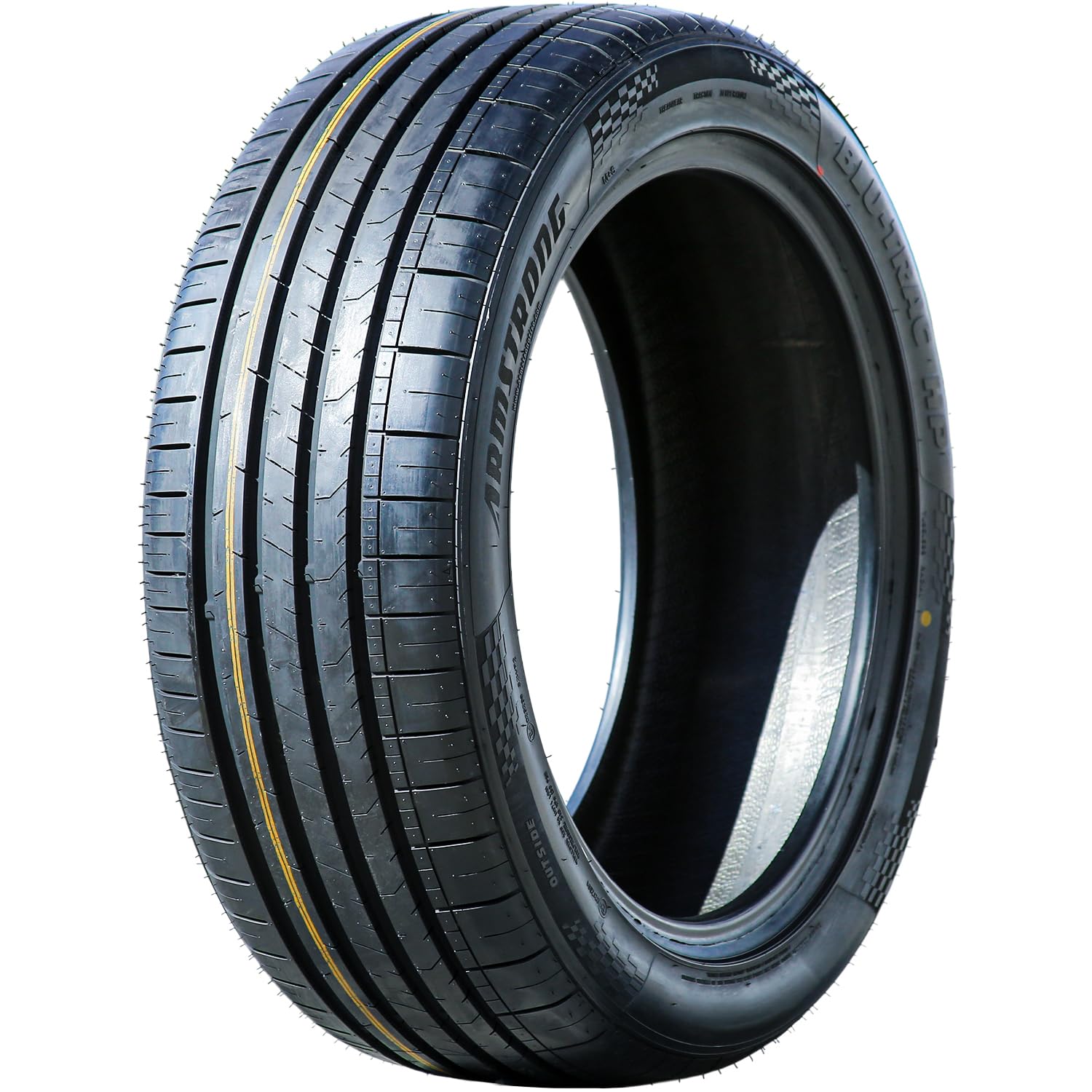
1. Armstrong Blu-Trac HP 195/55R16 91V XL
A performance tire that acts calm on the commute and grips like it costs three times more.
This is the tire you buy if you want your car to feel better than it did on the old rubber. It is an extra-load (XL) performance tire in 195/55R16, which means the sidewall is built to carry more weight and hold its shape under cornering. The speed rating is V — certified to 149 mph — and that figure alone puts it a full 19 mph above the Blu-Trac PC down this list. A stiff sidewall is what stops the car feeling vague on a highway on-ramp, and this tire has it.
Load index 91 means each tire supports up to 1356 pounds. Treadwear is 45,000 miles with a UTQG of 340AA, so the compound is on the softer, grippier end. Buyers describe mounting these, airing them up, and finding no balancing weights needed even at 70 mph. That is the mark of a tire built straight, and it is why DIY installers keep buying it.
What wins people over is how well-built it feels for the money. The quirkier note in the reviews is a driver who swapped from another budget set and found these louder and firmer than expected, though still quieter than a lot of what is out there. That is the honest trade-off of a stiffer performance casing: more feedback through the wheel, a little more road texture in the cabin. On a sporty sedan or a car you drive with some enthusiasm, that is a feature, not a fault.
What earns the top spot
- V-rated to 149 mph, so the sidewall stays controlled at highway speeds
- Extra Load construction with a 91 load index for up to 1356 pounds per tire
- Smooth, quiet ride for a performance-category tire
- Very strong value for a tire with a build quality buyers keep praising
Where to set expectations
- 340AA treadwear is on the softer side, so it will not outlast a high-treadwear touring tire
- Firmer, louder ride than a comfort-first touring tire, by design
Pick this for: a daily driver with some sport in it, especially a car that wears 195/55R16 and wants a planted feel.
Expect a trade-off on: treadlife — a 340AA compound is chosen for grip, not for marathon mileage.
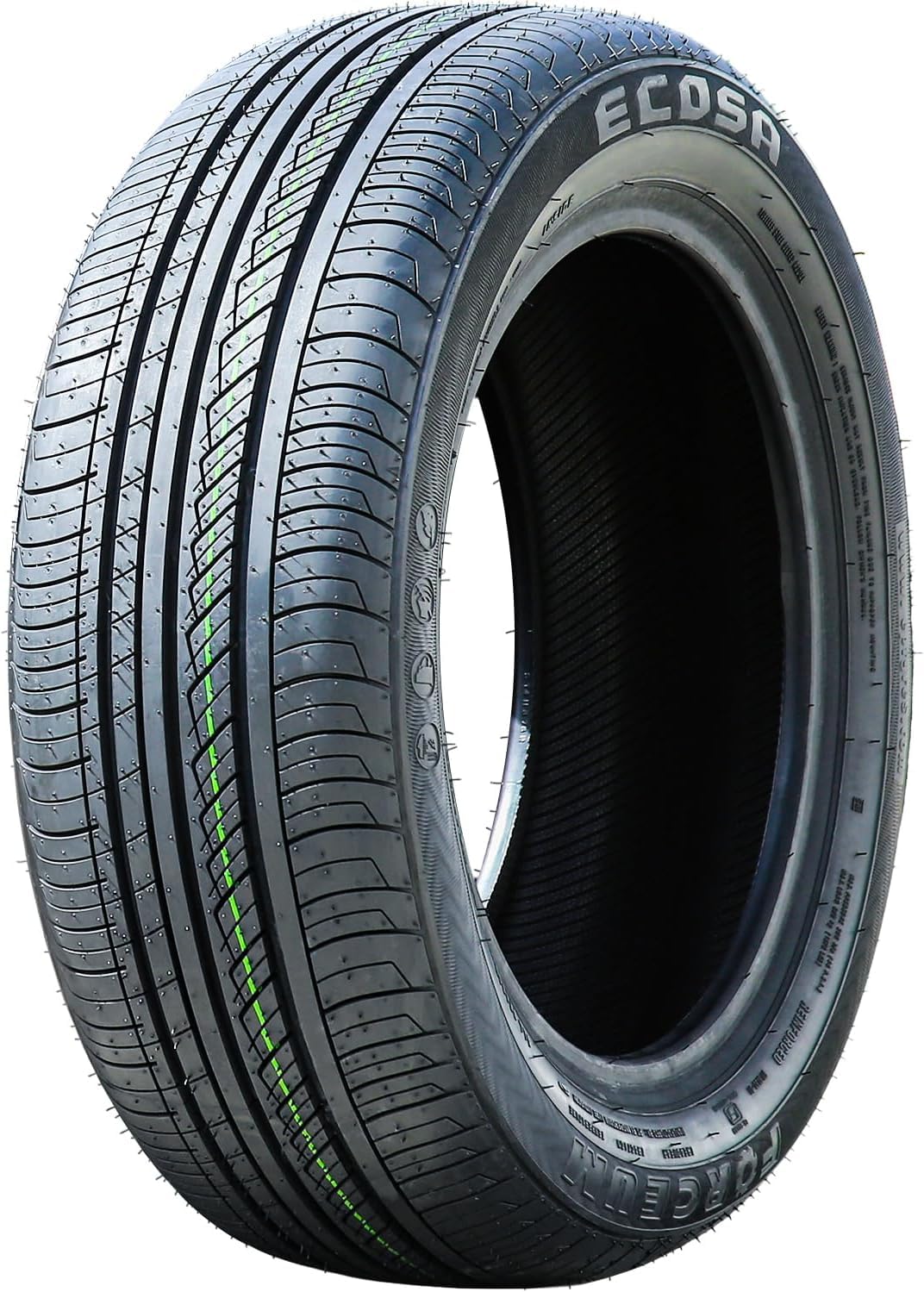
2. Forceum Ecosa 175/65R14 82H
A 15-pound 175/65R14 touring tire with a 45,000-mile warranty at the bottom of the price ladder.
Here is your entry point if you drive a small car on 175/65R14 wheels and just want decent rubber at a low cost. It is a standard-load (SL) touring tire with a load index of 82 and an H speed rating.
The tread design points at one thing: even wear. Two circumferential ribs (continuous bands running around the tire) improve straight-line stability and steering response, and a stabilizer rib resists scalloping, which is the cupped, wavy wear that ruins a cheap tire early. The multi-sipe pattern is there for wet grip. Forceum backs it with a 45,000-mile treadwear warranty, and while durability is the one mixed grade in the customer feedback — a few drivers report they wear out faster than expected — the value side is what most people focus on.
Fair caveat: budget touring tires like this one are happiest under normal commuting loads. Push them hard on a heavy car, or skip rotations, and tread life will not reach the warranty number. Rotate them on schedule and they do their job quietly. Mounting is easy, the price is the lowest on this list, and it fits a spare-tire job as well as a full set.
Why it makes the cut: A 15-pound tire with a 45,000-mile warranty at the bottom of the price ladder is real value for a small car, and the rib-and-sipe tread pattern is aimed squarely at even wear and rain grip.
What to watch: Set expectations on wear. A subset of drivers report faster-than-expected wear, and a 45,000-mile figure is a ceiling, not a promise, especially if you skip rotations.
Buy it if: your car runs 14-inch wheels and you want the lowest-cost way to get safe everyday rubber.
Otherwise: if wear rate is your top worry, a higher-UTQG touring tire like the Blu-Trac PC below is the safer pick.
3. STARFIRE Solarus AS All-Season 195/65R15 91H Tire
A budget tire that owners reorder for a third set because the first two held up.
The strongest evidence for the Solarus AS is repeat purchase. It is made by Cooper, and the reviews read like a loyalty file: third sets on the same car, bought again for multiple vehicles in one family, drivers who came off decades of premium rubber and report no drop-off in quietness or feel. That kind of pattern does not happen with a tire that disappoints in year two.
What 195/65R15 sizing gets you here is a taller sidewall than the 195/55R16 tires above, which is a real comfort win on broken pavement. Load index 91 means up to 1356 pounds per tire, and the H speed rating handles highway speeds with room left over. The tread compound is formulated for all-season traction, and the deep lateral shoulder grooves (the wide channels at the tire’s edge) are what clear standing water. Several drivers describe zero hydroplaning in heavy rain.
The honest limit is winter. Rain and light slush are fine. Deep unplowed snow is where an all-season tire runs out of grip, so if your county plows late you want a dedicated winter set. The other thing to know is that a small number of drivers report fast wear — the general consensus is long service life, so treat reminders to rotate these seriously, because mismatched wear is usually the cause.
The case for the Solarus
- Cooper manufacturing behind a budget nameplate
- Quiet cabin and a smooth ride for a 195/65R15 touring tire
- 91 load index for up to 1356 pounds per tire
- Strong wet-weather reputation, with hydroplaning kept in check
Where it steps back
- All-season compound, so genuinely deep snow is beyond it
- A few drivers report wear quicker than expected without regular rotation
The right call for: a 15-inch daily driver that sees rain more than snow and wants long quiet service.
Pass if: you regularly drive through heavy snow, where a winter tire earns its keep.
4. Armstrong Blu-Trac PC 175/60R15 81H SL

An 85,000-mile treadwear rating on a budget touring tire, with quiet highway manners to match.
If your measure of a good cheap tire is how long it lasts, this is the pick. That is a compound built for mileage rather than maximum grip, and it is exactly what you want if you rack up highway miles on a commute.
The trade-offs follow from that. Load index is 81, or 1019 pounds per tire, which is the lowest here, so this tire suits a lighter car. Speed rating is H, certified to 130 mph. It is also the lightest of the Armstrong pair at 16 pounds. Around town and on the freeway it is smooth, quiet, and predictable, and the deep tread blocks clear wet roads well.
Buyers of this size point to stability at highway speed and quiet running as the reasons they keep buying. The catch worth naming: the same stiffer, long-life compound that delivers the big treadwear number gives up some of the soft, glued-down feel you get from the performance-rated tires on this list. That is the deal — trade a touch of grip for a lot of miles. On a commuter car, most people will take it.
The long-mile logic: An 85,000-mile treadwear rating with a 700AA UTQG and an H speed rating is the best durability package on this whole page, and the 81 load index fits a compact or mid-size sedan nicely.
What you give up: A firm compound and a lower load rating, so it is not the tire for a heavy wagon or for a driver chasing maximum dry grip.
Worth buying for: the commuter who wants one set to last a long time and does not need extra load capacity.
Look past it if: your car is heavy enough to need more than 1019 pounds per tire.
5. Landspider Citytraxx G/P 205/55R16 91V SL

A 560AA city tire that hushes the cabin and absorbs potholes on the daily commute.
This one is for the driver who does the same 12-mile loop every day and just wants it hushed. A V-rating to 149 mph on a budget tire is a mild surprise, and it shows up in a firmer, more controlled sidewall than you might expect at this price. The UTQG treadwear is 560AA, which lands between the soft performance rubber and the long-mile touring tires on this page.
Owners describe the ride as the reason they bought it. One driver put it to work on a Honda Insight and came away impressed with low rolling resistance, meaning the tire rolls easily and costs less fuel, plus good shock absorption over potholes and rail crossings. A CanAm Spyder RT owner had the same read — no hydroplaning in pooled water, more sure-footed than the old set in the rain. If you drive a small car or a trike and the wet-road hydroplaning fear is real, this tire answers it.
There is a limit, and it is honest rather than alarming: long-term treadwear is unproven on the fresher reviews, and one four-star note flags that a tire this quiet often gives up a little dry grip if you push it. Nobody buys a city commuting tire to autocross it. If your driving is mostly errands, school runs, and the daily grind, this tire fits the brief.
What stands out
- Quiet running and a comfortable ride on rough city streets
- 560AA treadwear sits between soft and long-life compounds
- V-rated to 149 mph with a 91 load index for up to 1356 pounds
- Low rolling resistance helps fuel economy on a small car
The real limits
- Long-term wear is not yet well documented in owner feedback
- Trades a little dry grip for that quiet, plush ride
Made for: city and suburban commuting where a hushed cabin and a forgiving ride matter more than razor-sharp steering.
Think twice if: you regularly drive aggressively and want maximum dry grip.
6. Fullway HP108 205/55R16 91V SL

A 205/55R16 value tire that owners fit to everything from a Malibu commuter to a Charger.
If sheer popularity means anything, this is the cheap all-season to beat. It is a standard-load (SL) performance tire in 205/55R16 with a 91 load index for up to 1356 pounds per tire and a V-rating to 149 mph. The UTQG treadwear is 380AA, so the compound is on the grippier end of the touring spectrum, and the black sidewall keeps the look clean on a family car.
What owners praise most is how it feels installed. A Chevy Malibu driver described a smooth, quiet ride from day one, and a Charger owner in the reviews said the tires ride as well as premium brands. That is a quality-check wobble, not a design flaw. If a tire runs out of true, ask your installer to check it before balancing and mount the straightest pair up front.
The grip level is the other thing to weigh. On a Scat Pack, buyers report durable performance under hard acceleration and cornering, with no trouble in the rain. That is a lot of confidence for a budget tire. Just do not expect performance-tire handling at legal speeds for a decade — 380 treadwear is a compromise, and counting on it to last like a 700 will leave you unhappy.
The value play: 205/55R16 fit, 1356-pound load capacity, and V-rated construction in a tire that people buy again and again for a range of cars from compact to muscle.
One real-world catch: occasional run-out on the casing means you should have the installer check the tire is round before balancing, otherwise you feel it as vibration at highway speed.
Best for: the driver with a common 205/55R16 wheel who wants dependable wet-and-dry grip without premium-brand outlay.
skip it if: you demand guaranteed balance from the start and do not want to inspect tire roundness before mounting.
7. Starfire Solarus AS All-Season 205/55R16XL 94V Tire
The XL version of the Solarus AS, with a 94 load index for heavier cars and the same quiet ride.
This is the Solarus AS in 205/55R16, and the letter X after the size tells you it is extra-load (XL) construction. That matters: the load index jumps to 94, which supports up to 1477 pounds per tire. Put that against the 1356 pounds of the standard-load 195/65R15 Solarus, and you get 121 pounds more capacity per corner. On a heavier wagon or a car that often carries a full boot and passengers, that extra margin keeps the tire from squirming.
It is also a V-rated tire, certified to 149 mph, and it comes with a 50,000-mile warranty from Cooper Tire & Rubber. The M+S rating (mud and snow) means it is legal for winter use in most climates, though all-season traction and dedicated snow grip are not the same thing. Owners of this tire describe exactly what you want: quiet, smooth, planted in the rain, and enough dry-road stability to feel confident on a long highway haul.
Where the XL version differs from a standard touring tire is ride suppleness — the stiffer sidewall that carries the extra load also transmits more road texture. It is a cushioning trade for capacity. And the mixed wear reputation of the Solarus line applies here as it does elsewhere: long service life is the norm, but not universal. Rotate on schedule and the 50,000-mile warranty is realistic rather than optimistic.
Why it earns its place
- 94 load index for up to 1477 pounds per tire, the most capacity among the 205/55R16 tires here
- V-rated to 149 mph and M+S rated for legal winter use
- 50,000-mile treadwear warranty backed by Cooper Tire
- Quiet, smooth, planted feel on wet roads
What to keep in mind
- The stiffer XL sidewall gives up some cushiness compared with the standard-load version
- All-season rubber still falls short of a dedicated winter tire in heavy snow
Reach for it if: your car is heavier than average or regularly runs loaded, and you want extra load capacity without losing the quiet touring ride.
Look elsewhere if: you need maximum snow traction, where a winter tire is the honest answer.
8. Milestar MS932 Sport All-Season Radial Tire -185/65R15 88 H

An all-season tire with a documented 42,000-mile run through Utah snow and a repeat purchase behind it.
The MS932 Sport is the pick for drivers who see real winter weather but do not want to switch tires every November. The tread design is all about stability: wide ribs around the circumference improve handling and lateral grip, meaning side-to-side hold when you turn. Angled and longitudinal sipes — the angled slits cut into each tread block — improve both traction on slick surfaces and the tire’s own tread life, because the blocks flex rather than scrub.
The one-year ownership story that sticks with this tire is a Honda Accord driver who put 42,000 miles on a set, handled Utah snow and wet roads in the first 3,500 miles without ever getting stuck, and then bought a second set. What makes that credible is the explicit caveat: tread at 40,000 miles was 3/32 on the outer edge and 6/32 in the center, and the wear was attributed to infrequent rotation and no alignment. That is the story of most tire wear, not a defect in the rubber.
A fair note on the limits. A load index of 88 (1235 pounds per tire) and an H speed rating make this a small-to-midsize sedan tire. It is not built for a heavy vehicle, and 185/65R15 keeps it on the smaller end. If your car takes that size and your winters are real, this is a quietly smart choice — much quieter than the tire’s plain appearance suggests.
The winter-test case: A documented 42,000-mile run with solid snow traction in the first few thousand miles, from a driver who then bought the same tire again, is a strong practical endorsement.
Set the right expectations: Uneven wear is a rotation-and-alignment story, and the 88 load index keeps this tire on lighter cars only.
Good match for: 185/65R15 drivers in snow-belt states who want one tire for all four seasons and will commit to rotating them.
Not for: heavy vehicles or anyone expecting all-season rubber to match a true snow tire in deep drifts.
9. Fullway HP108 215/55ZR17 98W XL
A 17-inch performance tire that takes more weight and more speed than anything else here.
If your car wears 215/55R17 wheels and you think cheap means weak, this tire is the counter-argument. It carries a load index of 98, supporting up to 1653 pounds per tire, and a W speed rating certified to 168 mph. Both are the highest figures on this page. The extra-load (XL) construction stiffens the sidewall further, which on a heavier sport sedan means less roll in corners and a more confident wheel feel.
Around town it is quieter than that spec sheet suggests. Owners describe it as great in the rain, easy to fit, and remarkably hushed for what they paid. The UTQG treadwear is 380AA, so as with the 205/55R16 Fullway above, the compound favors grip over longevity. A pair of tires in this size also goes on a car’s rear axle well if you are replacing two at a time rather than four.
The balancing story is worth knowing before installation. Most tires in this family take under an ounce of weight, but one owner needed 1.5 ounces inside and 1 ounce outside, and two of the four tires had noticeable run-out that had to be positioned on the rear. Ask your installer to check roundness first. Do that and you have a genuine high-performance bargain; skip it and you may chase a highway vibration.
What it brings
- 98 load index for up to 1653 pounds per tire, the highest here
- W-rated to 168 mph with XL construction for a stiffer, more controlled sidewall
- Quiet for a performance tire, with strong wet-road composure
- Fits a wide range of 17-inch sport sedans
Points to weigh
- 380AA treadwear is grip-oriented, not a long-life compound
- Casing balance varies tire to tire, so check roundness before mounting
Right tire for: a heavier sport sedan or wagon on 17-inch wheels that needs real load capacity and highway-speed stability.
Better skip: if your goal is maximum mileage rather than grip, in which case a 700AA touring tire is a better fit.
10. Hankook Kinergy ST H735 185/65R15 88T

A recognisable tire name at a price that does not feel like a premium-brand invoice.
Some drivers will not put an unknown badge on their car, and for them the Kinergy ST H735 is the answer. This is a standard touring all-season in 185/65R15 with a load index of 88 (1235 pounds per tire) and a T speed rating. It is built around a jointless full-cover reinforced belt and wide two-steel belts, both of which are the internal construction that keeps the tread stable at highway speed, plus a high-stiffness bead filler that firms up the steering response.
The compound is oriented toward abrasion resistance, so it resists the scuffing and wear that shortens tire life. It is a T-rated tire, not a performance one, and that is fine for a compact car. Owners describe smooth running, decent grip, and a confident feel on acceleration. The reassurance of the Hankook name on the sidewall is part of what you are paying for.
The one wrinkle to know about: some tires ship from older stock, and a buyer noticed the manufacture date on their set was a year old. That is not a defect — tires age slowly when stored properly — but if a fresh date code matters to you, check yours on delivery. Fitment is listed as vehicle specific, so confirm your size before ordering rather than assume it is universal like some of the other picks here.
What you’re buying: A brand-name touring tire with reinforced steel belts and a stiff bead filler, built to resist abrasion rather than deliver performance-car grip.
The fine print: Vehicle-specific fitment and occasional older stock mean you should confirm size and date code before mounting.
Go for this: if a known brand name on the sidewall is worth paying a little more for, and your car takes 185/65R15.
Better alternatives exist: if you want the lowest possible outlay and care less about the badge.
11. Fullway HP108 195/65R15 91H SL Two Tires

Two matching tires in one order, so you replace an axle without hunting for a pair.
Sometimes you do not need four tires, you need two. This listing ships a pair of Fullway HP108 tires in 195/65R15, each with a load index of 91 for up to 1356 pounds and an H rating for highway speeds. The pair weighs 36 pounds, and the maximum inflation pressure is 44 psi, so setting them to your door sticker is straightforward. Two black sidewalls keep the look matched left and right.
What owners like is the consistency. Drivers who have bought these for years describe them as performing beautifully, and one put it plainly: why pay much more per tire when these work just fine. The treadwear is 380AA, so there is grip on both wet and dry roads. A smooth, quiet ride comes up a lot too — this is the tire for a car that mostly does school runs and short errands, not track days.
The honest trade-off is longevity. A performance compound at 380 treadwear will not match a 700-treadwear touring tire on mileage, and the buyer feedback reflects that — holding up well for most, wearing sooner than hoped for some. That is the price of grip in a budget tire. Buy the pair when you need to replace one axle, or buy two pairs when you want a full set.
Why a pair makes sense
- Two tires per order in a 195/65R15 size with a 91 load index
- 380AA treadwear gives dependable wet and dry grip for daily driving
- Quiet, smooth character that suits a family commuter
- 44 psi maximum pressure makes inflation setup easy to match to your door sticker
The honest constraints
- Performance-oriented treadwear, so it will not last as long as a long-mile touring tire
- Two-tire orders only suit a car that needs just one axle replaced
Plan around this: the 380AA compound trades some treadlife for grip, so budget for replacement sooner than a 700AA touring tire.
Know the Specs
Treadwear, Traction, and Temperature (UTQG)
UTQG is a three-part grade printed on the sidewall. The first number, treadwear, is relative — a 700 tire is built to outlast a 340 tire under the same driving. The two letters that follow grade wet traction and heat resistance, with AA the highest traction grade. Higher treadwear usually means a harder compound, so you trade some grip for miles. Match the number to how you drive: a highway commuter benefits from a high figure, while a driver who wants sharper response is better served by a lower one.
Load Index and Speed Rating
Load index is a code for how much weight one tire carries — a 91 supports up to 1356 pounds, a 94 up to 1477, and a 98 up to 1653. Speed rating is a letter for the top sustained speed the tire is certified to: T means 118 mph, H means 130, V means 149, and W means 168. You do not need the top speed in daily driving, but a higher rating typically comes with a stiffer sidewall that sharpens steering feel and holds up better when the car is loaded.
Common Questions
How do I know which tire size my car takes?
Is a higher treadwear number always better?
What is the difference between SL and XL tires?
Are cheap all-season tires safe in heavy rain?
Can I run all-season tires in snow?
How often should I rotate cheap tires?
Why does my new tire need a lot of balancing weight?
Does a 15-inch tire fit a 16-inch wheel?
Is it worth paying more for a name-brand tire?
How long do cheap all-season tires actually last?
The Bottom Line
For most drivers, the cheap all-season tires winner is the Armstrong Blu-Trac HP, because it puts a V-rated 149 mph sidewall and a 1356-pound load capacity under a car that still needs to feel planted in corners. If long life matters more than grip, grab the Armstrong Blu-Trac PC and its 85,000-mile treadwear rating. And if your car is heavier or you want extra load capacity on a 16-inch wheel, the Starfire Solarus AS 205/55R16XL with its 94 load index is the one to reach for.
Before you order, confirm your size, check the load index against your car’s weight, and think about the weather you actually see. That three-step check turns a cheap tire into the right tire, and that is the whole game with budget all-season rubber.
How we choose
We do not accept paid placement. Every pick is matched to a real buyer and a real use-case; we do not hands-on test units.
Sources
Specifications: manufacturer listings and product documentation. Review insights: verified customer reviews, as of October 2026. Pricing: not shown on this page (it changes often); check the current price via the retailer link.
As an Amazon Associate, Aappliancez earns from qualifying purchases. This does not affect which products we feature.