Disclosure: Some links in this post are affiliate links. As an Amazon Associate I earn from qualifying purchases, at no extra cost to you. Learn more
Specs are compiled from manufacturer listings and verified buyer reviews and can change over time — please confirm the key details on the product page before buying.
If your car turns into an oven by mid-morning, a roll of tint film is the cheapest fix you can apply yourself. The catch is that film is sold by two numbers — VLT (visible light transmission, meaning how much light you let through) and UV block percentage — and getting those two wrong is why so many DIY tint jobs end up peeled off in a bin. Below are five rolls that actually hold up, from reflective privacy sheets to ceramic automotive film.
This guide is built by comparing the manufacturers’ published specifications and the patterns across verified customer reviews, so you get each pick’s real strengths and trade-offs instead of marketing spin.
You will see exactly what each roll covers, how dark it really goes, and where the adhesive lets you down. Here is the honest shortlist for anyone shopping for car window film.
Top Picks
How To Choose The Best Car Window Film
Most people buy tint film for one of two reasons: the sun is cooking their arm on the drive home, or strangers can see straight into the back seat. Those two goals pull in opposite directions, and the VLT number is where you balance them.
Read the VLT number before anything else
VLT stands for visible light transmission — the share of daylight that passes through the film. A 20% VLT film lets roughly a fifth of the light in, which reads as a dark, private window from outside while staying usable from the driver’s seat. A 35% film is noticeably lighter and easier to see through at night. Your state sets its own legal limit for front side windows, so check that before you cut anything.
Ceramic versus standard film
Ceramic film uses nano ceramic particles to cut heat without needing a dark dye layer. That matters because a ceramic roll can reject heat while staying lighter than a dyed roll of the same VLT. Ceramic is also the type that tends to leave phone and GPS signals alone, which is why several rolls here advertise signal friendliness.
Match the roll size to your glass
A 20-inch wide roll handles side windows and sun strips comfortably. A 24-inch roll gives you more margin on curved rear glass, and a 20-foot or 25-foot length is what lets one roll cover a full SUV. Buy short and you will be splicing seams across your back window.
Side-by-Side Comparison
| Model | Best For | VLT | Roll Size | Material | Amazon |
|---|---|---|---|---|---|
| Niviy One Way Window Privacy Film★ Best Overall | Daytime privacy and heat relief on home and car glass | — | 23.6″ x 78.7″ | Vinyl | Amazon |
| RP Remarkable Power Car Window Tint 15%Budget Trial Roll | Cheap practice roll before a real install | 15% | 20 in x 15 ft | — | Amazon |
| ARANA 20% VLT Ceramic Tint | Full-car coverage on a ceramic roll | 20% | 20 in x 20 ft | Ceramic | Amazon |
| IAQWE 20% VLT Ceramic Tint | Biggest roll for vans and long vehicles | 20% | 20 in x 20 ft | Ceramic | Amazon |
| AUTOTEK 2Ply Premium Window Tint 25% | Wide rear-window coverage with a heat gun | 25% | 24 in x 25 ft | PET | Amazon |
Detailed Reviews
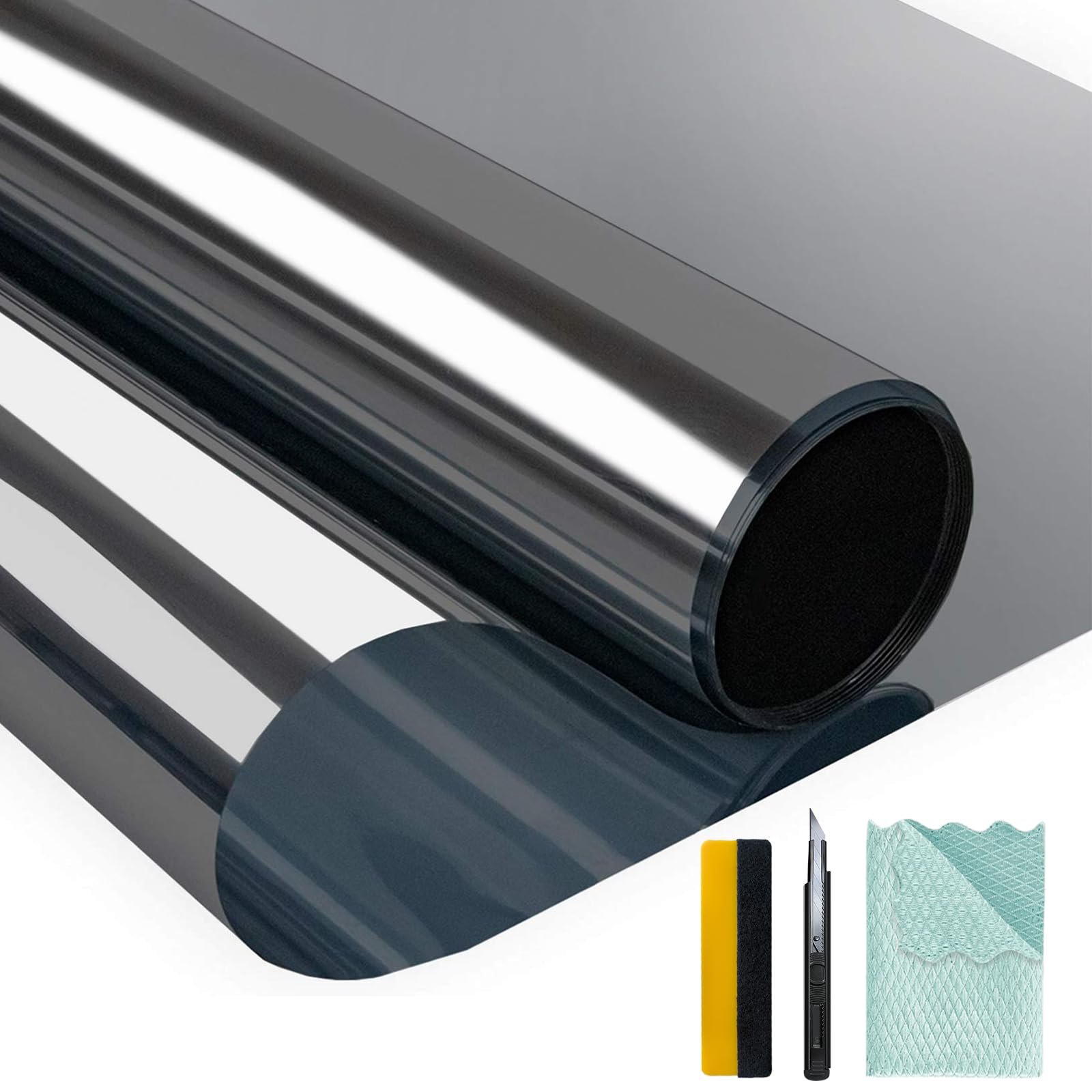
1. Niviy One Way Window Privacy Film 23.6 x 78.7
Our pick — 4.0+★ from 11,500+ verified ratings; the strongest balance of quality and price.
The reflective roll that turns glass into a daytime mirror and blocks 95% of UV.
The Niviy roll earns the top spot because it solves the privacy problem without darkening your car into a cave. It blocks 95% of UV rays — that is the light that fades dashboards and burns forearms on a long drive. The mirror effect does its work while the sun is up, so people outside see a reflection instead of your back seat. The roll measures 23.6 inches by 78.7 inches, which is enough to handle a run of side glass or a strip across a rear window.
The package also throws in the installation kit — wipes, a knife, and squeegees — so you are not hunting for tools on install day. It is peel-and-stick vinyl, and it comes off by peeling a corner and spraying water behind it, leaving no residue on the glass. What wins people over is the look of the finished job: a clean, dark, mirror-silver finish that reads as deliberate rather than cheap. Buyers report “it lets the light into the room but still provides privacy,” which is exactly the balance you want on a car that sits in a sunny lot.
The honest catch is that the mirror effect only works in daylight. Once it is dark outside and your interior lights are on, the reflection flips and people can see in — so do not treat this as night-time security film. Adhesion also splits opinions: a wet, thoroughly cleaned glass surface holds it fine, but a dry or dusty pane will not. Honest caveat: some buyers find it expensive for what is essentially a vinyl sheet, and installing a large pane solo takes patience to push the bubbles out.
What earns the top slot
- Blocks 95% of UV rays, cutting dashboard fade and arm burn
- Reflective mirror effect hides the interior from outside during daylight
- Install kit included — wipes, knife and squeegees in the box
- Peel-and-stick vinyl removes without residue
Where it asks you to be careful
- Mirror privacy disappears at night when interior lights are on
- Needs a very wet, spotless surface or it will not adhere
- Large panes are awkward to smooth solo
Reach for this if: you want daytime privacy and UV protection on glass without turning the interior black.
Think twice if: you need real night-time screening — the reflective effect only runs while the sun is up.
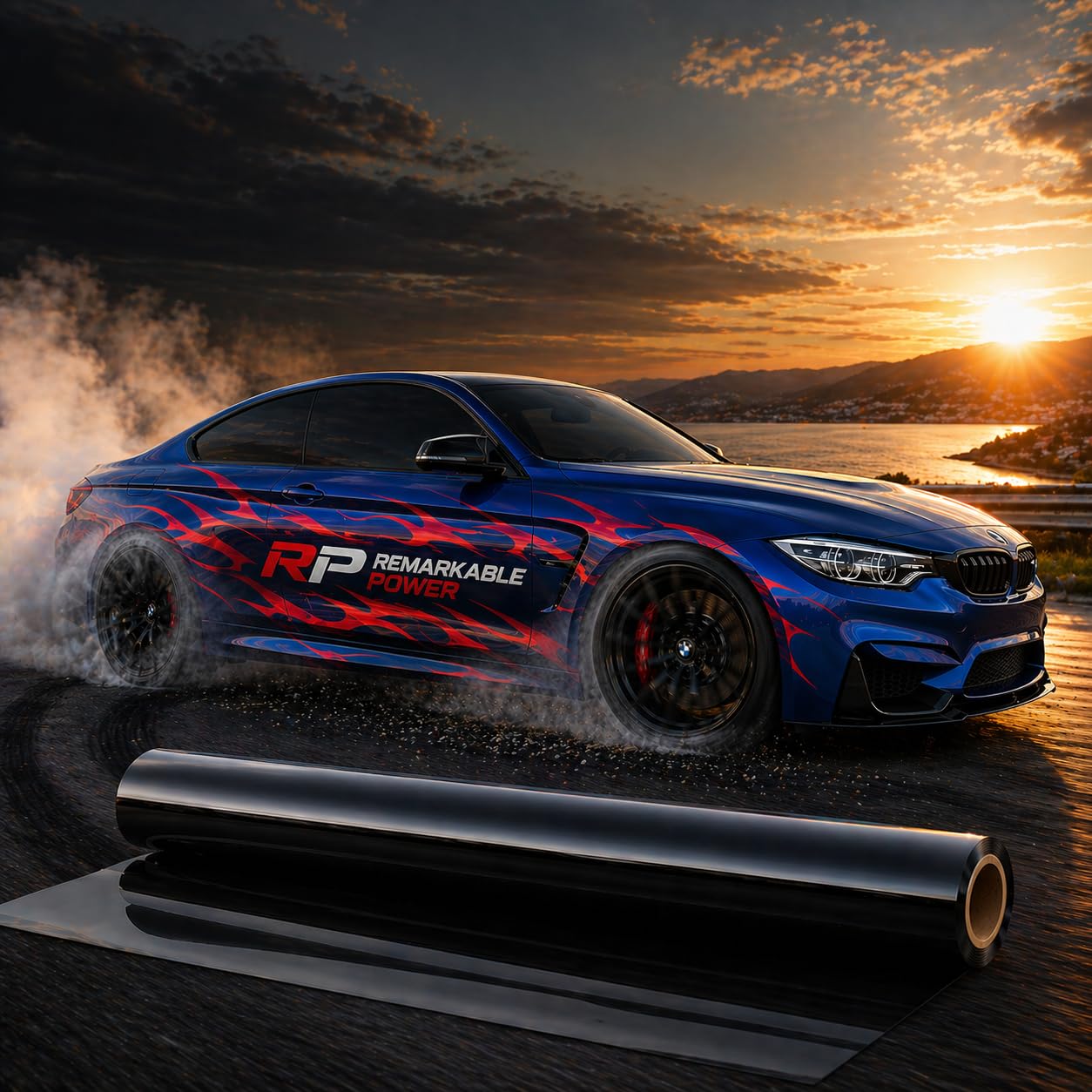
2. Car Window Tint Film 15% VLT 20in x 15FT UVR 99% Heat Block
The cheap practice roll you cut your teeth on before touching the real glass.
You get a dark, private tint because this is a 15% VLT roll — only a fifth of the light passes through. It blocks 99% UV — the highest UV figure on this list, matching the ARANA ceramic roll. But the number that should drive your decision here is the price of experimenting: you can pick from 20in, 24in, 30in and 36in widths with 15ft or 30ft lengths, plus 5%, 15%, 22%, 35% and 75% VLT choices. That flexibility is genuinely unusual at this end of the shelf.
It is UV-blocking and anti-glare, and the maker says it is an HD-clear film that does not disturb the view from inside. The two-layer construction means the sticky side is the positive film and the clear side is the protective layer — get that order wrong and you will be peeling it back off. Owners mention the colour leans “a little on the purple side,” which is a cosmetic quirk rather than a functional one.
Here is the part nobody tells you: instructions are thin on the ground. One buyer put it plainly — “You have to know or have done it before because there no instruction.” That is the whole trade-off. If you have never squeegeed a window in your life, start with this size on a piece of scrap glass, or accept that a mishap here costs very little. The 99% UV protection makes it a sensible pick for a sun-baked commuter car where you mainly want a cooler arm and less glare.
Best used as a rehearsal: the size and VLT spread means you can buy a cheap 15ft roll, learn the wet-install technique, and graduate to a ceramic roll once your hands know the motion.
The trade-off to accept: thinner documentation than the ceramic rolls on this list — plan on watching a video before you start.
Go for it when: you are learning to tint and want a low-risk roll to practice on first.
Pick the ceramic rolls instead if: you want hand-holding and a four-figure UV claim with proper installation notes.
3. ARANA 20% VLT 20″×20FT Ceramic Car Window Tint Film
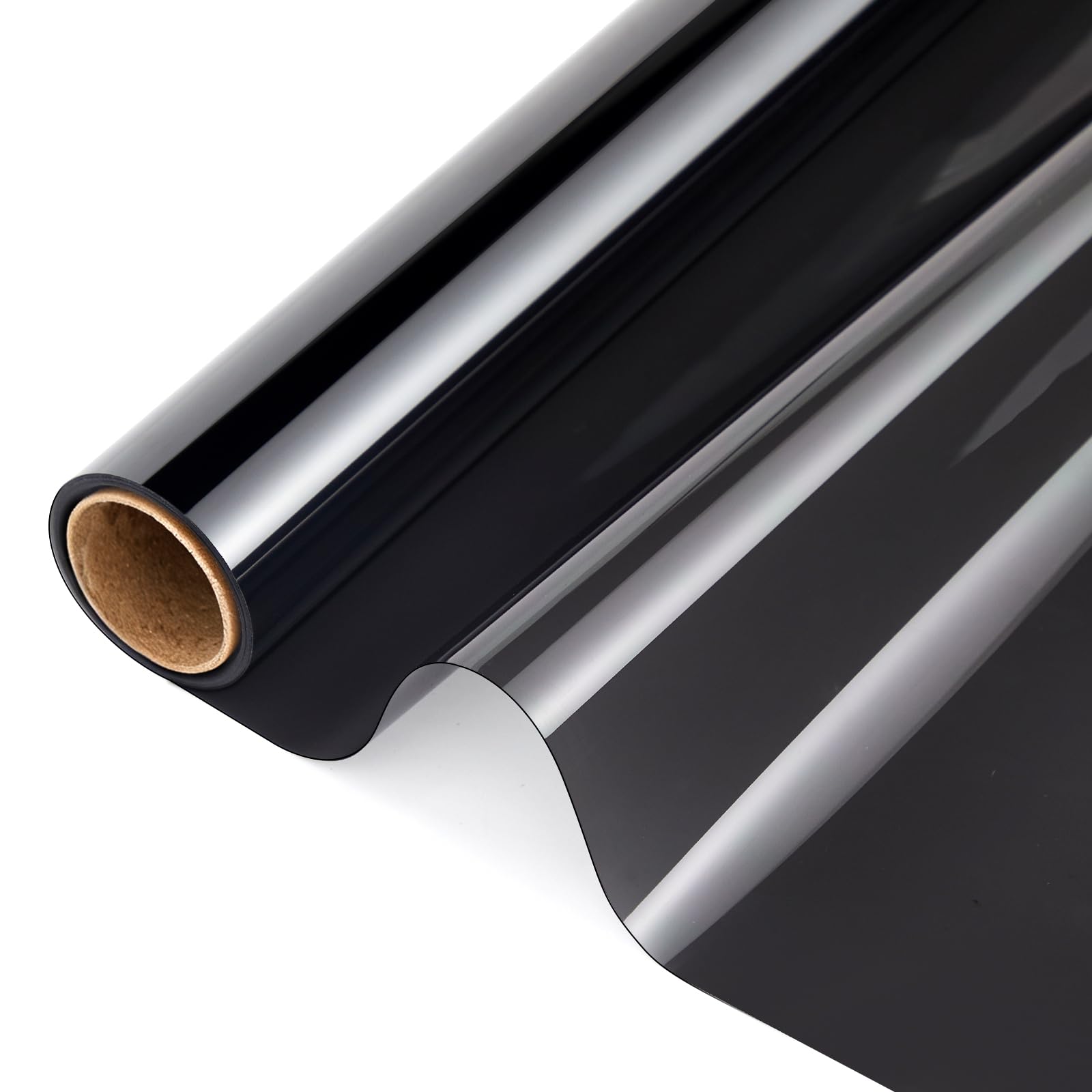
Nano ceramic film at 20% VLT — the middle ground between privacy and driving visibility.
Twenty percent VLT is the number to hold onto here. It lets a fifth of daylight through, so your window reads dark from the pavement while you still have a clear line of sight from the driver’s seat. The ceramic construction blocks 99% of UVA and UVB radiation and cuts solar heat buildup, and the hard coating resists wiper wear and minor scratches. You get 20 inches by 20 feet, enough to run the sides of a car without splicing.
The material difference matters in practice: a ceramic roll handles the heat without needing an aggressive dye layer, so the glass stays usable inside while looking lawfully dark outside. It is that balance that wins people over. Customers note “after a month, no peeling and still looks like a professional did it” — a first-attempt result that says the adhesive is stable when applied wet. The 18 months of after-sales support is a nice safety net if you hit an install snag.
The recurring gripe is darkness versus the label. A few buyers feel the film reads lighter than the stated VLT suggests, so do not buy this expecting a limousine-black rear window. A small handful found the adhesive fought them on a dusty pane. Both are fit notes, not defects — clean the glass with alcohol first and this ceramic roll behaves.
Why the ceramic spec earns its place
- 20% VLT balances outside privacy with inside visibility
- 99% UVA and UVB block on a nano ceramic film
- Hard coating resists wiper wear and daily scratches
- 18 months of after-sales support included
What to know before you buy
- Some find it reads lighter than the stated VLT
- Adhesion suffers on a dirty or dry pane
- Not the darkest option if you want heavy blackout
The confident choice for: a first proper ceramic tint job where you want real heat rejection without a blackout look.
Not the pick for: anyone chasing maximum darkness — pick a 5% film instead of a 20% one.
4. IAQWE 20% VLT Ceramic Car Window Tint Film 20 in x 20 ft
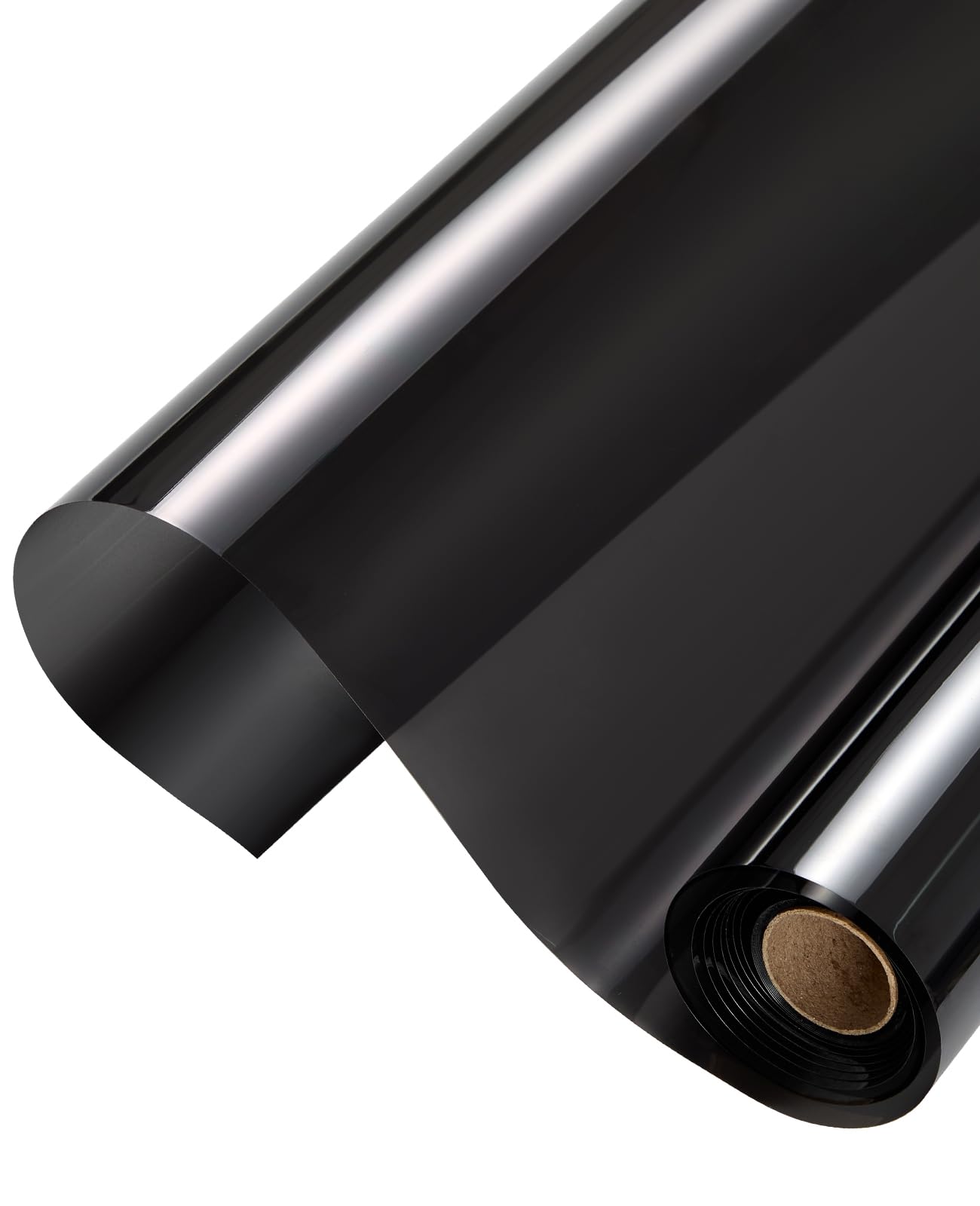
One 20-foot roll that can wrap a whole van if your cuts are clean.
You get a lot of glass covered from one purchase with the IAQWE roll. It ships as 20 inches by 20 feet — the maker lists 240 inches of length and a unit count of 400 square feet — and one roll covered a 15-passenger van minus the two front roll-down windows in a build a buyer described. The film is a five-layer automotive tint that holds glass together on impact — a shatterproof claim rarely stated this plainly at the value end.
The ceramic layer does the heat work: it blocks 99% UV per the maker and cuts solar heat, while the 20% VLT keeps the cabin cooler and still lets you see out at night. It also heat-shrinks to curved windows, which is the difference between a smooth rear glass and a creased one. Glare control is real here — the tint takes the sting out of oncoming headlights on a night drive.
What you should know before you commit: this film is thinner than some buyers expect and can tear if you are heavy-handed with the blade. Use a sharp one, keep the film taut, and heat it before you scrape. A first-timer spent five hours on a full van with a heat gun, soapy water spray bottle and a plastic scraper — that is the realistic effort here. Reviewers point out the 20% film looked darker than the law allowed in one buyer’s state, so check your state limit before you cover the front doors.
The coverage math: 20 feet of length against the ARANA’s identical 20-foot roll means the difference is material and finish — this one carries the five-layer safety spec and the shatterproof claim.
The buyer-pattern note: “Worth the price” and “good value and the quality” run through the reviews — the tint holds up as a bargain, provided you install it with a heat gun and patience.
Best fit for: large vehicles, vans and long rear glass where one generous roll beats two short ones.
Look elsewhere if: you want a forgiving film for a first attempt — this one punishes a dull blade.
5. 2Ply Premium Window Tint Film for Car 24in x 25ft (25% VLT)
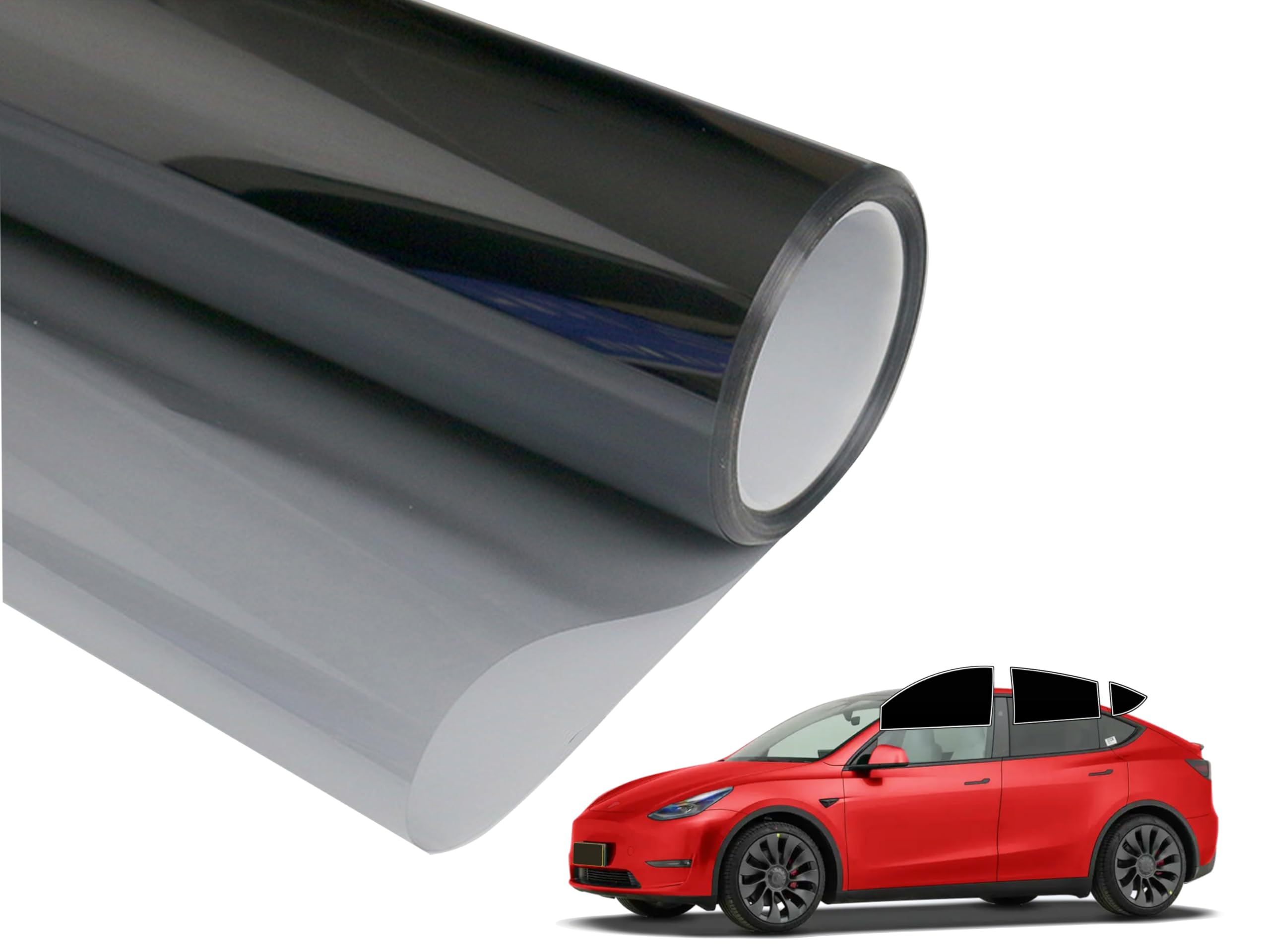
Extra width and extra length for the rear glass that swallows other rolls.
Twenty-five percent VLT on a 24-inch by 25-foot roll — that width is the differentiator. A 24-inch roll gives you margin on the curved rear window of a hatchback or SUV, where a 20-inch roll can leave you short at the corners. The 25-foot length means you can cover side glass and still have enough for sun strips across the top of the windshield. The film is two-ply PET, the plastic base most automotive tint is built on, and it is sold by AUTOTEK with VLT options from 5% through 35%.
Privacy is the job here. The film darkens the glass from outside without blocking your view out, and its stated shatter-strength benefit helps hold glass together and cuts glare from oncoming headlights. Heat and UV reduction round the list out. The texture and finish are the part you feel in the hand, and the maker describes it as a premium two-ply construction, though the film’s real character shows up once it’s on glass.
The install is the honest catch. Multiple buyers describe it as hard and needing patience, with the heat gun being the tool that makes the curved glass work. A buyer report called it “pretty decent tint. Easy to put on and trim” — but another found the texture bad and the VLT percentage inaccurate, saying it looked see-through unless the day was overcast. That spread is the whole picture, and it points to one thing: this is a film that rewards a slow, patient hand and punishes a rushed one.
What a wide roll buys you
- 24-inch width covers large curved rear glass
- 25-foot length leaves spare for sun strips
- 25% VLT gives privacy without a full blackout
- PEТ base with stated shatter and glare benefits
The install reality
- Harder to apply than thinner rolls — needs a heat gun
- Some find the VLT reads lighter than stated
- Texture quality is hit and miss on some rolls
Choose this one when: your rear window is wide and curved, and you want spare film for sun strips.
Skip this and go ceramic if: you want heat rejection as the headline, not privacy — the ceramic rolls on this list do that job better.
Know the Specs
VLT (Visible Light Transmission)
VLT is the percentage of daylight that passes through the film — a 20% film lets a fifth of the light in, and a 35% film lets in noticeably more. Lower VLT means darker glass and more privacy, but it also means harder night driving. Always check your state’s front-window limit before you buy, because a 5% film that is fine on rear glass can be illegal on the driver’s door.
UV Block Percentage
UV block is the share of ultraviolet radiation the film stops. A 99% figure is the ceiling you will see on ceramic rolls and stops the light that fades dashboards and leather. A 95% figure on a vinyl privacy film does nearly the same job. The difference between the two does not matter much for a car interior — either figure protects your surfaces.
Ceramic versus Dyed Film
Ceramic film uses nano ceramic particles to reject heat, while dyed film relies on a dark colour layer. That lets a ceramic roll cut heat while staying lighter, and ceramic film is far less likely to interfere with phone or GPS signals. Dyed film is cheaper and fine for pure privacy, but it can fade over time.
Roll Width and Length
A 20-inch roll handles side windows, a 24-inch roll covers curved rear glass, and a 20-foot or 25-foot length is what lets one roll wrap a van. Buy short and you will be splicing seams across the back window — measure your rear glass corner to corner before you order.
Common Questions
What VLT tint is legal on car front windows?
Does 99% UV block film really stop dashboard cracking?
Can I install car window film myself without a heat gun?
Why does my reflective privacy film stop working at night?
Will ceramic tint block my phone signal or GPS?
How many windows will a 20-inch by 20-foot roll cover?
Can I remove car window film and reapply it?
Does window tint actually make the car cooler?
What is the difference between a 20% and a 15% VLT film?
Will the film peel if I use a car wash?
The Bottom Line
For most drivers, the car window film to start with is the Niviy One Way Window Privacy Film because it blocks 95% of UV and hides your interior during daylight without darkening the car into a cave. If daytime heat and glare inside the cabin are your priority, grab the ARANA 20% Ceramic Tint for its 99% UV block and stable adhesion. And for a wide rear window or a van, the IAQWE 20% roll is the one to reach for.
How we choose
We do not accept paid placement. Every pick is matched to a real buyer and a real use-case; we do not hands-on test units.
Sources
Specifications: manufacturer listings and product documentation. Review insights: verified customer reviews, as of October 2026. Pricing: not shown on this page (it changes often); check the current price via the retailer link.
As an Amazon Associate, Aappliancez earns from qualifying purchases. This does not affect which products we feature.