Disclosure: Some links in this post are affiliate links. As an Amazon Associate I earn from qualifying purchases, at no extra cost to you. Learn more
Specs are compiled from manufacturer listings and verified buyer reviews and can change over time — please confirm the key details on the product page before buying.
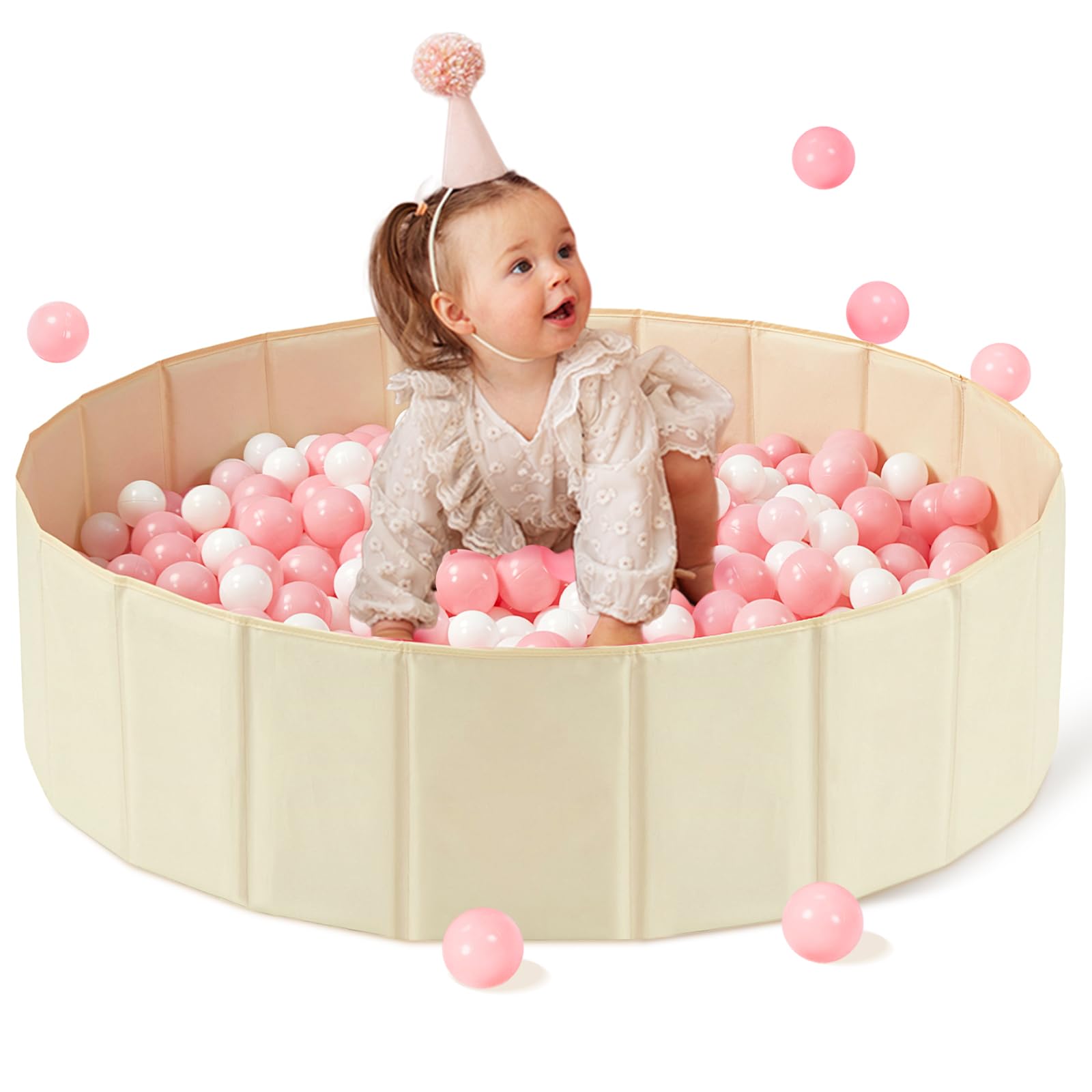
Buying a ball pit for a baby is really a question of wall strength, not ball count. A pit with soft, collapsing sides turns into a mess of loose balls rolling under the couch the moment your little one grabs the rim and pulls up. The right pick keeps its round walls firm without inflation, an air pump, or tools, and its wipe-clean cover handles snack crumbs and spit-up in seconds.
This guide is built by comparing the manufacturers’ published specifications and the patterns across verified customer reviews, so you get each pick’s real strengths and trade-offs instead of marketing spin.
The five picks below cover fold-flat travel pits, soft foam designs, and larger round pools, so you can match the wall style to your baby’s age and your floor space. This breakdown of the best ball pit for babies explains which of these five fits your room and your crawler.
Top Picks

How To Choose The Best Ball Pit for Babies
The two things that decide whether you love or regret this purchase are the wall build and the ball math. Everything else — color, fabric, whether it folds — matters far less than those two.
Wall type: what stops the sides flopping over
There are two main builds. Foam pits use a thick sponge ring, often with a steel or aluminum ring inside the fabric, which stays upright on its own and softens a bump if your baby tips into it. Fold-flat pits use a pop-up frame that snaps open in seconds but relies on tension alone to hold the shape. A baby who is pulling up, cruising, or grabbing the rim needs the firmer foam build. A baby who mostly sits and bats at balls does fine with the lighter pop-up style. Watch the listed age range too, since several foam pits here are marked for 3 years and up because of small parts.
Ball count: the number nobody warns you about
Nearly every pit on this list ships without balls, and the ones that include them rarely include enough. A single layer across the base is not a ball pit — it is a scattered floor. For a round pool in this size range, a few hundred balls just gets you started, and the count climbs toward four figures if you want the full swimming-pool effect. Plan the ball budget separately from the pit itself, and if a pit lists a capacity, treat that as the ceiling rather than the number you need.
Side-by-Side Comparison
| Model | Best For | Wall Build | Ball Capacity | Shape / Size | Amazon |
|---|---|---|---|---|---|
| Hikiddy Foldable Ball Pit★ Best Overall | Small rooms and travel | Pop-up steel frame, oxford fabric | 500+ balls | Round, 31.5 x 31.5 x 12 inches | Amazon |
| Infantino Pop-Up Ball PitBest Value | Toddler pairs in tight spaces | Pop-up frame, polyester | 50 balls included | 35-inch play area | Amazon |
| FUBOTRAD Round Foam Ball Pit | Soft landing for crawlers | Memory foam, washable cover | Up to 1000 balls | Round, 35.4 x 11.8 inches | Amazon |
| HARBOLLE Soft Fleece Ball Pit | Cozy sensory play corner | Memory foam, fleece cover | 250–400 balls suggested | Round, 35.4 x 35.4 x 11.8 inches | Amazon |
| Baby Foam Ball Pit, White | Multi-pet and toddler homes | 1.97-inch memory foam, milk fiber cover | Up to 500 balls | Round, 35.4 x 11.8 inches | Amazon |
Detailed Reviews
1. Hikiddy Baby Ball Pit Foldable 31.5 Inch
Our pick — 4.5+★ from 600+ verified ratings; the strongest balance of quality and price.
The pop-open pit that snaps into shape without a pump, a tool, or a single minute of assembly.
If you live in a small apartment and want a play zone that vanishes into a closet, start here. This Hikiddy pit unfolds in about five seconds and folds just as fast, so setting it up for a morning of play and packing it away before dinner adds no real chore to your day. At 1.21 kg (roughly 2.7 lb), it is the lightest pick in this lineup and the easiest to carry one-handed while you are also holding a baby.
The 31.5 x 31.5 x 12 inch footprint makes it the most compact round pit here — noticeably tighter than the 35.4-inch foam pits below. That smaller circle is exactly what makes it work in a tight corner, but it also means fewer babies fit inside at once. The 12-inch wall height is deliberate: tall enough that the sides give your baby a defined play area to push against, short enough that a toddler can step over the rim without help. The frame is alloy steel under the oxford fabric, so it holds its circle instead of sagging. The fabric is PU-coated oxford cloth — a water-resistant woven material — which means a damp rag handles spilled juice and crushed crackers, no machine wash required.
Two things to plan around. First, no balls are included, and the listed capacity is 500+ balls, with 600 the number you would want for the full effect. Second, a smaller circle fills faster than you think — one buyer found it took at least 1000 balls to get the depth she wanted out of a similar round pit. Factor the ball cost into this purchase or you will be looking at an empty ring on day one. It also doubles as toy storage or a pet bed when the kids move on.
What works in a tight room
- Unfolds and folds in seconds with no pump or tools, so daily pack-away is realistic
- At 1.21 kg it lifts and moves with one hand, and a carry bag handles travel and playdates
- PU-coated oxford fabric wipes clean with a damp rag instead of a full wash cycle
- Twelve-inch walls give a crawler a defined boundary to pull up against
Before you order
- No balls included, and the full look needs 500+ to 600 balls
- The 31.5-inch circle fits fewer babies than the 35.4-inch foam pits
- Pop-up tension walls suit sitters and crawlers better than a cruising toddler yanking on the rim
Reach for this if: your play space doubles as your living space and you need the pit gone by bedtime.
Look elsewhere if: you want the pit to arrive with balls inside the box.
2. Infantino Pop-Up Ball Pit 35″
The only pit here that lands with balls in the box — handy, but fifty goes fast.
You can set this up and start playing the same afternoon it arrives, because it is the only pit in this group that comes with balls included. The 35-inch play area fits a small living room or a playroom corner, and two toddlers fit comfortably inside. Raised side rims keep balls from rolling out, and plastic loops along the seams spread the strain where the fabric would otherwise tear — the fix for the seam rips that kill cheaper pop-up pits.
Set expectations on ball count, though. Fifty balls is a starting layer, not a filled pit. One buyer notes that 200 balls fills it about halfway, so budget for several hundred more than the 50 in the box. The included storage bag and the fold-flat build make it genuinely portable for trips and visits, and the polyester is a garment-grade fabric rather than a heavy industrial weave.
The honest trade-off here is the wall build. This is a tension pop-up frame, and a baby who is sitting up and grabbing the sides can pull it down on themselves. That is the core of the mixed feedback on sturdiness. For a sitter who mostly plays inside it, it holds up well — one parent ran it daily for months and got years of use out of a comparable foam pit that warped in weeks. But for a crawling, climbing baby, a firm foam wall is the safer structure.
Why the size wins: the 35-inch footprint strikes the middle ground between the compact Hikiddy above and the larger 35.4-inch foam pits, and it folds into a bag you can carry to grandma’s house.
The fold catch: collapsing it back into the bag takes practice, and the smaller the room, the more that friction matters when you are packing up one-handed.
Good buy for: a sitting baby in a small home who needs balls on day one and a pit that travels.
Think twice if: your baby is already pulling up on furniture — the tension walls will not hold against that.
3. Baby Ball Pit 35.4″ x 11.8″ Foam Light Gray

The capacity king — a 35.4-inch foam ring that swallows up to a thousand balls without overflowing.
This pit is built from memory foam with a removable, machine-washable cover, so a spill or a diaper mishap comes out in the wash instead of staining the fabric. The foam does not soak up liquid easily, so you can catch most messes before they set. The 35.4-inch diameter gives real room to move, and the sponge walls cushion a bump when your baby tumbles against the side.
This is where the ball math gets interesting. The published capacity is up to 1000 balls, and 200 balls only gets you about a quarter full — so the difference in interior volume between this round pit and the compact Hikiddy above is enormous. If you want the deep, swim-through look, this is the structure that supports it. In practice 400 to 500 balls gets you half full, and a full pit of a thousand is a lot of plastic to buy and store. Note for pet owners: the same soft, self-supporting walls make this a favorite for dogs and small pets, and the removable cover keeps the fur situation manageable.
Before ordering, know that the pit ships compressed and slightly deformed; the manufacturer says to stuff it with pillows or blankets to help it recover, with the round shape returning after 3 to 5 days. It is usable in the meantime — this is a cosmetic settling period, not a defect. It is also the heaviest pick here at 1.83 kg, and the age note flags it as not for children under 3 because of small parts in the assembly.
Where it earns its place
- Up to 1000-ball capacity gives the deepest play volume of any pit here
- Machine-washable removable cover and foam that resists soaking up spills
- Soft memory foam walls take the impact when a crawler tumbles against the side
- Bigger footprint than the two pop-up pits, so more room to move and roll
Plan around this
- Arrives compressed and needs a few days of settling to look fully round
- No balls included, and hitting the full look takes a serious ball spend
- Heavier than the fold-flat picks, so it lives where you put it
Best for: parents who want a soft-walled pit big enough to grow with the baby and hold a deep bed of balls.
Not for: anyone who needs the pit to look perfectly round on day one.
4. HARBOLLE 35.4″ Soft Fleece Ball Pit for Toddlers, Green

The fleece-lined pit that turns a bare corner into a soft sensory play nest.
Fleece changes the feel of this whole category. Where the oxford and polyester pits above feel like tents and tunnels, this HARBOLLE is upholstered — a soft, cushioned surface that babies crawl into rather than over. The 35.4 x 35.4 x 11.8 inch round shape fits multiple children, and the sides are the standout: firm enough to hold the wall up, soft enough to give when a baby leans on them. The removable cover zips off and goes in the machine, and the side zipper makes separating it from the foam straightforward.
The setup story is a little odd, and worth knowing before you unbox. This pit ships vacuum-packed, so it arrives flat and wonky. You fluff the fleece and let it decompress, and it rounds out into a full circle within a day or two. One owner reports it took about 24 hours to expand back into a perfect circle, which is normal for vacuum-packed foam, not a defect. Give it the time and it looks the way the photos promise.
The trade-off to weigh is the shape itself. This is a memory foam ring with soft fleece, and soft foam does not always hold a crisp circle when a toddler climbs on the rim every day. The recurring gripe in owner feedback is that the ring can drift out of round over time. That is the price of the plush feel — a stiffer foam or a rigid frame holds its line better. If perfect geometry matters to you, this may not be the one. If cozy sensory play is the goal, the fleece cover delivers it.
The touch is the sell: fleece over memory foam gives a padded, huggable surface that the fabric-lined pop-ups simply cannot match, and it makes a stylish, calm play corner in a formal living room.
The trade this carries: soft foam keeps the walls pillowy but can lose its crisp round shape, and the cover needs a bit of a fuss to get back on after washing.
Suits your home if: you want a cozy, good-looking play corner and your child is at the crawling-and-climbing-in stage.
Pass on it if: you need a pit that stays perfectly round through daily tumbling.
5. Baby Foam Ball Pit 35.4″x 11.8″ White

Thickest walls of the bunch, wrapped in a skin-soft milk fiber cover.
The number that separates this pit from its foam rivals is 1.97 inches — the wall thickness. That is a genuinely thick memory foam wall, and it does two jobs: it holds the round shape firmly, and it cushions hard when your baby pitches sideways. The outer cover is milk fiber, a soft, breathable fabric, and the 35.4-inch diameter by 11.8-inch height matches the other round foam pits here. It holds up to 500 balls, again with none in the box.
Crawling in and out is the everyday reality of a pit this shape, and the height is set so a baby can climb over the rim without a hand. The cover comes off for washing, and reassembly takes a few minutes after it dries. One thing owners of foam pits learn quickly: the inner base panel can shift, and balls slide underneath it. If you spot balls vanishing under the floor, you are looking at clearing the pit and reseating the panel — annoying but fixable in a minute.
Order this with eyes open about the unboxing. It arrives vacuum-sealed, and the sponge core can take anywhere from 2 to 21 days to fully recover its shape, though it stays usable while it settles. Pillows and blankets stuffed inside speed things along. The other detail worth flagging: a new foam pit can carry a factory smell out of the bag, so air it out before playtime, especially with a baby who puts everything in their mouth. That is a one-time settling issue, not a lasting one.
Why the thick walls matter
- 1.97-inch memory foam walls stay firm and cushion a tumble better than thin walls
- Milk fiber exterior cover is soft and breathable against skin, and it unzips for washing
- Hidden waterproof zipper lets you pull the foam blocks out and reassemble in minutes
- 35.4-inch round footprint gives plenty of play room for one or two little ones
Worth knowing
- Takes 2 to 21 days to reach full shape after unboxing
- New-pit foam smell needs airing out before first use
- The inner base panel can shift under the balls and calls for a quick reseat
Skip if: you are impatient about the settling period and want a ready-to-use pit straight from the box.
Know the Specs
Wall height and why 11 to 12 inches is the balance
Every fixed pit in this group sits at 11.8 or 12 inches tall — the difference between a wall and a trip hazard. At roughly a foot high, the sides are tall enough to keep most balls corralled during play but low enough that a toddler can climb in and out without tipping the whole ring over. Taller walls would trap a small baby; shorter walls let balls roll free across your floor. If your baby is still a crawler, the low height means they can tumble in and out on their own, which is the whole point of the toy.
Ball capacity and how to budget for it
Capacity numbers here run from a few hundred balls up to a kit that holds 1000. That is the ceiling, not the target. To get a shallow but usable layer, plan on a couple hundred balls; to get the deep swim-through look, you are into the hundreds and up. Because nearly every pit ships without balls, weight the ball spend as part of the purchase. Cheap plastic balls are sold in bags, so the count you need is your main decision, not the color of the pit.
Common Questions
How many balls do I actually need to fill a ball pit?
Are foam ball pits safe for a baby who is just learning to pull up?
Can a ball pit be washed when it gets dirty?
Why does my ball pit arrive flat and misshapen?
Does a ball pit come with balls included?
What is the difference between a foam pit and a pop-up pit?
Can I use a ball pit for a dog as well as a baby?
How long does a ball pit last with daily use?
Will a new ball pit have a smell when I unbox it?
What age is a ball pit suitable for?
The Bottom Line
For most families, the ball pit for babies that earns the top spot is the Hikiddy Foldable Ball Pit, because it pops open and folds away with no pump or tools, and its alloy steel frame keeps the oxford walls standing upright. If you want soft foam walls that cushion every tumble, grab the FUBOTRAD Round Foam Ball Pit, which holds up to 1000 balls. And for a fleece-lined corner that feels upholstered rather than like a tent, reach for the HARBOLLE Soft Fleece Ball Pit. Whichever you pick, buy your balls in bulk upfront — the pit is only half the toy.
How we choose
We do not accept paid placement. Every pick is matched to a real buyer and a real use-case; we do not hands-on test units.
Sources
Specifications: manufacturer listings and product documentation. Review insights: verified customer reviews, as of October 2026. Pricing: not shown on this page (it changes often); check the current price via the retailer link.
As an Amazon Associate, Aappliancez earns from qualifying purchases. This does not affect which products we feature.