Disclosure: Some links in this post are affiliate links. As an Amazon Associate I earn from qualifying purchases, at no extra cost to you. Learn more
Specs are compiled from manufacturer listings and verified buyer reviews and can change over time — please confirm the key details on the product page before buying.
If your ankles roll inward with every step, the fix is not a softer insole — it is a firmer one with a deep heel cup that stops the roll at the source. That is the single thing to get right when you shop for pronation, and it is what separates the five picks below. A squishy gel pad feels nice for an hour and then lets your arch collapse again. A structured insert holds your foot where it belongs all day.
This guide is built by comparing the manufacturers’ published specifications and the patterns across verified customer reviews, so you get each pick’s real strengths and trade-offs instead of marketing spin.
You will see exactly which inserts are built for a collapsing arch, which ones suit heavy bodies and long shifts, and which ones are light enough to slip into a work boot. Every claim here traces back to the maker’s own specs or to what owners actually report after months of wear. Below is the shortlist for the arch support insoles for pronation that genuinely hold a foot straight.
Top Picks
How To Choose The Best Arch Support Insoles for Pronation
Pronation is your foot rolling inward as you step. A little is normal; too much collapses the arch, drags the knee inward, and leaves you sore by evening. The insole you want does not just pad the arch — it controls the heel so the roll never starts. Here are the four things that decide whether an insert actually helps.
Look at the heel cup first, not the cushion
The heel cup is the raised bowl at the back of the insole that cradles your heel bone. A deep cup keeps the heel from tilting inward, and that is the first line of defense against overpronation. A shallow, flat-backed insole lets the heel wander no matter how thick the arch pad is. If the listing does not describe a deep or stabilizing heel cup, assume it is built for comfort rather than control.
Match the firmness to your body weight
A soft insole feels great in the shop and flattens under a heavier body within weeks. Insoles rated for 220+ lbs or described as heavy duty use a stiffer base — often a hard TPU shell — that keeps its shape under load. Lighter walkers can get away with a softer build. The one thing you cannot do is buy a soft insole and expect it to hold a heavy frame straight.
Decide whether you can trim to fit
Trim-to-fit means you cut the insole along printed guide lines to match your shoe size. That is handy for odd sizes, but every cut shaves material off the width. Cut carefully and never take anything off the heel end — that is where the pronation control lives. Insoles that fit true to size from the start, with no cutting, keep their shape intact.
Give your feet a break-in window
A firm arch under a foot that has been collapsing for years will feel odd at first. Makers of structured insoles often suggest a few hours a day to start and building up from there. That early pressure is normal adaptation, not a defect. If it still hurts after that window, the arch height is likely wrong for your foot, not the product.
Side-by-Side Comparison
| Model | Best For | Support Rating | Weight | Trim-to-Fit | Amazon |
|---|---|---|---|---|---|
| Vionic Men’s Full Length Relief Insole★ Best Overall | Everyday dress and walking shoes | Everyday arch support | — | Yes, trimmable | Amazon |
| Professional Heavy Duty Support OrthoticsBest for Heavy Bodies | Heavy bodies and work boots | Over 230+ lbs | 5.93 ounces | No cutting needed | Amazon |
| Cloudflo Plantar Fasciitis Insoles | Long shifts on concrete | Suitable for 220+ lbs | 8.82 ounces | Yes, easy to cut | Amazon |
| BestHalo Heavy Duty Plantar Fasciitis Insoles | Overpronation control in running shoes | 220+ lbs | 9.14 ounces | Yes, trim-to-fit | Amazon |
| Heavy‑Duty Arch Support Inserts for Men & Women | Flat, unsupportive shoes on a budget | High arch & flat feet | 2.89 ounces | — | Amazon |
Detailed Reviews
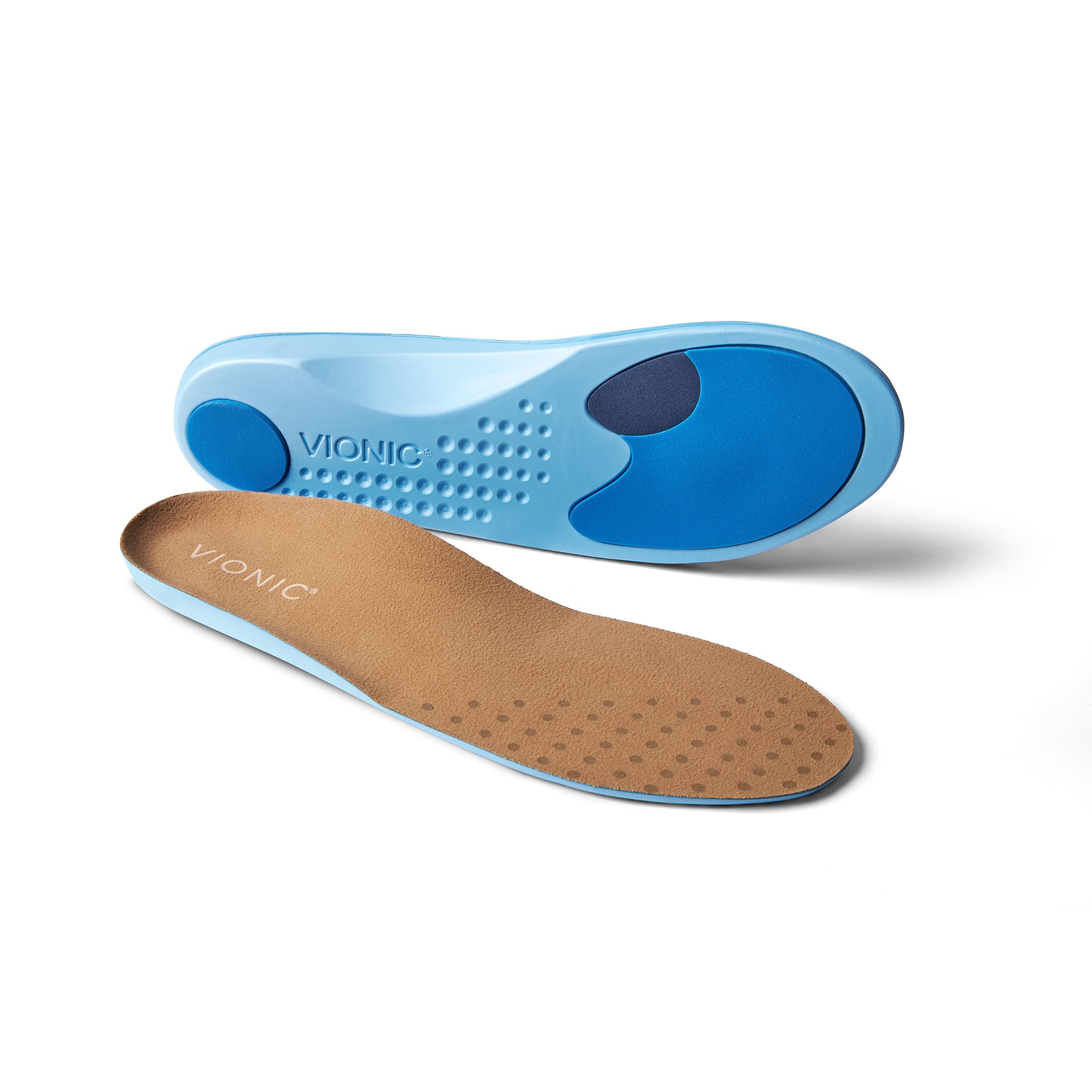
1. Vionic Men’s Full Length Relief Insole Support
Our pick — 4.5+★ from 250+ verified ratings; the strongest balance of quality and price.
The full-length orthotic that quietly holds a rolling ankle in line all day.
This is the pick that does the most invisible work for a pronating foot. Its stabilizing heel cup cradles the heel bone so it cannot tilt inward, which is exactly where overpronation begins. Under the forefoot it adds 1st Ray Technology — a flexible zone beneath the big toe that keeps the front of your foot mobile while the arch stays supported. The result is a foot that feels planted rather than locked.
The build is what wins people over. Durability is the quality owners praise most, and it shows in the way these hold up rather than crush down under daily wear. Buyers report long stretches of use that outlast the shoes they sat in. What they also notice is the relief: “Owners say it relieves end-of-day foot pain, even on 12+ hour days.” One wearer of narrow feet who walks heel-first found the arch support strong enough to call the fit an instant improvement — and cheaper than the orthotics they had tried before.
Here is the honest catch. The fit runs mixed, and the length is on the generous side. Expect to trim them to match your shoe. That trimming job is the one chore of ownership, but it only takes a minute with scissors and the guide on the base. Beyond that, staying power is the story — these are built to be moved from shoe to shoe and keep working.
Where this insole earns its place
- Stabilizing heel cup fights the inward roll right at the heel bone.
- 1st Ray Technology keeps the forefoot flexible instead of stiff.
- Shock-absorbing foam cuts fatigue so you stay on your feet longer.
- Built tough enough to transfer between dress shoes, trainers, and work boots.
What to expect before you buy
- Fit runs mixed, so trimming is likely needed.
- Full length means a snug fit in narrow or shallow shoes.
The confident call: Buy this if you want one structured insole that tames a rolling ankle and moves cleanly across several pairs of shoes.
Think twice if: your shoes are already tight — the full length plus a heel cup needs a little room to breathe.
2. Professional Heavy Duty Support Pain Relief Orthotics
Built to carry a heavy frame through a full shift in work boots.
If you are on the heavier side, this is the insole to reach for first. It is rated for over 230+ lbs, and it backs that up with a stiff PU base under a soft top layer. That harder shell is what keeps the arch from flattening under load — the exact failure point on a cheaper, squishier insert. The Golden Triangle design adds three-point support at the forefoot, arch, and heel so pressure spreads out instead of piling on one spot.
What wins owners over is the quality of the build, and the comfort runs a close second. That combo shows up in the way these handle a whole working day. Owners mention the heel cushion working right away inside work boots, with the difference felt immediately. One detailed account put it plainly: these held up better than “the more expensive variety I have tried.” Another noted the stiff bottom gives proper support while the top stays soft, without the plastic-poking pain that cheaper rigid inserts cause after minutes.
Weigh the trade-off before ordering. Some find these thicker than expected, so thin or low-volume shoes can feel cramped. The deep U-shaped heel cups are the reason — that secure bowl is exactly what stops side slippage during walking, so you give up a little shoe space to get real stability. And a 3.5+ star verdict across just 10+ ratings is thin evidence; treat these as promising but lightly reviewed compared with the giants in this list.
A fair reading on the numbers: Quality and comfort are what people talk about, but that feedback comes from a small early pool. The spec sheet is where the confidence sits — a heavy-duty shell and a 230+ lbs rating are concrete things you can buy on.
Who it fits: the wearer whose shoes are already roomy and who needs an arch to stay put under weight.
The deciding factor: A stiff base plus a heavy-load rating makes this the honest choice for a bigger frame in work boots.
Watch this: An early product with few ratings, and thickness that crowds thin shoes.
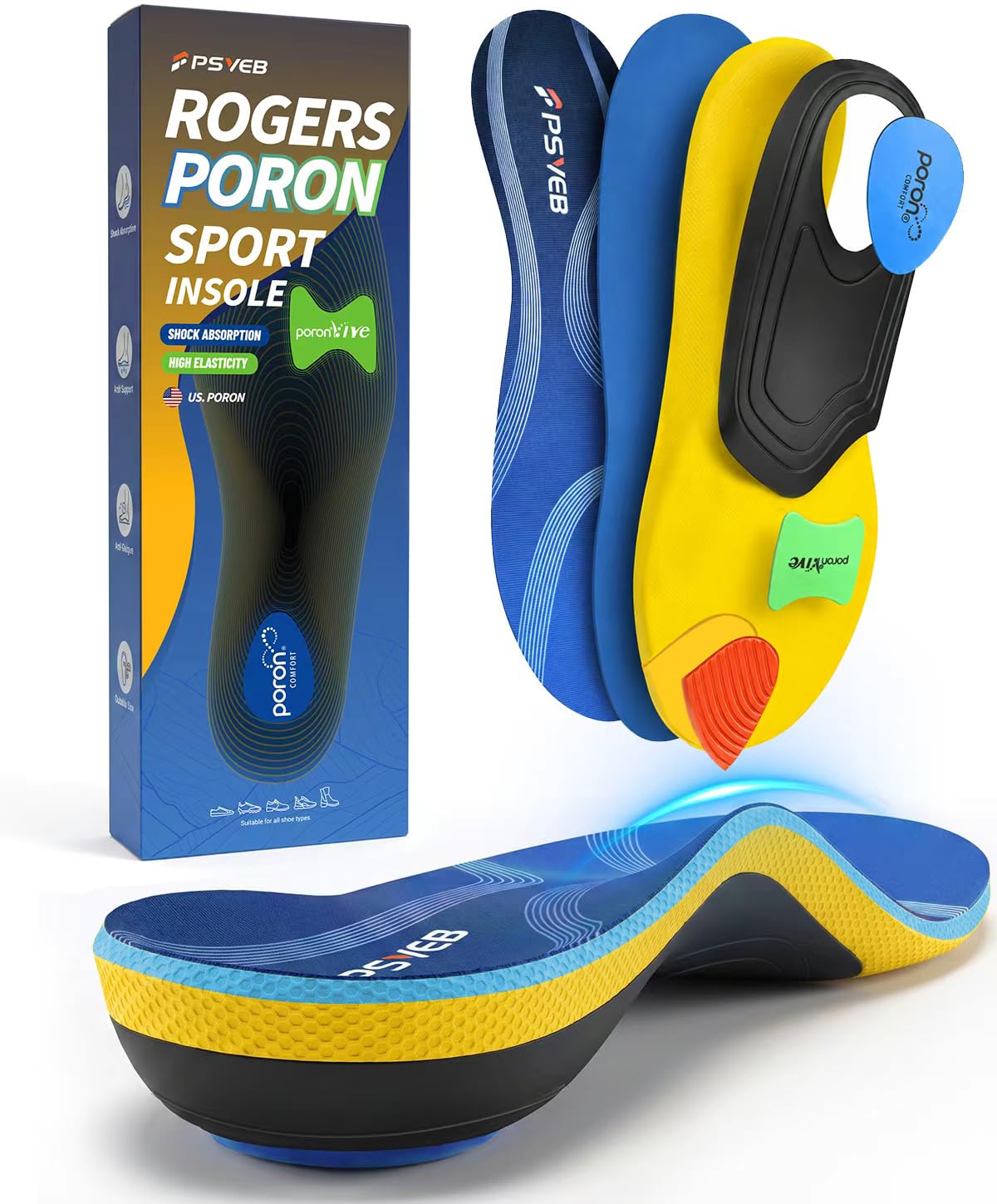
3. Cloudflo Plantar Fasciitis Insoles

The firm-footed workhorse for anyone clocking a ten-hour shift on concrete.
This insole is engineered for the ones who never sit — nurses, teachers, chefs, mail carriers, and retail staff on their feet all day. It uses a hard, rigid TPU material for the base so the arch does not collapse, then stacks a thick Ortholite cushion and a PU heel pad on top to take the shock out of each step. It is rated for users weighing 220+ lbs, which tells you the shell is built to stay firm under a real load.
The thing everyone raves about is the sheer supportiveness of the build, with effectiveness a close second. Two scenes make the point. A mailman logging 25,000–30,000 steps a day rates them highly and has bought them twice — strong arch support even for high arches, with a good fit in his shoes. A wearer with years of foot trouble says the back and knee pain stopped and flat feet finally get real support. Another runner found them still holding up well after 10 months.
Now the part that matters for pronation. These are heavy, thick insoles, and the size the maker lists makes that clear — they sit low and deep in a shoe, so they will not slide into every trainer or slim casual pair. That bulk is the trade-off for real arch control. And for a very high arch, some want more height than even this delivers — one very-high-arched runner wished for a higher option. Trim carefully to your size and keep the heel end whole.
The bulk-versus-control trade: A rigid shell under weight is exactly what stops the arch collapsing, but it makes these the thickest fit here — the right call for roomy boots and sneakers, not tight shoes.
Reach for these if: you stand on hard floors for hours and need an arch that refuses to give under 220+ lbs.
Look elsewhere if: you need to squeeze an insole into a snug or shallow shoe.
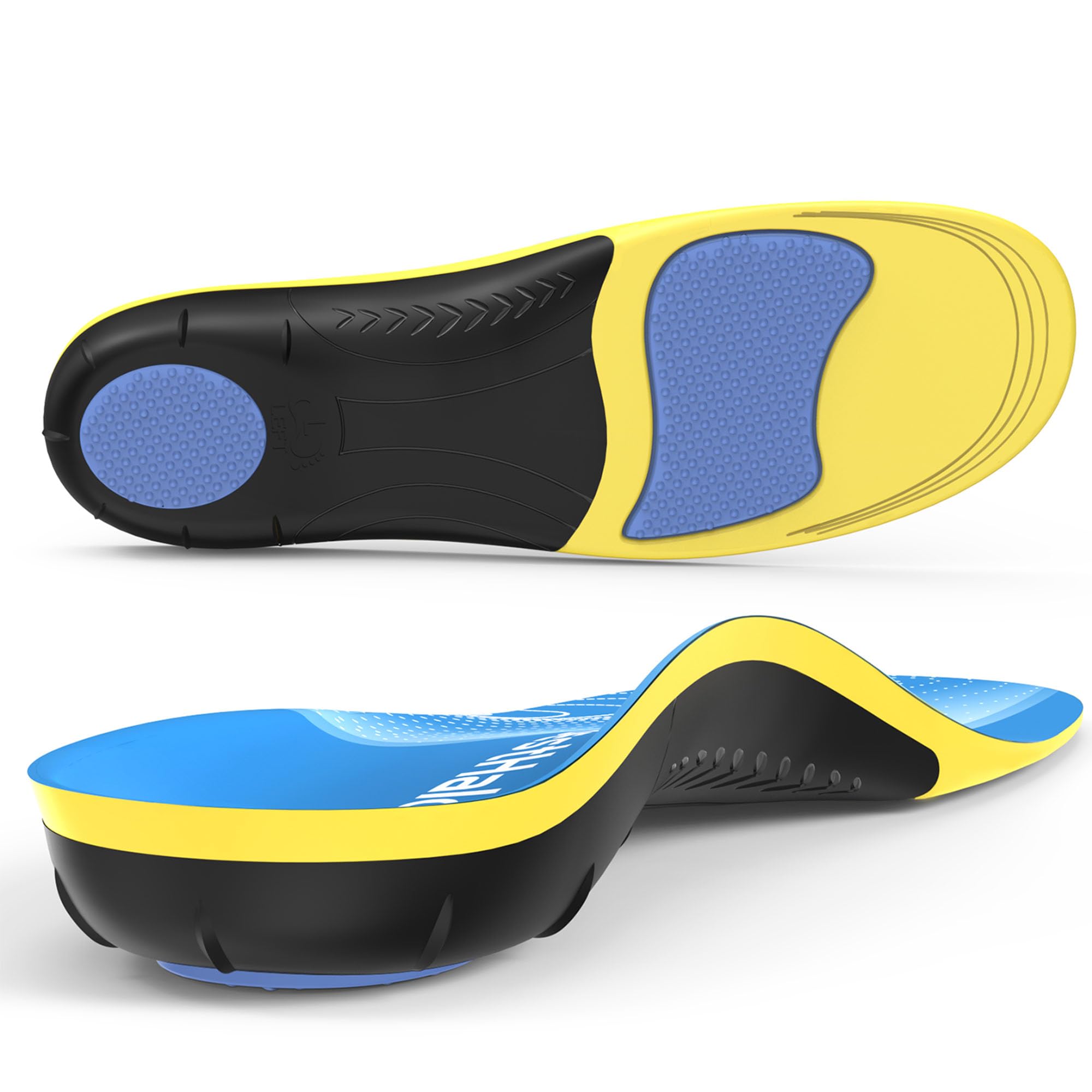
4. BestHalo Heavy Duty Plantar Fasciitis Insoles
The one that names overpronation outright and builds its heel cup to stop it.
This is the pick that talks directly to a rolling foot. Its ergonomic deep heel cup works to keep the heel centered and stable, which is the mechanism that helps control overpronation and supination — the inward and outward roll. Underneath sits premium EVA foam plus gel cushioning for shock absorption, and the whole insert is rated for 220+ lbs. A biomechanical arch structure nudges your stride toward a more natural line, so the support carries through each step rather than sitting under a flat foot.
What wins people over is the quality of the build, with pain relief a close second. The heel cup and high arch are the combo that keeps feet and ankles sitting in alignment instead of drifting. One runner calls these the favorite inserts in all their Hoka running shoes — a women’s 9 fits with no trimming and eases the lower-back ache of standing all day. A high-arch wearer who walks, stands, and pivots at work reports only slight soreness after one day versus months of severe pain, and has ordered a second pair. A basketball and pickleball player wore them for hours with no discomfort and never needed a mid-game shoe change.
The one honest caution is endurance under a relentless day. For a few wearers on their feet more than forty hours a week, the help faded over a month — the pain eased at first, then crept back. That is worth knowing before you commit if you never get a break. For most it holds, and the trim-to-fit design keeps the length adjustable to your shoe.
The architecture that matters here
- Deep heel cup is built to control overpronation and supination.
- EVA foam and gel take impact out of walking, running, and standing.
- 220+ lbs rating keeps the shell firm under weight.
- Trim-to-fit adjusts to most sneakers, runners, and work boots.
The fine print worth hearing
- Expect mild arch pressure for the first few days of wear.
- Support can soften for those logging 40+ hours a week on their feet.
My recommendation: The clearest match for a foot that rolls inward — the named heel-cup control and 220+ lbs rating line up precisely with pronation.
The one hesitation: if you are on your feet more than forty hours a week, plan for the support to ease over time.
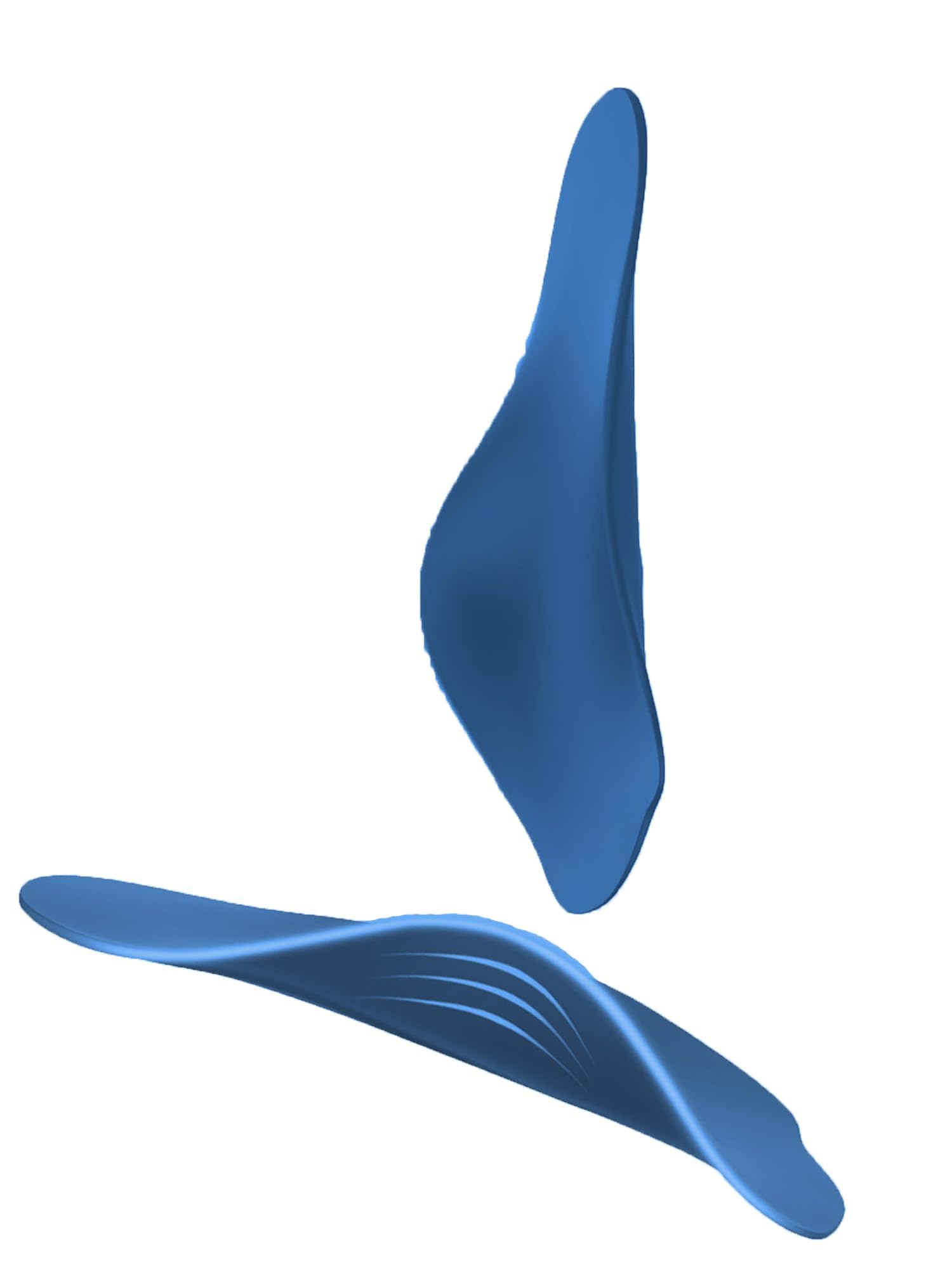
5. Heavy‑Duty Arch Support Inserts for Men & Women
The light little insert for rescuing a pair of flat, unsupportive shoes.
This is the slimmest, lightest option on the list by a wide margin. At 2.89 ounces it slips in without bulking up your shoe, which makes it a sensible first fix for a pair of skate shoes or trainers that have no support to begin with. It is built for high arches and flat feet, and it is aimed at plain walking comfort rather than heavy-load orthotics.
The buying case is simple: it is the most budget-friendly pick here, and it does one job well — putting a supportive bulge under a bare, flat footbed. The experience behind it is real. A wearer who had spent years in support-free skate shoes finally got relief: “One wearer who spent 35 years in unsupportive shoes says the leg aching stopped after switching to these inserts.” Another simply says it “actually works.”
Compare it honestly to the bigger picks. It weighs a fraction of the Cloudflo and BestHalo inserts, which is great for slim shoes but means it carries less structural mass for a heavy body or an extreme roll. And it is a very new product with only a small handful of ratings, so the track record is short. Buy it as a light, cheap stopgap — not as the answer for a serious overpronation problem under a heavy frame.
The smart small-spend: A featherlight 2.89-ounce insert that adds support to bare flat shoes for very little money.
The honest limit: A new, lightly reviewed product with far less structural bulk than the heavy-duty picks — not the tool for a heavy frame or a strong roll.
Know the Specs
Why the Heel Cup Controls Pronation
A deep heel cup is a raised bowl that cradles your heel bone. When your foot rolls inward, it usually starts at the heel — the bone tilts and the arch follows. A cup that wraps the heel keeps it upright, so the roll never gains momentum. Look for words like “stabilizing heel cup,” “deep U-shaped heel cups,” or “controls overpronation” in the listing. That one detail does more for pronation than a thick arch pad alone.
Heavy-Duty Ratings and Body Weight
A “220+ lbs” or “230+ lbs” rating tells you the base is stiff enough to stay firm under a heavier body. Soft insoles flatten under load, and a flattened arch stops controlling anything. The stiffer picks here — like the Cloudflo with its hard TPU shell and the Professional Heavy Duty with its PU base — are built for exactly that pressure. Lighter walkers can choose a softer build without losing support.
Common Questions
Will an arch support insole actually help my pronation?
How long does it take for my feet to adjust to a new arch insole?
Can I trim these insoles to fit my shoes?
Are these insoles firm or soft — which is better for overpronation?
Will a heavy-duty insole fit inside work boots?
What is the difference between an insole for pronation and one for plantar fasciitis?
How much weight can these insoles support?
Do I replace the shoe’s own insole or lay these on top?
Should I wear the same insole in every pair of shoes?
The Bottom Line
For most people fighting a rolling foot, the arch support insoles for pronation winner is the Vionic Men’s Full Length Relief Insole because its stabilizing heel cup attacks the inward tilt at the heel and its durability lets it move from shoe to shoe. If you carry a heavier frame and want a stiff shell that stays firm, grab the Professional Heavy Duty with its 230+ lbs rating. And if overpronation control is the whole point, the BestHalo with its deep heel cup is the one built to speak directly to the roll. Sizing and arch height decide everything here, so match the insert to your shoe’s room and your body weight, not just the star count.
How we choose
We do not accept paid placement. Every pick is matched to a real buyer and a real use-case; we do not hands-on test units.
Sources
Specifications: manufacturer listings and product documentation. Review insights: verified customer reviews, as of October 2026. Pricing: not shown on this page (it changes often); check the current price via the retailer link.
As an Amazon Associate, Aappliancez earns from qualifying purchases. This does not affect which products we feature.