Disclosure: Some links in this post are affiliate links. As an Amazon Associate I earn from qualifying purchases, at no extra cost to you. Learn more
Specs are compiled from manufacturer listings and verified buyer reviews and can change over time — please confirm the key details on the product page before buying.
Finding an allergy pill that controls the sneezing without leaving an older body foggy or unsteady is the whole game here. The right pick depends on format: a once-a-day tablet, a nose spray, or drops for itchy eyes. Below are five allergy medicines that older adults commonly turn to, matched to the situations they actually fit.
This guide is built by comparing the manufacturers’ published specifications and the patterns across verified customer reviews, so you get each pick’s real strengths and trade-offs instead of marketing spin.
Drowsiness is the dividing line for most older buyers, so dosing strength matters as much as the drug itself — which is exactly what this breakdown of the antihistamine for seniors ranks and explains in plain terms.
Top Picks
How to Choose an Allergy Medicine for Older Adults
Allergy season hits the same at any age — watery eyes, runny nose, itchy throat. What changes is how much drowsiness you can afford on a day of driving, gardening or babysitting. Answer that first, then work down this list.
Dosing strength and the drowsiness question
Cetirizine, the drug in Zyrtec, comes in different strengths — a 5 mg tablet and a 10 mg liquid gel, for example. The 5 mg tablet can be split into one for a mild day or two for a rougher one, which is a real advantage if you want to dial your dose up or down. The 10 mg capsule is a fixed dose and cannot be halved.
Drowsiness splits opinion across every cetirizine product. Some people take it and feel nothing at all; others find the same drug makes them sluggish. If you have never taken cetirizine, start with the 5 mg tablet and see how your body responds.
Pills, sprays or drops — what each one reaches
A tablet works on the whole body, so it covers runny nose, sneezing and itchy eyes in one go. A nasal spray like Flonase is aimed at the passages themselves and adds congestion relief a pill does not touch. Eye drops such as Pataday deliver relief directly to itchy, watery eyes. Plenty of people use a tablet daily and keep a spray or drops for the days when one symptom flares harder than the rest.
Age limits on the label
Check the age floor on the box before you share. The Zyrtec gels and tablets are listed for ages 6 and up, Flonase and Claritin for ages 12 and 6 respectively, and Pataday eye drops for ages 2 and up. That matters if grandchildren stay over during pollen season.
Cost and storage
Allergy medicine is a repeat purchase through the season, so bottle count and per-tablet cost add up over a year. Several of these products are HSA and FSA eligible, which is worth checking against your own plan.
Side-by-Side Comparison
| Model | Best For | Active Ingredient | Dose Per Unit | Age Range | Amazon |
|---|---|---|---|---|---|
| Zyrtec 24-Hour Liquid Gels, 10 mg★ Best Overall | All-day pill relief with travel packs | Cetirizine HCl | 10 mg | 6 and up | Amazon |
| Flonase Allergy Relief Nasal SprayBest for Stuffy Nose | Stuffy nose that pills cannot open | Fluticasone propionate | Metered spray | 12 and up | Amazon |
| Zyrtec 24-Hour Tablets, 5 mg | Splitting the dose on light days | Cetirizine HCl | 5 mg | 6 and up | Amazon |
| Claritin 24 Hour Allergy, 70 ct | Year-round non-drowsy daily pill | Loratadine | 10 mg | 6 and up | Amazon |
| Pataday Once Daily Eye Drops | Itchy, watering eyes only | Olopatadine 0.7% | One drop per eye | 2 and up | Amazon |
Detailed Reviews
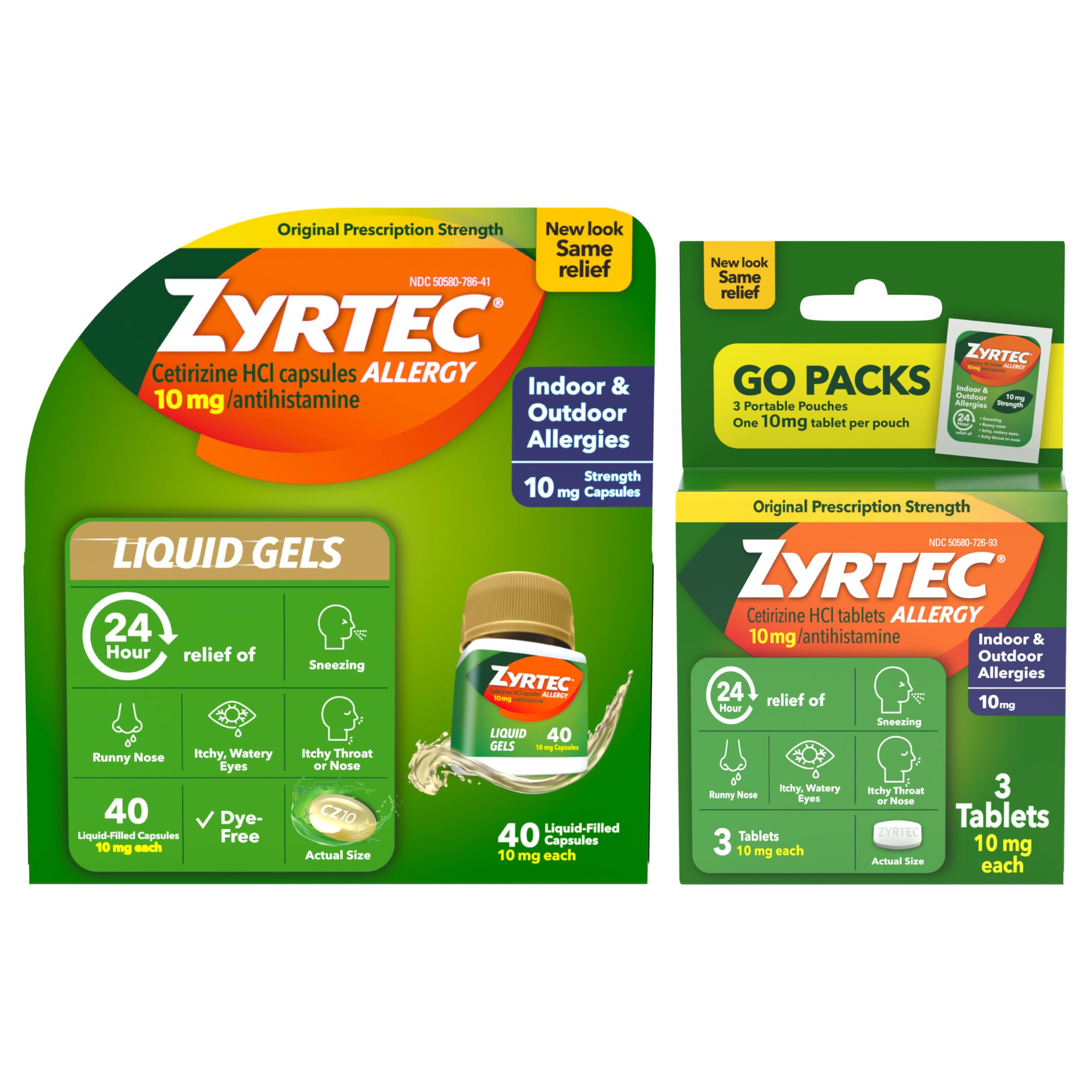
1. Zyrtec 24-Hour Allergy Relief Liquid Gels 40+3 ct
Our pick — 4.5+★ from 1,000+ verified ratings; the strongest balance of quality and price.
One easy-swallow gel that keeps symptoms quiet from morning through night
For the older adult who wants to tick every box — runny nose, sneezing, itchy watery eyes and that scratchy itch in the nose or throat — with a single swallow each morning, this is the strongest all-rounder in the group. Each liquid gel carries 10 mg of cetirizine hydrochloride, the drug that does the work. The maker states it starts working at hour one and holds for 24 hours, so the plan is genuinely one capsule, once a day.
The numbers back up its size as a grab-and-go bottle. At 4.96 ounces and 7.8 x 6.3 x 2.8 inches, the bottle is a shelf item rather than a purse item, which is where the included three 1-count packs come in — those slip into a pocket, wallet or carry-on. To put the weight in perspective, this bottle runs about 4.4 times heavier than the 5 mg Zyrtec tablet bottle at 1.13 ounces, and roughly 4.1 times wider than the Flonase spray at 1.88 inches across. You are trading shelf space for a full 40 capsules plus the travel singles.
What wins people over is the relief itself, followed closely by how specifically it handles allergy symptoms. That is the verdict across the review pages, and it lines up with the makers’ claims. There is one honest split, and it matters more here than on a younger buyer’s shelf — sleep. Some people take a 10 mg cetirizine capsule and stay clear-headed; others find the same dose leaves them drowsy. As buyers put it: “This product is very good for me because it doesn’t make me drowsy.” Thousands of reviewers land on the other side of that fence. If you have never used cetirizine, take the first gel on a day you can stay home and watch how your body reacts.
Where This One Earns Its Place
- Fast onset — the maker says symptom relief begins in the first hour
- 24-hour coverage from a single 10 mg cetirizine capsule
- Liquid gels swallow easily and carry no flavor
- Three single-serve packs built in for travel and errands
The Honest Friction Point
- Drowsiness is a coin flip at 10 mg, and the dose cannot be halved
- Bottle is too bulky for a handbag without the travel singles
Reach for this if: you want one daily capsule that handles indoor and outdoor allergies for a full 24 hours, and you already know cetirizine sits well with you.
Think twice if: you are new to cetirizine or drowsy by nature — the 5 mg tablet below gives you a lighter, splittable dose to start on.
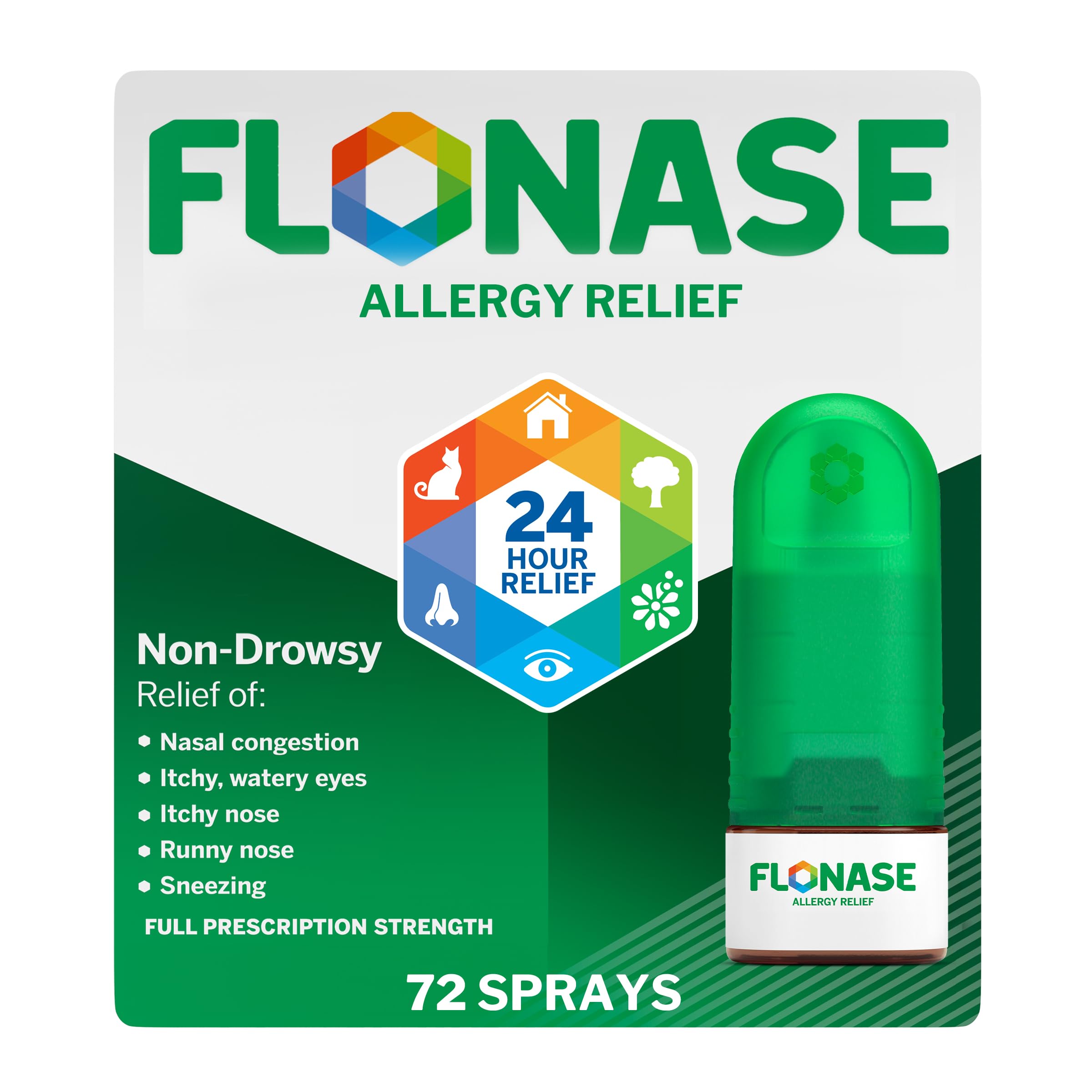
2. Flonase Allergy Relief Nasal Spray 72 Sprays
The spray that opens a blocked nose when a pill just cannot get there
Here is the gap most allergy pills leave wide open: congestion. A tablet may dry up the runny nose and calm the sneezing, but a fully blocked passage needs medicine delivered right into it. Flonase does that with fluticasone propionate, a steroid sprayed as a mist, and it carries the congestion relief that tablets cannot. The label lists runny nose, sneezing, itchy nose, watery and itchy eyes, plus nasal stuffiness, all covered for 24 hours.
Dosing is two sprays in each nostril once a day at most, and it is a non-drowsy formula, which is the whole point for an older buyer who wants allergy control without the fog. One 72-spray bottle runs about 1.88 x 5.53 x 4.97 inches — noticeably more compact on a nightstand than the 7.8-inch Zyrtec gel bottle. The label is for adults and children 12 and up, so it is not the bottle to reach for with a grandchild under that age.
The reason people keep buying it is simple: it works, and owners lean on that heavily. One practical trick shows up again and again — spraying before bed so the next day stays calm. Buyers report: “This works perfectly. 1 time before bed for 25 hours of coverage.” The recurring gripe is not the medicine but the bottle — some units spray a clean mist, while others dribble and need priming, which wastes part of the bottle. A smaller number find the spray dries the nose and makes it a little prone to bleeding. Prime a fresh bottle properly and use it as the label says.
What the spray buys you: congestion relief a daily tablet does not reach, non-drowsy, from a bottle small enough to keep by the bed.
The catch worth knowing: bottle-to-bottle consistency varies, and dry nose is a real trade-off for some users — a saline mist alongside it helps.
Your pick if: a stuffed nose is the symptom that bothers you most, or your daily pill covers everything except congestion.
Not your pick if: you are shopping for a child under 12, or you want the simplicity of a swallow-and-go tablet.
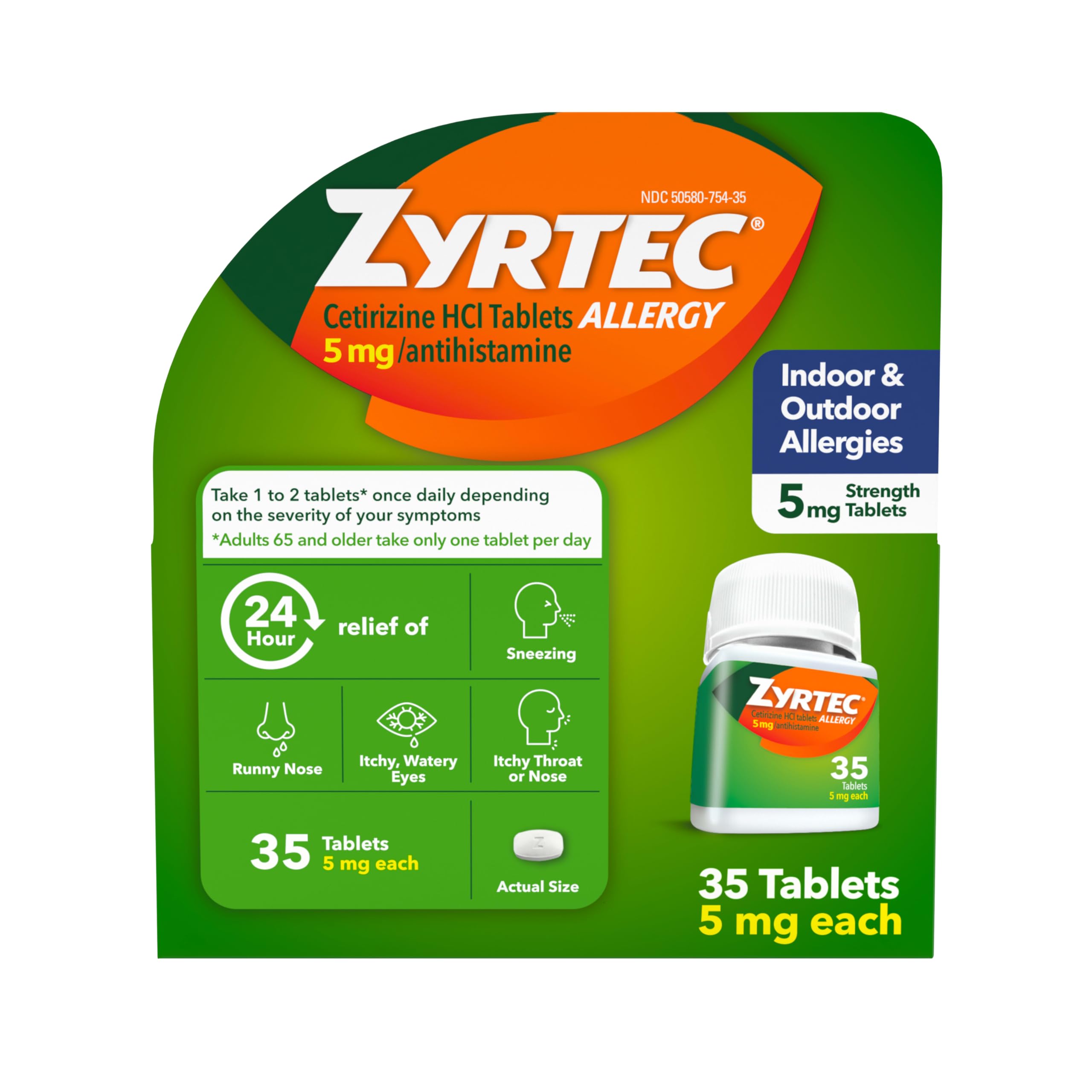
3. Zyrtec 24-Hour Allergy Relief Tablets 35 ct
Same relief as the gel, at half the strength and half the commitment
If the thought of a 10 mg cetirizine capsule leaves you wary of a foggy afternoon, this bottle hands you the control back. Each tablet is 5 mg of cetirizine hydrochloride — exactly half the liquid gel’s dose — and the label spells out the flexibility: one tablet for a mild day, two for a more severe one, once daily. For an older adult easing into a new antihistamine, that half-step is the difference between committing to a full dose and testing the water first.
The dose math runs straight off the comparison: 5 mg here against 10 mg in the liquid gel, a two-fold gap. And the bottle is travel-sized in a way the gel bottle never was — 1.13 ounces against 4.96 ounces for the gels, light enough to live in a purse, a backpack or the corner of a medicine cabinet. Coverage is the same symptom list: runny nose, sneezing, itchy watery eyes, and itching of the nose or throat, from dust and pet dander indoors to tree pollen, weeds and grasses outdoors.
What draws people to this format is the lighter dose and the calm that comes with it — a buyer who loved that a lower strength meant less drowsiness, with a second tablet in reserve for the days pollen wins. Side effects barely register as a talking point across the reviews; the pill simply does its job for most. The split in opinion is on dosage itself: some find the 5 mg strength perfect, a few find it does too little on a heavy day. A dry-out and drowsy edge shows up now and then. One owner cut through a stubborn full-body itch with it: “Completely resolved my vasodilation itching or ‘runner’s itch’.” That is the kind of specific, daily-life win this bottle is built for.
Why Owners Keep Reordering
- Half-dose 5 mg tablet leaves room to take one or two per day
- 1.13-ounce bottle fits where the gel bottle cannot
- Same 24-hour cetirizine coverage from a smaller, lighter pill
- 35-count bottle keeps a steady supply on hand
Where It Falls Short
- 5 mg alone may be too light on a high-pollen day for some
- Still cetirizine, so some drowsiness is possible on the two-tablet dose
Settle on this one if: you want to start light, control your strength day to day, and keep the bottle in a bag or drawer.
Pass on it if: you already know you need full strength every single day — the 10 mg gel is simpler than taking two.
4. Claritin 24 Hour Allergy Medicine 70 Count

Seventy small tablets of the pill folks take all year without a yawn
Not everyone needs cetirizine. Claritin runs on a different drug — loratadine, 10 mg per tablet — and it is the non-drowsy option people pick when the daytime grogginess of other antihistamines is the deal-breaker. The label lists relief for sneezing, runny nose, itchy watery eyes and itchy throat or nose, and states it tackles symptoms triggered by over 200 different allergens from pets, pollen, dust and mold. This 70-count bottle is a long supply, useful for anyone who takes one every single day.
The pill itself is petite — the whole bottle weighs just 0.6 ounces, and owners talk about how tiny and easy it is to swallow. That matters more for an older adult than it sounds: a pill you can take without hesitation is a pill you actually take. Age floor is 6 and up, the same as the Zyrtec products, so it suits multi-generational homes. Where it differs from the cetirizine picks above is the drowsiness profile — loratadine tends to leave people clear-headed, and the reviews lean into that.
Effectiveness is what carries this bottle in the reviews, and a doctor’s word reinforces it for some buyers — a physician steering one person toward Claritin over a similar brand, saying it costs more but works, and being right about that. Value is the second big theme, with buyers switching here because it beat their pharmacy and supermarket shelves on cost. The one mixed note is the expiration date: a few wonder whether the long supply will still be fresh by the time they reach the bottom of the bottle. Seventy tablets at one a day is about ten weeks of daily use, which is well within a normal shelf life — but check the date stamp as it arrives.
The thinking-person’s pick: loratadine is the non-drowsy route, the tablet is tiny, and the bottle covers weeks of daily use for a household that takes one a day.
One thing to confirm: check the printed expiration date on arrival so a 70-day supply does not outlast its freshness.
Best match for: the daily, year-round allergy taker who will not tolerate daytime drowsiness and wants a pill small enough to never think about.
Look elsewhere if: you specifically want the nasal congestion coverage a tablet cannot offer — that is Flonase territory.
5. PATADAY Allergy Eye Drops 2.5 ml 2 Pack

One drop per eye, and the itch that drives you mad goes quiet
When the eyes are the worst of it — red, scratchy, watering, and impossible to leave alone — no tablet reaches that itch as directly as a drop placed right on the eye. Pataday is built for exactly that. Its active ingredient is 0.7% olopatadine, an extra-strength formula, and the label says a single drop works in minutes and lasts a full 24 hours. It fights histamines two ways: it blocks them and it stops more from being released, which is the mechanism behind the relief.
The 2.5 ml, 2-pack format gives you two small bottles — one for the bathroom cabinet, one for the bag. The age range is the widest here: the label clears it for ages 2 and up, so it works in a house with young grandchildren. Two notes the label insists on: take contact lenses out before using the drops and wait at least ten minutes before putting them back in, and stop and see a doctor if eye pain, vision changes, redness or itching worsens or lasts beyond 72 hours.
Where this shines is the eye symptoms a pill never fully silences. For seasonal allergy eyes that never seem to stop, the relief after one drop is the story owners tell, and the biggest praise goes to how well the drops aid allergy eyes. The trade-offs are honest and specific: the drops are on the pricier side, and for some users eyes go blurry after applying. A few find the relief duration shorter than advertised. But the dramatic wins land — swelling and burning easing within hours and minutes after the drop for people who had tried other routes without success. Just have a doctor rule out infection first if the eyes are red and painful rather than merely itchy.
What Makes These Drops Special
- Delivers itch relief straight to the eyes, where tablets cannot reach
- One drop per eye covers a full 24 hours
- 0.7% olopatadine extra-strength formula works in minutes
- Two-bottle pack keeps a spare always at hand
Things to Plan For
- Blurry eyes after the drop is a real experience for some users
- Cost is a recurring theme, and duration can fall short for a few
Your answer to itchy eyes: if watering, red, itchy eyes are the symptom that ruins your day, these drops hit the spot a tablet misses.
Rule out first: if the red eye is painful or vision is changing, see a doctor rather than reaching for a drop.
Know the Specs
Dose strength — mg per tablet or capsule
The mg figure is how much of the drug sits in one dose. A 5 mg tablet can be halved into one for a light day or two for a heavy one; a 10 mg capsule is fixed. For an older adult still finding the right level, the splittable figure gives more control than the locked one.
Active ingredient names
Cetirizine, loratadine, fluticasone and olopatadine are the drugs behind the brand names. Cetirizine and loratadine are swallowed antihistamines; fluticasone is a nasal steroid spray; olopatadine is an eye drop. Knowing the drug means you can compare products on the box instead of the label.
Onset and duration — hours of coverage
Onset is how fast relief starts; duration is how long it holds. Cetirizine products state hour-one onset and 24-hour coverage; Flonase, Claritin and Pataday all state 24 hours from a once-daily dose. Longer coverage means a simpler routine — one dose, one time of day, fewer chances to forget.
Age range on the label
The age floor tells you who can safely take the product. Zyrtec tablets and gels clear from age 6, Claritin from age 6, Flonase from age 12, and Pataday drops from age 2. It matters most in a shared household with children.
Common Questions
Which allergy medicine is least likely to cause drowsiness for older adults?
Can I take a Zyrtec tablet and use Flonase on the same day?
What is the difference between the 5 mg and 10 mg Zyrtec?
How long does one dose of these allergy medicines last?
Are these allergy medicines safe if I am already on other prescriptions?
Can I wear contact lenses with Pataday eye drops?
Why does the Flonase bottle sometimes dribble instead of spraying?
Is it better to take a tablet or an eye drop for itchy allergy eyes?
How many tablets are in a bottle and how long will it last?
The Bottom Line
For the older adult who wants the simplest possible routine — one swallow, one dose, everything covered for a full day — the Zyrtec 24-Hour Liquid Gels are the strongest all-rounder, with a 10 mg dose, hour-one onset and a full 24 hours of coverage. If drowsiness worries you and you want to start light, the 5 mg Zyrtec tablets hand you a half-dose you can split. For a blocked nose a tablet cannot open, reach for the Flonase spray, and if itchy eyes are your worst symptom, the Pataday drops deliver relief right where you need it. Match the pick to your worst symptom, keep a backup on hand, and you can get through the season without the fog.
How we choose
We do not accept paid placement. Every pick is matched to a real buyer and a real use-case; we do not hands-on test units.
Sources
Specifications: manufacturer listings and product documentation. Review insights: verified customer reviews, as of October 2026. Pricing: not shown on this page (it changes often); check the current price via the retailer link.
As an Amazon Associate, Aappliancez earns from qualifying purchases. This does not affect which products we feature.