Disclosure: Some links in this post are affiliate links. As an Amazon Associate I earn from qualifying purchases, at no extra cost to you. Learn more
Specs are compiled from manufacturer listings and verified buyer reviews and can change over time — please confirm the key details on the product page before buying.
If your bread keeps coming out dense, crumbly, or just plain flat-tasting, the flour is usually the culprit — not your technique. Ancient wheat flour — milled from older varieties like einkorn, spelt, and heritage wheat — hydrates and stretches differently from the modern wheat on most supermarket shelves. It brings a nuttier flavor to the loaf and a weaker gluten structure that some wheat-sensitive bakers find easier to handle. This guide sorts five real options by what they actually do in a bowl, so you can match the flour to the loaf you want to bake.
This guide is built by comparing the manufacturers’ published specifications and the patterns across verified customer reviews, so you get each pick’s real strengths and trade-offs instead of marketing spin.
Your baking day hinges on one decision: whole berries you grind yourself or a ready bag of flour. That choice sets your prep time and how fresh the grain tastes in the loaf. Below, five ancient wheat flours are compared on flavor, grind, and how reliably each one turns into a loaf.
Top Picks


How To Choose The Best Ancient Wheat Flour
The first decision is berries versus pre-milled flour. Whole einkorn berries let you mill exactly what you need and keep the grain fresh for longer, but they demand a mill or a strong grinder. A bag of ready-milled ancient wheat flour skips that step and drops straight into your mixing bowl. Settle that before you compare brands.
Match the grain to the loaf you bake
Einkorn brings a nutty, buttery flavor and a weaker gluten (the protein that gives bread its stretch), so it suits pancakes, cookies, and rustic loaves more than tall sandwich bread. Spelt is a closer stand-in for modern wheat, and white spelt flour — milled without the bran and germ — substitutes into most recipes with little fuss. Heritage blends built from pre-hybridized wheat aim for bakery-style rise with easier digestibility.
Read the milling and the certification line
Milling style changes the texture of the baked loaf as much as the flavor. Stone grinding and cool milling (a slow process that keeps the grain from heating up) preserve more of the natural oils, while a single-pass “unifine” mill produces a super-fine, fluffy flour that bakes airy loaves. On the label, “100% USDA organic” and “glyphosate residue free” tell you how the grain was grown and treated — a real selling point for buyers who care about what is in the bag.
Side-by-Side Comparison
| Model | Best For | Form | Weight | Certification Highlight | Amazon |
|---|---|---|---|---|---|
| Grand Teton Ancient Grains Einkorn Berries★ Best Overall | Home millers and sprouters | Whole berries | 5 lb | 100% USDA organic, non-GMO | Amazon |
| Palouse Brand Glyphosate Residue Free Bread FlourCleanest Label | Whole wheat sandwich loaves | Pre-milled flour | 3 lb | Certified glyphosate residue free, Kosher | Amazon |
| Grain Brain Organic White Spelt Flour | All-purpose everyday swapping | Pre-milled flour | 5 lb | USDA organic, Kosher parve | Amazon |
| Sunrise Flour Mill Heritage Organic Bread Flour Blend | Sourdough and bread machines | Pre-milled blend | 5 lb | 100% USDA organic | Amazon |
| Jovial Organic Einkorn Whole Wheat Flour 3-Pack | Einkorn pancakes and baking | Pre-milled flour | 32 oz each | USDA organic, Non-GMO Project Verified | Amazon |
Detailed Reviews
1. Grand Teton Ancient Grains – 100% Organic Einkorn Berries
Our pick — 4.5+★ from 800+ verified ratings; the strongest balance of quality and price.
The whole-grain bag that lets you mill exactly what you bake.
This is the pick for anyone who wants to control the grain from the ground up. You get 5 pounds of whole einkorn berries (the most ancient form of wheat, milled from a different, simpler gluten than modern wheat) and you decide when to grind them. Because the whole berry is intact, the natural oils stay fresher for longer than a bag of pre-milled flour — a real advantage if you only bake a loaf now and then. It is USDA certified organic, non-GMO, and grown in the US.
The crowd response is enthusiastic — 4.5+ stars across 840+ owners — and the flavor is the clear star, with nutty, authentic grain taste coming up again and again. Grain quality is the next thing people rave about; this is not a bag of anonymous powder but berries you can see and inspect. Freshness scores highly too: the packaging date matches the order date and the bag carries a 2-year expiration. If you have a coffee grinder, a mill, or patience with a sprouting jar, this bag goes further than almost anything else here.
The catch is simple: these are berries, not flour. You cannot scoop them straight into a mixing bowl — you have to mill or grind them first, which adds a step to every bake. The 5-pound bag is bigger than the Palouse Brand’s 3-pound supply, so you are getting more grain per bag. And one buyer found a single worm in the bag, which is the price of untreated natural grain; a quick rinse and a two-day sprout handled it fine. Store the bag in the freezer if you want it to last.
What owners keep coming back for
- Whole berries stay fresh far longer than pre-milled flour because the grain is intact
- Nutty, authentic flavor that shines in soups, salads, pilafs, and home-ground bread
- USDA certified organic, non-GMO, grown in the US with no pesticides or glyphosate
- Packaging date matches order date, with a 2-year expiration window
What you should know before buying
- You need a mill or strong grinder — these are whole berries, not ready flour
- Untreated natural grain can occasionally arrive with a stray worm
- Adds a milling step to every baking session
Reach for it if: you own a mill or grinder and want the freshest possible einkorn for bread, pilafs, or sprouting.
Look elsewhere if: you want to scoop flour straight from the bag into a bowl with zero prep.
2. Palouse Brand Certified Glyphosate Residue Free Bread Flour
The whole-wheat bread flour with a certification most bags can only hint at.
If a clean, traceable supply chain is the whole reason you are here, start with this one. It carries a certified glyphosate residue free label from the Detox Project, which is a third-party certification rather than a vague claim. The wheat is grown on a family farm in Washington State, triple cleaned in an HACCP-certified facility (a food-safety standard), stone ground, and never stripped of bran or germ. Nothing is added, nothing is preserved.
Quality is what wins people over here — the thing everyone raves about is how reliably it turns into good bread and rolls. It shines in lower-hydration dough (dough with less water in it) and is a natural fit for sandwich bread. The nutty taste lands well, and it pairs nicely with a finer flour for no-knead artisan loaves when you want more structure. At 3 pounds it is the smallest bag in this lineup, and that is deliberate — it is a manageable size to try before committing to a bigger sack.
The one honest trade-off is texture. Some bakers find the grind a little coarse, so if you want a super-silky result you may need to blend it with a finer flour. The resealable bag also sits flat rather than standing upright on the counter, which makes scooping a touch more awkward than a stand-up bag. But for whole-wheat bread that tastes like home, those are minor notes against a very solid flour.
Where it shines: lower-hydration doughs, sandwich loaves, and breadmaker batches, with a nutty flavor that reads old-school homemade.
The honest note: the grind is on the coarse side for some, and the bag sits flat rather than standing — blend it with a finer flour if you want a silkier crumb.
Your move if: you want certified clean whole-wheat bread flour for everyday sandwich and breadmaker loaves.
Different choice if: you need a finely milled flour for delicate pastry or airy artisan crumb.
3. Grain Brain Organic White Spelt Flour 5 LB

The everyday stand-in for modern flour that swaps straight into your recipes.
White spelt flour is the easiest ancient grain to work into a normal baking routine. It is milled without the bran and germ, so it behaves much closer to regular all-purpose flour and substitutes into most recipes without a fuss. Grain Brain uses cool milling, a slow process that keeps the grain from heating up, to hold onto the minerals, vitamins, and protein. It is USDA certified organic, unbleached, Kosher parve, and free of potassium bromate and other additives.
What buyers love most is the quality — it is repeatedly described as a step up from standard all-purpose flour, and the soft texture stands out next to sprouted spelt. Sourdough is where it gets the loudest praise, with bakers reporting reliable rise and great results. It is also a touch lighter in the bag than the Palouse bread flour’s 3-pound supply — you get the full 5 pounds here. “Well milled Spelt like this flour provides great baking results,” one baker sums up, and the sentiment is common.
Spelt is an ancient grain related to modern wheat that was widely grown in Europe for centuries. Its gluten is often easier for some wheat-sensitive people to tolerate, though this is not a gluten-free flour. The one thing to watch is packaging — some bags arrive with the resealable slip damaged in transit, though the flour itself usually arrives sealed and fresh. Overall, this is the bag to reach for when you want an ancient grain that does not make you rethink your recipe.
Why it earns its place in the pantry
- White spelt substitutes into most recipes without a formula change
- Cool milling preserves minerals, vitamins, and protein
- USDA organic, unbleached, Kosher parve, no additives or preservatives
- Soft texture and reliable rise in sourdough and everyday baking
Small things to factor in
- The resealable slip can arrive damaged in transit on some orders
- Not a gluten-free flour — it is a wheat relative
Best fit for: bakers who want an ancient-grain upgrade without rewriting their recipes.
Not the one for: anyone needing a certified gluten-free flour.
4. Sunrise Flour Mill Heritage Organic Bread Flour Blend
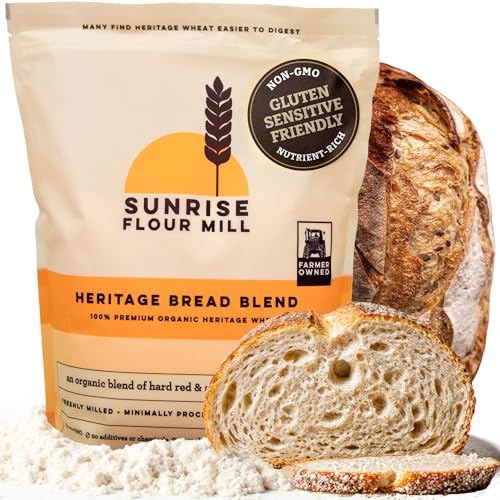
The heritage blend that bakes like a bakery loaf and digests like a lighter flour.
This is a blend of Turkey Red and White Sonora heritage wheat — pre-hybridized grains milled from older, traditional varieties. It is 100% USDA organic, free of chemicals, pesticides, and herbicides, and milled with a single-pass “unifine” process (a 1930s milling technology) that produces super-fine, fluffy flour. That fine grind is what lets it bake lofty, airy loaves with a soft crumb and a golden crust rather than the dense brick you can get from coarser whole-grain flour.
Sourdough is where this flour really delivers. Bakers report it takes their sourdough to another level, and it works just as well in a bread machine. The flavor is rich and nutty without any bitterness, and the texture is soft enough for sandwich loaves and dinner rolls. It is the biggest bag in the lineup at 5 pounds alongside the Grain Brain, so a serious baker gets plenty of batches out of one sack. A touch of heritage wheat does something modern flour cannot — it brings back a deeper, more old-fashioned taste.
One honest note on digestibility: several home bakers with gluten sensitivity report they can enjoy this bread with more comfort than standard flour, especially in sourdough form. That is a personal tolerance story, not a medical guarantee, and the flour is still a wheat product. The recurring gripe is the cost — it sits at the premium end of the flour shelf — but most people who try it decide the result justifies the splurge.
Why sourdough bakers rate it: a fine unifine grind that produces bakery-style rise, a soft crumb, and a nutty flavor without bitterness, in both hand-baked and bread-machine loaves.
One thing to note: this is still a wheat flour, and the digestibility difference is a matter of individual tolerance, not a medical fix.
Pick it if: you bake sourdough or sandwich loaves and want a heritage grain that rises like a pro loaf.
Pass it by if: you need a certified gluten-free flour or you are baking on the tightest budget.
5. Jovial Organic Einkorn Whole Wheat Flour, 32 Oz, 3 Pack
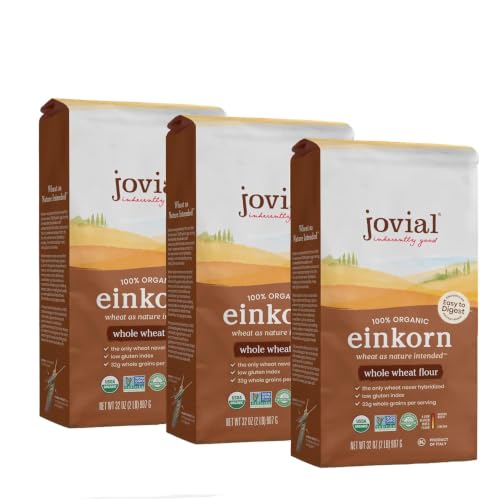
Ready-milled einkorn for anyone who wants ancient flavor without a grinder.
If the Grand Teton berries appeal to you but you do not want to mill your own, this is the shortcut. You get three 32-ounce bags of pre-milled einkorn whole wheat flour, USDA certified organic and Non-GMO Project Verified. Einkorn is the only wheat never hybridized, and its gluten is weaker and easier to work with than a modern wheat’s. Jovial grows and mills it in Italy, and the flour is not bromated, bleached, or enriched.
The flavor is what sells it — a nutty, silky flour with a buttery yellow color that browns better than regular flour. Pancakes are the gateway: swap it in for your regular wheat and the result reads lighter, nuttier, and more satisfying. It also holds up in whole-grain sourdough and rolls, and mixed 50/50 with another whole-grain flour it produces some seriously flavorful loaves. Quality and flavor are the aspects that win over most people. One home baker’s verdict: “Love this flour! Makes baking and nourishment for all most rewarding and delicious.”
The honest catch is cost and digestibility. Even in a 3-pack, einkorn at this level is a premium buy, and value is the one area where opinion splits — some say it is worth every penny, others find it steep for everyday baking. Einkorn’s gluten is easier to digest than modern wheat for many, but the maker is clear that people with celiac disease should not eat it. Weaker gluten also means it will not build the same tall rise in a sandwich loaf as heritage wheat, so it favors pancakes, cookies, and rustic bakes.
The case for keeping it stocked
- Pre-milled einkorn means no grinder required
- Nutty, buttery flavor that browns well and shines in pancakes and rustic loaves
- USDA organic, Non-GMO Project Verified, never bromated or bleached
- Three-bag pack means less restocking between bakes
What to keep in mind
- Premium cost, and value is the one thing reviews split on
- Einkorn’s weaker gluten gives less rise in tall sandwich loaves
- Not suitable for anyone with celiac disease
Worth grabbing if: you want ready-to-use einkorn for pancakes, cookies, and rustic baking without milling your own.
Better to skip if: you are baking tall crusty sandwich loaves that need a strong-rise heritage flour.
Know the Specs
Berries vs. Pre-Milled Flour
Whole berries (like the Grand Teton einkorn) keep the grain intact, so the natural oils stay fresh far longer than a bag of powder. That freshness is the reason home millers swear by berries. The trade-off is a milling step before every bake. Pre-milled flour is the instant option: open the bag, scoop, bake. If you bake weekly and own a grinder, berries give you control; if you bake on impulse, a milled bag saves the fuss.
Protein Level and Gluten Strength
Protein (the building block that forms gluten) drives how much rise a flour can give. Heritage blends aim for high protein for lofty, airy loaves, while einkorn’s gluten is naturally weaker, which suits pancakes and rustic bakes better than tall sandwich bread. Spelt sits closer to modern wheat, which is why white spelt substitutes so easily. Match the protein habit of the flour to the structure you want in the finished loaf.
Milling Style and Certification
The way grain is milled changes the texture of the flour as much as its flavor. Cool milling (a slow process that avoids heating the grain) and stone grinding preserve more of the natural oils and nutrients, while single-pass “unifine” milling gives a super-fine, fluffy flour that bakes airy. On the label, “USDA organic,” “non-GMO,” and “glyphosate residue free” each tell you something real about how the grain was grown and treated before it reached the bag.
Ancient Wheat and Digestion
Ancient wheats like einkorn, spelt, and heritage varieties carry a different, often simpler gluten structure than modern wheat, which some wheat-sensitive people find easier to digest. That is a matter of individual tolerance, not a cure — and none of these are gluten-free flours. Anyone with celiac disease should avoid them entirely. Think of ancient wheat as a flavor and digestive option, not a medical substitute.
Common Questions
Is ancient wheat flour gluten free?
How much flour do I get in a bag?
Can I substitute ancient wheat flour 1-to-1 for regular flour?
Do I need a grain mill to use einkorn berries?
Is einkorn easier to digest than modern wheat?
How should I store ancient wheat flour?
What does “glyphosate residue free” mean on a flour label?
Can I bake sandwich bread with einkorn flour?
Is organic ancient wheat flour worth buying over standard flour?
What is the difference between einkorn and spelt?
The Bottom Line
Most bakers should buy the ancient wheat flour pick that gives the freshest grain: the Grand Teton Ancient Grains Organic Einkorn Berries. These are whole organic einkorn berries (the unground grain) that you mill exactly when you bake, so the flour keeps its nutty flavor and steady freshness. You do need a grinder, though. If you would rather skip the grinder and want an everyday all-purpose swap, the Grain Brain Organic White Spelt Flour slides into nearly any recipe. For sourdough and sandwich loaves that need a bakery-style rise, reach for the Sunrise Flour Mill Heritage Organic Bread Flour Blend. Whichever you pick, match the grain to the loaf — that single choice decides whether your bread rises tall or stays rustic.
How we choose
We do not accept paid placement. Every pick is matched to a real buyer and a real use-case; we do not hands-on test units.
Sources
Specifications: manufacturer listings and product documentation. Review insights: verified customer reviews, as of October 2026. Pricing: not shown on this page (it changes often); check the current price via the retailer link.
As an Amazon Associate, Aappliancez earns from qualifying purchases. This does not affect which products we feature.