Disclosure: Some links in this post are affiliate links. As an Amazon Associate I earn from qualifying purchases, at no extra cost to you. Learn more
Specs are compiled from manufacturer listings and verified buyer reviews and can change over time — please confirm the key details on the product page before buying.
If your windshield or side glass needs re-sticking, what you actually want is a urethane (a rubbery, flexible glue built for glass and metal) that cures fast, does not drip down the glass when you are working overhead, and stays flexible through winter cold and summer heat. Get those three right and the job holds. Get them wrong and you get leaks, wind noise, and a windshield that creeps in its frame. Every pick below clears that bar.
This guide is built by comparing the manufacturers’ published specifications and the patterns across verified customer reviews, so you get each pick’s real strengths and trade-offs instead of marketing spin.
The real dividing line in this category is not brand — it is cure speed, viscosity, and whether the tube demands a primer step before you ever touch the glass. Below, that is exactly what separates a five-star install from a frustrating afternoon, and it is what every pick of the adhesive for auto glass on this page was chosen to solve.
Top Picks

How To Choose The Best Adhesive for Auto Glass
Auto glass adhesive is not the same job as gluing a shelf bracket. Your windshield is a structural part of the car — it helps hold the roof up in a rollover and keeps the cabin sealed against rain. That is why the chemistry matters, and why silicone caulk from the hardware store is the wrong tool. The glue has to grip glass on one face and painted metal or bare metal on the other, and it has to stay slightly rubbery forever so temperature swings do not crack the seam.
Chemistry comes first — urethane, not silicone
Look for a polyurethane or urethane formula on the label. That is the family built to flex with the body of a car and bond both glass and metal without a separate primer in many cases. It also resists weather far better than a rigid glue, which is why it is what the factories use. If a tube does not state its chemistry, keep looking.
Non-sag matters more than you think
A sagging adhesive runs down the glass the moment you stop squeezing, which is a real problem when you are working on a vertical windshield or an overhead rear window. A non-sag or high-viscosity formula stays exactly where you place the bead. That single property is the difference between a clean install and a glued-up mess across your paint.
Tube size, nozzle, and what you actually need
Most of these cartridges hold around 10.5 ounces or 310 milliliters, which is roughly one windshield or one rear window panel per tube. Check whether the listing includes an applicator tip and gloves — a tip keeps the bead even, and gloves are not optional once you see how urethane sticks to skin. Note the drive-away time too, because a 30-minute cure lets you move sooner than a 24-hour one.
Side-by-Side Comparison
| Model | Best For | Full Cure Time | Format | Non-Sag Formula | Amazon |
|---|---|---|---|---|---|
| FORTIVO Polyurethane Windshield Adhesive 2-Pack★ Best Overall | Doing two vehicles or keeping a spare | — | 310ml cartridge | Yes | Amazon |
| Tylove Professional Strength Urethane Windshield SealantFastest Cure | Fast turnaround jobs needing a quick topcoat | 30 minutes | 10.5oz tube | Yes | Amazon |
| 3M Fast Cure Auto Glass Urethane 08690 | Shop-grade jobs where brand trust matters | 24 hours | 10.5 fl oz cartridge | — | Amazon |
| Berkland Polyurethane Windshield Adhesive 2-Pack | DIY driveway installs on a budget | — | Cartridge/Box, 2-pack | Yes | Amazon |
| Betaseal U-428 Dow Auto Glass Urethane | Technicians doing structural, OEM-level installs | 24 hours | 10.5oz tube, 2-pack plus primer | — | Amazon |
Detailed Reviews
1. FORTIVO Polyurethane Windshield Adhesive 2-Pack
Our pick — 4.5+★ from 250+ verified ratings; the strongest balance of quality and price.
Two cartridges, no primer step, and the easiest tube in this lineup to use on a vertical windshield.
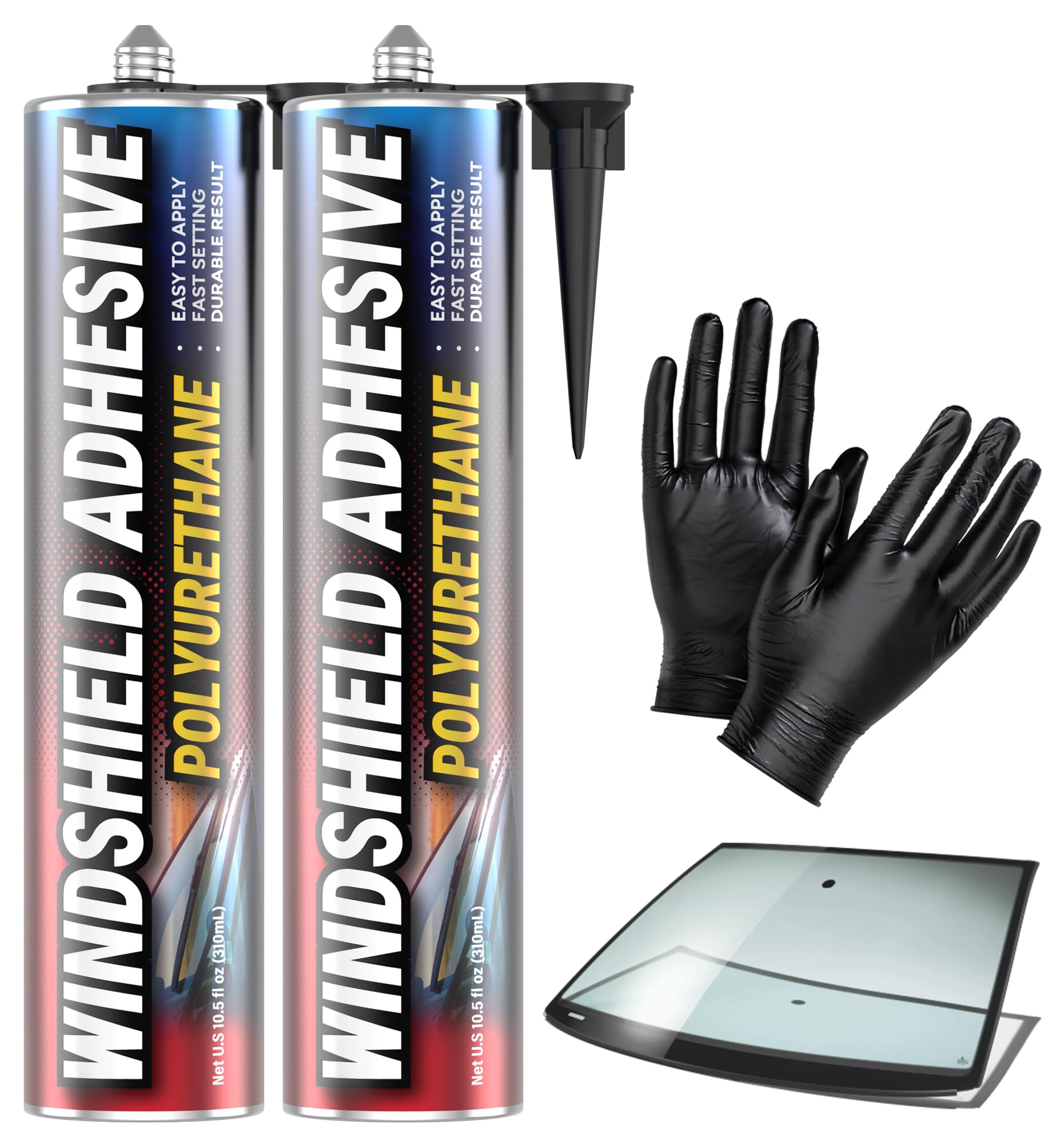
For anyone doing this job for the first time — or doing two vehicles before the weekend is out — the FORTIVO pair takes the top spot. You get two 310ml cartridges, which is roughly a full windshield’s worth of adhesive per tube, plus gloves and an applicator tip in the box. The urethane is a non-sagging formula, so it stays put when you lay a bead down a windshield edge or work overhead on a rear window, instead of drooping under its own weight.
The real win is the application process. There is no primer step, so you load the cartridge into a standard caulking gun and start squeezing. What people notice most after the job is that the adhesive simply functions exactly the way you want: it bonds, it seals, and it holds. As one customer put it, it works better than the old tape-and-seal approach they had been using. The result is a watertight seal that keeps rain out in both high and low temperatures.
The catch that shows up in the feedback is texture. This is a thick adhesive, and the applicator tip hole is a double-edged sword. A small hole makes it hard to push through, while too large a hole can cause the product to run out faster than you intended. Adjusting the tip before you start is the fix, and it is a small adjustment rather than a design flaw — worth knowing before your first bead.
What works in your favor
- Two 310ml cartridges, enough for a windshield plus a spare
- Non-sag formula holds on vertical and overhead glass
- No primer required — load and go with a standard caulk gun
- Seal holds through both hot and cold weather
Where it asks for patience
- Thick texture means the tip hole size matters more than on thinner glues
- Very small or too-large tip openings each cause their own frustration
Go with this if: it’s your first windshield job or you’re covering more than one vehicle.
Think twice if: you expected a fast, runny adhesive that squeezes out like silicone.
2. Tylove Professional Strength Urethane Windshield Sealant
The tube that reaches sandable, paintable hardness in half an hour — no overnight wait for the topcoat.
If your repair involves paint or body panels along with the glass, this is the pick that saves you a whole day. This Tylove urethane sealant reaches sandable and paintable hardness in just 30 minutes after application, which means you can apply, cure, and topcoat in a single afternoon instead of waiting overnight. The non-sag, high-thixotropic viscosity keeps the bead exactly where you place it on windshields, roof seams, and vertical panels, with no drips running into your paint.
Once cured it forms a permanently flexible barrier rated from -40F to 200F. That range covers summer heat through winter cold without shrinking or peeling. The formula is low-VOC with no solvents, so the workspace stays friendlier during application and curing. Per the manufacturer, it meets or exceeds original equipment standards.
What you should expect, and where the honest limits are: this is a viscous product. Several buyers compare it to the adhesive at a local parts store but note it is very hard to squeeze, and some found the threading on the tube tip mismatched to the nozzle, causing product to ooze out the threads. It dries quickly — buyers confirm that in under an hour — but note that its bonding strength and dispensing get mixed reports. It functions best with speed clamps or an electric caulk gun rather than a hand-squeeze gun.
The value you’re actually getting
- Sandable/paintable in 30 minutes — no overnight wait
- Non-sag on vertical and overhead surfaces
- Withstands -40F to 200F without shrinking or peeling
- Low VOC, solvent-free formula
What you’ll need to work around
- Very viscous — hard to squeeze without speed clamps or a stronger gun
- Threading issues on some tubes let product ooze at the nozzle
Built for: jobs where you need to paint over the seam the same day.
Pass if: you only have a light-duty hand caulk gun in the garage.
3. 3M Fast Cure Auto Glass Urethane 08690

The industry-standard tube — the one other urethanes get measured against, and the one that demands a little heat first.
This is the reference point in the category. The 3M 08690 is a fast-curing urethane with high viscosity for accurate bead placement, formulated specifically for windshield bonding and stationary glass attachment. It builds strength fast enough to hold the windshield in place without a long wait. Its top strength is effectiveness — buyers consistently report it simply works, and it is the standard pros reach for.
Here is where it diverges from the FORTIVO pick above. 3M lists a full cure time of 24 hours versus the FORTIVO’s all-weather flexibility, and the formula is significantly thicker, which makes it harder to apply straight from the tube than most caulk-type products. Warm it first — a blow dryer in a cardboard box or a heating pad wrapped around the tube for 30 to 40 minutes — and it flows. Without warming it can be almost impossible to squeeze out. Buyers also note the product referenced here as white in the listing arrives black in practice, so check the part number if color matters to your job.
Durability gets mixed reports because some units arrive having spent too long on the shelf. If your tube is fresh and warmed properly, it does the job and yields two full uses from a single cartridge. Wear gloves and keep alcohol or brake cleaner nearby, because this urethane migrates like grease and will not clean up easily. Applied carefully, it holds.
The honest verdict: This is the pick if you want the brand the shops use and you are willing to warm the tube and work with a proper caulk gun. The trade-off is squarely in the prep: cold tube, weak gun, or a stale unit each turn a good product into a frustrating afternoon.
The pro’s default: pick this when brand reliability and proven glass-bonding pedigree outweigh convenience.
Look elsewhere if: you want to skip the warming step and squeeze straight from a basic hand gun.
4. Berkland Polyurethane Windshield Adhesive 2-Pack

The DIY hero that quietly outperforms bigger names — one cartridge, no primer, and a driveway install that actually sticks.
If you are staring down a cracked rear quarter window on a Saturday morning, this is the tube that gets you out of the driveway without a shop visit. This Berkland two-pack delivers two cartridges of black urethane that reach handling strength in hours and bond glass to metal, fiberglass, and painted surfaces. It is explicitly referred to by buyers as comparing favorably to 3M — which earns it this value slot. You also get disposable nitrile gloves and a nozzle in the box, and it loads into any standard caulking gun for a controlled bead.
Where it really earns its keep is on real projects. A buyer replaced their Jeep Commander rear quarter glass without primer, set it fast, and one cartridge sufficed — saving hundreds versus a shop quote. Another sealed a leaking RV windshield and reported it did not run, thanks to the thick, non-sagging consistency. There is also a strong seam-sealing use case beyond autos, so the second tube is not wasted inventory. The effectiveness and overall quality are what buyers praise most here, along with the price.
The trade-off buyers keep running into is texture and clean-up. The adhesive is very stiff and works best warmed or you need a power caulking gun, and it is genuinely messy — it migrates and gets everywhere, so keep paper towels and something like Goo Gone or alcohol close by. There is a strong odor, so work with ventilation. The seal is worth the mess, but wear gloves.
Why it lands here: It matches a premium brand on results while undercutting it on price. The two-pack covers two full windshield jobs.
Reach for this if: you want OEM-level performance for a DIY driveway install and don’t mind cleanup.
Skip if: you don’t have a caulk gun rated for stiff adhesive or a ventilated work area.
5. Betaseal U-428 Dow Auto Glass Urethane

The crash-tested, primerless-to-glass pro tube — the closest you get to the factory bond on a driveway budget.
This is the pick for the technician or serious DIY mechanic who actually installs windshields. Betaseal U-428HV is the formula glass shops use, and it carries crash-test credentials — a minimum drive-away time of 4 hours down to 40F/4.4C under FMVSS 212. You get two 10.5oz (310ml) tubes plus a single-use application primer stick. The urethane is primerless to glass, and the primer is only for covering scratches or bonding bare metal and freshly painted surfaces.
Understanding the tooling is the key to success. This product requires a caulk gun rated at a 26:1 thrust ratio or better, and it will not fit standard silicone caulk guns — buyers who sized up their gun and notched the nozzle properly ended up with solid, leak-free results. On a custom rear slider, a buyer bonded aluminum to fiberglass with the Dupont primer and reported no leaks and proper drainage a full year later. A first-time quarter-panel installer cut out the old urethane, primed both surfaces, used blue tape to hold the glass overnight, and reported zero issues.
Fair warning, because the maker states it directly: this is a professional-use product, and failure to follow the guidelines can cause leaks, wind noise, or serious injury. It is very viscous and easy to over-apply, which complicates clamping. The seller recommends a certified auto glass technician for the job — that is the setup, not a defect, but it means this tube is for someone who is prepared to do it right.
The trade-off you accept: You are buying a pro-grade, crash-tested urethane at a hobbyist-accessible price, and in exchange you accept the disclaimer that it’s intended for prior-experienced users. For a windshield replacement on a car heading to state inspection — where leak-proof results are not optional — the safe, leak-free outcome buyers report is exactly what you are paying for.
The pick for: technicians and confident DIY mechanics with a heavy-duty gun and a real glass-install job.
Not the pick if: you are looking for a casual, no-experience-needed sealant — the makers say as much themselves.
Know the Specs
Non-Sag vs. Runny
Non-sag means the adhesive holds the shape of the bead you lay down instead of running downhill. This is the single spec that decides whether your vertical windshield or overhead rear window job is clean or a dripping disaster. High-thixotropic viscosity is the technical term, but the practical test is simple: invert the tube and see if the product moves.
Primerless vs. Primer-Required
Primerless-to-glass means the tube bonds to bare glass on its own, so you skip a whole setup step. A primer may still be needed for bare metal or freshly painted surfaces, where it promotes the bond and covers scratches. Check the label — a primerless formula like the Betaseal U-428 saves an entire stage of prep.
Common Questions
Will polyurethane windshield adhesive work on side windows and rear glass too?
Do I really need a special caulking gun for urethane adhesive?
How long before I can drive the car after using windshield adhesive?
Does urethane adhesive need a primer before I apply it to glass?
Will this adhesive hold in extreme heat and cold?
Is windshield adhesive the same as regular caulk or silicone?
How do I stop the adhesive from running down the windshield?
Can I use auto glass urethane to bond aluminum or metal panels?
Why does my urethane adhesive get too thick to squeeze out of the tube?
The Bottom Line
For most people sealing a windshield or side glass, the strongest overall pick for the adhesive for auto glass job is the FORTIVO Polyurethane Windshield Adhesive 2-Pack. It combines a non-sag formula, no primer step, and two full cartridges — enough for a windshield with a spare left over. If you need paint-ready results the same day, the Tylove Urethane Sealant cures to sandable hardness in 30 minutes. And for the pro-level install where crash-tested, primerless-to-glass performance is non-negotiable, the Betaseal U-428 Dow Auto Glass Urethane is the tube to reach for. Whichever you choose, warm the tube, wear gloves, and tape the glass until it sets.
How we choose
We do not accept paid placement. Every pick is matched to a real buyer and a real use-case; we do not hands-on test units.
Sources
Specifications: manufacturer listings and product documentation. Review insights: verified customer reviews, as of October 2026. Pricing: not shown on this page (it changes often); check the current price via the retailer link.
As an Amazon Associate, Aappliancez earns from qualifying purchases. This does not affect which products we feature.