Disclosure: Some links in this post are affiliate links. As an Amazon Associate I earn from qualifying purchases, at no extra cost to you. Learn more
Specs are compiled from manufacturer listings and verified buyer reviews and can change over time — please confirm the key details on the product page before buying.
Here is the thing almost nobody tells you before shopping for a 4 Ton A/C System: the “ton” in the name does not always mean the system on the box delivers a true 4 tons. Some multi-zone systems are split across several indoor heads and the tonnage figure is the total of all those heads combined, not a single 48,000 BTU blast from one unit. That is why two systems that both call themselves “4 zone” can cool very differently. This guide sorts through real BTU output, SEER2 ratings, and the reliability patterns buyers report, so you pick a system sized to your rooms rather than one that only looks good on a spec sheet.
This guide is built by comparing the manufacturers’ published specifications and the patterns across verified customer reviews, so you get each pick’s real strengths and trade-offs instead of marketing spin.
You will see tonnage, SEER2, line-set lengths, and voltage spelled out in plain terms along the way. The picks below run from whole-home condensers to multi-zone ductless setups, which covers most of the reasons people search for a 4 ton a/c system in the first place.
Top Picks

How To Choose The Best 4 Ton A/C System
Start with the rooms you actually want cold, not the number in the product title. A true 4-ton system moves 48,000 BTU of cooling, which is a whole-home or large open-plan figure. A four-zone ductless system labeled 4-ton territory often spreads 36,000 to 38,000 BTU across four indoor heads instead, and that is a different machine built for four separate rooms.
Tonnage versus zone count
A single condenser with one air handler is sized by square footage. A multi-zone setup is sized by how many rooms you want to condition at once. If every zone runs full tilt on a hot afternoon, a condenser rated below the combined indoor capacity will cool more slowly. That trade-off is spelled out in the manufacturer data for at least one system here, and it is worth asking your installer about before you commit.
Efficiency: what SEER2 changes for you
SEER2 is the seasonal efficiency rating that replaced the older SEER number, and it measures how much cooling you get per unit of electricity across a season. A higher SEER2 generally means lower running cost, but the sticker only holds once the matched indoor coil and air handler are installed together and registered. Buy a high-SEER2 condenser and pair it with a mismatched coil, and you will not see the rating on your bill.
Heat pump or cooling only
Some systems in this list cool only, and one Goodman pairing explicitly states it does not provide heat without an added heat kit. Others are heat pumps that reverse the refrigerant flow to warm the house in winter. If you live somewhere with real cold, a heat pump with a low ambient rating matters more than a slightly better cooling number. Pay attention to whether a heat strip or auxiliary heater is included or sold separately.
Install reality: lines, voltage, and paperwork
Most of these systems run on 208-230V and ship pre-charged for a set line length — 15 feet, 16 feet, or 25 feet depending on the model. Go longer than that and the installer has to adjust the refrigerant charge. Factor in a licensed tech, a possible new disconnect, and the warranty registration window, because several manufacturers tie their parts coverage to online registration within a set number of days.
Side-by-Side Comparison
| Model | Best For | Cooling Power | Efficiency | System Type | Amazon |
|---|---|---|---|---|---|
| Goodman 3 Ton 15 SEER2 Heat Pump + Air Handler★ Best Overall | Whole-home heat and cool | 36,000 BTU | 15 SEER2 | Split system, ducted | Amazon |
| Della 35K BTU 4 Zone Mini SplitBest Value | Four rooms, tight budget | 35,000 BTU | 19 SEER2 | Multi-zone ductless | Amazon |
| ROVSUN 4 Zone 38000 BTU Mini SplitTop Performer | Balancing efficiency and head count | 38,000 BTU | 20 SEER2 | Multi-zone ductless | Amazon |
| Goodman 4 Ton 15.2 SEER2 AC Condenser | Straight swap on an existing ducted setup | 48,000 BTU | 15.2 SEER2 | Condenser only, ducted | Amazon |
| Senville 4 Zone 36000 BTU Mini Split | Quiet multi-room comfort | 36,000 BTU | 22.5 | Multi-zone ductless | Amazon |
| Goodman 3 Ton 14.5 SEER2 Condenser + Air Handler | Ducted cooling on a budget-minded build | 36,000 BTU | 14.5 SEER2 | Split system, ducted | Amazon |
| Goodman 3.5 Ton 14 SEER Package Heat Pump | Single packaged unit replacement | 42,000 BTU | 14 SEER | Packaged heat pump | Amazon |
| Senville Central Heat Pump 4 Ton, 10kW Aux | Cold-climate whole-home cooling and heat | 48,000 BTU | Cold Climate Energy Star | Central inverter split | Amazon |
| Cooper & Hunter 28,000 BTU 3-Zone Mini Split | Three rooms, high-efficiency zone control | 28,000 BTU | 25 SEER2 | Multi-zone ductless | Amazon |
Detailed Reviews
1. Goodman 3 TON 15 SEER2 Heat Pump System
Our pick — 4.0+★ from 60+ verified ratings; the strongest balance of quality and price.
The heat pump that handles both halves of the year from one box on the pad.
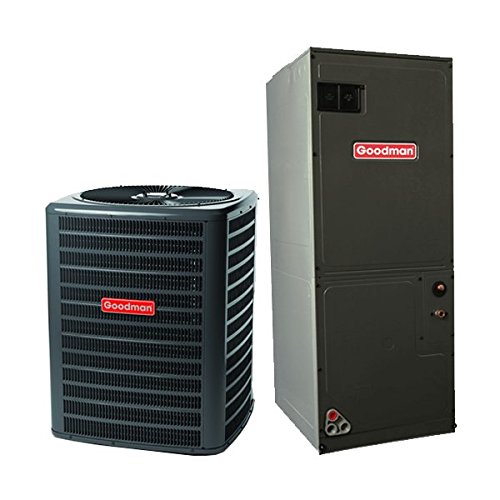
For a homeowner replacing an aging ducted system who wants cooling in July and heat in January without buying two separate machines, this Goodman pairing is the sensible anchor of the list. It ships as a matched set — the GLZS4BA3610 heat pump condenser and the AMST36CU1300 air handler — so the indoor and outdoor halves are designed to work together from the start. Cooling power sits at 36,000 BTU on a 3-ton frame, which is the number to check against your square footage before anything else.
Efficiency is 15 SEER2, and that gap against the ROVSUN quad-zone system’s 20 SEER2 is the clearest efficiency divide on this page. The Goodman runs R-32 refrigerant, the newer lower-impact blend that installers can source when a line eventually needs attention. Arizona and Florida owners mention these units running through punishing summers without trouble, and the most common feedback is that replacing an older system with this one visibly lowers the summer power bill. One long-time reviewer in Arizona credited the swap from the home’s original unit with a big monthly savings — a result that depends heavily on how inefficient your old system was.
The honest catch is accessories. This listing does not include linesets or thermostats, and it takes the HKSC/HKSX series of heat kits rather than the HKR series, so a heat kit is a separate conversation with your installer. A few owners have run into a dead unit out of the gate and had to work through tech support to resolve it, which is where the 4.0+ star rating comes from — strong overall, with a small tail of setup friction. Register online and use a qualified installer to lock in the 10-year parts warranty.
What works in your favor
- One system covers both heating and cooling, so you are not buying a separate furnace or heat strip.
- Matched condenser and air handler ship together at 36,000 BTU and 15 SEER2.
- R-32 refrigerant makes future service and recharging easier to source.
- Rated 4.0+ out of 5 across 60+ owner ratings — a solid satisfaction record for a major appliance.
Where it needs planning
- Linesets and thermostats are sold separately, so budget for them alongside the unit.
- Heat kits must come from the HKSC/HKSX series, not the HKR line.
Reach for this if: you have existing ducts and want one matched Goodman set to handle cooling and heating for a mid-size home.
Look elsewhere if: you are conditioning separate rooms without ductwork — a multi-zone mini split fits that job better.
2. Della 35K BTU 4 Zone Mini Split
Four separate room temperatures from one condenser, with the linesets already in the box.
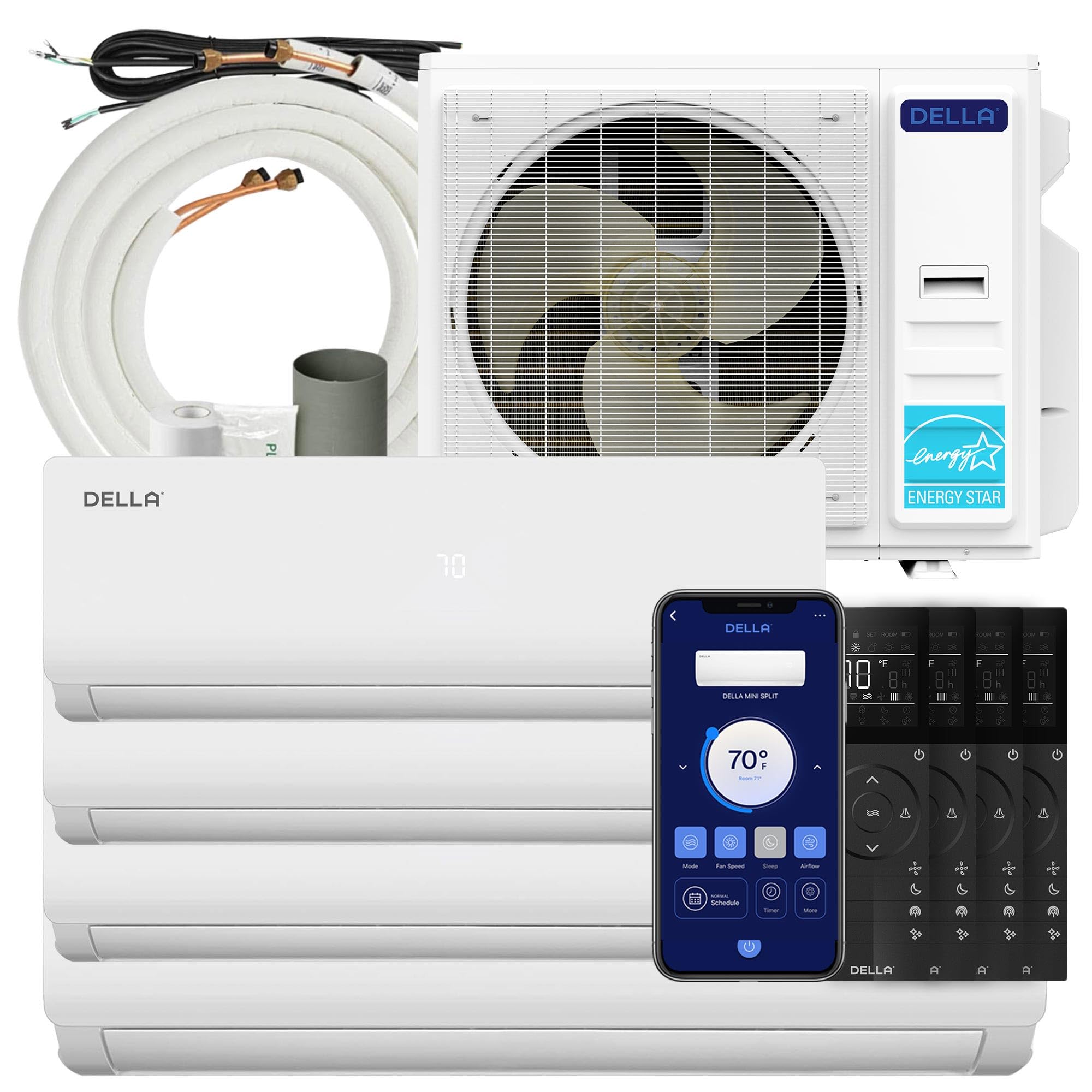
This is the pick for someone finishing a basement, adding comfort to a converted garage, or wiring up four bedrooms without tearing open walls for ductwork. Della bundles one indoor head at 18,000 BTU and three at 9,000 BTU, plus four 16-foot copper linesets and four drain pipes, so the parts list is largely covered. It gets you into multi-zone cooling at 19 SEER2, which is a meaningful step up from the 15 SEER2 Goodman and its efficiency comparison against the ROVSUN 38,000 BTU system lands 1 SEER2 behind but still well within high-efficiency territory.
The 35,000 BTU and 2.92-ton figure tells the real story: this system spreads its cooling across four heads instead of delivering all 4 tons at once. Della is upfront about that — the listing notes that when every zone runs beyond capacity, cooling and heating slow down, and it recommends a bigger or multi-system setup for constant high demand everywhere. Quiet operation at 29 dBa means you can hold a conversation next to an indoor head. Alexa and WiFi control, a 24-hour timer, and 4D airflow round out the convenience layer. Note that the self-cleaning option shows on the display but does not actually perform on this model.
The genuine risk here is parts support over the long haul. The recurring pattern is that when something fails, replacement parts are hard to come by and local technicians are reluctant to service the brand, and a buyer who needed an outdoor part found it out of stock for weeks. That said, with the system confirmed by several owners as easy to install and effective in both heating and cooling, the fit is right for a careful DIY-leaning buyer or an installer comfortable sourcing parts independently.
The trade-off that matters: four heads on a 35,000 BTU condenser means you should not expect full-power cooling in every room at once. Plan for staggered use or size up if all four rooms run simultaneously during the hottest weeks.
Where the value lands: 19 SEER2, Alexa control, and a full four-head kit with 16-foot linesets in one purchase gives you a lot of installed system for a value-tier outlay.
Best if you want: four independent room temperatures and the linesets bundled, without paying premium-brand prices.
Think twice if: you need guaranteed parts on your doorstep — this is a brand where spare-part availability can test your patience.
3. ROVSUN 4 Zone 38000 BTU Mini Split
The efficiency leader of the four-zone group, with the longest linesets in the set.
At 20 SEER2, this is the highest efficiency number among the four-zone ductless systems here, and it holds 38,000 BTU across four 9,000 BTU indoor heads. Compare that to the Della at 35,000 BTU and you get 3,000 more BTU of rated cooling for a system that also lands 1 SEER2 higher. If efficiency and total head count are your two priorities, this is the rovsun to look at. It includes four 25-foot linesets and four remotes — longer than the 16-foot kits on the Della and Senville, which can save you an extension charge on a bigger house.
What owners genuinely value is that it cools — the effectiveness is the strongest point of owner feedback by a wide margin, with installation ease right behind it. The installer-friendly comments carry weight too: an HVAC tech with two decades of experience who fitted several of these praised the build, the absence of install headaches, and the energy-efficient R32 refrigerant that is easy to source if a leak ever shows up. It runs on 208-230V, features a heat pump rated for ambient temperatures from -4°F to 122°F, and adds self-diagnosis, a 24-hour timer, four-way swing, and 28-45 dBA quiet operation.
The pattern to weigh honestly is reliability. Owner experience is genuinely split — some units run clean for years, while a handful arrive or develop faults. One report describes two units bought together where one blew cold and the other did not, and another describes a professionally installed unit icing up and shutting off below 20°F. That mix is why this sits at a solid-but-not-top rating rather than a runaway winner. If something does go sideways, support runs through email with a slower response window than a phone line, so plan on documenting the issue clearly.
Strongest at: efficiency — 20 SEER2 is the best figure in the quad-zone group, and the 25-foot linesets give you more install flexibility.
The one hesitation: send it to a real HVAC pro rather than a weekend DIY job; the reliability split in owner reports means a clean install is your best protection.
4. Goodman 4 TON 15.2 SEER2 R-32 AC Condenser (GLXS5BA4810)

A true 48,000 BTU condenser built to slide into an existing ducted system.
If your ducts and air handler are already in place and the outdoor unit is the part that finally quit, this Goodman is the straightforward replacement. It delivers 48,000 BTU of cooling — the honest 4-ton number — at 15.2 SEER2, and it replaces the GSXH504810 and GSX160481 models. Construction gets attention: a heavy-duty removable metal guard shields the fins, the unit ships pre-charged with enough refrigerant and oil for up to 25 feet of copper line, and it carries a 10-year parts warranty when a qualified installer fits it and you register online.
What sells people on it is the swap-in simplicity. An owner who had theirs professionally installed roughly a month in reported it working just like it should, no complaints, and noted that buying online and hiring a pro still beat three local quotes on cost. Another on a trailer replacement called it a nice unit that works well. The scroll compressor and inverter setup are designed for steady, efficient running, and the removable guard makes coil cleaning far less of a chore than on older units where the fins are exposed.
Two honest points. It is a cooling-only condenser — there is no heat, so if you need winter warmth you are buying a heat pump or adding a heat kit elsewhere in the system. And it is surprisingly heavy, which is fine for an installer with two people and a dolly but worth knowing before delivery day. Some accessories — thermostats, linesets, outdoor sensors — are sold separately, and at least one buyer was caught out by a listing showing a higher SEER than the unit that arrived, so confirm the exact model number before you pay.
Fit for the right job: existing ducted homes where the air handler is healthy and only the outdoor condenser needs replacing. The 48,000 BTU output matches a full 4-ton load, and the metal fin guard is a genuine upgrade for long-term upkeep.
The limit to plan around: no heating function. If you need year-round comfort, this is one half of a system, not the whole thing.
Best for: a ducted home replacing an old condenser who needs true 48,000 BTU cooling and a warranty that rewards proper registration.
Skip if: your old system also handled heating — this one is cooling only.
5. Senville Mini Split AC/Heating System, 4 Zone, 36000 BTU

Four heads, 22.5 efficiency, and a heat pump that shrugs off deep cold.
The number that stands out here is 22.5 — the highest efficiency figure among the multi-zone systems on this list. Senville pairs four 9,000 BTU indoor heads with a single 36,000 BTU outdoor condenser, runs on 208-230V, and certifies the whole set through AHRI. The Arctic Heat Pump side of the system is rated to keep working down to -22°F/-30°C, which is cold-climate territory most mini splits in this class do not reach. Alexa voice control and app scheduling round out the smart features, and Senville claims up to 40% cost savings from scheduled routines while you are away.
What buyers consistently describe is silence and steady cooling. Performance is the strength that comes up most in owner feedback, with cooling capability and noise level close behind, and the opinion lines up with the spec sheet: indoor and outdoor units run so quietly you can forget the system is on. One real-world report from a 1972 single-wide trailer — uninsulated, the toughest test there is — had the four-head setup cooling and heating with power to spare, fan speeds dropping from a strong push down to whisper-soft, all controlled from an iPhone app. That is the scenario this system was built for: several rooms, one condenser, and a house that never had ductwork.
The honest caveat is that Senville does not claim DIY-friendly installation for this one — the listing says professional install required, and the four-head job realistically takes two people a long day or more. Line sets are 16 feet, so longer runs need extra planning and a refrigerant adjustment. Reliability reports carry a mixed edge, with most owners years into trouble-free service and a smaller group running into refrigerant leaks or pressure-error codes that required warranty follow-up. Register the system and keep the install paperwork handy.
The quiet-and-efficient case
- 22.5 efficiency rating is the top number in the four-zone group.
- Heat pump rated down to -22°F/-30°C for genuinely cold winters.
- Alexa and app control let you schedule savings while away.
- Rated 4.0+ out of 5 across 130+ owner ratings, with quiet operation and cooling power as the standout themes.
The install-side reality
- Not a DIY system — the listing calls for professional installation.
- 16-foot linesets mean longer runs need extra refrigerant work.
- A small share of units develop leaks or error codes that need warranty resolution.
Top pick when: quiet comfort across four rooms plus serious cold-weather heating is the goal, and you are hiring an installer.
Not the one for: a true do-it-yourself job — the manufacturer points you to a licensed pro.
6. Goodman 3 Ton 14.5 SEER2 Condenser
Cooling-only ducted setup where the air handler bends to fit the space you have.
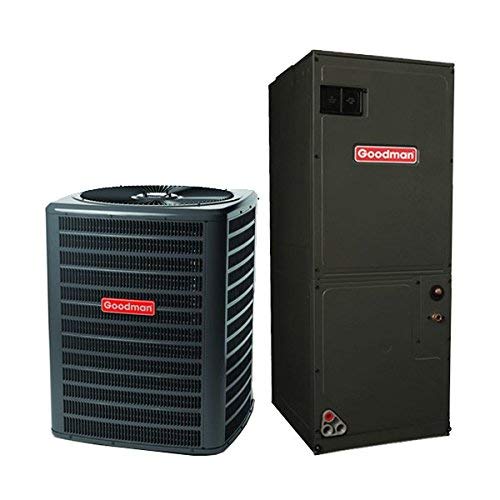
Here is the practical option for a homeowner who needs ducted cooling and does not need the system to heat anything. Goodman pairs the 3-ton GLXS4BA3610 condenser at 14.5 SEER2 with the AMST36CU1300 air handler, and the whole set runs on R-32 refrigerant. Cooling power is 36,000 BTU, and the air handler can install upflow, horizontal right, or horizontal left — a detail that matters when your closet or attic limits how the box can sit. It also ships with a thermostat included.
The standout engineering piece is the air handler itself: a direct-drive, 9-speed ECM blower motor, factory-installed thermal expansion valves, and grooved tubing for better heat transfer. In the real world, one buyer in south Louisiana — genuinely oppressive summer heat — described the 3-ton unit cooling a 2,000-square-foot two-floor home with ease and zero complaints. A separate replacement install in an older setup had it cooling to the right temperature even on the hottest days, running quiet where the old unit had banged. The 10-year parts warranty applies when a qualified installer fits it and you register within 60 days.
Note the big caveat spelled out on the listing: this system does not provide heat. Add an HKTS series heat kit or step up to a heat pump if winter warmth is part of the plan. And plan on buying a downflow kit separately if your install needs a downflow configuration. Compressor noise has come up in owner reports for this line, so ask your installer to check the compressor at start-up before the return window closes. Materials are described by some as a touch lighter than a 20-year-old unit, which is a used-to-be-heavier observation rather than a failure point.
Worth it for: cooling-only ducted projects where the multi-position air handler solves a tight install space.
The honest catch: no heat without a separate heat kit, and the compressor is worth verifying on day one.
7. Goodman 3.5 Ton 14 Seer Package Heat Pump — GPH1442H41

A single all-in-one cabinet for homes that keep everything outside.
A package heat pump puts the whole system in one outdoor cabinet, which is exactly what you want when there is no indoor space for a separate air handler. This one delivers 42,000 BTU of cooling at 14 SEER and reverses for heating, so it covers the year in one footprint. It weighs 400 pounds — a two-person, dolly-and-ramp delivery, not a carry it yourself piece of equipment. The factory-installed bi-flow liquid line filter dryer and permanently lubricated condenser fan motor are the maintenance-friendly touches that keep it running between service calls.
The people who buy this tend to be replacing an old packaged unit, and that is where it shines. One owner’s near-exact swap had the house up and running within hours of arrival and 10 degrees cooler in 30 minutes. Another family’s 15-year-old unit was replaced with this 3.5-ton model, self-installed in about four hours, and it has run well since. A third has had the unit running excellent for a month with no issues. That practical, get-it-in-and-go pattern runs through the strong owner satisfaction — the people who install it properly are the ones who come away happy.
What to know before it lands: you may need to build a new curb or modify the existing one, so do not assume it drops straight onto the old pad. The warranty covers parts but not labor, so if a defect shows up the diagnosis and repair are on your side. And shipping damage is worth inspecting on delivery day — one unit arrived with a wobbling fan, and returns on an installed, refrigerant-charged unit are not simple. Handle the receiving inspection carefully and any of that becomes a non-issue.
Where it fits: a packaged replacement, a barn or shop with no indoor mechanical space, or a home where one outdoor cabinet is the only option. The 42,000 BTU output and all-in-one build make it a clean solution for those setups.
What to line up first: the curb and a clear receiving inspection at delivery. Both are small tasks that save real headaches later.
Go with this if: you need a packaged heat pump and want the whole system in one cabinet.
Not for you if: you want a ducted split with a separate indoor air handler — this is a single-unit design.
8. Senville Central Air Conditioning System 4 Ton
A full 48,000 BTU inverter central system that keeps working when the temperature drops to -22°F.
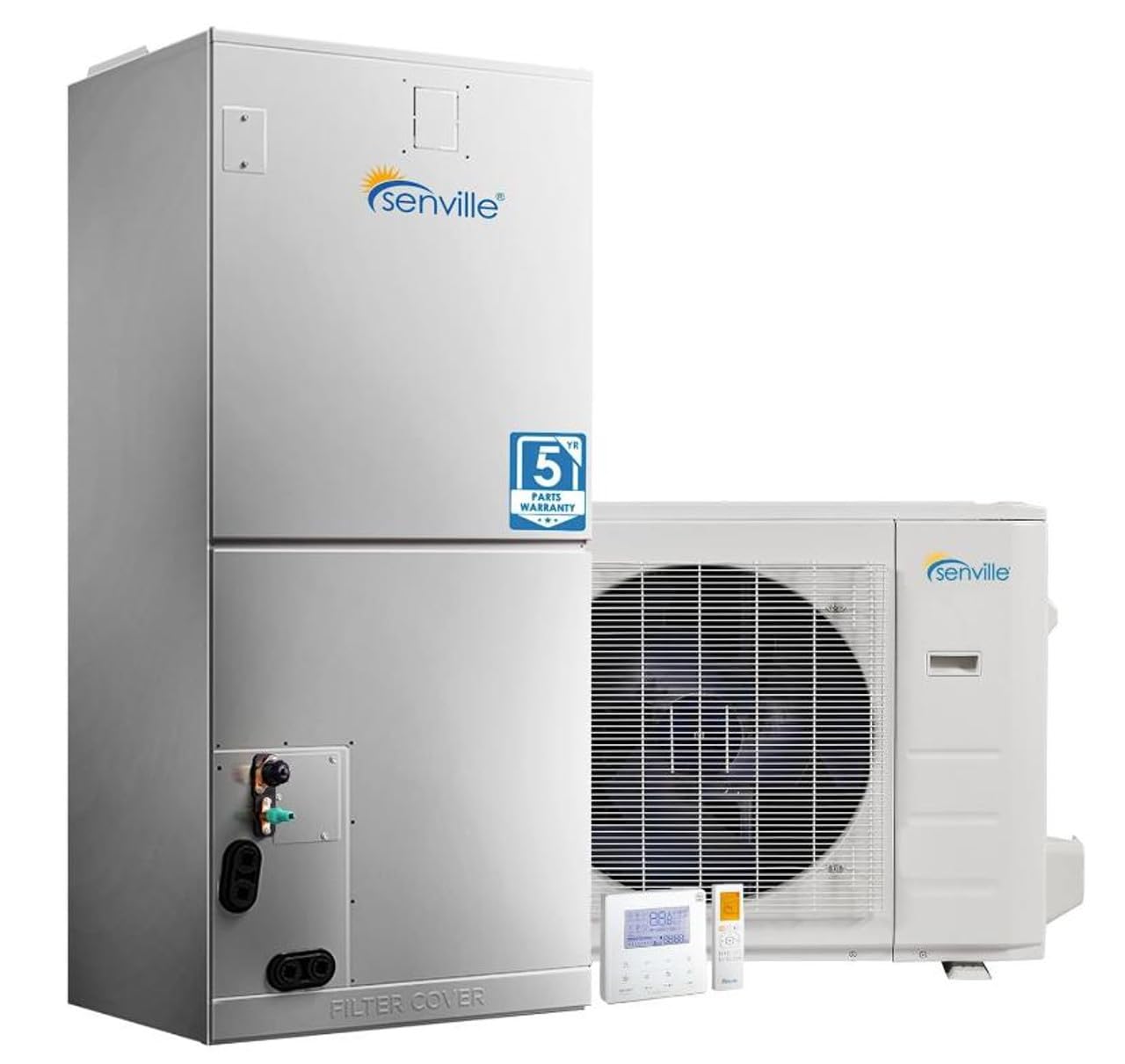
This is the one to weigh if you want the efficiency of an inverter heat pump without giving up central ducted cooling. Senville rates it at 48,000 BTU — a true 4-ton system — and pairs a variable-speed inverter compressor with a 10kW auxiliary heat strip for the coldest snaps. It is designed to cool up to 2,000 square feet, carries a Cold Climate Energy Star rating, and comes with a 10-year compressor warranty and a 5-year parts warranty. The included 16-foot installation kit has the indoor air handler, outdoor condenser, thermostat, and the auxiliary heater in one box.
Quality is what comes through in how it runs: owners describe the system cooling well through 95-100°F Texas summer days, the outdoor unit staying quiet, and the design reading as well-thought-out. The heat pump side continues down to -22°F/-30°C, which is why the 10kW aux heater matters — it provides the backup punch on genuinely cold nights. There is a lot to like here if you want a modern inverter central system rather than a ductless multi-zone layout.
The plain-truth trade-off is installation complexity. A licensed electrician who installed one himself estimated the install cost in the low thousands. The auxiliary heater needs its own electrician visit and breakers, and the indoor air handler’s duct sizing is unusual enough that an installer needs to plan for it. Included flare fittings have been flagged as mediocre, with one needing replacement, so a pro who knows the fittings matters more than usual here. The controller is not a true thermostat — it senses temperature in an unusual spot — which some owners have had to work around.
Why it earns a look
- True 48,000 BTU cooling with a variable-speed inverter compressor.
- 10kW auxiliary heat covers the coldest nights.
- 10-year compressor and 5-year parts warranty.
- Rated 4.0+ out of 5 across 20+ owner ratings, with cooling performance as the strongest theme.
What you have to plan for
- Expect a real install budget and a licensed HVAC tech.
- Aux heat requires a separate electrician and breakers.
- Included flare fittings can need replacing to seal properly.
Reach for this if: you want whole-home central cooling plus genuine cold-climate heating and are ready to pay for a quality install.
Look elsewhere if: you are trying to DIY a full central system — this one is built for professional hands.
9. Cooper & Hunter 28,000 BTU 3-Zone Mini Split
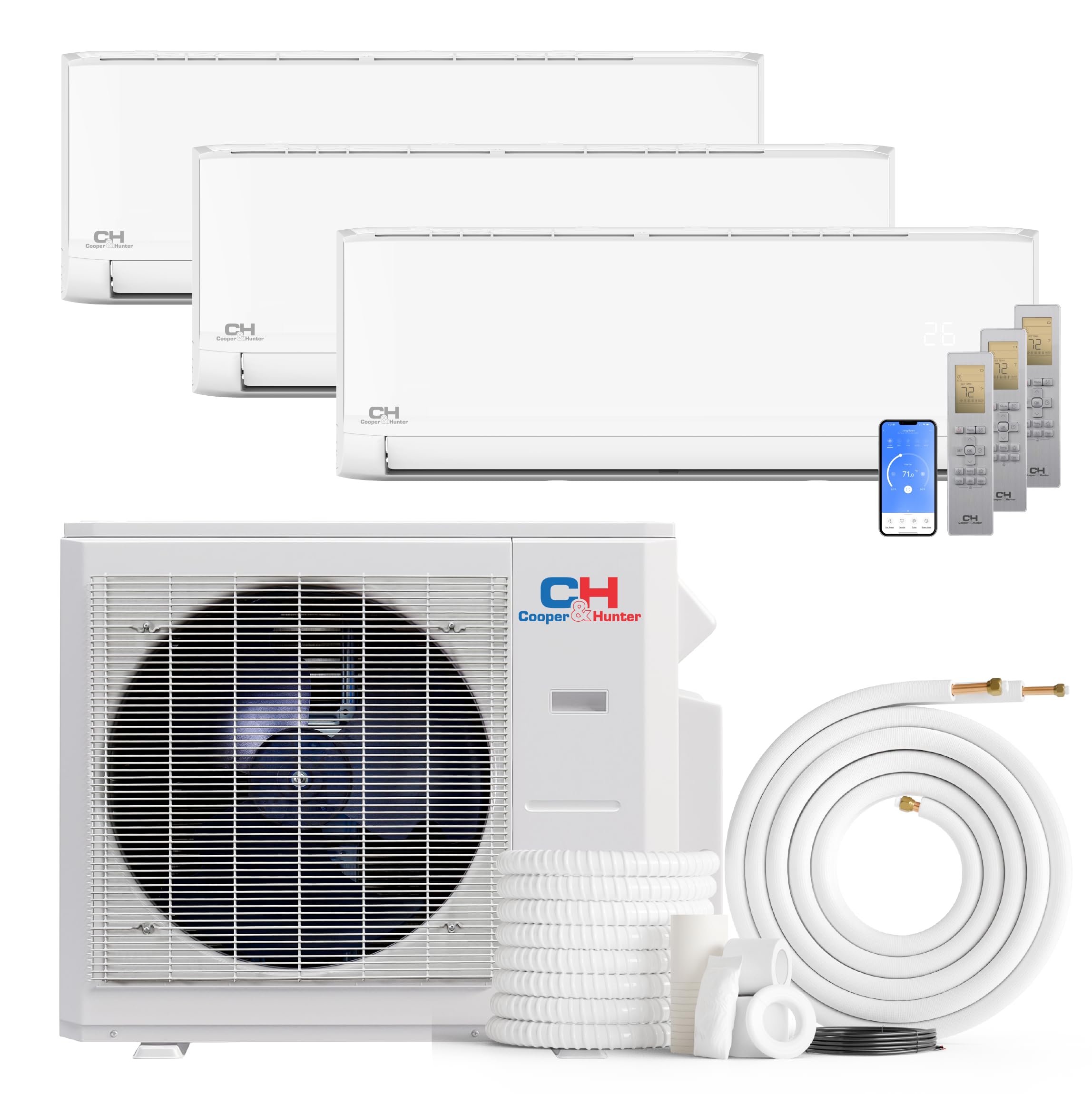
The efficiency standout of the whole list — 25 SEER2 across three rooms.
If you have three rooms to condition and efficiency matters most, this is the number to beat: 25 SEER2, the highest figure anywhere on this page. It pairs a 28,000 BTU (2.3-ton) outdoor condenser with three 12,000 BTU wall-mounted heads, runs on 230V, and includes three smart kits for phone control plus three 25-foot installation kits with insulated copper linesets, comm cable, and 16-foot drainage extensions. It is built for a licensed installer and ships by freight to the nearest accessible point outside your home.
The three-zone layout keeps each room at its own temperature from one condenser — a better fit for a house with three bedrooms than a full 4-ton central system. Cools a large dining room well according to owners who have it, and the outdoor compressor runs quieter than a conventional central unit. A Phoenix homeowner with 1,250 square feet held 69°F through 95-105°F summer heat, and the dehumidifier mode helps manage sticky air in humid climates. The inverter heat pump technology is credited with lower running costs through the year.
Be honest about the mixed signals. Cooling performance is the most-discussed topic in owner reports, and it splits — some owners have it keeping rooms cold, others find it does not cool as thoroughly as they expect for their space. A handful of longer-run reports describe failed units after a year or two, with a compressor and inverter failure replaced as a parts-only job, so confirm warranty registration before install. One unit arrived with a small leak and required a shipping fee to get a replacement head. Register, inspect on delivery, and use a licensed tech and most of those issues stay avoidable.
The efficiency headline: 25 SEER2 is the top figure on this list, and the three 25-foot line kits give an installer room to reach farther rooms without extensions. Quiet indoor and outdoor operation is the second strong point.
What to verify before install: the intake area and head placement, plus warranty registration. C&H support is praised when owners reach the right person, but the paperwork matters for coverage.
Pick this one when: three rooms is the job and 25 SEER2 efficiency leads your priority list.
Weigh other options if: you need guaranteed full-power cooling in each zone at once, or want a simpler short-run install.
Know the Specs
Tonnage and BTU — the true capacity number
One ton of cooling equals 12,000 BTU per hour, so a 4-ton system moves 48,000 BTU and a 3-ton moves 36,000. BTU (British thermal units) is simply the measure of how much heat the system can pull out of a space per hour — the higher the number, the more rooms or square footage it can hold cold on a hot day. The trick with multi-zone systems is that the headline BTU is often the total of several indoor heads, not the output of a single condenser. When every head runs at full power on a 35,000 BTU system, cooling slows down. Read the condenser’s own number, not just the sum of the heads.
SEER2 — what the efficiency rating measures
SEER2 is the seasonal energy efficiency rating of a cooling system, measuring how much cooling you get per unit of electricity over a season. A higher SEER2 usually means lower running costs, but the rating only counts when the matched indoor coil or air handler is installed together with the condenser. Install a high-efficiency condenser with the wrong coil and you never see the number. That is why buying the condenser alone is risky for efficiency — a matched pair in one listing keeps the rating intact.
Lineset length and pre-charged refrigerant
A lineset is the pair of insulated copper pipes that carry refrigerant between the indoor and outdoor units. Most systems here ship pre-charged for a set length — 15 feet, 16 feet, or 25 feet depending on the model. Go past that length and the installer has to add refrigerant to match the extra run. That is a small cost if you plan, and a surprise if the crew arrives to a longer run than the box was charged for.
Voltage and the electrical circuit
Most of these systems run on 208-230V, which is the higher household voltage that powers major appliances like dryers and ranges. A 36,000 BTU mini split typically needs its own dedicated circuit at that voltage, and a system with a 10kW auxiliary heater needs a breaker sized for that heater. Your electrician and installer handle the hookup, but a quick ask about the circuit before delivery day avoids a system sitting in the driveway.
Common Questions
Is a 4 Ton A/C System the same as a 4-zone mini split?
What SEER2 do I need for a 4-ton system?
Can I install a mini split system myself?
How long do the line sets need to be?
Does a 4 Ton A/C System need its own electrical circuit?
Will a heat pump really heat the house in cold weather?
What does 4 ton mean on an air conditioner?
Do these systems come with a thermostat?
How long does the parts warranty last and what does it cover?
Can a ducted system share the same ducts as my old unit?
What happens if my multi-zone system only cools some rooms?
Is a heat pump better than a straight cooling system?
The Bottom Line
For most people searching for the best 4 ton a/c system and who have existing ductwork, the Goodman 3 Ton 15 SEER2 Heat Pump with Air Handler is the pick that covers the whole year — cooling and heating from one matched set, with R-32 refrigerant and a solid owner satisfaction record. If you are setting up separate rooms with no ducts to work with, the Senville 4 Zone Mini Split is the one to reach for, with 22.5 efficiency and a heat pump that holds up in serious cold. And if true 48,000 BTU whole-home cooling in cold climates is the goal, the Senville Central Heat Pump delivers the full 4-ton figure with auxiliary heat for the coldest nights. Now the one fact that should push you off the fence: the Goodman at the top of this list has earned 4.0+ out of 5 across 60+ owner ratings — a strong score for a system this large and this consequential to your home comfort.
How we choose
We do not accept paid placement. Every pick is matched to a real buyer and a real use-case; we do not hands-on test units.
Sources
Specifications: manufacturer listings and product documentation. Review insights: verified customer reviews, as of October 2026. Pricing: not shown on this page (it changes often); check the current price via the retailer link.
As an Amazon Associate, Aappliancez earns from qualifying purchases. This does not affect which products we feature.