Disclosure: Some links in this post are affiliate links. As an Amazon Associate I earn from qualifying purchases, at no extra cost to you. Learn more
Specs are compiled from manufacturer listings and verified buyer reviews and can change over time — please confirm the key details on the product page before buying.
If your drying towels smear instead of soak, the towels are not worn out — they are clogged. Wax, polish residue, and fabric softener sit deep in the fibers and stop them from pulling water off a panel. A dedicated microfiber detergent breaks that layer down and brings the towel back to the soft, thirsty state it had on day one. Regular laundry soap cannot do this job, and worse, most of it leaves a coating that makes the problem harder. Below are five concentrates that genuinely restore microfiber, ranked by what they do best.
This guide is built by comparing the manufacturers’ published specifications and the patterns across verified customer reviews, so you get each pick’s real strengths and trade-offs instead of marketing spin.
Every pick here works in a standard washing machine, but the dosing and the rinse behave very differently from bottle to bottle. This is everything worth knowing about microfiber detergent before you commit to a gallon.
Top Picks

How To Choose The Best Microfiber Detergent
The single most useful thing to understand is that microfiber is a plastic fiber, and plastic holds onto oil. A detergent that removes oil without adding anything back is what keeps the towel working. A detergent that adds softener, dye, or heavy perfume is what kills it. So the label matters more than the brand name on the front.
Concentrated Dosing Saves You From Overusing It
Nearly every bottle on this list is a concentrate, which means you use a capful or two rather than a full cup. That is why a 16-ounce bottle can outlast a standard jug of household soap. The catch is that overdosing is the most common mistake — extra detergent does not rinse out cleanly and leaves the fibers stiff. If you see suds sitting in the drum after the rinse cycle, you used too much.
Why “No Residue” Is The Whole Point
Residue is anything left behind on the fiber after the wash — soap film, dye, perfume oil, or fabric softener. A clean-rinsing formula leaves nothing behind, so the fiber keeps its natural state and pulls water on contact. That is the exact reason a fragrance-free, dye-free wash behaves better on microfiber than a supermarket detergent that smells great but coats the cloth.
Match The Formula To The Soil You Are Removing
If your towels soak up car wax, polish, and sealant, look for a formula built to dissolve waxes, silicones, and resins. If your towels mostly handle household dust and kitchen spills, a gentler fragrance-free wash is plenty. The wrong match is not dangerous — it just means you wash the same load twice, which wears the towel out faster than it needs to.
Wash Hot, Dry Cool
The heat does the heavy lifting on oil, and the dryer is where towels go wrong. High dryer heat melts the fiber tips and creates the crunchy feel people mistake for a worn-out towel. Owners consistently report washing with hot water and drying on low heat or air only, which keeps the nap intact.
Side-by-Side Comparison
| Model | Best For | Format | Size | Residue Profile | Amazon |
|---|---|---|---|---|---|
| 3D Towel Kleen★ Best Overall | High-volume detailing towel loads | Liquid concentrate, low foam | 1 Gallon | No-residue formula | Amazon |
| Wolfgang Concours SeriesBest For HE Washers | HE machine loads of cloths and clothing | Liquid concentrate, clean-rinsing | 16 oz | No dyes, perfumes or fabric softeners | Amazon |
| Blackline Restore | Wax and detailing-residue removal | Liquid concentrate, HE-safe | 16 oz | No stiffening, absorbency preserved | Amazon |
| Masterson’s Car Care | Small loads on a tight shelf | Liquid concentrate, all machines | 16 oz | Biodegradable, fresh scent finish | Amazon |
| Adam’s Polishes | Pads, applicators and pre-treatment | Liquid concentrate, multi-use | 1 Gallon | No dyes or perfumes, citrus scent | Amazon |
Detailed Reviews
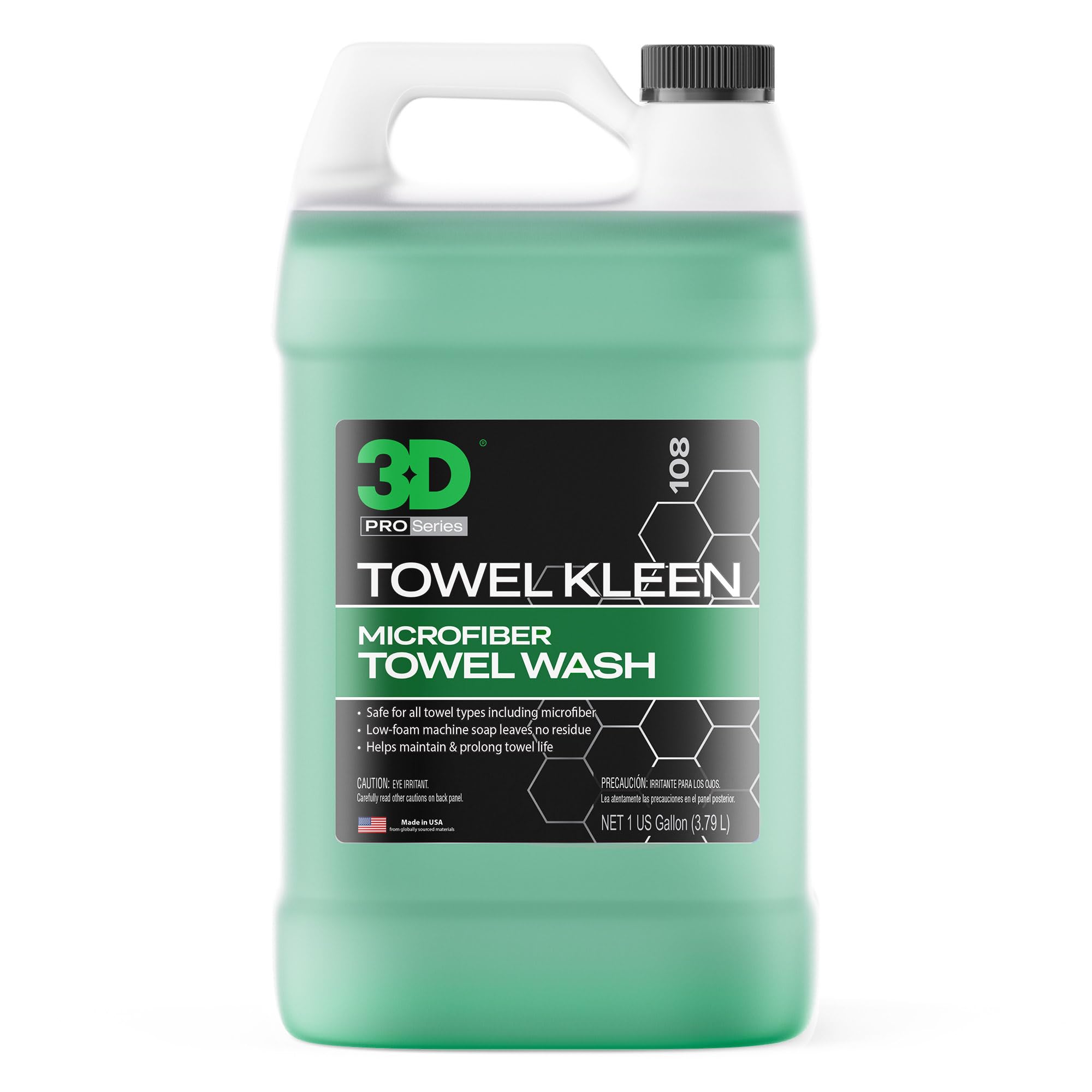
1. 3D Towel Kleen Concentrated Microfiber Detergent
Our pick — over 4.5★ from 400+ verified ratings; the strongest balance of quality and price.
A gallon jug that restores absorbency to wax-clogged detailing towels.
If you wash detailing towels in bulk, this is the pick that makes the math work. A gallon keeps you going through a detailing season without reordering, and the low-foam, no-residue formula is built to rinse out of the fiber instead of sitting on it. Practically, that means a dirty microfiber comes out able to absorb water again rather than pushing it around the panel.
Its strongest suit is stain and contamination removal. The review pages sum it up plainly: buyers report it has pulled out contamination and product buildup from fibers that other detergents left behind — including five-year-old stains that had already survived several washes. It also holds up in cold water, which is useful if you are washing a mixed load rather than reserving a hot cycle for towels alone. Detailing-weekend owners also stretch it out with a pre-soak in a bucket before the machine run.
Dosing discipline is the catch, and it is a real one. This is a thin, watery concentrate, and pouring it by eye tends to overshoot. When that happens you get suds sitting in the drum and a second rinse cycle to clear them. The brand positions the formula as protecting towels better than standard laundry soap, and the ingredient list here is not a softener — so it will not rescue a towel that has already been through a hot dryer. Pair it with a cool dry and it keeps its nap.
What Buyers Keep Coming Back For
- Gallon format covers months of detailing-towel loads without a reorder
- Low-foam, no-residue formula rinses clean so fibers stay absorbent
- Works in cold water and clears old, set-in contamination from fibers
Where It Asks For Patience
- Watery concentrate is easy to overdose — measure, do not pour
- Overdosing leaves suds that need an extra rinse cycle
- At 8 pounds the jug is heavy to lift onto a high shelf
Built for the bulk washer: reach for this if you run big loads of towels and want the cost-per-wash to drop as the bottle empties.
Measure it, though: the dose is a capful or two, not a cup, and the jug itself weighs a solid 8 pounds.
2. WOLFGANG CONCOURS SERIES Microfiber Cleaner & Rejuvenator
A dye- and perfume-free wash you can run on detailing cloths and gym gear together.
Here is the pick that does not stop at the garage. It is formulated for high efficiency washing machines, which is a real distinction — those machines use far less water, so a soap that foams heavily never rinses clear. This one is built to rinse completely without foaming up, and it carries no dyes, perfumes, or fabric softeners. Those additions are exactly what coat a fiber and kill absorbency over time.
What has surprised owners is the range. The 16-ounce bottle is described as 100 percent biodegradable by the maker, and it ships with a built-in measuring dispenser so the dose is not guesswork. The recyclable plastic bottle keeps the footprint small on the shelf.
The honest split in the feedback is residue on some loads. Some loads come out looking new, and some leave a slight film — which generally traces back to wash temperature and towel quality rather than the bottle. The most reliable results come from a hot-water wash followed by little or no dryer heat. Cheap, thin towels still come out mottled where the better brands (Meguiar’s X2020 and Kirkland were named) do not. It is also a smaller bottle than the gallon options, so heavy detailing volume will drain it.
Why it holds its spot: the clean-rinsing, dye-free, perfume-free formula is the safest bet for a high efficiency machine, and its use has stretched from detailing cloths into everyday synthetic clothing.
The fair caveat: slight residue does show up on some loads, and the built-in dispenser plus a 16-ounce bottle means frequent buyers will be reordering sooner than they would with a gallon.
Pick this if you own an HE machine: the low-foam, dye-free rinse is designed around the way those washers actually use water.
Keep looking if you want one bottle to last a year: 16 ounces goes quickly on high-volume towel loads.
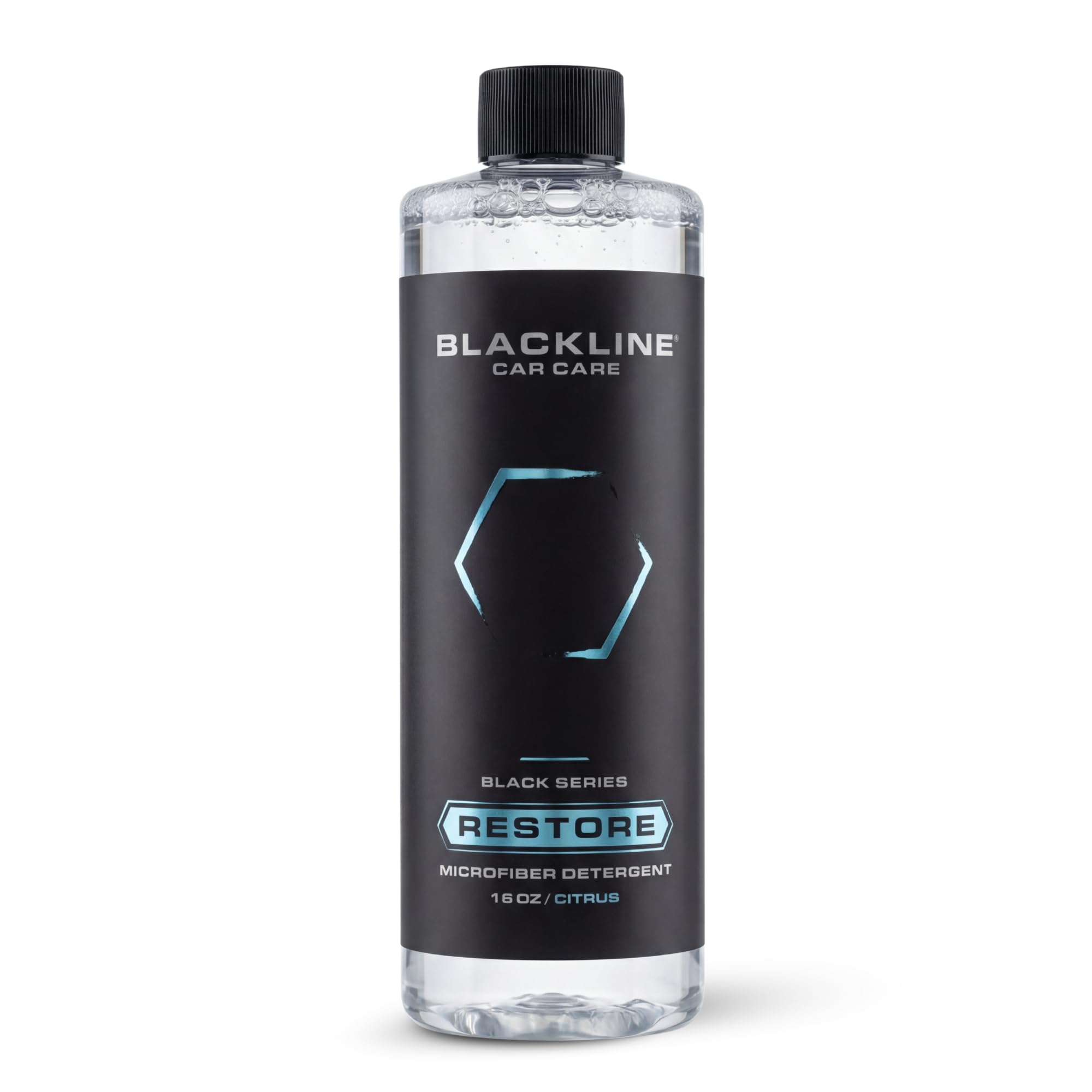
3. Blackline Restore Microfiber Detergent 16oz
Formulated to strip wax and polish residue while keeping fibers soft.
Two things have to happen at once with a detailing towel: the wax has to come out, and the fiber has to stay soft enough to absorb. Blackline Restore targets exactly that pairing. It is a specialized wash designed for optimal cleaning on delicate microfiber, and the maker states it was developed with professional detailers and tested in working shops.
What owners mention most is that absorbency comes back. Towels used for wax, drying aid, and polish residue come out soft rather than stiff, and the drying towels specifically return to a near-new state. Just as important, the dose is tiny — a little really does go a long way, and a small amount washes a full load. That makes a 16-ounce bottle stretch further than its size suggests, which is exactly why value comes up so favorably despite the modest volume.
Set expectations on set-in stains, though. Owners describe the stain removal as acceptable rather than miraculous — this is a maintenance wash that keeps good towels in rotation, not a rescue for a cloth that has been through a hundred dirty jobs. The recurring wish is simply a bigger container, because once you are dosing this small, the bottle goes before the towels do. At 1.13 pounds it is light enough to store on a shelf over the machine, which the gallon jug is not.
Ideal for the weekly rotation: if you want wax and polish to come out while the softness stays in, this keeps a working towel pile alive.
Not the rescue bottle: for a truly ruined cloth, expect acceptable stain lifting rather than a full restoration.
4. MASTERSON’S CAR CARE Microfiber Wash & Restore

A 16-ounce bottle that owners say outcleans Chemical Guys on stubborn residue.
The standout story here is how it performs against Chemical Guys. Customers note it beats Chemical Guys outright — it lifted the white solids left on microfiber cloths after Ceramabryte on a glass-top stove, and did it using less product for a better restore. Owners describe towels coming out clean and regaining absorbency after drying, and the softness is the part people tend to mention unprompted.
The physical reality of this pick is genuinely different from the gallon jugs. It weighs 1.2 pounds against the 3D gallon’s 8 pounds, and it measures just 7.7 x 2.4 x 2.2 inches — small enough to tuck into a narrow cabinet or a detailing bag without a second thought. If you have limited shelf space or you are kitting out a car, that footprint matters as much as the formula. It works in all washing machines and covers everything from towels and wash mitts to bedding, sheets, and clothing.
Cost per wash is where opinions divide. A number of owners find it not worth the cost for the volume you get, even though they like how it performs — small bottles simply do not stretch like a gallon does. Treat this as the pick for a light-to-moderate user, or for someone who wants to test a dedicated microfiber soap before committing to bulk. It is also labeled biodegradable, and it finishes with a fresh scent rather than a neutral one.
The case for it: strong cleaning and real softness in a compact, easy-to-store bottle, with owners reporting it outperforms the better-known competitor on stubborn residue.
The catch: cost per wash is the weak spot — several owners feel the small volume is not worth the outlay once they are washing regularly.
Right for occasional washers: anyone washing a modest pile of towels who wants a dedicated microfiber soap without committing to a gallon.
Wrong shape for heavy volume: if you burn through towels weekly, the tiny bottle will run dry first.
5. Adam’s Polishes Microfiber Towel & Pad Cleaner

One gallon that washes towels, applicators and polishing pads in the same load.
Most microfiber soaps are built for cloths and stop there. This one extends to wool and foam polishing pads, which is where detailing residue likes to hide. The citrus cleaners in the formula are aimed at dissolving compounds, polishes, sealants, dressings, and waxes that ordinary detergent cannot shift. It is also flexible by design — you can use it as a pre-treatment, a hand wash, or a standard in-wash solution.
Owners who hand-wash report the pre-spray route working fast. A spray bottle on a soiled cloth, worked by hand, lifts the large majority of dirt right off. In the machine, it keeps microfiber soft and absorbent with no stiff feel and no scent transfer, and it is credited with reviving heavily soiled towels like the Eagle Edgeless 500. The gallon volume supports that pre-treatment habit — which is the actual advantage here, because the spray-and-soak method eats liquid.
Spend a moment on the honest caveats. On pads it is a mixed performer — owners warn it works but is beaten by dedicated pad cleaners, so do not expect the pretreated pad route to be its best trick. Some also find the gallon overpriced for what it is, though that opinion sits alongside plenty of owners calling it strong value because so little is needed per load. And a few note that heavily perfumed polish residue needs a second wash before the citrus scent fully clears. It carries no dyes or perfumes beyond that natural citrus note, and the maker labels it residue-free.
Where it earns the label: the make-it-any-way-you-like flexibility — pre-treatment spray, hand wash, or in-wash solution — covers towels, cloths, and pads from one jug.
Reality check: for polishing pads specifically it falls short of a dedicated pad cleaner, and the gallon price splits opinion among owners.
Reach for this if you detail the whole car: the pre-treatment capability makes it the pick for anyone managing cloths, applicators, and pads together.
Look elsewhere for pads alone: a dedicated pad cleaner will outperform it on that single job.
Know the Specs
Concentrate vs Ready-To-Use
A concentrate is meant to be dosed a capful or two per load, not poured to the fill line of a standard cup. That is why a 16-ounce bottle can wash a surprising number of loads. The upside is cost per wash and shelf space. The downside is that overdosing is easy, and extra detergent does not rinse cleanly — it leaves the fiber stiff. If you see foam still sitting in the drum after the rinse, the load was overdosed.
Residue And Why It Matters
Residue is anything left on the fiber after the wash: soap film, dye, perfume oil, or fabric softener. All of it sits between the fiber and the water you want the towel to absorb. A clean-rinsing formula is built to leave nothing behind. That is the practical difference between a fragrance-free, dye-free wash and a supermarket detergent that smells pleasant but coats the cloth.
Wax, Silicone And Resin Removal
Detailing towels pick up compounds, polishes, sealants, and waxes that household soap simply cannot break down. Formulas built for this treat those soils directly so the fiber releases them instead of trapping them. If your towels come out of a normal wash still beading water instead of soaking it, trapped wax is the usual reason.
HE Machine Compatibility
High efficiency washers use far less water, so a detergent that foams heavily never rinses out. A formula labeled HE-safe or clean-rinsing is built to work in that low-water environment. Using a high-foam soap in an HE machine tends to leave both the towels and the drum coated.
Common Questions
Can I wash microfiber towels with my regular laundry detergent?
How much microfiber detergent should I use per load?
What water temperature should I wash microfiber towels at?
Will microfiber detergent remove wax and polish from my towels?
Is microfiber detergent safe for high efficiency washing machines?
Can I use microfiber detergent on other fabrics like wool or synthetic clothing?
How long does a 16 ounce bottle of microfiber detergent last?
Will microfiber detergent leave any residue on my towels?
Can microfiber detergent be used as a pre-treatment before the wash?
Should I wash polishing pads and towels in the same load?
The Bottom Line
For most people, the best microfiber detergent is the 3D Towel Kleen, because the gallon format plus a low-foam, no-residue rinse keeps a working towel pile absorbent without constant reordering. If your machine is a front-loading HE model, the Wolfgang Concours Series is the safer match with its dye-free, perfume-free, clean-rinsing formula. And if your towels are soaked in wax and you detail the whole car, the Adam’s Polishes gallon doubles as a pre-treatment, which is where its real advantage sits.
One honest nudge before you buy: match the bottle to the soil, not to the shelf. A dedicated microfiber wash only pays off when the towels you are washing actually carry wax, polish, or the residue that supermarket soap leaves behind. If yours are stripped and lightly used, a smaller compact bottle will go further than you expect.
How we choose
We do not accept paid placement. Every pick is matched to a real buyer and a real use-case; we do not hands-on test units.
Sources
Specifications: manufacturer listings and product documentation. Review insights: verified customer reviews, as of October 2026. Pricing: not shown on this page (it changes often); check the current price via the retailer link.
As an Amazon Associate, Aappliancez earns from qualifying purchases. This does not affect which products we feature.