Disclosure: Some links in this post are affiliate links. As an Amazon Associate I earn from qualifying purchases, at no extra cost to you. Learn more
Specs are compiled from manufacturer listings and verified buyer reviews and can change over time — please confirm the key details on the product page before buying.
A flapping sole doesn’t have to mean the end of a favorite pair. A flexible cement re-bonds a peeling rubber sole, and a cyanoacrylate closes a torn leather seam in about a minute. A rigid glue on a flexing sole cracks and peels within a few wears. This guide covers which adhesives hold on leather, rubber, and vinyl, and how long each needs before you wear the shoes.
This guide is built by comparing the manufacturers’ published specifications and the patterns across verified customer reviews, so you get each pick’s real strengths and trade-offs instead of marketing spin.
You will learn the difference between a fast-setting cyanoacrylate and a slow-curing flexible cement, plus the prep steps that decide whether a repair lasts. The quick comparison below ranks the strongest glue for shoes repair options by material fit, dry time, and real durability.
Top Picks
How To Choose The Best Glue for Shoes Repair
Shoe repairs fail when the adhesive can’t flex with the sole, or when the surfaces weren’t clean and clamped. Shoe repairs fail for two reasons: the adhesive can’t flex with the sole as you walk, or the surfaces weren’t clean and clamped while it cured. Match a flexible cement to rubber soles and a cyanoacrylate to small rigid cracks, and most repairs hold for months.
Cyanoacrylate vs flexible cement
A cyanoacrylate (the chemical name for instant super glue) sets in seconds and dries hard. That hardness is perfect for stiffening ballet pointe shoes or locking a small crack. It is the wrong choice for a thick rubber sole that bends with every step, because a rigid bond cracks over time. A flexible cement stays slightly soft after curing, so it moves with the sole instead of snapping.
Match the glue to the material
Leather and faux leather bond well with most repair adhesives and give a strong, near-invisible seam once dry. Rubber soles are the trickiest surface — some glues bite hard while others slide. Vinyl and flexible plastics resist many adhesives and are the material most likely to fail. If your shoe mixes materials, pick a formula explicitly rated for the toughest one on your list.
Side-by-Side Comparison
| Model | Best For | Form | Full Cure Time | Compatible Materials | Amazon |
|---|---|---|---|---|---|
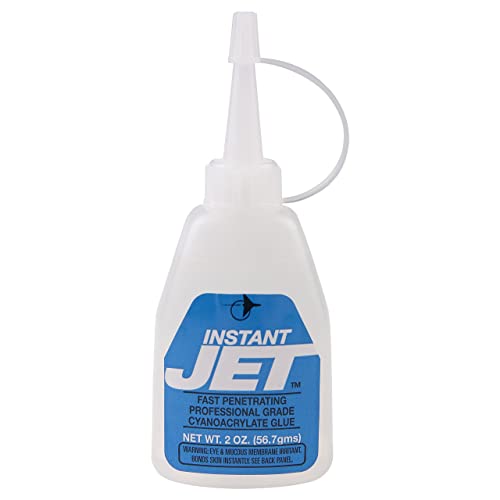
| Jet Glue Fast-Action Multipurpose CA Adhesive★ Best Overall | Pointe shoes and quick splits | Liquid | 1 minute | Plastic, Rubber, Wood | Amazon |
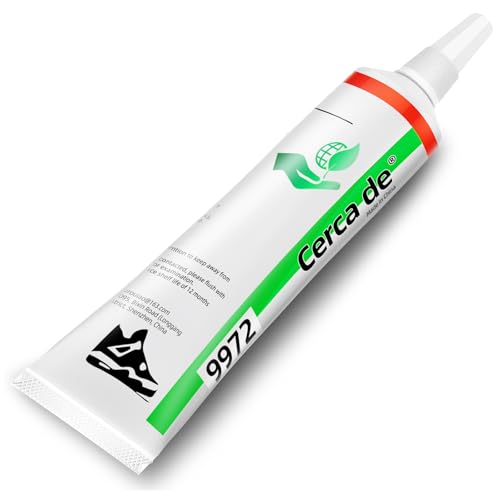
| Shoe Glue Heavy Duty Sole Repair AdhesiveBest Value | Everyday sneaker and sandal soles | Gel | 24 hours | Leather, Fabric, Glass, Metal, Plastic, Rubber, Wood | Amazon |
| Professional Leather Glue Adhesive | Leather bags, shoes, and furniture | Gel, Liquid | — | Leather, Faux Leather, Vinyl, Suede, Rubber, Canvas | Amazon |
| Eagle Shoe Cement | Boot and sneaker sole re-bonding | Paste | — | Faux Leather, Leather, Rubber | Amazon |
| StrongBond Shoe Glue | Insoles, soles, and heels on mixed footwear | Liquid | — | Leather, Rubber, PVC, Canvas, Fabric, EVA, Plastic, Wood, Metal | Amazon |
Detailed Reviews
1. Jet Glue Fast-Action Multipurpose CA Adhesive, 2 oz
Our pick — over 4.5★ from 500+ verified ratings; the strongest balance of quality and price.
The instant-set workhorse dancers reach for when pointe shoes go soft mid-season
If you dance or own a pair of ballet pointe shoes, you already know the problem: the box goes soft and the shoe stops supporting you long before it wears out. Jet Glue is a cyanoacrylate (instant super glue) built for exactly that job. It cures in a full minute to a hard, clear bond across plastic, rubber, and wood. For stiffening a pointe shoe box or locking a crack in a sneaker sole, nothing on this list sets faster.
What wins people over is the sheer strength of the hold — the effectiveness of this adhesive is the quality buyers bring up over and over, far more than any other trait. Street shoe repairs hold too: sneakers, velvet platforms, and everyday leather all bond tightly, and a little goes a long way. One groomer keeps a bottle on hand for emergency fixes during the workday. The fast dry is the other big plus; it grabs almost the moment the surfaces touch, so you’re not standing there holding two pieces together for an hour.
The trade-off is real and you should know it before you open the bottle. It bonds skin instantly, and it generates heat as it sets — so keep your fingers clear of the seam. The consistency also draws mixed feelings: some buyers find it gel-like and easy to control, others less so. If you want a glue for a thick rubber sole that flexes underfoot, a hard-setting cyanoacrylate like this is the wrong tool — go with a flexible cement instead.
What Makes It a Favorite
- Full cure in about 1 minute — the fastest set on this list
- Bonds rubber, wood, and plastic in one clear-drying formula
- Dancers stiffen pointe shoes with it, often mixed with talcum powder for added rigidity
- Bonds instantly and holds hard, even on velvet and street shoes
Read This Before You Buy
- Bonds fingers on contact and releases heat as it cures — handle with care
- A hard-set cyanoacrylate is a poor match for thick, flexing rubber soles
- The gel-like texture splits opinion among buyers
Go for it if: you are a dancer, a groomer, or anyone who needs a lightning repair on pointe shoes or a small split.
Step away if: your job is re-bonding a bending rubber sole — this sets too hard to move with it.
2. Shoe Glue Heavy Duty Sole Repair Adhesive, 2oz
The all-in-one kit that hands you the tools, not just the glue
Most shoe glues leave you hunting for clamps and brushes. This one drops everything in the box: an unglueing agent, a brush, a rubber band, disposable gloves, and a sanding stick. That kit matters, because the prep step — sanding and cleaning the surfaces — is what decides whether a sole repair survives a week. The gel form stays flexible after it dries, so a thick sole keeps moving with your foot instead of cracking.
The hold here is genuinely strong, and it is waterproof and clear-drying, so rain and puddles don’t undo your work. It handles the full spread — leather shoes, sneakers, sandals, and high heels — plus belts, handbags, and hooks around the house. Full cure takes 24 hours, which is standard for a flexible cement, and once it sets the bond is firm and invisible. One tube costs far less than a new pair of sneakers.
One honest limit: a few buyers have tried it on heavy work boots and found the glue didn’t hold even after cleaning and clamping. That points to surface compatibility — a worn, oil-soaked boot leather can resist almost any adhesive. On everyday shoes, the results are far more consistent. Pick it if you want the tools, the flexibility, and a clear waterproof finish; skip it if you’re re-soling a heavily-abused work boot that needs a professional cement.
Where it shines: the hold is strong and waterproof, and reviewers call it a genuine alternative to replacing shoes entirely.
The trade-off: the 24-hour cure means you set it and walk away for a day, and heavy, oil-soaked work boots are its weakest surface.
Best for: everyday sneakers, sandals, and household fixes where you want the tools included.
Think twice if: you need a same-hour fix or you’re re-bonding a heavy work boot.
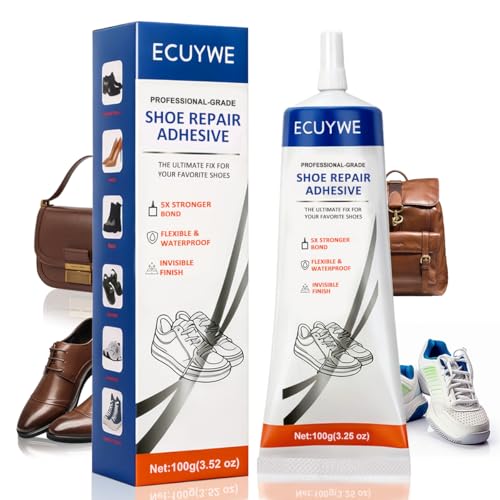
3. Professional Leather Glue Adhesive, 4.23 oz

The precise-tip leather glue that saved a bag a cobbler would not touch
Leather is where cheap glue shows its seams — literally. This Ecuywe adhesive bonds leather, faux leather, vinyl, suede, rubber, and canvas with a flexible, waterproof hold designed to flex without splitting. The applicator tip is fine and controlled, so you can run a bead along an edge without oozing glue onto the surface. That precision is the whole point on detailed work like a torn bag handle or a loose boot seam.
What buyers keep coming back to is how well it holds on leather. A detached boot sole that a cobbler refused to fix was re-bonded with it — applied generously and taped for a day, the bond held firm. A fraying leather bag handle bonded back together with a repair you can’t even spot. It dries 100% crisp, and the nozzle has a metal spike built in to stop it clogging up between uses. The label rates it non-toxic and fume-free when used as directed, including on furniture and car interiors.
The one catch: on matte black surfaces it can leave a faint shiny residue where the glue sits. On most leather that’s invisible once dry, but on a strictly matte finish, wipe any excess quickly. It’s the right pick for leather goods and detailed repairs; if you’re re-soling a rubber work boot, a dedicated rubber cement serves you better.
Why Leather Lovers Pick It
- Fine applicator tip for pinpoint control on seams and edges
- Dries 100% clear for an invisible repair
- Flexible, waterproof bond that holds on leather, suede, vinyl, and canvas
- Built-in metal spike keeps the nozzle from clogging
The Fine Print
- Can leave a faint shiny residue on matte finishes
- Not the first choice for thick, flexing rubber work-boot soles
Reach for this if: you’re mending leather shoes, bags, or furniture and want a clean, invisible seam.
Look elsewhere if: your repair is a worn rubber work-boot sole that needs a rubber cement instead.
4. Eagle Shoe Cement, 4 oz
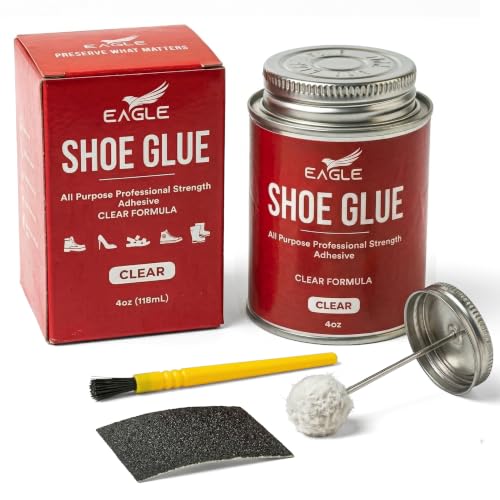
A traditional cobbler-style cement for re-bonding detached soles and midsoles
This is a shoe cement in the classic sense — a medium-viscosity paste meant to fill the gap when a sole pulls away from the upper. It works on leather, rubber, and faux leather, handling detached soles, separated midsoles, and torn uppers on sneakers, boots, and dress shoes. The precision tip keeps the paste where you want it, and it is thick enough for professional cobbler use while staying manageable for a home fix.
When it works, it works well. Expensive sandals and flip-flops that had come apart were mended cleanly with it, and it leaves no stains or visible marks on most surfaces — one of the qualities buyers appreciate. Effectiveness is the trait that comes up most here, and it extends the life of footwear you’d otherwise toss. The paste fills gaps that a thin liquid can’t, which is exactly why cements like this have been the workshop standard for decades.
Two things to plan around. The lid ships extremely tight, so warm it under hot water or use a jar opener to get in. And adhesion varies hard by material: excellent on cloth and real leather, only so-so on rubber, and poor on most flexible plastics. A few buyers found stubborn work-boot soles peeled off even after repeated attempts and long setting times. On the surfaces it’s rated for, though, it holds well and dries securely.
My read: a solid traditional cement for leather and rubber soles, with real gap-filling power and clean application.
Watch this: it’s fussier about materials than the flexible glues above — rubber and flexible plastics give it trouble, and the lid can be a fight.
Good match for: leather and rubber sole repairs where you want a gap-filling paste and clean finish.
Not the one for: flexible plastic shoe parts or any job needing a guaranteed rubber-sole bond.
5. StrongBond Shoe Glue, 100ML
The big-bottle flexible glue that keeps pace with insoles, soles, and heels
StrongBond gives you more glue than almost anything else here — 100 ml of low-viscosity liquid, so it wicks into a gap between sole and upper rather than sitting on top. The formula stays flexible after it dries and cures clear, moving with the shoe instead of cracking when you walk. It’s rated across a wide spread: leather, rubber, PVC, canvas, fabric, EVA, plastic, wood, and metal, which makes it the most versatile pick in the lineup.
The real strength is on stubborn, mixed-material shoes. A gardening shoe whose rubber sole had mostly separated from the body was glued and held beautifully after weeks of outdoor wear. A shoe that had lost almost its entire sole came back looking well made again. Buyers also like the precision tip — the clear glue goes on clean with a small metal nipple, and results even beat how the shoes came new. Give it a day or two to cure and the bond sets firmly.
Be honest about the prep: for the best result, you need to work the glue all the way to the edge of the sole, or an edge can lift. A few buyers have also reported it not holding on certain sandals, which usually traces back to a smooth, low-grip surface — sanding first helps. On mixed-material shoes and larger surfaces, though, this flexible liquid is the most broadly capable choice here.
Where StrongBond Wins
- 100 ml volume — the largest supply in this lineup
- Flexible, waterproof, clear-drying bond that moves with the shoe
- Rated for the widest material range, including EVA, PVC, and canvas
- Precision tip with a metal nipple for a clean, controlled bead
Honest Caveats
- You must work the glue to the sole edge or an edge can lift
- It has struggled on some smooth-surfaced sandals without proper prep
- Needs a day or two of cure time for full strength
Pick this when: you’re fixing mixed-material footwear and want one flexible glue that covers the most surfaces.
Skip this when: you want an instant grab or you’re bonding smooth, low-grip surfaces without sanding first.
Know the Specs
Cure Time
Cure time is how long the glue needs to reach full strength, and it’s the spec that trips up most first-time repairs. A fast-setting cyanoacrylate like a super glue can tack in seconds and reach full cure in about a minute — great for small, rigid fixes. A flexible cement often needs a full day to set, because it cures slowly to stay soft and move with the sole. Clamp the shoe and leave it alone for the listed time; walking on it early is the number-one reason repairs fail.
Glue Form: Liquid, Gel, or Paste
The form decides how the glue behaves on the shoe. A low-viscosity liquid wicks into thin gaps between a sole and upper, but it can run. A gel sits where you put it and resists dripping, which suits vertical seams and edges. A thicker paste fills larger gaps, like a sole that has pulled open, and stays put during clamping. Match the form to the gap: thin gaps want liquid or gel, wide gaps want paste.
Common Questions
What kind of glue actually works on rubber shoe soles?
How long should I let shoe glue cure before wearing the shoes?
Can I use super glue on leather shoes and bags?
Will shoe glue work on sneakers that keep peeling at the toe?
Is shoe repair glue waterproof enough for wet weather?
What is the difference between shoe cement and liquid super glue?
How do I stop shoe glue from hardening in the tube between uses?
Can you glue a sole back on a boot that a cobbler won’t repair?
Is it better to glue a detached sole or replace the shoes?
Do I need to clamp or tape a shoe while the glue dries?
The Bottom Line
For most people chasing the best glue for shoes repair, the winner is the Jet Glue Fast-Action CA Adhesive because it sets in about a minute and holds hard on pointe shoes and quick shoe fixes. If you want the tools included and a flexible waterproof bond, grab the Shoe Glue Heavy Duty Sole Repair Adhesive. And for leather goods and detailed repairs that need an invisible seam, the Professional Leather Glue Adhesive is the one to reach for.
How we choose
We do not accept paid placement. Every pick is matched to a real buyer and a real use-case; we do not hands-on test units.
Sources
Specifications: manufacturer listings and product documentation. Review insights: verified customer reviews, as of October 2026. Pricing: not shown on this page (it changes often); check the current price via the retailer link.
As an Amazon Associate, Aappliancez earns from qualifying purchases. This does not affect which products we feature.