Disclosure: Some links in this post are affiliate links. As an Amazon Associate I earn from qualifying purchases, at no extra cost to you. Learn more
Specs are compiled from manufacturer listings and verified buyer reviews and can change over time — please confirm the key details on the product page before buying.
If your foot rolls inward on every landing, you want a shoe that reaches under your arch and steadies things before your knee and hip start paying for it. That is the whole job of a stability shoe. The picks below split into two camps: firmer-midsole trainers that add support with a built-in guide system, and broader-platform shoes that cradle the foot so it rolls smoothly instead of collapsing. Some use named anti-pronation tech (ASICS’s 4D GUIDANCE SYSTEM, Brooks’s GuideRails, Saucony’s CenterPath), others lean on a reinforced arch and a wide base. All of them are road shoes made for pavement, treadmill, gym floor, and long shifts on hard flooring.
This guide is built by comparing the manufacturers’ published specifications and the patterns across verified customer reviews, so you get each pick’s real strengths and trade-offs instead of marketing spin.
A stability shoe steadies your stride, but the wrong one fights your arch instead of supporting it. Weigh fit, arch height, and heel hold before anything else. These women’s stability running shoes are sorted by what they actually fix.
Top Picks

How To Choose Women’s Stability Running Shoes
Start with what your foot does when it lands, not with how the shoe looks. If your ankle caves inward and your big toe takes the load, you need a shoe that resists that motion without bruising your arch. If you have high arches and a rigid foot, too much firmness under the midfoot can hurt more than it helps. The nine picks here run from firm motion control to soft broad-platform cushioning, so the real decision is matching the support level to how your foot actually behaves.
Reading your own stride before you shop
Look at the bottom of a worn pair. If the tread is chewed away along the inner edge near the big toe, that is overpronation, and a stability model earns its place. Wear along the outer heel with an even wear pattern means you may not need much correction. An 8 mm heel drop, the height difference between the heel and the toe, changes how much your calf and ankle have to work, so it matters if you are coming off an injury.
Shoe weight, stack height, and the trade-off you feel
Support structures add material, and material adds grams. The ASICS Gel-Kayano 32 sits at 1.44 pounds, the same figure as the GT-1000 14 and GT-2000 13, while the Brooks Addiction GTS 15 and New Balance 860 v14 run 3 pounds. A heavier shoe often means more correction built in, but it also means more to lift on every step. Pick the lighter shoe for speed and the heavier one for all-day standing and long shifts.
Toe box, heel hold, and orthotics
A wide toe box protects bunions and hammer toes; a snug heel keeps the whole shoe from sliding. Both have to be true at once, which is why the review pages are full of people sizing up a half size or ordering wide. If you wear custom orthotics, check that the insole is removable and that there is enough depth, since a shallow footbed will crowd your insert. Features like a guide rail or a guidance system work best when the shoe already fits your foot shape.
Side-by-Side Comparison
| Model | Best For | Support Tech | Stated Weight | Heel Drop | Amazon |
|---|---|---|---|---|---|
| New Balance Fresh Foam X 860 v14★ Best Overall | Everyday overpronation | Fresh Foam X midsole, built-in support | 3 pounds | — | Amazon |
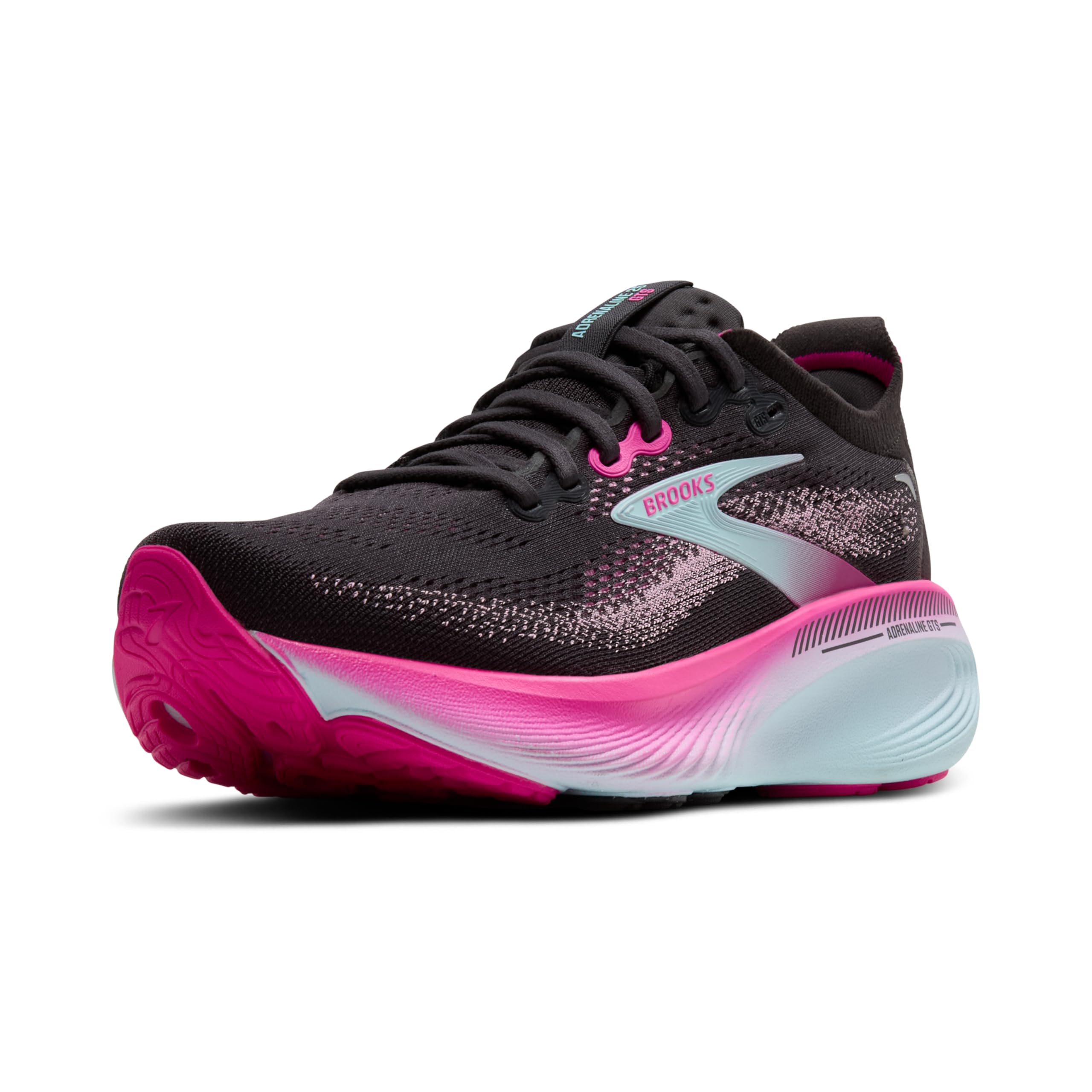
| Brooks Adrenaline GTS 25Best Toe Room | Wide toe room + support | GuideRails support | 1.5 pounds (package) | — | Amazon |
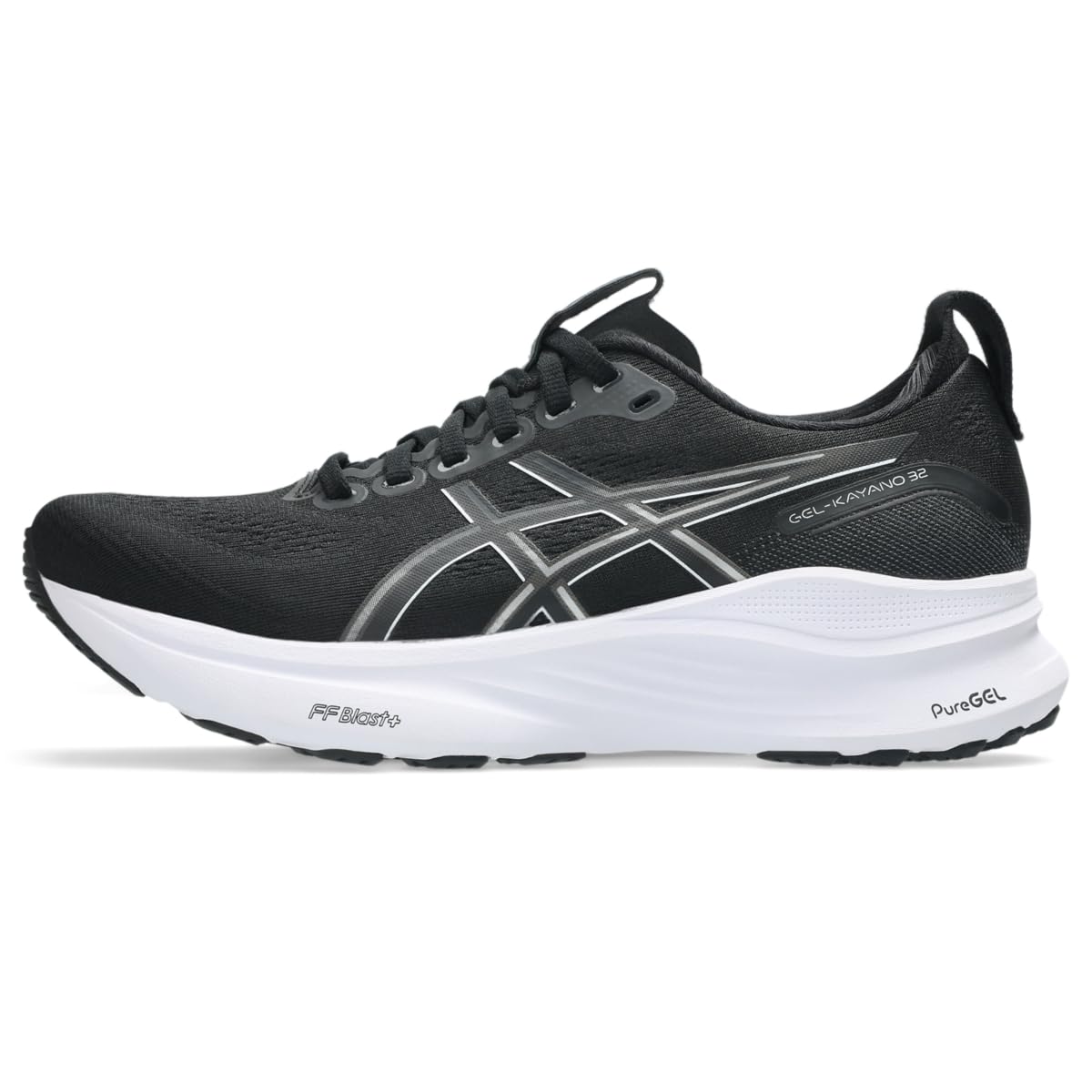
| ASICS Gel-Kayano 32Best Adaptive Stability | Adaptive distance stability | 4D GUIDANCE SYSTEM | 1.44 pounds | — | Amazon |
| Brooks Glycerin GTS 22 | Plush support underfoot | GuideRails support | 1.5 pounds | — | Amazon |
| Brooks Ariel GTS 24 | High-arch, heavier frames | GuideRails support | 1.5 pounds | — | Amazon |
| ALLSWIFIT Slip-On Walking Shoes | Slip-on convenience | Snug midfoot + arch support | — | — | Amazon |
| ASICS GT-1000 14 | Budget stability trainer | 3D GUIDANCE SYSTEM | 1.44 pounds | — | Amazon |
| ASICS GT-2000 13 | Lighter stability, narrow fits | PureGEL rearfoot + stability | 235 g / 8.3 oz | 8 mm | Amazon |
| Saucony Guide 18 | Max cushioned stability | Center Path Technology | 8.6 oz / 245 g | 6 mm | Amazon |
| Brooks Addiction GTS 15 | High-volume motion control | Transition Zone support | 3 pounds | — | Amazon |
| Wide Toe Box Extra Wide Sneakers | Budget-wide everyday fit | Arch support insole | — | — | Amazon |
Detailed Reviews
1. New Balance Fresh Foam X 860 v14
Our pick — 4.5+★ from 2,500+ verified ratings; the strongest balance of quality and price.
A built-in support frame that steadies the inward roll without turning the ride harsh.
The 860 v14 is the pick that does both jobs at once: it steadies the inward roll and stays soft enough to live in. It runs on a Fresh Foam X midsole, which is the brand’s soft foam layer that buffers each landing. That Fresh Foam X cushioning is what lets nurses and walkers log two miles a day without pain. This is the crowd favorite here — 4.5+ stars across 2,600+ ratings — and the fit is the thing people talk about most.
That inner stability frame matters if your ankle caves inward and your knee starts complaining. Buyers report it as a reliable counter to overpronation, and several wear it for running and all-day hospital shifts instead of just the gym. One walker had this to say: “These shoes have held up well to my husband walking 6-7 miles a day for work.” The same support is the reason it suits nurses on twelve-hour floors.
The catch is break-in. A few note pressure across the forefoot and a slightly forward “pushy” feel in the first few days. That fades once the midsole softens, but plan a short adjustment week rather than a long run straight from the box. At 3 pounds it is the heavier of the two big brands here; the ASICS Gel-Kayano 32 sits at 1.44 pounds, so pick this one for standing and the lighter ASICS for speed work.
The 860 Does Right
- Fresh Foam X midsole stays soft for daily walking and long shifts
- Built-in support frame counters inward roll on a neutral-footed run
- Secure heel hold and a roomy toe box in the wide version
- Wears well past two miles a day without pain
Plan Around This
- Short break-in: forefoot pressure and a forward push at first
- Heavier than the lighter ASICS pick at 3 pounds
- Light colors pick up road dirt fast
Best for: The overpronator who needs steadiness for walking, standing, or daily miles and does not want a stiff plank of a shoe.
One limit: Give it a short break-in week before you trust it on a long run.
2. Brooks Adrenaline GTS 25
The stability shoe that keeps the correction in the rail, not the toe.
If your splay is wide and your arch still needs holding, the Adrenaline GTS 25 is the one. Its guide rails keep the correction at the edges of the shoe, which leaves the midfoot soft instead of stiff. Owners with plantar fasciitis and a bunion describe walking freely, with no rubbing at the bunion and no plantar pain. The full-width toe box is the strength here, and at 4.0+ stars across 3,700+ ratings, the comfort is the aspect people come back to most.
This shoe suits a wide range of feet. A 72-year-old recovering from ankle surgery finds it the most stable option. A runner who goes 15 miles a week and does daily workouts gets both grip and a cushioned forefoot. A narrow-footed nurse in a hospital recovery unit reports cushioned support all day on hard floors. One owner who runs often in them says, “I also worked out in these and they are great.” The fit holds up at a range of stride lengths.
Two honest hard facts on durability and sizing worth flagging. Some owners mention the shoes falling apart over time while others say they hold up for years. A few note sizing inconsistency between two identical pairs. If you want a firm surety on longevity, this is a shoe you should treat as a single-purchase commitment rather than a repeat your-order-every-time one.
What owners praise most: Comfort (1.1K mentioned) and fit, particularly the toe room. The term “most comfortable ever” shows up specifically in surgery-recovery wearers.
What to know before you order: Consistent sizing is not guaranteed from pair to pair. Have your normal size and a half size down in mind and keep the receipt handy.
Pick it for: Wide, splay-prone feet that also need a support rail; bunion and plantar fasciitis comfort is where this shoe earns its keep.
Think twice for: Anyone who expects the exact same fit in a second pair — the sizing spread is the one recurring gripe.
3. ASICS Gel-Kayano 32
Adaptive steering for the long run, at a weight you won’t resent.
What sets this shoe apart is how the support behaves as you tire. The 4D GUIDANCE SYSTEM (ASICS’s stability tech that adapts to your foot’s movement) holds a balanced stride through the back half of a distance run. The FF BLAST PLUS foam is the soft, responsive layer underfoot that takes the landing, and the whole shoe weighs 1.44 pounds — far under the New Balance 860 v14 at 3 pounds. For a long run, that is less shoe to lift on every step.
It is a strong pick for anyone whose feet ache through a day on their feet. Owners with accessory navicular syndrome (an extra bone near the arch that gets irritated) report walking long distances and hiking all day without pain. The reinforced tongue wing along the arch keeps the midfoot comfortable. What customers note confirms this: the arch support is the second most-praised aspect of this shoe, right behind fit.
The catch is width. A runner with a bunion on one foot reports the toes scrunching at the widest part and a blister on the heel despite good support. A standard-width wearer finds them slightly wide and needs two pairs of socks. And the FF BLAST PLUS stack does not make them feather-light — a 67-year-old daily walker describes them as not lightweight because of the stability and durability built in.
Fit is the reason it sells: Fit is the most-praised aspect by a wide margin, with arch support close behind. Owners who commit to a half size up or a wide get the most out of it.
Reach for this if: You put in real distance and want support that reacts as you fatigue, not a single fixed rail.
Look elsewhere if: You run with a prominent bunion — the toe room at the widest point is the one dimension to check first.
4. Brooks Glycerin GTS 22
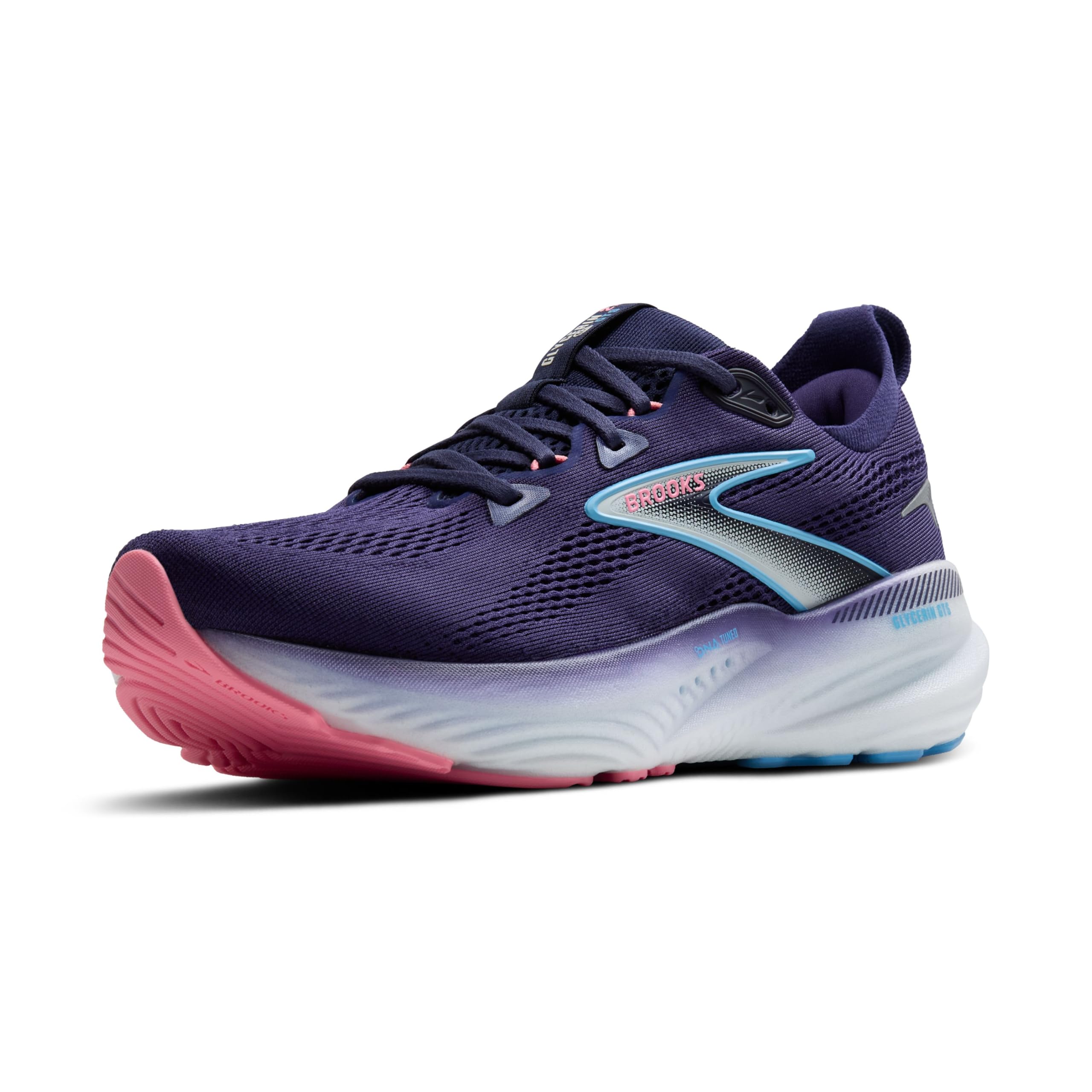
So cushioned underfoot that owners say they are reluctant to take them off at day’s end.
Take the support rail of an Adrenaline and swap in a much softer midsole and you get the Glycerin GTS 22. The stabilizing bar (Brooks’s GuideRails, which steer the foot from rolling too far inward) does its job without pressing into your arch. Owners with flat arches and pronation say the GuideRails corrected the roll while feeling more comfortable than custom orthotics. The cushioning is the star, though, and the fit is what buyers talk about most.
This is the shoe for someone who spends the day upright and wants a soft landing, not a firm one. Owners describe walking miles daily and being reluctant to take them off at night. The heel-toe drop and the padded heel collar make it easy on the Achilles, and the flexible toe sole grips the road well. As the review pages put it, they are “so comfortable and supportive” that people order a second pair for rotation.
Two hard facts to weigh. The support is deliberately strong, so a runner with arches that need more give finds them aggressive after about thirty minutes of standing. And sizing runs generous — many need a half size up, especially if orthotics go in. One detail: the shoe is machine-washable, and an owner reportedly washed theirs six times and air dried with no damage. That is a rare convenience in this category.
Why It Earns Its Place
- GuideRails keep the correction at the edges, not the arch
- High-cushion midsole for long days of walking
- Machine-washable — air dry after washing
- Padded heel collar soothes the Achilles
The Honest Trade-offs
- Strong arch support can press into a sensitive high arch
- Sizing is generous — many need a half size up
- A one-time durability report among the positive ones
Your match if: You want the most cushioning plus a guide rail and you are willing to size up for orthotics.
Pass by if: Your arches are high and sensitive, because this much support can be too much.
5. Brooks Ariel GTS 24

For feet that need real correction, this is the firm directional hand that does not wobble.
The Ariel GTS 24 is the supportive heavyweight of the Brooks line here. It is built for a runner or walker who needs the most arch control and wants a shoe that stays stable under forward weight. Owners with hammer toes and falling arches report strong arch support placed correctly under the foot. The quality of the build is the aspect people praise most, and it suits pedestrians who walk pavement at a brisk pace with a high arch.
This is not a soft shoe and does not pretend to be. The support sits where you want it and the chassis does not flex under you. A walker nearing seventy who covers daily pavement miles says it exceeded expectations. A runner who does regular workouts says no more leg aches after switching in. If you have tried other Brooks models and felt them wrong, this firmer platform is often the shape that clicks.
Sizing is the one thing to watch. The general pattern is to go up a half size, and at least two owners had to. One detail to know before you order a dark pair: the “black” colorway reads as navy in sunlight, which is not black. That is cosmetic, but if you want a true black shoe, this is not the colorway to pick.
Where it wins: Quality of build earns the most praise — the aspect that carries this shoe past its size quirks.
Made for you if: Your arches are high, your stride is quick, and you want firm support that does not roll under you.
Size up note: A half size up is the common choice here, and the black colorway reads navy in daylight.
6. ALLSWIFIT Slip-On Walking Shoes
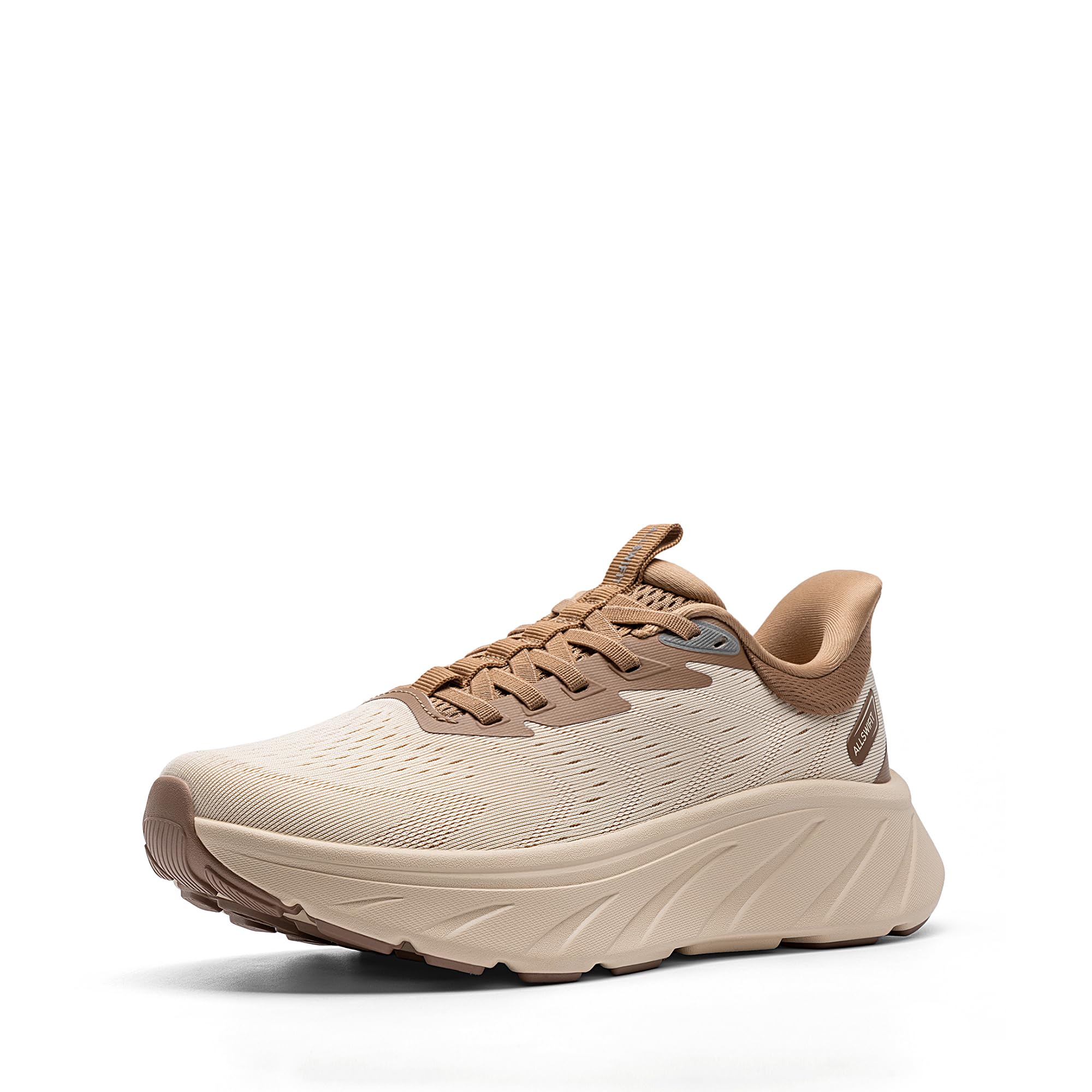
A sockless slip-on that holds its shape through miles and washes.
Not every stable walk needs a full motion-control chassis. Some people want to slide a shoe on at the door and get walking. The ALLSWIFIT slip-on does that with a snug midfoot, cushioned footbed, and arch support under the instep. A machine-washable pair that survives five to six months of heavy use and four wash cycles with no shrinkage is a rare find at any level. Owners who have put them through that say they do not stretch out or slide off, even barefoot.
The stability here comes from the fit, not a firm rail, and a snug midfoot is what keeps the dress-shoe look from turning into a slipper. A committed Hoka wearer describes them as comfortable, stable, and cute — at a fraction of the cost — and a teacher calls them perfect for a day on her feet. The look is the biggest draw, and the slip-on ease is close behind.
What’s the catch? The heel slips on a few narrow feet, and toe room runs small under heavy pressure for the wide-footed set. Size up a half if you run wide, and keep in mind that durability beyond several months of daily wear is still unproven by the review record.
The look draws them in: Appearance is the most-mentioned positive — people wear these for the style as much as the arch support.
Take this one if: You want a stylish, lightweight slip-on for daily walking, errands, and classrooms that still supports your arch.
Skip if: You want proven long-term durability or you run wide — a half size up is the safer path.
7. ASICS GT-1000 14
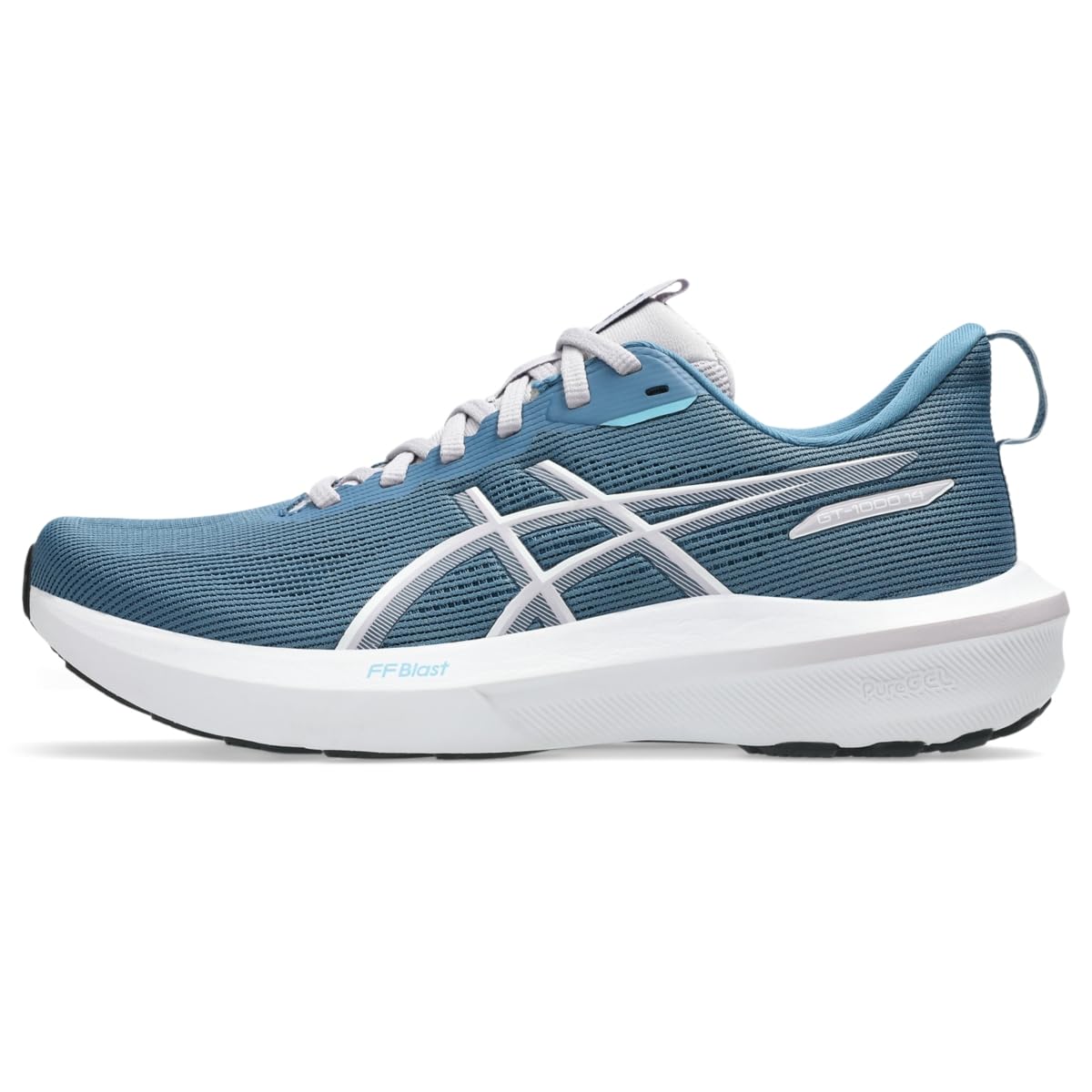
Budget-priced stability that stays cushy through a twelve-hour shift.
This is the value play for anyone who wants named stability tech without the premium price. The 3D GUIDANCE SYSTEM is ASICS’s stability frame, and it keeps a neutral-to-overpronating stride from rolling inward. The FF BLAST foam midsole underneath is the soft, bouncy layer that takes the shock out of pavement miles. At 1.44 pounds it matches the lighter Gel-Kayano 32 on weight.
Where it shines is the long day. ER nurses here work twelve-hour shifts and report both support and comfort. Walkers do long distances with no foot aches. The toe box is roomy rather than narrow, which matters for wide feet. The fit is the second most-praised aspect behind comfort, and for a budget shoe that is the right pair of strengths.
The honest limit is durability and finish. Some owners say these hold up well, others raise concerns. One reports a pull loop breaking during a quick re-lace on a trip, and one says the tongue is extremely tall and bulky. None of that is fatal, but if you want the tighter build, the GT-2000 13 below is the more refined sibling.
Why It’s Worth A Look
- 3D GUIDANCE SYSTEM keeps the foot from rolling inward
- 1.44 pounds — light enough to wear all shift
- Roomier toe box than a narrow last
- Genuine comfort for long-shift work
Keep In Mind
- Durability is reported as mixed
- Oversized tongue can feel bulky
- A loop broke on one buyer during a quick re-lace
Matches with: A budget buyer who wants a light, cushioned stability trainer for the gym or a twelve-hour shift.
Not for: Anyone chasing the firmest, most durable build — the GT-2000 13 below is the tighter one to step to.
8. ASICS GT-2000 13

An 8 mm-drop stabilizer that reads narrow feet like a custom last.
The GT-2000 13 packs stability into 235 g (8.3 oz), with a defined 8 mm heel drop and rearfoot PureGEL cushioning to absorb impact. PureGEL is a gel insert in the heel that softens the landing, and the lower 8 mm drop means your ankle works slightly less than on a taller stack. For narrow-footed runners and walkers who need a light, responsive trainer, that combination hits a balance the heavier shoes here cannot touch.
Narrow feet settle into this shoe. A wearer with a medium-width foot calls it a great brand for narrower feet and says she does not need her orthotics inside. A runner who goes about 20 miles a week says it is comfortable from day one and holds up well. Reviewers point out a 350-to-400-mile lifespan per pair, with one first pair bottoming out at 350 and a second lasting 400. That is a real running shoe’s life, not a hiking boot’s.
The recurring gripe is width. The noted fit issue: these run narrow even for normal feet. A runner with a standard-width foot finds them tight and buys wide. A long-time Kayano wearer calls the lack of tongue padding the biggest flaw. If you have a low-arch, wider foot, order the wide, and expect a light build rather than a plush one — the cushioning is described as moderate, not cloud-soft.
Who it’s built for: Narrow, medium, and high-arch feet that want a light stability trainer, not a soft couch.
Best fit: A runner with a narrow-to-medium foot who wants a 235 g stability shoe with a defined 8 mm drop.
Sizing caution: Run narrow for many — order the wide if your foot is anything but slim.
9. Saucony Guide 18
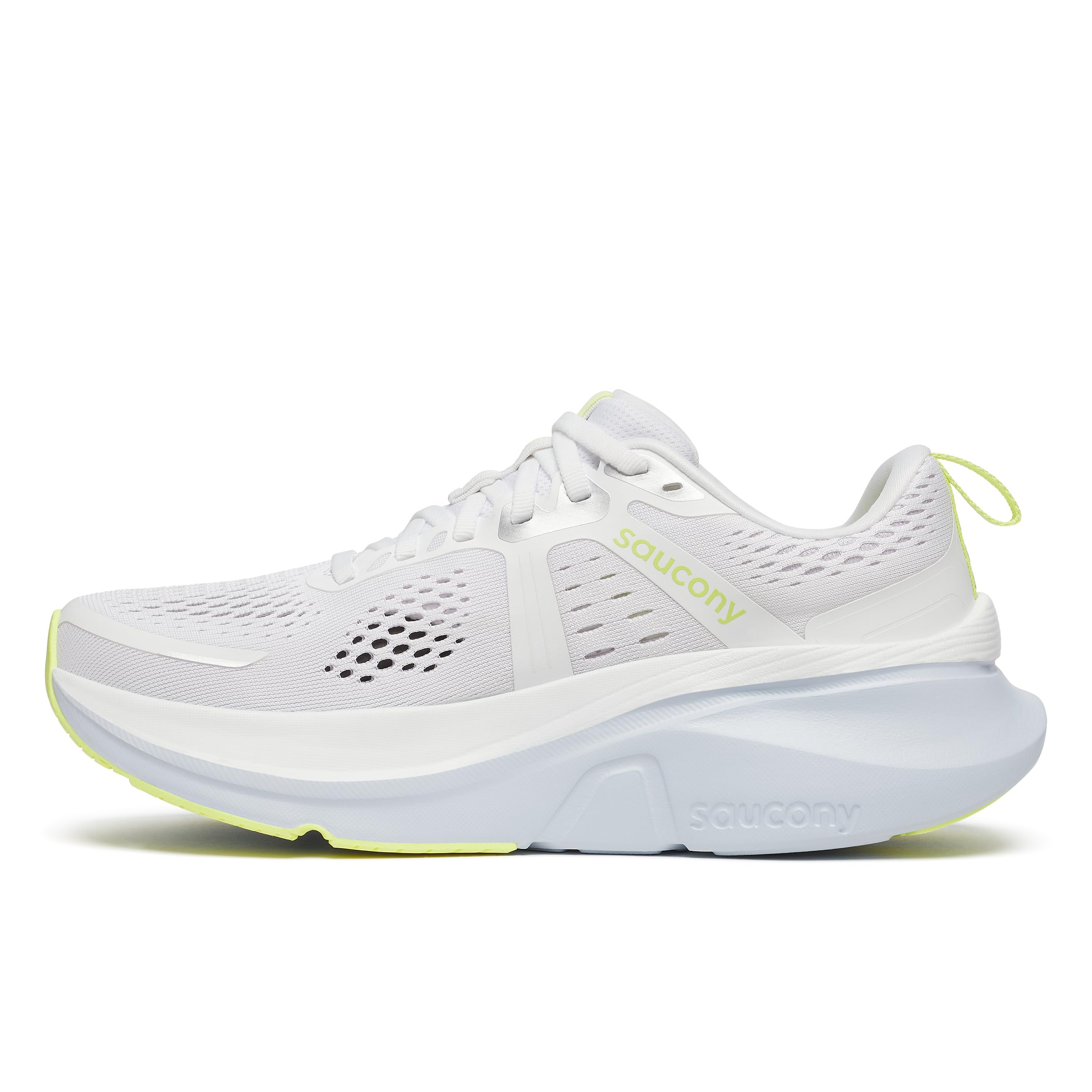
A cradle-shaped base that rolls you through the step instead of fighting you.
The Guide 18 does stability differently from the rail-based shoes. Its Center Path Technology raises the sidewalls of a broad base and builds them on a rocker shape, so your foot is cradled and rolls forward smoothly. The PWRRUN foam and PWRRUN+ sockliner are the cushioning layers that keep the ride soft. At 8.6 oz (245 g) and a 6 mm offset, it stays light for a max-cushion stability trainer. Owners describe the underfoot feel as walking on pillows.
This is the pick for someone who wants protection mile after mile and will trade a little ground feel for it. A 15-year user with overpronation and arch issues says it helps correct them and the tops stay durable. An ultrarunner with starting bunions says the toe box is roomy and comfortable without needing a full wide fit — one of the few places this shoe reaches a wide-toed foot without a wide width.
Facts to weigh before ordering. Some examples have come apart on the side detailing in under two months. The included shoelaces are short — barely enough to double-knot. And the higher-cut top can rub the ankle bone on some. Size up if you are between sizes, and check the laces on day one.
The rocker is the point: Quality of build is the aspect most often praised, with comfort close behind and arch support third.
Right for you if: You want max cushioning plus a stability cradle and your foot is on the wider side, bunion or not.
Watch out for: Shoelaces are short and the higher-cut top can rub an ankle bone — size up and skip the tight lacing.
10. Brooks Addiction GTS 15
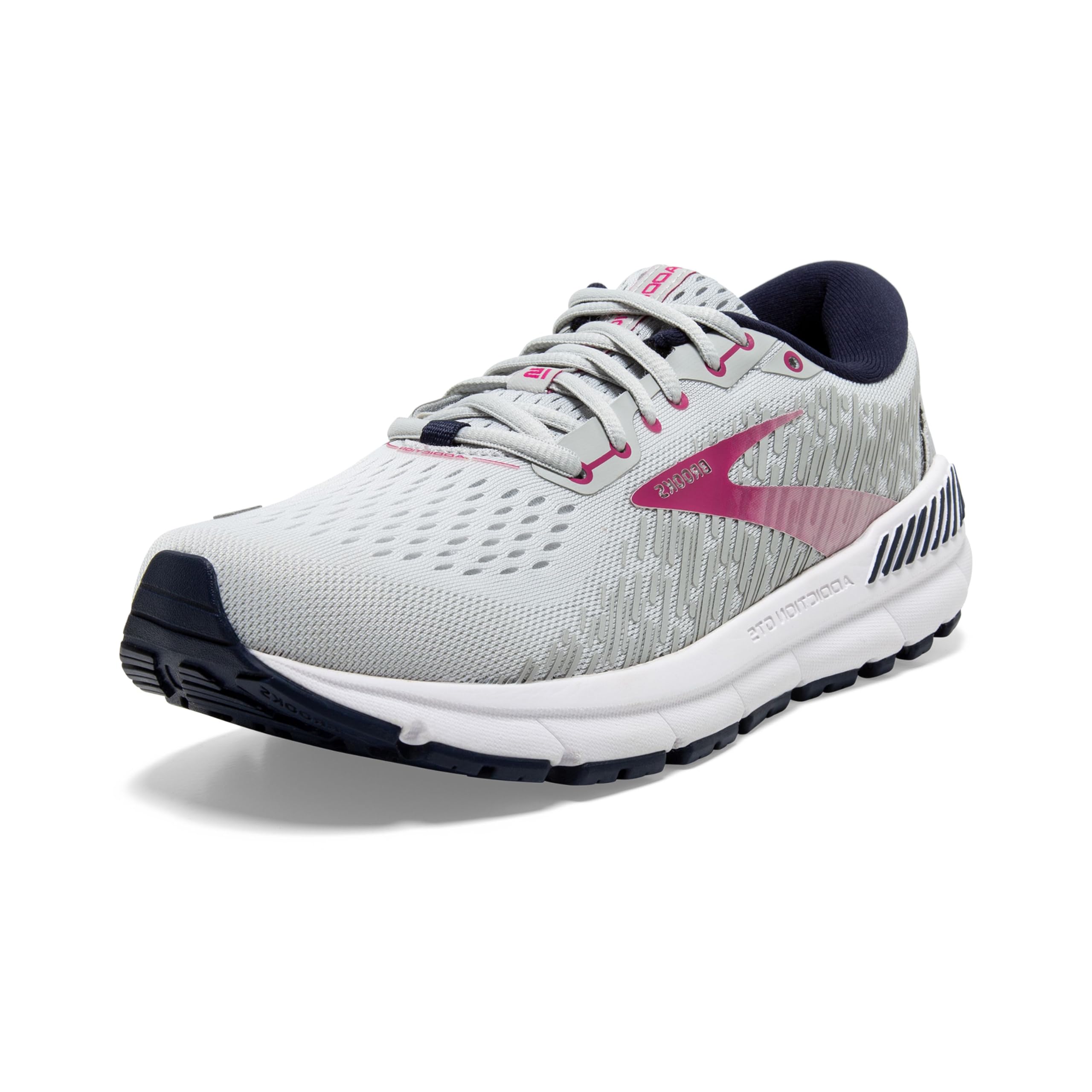
The go-to for neuropathy balance and a toe box that refuses to pinch.
When you need maximum correction and a wide, roomy toe, this is the shoe people end up in after trying a few. It weighs 3 pounds, the same figure as the New Balance 860 v14, with a wide toe, arch support, a narrow heel, and a no-slip sole. Owners with neuropathy and balance problems report the wide toe, narrow heel, and no-slip sole keep them steady. It is the pick for a foot that needs the whole chassis to hold it steady, not a soft landing.
The gift of this shoe is its foot shape. A box-toed roomy fit suits bunions, hammer toes, and the kind of feet that hate a tapered toe. Long shifts in medicine are reported as comfortable, and someone who wore a pair for three years before replacing it says the workhorse build earns its keep. There is also a leather walker version, which a 72-year-old retired owner finds better for wet, cold, or formal wear.
To set expectations: the fabric version runs small and short in the toe box, and it uses a different last from the leather one. Ordering your usual size in the fabric build can cramp the toes. Order wide and a half size up if your feet are full, and do not expect this shoe to feel light — it is the heaviest pick in this guide alongside the 860.
What it fixes: Balance issues, bunion width, and long shifts on hard floors.
The honest caveat: The fabric build runs short and small. Size up a half and pick wide if your foot is full.
This is your shoe if: You need maximum correction with a wide toe box for balance or bunion comfort.
Not the one for: Someone who wants a light, sleek fit — and order a half size up in fabric.
11. Wide Toe Box Extra Wide Sneakers

The entry-level way to get a genuinely wide toe without the sporty price.
If your only real requirement is space across the toes and the budget is tight, this is the shoe that delivers it. The wide toe box frees the toes and the memory foam insole has a heel cup for a bit of grab. Owners walk five to ten miles a day in them without blisters, and the slip-on design makes them easy to get on. The ease of use and the look are what people come back to; the cushioning is the reason they keep them on.
This is a comfort shoe, not a true stability trainer. The arch support is present but moderate, and the cushioning is minimal with no firm heel counter. It suits swelling feet, wide forefeet with bunions, and days when you want a shoe that does not squeeze. The mesh upper stretches, and the insole is firm enough to keep a daytime shape. At its level it does the wide-toe job that a lot of pricier shoes still miss.
The trade-off is in traction and precision. The opening is stiff and takes some effort to slide into. The shoes run wide even for a wide toe box, so the fit is roomy to a fault. Some report the labeling says extra wide but the actual width is a standard wide. Treat this as a wide everyday sneaker, not a serious overpronation trainer, and expect the arch support to be gentle.
What This Bargain Does
- A genuinely wide toe box for bunion and swelling comfort
- Slip-on ease with a firm memory foam insole
- Holds up to daily walking without blisters
- Light and breathable for long standing
Where It Falls Short
- Moderate arch support — not a full stability frame
- Stiff opening takes effort to get on
- Runs wide even for a wide size
- Traction grip drawn lower than the name brands
Grab it if: You want a light, roomy, inexpensive wide shoe for errands, walking, or standing.
Look further if: You need firm overpronation control or a snug, true-to-size fit.
Know the Specs
Support Systems
A guide system steers the foot before it rolls too far inward — it might be a raised sidewall, a rail at the edge of the sole, or a cradling base. A guide rail puts the correction at the shoe’s outer edge and leaves the midfoot soft. A guidance system reacts to your foot’s own movement, which can feel less intrusive on longer runs. A broad, rockered base cradles the foot and rolls it forward instead of resisting it. None of these replaces correct arch support; they work best when the shoe fits your foot shape first.
Weight, Drop, and Stack Height
Weight tells you how much shoe you lift on every step, and stability adds material. A trainer near 1.44 pounds suits speed and long runs; one near 3 pounds carries more correction and cushioning for all-day standing. Heel drop is the height difference between heel and toe. A smaller drop like 8 mm asks less of the ankle than a taller stack, which helps if you are coming off injury. If you need a lighter shoe, look at the weights in the table — a lighter stability shoe can still hold your stride.
Toe Box and Heel Fit
A wide toe box stops bunions and hammer toes from pressing on the sides, and it prevents toes from sliding forward into a crowded tip. Heel hold is what keeps the whole foot from moving in the shoe. You want both at once: room at the front and snugness at the back. That is why so many owners size up a half size and pick a wide — the extra room at the toe has to be matched by a heel that does not slip. If the shoe feels too roomy, a heel insert can fix the fit.
Cushioning and Ground Feel
More foam underfoot means you feel the road less, which is what you want for long walks and hard floors. Less cushioning means a lighter, more responsive shoe that lets you feel the ground, which suits gym work and lateral moves. The trade-off is always in the ride. Max-cushion shoes can feel unstable for some, and firm stability shoes can be harsh on a high arch. Match the cushion level to how much time you spend on your feet and how sensitive your arch is.
Common Questions
How do I know if I need stability running shoes?
Do stability running shoes help with knee or hip pain from running?
Should I size up or down in stability shoes?
Can I;t use custom orthotics in these stability shoes?
What is the difference between GuideRails and a guidance system?
How many miles should I expect from a stability running shoe?
Are wide toe box stability shoes better for bunions?
Which of these is best for plant-related foot pain like plantar fasciitis?
Can these stability running shoes be used for walking and gym workouts?
Do I need a stability shoe if my feet are flat?
The Bottom Line
For most runners and walkers who roll inward, the women’s stability running shoes pick that does both jobs best is the New Balance Fresh Foam X 860 v14. It combines a soft Fresh Foam X midsole with real built-in support, and it holds the highest rating on the page — 4.5+ stars across 2,600+ buyers — so the crowd and the spec sheet agree. If your arches are high and you want firm correction, grab the Brooks Ariel GTS 24, or step to the Brooks Addiction GTS 15 when you need maximum control and a wide toe. And for adaptive stability through distance miles at 1.44 pounds, the ASICS Gel-Kayano 32 is the one to reach for.
How we choose
We do not accept paid placement. Every pick is matched to a real buyer and a real use-case; we do not hands-on test units.
Sources
Specifications: manufacturer listings and product documentation. Review insights: verified customer reviews, as of October 2026. Pricing: not shown on this page (it changes often); check the current price via the retailer link.
As an Amazon Associate, Aappliancez earns from qualifying purchases. This does not affect which products we feature.