Disclosure: Some links in this post are affiliate links. As an Amazon Associate I earn from qualifying purchases, at no extra cost to you. Learn more
Specs are compiled from manufacturer listings and verified buyer reviews and can change over time — please confirm the key details on the product page before buying.
If your toes go numb an hour into a hike, the boot is the problem — not your feet. Women’s hiking boots for wide feet live or die on one thing: a toe box that actually lets your forefoot spread out while the heel stays locked down. Everything else, from waterproofing to tread, comes second. This guide covers nine boots that real wide-footed hikers keep coming back to, sorted by what each one does best.
This guide is built by comparing the manufacturers’ published specifications and the patterns across verified customer reviews, so you get each pick’s real strengths and trade-offs instead of marketing spin.
You’ll see which boots run genuinely wide versus which just claim to, how waterproof membranes hold up in streams and puddles, and where each pair lands on cushioning and ankle support. The shortlist below narrows down the best women’s hiking boots for wide feet, so you can find a pair that fits your actual foot shape.
Top Picks


How To Choose The Best Women’s Hiking Boots for Wide Feet
Most hiking boots are built on a standard last — the foot-shaped mold the boot wraps around — and that last is too narrow for a lot of women. A “wide” version can still feel tight if the toe box doesn’t taper the way your forefoot does. The trick is finding a boot where the width comes from the toe box shape, not just from extra material bolted onto the sides.
Toe box shape versus overall width
A wide toe box gives your toes room to spread when you push off, which stops the pinching and numbness that comes from a cramped forefoot. Overall width tells you how much room exists side to side, but it doesn’t tell you if the boot tapers sharply at the toes. Look for boots that describe the toe box specifically — KEEN’s traditional wider form is one example. Hikers with bunions, corns, or orthotics need the toe box room more than they need extra width everywhere else.
Waterproof membranes: when they help and when they hurt
A waterproof membrane blocks rain, puddles, and stream crossings, but it also traps heat and sweat. In hot, dry conditions, a waterproof boot can overheat your feet. In wet, cold climates, the membrane keeps your feet dry and warm. Match the boot to your terrain. If you hike mostly dry desert trails, consider breathable options. If you hike in wet forests or shoulder-season snow, waterproof is worth the warmth trade-off.
Arch support and insole room
A boot with a removable insole lets you swap in a custom orthotic or add a thicker footbed for arch support. Extra depth inside the boot gives your toes room to flex and prevents the top of the boot from pressing down on your instep. If you wear orthotics or need extra arch support, look for boots that mention a removable insole and extra depth — the Orthofeet Dakota is built around this idea. If you have high arches and don’t need custom inserts, a boot with built-in arch support and a firmer midsole will serve you well.
Side-by-Side Comparison
| Model | Best For | Weight | Sole / Outsole | Waterproofing | Amazon |
|---|---|---|---|---|---|
| Danner Mountain 600★ Best Overall | All-around trail hiking | — | Vibram SPE midsole + Fuga outsole | Danner Dry | Amazon |
| HI-TEC Altitude VI I WPBudget Champion | Light trail and everyday walking | — | M-D Traction rubber outsole | Waterproof membrane | Amazon |
| Oboz Sawtooth X MidToe Room Pick | Rocky terrain and toe room | 15.8 oz / 448 g | Trail Tread rubber outsole | B-DRY | Amazon |
| Merrell Speed Strike 2 Mid | Athletic, lightweight hikes | 2 lb | Merrell sticky rubber outsole | Waterproof | Amazon |
| Salomon X-Adventure Recon Mid | Multi-terrain versatility | — | Contagrip rubber outsole | Adv.DRY membrane | Amazon |
| Orthofeet Dakota | Orthotic-friendly wide fit | — | Ortho-Cushion system sole | Waterproof | Amazon |
| KEEN Nxis Evo Mid | Fast day hikes | 1.7 lb | All-terrain tread | Waterproof knit | Amazon |
| New Balance Fresh Foam X Hierro V1 | Cushioned trail running and hiking | 2.1 lb | Vibram Megagrip outsole | Waterproof | Amazon |
| KEEN Targhee 4 Mid | Wide-fit stability and ankle protection | 2.55 lb | Direct-attach all-terrain traction | KEEN.DRY | Amazon |
Detailed Reviews
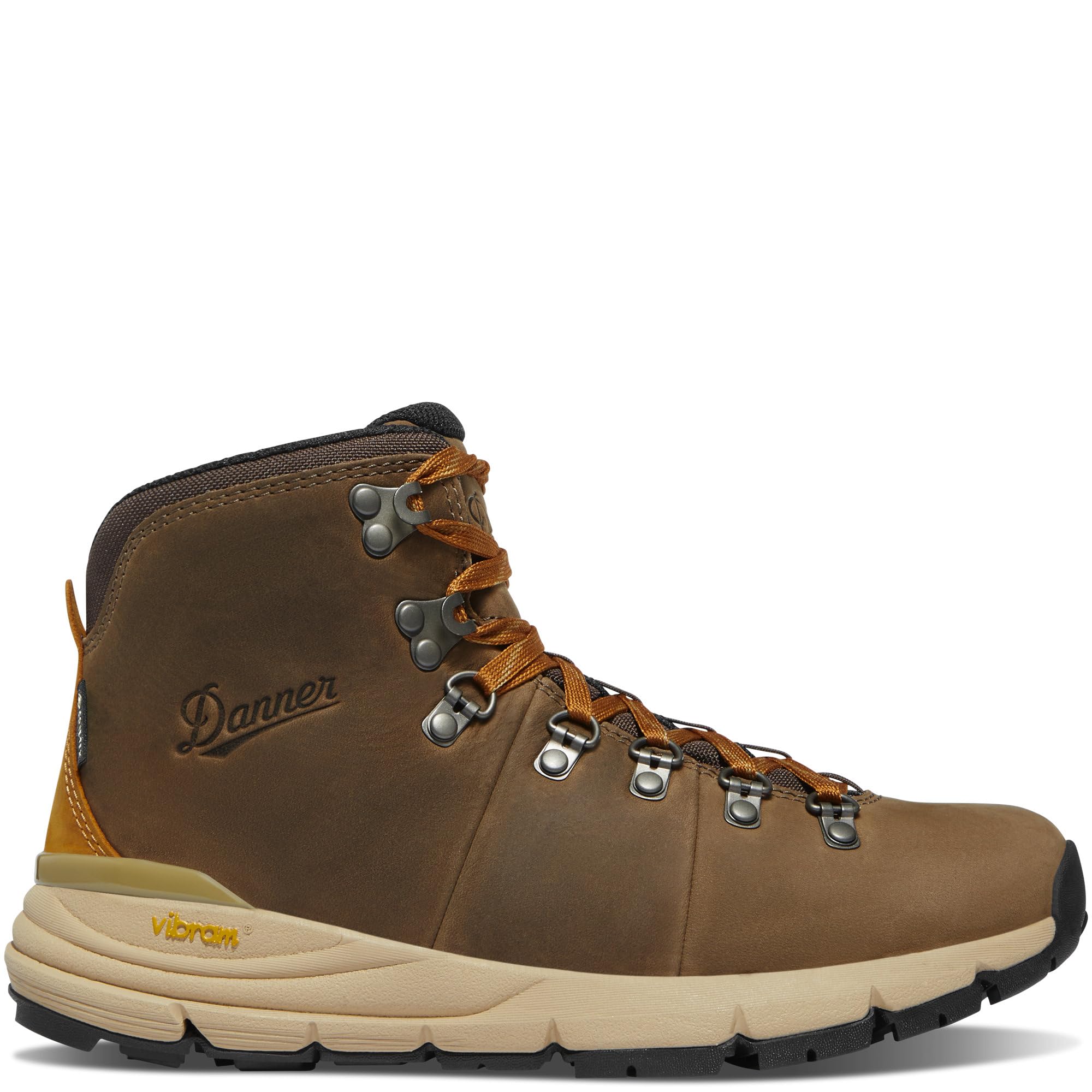
1. Danner Mountain 600 Women’s Hiking Boots
Our pick — 4.5+★ from 650+ verified ratings; the strongest balance of quality and price.
The suede-and-leather classic that earns its keep on wet granite, with a toe box wide enough for real feet.
The Mountain 600 pairs a smooth suede or full-grain leather upper with Danner’s own Danner Dry waterproof lining — a membrane layer inside the boot that blocks water from getting in while letting some moisture escape. Under your foot sits a Vibram SPE midsole (a cushioning foam layer) with a Vibram Fuga outsole, a rubber sole with a lug pattern meant to grip wet and dry rock alike. What wins people over is the fit itself: the toe box gives your forefoot room to spread, so the arch can land where it should and the heel stays put.
You can often skip the break-in and head straight onto the trail. Buyers report “Walked 1.39 miles with medium crew socks in size 7 (her usual size) with no issues.” One 71-year-old hiker with a narrow heel, high arches, a Morton’s neuroma (a painful thickening of nerve tissue in the forefoot), bone spurs, and a fused big toe found the boot handled all of it: adequate toe box, no heel slip, decent arch support. That is the wide-foot story in one sentence — the boot is not just wide, it is shaped so the toe box and heel do different jobs.
Grip is the other headline on the trail. A 20-mile Yosemite hike through rocky, wet terrain on granite slab — Mist Trail and Half Dome — came through with “confident traction and support.” Ankle support gets plenty of credit too, which matters if you have had an ankle injury. The boot is not insulated, and feet run slightly warmer than average, which cuts both ways: cozy on cold mornings, warm on summer climbs. The recurring gripe is ankle-collar padding — a few hikers want more cushioning at the top edge. That is not a deal-breaker, but it is worth knowing if your ankle bones sit high.
What earns this boot the top spot
- Vibram Fuga outsole grips wet rock and granite slab, so slippery creek crossings and steep descents stay predictable.
- Danner Dry waterproof layer keeps feet dry in rain, streams, and puddles — not fully submersible, but solid for real trail conditions.
- Shaped toe box plus locked-down heel lets wide forefeet spread without your heel slipping uphill.
- Often no break-in needed — many hikers take it straight from the start onto multi-mile hikes.
The honest trade-offs
- Ankle collar runs on the firm side — a few hikers want more padding at the top edge.
- Slightly warmer than average for an uninsulated boot, which can feel hot on summer climbs.
- Tongue gusseting isn’t fully sealed — fine for puddles and rain, not for standing in deep water.
- Runs above average in build weight for a heritage-style leather boot — not a minimalist trail runner.
Go-to for wide forefeet: Hikers who want a leather boot that grips wet rock and doesn’t need weeks of break-in — especially anyone with a wide toe box and a narrow heel.
Look elsewhere if: You hike mostly in desert heat and want a breathable mesh boot that vents sweat, or you need thick padding at the ankle collar.
2. HI-TEC Altitude VI I WP Women’s Hiking Boots
The leather workhorse that undercuts the big names and still keeps your feet dry through Colorado rainstorms.
The Altitude VI I WP is the value play on paper. You get a leather upper, an M-D Traction rubber outsole (the grippy bottom layer), an impact-absorbing midsole with a nylon shank (a stiff strip that stops the boot from twisting underfoot), and an OrthoLite cushioned insole. A waterproof, breathable membrane sits under the leather, so the boot blocks rain while letting heat escape. Stain-resistant i-shield technology on the upper means mud does not set into the leather as easily.
Comfort for the price is where this boot wins. Feet and back pain stay away on long walks, and the break-in is short: “They didn’t really take much to break in, I did a 4 mile hike the first time with no soreness or blisters.” A week in Colorado rainstorms, Rocky Mountains, and wet hikes — including stepping into a puddle — left the inside only slightly wet, drying in about 30 minutes. The ankle height gives genuine support on gravel and regular hills.
The width story is more complicated. Some hikers with regular-width feet find it roomy and comfortable, and one wide-width order finally fit right with a wider sole for stability. Others say the “wide” still pinches across the toe area. If you have a genuinely wide forefoot with bunions or a high instep, this might not give you the room a dedicated wide-lasted boot like the Targhee does. The bigger watch-out is durability on hard use — one hiking boot’s side seam came undone fairly early, though plenty of hikers report years of use on regular trail days.
Where the value shows up: Leather upper, waterproof membrane, OrthoLite insole, M-D Traction outsole — the full kit at an entry-level tier. For casual hiking, walking, and wet-weather days, the Altitude VI I WP covers a lot of ground.
The catch to weigh: The “wide” width is the fit to test carefully before you trust it on a long hike, and heavy daily wear can stress the side seams. Treat it as a solid light-trail boot, not a bombproof expedition boot.
Best for light-trail hikers on a budget: Walkers and casual hikers who want leather, waterproofing, and a cushioned insole without moving into premium pricing.
Think twice if: Your forefoot is genuinely wide — order a half size up and confirm the toe box fits before committing to a long trail day.
3. Oboz Women’s Sawtooth X Mid B-DRY Hiking Boot
A sturdy mid-cut built around a proper toe box — 448 grams of leather, mesh, and rock-gripping rubber.
The room up front is what earns the Sawtooth X Mid its place. The upper mixes Leather Working Group gold-certified oiled nubuck leather with Cordura fabric mesh (a tear-resistant textile), and the fit lets toes sit where they should — one hiker with 68-year-old feet dealing with corns, bunions, and orthotics found size 8 wide gave “ample room.” A hiker who sized up found the toe box opened enough for rocky-terrain hikes. Underfoot sits a rubberized EVA midsole — a foam midlayer that adapts to terrain — with a Trail Tread rubber outsole for grip.
Weight matters here: 15.8 oz (448 grams) per boot, which is genuinely on the lighter side for a leather mid-cut and means your legs do less work on long climbs. Ankle height comes up as “snug” and supportive, and the heel holds without slipping. The B-DRY membrane handles wet conditions, though several hikers in hot climates ran into warmth inside — one Arizona hiker specifically chose the non-waterproof version because waterproof membranes trap heat. The honest caveat: fit runs larger than expected for some, and one hiker who normally wore a 7.5 ran big at the same size and got blisters. Order carefully.
The build that holds up: Leather Working Group gold-certified oiled nubuck, Cordura mesh, a TPU heel counter, and laces and webbing made from 100% recycled polyester. Oboz also plants a tree for every pair sold — a real sustainability note, not just a badge.
Suited to: Wide-footed hikers with bunions, corns, or orthotics who want a lighter leather mid-cut with real toe room and supportive ankle height.
Skip the waterproof if: You hike in hot, dry climates — the membrane runs warm, and a breathable version may suit you better.
4. Merrell Women’s Speed Strike 2 Mid Waterproof
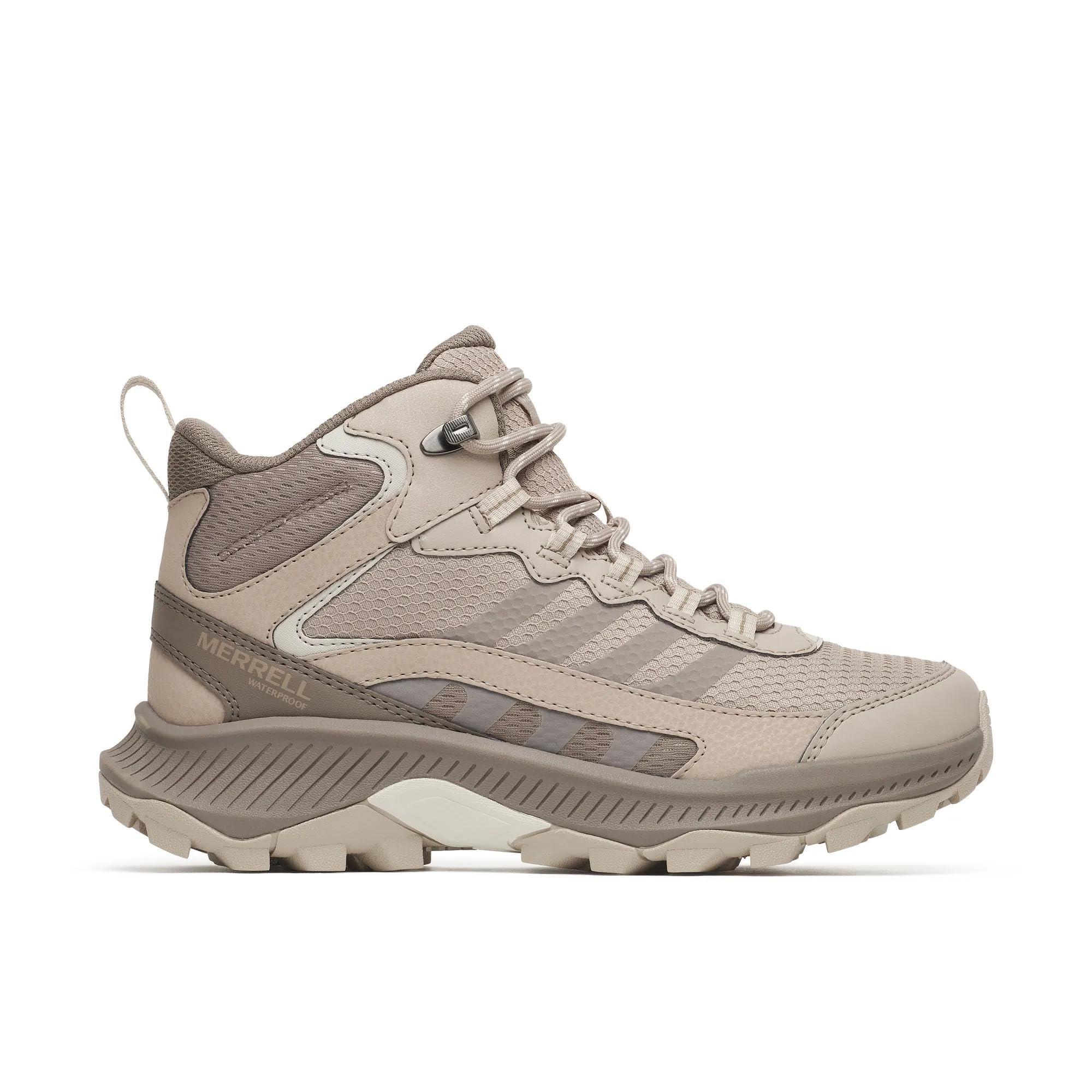
An athletic mid-cut that hikes like a running shoe and skips the heavy leather feel — 2 pounds per pair.
Merrell built this one around a faster feel: a waterproof membrane keeps weather out, a Merrell sticky rubber outsole grips when you need it, and the midsole runs athletic rather than stiff. The boot packs 100% recycled materials into the laces, webbing, mesh lining, and footbed cover, plus a 50% recycled removable EVA foam footbed — EVA being the lightweight foam most athletic shoes cushion with. It’s a real upgrade over a big leather boot for speed on the trail, and it doesn’t sacrifice ankle support to get there.
Owners talk about the sole and the ankle in the same breath. A hiker comparing five to eight boots chose this pair for its grip and ankle support after previous injuries, calling it the best of the group. Another confirmed feet stayed dry even through a river crossing that went over the ankle. Fit runs true to size, and the toe area is described as wide enough — one hiker compared an 8.5 wide to a 7.5 regular and found the wide gave the toe box room to spread without the boot feeling sloppy.
The trade-off to know is the tongue. Sits flat and it disappears; rides up and it digs in, so plan a few minutes to get the tongue settled before a long hike. Cushioning is athletic, not plush — hikers expecting a marshmallow midsole will notice. And while it protects ankles during rocky desert hikes, it’s built for speed, not for heavy pack loads on technical terrain.
Why hikers recommend it: GORE-Tex-level waterproofing, a thick sole with deep lugs for rocky ground, and good arch support — all at a mid-range tier with recycled materials throughout.
Reach for this if: You want an athletic, lightweight mid-cut that hiked dry through a river crossing and grips rocky, treacherous terrain.
Not your boot if: You want a plush, heavily cushioned ride, or you hate fiddling with a tongue that needs to sit flat.
5. Salomon Women’s X-Adventure Recon Mid Hiking Shoe
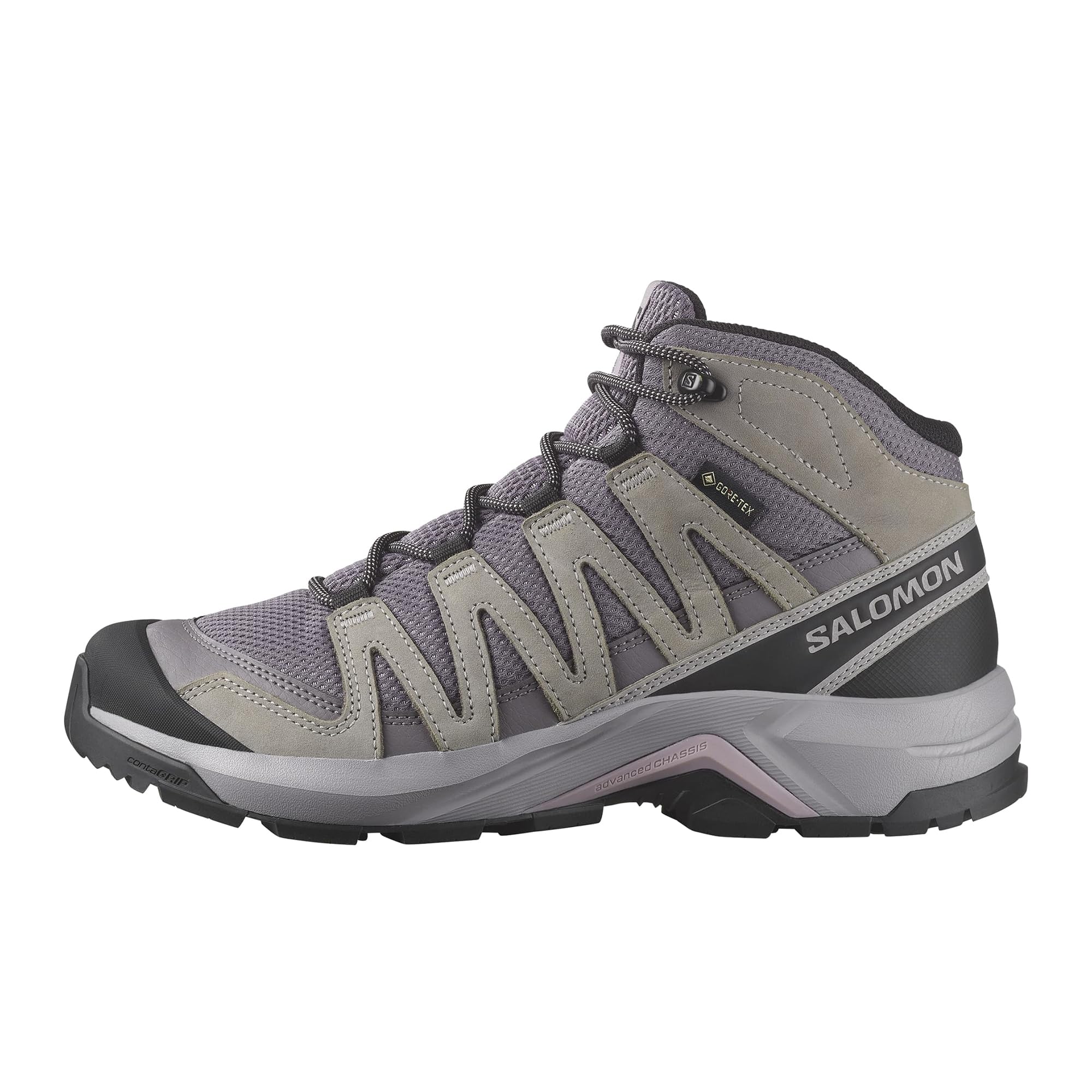
A nubuck-and-mesh hybrid with a reinforced toe cap and a roomy toe box for regular-width-plus feet.
Salomon takes its XA Pro running heritage and turns it into an all-terrain hiker. You get a rugged nubuck leather and mesh upper, a Contagrip rubber outsole with a lug shape tuned for varied ground, and an Advanced Chassis (a molded insert built into the outsole) that resists side forces while still letting the boot flex. The Adv.DRY three-layer waterproof laminate sits between a 100% recycled material and a nylon backing — PFC-free, which means no per- or poly-fluoroalkyl chemicals (water-repellent compounds that linger in the environment) in the membrane. Reinforced toe caps and mud guards round out the package for mixed terrain.
Foot shape is the bigger story here. The toe box is described as generous — one regular wearer notes “Nice toe box” and “True to size.” This is not a boot for extreme wide feet, but for hikers on the wider edge of regular, it delivers room. Waterproofing starts strong and fades to mostly water-repellent with extended use, which tracks with what you would expect from a membrane layer inside a leather shoe.
Salomon runs slightly larger than a standard fit — one regular buyer sized down a half size to dial in the fit. The ankle collar is the thorn in the side: the material around the ankle runs firm, and one hiker found it rough enough to say it would take skin off on a real hike. Break-in time helps, and unlike the Targhee the padding isn’t the strong point here. Consider it a solid all-arounder with one real pressure-point risk to watch.
What it gets right: A genuinely roomy toe box, rugged nubuck-and-mesh upper, Contagrip grip, and a PFC-free Adv.DRY membrane — solid coverage for multifunction hikes across mixed terrain.
Made for: Hikers on the wider edge of regular width who want one boot for mixed terrain, from road to trail, with a weather-resistant membrane.
Try before you commit if: You have sensitive ankles or high ankle bones — the firm collar is the part to test first.
6. Orthofeet Dakota Orthopedic Women’s Hiking Boots
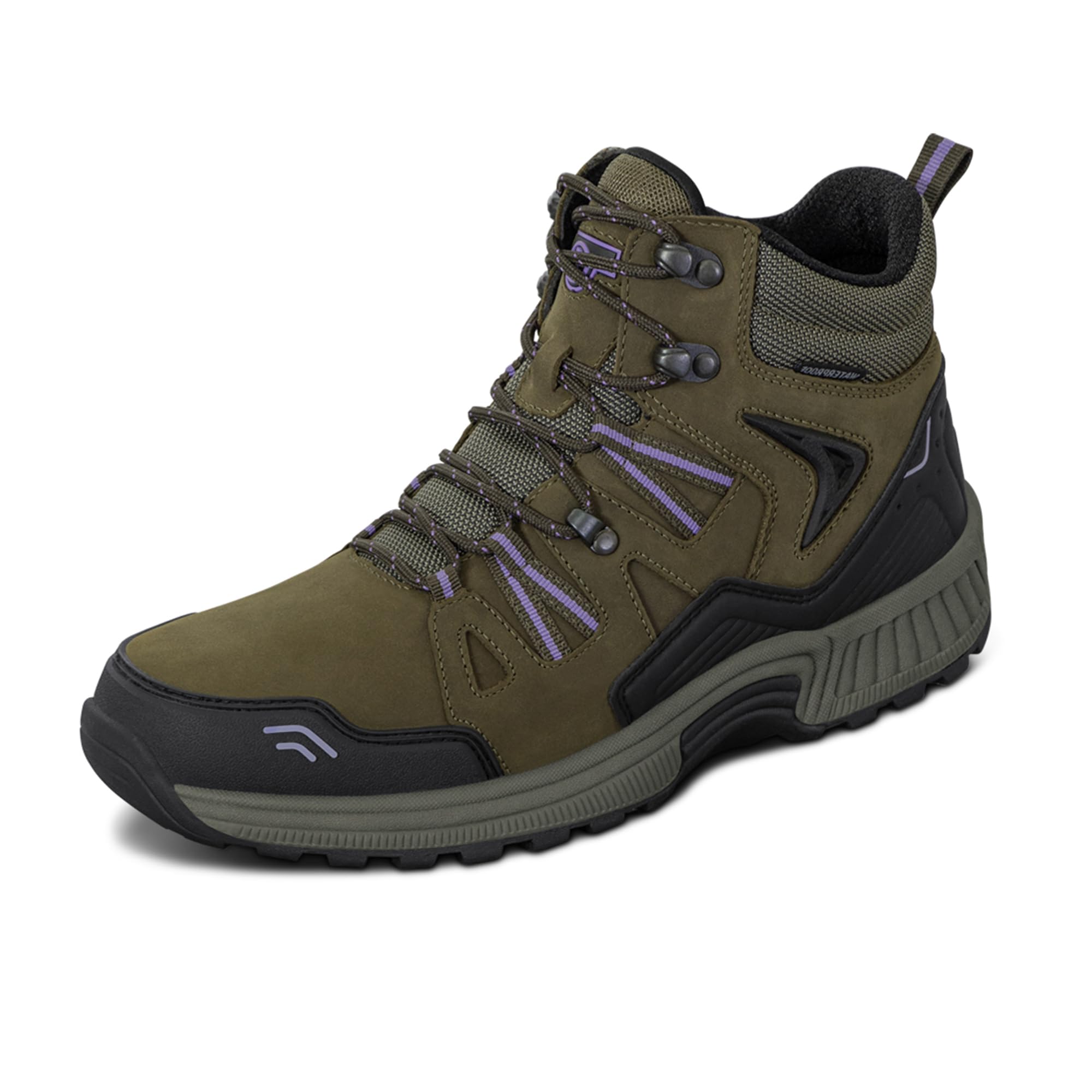
A wide, deep boot that comes with its own orthotic insole — made for bunions, high arches, and long days standing.
The Dakota is built around a removable orthotic insole and extra depth inside the boot, which is the combination that lets custom inserts drop in without your toes hitting the top of the boot. The Ortho-Cushion system pairs that insole with a shock-absorbing sole and a pressure-free fit — a wide toe box, so the forefoot doesn’t cramp. A firm heel counter and slip-resistant rubber outsole round out the stability package. The boot also ships with two different foam insoles and an Arch Booster, so you can tune the fit more than usual.
For wide-footed hikers with bunions, high arches, or general foot pain, the extra depth and roomy toe box are the payoff. One hiker with bunions and high arches logged 5-mile days on Isle Royale without complaints. Another reviewer with “bad feet” covered miles of rough terrain and finished without end-of-day pain. The extra depth isn’t cosmetic — it stops the top of the boot from pressing down on a high instep, and the roomy toe box is what keeps your forefoot from cramping.
The honest limits: the sole could be thicker for sharp rocky paths, and the cushioning is comfortable for walking but not a technical trail platform. Consistency is a real caveat — some pairs hit the arch support balance and others do not, so check the fit on the first wear. Long days still come out comfortable: one hiker reported 10 hours on their feet with no issues. A few note durability concerns on the shoelaces.
Where the design pays off: Multiple insoles and an Arch Booster means you can tune the fit without buying extras. Water resistance holds up in wet conditions, and feet stay comfortable across a full day on your feet.
Ideal for: Wide-footed hikers with bunions, high arches, or foot pain who want a boot with room for their own orthotic and a wide toe box that doesn’t cramp the forefoot.
Look elsewhere if: You hike steep, rocky, technical trails and need a thicker, more aggressive sole.
7. KEEN Women’s Nxis Evo Mid Waterproof Boots

KEEN’s room-for-your-toes shape in a waterproof engineered knit — light on the foot, fast on the trail.
The Nxis Evo takes KEEN’s traditional wider footwear form and wraps it in a waterproof engineered knit upper — a woven textile outer with a water-blocking membrane behind it. The running-shoe feel comes from a soft, flexible build and an all-terrain tread that grips gravel and trails. It’s built for speed on day hikes rather than heavy pack loads on technical ground.
Comfort and traction get high marks. One hiker took it straight onto a 19-mile Yosemite day, sized up from a 9.5 to a 10, and had no blisters or sore spots — great traction on slippery granite is the phrase that keeps coming up. Hikers with plantar fasciitis report the cushioning and arch support hold up through a full day on the trail. Another notes the boot feels sturdy without feeling heavy, which is the right balance for a fast day hike.
The catch is width. KEEN’s wider form helps — but the fit runs snug rather than roomy, and hikers with genuinely wide feet report needing to size up significantly. The structured toe shape also divides opinion, and there’s a real price-to-value gripe from some hikers who feel the boot should cost less at this level of wear. Not for everyone, then. For narrow-to-regular feet wanting a light, breathable, waterproof day hiker, it’s an easy pick.
The real highlight: A waterproof engineered knit that keeps feet dry while feeling more like a running shoe than a leather boot — a huge advantage on warm-weather day hikes.
Fits best: Regular-to-moderate-width feet looking for a fast, light day hiker with a waterproof knit upper and dependable arch support.
Size carefully if: You have a truly wide forefoot — order up significantly and check the toe shape fits your foot before a long hike.
8. New Balance Women’s Fresh Foam X Hierro V1 Mid-Cut

A cushioned trail runner with a mid-cut ankle, a wide-specific fit option, and a Vibram sole that digs into ice.
Fresh Foam X is the cushioned foam midsole New Balance builds its running line around, and it transfers cleanly to a trail mid-cut. The Vibram Megagrip outsole is the headline grip layer — a sticky rubber compound that holds on mixed terrain — and a Toe Protect layer under the front of the shoe guards against rocks and roots. The engineered upper adds a mid-height ankle collar for stability without turning the boot into a heavy leather chassis.
The fit is where it gets interesting for a wide foot. Sizing up a half size and ordering the wide width solves tightness for a lot of hikers — a regular 8M who describes her feet as slightly wide found an 8 wide gave toe box wiggle room. A flat-footed hiker in size 5 wide struck out with KEEN and Orthofeet before this boot and called it the first supportive pair she found. Cushioning over gravel and ankle stability on uneven terrain are the parts that come up again and again.
The honest caveats matter here. The mid-cut ankle collar starts stiff and rubs — expect break-in time and tall socks for the first few hikes. Toe width still runs narrow on some feet, and the tongue can press under the laces until you re-thread. Durability holds up (one semi-pro athlete got 1.5 years of use) and the Megagrip outsole bit better than boots on ice at 18°F, but the cushioning may feel too firm for heel-sensitive hikers. It’s more of a trail shoe than a burly boot, so plan accordingly.
Why wide-footed runners like it: The Fresh Foam X midsole cushions over gravel and long miles, the Vibram Megagrip outsole bites into wet terrain, and the wide width option gives the toe box space without losing ankle stability.
Best fit for: Wide-footed hikers who want a cushioned mid-cut that runs like a trail shoe and protects the ankle on technical descents.
Expect a break-in: The ankle collar and tongue need attention on the first few hikes, and the cushioning favors neutral arches over heel spurs.
9. KEEN Women’s Targhee 4 Mid Hiking Boots

KEEN’s widest, most protective mid-cut — a high laced shaft, a direct-attach one-piece sole, and serious toe room.
The Targhee 4 gives you the most ankle coverage in this lineup: a high shaft with lacing for real stability, a padded collar, and a wider sole than most boots here for a more planted stance. KEEN’s traditional wider footwear form is specifically mentioned, and the one-piece direct-attach construction means the upper and outsole are fused without separate layers that can peel — a durability detail worth noting. The KEEN.DRY waterproof lining handles rain, streams, and puddles, and it breathes so feet don’t get sweaty at 80°F.
For wide-footed hikers, the room is what sells it. One hiker who needed room for thick socks and wide feet called it “the last hiking boots with width you will ever need” after a week in the Carolinas, and a hiker comparing to Salomon trail shoes found much more toe box room. Older hikers with balance concerns specifically credit the high laced shaft, roomy toe box, and wider sole for stability. The tread grips wet granite and streams without drama, and high lacing keeps ankle support manageable rather than locking the ankle.
The fit runs large — several hikers who wear a standard size can lace it up and kick it off, so ordering half a size up for thick merino socks isn’t always necessary. But for stability, ankle protection, and a wide-lasted fit that holds up on wet trails, it earns its keep.
The argument for the Targhee
- Roomy toe box on KEEN’s wider form gives genuine space for wide feet, thick socks, and bunion-prone forefeet.
- High laced ankle shaft provides stability for hikers with balance concerns or previously injured ankles.
- Direct-attach one-piece construction fuses the upper and sole for fewer failure points at the seam.
- KEEN.DRY waterproof lining keeps feet dry in rain and streams without overheating at 80°F.
What to know before you buy
- Runs large and wide all over — sizing down may be needed rather than sizing up.
- 2.55 lb total weight is on the heavier side compared to knit and athletic options.
- Stiff collar with higher arch support needs break-in, especially if you lace tightly.
- Structured shaft height is a stabilizer, but it’s also the part most likely to press on sensitive ankles.
Hands down for: Wide-footed hikers who want maximum ankle protection, a roomy toe box, and a waterproof boot that handles wet, cold trail conditions.
Think smaller if: You wear a regular width or your feet run narrow — this boot’s generous sizing can be too much room and too much weight.
Know the Specs
Waterproof Membrane
A waterproof membrane is a thin layer inside the boot that lets sweat vapor escape but blocks liquid water from getting in. In practice, it means your feet stay dry in rain, puddles, and stream crossings — but the membrane also traps some heat, so a waterproof boot runs warmer than a breathable mesh boot. Boots here list membranes by name: Danner Dry, KEEN.DRY, Adv.DRY, B-DRY. All serve the same purpose; the differences come down to breathability and how the membrane is bonded to the upper. If you hike in wet climates, the membrane is worth the warmth. If you hike dry desert trails, a breathable version will keep your feet cooler.
Toe Box and Last Shape
The “last” is the foot-shaped mold a boot is built around, and it determines the toe box shape. A wide toe box lets your toes spread when you push off, which prevents cramping and pinching. Overall width tells you how much room exists side to side, but it doesn’t tell you if the toe box tapers sharply at the front. Hikers with bunions or a wide forefoot need a toe box that stays roomy through the toes, not just wider at the midfoot. KEEN’s traditional wider form is one example; the Danner’s shaped toe box and locked heel is another approach. When a “wide” boot still pinches, the problem is usually the toe box shape, not the overall width.
Common Questions
How do I know if a hiking boot’s toe box is actually wide enough for my foot?
Should I size up or down in a wide hiking boot?
Do waterproof membranes really keep feet dry on long wet hikes?
Is a wide toe box or overall width more important for a wide foot?
Can I use my custom orthotics in these hiking boots?
How long does a waterproof hiking boot last before the membrane fails?
Are mid-cut hiking boots better than low-cut for wide feet?
Is a leather boot or a knit/mesh boot better for wide feet?
How much does a wide hiking boot weigh, and does it matter on long hikes?
Will a wide-width version of a standard boot always fit a genuinely wide foot?
What is the difference between waterproof and water-resistant hiking boots?
The Bottom Line
For most wide-footed hikers, the women’s hiking boots for wide feet winner is the Danner Mountain 600 because its shaped toe box lets your forefoot spread without losing the heel lock, and the Vibram Fuga outsole grips wet granite where a lot of boots slip. The range of its fit feedback — a 71-year-old with multiple foot issues and a 20-mile Yosemite day both landing well — is the pattern that puts it on top. Want a value leather boot you can break in quickly? The HI-TEC Altitude VI I WP delivers waterproofing and OrthoLite cushioning at an entry-level tier. And for the widest room and the most ankle protection in this lineup, the KEEN Targhee 4 Mid is the one to reach for. Go with the boot whose toe box shape fits your foot best — that is the decision that makes long hikes comfortable.
How we choose
We do not accept paid placement. Every pick is matched to a real buyer and a real use-case; we do not hands-on test units.
Sources
Specifications: manufacturer listings and product documentation. Review insights: verified customer reviews, as of October 2026. Pricing: not shown on this page (it changes often); check the current price via the retailer link.
As an Amazon Associate, Aappliancez earns from qualifying purchases. This does not affect which products we feature.