Disclosure: Some links in this post are affiliate links. As an Amazon Associate I earn from qualifying purchases, at no extra cost to you. Learn more
Specs are compiled from manufacturer listings and verified buyer reviews and can change over time — please confirm the key details on the product page before buying.
You want lossless audio from a wire without buying a headphone amp? Start with a low-impedance pair — 32 ohms or thereabouts — because those plug straight into a laptop or phone jack and still sound clean. Everything else on this list asks for more, and that ask is the whole buying decision. Below you’ll find nine wired pairs sorted by what they actually need from your desk, from plug-and-play to gear that rewards a dedicated amplifier and a lossless file library.
This guide is built by comparing the manufacturers’ published specifications and the patterns across verified customer reviews, so you get each pick’s real strengths and trade-offs instead of marketing spin.
Some of these leak sound badly and some isolate well, so the room you listen in matters as much as the driver. Here is the honest breakdown of the wired headphones for lossless audio worth your money.
Top Picks


How To Choose The Best Wired Headphones for Lossless Audio
Lossless files only pay off when the whole chain stays clean. The headphones are the last link, and they are the one that decides whether a high-resolution track sounds layered or flat. Three things separate a good pick from a frustrating one: how hard they are to drive, whether they leak, and whether the cable can be swapped.
Match the impedance to what you already own
Impedance is the electrical resistance the headphones present to your source, measured in ohms. At 32 ohms, an ordinary laptop or phone headphone jack can drive them to full volume without an amp. A high figure usually means you need a separate headphone amp (a small box that boosts the signal) to hear them properly. If you have no amp and no plans to buy one, stay low.
Decide whether you can live with open-back leakage
Open-back headphones have no sealed cup, so air moves freely and the soundstage spreads out around your head. The trade-off is leakage in both directions — people nearby hear your music, and you hear them. Closed-back models seal the cup, keep the sound in, and suit an office, a shared room, or a mic-heavy desk. Pick open-back for a quiet room and closed-back for a shared one.
Look at the cable before the cosmetics
A detachable cable is the cheapest insurance against a dead pair of headphones. Cables fail first, and a mini-XLR or 3.5mm connector lets you swap one in seconds instead of retiring the headphones. Balanced plugs like 4.4mm also matter if your DAC offers a balanced output, because that connection often delivers more power and a lower noise floor.
Budget for the source, not just the headphones
A premium pair fed by a phone dongle will not show what it can do. Plan for a desktop DAC/amp if you are spending at the top of this list. If you are staying entry-level, a low-impedance pair plus the jack you already own gets you most of the way there without extra spending.
Side-by-Side Comparison
| Model | Best For | Impedance | Open/Closed | Driver | Amazon |
|---|---|---|---|---|---|
| MEZE AUDIO 99 NEO★ Best Overall | Plug-and-play listening | 32 Ohm | Closed-back | Dynamic | Amazon |
| FiiO FT1Best Value | Bass and value | 32 Ohm | Closed-back | 60 mm dynamic | Amazon |
| beyerdynamic DT 770 Pro XTop Performer | Recording with isolation | 48 Ohm | Closed-back | 45 mm STELLAR.45 | Amazon |
| beyerdynamic DT 990 Pro X | Mixing on a wide stage | 48 Ohm | Open-back | 45 mm STELLAR.45 | Amazon |
| Sony MDR-M1 | Long studio sessions | — | Closed-back | 40 mm dynamic | Amazon |
| Sennheiser HD 660S2 | Vocal-first listening | — | Open-back | 42 mm dynamic | Amazon |
| HIFIMAN Arya Stealth | Huge soundstage | — | Open-back | Planar magnetic | Amazon |
| Audeze LCD-X | Mixing and mastering | 20 Ohm | Open-back | 106 mm planar | Amazon |
| Sennheiser HD 800 S | Reference detail | — | Open-back | 56 mm ring radiator | Amazon |
Detailed Reviews
1. MEZE AUDIO 99 NEO Closed-Back Headphones
Our pick — 4.5+★ from 750+ verified ratings; the strongest balance of quality and price.
The pair that turns your laptop jack into a lossless rig with nothing else in the chain.
The 99 NEO runs at 32 ohms, which means an ordinary headphone jack can drive it to a satisfying volume with no amp in sight. That one figure is why it tops this list — it removes the entry cost most audiophile headphones quietly impose. If you have a DAC or a portable player, it scales up, but it never demands one.
What wins people over is the bass-first tuning, and it is a deliberate choice rather than a flaw. Owners describe the sound as curved and fun instead of flat and analytical, with layered detail that holds together across rock, jazz, and orchestral tracks. Gaming gets a special mention for imaging and low-end thump. The self-adjusting headband spreads weight with a manganese spring steel outer band, so marathon sessions stay comfortable.
The trade-off is honest: this is not a neutral reference headphone, and the isolation is physical rather than active — no noise cancellation circuitry here. Big-eared listeners may want larger pads, and the stock cable runs short for desktop use, so budget for a longer one. Every part is replaceable, down to the drivers, which is why it keeps earning its place.
Why it takes the top spot
- 32-ohm impedance means no amp is required for full, clean volume from a laptop or phone
- Vegan leather headband reinforced with manganese spring steel spreads pressure evenly across head shapes
- Glue-free construction — ear cups, headband, cables, and drivers are all replaceable
- Detachable 1.5m Kevlar-reinforced OFC cable with mic and remote, plus 3.5mm-to-6.3mm and airplane adapters in the box
The honest caveats
- Tuned for bass and fun rather than flat reference accuracy
- Isolation is passive only — no active noise cancellation
- Stock cable is short for a desktop setup; big ears need larger pads
Reach for this if: you want a first proper lossless-ready wired pair and you are not buying an amplifier.
Look elsewhere if: you mix music and need a flat, uncolored monitor above all else.
2. FiiO FT1 32Ω Large Dynamic Driver Headphones
A 60 mm wood-fibre driver in a sealed cup, and the bass goes deeper than the price suggests.
The FT1’s diaphragm is built from selected wood fibres on a base of 90-year-old Northern European spruce, mixed with carbon fibre to roughly 0.1mm thick. That combination keeps it light enough to move fast and stiff enough to stay controlled. FiiO’s W-shaped suspension design increases the effective vibrating area of the diaphragm by 25.8% compared to conventional designs of the same size, and that extra air movement is what you hear as weight and extension down low.
Buyers report running these through Tidal HiRes for about a month and coming away impressed, with the sub-bass staying distortion-free and the clarity holding up next to far pricier open-backs. What owners praise most is the sound, and the second theme is value — a closed-back with a wide stage at this tier is unusual. The two included cables are a real bonus: a 3.5mm single-ended and a 4.4mm balanced, both 1.5m oxygen-free copper with silver plating over 392 strands.
Here is the catch worth knowing. The stock headband caused pain after long sessions for some smaller-headed listeners, and the cables are microphonic — they pick up clothing rustle and send it to your ears. Third-party cables fix the second issue, and the ball slide rail adjusts from 0 to 11 notches for head size. Neither issue touches the sound, which is why it still earns a strong place here.
Where the money goes: a 60 mm driver with a 25.8% larger effective vibrating area than conventional same-size designs, plus two cables including a 4.4mm balanced plug, makes this the strongest hardware-per-tier pick on the list.
What it will not fix: the suede headband contact patch and microphonic stock cable are the two recurring gripes — plan a pad or cable swap if you wear them all day.
Suits you if: you want closed-back bass depth and a balanced 4.4mm option already in the box.
Think twice if: you have a small head and wear headphones for eight hours straight without a break.
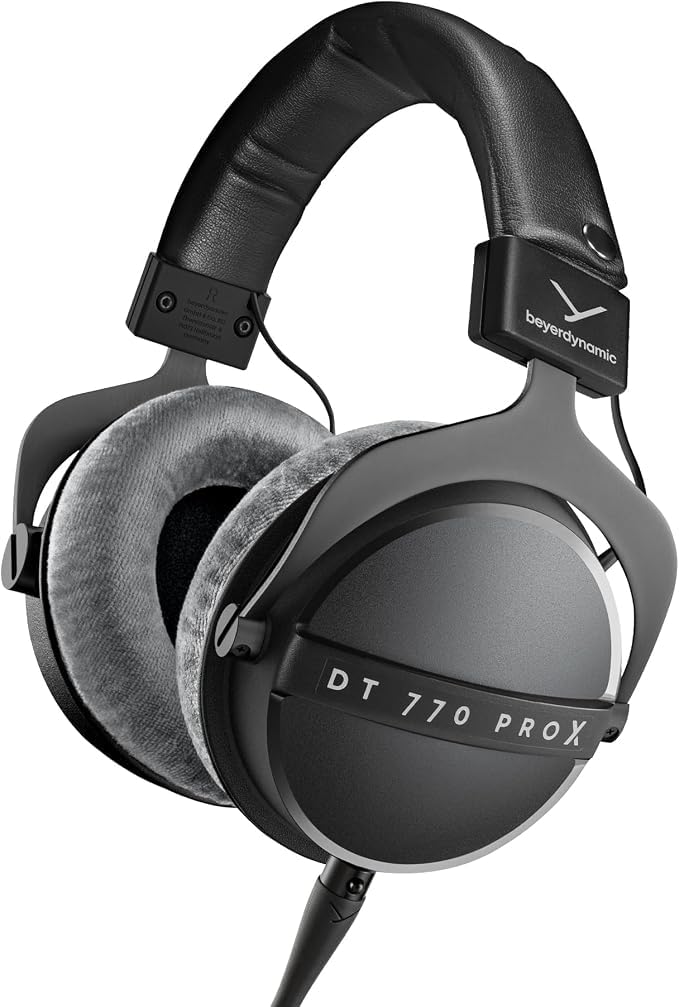
3. beyerdynamic DT 770 Pro X Studio Headphones
The one you put on when a microphone is open in the same room.
Closed-back isolation is the whole point here. The sealed cups keep headphone bleed out of your mic while you record, and they keep the room out of your ears while you mix. At 48 ohms they plug straight into a laptop, interface, phone, or console with no amp required — a spec that used to be rare in studio gear.
beyerdynamic’s STELLAR.45 driver is the flagship transducer in the range, and it is tuned for precision rather than warmth. The detachable mini-XLR cable swaps in seconds, and the velour ear pads are replaceable, so daily studio use does not wear them out. Handmade in Germany, with a 3m cable in the box.
The treble is the single thing to know about before you buy. It arrives bright from the start on some sources, and several owners warm it with EQ rather than accept it raw. Comfort is the other split: velour pads feel warm, the fit lands too tight for some head shapes, and the clamp is noticeable on longer sessions. Run them on a clean source and the detail you get back is worth that adjustment.
The case for the sealed cup: no headphone bleed into an open mic and a 48-ohm load that any interface drives directly — a rare pair of traits outside this tier.
What to expect on arrival: treble can be bright on some chains, and the clamp runs tight; both are fixable with EQ and a break-in period.
Matches your desk if: you record with a live mic and need the room kept out of your ears.
Pass it over if: you want a warm, forgiving sound straight from the start with no EQ work.
4. beyerdynamic DT 990 Pro X Open-Back Headphones

Open cups, a 48-ohm load, and a stage that puts instruments out past your ears.
Where the DT 770 Pro X seals you in, this one opens the sound out. The open-back cups let air move freely, so the reference sound spreads into a wide, natural image that makes placement and depth easy to hear while you mix. The same STELLAR.45 driver sits inside, and the same 48 ohms mean you can run them straight from a laptop or interface without adding an amp — the older 990 Pro usually asked for one.
What people keep coming back to is the space. Instrument separation and a three-dimensional presentation are the reasons this earns a mixing recommendation, and the detachable 3m mini-XLR cable plus a 1/4-inch adapter cover studio and desktop setups. Velour pads stay comfortable through long sessions, and consistency is a calling card — one long-serving owner describes mixes improving because what sounds right here translates elsewhere.
Bright treble is the honest trade. It rides close to sibilance on some material, and a few listeners find the out-of-box tuning flat, with female vocals sitting forward or distant depending on the track. There is no isolation to speak of, because that is what open-back means — the room hears your music and you hear the room. Get past that and the stage is the reward.
What the open cups buy you
- Wide, natural imaging that makes mix placement and depth readable
- 48 ohms runs from a laptop or interface — the amp that the older 990 Pro needed is now optional
- Detachable 3m mini-XLR cable with 1/4-inch adapter, plus replaceable velour pads
Where it asks you to compromise
- Treble sits close to sibilant on some recordings
- Almost no isolation — it leaks and lets the room straight in
- Not the punchiest option; the low end is controlled rather than heavy
Pick this one if: you mix in a quiet room and want to hear where every part sits.
Leave it if: you share your space or record with an open microphone nearby.
5. Sony MDR-M1 Professional Reference Closed Monitor Headphones

Weighs about as much as a paperback and plays a claimed 5 Hz to 80 kHz without ear fatigue.
The MDR-M1 earns its spot with a 40mm driver and a claimed playback range of 5 Hz to 80 kHz — the bottom figure is deeper than a piano’s lowest note, the top sits well past the limits of lossless files. Sony tuned it with recording engineers to reproduce what the mixer intended, and the closed cup provides real isolation so you can judge a take without the room coloring it.
Light is the word that carries this one. At roughly 216g it stays on your head through a full session without building heat, and the thick earpads keep pressure low — glasses wearers in particular get on well with it. Two detachable cables are included in different lengths, the earpads replace, and the screw-in plug adapter moves between 6.3mm and 3.5mm jacks without a fuss. The detail and separation across the frequency range are why engineers reach for it.
One honest limit: the pleather pads can run warm and a touch cramped on larger ears, and a few listeners find a sibilant edge on some material they would rather not EQ around. The pads swap out though, and thick aftermarket ones are a documented fix. For long, unglamorous monitoring work, that is a minor ask.
Engineered for the tenth hour: 216g on the head, replaceable earpads, and two detachable cable lengths mean a session ends with tired ears, not a sore neck.
The one niggle: stock pleather pads warm up and feel tight on bigger ears; a pad swap fixes it cheaply.
Built for you if: you monitor for hours and want a light, sealed headphone that never makes your ears ache.
Not for you if: you need big cushioned cups from the start and refuse to swap pads.
6. Sennheiser HD 660S2 Open-Back Audiophile Headphones
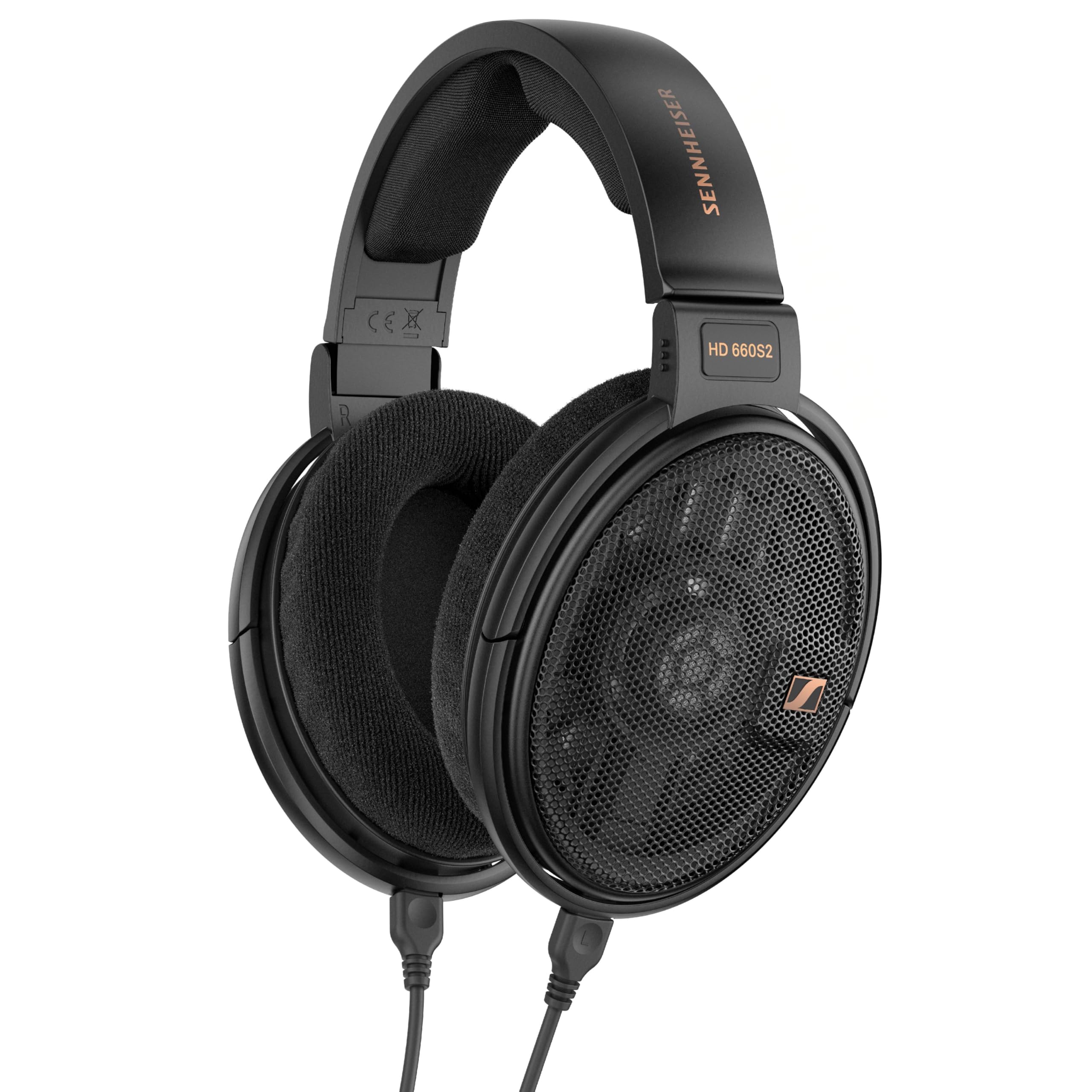
A 42mm transducer tuned so a voice sounds like a person, not a signal.
Inside the HD 660S2 sits a 42mm transducer with an ultra-light aluminum voice coil. The low end reaches down to 27.5 Hz — the lowest note on a piano — and covers bass drums at 45–60 Hz, so the bottom of a track arrives with clarity rather than a smear. The open-back cup spreads the image out and keeps the ear cushions breathable for long listening.
This is a vocal headphone above all. Textured, lifelike mids sit at the center of its character, especially on older and acoustic recordings, and the treble stays relaxed rather than attention-seeking. It does not punish a badly mastered lossless file the way a true reference monitor will. Two cables ship in the box — a 6.3mm and a 4.4mm balanced, both 1.8m — and the plush velour pads make marathon sessions easy.
The catch is scale. Its soundstage is not as wide as a planar design, and the bass is controlled rather than boosted, so anyone chasing sub-bass slam will want more. It also likes a clean source; a modest amp is the sensible partner. If your library leans on singers and acoustic instruments, none of that reads as a weakness.
The reason it earns its place: 27.5 Hz low-end reach and a voice-forward character that makes lossless vocals feel present and specific.
Where it changes the mood: intimate rather than wide, and polite in the bass — a vocal-first listener’s headphone, not a basshead’s.
Choose it if: your library is built on singers, acoustic instruments, and long relaxed listening evenings.
Look past it if: you want a wide cinematic stage and heavy sub-bass weight from a wire.
7. HIFIMAN Arya Stealth Magnet Planar Headphones

Sound that arrives from all around you instead of from inside your head.
The Arya stands out because its planar magnetic drivers — a flat diaphragm moved by magnets on both sides, rather than a cone pushed from behind — let HIFIMAN shape those magnets so sound waves pass through them without the diffraction that muddies a signal. A nanometer-thickness diaphragm does the actual moving. The result is a presentation described as big and expansive, with a stage that puts instruments in their own space around you.
The construction is metal with high-grade plastic for weight control, the 3.5mm connectors are user-replaceable, and the asymmetrical ear cups follow the shape of the human ear. Compared with the Ananda Nano and Edition XS, owners rate it more comfortable, more premium in build, and slightly more detailed while staying more musical — easy to listen to for hours where the Nano fatigues. It is also a genuine gaming pick; footstep, gunshot, and environmental cues land with directional precision.
Before you commit, know that this is an open-back that leaks heavily and is no companion for a commute, a gym, or an office with people in it. The giant earpads can press against a jaw when you lie down. Some owners also find the build mostly plastic for the money. None of that touches the sound in a quiet room.
What makes the stage feel real
- Stealth Magnet design lets sound waves pass through the magnets with far less diffraction
- Nanometer-thickness diaphragm delivers detail without sibilance
- User-replaceable 3.5mm connectors and asymmetrical ear cups built to the ear’s shape
What you should know before buying
- Leaks heavily and lets room noise in — indoor listening only
- Build reads mostly plastic to some owners at this tier
- Large earpads press on the jaw when lying down
The right call if: you want a stage wide enough to feel like the band is around you, and you listen in a quiet room.
Wrong call if: you need a sealed headphone for travel, shared space, or outdoor use.
8. Audeze LCD-X Open-Back Professional Headphones

A 106mm planar diaphragm at 20 ohms that hits hard and stays clean at volume.
Those two numbers explain the LCD-X. The 106mm diaphragms are large ultra-thin planar drivers with double-sided magnetic arrays, and the 20-ohm impedance keeps them easy to power despite the size. Audeze lists 103dB/1mW efficiency, and the frequency response runs from 12Hz to 20kHz, extended out to 50kHz. In plain terms, the low end reaches below the lowest note you can hear and the top end covers everything a high-resolution file carries.
This is a mixing tool as much as a listening one — many hit recordings were mixed on Audeze headphones, and the instrument separation and confident slam are why engineers keep them. The bass is thick and full without distorting at high volume, which is unusual at this level. The revised 2021 leather ear pads and all-metal build make it a durable desk fixture, and it ships with a carry case and a combo 4-pin XLR cable plus 6.3mm and 3.5mm adapters. Each pair is handcrafted and calibrated in Southern California.
The weight is the real cost. Owners describe head and neck fatigue that forces breaks, and the tuning comes in dark from the start, so an EQ is close to mandatory to bring out the mids. It also wants a powerful amp — a desktop receiver-class source does better than a small portable one. Treat it as a desk premium rather than a couch headphone and it delivers.
The sound, in one line: 106mm planar drivers and 12Hz–20kHz response give it a weight and detail that small dynamic designs simply cannot reach.
The weight, in one line: it is heavy enough to need breaks and dark enough to need EQ — budget for a desk, a strong amp, and a preset.
Worth it if: you mix, master, or listen at a desk with a proper amp and you want reference-grade weight in the low end.
Skip the strain if: you need a headphone you can wear for hours without a break, or one that sounds open right from the start.
9. Sennheiser HD 800 S Over-The-Ear Reference Headphones

The largest drivers ever used in dynamic headphones, aimed at the last few percent of detail.
Its 56mm ring radiator transducers are the biggest dynamic drivers Sennheiser has put in a headphone, and the ear cups angle sound at the ear rather than firing it straight in — the reason the stage reads as spatial rather than flat. Absorber technology inside the cup pulls down unwanted frequency peaks so quieter details survive. You get two detachable cables in the box, a single-ended 1/4-inch and a balanced 4.4mm, both long enough for a desktop chain.
What this is built to do is expose recordings. Owners describe it as an instrument: transparent, distortion-free, and honest about a bad master. It handles a modest setup too — a portable DAC and a tube amp push it to around 95dB peaks with no noise or clipping. For gaming the positioning is uncanny, with precise localization of footsteps and aircraft across a wide field.
Two things wear thin. It runs bright and bass-light, so listeners who prefer warmth may find it thin, and an EQ correction is a common companion for mixing work. The cups are also genuinely large — some heads find them sliding, and the fit is the most-discussed compromise. It leaks in both directions by design, so this is a quiet-room headphone through and through.
What the 56mm drivers deliver: a broad, deep, three-dimensional stage and separation that makes individual instruments easy to follow.
What you trade for it: a bright, bass-light signature and a large cup that can slide — plus total leakage in both directions.
Buy it if: you have a quiet room, a decent chain, and you chase the finest layer of a familiar recording.
Leave it for later if: you want a warm, bass-forward sound or need a headphone that stays put on a smaller head.
Know the Specs
Impedance (Ohms) and Power
Impedance is the electrical resistance the headphones present to your source, given in ohms. At 32 ohms, a phone or laptop jack drives them to a comfortable volume with no extra gear. A higher number generally needs a dedicated headphone amp to reach full potential. If you want lossless audio without buying another box, a low-impedance pair is the shortest route.
Open-Back vs Closed-Back
Open-back cups leave the rear of the driver exposed, so air moves freely and the soundstage spreads wide around your head. Closed-back cups seal the driver, giving isolation and keeping sound in. Open-back is for a quiet room and critical listening; closed-back is for recording with a live mic, shared offices, and anyone who does not want to be heard.
Driver Size and Material
Driver size is the diameter of the diaphragm that moves air, from 40mm up to 106mm planar designs here. Bigger does not automatically mean better sound, but a larger or stiffer diaphragm — wood fibre in the FiiO FT1, planar film in the HIFIMAN Arya — moves more air and holds detail at higher volume. A nanometer-thickness diaphragm is built for speed; a wood-fibre one is built for low-end weight.
Cable Connectors and Balanced Audio
A detachable cable lets you swap a worn or damaged cord in seconds instead of retiring the headphones. Balanced plugs such as 4.4mm and 4-pin XLR let a compatible DAC send the signal in two halves with no shared ground, which often delivers more power and a lower noise floor. If your amp has a balanced output, prefer a headphone that ships with or accepts a balanced cable.
Common Questions
Do I need a headphone amp to hear lossless audio properly?
Will open-back headphones leak sound into my microphone while I record?
Can my laptop’s headphone jack drive any of these wired headphones for lossless files?
Do I need a DAC to get lossless audio from a wired headphone?
Is a detachable cable worth paying more for on wired headphones?
What is the difference between planar magnetic and dynamic drivers for lossless listening?
Will a balanced 4.4mm cable make my wired headphones sound better?
Which of these headphones is best for gaming and positional audio?
Do these headphones work with a phone if I use a dongle?
How do I replace the earpads on these headphones?
The Bottom Line
For most people, the wired headphones for lossless audio winner is the MEZE AUDIO 99 NEO because its 32-ohm design needs no amplifier and still delivers layered, bass-forward detail. If you want a deeper low end and a balanced cable in the box, reach for the FiiO FT1. And for a quiet-room mixing reference with a stage that spreads past your ears, the Sennheiser HD 800 S is the one to keep on the desk.
A final nudge: if you already own a laptop and no other gear, start with the 32-ohm picks and skip the amplifiers. The sound is clean, the price is sane, and you can add a DAC or amp later once you know if you want more bass weight or more treble detail.
How we choose
We do not accept paid placement. Every pick is matched to a real buyer and a real use-case; we do not hands-on test units.
Sources
Specifications: manufacturer listings and product documentation. Review insights: verified customer reviews, as of October 2026. Pricing: not shown on this page (it changes often); check the current price via the retailer link.
As an Amazon Associate, Aappliancez earns from qualifying purchases. This does not affect which products we feature.