Disclosure: Some links in this post are affiliate links. As an Amazon Associate I earn from qualifying purchases, at no extra cost to you. Learn more
Specs are compiled from manufacturer listings and verified buyer reviews and can change over time — please confirm the key details on the product page before buying.
Squirrels do not chew through wire mesh because they are bored — they chew because the hole in front of them is big enough to let a jaw through. A 1/2 inch opening stops them, a 2 inch opening invites them, and a soft floral wire bends out of the way the first time one leans on it. This guide walks through five rolls that actually hold, sorted by what each one is genuinely good at, so you can match the mesh to the job instead of guessing at the hardware store.
This guide is built by comparing the manufacturers’ published specifications and the patterns across verified customer reviews, so you get each pick’s real strengths and trade-offs instead of marketing spin.
You will see the difference between welded hardware cloth and twisted hexagonal netting, why gauge decides whether a squirrel wins, and which rolls come with the gloves and cutters you need on day one. Read on for the honest breakdown of the wire mesh for squirrels that holds up season after season.
Top Picks

How To Choose The Best Wire Mesh for Squirrels
Start with the hole size, not the brand. A squirrel’s goal is to get its nose and teeth into an opening, and anything wide enough for that is a losing barrier. The second thing you check is gauge — the thickness of the wire, where a lower number means thicker wire — because a thin wire bends away from pressure even when the hole is small. The third is the coating, since a galvanized (zinc-coated) finish is what keeps the roll from rusting into lace after a wet winter.
Hole size is the first filter
A 1/2 inch square mesh is the practical cutoff for squirrel exclusion — the gaps are too narrow for a jaw to work through and too narrow for a body to squeeze past. A 0.6 inch hexagonal opening does similar work around seedlings and low crops. A 1/4 inch mesh goes further and stops snakes and small rodents too, at the cost of a heavier roll that blocks more air and light.
Gauge and coating decide lifespan
Thicker wire resists being pulled, bent and chewed, and a hot-dipped or double galvanized finish is what survives rain and soil contact. If the roll is destined for underground burial along a fence line, the coating matters more than the brand name on the box. Rolls that sit above ground and never touch soil get away with lighter wire.
Match the roll to how you will install it
Long rolls suit straight fence runs and garden bed skirts. Short, narrow rolls suit tree trunks, vent covers and small cage panels where you want to cut a piece and be done. Check whether the kit includes gloves, wire and cutters, because cutting any galvanized mesh leaves sharp edges that will find your hands.
Side-by-Side Comparison
| Model | Best For | Mesh Opening | Roll Size | Gauge | Amazon |
|---|---|---|---|---|---|
| Hardware Cloth 1/4 inch Wire Mesh 24 x 50 Ft 23 Gauge★ Best Overall | Snake and squirrel barrier runs | 1/4 inch | 24 in x 50 ft | 23 Gauge | Amazon |
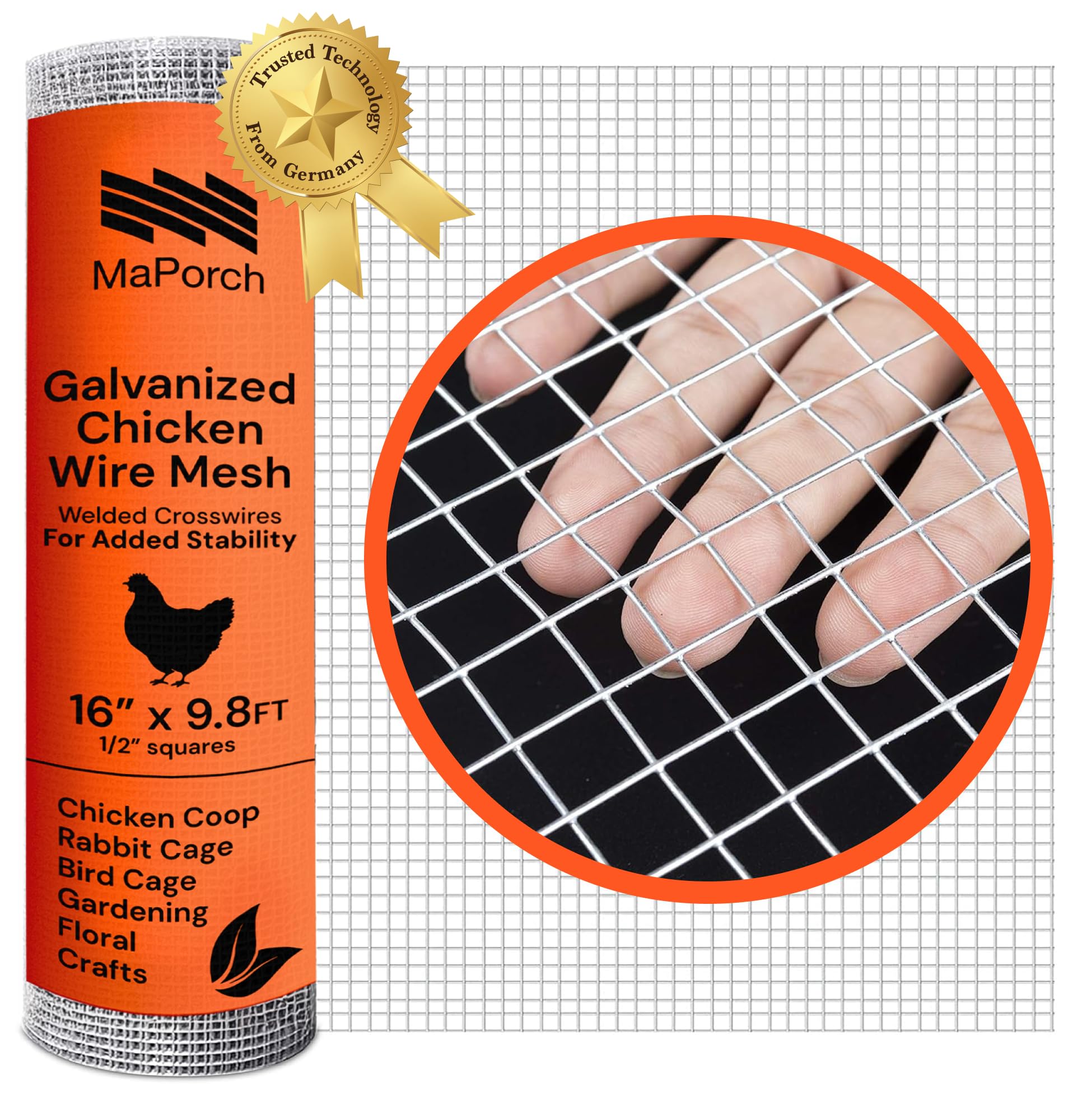
| Hardware Cloth Mesh – Galvanized Chicken Wire Mesh (15.7” x 118.1′, 1/2 Inch Square)Best for Vents | Attic vents and crawl space sealing | 1/2 inch square | 15.7 in x 118.1 in | — | Amazon |
| Chicken Wire Fencing Mesh, 16.9 Inch x 40 Feet | Garden beds and craft projects | 0.6 inch hexagonal | 16.9 in x 32.8 ft | — | Amazon |
| YARDGARD 1/2 Inch Mesh Welded Wire Hardware Cloth | Chicken coops and animal pens | 1/2 inch | 24 in x 25 ft | 19-Gauge | Amazon |
| VEVOR Hardware Cloth, 1/2 inch 24in x 50 ft | Long garden and coop runs | 1/2 inch | 24 in x 50 ft | 19 Gauge | Amazon |
Detailed Reviews
1. Hardware Cloth 1/4 inch Wire Mesh 24 x 50 Ft 23 Gauge
Our pick — 4.5+★ from 450+ verified ratings; the strongest balance of quality and price.
The tight-grid roll that turns a squirrel problem into a wall it cannot grip
If a squirrel has already beaten one barrier on your property, this is the roll that ends the argument. The wire grid is spaced at 1/4 inch, which is roughly the width of a pencil lead doubled — far too narrow for teeth or a nose to work into. That is a tighter opening than most hardware cloth sold for garden use, and it is the single reason this roll tops the list. The crowd backing it is substantial too: 4.5+ stars across 400+ ratings.
Length is where it separates from the pack. At 24 inches by 50 feet you get a run long enough to skirt a full deck perimeter and still have leftover for a tree trunk or two. That is double the footage of the YARDGARD roll, 50 ft against 25 ft, so a long fence line does not force you into a second purchase midway through. The 23 gauge wire is thicker than the YARDGARD’s 19-gauge spec, and that extra thickness keeps the mesh from deforming when something pushes against it. Owners put it to work well past squirrels — as one verified buyer put it, “Rattlesnakes can’t get past this grid.”
The roll weighs 11.44 pounds, so plan on two hands and a second person when you unroll it along a fence — the manufacturer even suggests a helper or a holder. Cutting takes proper straight metal shears, and the galvanized edges are sharp, which is why gloves ship in the box and why you should actually wear them. The maker also specs a 15% larger weld area and 10% more zinc coverage than standard cloth, which is what lets this grid sit in buried soil without rusting through. The occasional roll arrives with mesh slightly off-square, which shows in a finished frame but does nothing to its ability to keep animals out.
Where this roll earns its keep
- 1/4 inch openings shut out squirrels, snakes and gophers in one pass
- 50 ft of 24 inch width covers a long run without a second order
- 23 gauge wire holds its shape under pressure instead of bowing
- Handles underground burial and rain without rusting out
What to plan around
- 11.44 pounds of roll needs a helper to unroll cleanly
- Cut edges are sharp enough to demand the included gloves
- Occasional rolls land slightly off-square
Pick this one if: you are fencing a deck, fence line or garden bed and want a barrier that stops diggers and climbers at the same time.
Think twice if: you only need a small patch for a vent or a single trunk — the 50 ft length is more than that job asks for.
2. Hardware Cloth Mesh 15.7” x 118.1′
A narrow 15.7 inch strip built for attic vents and crawl space gaps, not fence lines
The squirrel that keeps getting into the attic is a different problem from the one raiding the tomatoes, and this MAPORCH roll is shaped for the first one. The mesh is a 1/2 inch square — narrow enough that a squirrel cannot push a shoulder through — and the panel cuts with the scissors that come in the kit. That makes short work of sealing a soffit vent or a crawl space opening where a full fence roll would just be awkward.
Do not expect a long fence run from it. The strip measures 15.7 feet by 118.1 inches, and its 12.92 square feet of coverage goes fast once you start wrapping corners. The 15.7 inch width is the real constraint: stacked against the YARDGARD at 24 inches, you are working with a narrower band and will need to join pieces on anything tall. The roll arrives as 23 pieces, which is fine for patching several small openings but means more seams on one big panel.
Quality is the theme owners keep circling back to, and the galvanized steel construction earns it — the mesh is evenly woven and welded so it does not slip out of alignment as you cut. It holds up in damp spots like attics and crawl spaces without showing wear. Where opinions split is on cost: the panel does more than its size suggests, but it is not the cheapest way to buy coverage if you have a long run to fill. Buy it for precision patching, not bulk fencing.
What owners keep coming back to: the panel is genuinely sturdy in service and holds together in damp, enclosed spaces where cheaper netting shows its age fast.
The honest catch: at 15.7 inches wide and 12.92 square feet of total coverage, it is a patching material — not a fencing material — and the cost per foot reflects that.
Reach for this if: squirrels are getting in through vents, soffits or crawl space gaps and you want a hard barrier you can cut to fit on a Saturday morning.
Look elsewhere if: you are fencing a garden bed or a long boundary — you will burn through the 12.92 square feet before the job is half done.
3. Chicken Wire Fencing Mesh 16.9 Inch x 40 Feet

The roll that shows up with gloves, cutters and wire so you can start the same afternoon
Most mesh rolls send you back to the store for tools. This Fabulas roll arrives with a pair of nitrile gloves, a mini industrial grade wire pliers and a roll of 10 meters of wire for splicing pieces together — a complete starter kit in one box. That combination is what owners talk about most, and it makes the first install noticeably less frustrating than a bare roll.
The mesh itself is a 0.6 inch hexagonal pattern, double hot-dip galvanized and twisted rather than welded. That 0.6 inch opening is the practical size for keeping squirrels and rabbits off seedlings while still letting air and sight through, which is why it suits garden beds and low crop protection better than a solid fence line. It is soft and bendable by design — that flexibility is what lets you wrap it around dowels, join panels and shape it to beds. The honest trade-off is that the same softness means it will not hold a shape on its own. As one verified buyer put it, “But maybe too soft, don’t hold well the shape, and when you use it as a vole or rabbit protection it’s better to have it a little higher, at least 24”.”
At 16.9 inches tall and 32.8 feet long, you can cut it down for craft projects, window screens or a wreath frame without feeling like you are wasting material. The included pliers are the piece that makes it usable — cut-to-size wire snips by hand, and a 4.5+ star product never would have gotten there. For garden defense and DIY work, the kit is the reason to pick this over a plainer roll.
Why it wins the garden and craft shelf: a complete install kit, a 0.6 inch opening that keeps squirrels and rabbits off seedlings, and 32.8 feet of double galvanized mesh you can shape by hand.
Where it stops short: that same soft wire will not stay rigid as a tall barrier — anything above knee height needs a frame or heavier gauge behind it.
Best for: protecting garden beds, seedling rows and craft builds where you want a bendable, cuttable wire and a kit that comes with the tools.
Not the one if: you need a rigid, chew-resistant barrier along a fence line — the soft twist wire is the wrong tool for that job.
4. YARDGARD 1/2 Inch Mesh Welded Wire Fence 24 in. x 25 ft.

A welded 24 inch roll that keeps coops and pens intact through a wet winter
The 1/2 inch welded opening is the number that matters here. It is narrow enough to lock out squirrels, raccoons and possums, and the 19-gauge zinc-coated steel is stiff enough to stop a run sagging between posts. The idea is an animal pen that still looks like a pen after two seasons of weather, not a drooping curtain.
Width and length are the practical story. A 24 inch tall roll gives you a fence-height band that stacks into taller barriers without cutting a second roll, and 25 feet covers a coop run or a garden border in one go. The galvanized coating is applied before the wire is woven, which is why it keeps its corrosion resistance in wet, humid climates rather than starting to rust at the joints. That is the same core job the VEVOR does, and this one simply delivers it in a shorter, easier-to-handle roll.
Where this sits honestly is at the budget edge. It is not a heavyweight chew barrier like the 1/4 inch Nueve Deer, and it is not the longest footage on the list. What it is, is the roll people buy when they want a clean welded grid at a fair price and a width that fits their coop wall. It is fine for poultry, rabbits and low garden protection — the wrong choice only if you are fencing a boundary where something will lean hard against the mesh all day.
Value read: a welded 19-gauge 1/2 inch grid that resists sagging and holds its look through wet weather, at a price that lets you buy two rolls for a bigger cage.
One thing to confirm before you order: double-check the mesh spec on the listing — a mismatched shipment has been reported, so verify you are getting the 1/2 inch 25 ft roll you selected.
Good match for: chicken coops, rabbit pens and small garden borders where a 24 inch x 25 ft 1/2 inch welded roll is the exact shape of the job.
Skip it for: long fence runs and heavy digger pressure — the shorter footage and lighter gauge will leave you short on both.
5. VEVOR Hardware Cloth 24in x 50 ft

Fifty feet of hot-dipped galvanized grid for the garden that keeps getting raided
Fifty feet of 24 inch mesh is the headline, and it changes what is possible in one afternoon. You can run a full garden perimeter, skirt a raised bed and still have material left over for the compost pile. The 1/2 inch opening is the squirrel-stopper — too narrow for a body to fit through or a jaw to work an edge loose — and the hot-dipped galvanization holds up to soil and rain.
The build is welded low-carbon steel with a post-weld galvanization pass, so each weld point is zinc-coated rather than left raw. That is the detail that separates a roll that rusts at the joints from one that stays bright through weather. The same 50 ft run puts it level with the top pick’s length, though this one trades the ultra-tight 1/4 inch grid for a standard 1/2 inch opening — right for squirrels and rabbits, not tight enough to stop the smallest rodents.
Weight is the catch you should plan around. At 13.2 pounds the roll is heavier than it looks in photos and needs wire cutters, not scissors, to get through cleanly. It also demands gloves — the cut ends are sharp. Get past that and this is an effective roll with real staying power. The garden protection is the use case owners lean on, and it holds up to both chewing and digging when buried along the fence line.
What the long roll delivers
- 50 ft of 24 inch mesh covers a full garden perimeter in one order
- Hot-dipped and post-weld galvanized for corrosion resistance at the joints
- 1/2 inch openings block squirrels and rabbits and stay put once staked
- Packaged in five layers of cardboard with sealed ends to survive shipping
The trade-off to plan for
- 13.2 pounds of roll is a two-hand job to unroll and stake
- Cut ends are sharp, so gloves are non-negotiable
- 1/2 inch grid will not stop the smallest rodents — you need 1/4 inch for that
Go with this if: you are fencing a large garden or coop run in one pass and want the hot-dipped coating that holds up to weather at the welds.
Look past it if: you need a tight 1/4 inch grid for snakes or mice — step up to the 1/4 inch roll at the top of this list.
Know the Specs
Mesh Opening
The opening is the gap between wires — the single most important number for squirrel control. A 1/4 inch opening is tight enough to stop snakes, mice and squirrels. A 1/2 inch square or hexagonal opening stops squirrels and rabbits but lets small rodents through. A 0.6 inch hexagonal opening works around seedlings while letting air and light through. Anything above 1 inch is a fence, not a squirrel barrier.
Gauge (Wire Thickness)
Gauge is the thickness of the wire, and a lower number means thicker wire. A 19-gauge wire is heavier than a 23 gauge on the same mesh, which matters when something leans, pulls or chews against the panel. Lighter wire cuts and bends easily but will not hold a tall shape without a frame. Heavier wire needs proper cutters and gloves, and it stays flat once installed.
Galvanization
Galvanizing means coating the steel in zinc to slow rust. Hot-dipped and double galvanized finishes hold up far better in soil and rain than a single light coat. If the mesh will be buried along a fence line or sit in a damp coop, choose the heavier coating. Rolls marked rust-resistant or zinc-coated are adequate above ground in dry conditions.
Roll Size and Coverage
Length and width decide how much fence you can build in one session. A 24 inch by 50 ft roll covers a long perimeter and stacks into taller barriers. A 16 to 17 inch wide roll suits garden beds and vents rather than fence lines. Buy the coverage the job actually needs — a short roll will leave you short mid-install and a long roll is awkward to store.
Common Questions
What mesh size stops squirrels from chewing through?
Is chicken wire as good as hardware cloth for squirrel proofing?
Do I need to bury wire mesh to stop squirrels digging underneath?
Will 19-gauge wire mesh stop a squirrel chewing through?
What tools do I need to cut galvanized wire mesh?
Can I use hardware cloth to seal attic vents against squirrels?
How long does galvanized wire mesh last outdoors?
Does hardware cloth block too much light for a garden bed?
Should I buy one long roll or two shorter ones?
Can wire mesh be used around tree trunks to protect bark from squirrels?
The Bottom Line
For most people fighting squirrels, the winner is the Hardware Cloth 1/4 inch Wire Mesh 24 x 50 Ft 23 Gauge because the 1/4 inch grid shuts out squirrels, snakes and gophers at once, and the 50 ft roll covers a deck perimeter or fence line without a second order. If the problem is vents and crawl space gaps rather than a fence line, grab the MAPORCH Galvanized Chicken Wire Mesh and cut it to fit with the included scissors. And for a garden bed or a craft project that needs a bendable wire and a kit that shows up with gloves, cutters and splicing wire, the Fabulas Chicken Wire Fencing Mesh is the one to reach for. If you are fencing a coop and want a welded 1/2 inch grid at a fair price, the YARDGARD 1/2 Inch Mesh Hardware Cloth does that job cleanly, and for a long garden perimeter in one pass the VEVOR Hardware Cloth 1/2 inch 24in x 50 ft gives you the footage. Match the mesh opening to the animal you are blocking, and the barrier will hold.
How we choose
We do not accept paid placement. Every pick is matched to a real buyer and a real use-case; we do not hands-on test units.
Sources
Specifications: manufacturer listings and product documentation. Review insights: verified customer reviews, as of October 2026. Pricing: not shown on this page (it changes often); check the current price via the retailer link.
As an Amazon Associate, Aappliancez earns from qualifying purchases. This does not affect which products we feature.