Disclosure: Some links in this post are affiliate links. As an Amazon Associate I earn from qualifying purchases, at no extra cost to you. Learn more
Specs are compiled from manufacturer listings and verified buyer reviews and can change over time — please confirm the key details on the product page before buying.
Here is the thing that trips up almost every first-time buyer: a window sash kit is not one product, it is two very different jobs. Some kits are complete windows — frame, glass, screen and all — that you screw into a rough opening you built yourself. Others are frame-only kits that reuse the glass you already own. Order the wrong type and you are stuck with a box of aluminum that fits nothing. This guide sorts every pick by which job it actually does, then tells you the three numbers you have to measure before you click buy.
This guide is built by comparing the manufacturers’ published specifications and the patterns across verified customer reviews, so you get each pick’s real strengths and trade-offs instead of marketing spin.
Tempered glass versus insulated double-pane glass is the first fork in the road, and it changes how the window sounds, insulates and cleans. Flush-mount versus built-in flange is the second fork. Get both right and the job is a Saturday afternoon; get either wrong and you are drilling new holes. Below is a straight comparison of the best window sash replacement kits for sheds, coops, basements and entry doors.
Top Picks
How To Choose The Right Window Sash Replacement Kit
The fastest way to waste money on this category is to buy before you measure. Every return, every bent frame and every “it didn’t fit” story starts with a number taken from the wrong part of the old window. Measure first, then match the kit type to the job.
Kit type first: complete window or frame only
A complete kit gives you the whole assembly — the frame, the glass and usually the screen — and it drops into an opening you have already framed. A frame-only kit gives you the interior and exterior trim pieces and nothing else, because it reuses the glass pane already sitting in your door. If your glass is foggy, cracked or broken, a frame-only kit is the wrong purchase, full stop.
Measure the glass, not the trim
On a door lite, the glass itself measures smaller than the visible opening, and the visible opening measures smaller than the outside of the old frame. Ordering by either of those wrong numbers is the single most common mistake. Pull the old frame, measure the bare pane edge to edge, and check that your door cutout is the size the kit expects.
Glass build and what it does for you
Single-pane tempered glass resists impact and shattering, which matters on a shed door or a coop wall where a stray branch or a goat horn can swing. Insulated double-pane glass adds a trapped air gap, so outside noise drops and the surface stays closer to room temperature — noticeable on a basement wall in winter. Neither is automatically better; they solve different problems.
Hardware and screens decide daily annoyance
A window that opens smoothly but has no way to latch shut is a security gap on a ground-floor wall. Check whether the kit includes a lock or latch, whether the screen pops out for cleaning, and whether the sash tilts inward so you can reach the outside pane without a ladder.
Side-by-Side Comparison
| Model | Best For | Nominal Size | Glass / Frame | Weight | Amazon |
|---|---|---|---|---|---|
| NeatiEase 24″ x 36″ Shed Window 2 Pack★ Best Overall | Sheds, coops and playhouses | 24″ x 36″ | Tempered glass, aluminum frame | 30 lb | Amazon |
| ZHULI 24″ x 36″ Shed Window 2 PackBest Value | Barns, greenhouses, utility sheds | 24″ x 36″ | Tempered glass, aluminum alloy frame | 29.5 lb | Amazon |
| Entry Door Frame Only Replacement Kit | Reusing existing 1/2″ door glass | 22″ x 36″ glass | Frame only, 9-lite, glass not included | 10 lb | Amazon |
| 22 x 36 Entry Door Clear Glass Insert | Full door lite replacement | 22″ x 36″ | Tempered glass, frame included | 25 lb | Amazon |
| Kinro 14×21 Mobile Home Window | Mobile home bath and closet walls | 14″ x 21″ | 3/4″ insulated thermopane, vinyl | — | Amazon |
| Vinyl Single Hung Sliding Window 24″ x 36″ | Home replacement and new build | 24″ x 36″ | Double-pane insulated, tilt-in sash | 27.2 lb | Amazon |
| Vinyl Basement Sliding Window 36″ x 24″ | Basements, storage rooms, garages | 36″ x 24″ | Double-pane insulated tempered glass | 24 lb | Amazon |
Detailed Reviews
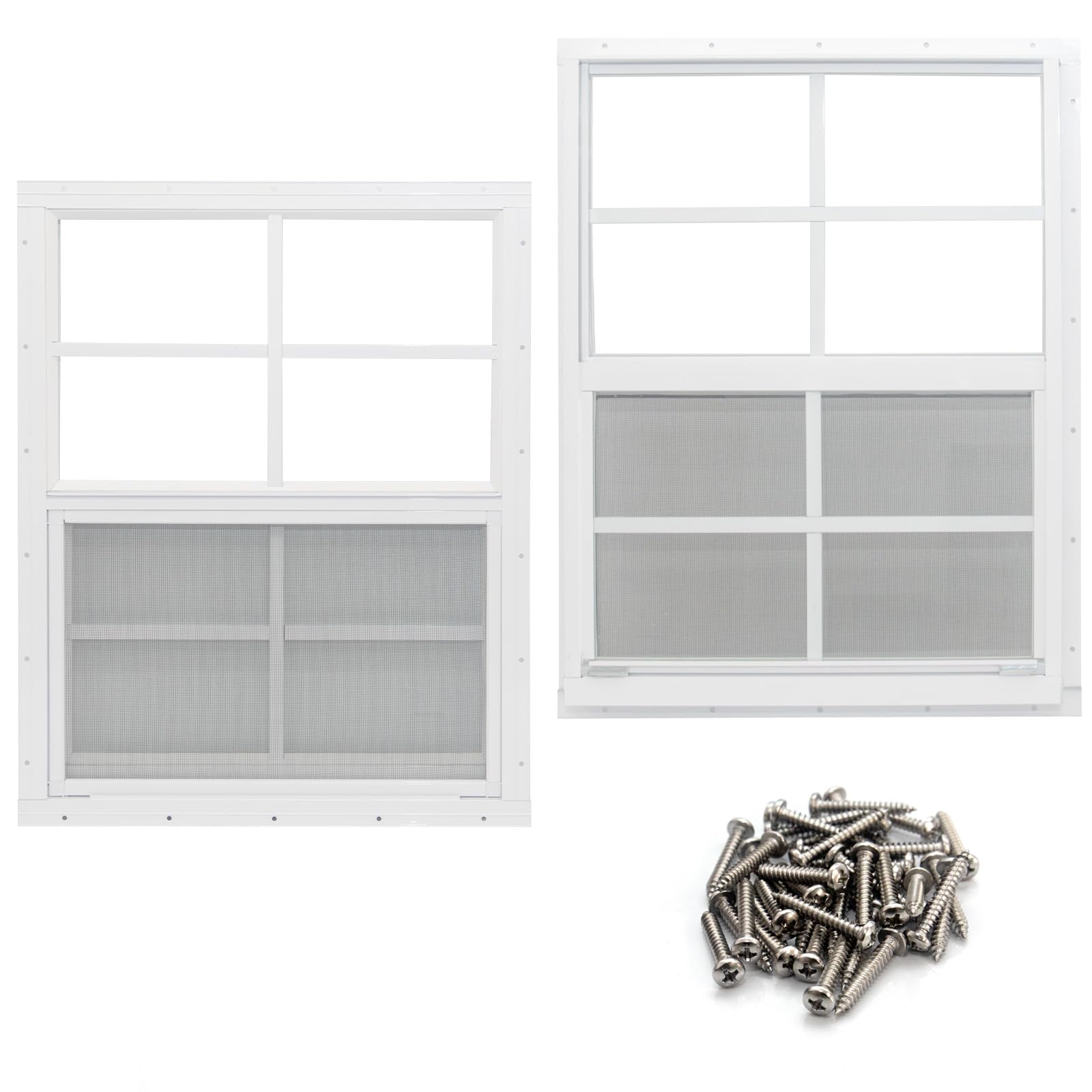
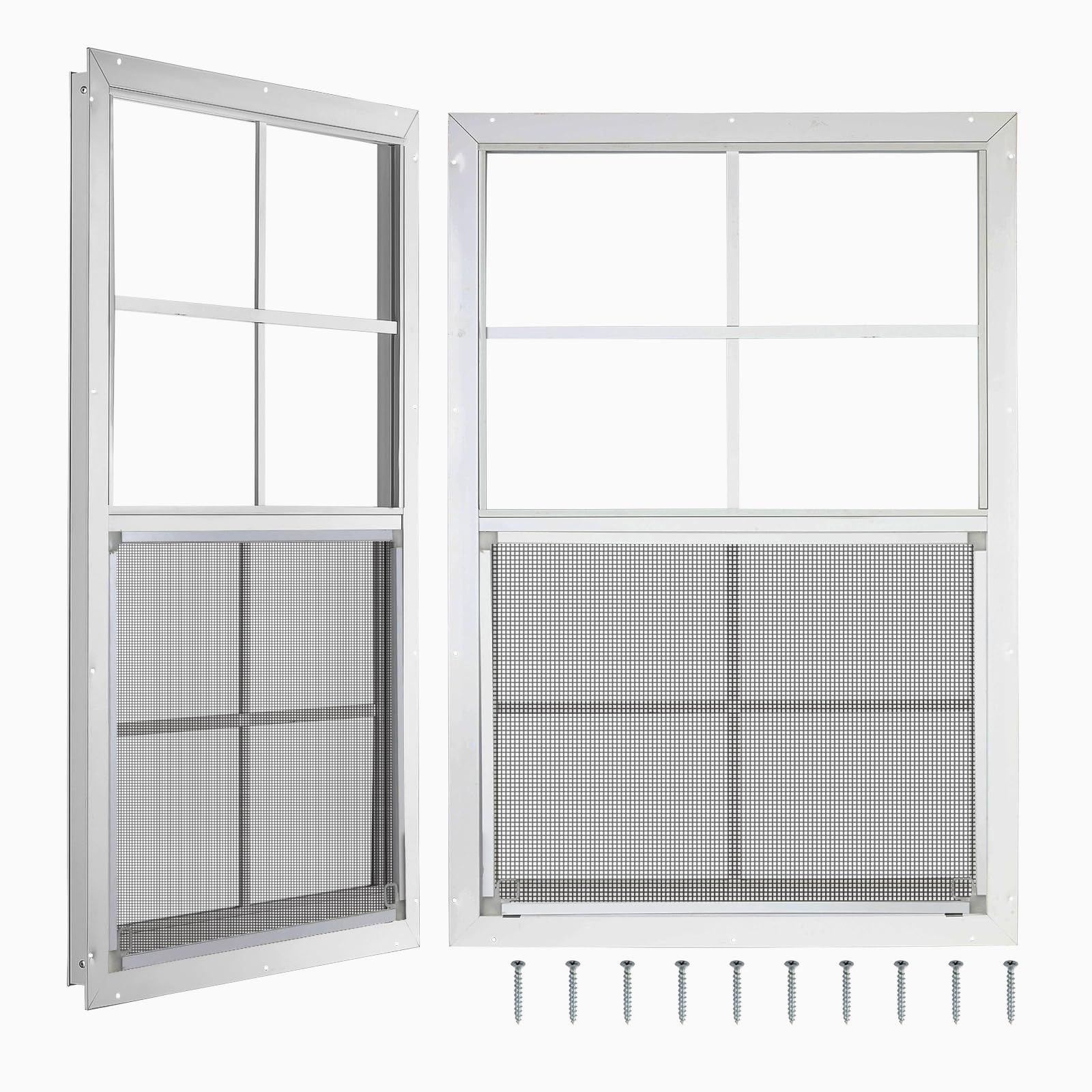
1. NeatiEase 2 Pack Shed Window 24″ x 36″
Our pick — 4.5+★ from 650+ verified ratings; the strongest balance of quality and price.
Two sliding windows, real glass and a screen, ready to screw into a shed wall you already framed.
If you are cutting a new opening into a coop or a garden shed and you want the whole thing done in one order, this is the kit that gets you there. You get two 24″ x 36″ windows, each built on a thick aluminum frame that will not rust or corrode, with tempered glass that resists impact and will not shatter into shards. The fiberglass screen mesh is already in place, so you get airflow without letting the mosquitoes and the wasps inside. Screws come in the box, and the frame is designed for flush mounting — it sits flat against your sheathing instead of needing a nail flange driven into a stud.
What has kept this pair at the top of the category is simply how solid the thing feels in the hand. Owners keep describing it the same way — heavy, well crafted, aluminum throughout — and there is a real reason to care about that weight. At 30 pounds for the two-pack, these are 10 pounds heavier than the frame-only door kit further down this list, which is the difference between a wall that feels finished and one that feels hollow. The sliding track is the other thing people point to: it glides, and it keeps gliding after a season of weather.
The honest trade-off is handling, not quality. Covered shipping is rough on aluminum, and thicker frames absorb a knock better than thin ones but they are still aluminum — a bent corner on arrival is a real possibility, and it is fixable with a hammer far more often than people expect. The other thing to plan for is the fit: because this is a flush-mount kit, the opening you build has to be genuinely square. Owners building for hardware cloth report it works fine without adding bulk to the frame line, so if you are layering mesh over the opening, that is a point in its favor. The two open heights snap into place and the sash locks when shut, which covers the security worry on a ground-level wall.
Flush mount frame
- Tempered glass plus fiberglass screen — ventilation without the bug problem, in one box.
- Thick aluminum frame that will not rust or corrode, so a wet climate is not a lifespan problem.
- Two snapped-open positions and a sash that locks shut when closed.
- Screws included and flush-mount design, so no separate flange to source or fit.
Trim work needed
- Aluminum can arrive bent if the carrier is careless — check the frame before you cut anything.
- Flush mounting gives you no forgiveness on an out-of-square opening.
- Heavier than the single-frame alternatives, so plan for a second pair of hands.
Pick for sheds: you are building a new shed, coop, playhouse or garage wall and want glass, screen and frame handled in one purchase.
Look at the frame-only kit instead if: your door glass is already good and you only need the trim around it.
2. ZHULI 24″ x 36″ Shed Window 2 Pack
The near-identical twin of the top pick, with a metal screen and one measurement quirk worth knowing.
Buyers who need windows for a barn, a greenhouse, a workshop or a utility room tend to land here, and the reasoning is straightforward — the frame is integrally formed from aluminum alloy rather than assembled from separate extrusions, and the hardware is zinc alloy. Both choices are about staying outside for a decade without turning chalky or seizing up. The tempered glass is wind and rain resistant and labeled waterproof, so a driving storm against a greenhouse wall is not a concern. The metal screen is the visible difference from the pick above, which uses fiberglass mesh.
Two packs of 24″ x 36″ windows land at 29.5 pounds, which is half a pound lighter than the NeatiEase pair — close enough that you would never feel it, but note because that lighter frame is also a slightly thinner one. What consistently pleases owners is the quality-to-money math; it is the aspect the review pages highlight hardest. Installation earns the same praise: packaged carefully, screws included, an easy afternoon job for someone with basic tools. The screen mounts outside but lifts out, so you can pull it in for rinsing instead of fighting it from a ladder.
The catch is two small things, not one big one. First, the listing quotes the outside frame dimensions — width 24″, height 36″ — and the inside opening runs roughly 1/2″ smaller than owners expect, which matters when you are the one building the frame. Measure twice. Second, the window has two opening stops but no dedicated locking position, so anyone who wants it secured shut will end up drilling their own holes in the bottom rail. Neither is a defect; both are the kind of thing that turns a twenty-minute install into a forty-minute one. It is water resistant to a genuine degree, and at 24″ x 36″ it drops into the same rough openings as the pick above.
Metal frame build: at 29.5 pounds against 30 for the NeatiEase set, and at the same nominal size, this is the pick when you want the aluminum-alloy construction and a metal screen at a slightly friendlier figure.
Extra install time: between the inside-measurement gap and the lock-hole drilling, this one rewards a buyer who reads the listing twice before cutting lumber.
Go metal here: you need two windows for a barn, greenhouse or workshop and you prefer a metal screen you can scrub.
Avoid on wood: you want a window that latches shut from the start — you will be adding that yourself.
3. Entry Door Frame Only Replacement Kit 22″ x 36″

If your glass is fine and only the trim has gone sun-checked, this is the whole fix in one box.
Your door glass is intact and clear, but the trim around it has yellowed, cracked or warped after a couple of decades of sun. That is exactly the job this kit does — interior frame, exterior frame, screws and screw-hole plugs, and nothing else. It reuses the 1/2″ thick, 22″ x 36″ glass already in your door. It will not close on 1″ glass, so the thickness check comes before anything else. The frame is white and paint-ready, and it is built not to yellow or warp the way the original trim did.
Three numbers decide whether it fits, and all three have to be right. The glass itself must measure 22″ x 36″ — measured edge to edge on the pane, not on the visible opening, which reads about 1″ smaller, and not on the outside of the old frame, which reads closer to 24″ x 38″. The glass thickness must be 1/2″. And the cutout in the door must measure 23″ x 37″ on a 1-3/4″ thick door. Get those right and this is a standard 9-lite frame that fits doors from Taylor, Perma Door, Stanley, Castlegate and Masonite.
What owners rave about is how it looks once it is in — clean enough to make a 1985 door read as new again, which is the aspect the review pages single out most. Fit runs second. The recurring gripe is not the frame at all but the process: the old trim has to come off before the new goes on, and on an upright door the glass has no support at that moment. The honest move is to remove the door and work flat, or to have a second person on hand, because the pane can drop out. A couple of small pegs have shown up broken in transit on some units, though it did not stop installation in those cases. At 10 pounds, this is by far the lightest thing on this list — and for good reason, since there is no glass inside it.
Buy for repair: a door where the glass is good and only the surrounding trim has aged out.
Skip if new: your glass is foggy, cracked or broken — order a glass-and-frame kit instead.
4. 22 x 36 Entry Door Clear Glass Insert (9 Lite), White

Glass and frame together, and the only kit here with a 20-year warranty.
This is the complete answer to a door lite that has fogged, cracked or simply gone ugly — 1/2″ insulated glass, maintenance-free frames, screws and screw-hole plugs, all in the box. The exterior frame carries a pre-applied dry glaze that seals the unit together as you assemble it, which removes the step most people get wrong. The warranty covers the frame and glass for 20 years. There is one condition printed with it: if a storm door sits outside this unit, it has to be vented, or the heat build-up voids the warranty.
The size range is where this kit separates itself from the frame-only option above. It fits steel or fiberglass doors with 1.75″ thickness, in widths of 36″, 34″, 32″ and 30″ (plus or minus 0.75″), and door heights of 6’8″ and 7’0″ (plus or minus 0.75″). That tolerance band is the point — it means an older Stanley steel door that has settled a little still takes the insert cleanly, which is exactly what the review pages report most often. The measurement guide is described as right on the money, and the fit is consistent across decades of doors.
Two things to know before you order. First, the installation screws have occasionally gone missing in transit — the packaging gets taped mid-journey and a small bag goes astray — so keep the old screws to one side as insurance. Second, glass this size does occasionally arrive damaged, which is a shipping reality for any large pane and not specific to this brand. Treat the box before you sign for it. At 25 pounds it is heavier than the frame-only kit by a wide margin, and it is also the priciest item on this list, but you are buying the glass and the frame in one shipment rather than sourcing glass separately.
Glass included: tempered safety glass, both frames, screws, plugs and a pre-applied dry glaze — nothing else to buy.
Odd size fit: it covers 30″, 32″, 34″ and 36″ door widths and both common door heights, so you are not hunting for an exact-match door.
Choose full set: you want the whole door lite replaced in one order and you value the twenty-year frame-and-glass coverage.
Pass on rough: your existing glass is still perfect — the frame-only kit handles that job for far less.
5. Kinro Mobile Home Window 14×21

A genuinely small window that still opens like a full-size one, with a tilt sash for cleaning.
Bathrooms and closets in mobile and manufactured homes are where this window earns its keep — narrow walls that need light and cross ventilation but have no room for a standard sash. At 14″ x 21″ it drops into a genuinely tight opening, and the 3/4″ insulated thermopane glass means the surface stays warm to the touch instead of condensing the way an old single-pane unit does. The lower sash tilts in, so you can clean the outside pane from inside the room. A screen is included, and a built-in nail and screw flange makes the install itself straightforward rather than a shim-and-pray affair.
For a manufactured-home wall, the built-in J-channel is the detail that pays off — it receives vinyl siding or trim and gives the finished edge a clean line instead of a raw frame buried in caulk. Long-term owners describe these holding up in a bathroom of a double-wide through a full year of weather without drafts, and opening and closing smoothly across a wide temperature swing. Contractors handle most of the installations, so the field reports tend to focus on the result rather than the process, and the result is consistently a window that operates the way it should.
Two caveats, both minor and specific. The screen is fixed rather than a pop-out, so you clean it in place instead of lifting it free — a small annoyance, not a functional problem. And this is a narrow-use product: it fits mobile and manufactured home walls and siding-ready openings, not a stick-built rough opening that expects a flush-mount frame. Measure the wall cavity first. If your opening is bigger than 14″ x 21″, look at the single hung further down this list instead.
Made for mobiles: mobile and manufactured homes where the wall is narrow and you still want a sash that opens.
Skip on stick: you are working in a stick-built wall — the built-in flange expects siding or trim, not a rough opening.
6. Vinyl Single Hung Sliding Window 24″ x 36″ White
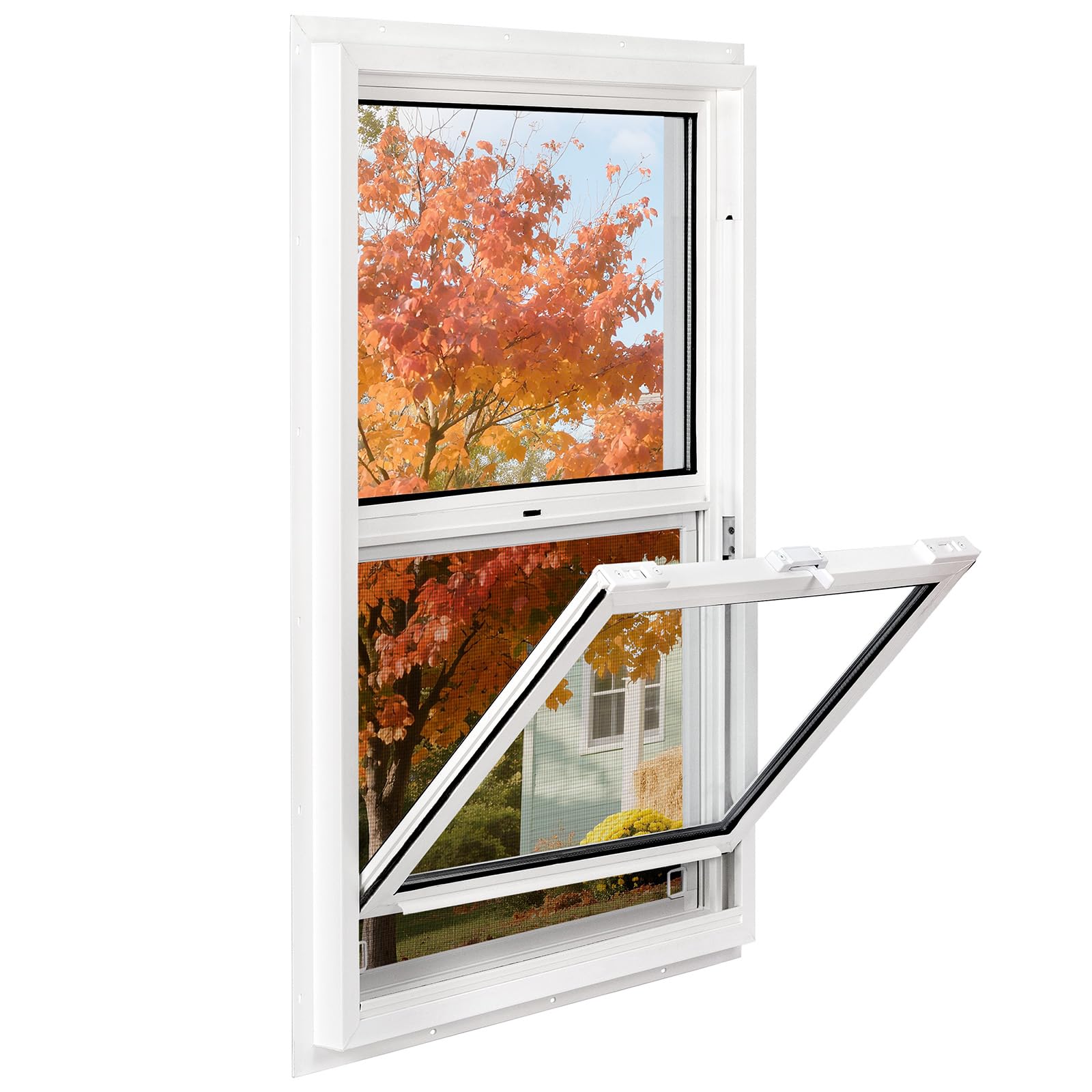
Double-pane glass, a rear drainage channel, and a sash that tips inward so you never climb a ladder.
The vertical single-hung format is the one most people picture when they say “replacement window,” and this 24″ x 36″ unit covers it in insulated double-pane glass. That double-pane construction narrows the noise coming in from outside and slows heat transfer both ways, which is what makes it a home replacement part rather than a shed part. There is a built-in rear drainage outlet as well, so rainwater that gets past the sash channels out instead of pooling in the sill. The frame is vinyl with reinforced framing, so rust and UV damage stay off the list of future problems.
The tilt-in sash is the feature that changes how you live with it. Instead of reaching awkwardly to clean the outer pane, you tip the sash toward you and wipe both faces from inside the room. Owners rate the build quality of this window very highly relative to its bracket — that is the aspect the review pages emphasize hardest, and the consistent theme is that while it is not a premium window, it is unmistakably a real one. Installation feedback is broadly positive, and the vinyl frame takes screws cleanly without cracking.
Two practical notes. Rough opening dimensions are not printed with the unit, which is a non-issue if you already know how to size a frame but a genuine snag if this is your first window. And the screen is fixed in place rather than removable, so a manufactured-home fit can need the opening worked slightly to seat it. At 27.2 pounds it is a two-hand lift but manageable solo. Pair it with the basement slider further down if you are doing a whole wall.
Insulated glass: double-pane glass plus a rear drainage outlet puts this a clear step above the single-pane shed windows on this list in comfort and moisture control.
Drain holes vague: the rough opening numbers are not supplied, so budget a few minutes with a tape measure before you cut anything.
Pick for warmth: you are replacing a home window and want insulated glass with a sash you can clean from indoors.
Skip on cheap: you need a removable screen — this one stays put.
7. Vinyl Basement Sliding Window, 36″ x 24″ White
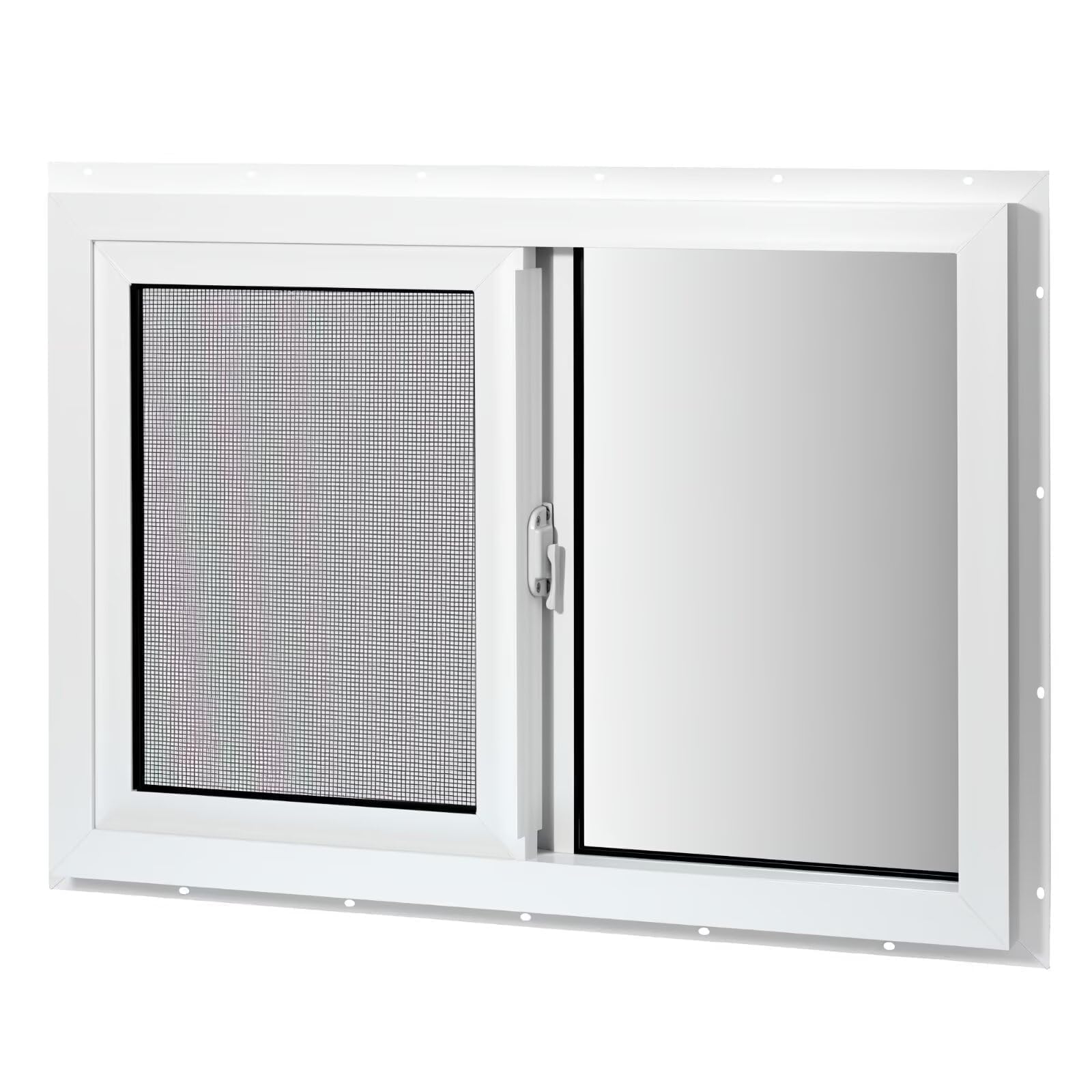
The one with the latch — a sliding basement window that locks shut, plus a screen you can lift out.
Basement walls and storage rooms need a window that seals against damp and stays shut when you want it shut, and this 36″ x 24″ slider is built for exactly that. The frame is energy-efficient vinyl that will not warp, peel or corrode, and it carries a rust-resistant galvanized latch — a detail worth checking, because a sliding window with no way to secure it is a hole in a ground-level wall. The screen is removable mesh, so it lifts out for cleaning instead of being scrubbed in place. The 3 mm thick double-pane insulated tempered glass sits in a frame with double sliding rails, letting you park the sliding panel in the middle or push it to one side depending on where you want the airflow.
Owners are consistently impressed with the quality relative to the bracket, and that is the aspect the review pages point to hardest. The other thing that comes up repeatedly is how undamaged they arrive — styrofoam packing all round, panes intact. Some have these in sheds going on multiple years, adding another one later as they expand the building, which tells you the frame is holding form. Installation gets described as a straightforward job: fit the window into the opening, secure the top with screws, fill the gap with foam sealant. The removable sash also makes cleaning simple, since you can take it right out rather than contorting around it.
The trade-off is the latch. It is rust-resistant and it is included, which is more than several windows on this list offer, but a small share of units have arrived with a broken latch or a pane sitting loose in the frame. That is a small slice against a strong overall record, and it is the kind of thing worth checking the moment the box is open, before you set it in the wall. At 24 pounds it is the lightest complete window on this list after the frame-only kit, which makes it an easy one-person fit on a ladder.
Right for cellars: basement, storage-room, garage and semi-basement openings where you want a latch and a screen that comes out.
Check for cracks: you are buying for an unheated space — inspect the latch and the pane seating before you install.
Know the Specs
Glass Type: Tempered Versus Insulated Thermopane
Tempered glass is heat-treated so it resists impact and breaks into blunt chunks rather than sharp shards, which is why it is the standard for a shed, coop or garage wall where something might swing into it. Insulated thermopane adds a second pane with a trapped air space between them, which is what quiets outside noise and keeps the inner surface closer to room temperature. The Kinro unit uses 3/4″ insulated thermopane glass, and the Vinyl Single Hung and Vinyl Basement Sliding Window both use double-pane insulated glass. If you want a warm-to-the-touch pane in winter and less traffic noise, insulated is the one to choose. If you want impact resistance in an unheated outbuilding, tempered single pane does that job at a lighter weight.
Measuring: Glass Size, Visible Size, Cutout Size
Three different numbers describe the same door lite, and mixing them up is how frames end up returned. The glass size is the bare pane measured edge to edge. The visible size is what you see looking at the assembled door, which reads about 1″ smaller than the glass. The cutout size is the rectangular hole cut in the door slab itself. A frame-only kit such as the Entry Door Frame Only Replacement Kit expects 22″ x 36″ glass at 1/2″ thickness inside a 23″ x 37″ cutout on a 1-3/4″ door. A complete insert like the 22 x 36 Entry Door Clear Glass Insert fits doors in 30″, 32″, 34″ and 36″ widths with a small tolerance in each direction. Measure the actual pane and the actual hole before you order anything.
Mounting: Flush Mount Versus Built-In Flange
A flush-mount window such as the NeatiEase or ZHULI shed windows sits flat against the surface of your sheathing and is held by screws driven straight through the frame. It is simple and it gives a clean line, but the opening you build has to be square because there is no flange to absorb an error. A built-in nail or screw flange, like the one on the Kinro mobile home window, extends past the frame and is driven into the surrounding structure, then covered by siding or trim. That flange is more forgiving and it is what you want when the wall already has siding going back over the top of the window.
Hardware: Locks, Screens and Stops
The hardware is where a cheap window shows itself over time. A galvanized latch, as on the Vinyl Basement Sliding Window, keeps a ground-floor opening secure and resists rust. A removable screen, also on that unit, means you rinse it off rather than scrape it in place. The Kinro’s screen is fixed, so you clean it where it sits. The ZHULI and NeatiEase shed windows both snap into open positions, and the ZHULI has no dedicated locking position without drilling your own hole. Two stops and no lock is a common arrangement on shed-grade windows, and it is fine — you just need to know it before you install, not after.
Common Questions
How do I measure for a door lite frame without ordering the wrong size?
Will a shed window kit work on a chicken coop or playhouse?
Do I need tempered glass on a basement window?
Is a frame-only door kit or a full glass insert the better buy?
Can I install a replacement window without removing the door?
What is the difference between a single hung and a sliding window?
How long should I expect these windows to last?
Does a low U-value or double pane matter for a shed?
What maintenance do these windows need over the years?
Can I paint these window frames to match my house?
The Bottom Line
The strongest overall pick in this group of window sash replacement kits is the NeatiEase 24″ x 36″ Shed Window 2 Pack, because it hands you glass, screen, frame and screws in one box and asks only that you build the opening square. If your door glass is still good and only the trim has aged out, the Entry Door Frame Only Replacement Kit does that job cleanly — check all three measurements first. And for a basement or storage room that needs a window you can actually latch shut, the Vinyl Basement Sliding Window is the one to reach for.
How we choose
We do not accept paid placement. Every pick is matched to a real buyer and a real use-case; we do not hands-on test units.
Sources
Specifications: manufacturer listings and product documentation. Review insights: verified customer reviews, as of October 2026. Pricing: not shown on this page (it changes often); check the current price via the retailer link.
As an Amazon Associate, Aappliancez earns from qualifying purchases. This does not affect which products we feature.