Disclosure: Some links in this post are affiliate links. As an Amazon Associate I earn from qualifying purchases, at no extra cost to you. Learn more
Specs are compiled from manufacturer listings and verified buyer reviews and can change over time — please confirm the key details on the product page before buying.
For sealing a pane into a sash, a flexible butyl rope or foam tape holds up better than a rigid tube of putty, because it stays soft as the frame moves and the seasons swing. The one exception is filling tiny pits and pinholes before paint — that job belongs to a fine-grained putty you can sand flat.
This guide is built by comparing the manufacturers’ published specifications and the patterns across verified customer reviews, so you get each pick’s real strengths and trade-offs instead of marketing spin.
Decide first if you need a glue-and-seal tape or a sandable filler, and the rest of the choice narrows fast. That split is exactly what this breakdown of window glazing putty sorts out for you.
Top Picks

How To Choose The Best Window Glazing Putty
Two different jobs get called by the same name, and mixing them up is where most home repairs go wrong. Sealing glass into a sash needs a flexible compound that grips and stays soft. Filling tiny surface pits before you paint needs a smooth filler that hardens and sands flat.
Rope, tape, or sandable putty
A butyl rope (a thick bead of sticky rubber you press into the gap) molds around corners and uneven frames, and it never fully cures, so it keeps flexing with the window. A closed-cell foam tape is a thin strip with adhesive on both sides that holds a pane in place while you work. A sandable spot putty is a fine paste you spread and sand, and it is only for shallow dents and pinholes — not for holding glass.
Match the roll length to the job
Roll length decides whether you finish a window in one pass or splice partway through. Splices are the weak points where water finds a way in, so on a full window reseal it pays to buy a longer roll and run end to end. Count your windows before you pick a roll length, so each one runs end to end without a splice.
Temperature is the make-or-break factor
Butyl stiffens when it gets cold and turns gummy when it gets hot, so the working temperature range matters. A sealant rated from -22°F to 176°F keeps its grip through both winter cold and summer heat. If you are sealing in the cold, warming the material in your hands first makes it conform instead of fighting you.
Side-by-Side Comparison
| Model | Best For | Form | Width | Coverage | Amazon |
|---|---|---|---|---|---|
| 3M Bondo 907 Glazing and Spot Putty★ Best Overall | Sanding pinholes before paint | Tube putty | — | 4 tubes (4.5 oz each) | Amazon |
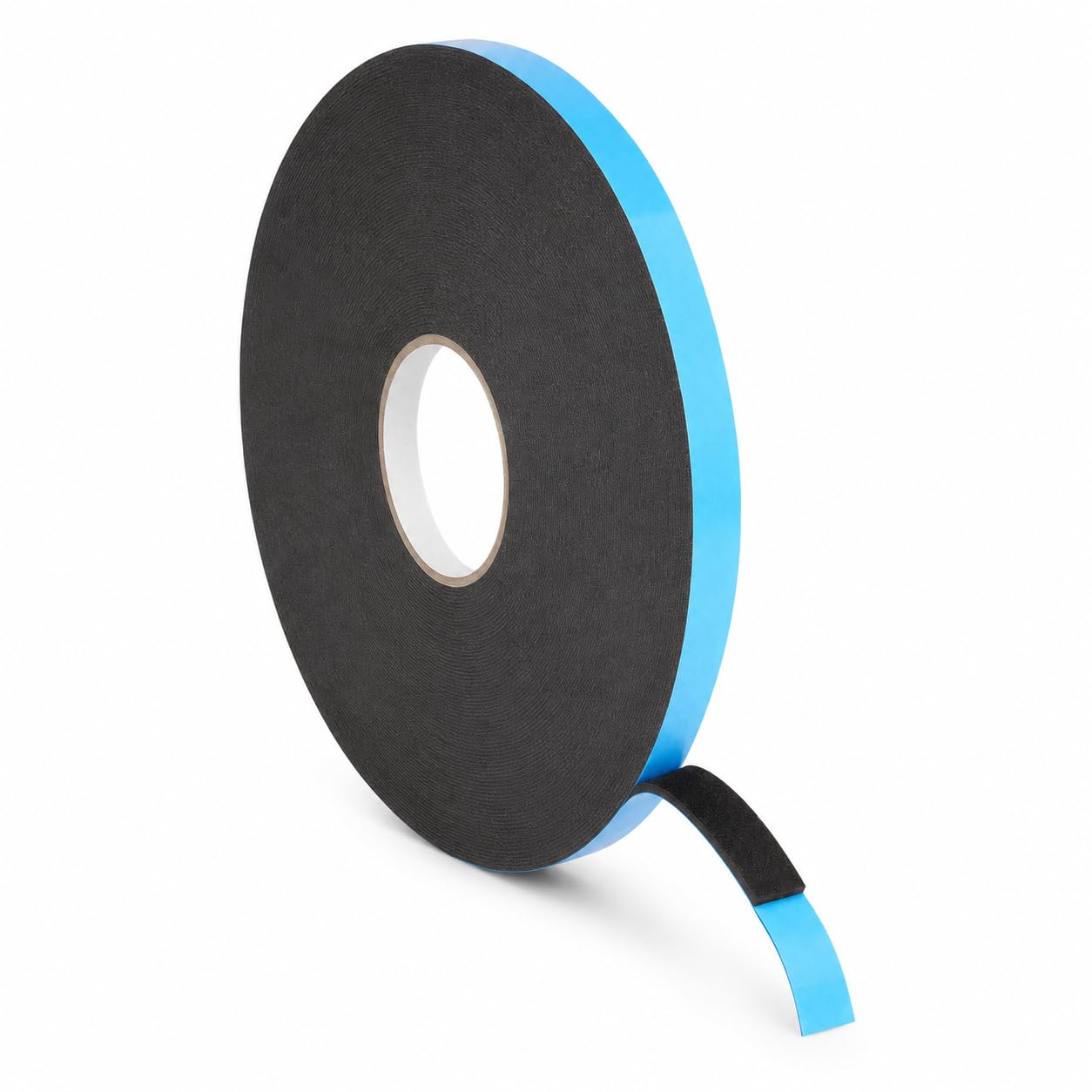
| GGR Supplies DC-PEF06P Glazing TapePro Installer’s Pick | Holding panes in metal frames | Double-sided foam tape | 1/2 inch | 75 feet | Amazon |
| LLPT Butyl Sealant Rope Tape | Auto and appliance gap sealing | Butyl rope | 0.37 inch | 16.5 feet | Amazon |
| US Chemical Ready-to-Use Red Glazing Putty | Bodywork and 3D print smoothing | Tube putty | — | 16 oz | Amazon |
| Better Boat Butyl Tape for RV Roof and Boat | Full RV window reseals in one pass | Butyl rope roll | 3/4 inch | 36 feet | Amazon |
Detailed Reviews
1. 3M Bondo 907 Glazing and Spot Putty – 4.5 oz, 4 Pack
Our pick — 4.5+★ from 700+ verified ratings; the strongest balance of quality and price.
The fine-grained filler that erases pinholes and grain before your paint goes on.
This is the pick for the moment a window frame or door is sanded and primed but still shows tiny pits the eye catches under gloss. The 3M Bondo 907 is a two-part putty — you mix a filler with a hardener — and it fills scratches, pinholes, holes, and nicks, including rock chips and road rash. It works on metal, fiberglass, wood, and sanded or primed surfaces, so it is not locked to one material.
Speed is the headline here. The workable window is brief, and it is ready to sand in just 30 minutes, which lets you move from fill to finish the same day. Full cure takes 4 hours, so a fully hardened surface is an afternoon job rather than an overnight one. The non-staining finish keeps your topcoat even, which matters when a glossy paint job will magnify every flaw.
For a glass-smooth result, spread it paste-thin as a pinhole filler, not as a gap filler. It spreads paste-thin and sinks into the smallest dimples that coarse filler misses, and it is the difference between a good paint job and a mirror one. It is not the tool for sealing a pane into a sash — for that you want the tape picks below, not a sandable paste.
Where it earns its keep
- Fills pinholes, scratches, and nicks in metal, fiberglass, wood, and primed surfaces.
- Sandable in 30 minutes, full cure in 4 hours.
- Non-staining, so your paint finish stays even.
- Non-shrinking once it sets.
What to plan around
- Strong smell — ventilate the room while you work.
- The mixed paste runs thin and liquidy at first, and the tube can leak.
- Sanding leaves a messy pink dust, so cover nearby surfaces.
Reach for this if: you are chasing a glass-smooth paint finish and need to hide pinholes and grain after sanding.
Keep looking if: your actual job is sealing glass into a frame — this paste sands flat, it does not hold a pane.
2. GGR Supplies DC-PEF06P Double Sided Window Glazing Tape
The tape that holds a pane steady with one hand while you seal with the other.
The GGR Supplies glazing tape solves the hardest part of a window install: keeping the glass where you want it while you work. It is a closed-cell polyethylene foam strip — closed-cell means the bubbles inside are sealed shut, so it will not soak up water — with a solvent-based acrylic adhesive on both sides. It sits between the glass and the sash or frame, fills the gap, and holds the pane in place while you run your finish seal over it.
Where it fits matters more than any single number. It is built for the interior seal between insulated glass panels and window sashes or frames, on properly prepared glass, wood, and aluminum. The 1/8-inch thickness gives it give, so it conforms between glazing components and helps shut out wind, dust, and moisture. For outdoor duty it handles a service range of -22°F to 176°F, and it withstands at least 24 hours of exposure at that 176°F top end.
Against the LLPT rope below, the real difference is width: at a half inch wide it covers a 35% wider gap than the LLPT’s 0.37-inch rope, which is the margin that matters on a wider sash channel. The long 150-foot roll means you are not splicing partway through a multi-window job, and a real RV skylight repair came in at a fraction of a replacement window’s cost. The one thing to know going in is that the stick is aggressive — you get very little forgiveness once it touches down, so line it up before you press.
Anatomy of the hold: the acrylic adhesive gives quick stick, high peel, and strong shear, so the pane stays put during assembly. The foam body flexes enough to sit flush on slightly uneven sash channels.
What reviewers agree on: buyers report that professional installers use the same tape, and one owner mentions it held a quarter-inch pane squarely in an aluminum frame. Where feedback splits is on removability — some find it super sticky and others note it can be tricky to pull back.
Buy it if: you are glazing aluminum or wood frames and want a wide foam tape that holds the pane while you seal.
Think twice if: you need to reposition the glass repeatedly — the aggressive stick leaves little room for a second try.
3. LLPT Butyl Sealant Rope Tape 3/8″ x 16.5 Feet

A roll of sticky rubber rope that presses into tight corners a caulk gun cannot reach.
This is the pick when your leak is not a straight line. LLPT’s butyl rope is a non-drying, non-hardening putty you press into gaps, and the spec that defines it is right in the name: a 3/8-inch diameter rope, 16.5 feet long, at 0.37 inches wide. It molds to tight corners, unusual curves, uneven and jagged surfaces, and bonds to glass, fiberglass, wood, coated or uncoated metals, plastic, and rubber. That material range is why it turns up from car light housings to home appliance panel sealing.
Where it differs from a foam tape is how it behaves over time. It stays permanently flexible, so it conforms as panels shift and temperatures move — the exact reason it is a fit for windows that see a lot of flex. It is also paintable, so once you press it flush you can coat over it and hide the seam. Set the material down clean and dry first, and the adhesion grabs immediately.
The honest trade-off is temperature at the other end of the job. Cold butyl stiffens, and on a cold, rainy install it can need warming before it will stick and mold to both sides of a gap — the maker’s own guidance is that low temperatures make it stiffer and slower to mold. Warm weather flips it: easy to stretch and slow to spring back, but very sticky and genuinely difficult to work with, which is simply the nature of butyl. Below 60 degrees, knead it in your hands first. The width is the other limit — the narrower 0.37-inch rope covers less gap than the half-inch GGR tape above, so wide channels want the wider tape.
Why it travels well: the non-hardening quality means this roll does not turn brittle and crack the way silicone and acrylic caulk do when a surface flexes. It resists water, dust, oil, grease, vapor, and moisture, and it is rated for shock absorption as well as sealing.
Ideal for: odd-shaped gaps, auto vapor barriers, and appliance panels where a straight caulk bead will not sit.
skip it if: you are sealing in the cold without a way to warm the rope, since it stiffens and will not mold.
4. Ready-to-Use Red Glazing Putty (16 oz.)

A tube of no-mix red filler for sanding smooth before the topcoat.
US Chemical’s red glazing putty is the straightforward choice when you want a homogeneous filler with nothing to measure. It is a ready-to-use, single-part paste — no hardener to mix — that fills imperfections, pits, scratches, and shallow dents in metal. It is designed to work alongside other auto body repair materials for holes, scratches, and dents, and it is sandable and paintable. For most owners it shines at smoothing pinholes in body filler and knocking down 3D print lines.
On consistency, it spreads smooth and sands to a feathered edge, which is what lets you blend a repair invisibly into the surrounding panel. The adhesion is strong enough to hold on metal and fiberglass, and it has a reputation as a stand-in for a discontinued favorite — owners who relied on that product say this does the same job for less. For 3D print cleanup it works just as well when the print needs a smooth priming surface.
Set your expectations on hardness. Harden it does, but not as rock-solid as some buyers expect going in — a 4-star note sums it up plainly: “works adequately.” That is not a defect for this job; putty only needs to be firm enough to sand flat, and a paste that stops short of glass-hard is easier to sand. Keep it to shallow work: it fills scratches and dimples, not deep structural holes.
Why it holds a repair: it is a solid-bodied paste that stays where you spread it and feathers out at the edges, so the sanded repair blends into the panel around it. Sanding and painting are both part of the design.
Best for: bodywork pinholes, print-line cleanup, and shallow dents where a no-mix, sandable filler keeps the job moving.
Not the pick if: you expected a rock-hard film for deep damage — this is a shallow-surface filler, not a structural repair compound.
5. Butyl Tape for RV Roof and Boat

The long roll that reseals a whole RV or boat without a single splice.
If you are chasing a leak that has already crept into the framing, this is the one to reach for. Better Boat’s butyl tape is a 36-foot roll at 3/4 inch wide and 1/8 inch thick, and the length is the whole point: most butyl tape ships in 10- to 20-foot rolls that force a splice partway through a job, and every splice is a leak waiting to happen. At 36 feet, most window reseals and roof jobs run end to end in one pass.
Application is peel-and-press: no mixing, no caulking gun, no cure time. Peel the PE liner, press the putty compound into the gap, and smooth it flush — no mixing, no caulking gun, no cure time. It bonds on contact to fiberglass, metal, rubber, vinyl, and wood. It molds around corners, and you can tear the carrier to turn a tight radius. This is a family-owned American company, and the tape suits roof seams, window frames, and hatch edges where water stains a ceiling months before you see the damage.
The long-term case rests on how it ages. Silicone and acrylic caulk harden and crack as surfaces flex; this butyl stays permanently flexible, conforming as the vehicle moves and the seasons change. One buyer who resealed a whole yacht summed up the material this way: “We couldn’t ask for a better quality material.” The honest catch is temperature handling in the workshop — it gets gooey unless it is refrigerated for two to three hours before use, and below 60 degrees you should knead it for 30 seconds to warm it. It is also a compression-light putty, so if your job needs a seal that squashes down hard, this is not the one.
The advantage that decides it: the 36-foot length at 3/4-inch width means a full window reseal without a splice, and the roll is waterproof and weather resistant for outdoor duty.
Cooler-weather note: warm the putty in your hands before applying in cold weather, and refrigerate the roll when it is warm — the material conforms best around 60 degrees and up.
Right for you if: you are resealing RV or boat windows, roof seams, and hatch edges and want one continuous, waterproof run per job.
Look elsewhere if: you need a high-compression seal rather than a flexible gap-filler that stays soft and gooey.
Know the Specs
Tape or rope width
Width decides how much gap your seal can bridge in a single pass. A 3/4-inch tape seats across a wide window channel, a 1/2-inch tape or a 0.37-inch rope suits a narrower opening. If the seal is too narrow for the gap, you will stack and splice, which weakens the whole run. Measure the channel before you buy — matching the width is the fastest way to a watertight, one-pass install.
Temperature range
Sealant lives outdoors, so its working range tells you how it behaves through the year. A tape rated from -22°F to 176°F keeps its grip in heat and cold without stiffening up, while cold butyl goes rigid and hot butyl turns gooey. Check the range before winter or summer work, and warm the material in your hands if it is cold so it molds flush rather than resisting.
Common Questions
Should I use plumber’s putty or glazing putty on a window?
Can I replace glazing putty with double-sided glazing tape?
How wide should window glazing tape be for my frame?
Does butyl tape harden over time like caulk?
What temperature can I apply window glazing tape in?
How long does a roll of glazing tape last on a job?
Can I paint over glazing putty after it dries?
What is the difference between glazing putty and spot putty?
Do I need a caulking gun to apply butyl tape?
Can window glazing tape seal out water and air?
The Bottom Line
If you want one dependable pick, the window glazing putty winner is the 3M Bondo 907 Glazing and Spot Putty, because it turns pinholes and grain into a glass-smooth surface you can sand in just 30 minutes and paint over without staining. It earns the most consistent praise for finish quality of any pick here, which is why it sits at the top. If you want to add a glass pane to a frame, grab the GGR Supplies DC-PEF06P Glazing Tape — its 1/2-inch width covers more gap than the 0.37-inch LLPT rope, and the acrylic adhesive holds the pane while you work. And for resealing a whole RV or boat window run without a splice, the Better Boat Butyl Tape and its 36-foot roll is the one to reach for.
How we choose
We do not accept paid placement. Every pick is matched to a real buyer and a real use-case; we do not hands-on test units.
Sources
Specifications: manufacturer listings and product documentation. Review insights: verified customer reviews, as of October 2026. Pricing: not shown on this page (it changes often); check the current price via the retailer link.
As an Amazon Associate, Aappliancez earns from qualifying purchases. This does not affect which products we feature.