Disclosure: Some links in this post are affiliate links. As an Amazon Associate I earn from qualifying purchases, at no extra cost to you. Learn more
Specs are compiled from manufacturer listings and verified buyer reviews and can change over time — please confirm the key details on the product page before buying.
If your windows still show a hazy film after you wipe, the problem is usually the bottle, not your arm. A foaming window cleaning solution clings to vertical glass instead of running down it, so it has time to soften fingerprints and road film before you wipe. That clinging action is what separates a one-pass finish from a second wipe. Below you get five real picks, sorted by what each one actually does best.
This guide is built by comparing the manufacturers’ published specifications and the patterns across verified customer reviews, so you get each pick’s real strengths and trade-offs instead of marketing spin.
You will see where a foaming aerosol beats a liquid spray, which formula suits tinted car glass, and what to expect from a plant-based option. I also flag the honest trade-offs, so you can pick the right bottle for your own windows in under a minute. Here is the straightforward shortlist of the best window cleaning solution.
Top Picks

How To Choose The Best Window Cleaning Solution
The mistake most people make is buying the cheapest large jug and assuming all glass cleaners behave the same. They do not. A cleaner that runs down the pane before it can work leaves you wiping twice and chasing a film you cannot quite see until the sun hits it. Pick by how the product leaves the bottle and what it is safe to touch.
Foam Versus Liquid Spray
A foaming aerosol releases a light foam that sits where you spray it, so it has time to soften fingerprints and road film instead of sliding off. That clinging action is why so many people who clean for a living reach for foam on vertical glass like shower doors and windshields. A liquid spray bottle is simpler and needs no propellant, but you generally work faster because the product stays put longer with foam.
Ammonia-Free Matters More Than You Think
Ammonia is a strong solvent, and it can cloud aftermarket window tint and dry out interior trim over time. If your car has factory or aftermarket tint, choose an ammonia-free formula and you can clean inside and out without worrying about the film. The same ammonia-free choice also means a milder smell in a closed room.
Match The Bottle Count To The Job
A single 19 oz can is fine for a car and a few mirrors. A whole house with sliding glass doors, or a shop with a row of windows, burns through one can quickly, so a multi-can case keeps you from rationing. Check whether you are buying cans, spray bottles, or a diluted concentrate, because that changes how long a purchase actually lasts.
Read The Surface List Before You Buy
Good glass cleaners also handle chrome, stainless steel, and mirrors, but performance on each surface varies. A formula that is brilliant on a mirror can leave smears on a brushed stainless fridge. Match the product to the surface you clean most — tinted car glass, brushed stainless, or plate glass — not the surface in the marketing photo.
Side-by-Side Comparison
| Model | Best For | Format | Ammonia-Free | Pack Size | Amazon |
|---|---|---|---|---|---|
| Sprayway Lavender Foaming Aerosol★ Best Overall | Overall streak-free glass | Foaming aerosol | Yes | Pack of 6 | Amazon |
| Sprayway Glass Cleaner CaseBulk Buy | Bulk buying for shops and homes | Foaming aerosol | Yes | 12 cans | Amazon |
| Seventh Generation Sparkling Seaside | Plant-based, low-odor cleaning | Liquid spray | Yes | 4-Pack, 23 oz each | Amazon |
| Invisible Glass Premium Spray | Car windows and tinted glass | Liquid spray | Yes | 4-Pack, 16 fl oz each | Amazon |
| Sparkle Ammonia-Free Spray | Large bottles for daily use | Liquid spray | Yes | 4-Pack, 33.8 fl oz each | Amazon |
Detailed Reviews
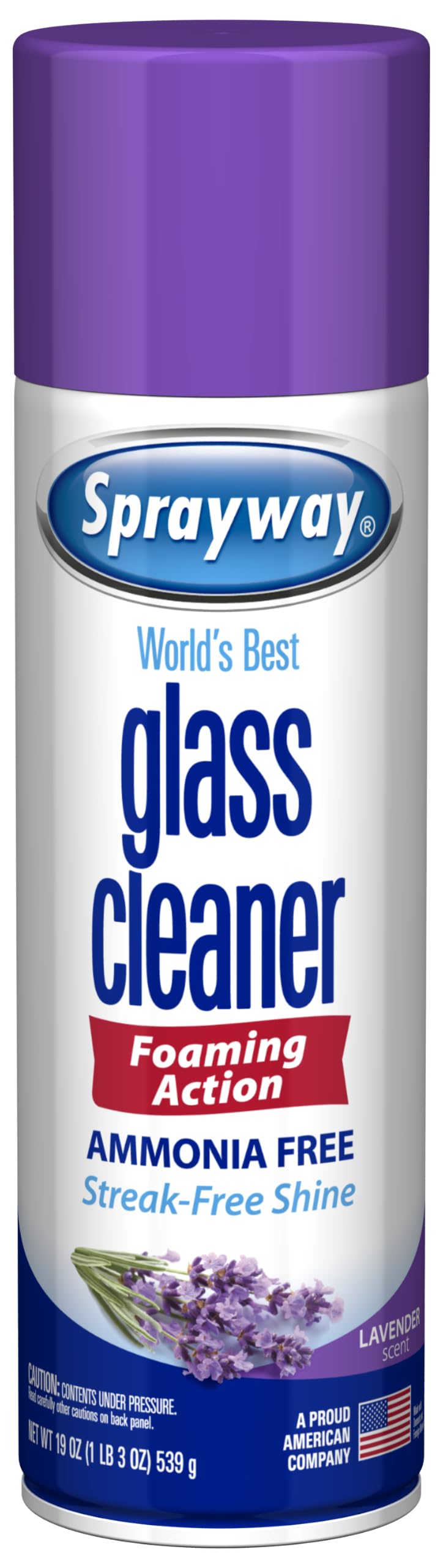
1. Sprayway Glass Cleaner 19oz Pack of 6
Our pick — 4.5+★ from 17,500+ verified ratings; the strongest balance of quality and price.
The clinging foam that lets one light spray do the work of three.
This one wins because of its foaming action. Instead of a wet stream that slides down the pane, you get a light foam that grabs the glass and stays there. That gives it time to break down fingerprints, dust, dirt, and smoke film before you reach for the cloth. The foam also keeps the cleaner from running into your window tracks and drying there. With six 19 oz cans in the pack, you are set for a very long stretch of cleaning.
What wins people over is how clean it leaves the glass. It removes fingerprints, dust, dirt, and smoke film across all glass surfaces. Owners describe the finish as streakless with a fresh fragrance. A body shop that uses it every day on windshields, side and rear windows, and shop glass doors singles out how the foam clings instead of running. That saves time when you have a whole row of vehicles. One cleaning crew, after trying a long line of other products, said simply that this one is the best. Drivers cleaning beachfront salty sliding doors found that one light spray, a one-minute wait, and a hose rinse left them clear with no spots.
It is also more versatile than the label suggests. People use it on stainless steel appliances, on car carpets, and even on sunglasses and jewelry. The formula is ammonia-free, so you can take it to tinted glass and car interiors without worry. If you need one can that earns its cupboard space, this foam covers mirrors, windows, windshields, and the chrome around them.
Where it earns its place
- Foam clings to vertical glass so it does not drip down into the tracks
- Streakless finish with a fresh lavender scent that lingers pleasantly
- Ammonia-free, so it is safe on tinted glass and around car interiors
- Six cans in the pack keep a whole house or shop supplied
What to keep in mind
- Aerosol cans must be kept away from heat and punctures, unlike a plastic spray bottle
- If you only clean two mirrors a month, six cans is more than you will use quickly
Reach for this if: you want one product that handles mirrors, windows, car glass, and chrome with a single pass.
Think twice if: you prefer a refillable spray bottle over aerosol cans.
2. Sprayway Glass Cleaner Case: 12 cans.
Twelve cans at once — for the person who cleans a shop, a fleet, or every window in the house.
This is the same foam-in-a-can idea in a much bigger box. Twelve cans ship together, and the full case weighs 17.39 pounds, so it is a committed purchase rather than a trial size. The formula is ammonia-free and leaves no residue, and the light foam will not run, which is the whole point on tall windows and glass doors you cannot reach easily.
What buyers go back for is the cleaning result. For shop windows and OEM tinted glass, the streakless finish and clean fresh fragrance keep them coming back. Take a household that mixes up a long list of brands: this one ended up being the keeper, and the note was that it works better than ammonia-based cleaners. It also earns its place away from the glass — one home uses it on a workbench, on the windows of an old hot rod, and on carpet, wood floor, and tile cleanups around the house.
The honest catch is the spray cap. This style of cap has to be thrown away if it drops and breaks, unlike a conventional spray bottle you can just swap the head on. And if you are fussy about a perfect finish, expect more than one pass on built-up residue before it comes fully clear. Buyers also report that a few cans arrived with cracked tops, though the seller replaced them promptly.
Built for volume: A dozen cans of the same foam people trust on tinted car glass makes the most sense for cleaners, detailers, and big households with lots of glass.
The trade-off to accept: Cans are heavy and the caps are not replaceable, so plan a spot to store the case upright and out of the way.
Stock up if: you clean a lot of glass and want one order to cover months of work.
Not for you if: a single can would last you an entire year.
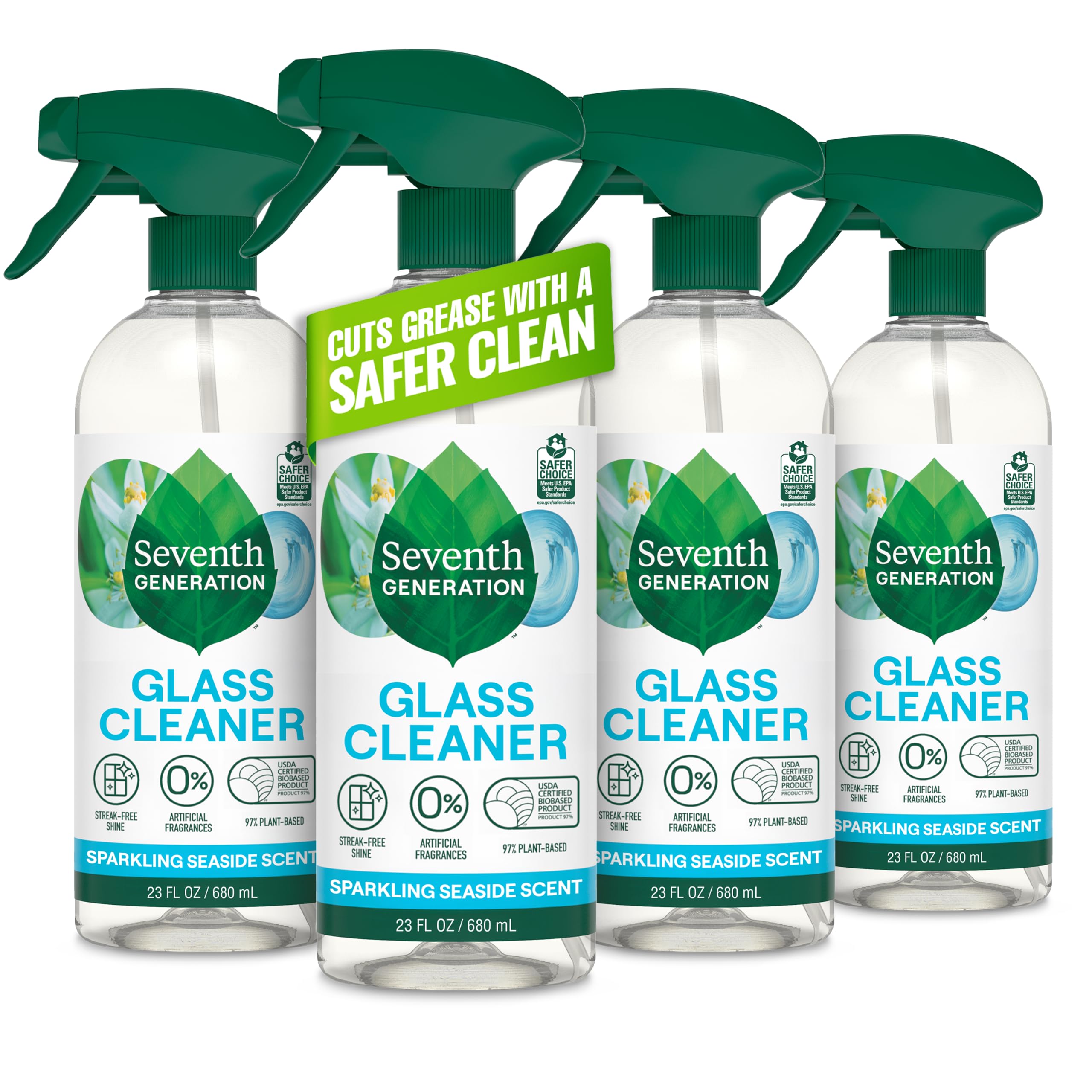
3. Seventh Generation Glass Cleaner 23 oz 4-Pack
Glass cleaner that skips the harsh fumes without giving up the shine.
If the smell of a cleaner is what stops you from using it, this one is built differently. The Sparkling Seaside scent comes from 100% essential oils and botanical ingredients, and the bottle lists 0% VOCs, meaning no volatile organic compounds, plus no artificial fragrances, dyes, or harsh fumes. That makes it a comfortable choice for a closed bathroom, a nursery, or anywhere someone is sensitive to chemical odors.
It leaves glass, mirrors, and stainless steel clean with a streak-free finish and no rinse. The formula leaves glass, mirrors, and stainless steel clean with a streak-free finish. It works on chrome, mirror, plate glass, and more. There is no rinsing needed — you just spray and wipe. People who clean with plant-based products tend to stay loyal to this brand. The recurring theme is how much more effective it feels than a conventional blue cleaner, plus how far a small amount goes on a large surface like a mirror or windshield.
There is one thing to know before you commit. Streaking divides opinion here: many people report a perfectly clear finish, while others see some marks, and the wiping cloth and technique make a real difference. It also carries a price that reflects the plant-based formula. Start with a fresh microfiber and a light touch, and most of the complaints disappear.
Who it suits: Homes that want a low-fume, essential-oil approach on galss, mirrors, stainless, and chrome.
The catch: Results on streak-free shine vary with cloth and method, so a clean microfiber and a light hand are part of the deal.
Choose it for: a gentler-smelling, plant-based cleaner that still leaves a clear shine.
Look elsewhere if: you want the most aggressive solvent power for caked-on outdoor grime.
4. Invisible Glass Glass Cleaner Pack of 4

Aimed squarely at the windshield haze and road film the home sprays leave behind.
This is the one to grab when the glass in question is on a car. The formula is designed to strip fingerprints, smudges, grease, and road film from windshields and side windows for a streak-free finish, inside and out. It is ammonia-free, which means it is safe for factory and aftermarket tint, so you can clean interior glass without the film going cloudy. The set ships as four 16 fl oz spray bottles.
On car glass, it beats the ordinary window cleaner — a first pass lifts nearly all the interior oil and grime, and a second leaves the windshield clear. Effectiveness is the headline here, and the pattern across buyers is that it beats the ordinary window cleaner on car glass. It is a controlled spray that coats evenly and lifts dirt for a fast wipe-off, and it cuts through haze and buildup without residue. People who clean interior windshields say a first application removes nearly all the oil and grime, and a second pass leaves the glass clear.
The honest catch is twofold. The scent splits opinion — some love it, others find it strong. And on chrome or stainless steel appliances it is not the star of the shelf; a dedicated cleaner handles those better. It is also the pick with the smallest bottles of the group, so heavy users may find themselves reordering.
Reasons car owners keep it
- Ammonia-free and safe on factory and aftermarket automotive tint
- Cuts road film and interior haze on windshields in a pass or two
- Controlled spray coats evenly for a fast, low-mess wipe
- Formulated, manufactured, and distributed in the USA
Where it gives ground
- The scent is a love-it-or-leave-it point
- Not the pick for stainless steel appliances — glass-specific strength
For the driveway detailer: this is the bottle that lives in the garage and keeps tinted glass clear.
For the kitchen all-rounder: a dedicated multi-surface glass cleaner fits better than this car-first formula.
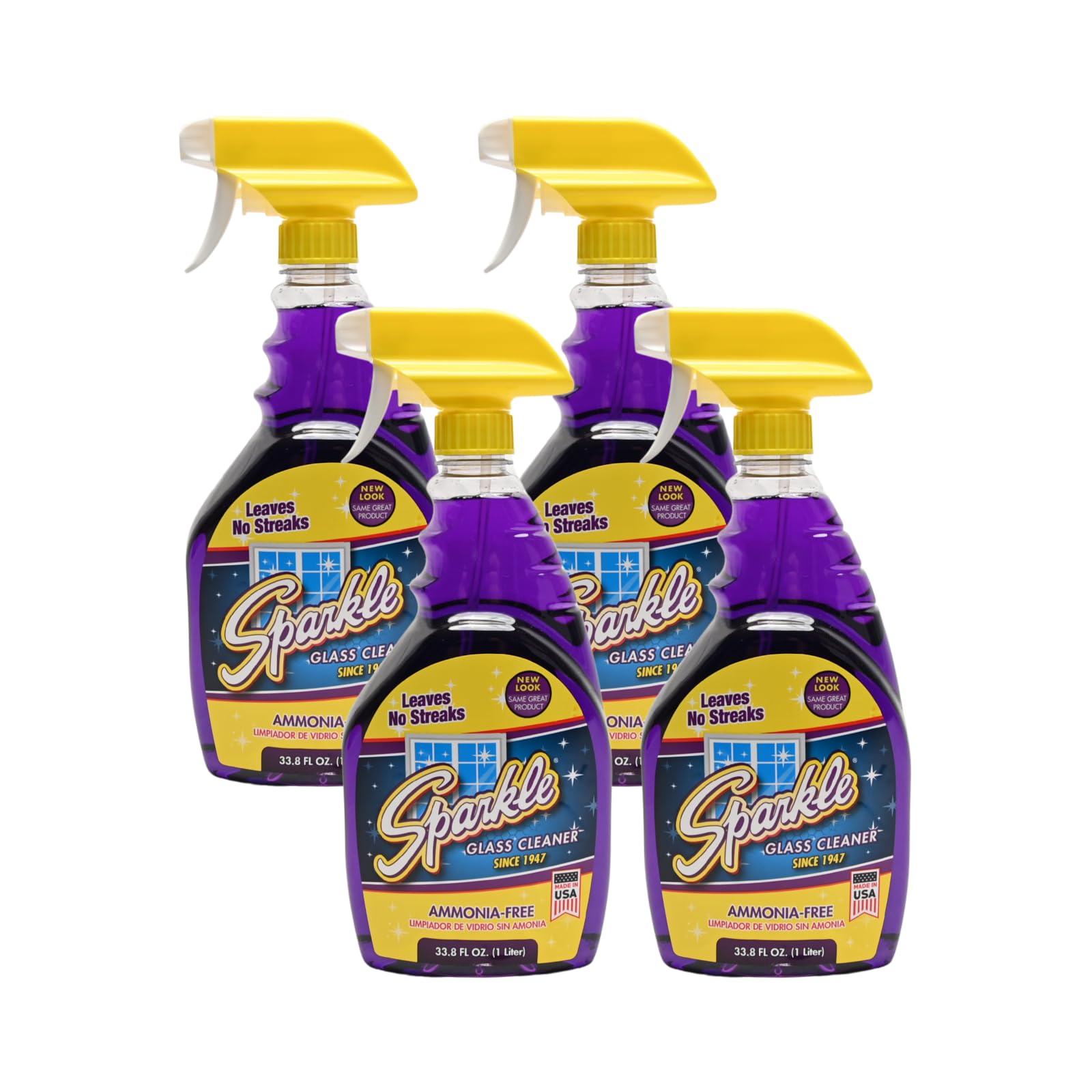
5. Sparkle Glass Cleaner 33.8 fl oz Pack of 4
The big-bottle workhorse for anyone cleaning windows every single week.
Thirty-three point eight fluid ounces per bottle, four to a set — this is the most generous supply here, and it is the pick for people who clean often rather than once a season. The ammonia-free formula is described as streak-free, and it works on windows, mirrors, glass tables, shower doors, and chrome fixtures, which covers most of the glass in a home or office. You spray and wipe, and it cuts through buildup without a rinse.
Owners talk about the cleaning performance, and customers reach for it for exactly that reason. It removes dirt, smudges, fingerprints, and grease for crisp glass. A family tradition carried down from a mother’s cleaning routine became a lifelong choice, and the note is that it works both full strength and diluted. Pet owners find it cuts through nose prints and paw prints on the windows without constant redo.
What to keep in mind: the scent is pleasant and mild, but the large bottles are heavier to hold for long cleaning sessions. Also, the formula is not formulated specifically for automotive tint the way the Invisible Glass is. For weekly house windows, mirrors, and shower doors, the 33.8 fl oz bottles and streak-free formula get the job done.
Where it wins: Frequent whole-house or office cleaning, where large 33.8 fl oz bottles and streak-free results do most of the work.
The fit to consider: If your main target is tinted car glass, choose a formula built for automotive film instead.
Go for it if: you clean a lot of glass and want a big, dependable bottle in each room.
Pass if: you need a specifically automotive formula for a tinted windshield.
Know the Specs
Format: Foam Versus Liquid Spray
A foaming aerosol releases foam that clings to vertical glass instead of running, giving the formula time to soften grime before you wipe. A liquid spray bottle is simpler and easier to refill, but on tall windows or windshields you work faster when the product stays where you sprayed it.
Ammonia-Free
Ammonia is a strong solvent that can cloud aftermarket window tint and is harsh on interior trim. An ammonia-free formula is the safer choice for tinted glass, car interiors, and closed rooms, and all five picks here carry that label.
VOCs And Scent
VOC stands for volatile organic compounds — the fumes given off by solvents. A formula labeled 0% VOCs has no such fumes, and a scent derived from 100% essential oils gives you a gentler smell than a harsh chemical one.
Bottle Count And Size
The volume in each bottle and the number of bottles in the set decide how long a purchase lasts. A 19 oz aerosol is easy to store, a 33.8 fl oz spray bottle lasts through many cleanings, and a 12-can case suits a shop, a fleet, or a big house with a lot of glass.
Common Questions
Is a foaming cleaner better than a liquid spray on windows?
Can I use a glass cleaner on a tinted car window?
Will glass cleaner also clean stainless steel and chrome?
How many windows will one can or bottle clean?
What does 0% VOCs mean on a glass cleaner?
Why do I still see streaks after cleaning?
Should I buy a case of cans or a few large spray bottles?
Is it safe to use around pets and children?
The Bottom Line
The pick that earns its shelf space for most homes is the Sprayway Lavender Foaming Aerosol, because the clinging foam and streakless finish make short work of mirrors, windows, and car glass alike. If you clean a lot and want one order to last, the Sprayway 12-can case keeps you supplied. For tinted car glass and windshields, reach for the Invisible Glass spray — it is built for road film, not kitchen cabinets. And if you want a gentler-smelling, plant-based bottle, the Seventh Generation fills that role. Choose by the surface you clean most — tinted car glass, stainless appliances, or whole-house windows — and you will get a clear finish on the first pass.
How we choose
We do not accept paid placement. Every pick is matched to a real buyer and a real use-case; we do not hands-on test units.
Sources
Specifications: manufacturer listings and product documentation. Review insights: verified customer reviews, as of October 2026. Pricing: not shown on this page (it changes often); check the current price via the retailer link.
As an Amazon Associate, Aappliancez earns from qualifying purchases. This does not affect which products we feature.