Disclosure: Some links in this post are affiliate links. As an Amazon Associate I earn from qualifying purchases, at no extra cost to you. Learn more
Specs are compiled from manufacturer listings and verified buyer reviews and can change over time — please confirm the key details on the product page before buying.
You want a lock that opens when your hands are full of groceries and still lets you check the door from a hotel room. That is the whole point of a Wi-Fi smart lock, and it depends on three things: a reader that works every time, a battery that does not die on a Tuesday, and a deadbolt that fits the hole already in your door. The picks below get those three right, sorted by what they do best rather than by their sticker.
This guide is built by comparing the manufacturers’ published specifications and the patterns across verified customer reviews, so you get each pick’s real strengths and trade-offs instead of marketing spin.
Below you will find the reader types explained, the door-thickness numbers that decide whether an install takes 15 minutes or three hours, and the battery habits that separate a happy owner from a frustrated one. The picks here reflect the best WiFi Smart Locks for a normal person upgrading one front door.
Top Picks

How To Choose The Best WiFi Smart Locks
Most people buy the wrong lock for one of two reasons. They pick the fanciest biometric reader and then discover their front door is 1-1/2 inches thick with a backset that does not match. Or they buy a lock that runs on eight AA cells every couple of months and resent it. Get the install and the power source right first, then choose the reader.
The reader decides your daily experience
A fingerprint reader scans the ridges on your fingertip. A palm-vein reader looks at the blood-vessel pattern under the skin, so it does not care about a callus, a paper cut, or a damp hand from washing dishes. Palms tend to fail less often for older users and kids whose prints are still developing. Fingerprints are quicker to register and cheaper to build into a lock.
Whichever you pick, add a keypad code and a physical key as fallbacks. A biometric reader is a convenience layer; the deadbolt itself is what keeps the door shut.
Wi-Fi, hub, and what “remote” really means
A lock with built-in Wi-Fi connects straight to your router, so you can lock or open up from your phone anywhere. Some locks need a separate gateway or bridge before you get that reach. Built-in is simpler, but it costs battery because the radio stays awake to hold the connection.
Almost all of these locks use the 2.4GHz band only, which is the slower but longer-reaching Wi-Fi signal. If your router shares one network name for both bands, you may need to split them or move the lock closer. Keep the router and the lock within 65ft for the strongest remote performance.
Battery chemistry and the numbers that matter
There are three power camps here. Rechargeable lithium packs, like the Tapo’s removable pack or the TCL’s 10,000mAh cell, give you a USB-C top-up and no battery shopping. AA alkaline locks are cheap to feed but eat cells fast. One honest note: an auto-lock that fires every time the door closes uses more power, so longer auto-lock delays stretch battery life.
Watch for a low-battery warning in the app and keep a physical key outside your house as backup. A dead battery should never be a lockout.
Side-by-Side Comparison
| Model | Best For | Entry Methods | Power | Door Fit | Amazon |
|---|---|---|---|---|---|
| Tapo DL110★ Best Overall | Best overall | Fingerprint, code, app, Bluetooth, voice, key | Rechargeable pack, 1-year life | Standard deadbolt | Amazon |
| Philips Smart DeadboltBest Value | Multi-method budget | App, code, fingerprint, key, voice | 8 AA (not included) | Standard deadbolt | Amazon |
| Veise VE027-KMost Versatile | Full lockset + knobs | App, 0.2s fingerprint, IC card, 100+ PIN, key, voice | 8 AA, up to 240 days | 1-3/8″ to 2″ thick | Amazon |
| Veise VE017G-H | Handle-set upgrade | Voice, 0.2s fingerprint, app, code, card, key | 4 AA, up to 300+ days | 1-3/8″ to 2″ thick | Amazon |
| Philips Fingerprint Set | Touchscreen handling | Fingerprint, PIN, key, app | 8 AA | 1-3/8″ to 1-3/4″ thick | Amazon |
| TCL D2 Pro | Palm-vein on a budget | Palm vein, code, app, voice, NFC, key | 10,000mAh rechargeable | 1-3/8″ to 2-1/8″ thick | Amazon |
| Lockin Veno Plus | Lock + camera in one | Palm vein, fingerprint, app, key | Rechargeable | Standard deadbolt | Amazon |
| Schlage Encode Lever | Rental host tool | App, keypad code, key | Batteries included | Standard one-hole door | Amazon |
| Lockly Visage Zeno | Face open up + HomeKit | Face, fingerprint, app, keypad, key, Home Key | Two rechargeable packs | 1-3/8″ to 3-1/8″ thick | Amazon |
Detailed Reviews
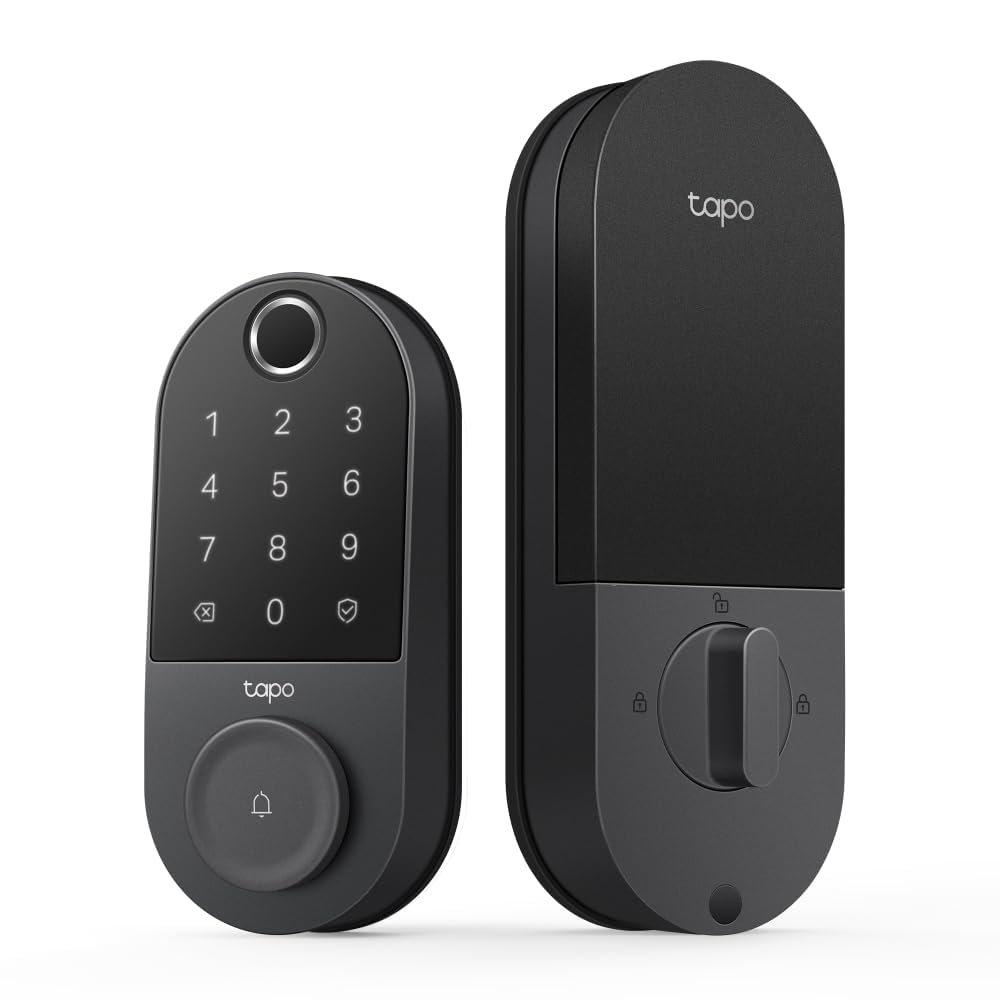
1. Tapo Smart Wi-Fi Door Lock DL110
Our pick — 4.5+★ from 800+ verified ratings; the strongest balance of quality and price.
A 0.42-second fingerprint read that opens the door before your hand settles on the handle.
The Tapo DL110 is the crowd favorite for a reason you notice on day one: the fingerprint sensor reads your print in 0.42 seconds, and you can register up to 100 different fingerprints. That is enough for the whole family plus a regular sitter, and it means nobody stands on the porch wiping their hands on their jeans before trying again. It carries a BHMA Grade 2 rating, which is a third-party durability grade from the Builders Hardware Manufacturers Association for how much abuse a lock survives.
Power is the other reason it takes the top spot. The DL110 runs on a removable, rechargeable battery pack that is rated for a full year of continuous operation, and it recharges through a USB-C port. No hunting for AA cells at 10pm. You can also manage guests properly: permanent resident codes for family, plus one-time or scheduled codes for a cleaner or a delivery. And because it connects over both Wi-Fi and Bluetooth, you can open up from the car when you are two minutes away.
Nothing is perfect. The self-lock timer only offers a few preset delays rather than a full slider, and the fingerprint setup asks you to clean the sensor a few times before it settles. The doorbell button is easy to brush by accident when you are carrying something through, though you can switch those alerts off. If you want granular automation, this lock is not the most programmable of the bunch.
What earns it first place
- 0.42-second fingerprint read with 100 fingerprint slots
- Removable USB-C rechargeable battery rated for a full year
- Six access routes including Bluetooth close-range and included backup keys
- BHMA Grade 2 durability grade
- Slim 5.91 x 2.69 x 1.29 inch housing that sits tight to the door
Where it holds you back
- Self-lock offers only a few preset delays instead of a wide range
- No Matter support and limited advanced automations
- Doorbell button can trigger false alerts from door traffic
Grab this one if: you want the fastest finger read, a battery you recharge instead of buy, and remote access without an extra hub.
Pause if: you need deep home-automation rules or a wide range of auto-lock timings.
2. Philips Wi-Fi Smart Deadbolt Lock
Five ways in the door and a handleless build that fits the smallest deadbolt footprint on this list.
The pitch on this Philips is flexibility. You get app control, a keypad passcode, a fingerprint reader, a physical key, and Alexa or Google voice, all on one lock. It stores up to 100 custom passcodes and lets you share unlimited one-time or scheduled codes, which is the feature that makes it sing if you run a short rental or have a rotating string of dog walkers. The aluminum body measures 6 x 2 x 1.5 inches, so it slots into a standard deadbolt bore without a handle set crowding the door. The Tapo runs 5.91 x 2.69 x 1.29 inches, so this one is the tighter of the two.
What wins people over is that fingerprint reader. It is the most-praised feature by a wide margin, and the results back it up in daily use. Buyers get the whole family’s prints saved and stop handing out keys. The value read is close behind, which is why it sits at the value slot rather than the premium one. The auto-lock is adjustable from 10 to 180 seconds, with a sensible caveat: there is no door sensor, so the lock only auto-locks correctly when the door is actually shut. If someone props the door open, the bolt will extend anyway.
Now the honest part. This lock is hungry. Buyers report the battery draining fast enough that they are swapping cells far more often than the one-year rating on other picks here, and durability over the long haul has been questioned. You will need eight AA alkaline batteries, which are not included, and the maker is specific that you should use alkaline only. Plan to buy a multipack and keep spares on the shelf.
The fingerprint story: fast, reliable for the whole family, and the reason most people choose it over the cheaper keypad-only options.
Plan for the batteries: eight AA cells are not in the box, so budget a pack up front rather than a midnight run to the shop.
The right fit: a private home or small rental where the fingerprint open up matters more than a battery that runs a year.
Worth knowing: that 65ft router range is not a suggestion. Push the lock too far from the router and remote open up gets sluggish.
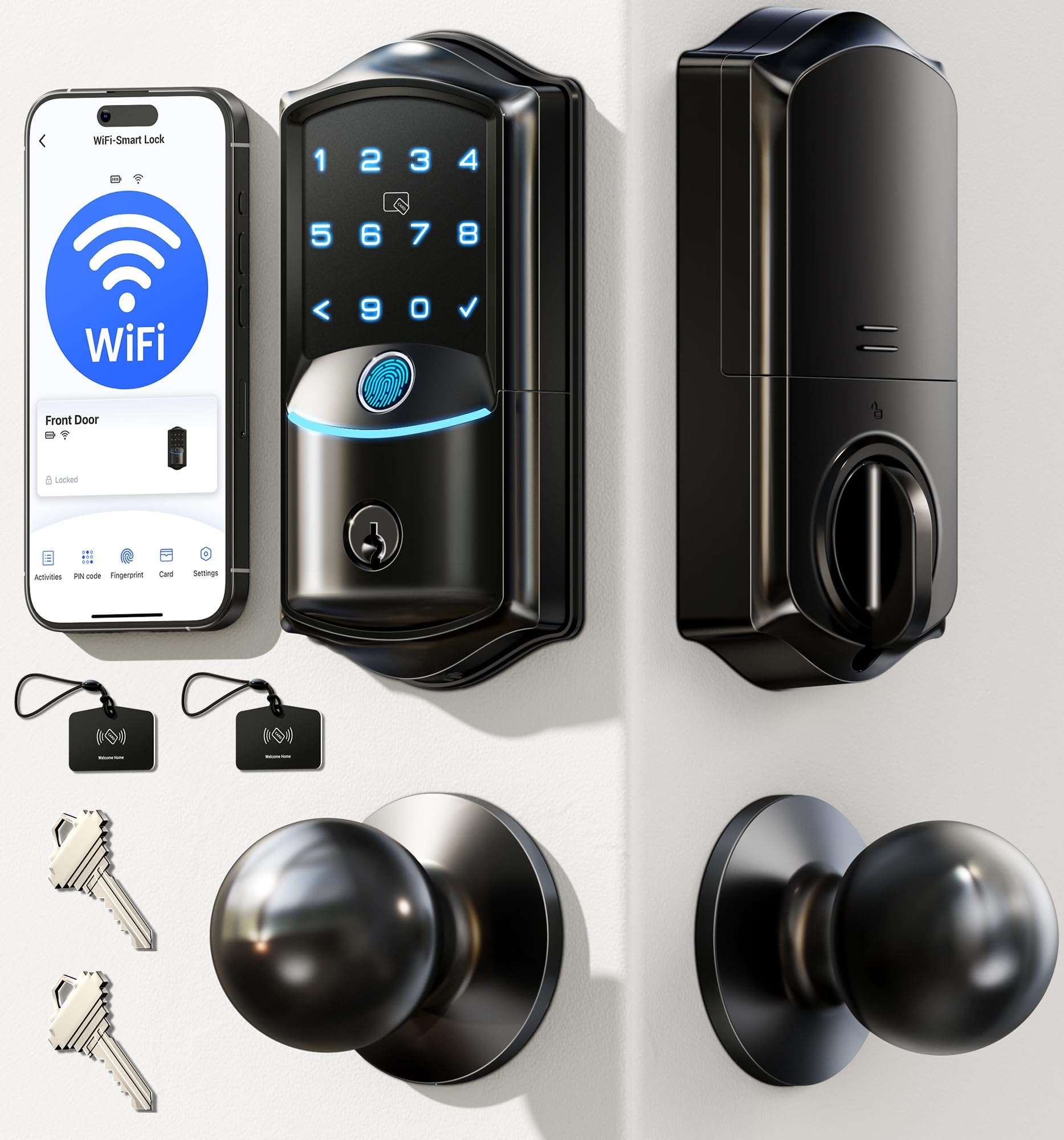
3. Veise VE027-K WiFi Smart Deadbolt with 2 Knobs
A matched matte-black deadbolt and two-knob set, so the whole door gets one finish instead of a shiny mismatch.
If your front door still has an old brass knob next to your new smart deadbolt, this kit solves that. It ships as a matched pair with two knobs in matte black, so the whole door gets a coherent look instead of a shiny mismatch. Under the finish, the deadbolt is built to BHMA/ANSI Grade 3 standards, an industry durability grade, and carries an IP65 weatherproof rating, which means it is sealed against dust and water jets. It is designed for standard US doors 1-3/8″ to 2″ thick, and it auto-detects whether your door swings left or right.
The fingerprint entry here runs on a 608DPI sensor (a measure of how finely the sensor reads the print) with AI self-learning. The maker rates it at 0.2 seconds and 99.99% accuracy and lets you store up to 20 fingerprints. In practice that is the feature buyers rely on most, followed closely by the easy install and the app’s real-time access log. The eight AA batteries are rated at up to 240 days, and the lock is IP65-rated, which is why it suits an exposed porch. You also get two IC cards in the box, a handy option for someone who does not want to use their phone.
The catch is battery discipline. One blunt review notes the cells ran down about once a month, which is the trade-off of running Wi-Fi and an auto-lock at the same time. If your door is in heavy traffic, keep a spare pack of AA cells nearby. The rest is small: an occasional single note about a wobbly handle after a few weeks and a short auto-lock ceiling of 3 minutes.
What the upgrade buys you: a complete matched handle set in matte black, so an old mismatched knob does not spoil the look.
Best for: a busy family home that wants two knobs, a keypad, IC cards, and voice control in one box.
Reach for this if: you are replacing both the lock and the knob and want the same finish on both.
Look elsewhere if: you want to keep your existing handle and only swap the deadbolt.
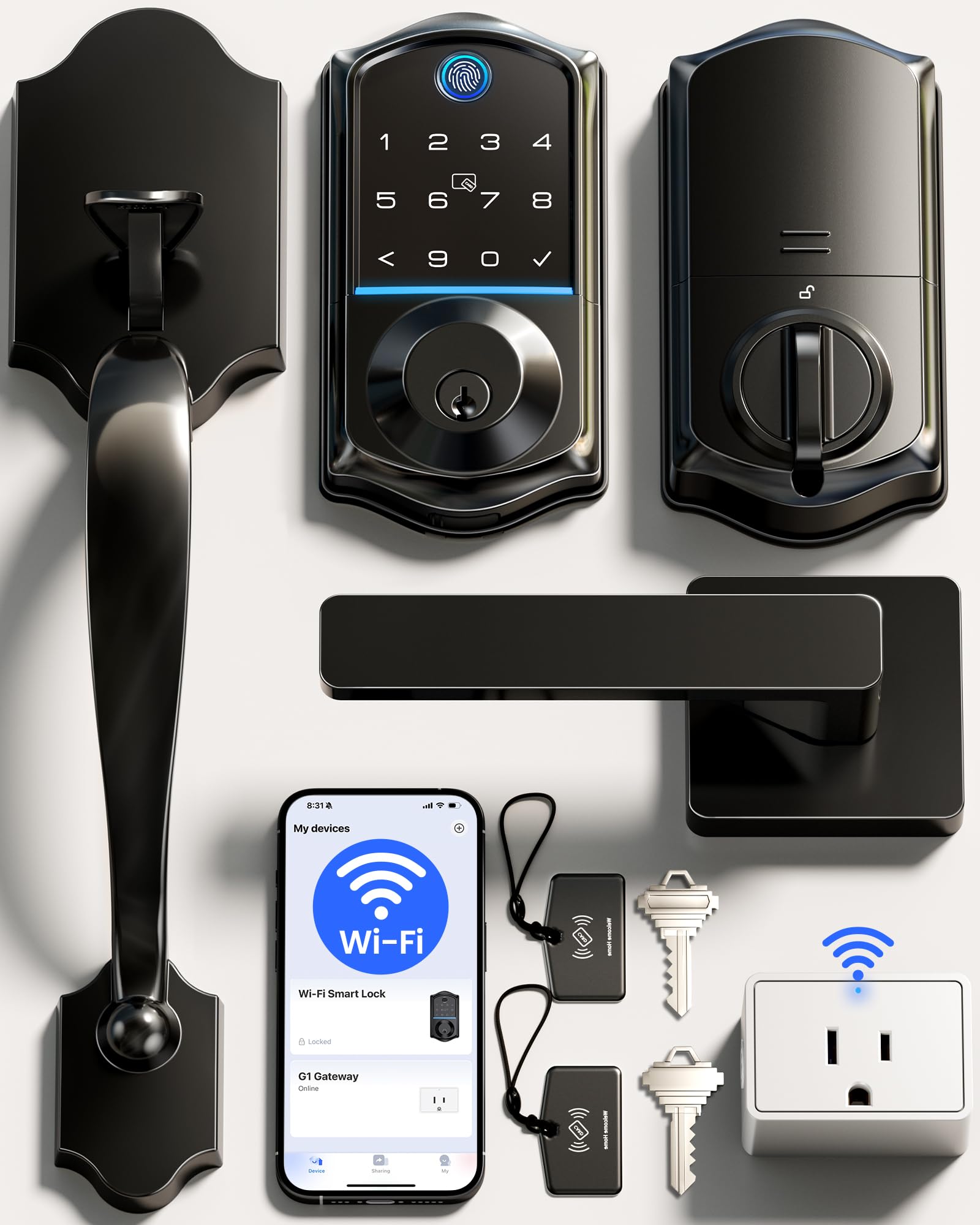
4. Veise VE017G-H Wi-Fi Smart Door Lock with Handle Set
Four AA cells instead of eight, a zinc-alloy handle set, and a 300+ day battery rating.
The most striking spec on this Veise is the power budget. It runs on four AA batteries, half as many as the eight-cell locks here, and it is rated for up to 300+ days of use. In a category where battery anxiety is the top daily complaint, that is a real comfort. The handle set is zinc alloy, so it feels substantial in the hand, and the deadbolt carries an ANSI Grade 3 and BHMA testing rating. It installs with a screwdriver in about 15 minutes and fits standard US doors 1-3/8″ to 2″ thick.
What everyone notices first is the install. It is the most-praised aspect by far, followed by the appearance. That handle set makes it look like a proper front door upgrade rather than a bolt-on gadget, and buyers who replace a seven-year-old deadbolt with this one say the squared-off look still reads as deliberate. In the app, you can create unlimited one-time codes and 100+ permanent, duration, or recurring codes, and delete or change any of them from your phone. The Wi-Fi gateway in the box also turns other VE01 series locks into Wi-Fi locks, so a second door can join the same system.
The honest limit: this one is noticeably larger to install than a bare deadbolt. One owner needed to drill a fresh hole because the handle was 0.5 inches shorter than the old one. The 0.2-second fingerprint and 99.99% accuracy work well, though the reader wants a deliberate placement of the finger. If your door already has an unusual old handle, measure before you order.
Why it earns its slot
- Up to 300+ days from just four AA batteries
- Zinc-alloy handle set upgrades the full door, not just the bolt
- Unlimited one-time codes plus 100+ permanent or scheduled codes
- Alexa and Google voice control on a 2.4GHz Wi-Fi connection
Measure before you order
- Handle set can sit 0.5 inches shorter than an old handle, requiring a new hole
- Auto-lock tops out at 180 seconds, so long delays are not an option
Reach for this if: you want the handle and the lock to be one matched purchase and you hate changing batteries.
Check first if: your existing door hardware is an unusual length or shape.
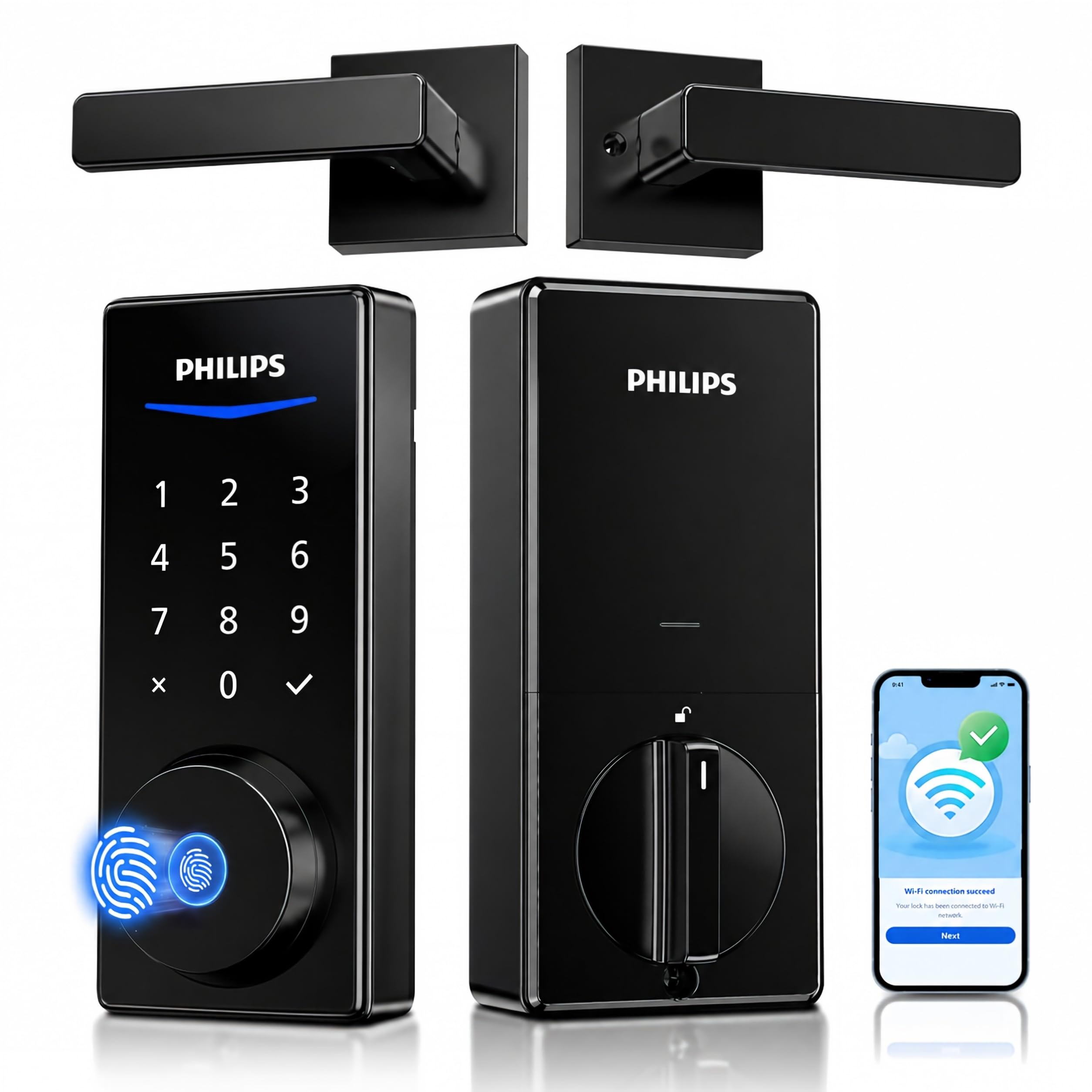
5. Philips Fingerprint Door Lock with Touchscreen
A touchscreen that stays black until you tap it, on a lock rated for up to nine months per set of AA cells.
The detail that sells this Philips is the touchscreen. It stays black until you tap it, so the keypad does not advertise itself, and it responds even when it is wet or grubby. That “tap to wake” behavior is a small thing that makes the lock feel considered. It stores up to 50 fingerprints, holds unlimited one-time PINs and 100 user PINs, and the one-time codes self-delete after one use, which is exactly what you want for a dog sitter who should not come back twice.
Battery life is the headline number: up to nine months. The trade-off is real battery use with heavy traffic, so keep an eye on the app’s low-battery icon. What wins the most praise here is build quality, followed by functionality, and the heavy aluminum body justifies that. Connection is built-in 2.4GHz Wi-Fi with no hub needed, and Alexa or Google can lock or check the door with voice. It uses eight AA batteries, which are included.
Two things to know. First, there is no door sensor, so the auto-lock only does its job when the door is fully closed. The maker is explicit about this, and the auto-lock will engage even if the door is ajar, which is the one real behavior you have to retrain yourself around. Second, some owners say the battery drains faster than the nine-month rating suggests when the lock is used often. If your door swings a dozen times a day, plan for an earlier swap. The touchscreen and fingerprint read stay strong through it.
The standout: a backlit keypad that hides until touched, so the entry point stays discreet and readable at night.
The honest limit: no door sensor means the auto-lock cannot tell a shut door from a propped one.
Choose it if: you want a low-profile touchscreen, a proper handle set in the box, and up to nine months on a set of cells.
Talk yourself out of it if: you leave the door open in summer and depend on the auto-lock to catch you.
6. TCL Smart Lock D2 Pro
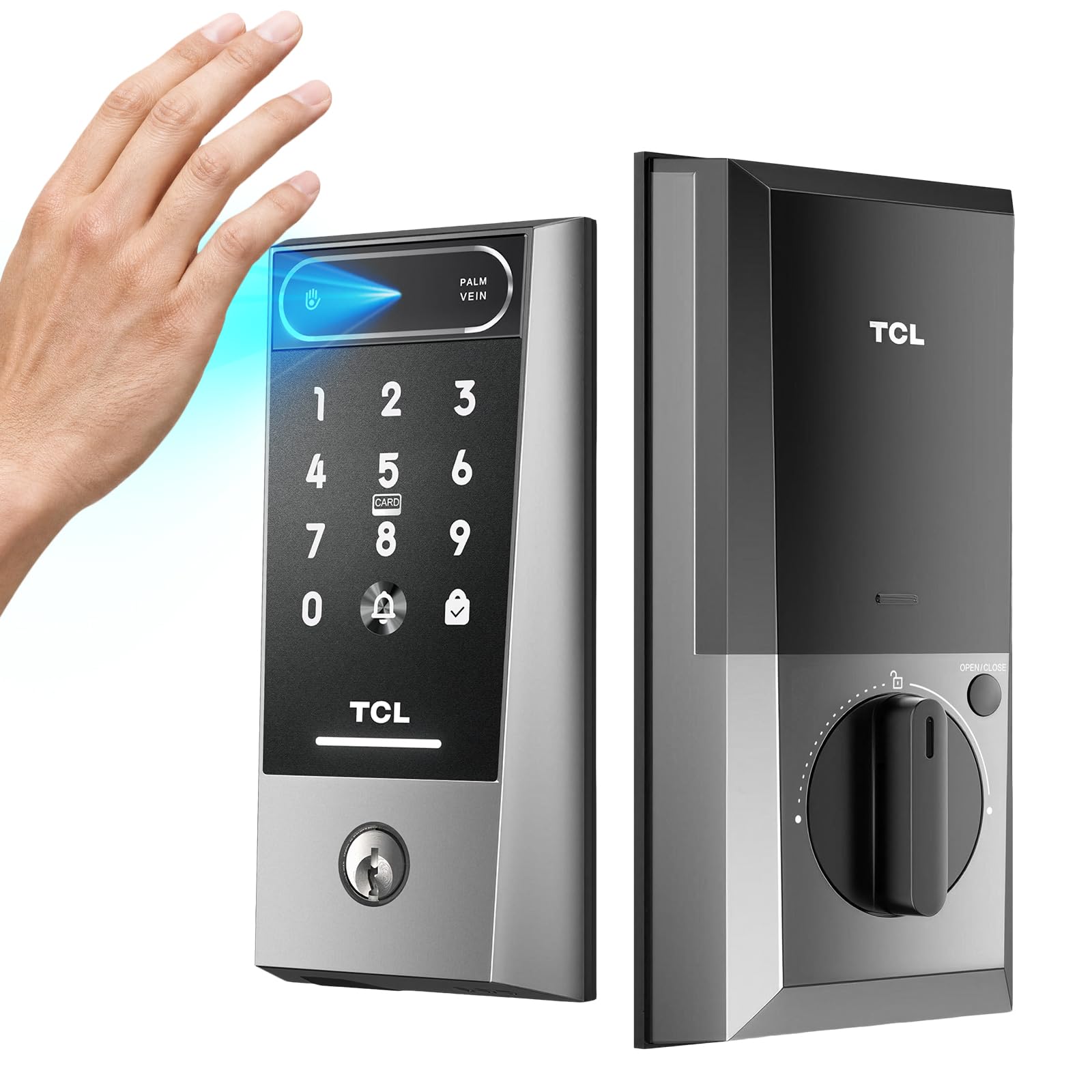
A 0.3-second palm-vein read that ignores wet hands, calluses, and worn fingerprints.
Palm-vein technology is the reason this lock exists. Instead of scanning ridges on a fingertip, it maps the vascular pattern beneath the skin, which the maker rates at 99.999% precision with a 0.3-second read. That matters if you have a worn print, dry skin in winter, or kids whose prints are still changing. It also means you can come home with wet hands from the rain or a bag of groceries and still open the door without wiping your hands first. All biometric data stays on the device, not in the cloud.
Power is where it separates from the AA crowd. A 10,000mAh rechargeable battery gives up to 8 months of use on one charge, and a 20% low-power alert warns you before it dies. There is a USB-C emergency backup port, so even a flat pack can be topped up at the door. Six entry routes keep the lock flexible: palm vein, touchscreen code, the TCL Home app, voice via Alexa or Google, an NFC card, or a physical key. The design is IP55-rated, which means dust protected and safe against water jets, so weather is not a concern.
Two real caveats. The lock only speaks 2.4GHz Wi-Fi, and one owner could not get the Wi-Fi remote lock to work on a 5GHz fiber network at all. If your router only offers one band, check before you buy, because remote open up is the whole point of a Wi-Fi lock. Second, the app still has rough edges. The palm reader itself is what buyers rave about, and it is the best of its kind here, but expect to fiddle with settings. The all-metal frame and simple install are solid bonuses.
what separates it
- 0.3-second palm-vein read rated at 99.999% precision
- 10,000mAh rechargeable battery rated for up to 8 months
- IP55 weatherproofing and a USB-C emergency backup port
- Six entry methods including NFC cards and a physical key
Check before committing
- 2.4GHz-only Wi-Fi, so a 5GHz-only router is a problem
- App is workable but not polished
The right buyer: anyone with worn, dry, or hard-to-read fingerprints who wants the door to open on a palm alone.
Worth knowing: confirm your router broadcasts 2.4GHz before you count on remote open up.
7. Lockin Veno Plus Smart Lock with Camera
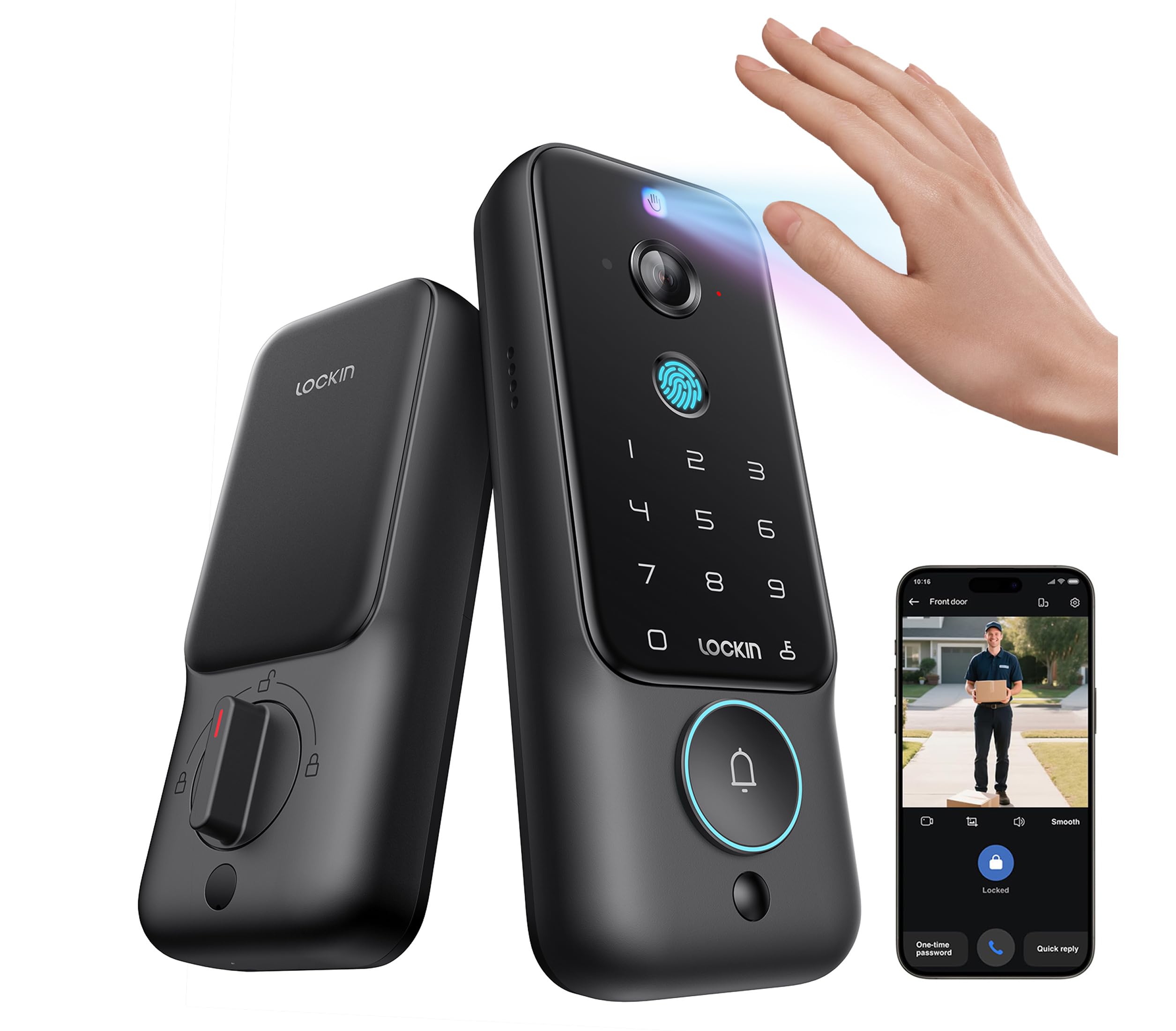
A keyless deadbolt, a 2K doorbell camera, and a built-in Wi-Fi gateway in a single aluminum unit.
This is the pick for the person who would otherwise buy a lock and a video doorbell separately. The Lockin Veno Plus folds a keyless deadbolt, a 2K camera, a doorbell, and a built-in Wi-Fi gateway into a single unit. The camera is ultra-wide at 180 degrees with IR night vision, so you see the whole porch after dark, and it stores footage on 8GB of local storage with no monthly subscription. That local storage is the part that separates it from nearly every doorbell camera, which want a plan to keep your clips.
open up is by palm vein or fingerprint, rated for a 0.17-second read with 99% accuracy, and it handles wet or worn hands without complaint. The 11 x 4.4 x 3.5 inch body is aluminum, and it supports Matter, Thread, and Wi-Fi, so it can talk to Apple HomeKit, Alexa, Google Assistant, and SmartThings. The most-praised aspect is reliability, backed by a large body of positive feedback, and the install is the second-strongest point. Auto-lock secures the door when it closes, and owners mention video clips and instant motion alerts that recognize people rather than just movement.
Battery is the one place to set expectations. Owners give mixed reports: some see 5-6 months between charges, and a few find it drains quicker. A camera draws far more power than a lock alone, so that spreads both ways. There is also one documented case of the bolt failing inside the first year and a warranty claim that stalled, which is a reminder to register the product early and keep your receipt.
The case for it: one box covers the lock, the doorbell, and the porch camera, and the local 8GB storage means no monthly fee.
The catch: a 2K camera and Wi-Fi together are heavy on the battery, so charge expectations are lower than a lock-only unit.
Best fit: a front door that needs eyes on the porch and a keyless entry in one piece of hardware.
Skip if: you want a single-purpose lock with the longest possible time between charges.
8. Schlage Encode Smart WiFi Lever
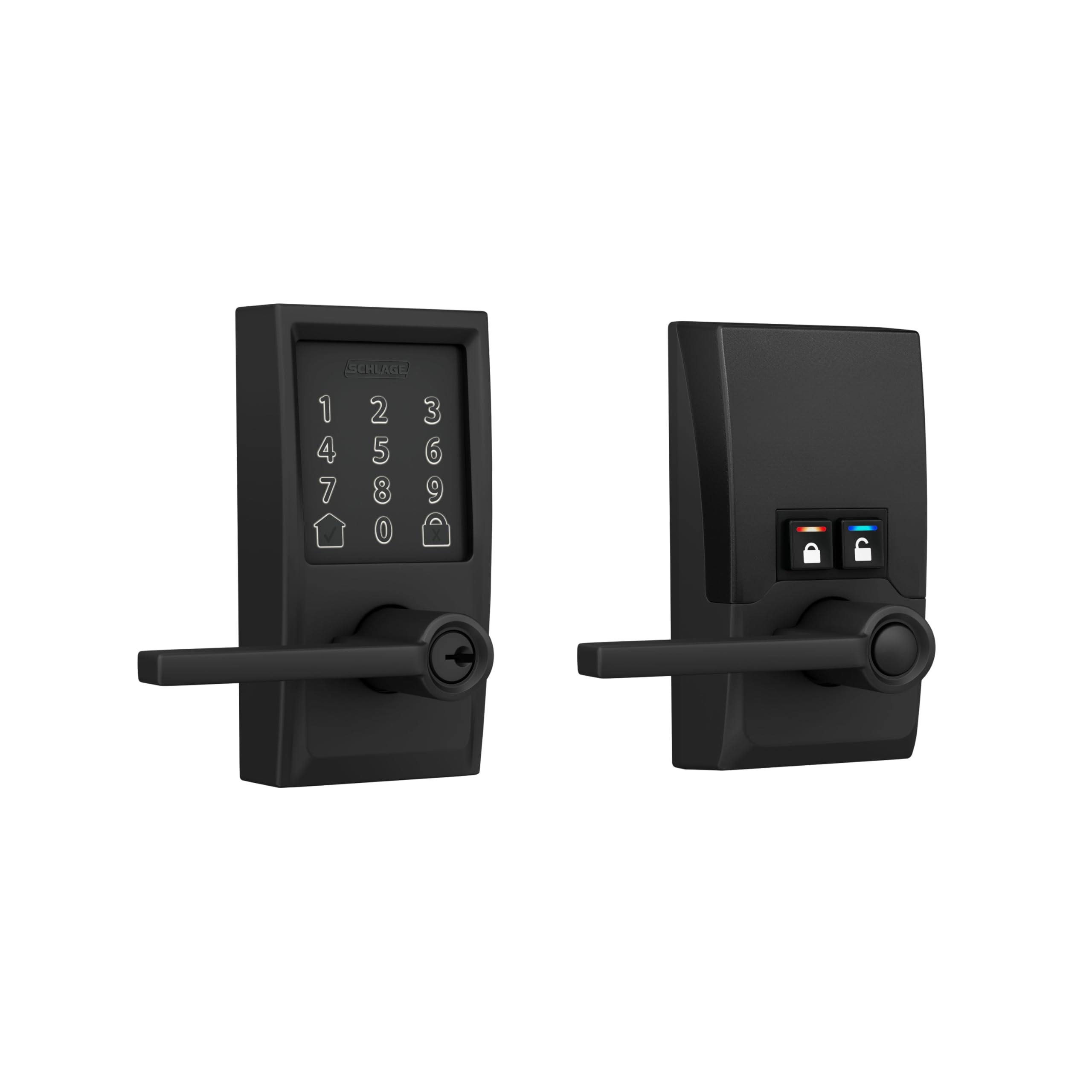
Over 200 app-managed codes, a built-in forced-entry alarm, and a lever that turns without a deadbolt’s clack.
For a short-term rental, the number that matters is codes. This Encode lever handles more than 200 of them, generated and revoked from the Schlage Home app, and it can pair with Airbnb to program a guest code per stay and wipe it after checkout. That one integration removes the key handoff entirely, which is why hosts keep coming back to this model. The lever turns silently unlike a noisy deadbolt, and the lock is certified by BHMA to the highest residential rating for security, durability, and finish.
Security features are unusually complete. There is a built-in alarm for door movement and forced-entry attempts, an encrypted Wi-Fi connection, and a fingerprint-resistant touchscreen. It works with Alexa, Google Assistant, Ring, and Airbnb, and it needs no hub. It includes batteries and fits a standard one-hole door, so the install is a 15-minute job for most. The premium finish and the matte-black lever make it one of the better-looking locks here.
The honest limitations. There is no fingerprint reader, so it is keypad and app only, and the Wi-Fi pairing can be finicky, needing a 5GHz band disabled on some mesh routers before it settles. A single sour review describes a unit that locked owners out after the return window, which is an outlier amid otherwise strong feedback. It also weighs 4.3 pounds, so door strain is worth a thought on an older frame. The app’s access-code control is genuinely excellent and covers the rest.
Why hosts gravitate to it
- Over 200 access codes plus Airbnb guest-code pairing
- Built-in alarm for door movement and forced entry
- BHMA top residential rating for security, durability, and finish
- Batteries included, no hub required
Worth knowing
- No fingerprint reader, so entry is keypad or app only
- Wi-Fi pairing can need a 5GHz band disabled on mesh routers
The right buyer: a host or landlord who needs a long list of codes and remote guest access without a key exchange.
Look elsewhere if: you want fingerprint or palm entry and do not care about rental code management.
9. Lockly Visage Zeno Smart Lock
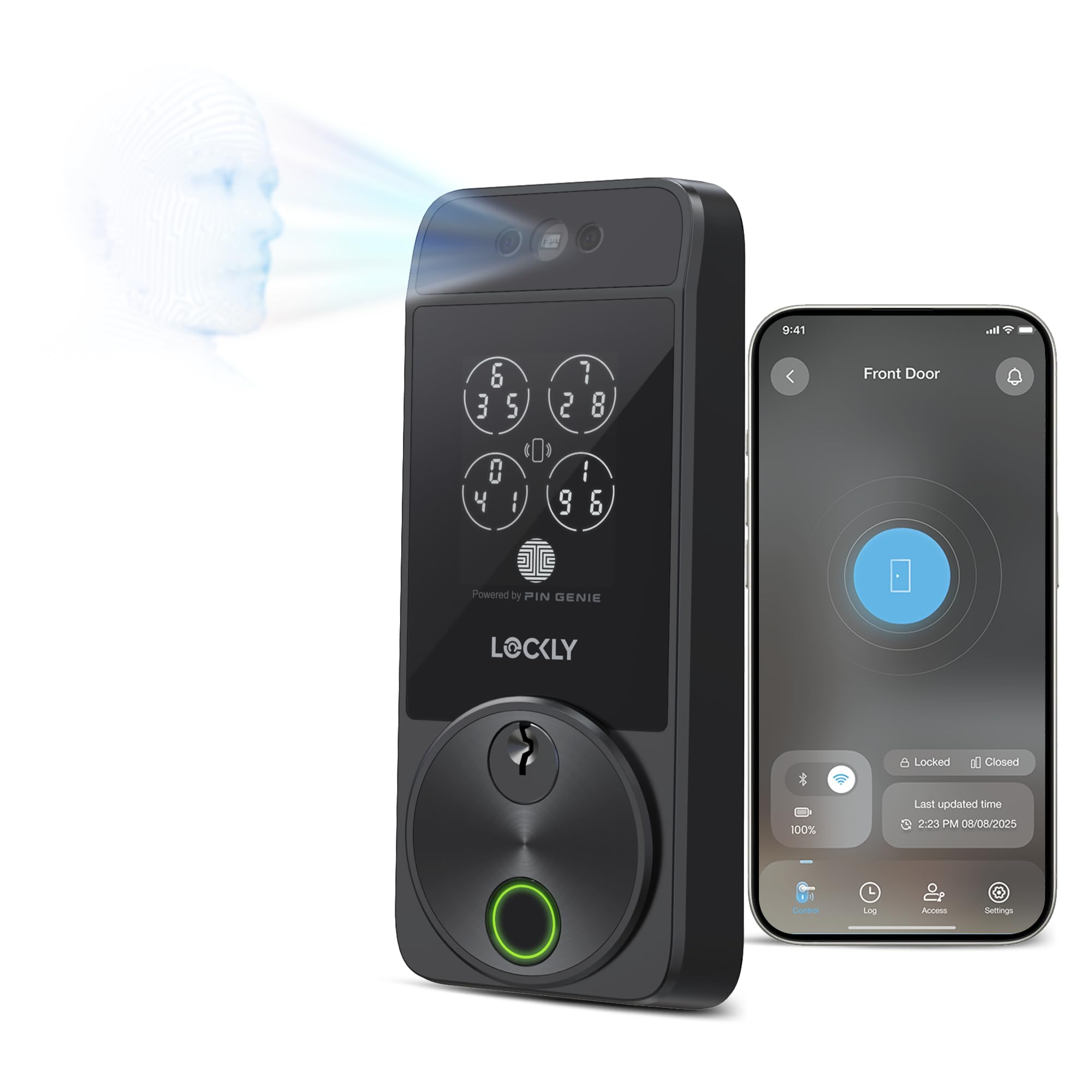
Dual IR sensors read your face in any light and retract the bolt, so a full armload never needs a free hand.
The whole appeal here is the face. Walk up to the door and dual infrared sensors (two sensors that read your face in the dark) detect and read your face in any light, including at night, then the bolt retracts automatically. For anyone carrying a toddler, a laundry basket, or a sack of shopping, that is the most liberating way to get inside. You can also open up with a 0.2-second fingerprint from a 3D sensor (a reader that maps your finger in three dimensions) that stores up to 99 prints, or by tapping an iPhone or Apple Watch on the lock with Apple Home Key (Apple’s tap-to-open up feature), which works even if your phone battery is dead. The face data is encrypted and stored on the device only.
Power is handled thoughtfully. Two rechargeable 10,000mAh batteries are included, plus a Type-C backup port, so one pack charges while the other runs the lock. A household with heavy use reports the first pack still at 28% after nine months, which is the standout spec of the whole list. It fits right or left swing doors 1-3/8″ to 3-1/8″ thick, which is the widest thickness range on this list, and the lock is IP65-rated against weather. Wi-Fi is built in with no bridge required, and the app is the most-praised aspect, followed by reliability.
The honest catch is in the details. The door-open sensor is the weak point: if the two magnet halves sit more than 3/4 inch apart, the auto-lock will not work as intended. Several owners simply remove the sensor and rely on lock status. The 15-minute install claim is generous on an old door, with 2-3 hours realistic for a first-timer, and the screen cover is a stick-on piece rather than hinged. None of that stops the face reader from being the best in its class.
Standout spec: two 10,000mAh rechargeable packs, with one household still on the first at 28% after nine months.
The catch: the door sensor wants its magnets within 3/4 inch, or auto-lock misbehaves.
Choose it if: you want true hands-free, face-first entry and the longest real-world battery life on this list.
Talk yourself out of it if: you expect a five-minute install on an old, badly bored door.
Know the Specs
Biometric readers: fingerprint vs palm vein vs face
A fingerprint reader scans the ridges on a fingertip, and it is fast and cheap but can stumble on a worn print, a dry winter hand, or a cut finger. A palm-vein reader maps the blood-vessel pattern beneath the skin, so it ignores surface wear and wet hands and works well for kids and older users. Face recognition adds infrared sensors so it reads your face in the dark, giving true hands-free entry. In all three cases, the reader is the convenience layer. The deadbolt is the actual security, so keep a key and a code as fallbacks.
Wi-Fi band, gateway, and remote reach
Built-in Wi-Fi means the lock talks to your router directly, so you can lock and open up from your phone anywhere without an extra box. A gateway or bridge is a separate hub you plug in to give an otherwise Bluetooth-only lock that same reach. Most locks here use the 2.4GHz band only, which reaches farther through walls but is slower than the 5GHz band. If your router shares one name across both bands, split them, or the lock may refuse to connect. Keeping the router and the lock within 65ft is the maker’s own guidance for reliable remote control.
Battery chemistry: AA cells vs rechargeable packs
The two main camps are AA alkaline cells, which are cheap to buy but heavier and need replacing, and built-in rechargeable lithium packs, which you top up through USB-C. Locks vary hugely: some take four AA cells, others eight, and the consumption depends on how often the auto-lock fires and how awake the Wi-Fi radio stays. A rechargeable pack rated for a full year or eight months is a real convenience, but heavy traffic shortens it. Look for a low-battery warning in the app and a physical key kept outside as backup, and never treat a dead battery as a lockout.
Door thickness and backset before you buy
Door fit is the most common surprise. Check your door’s thickness first: standard locks here support 1-3/8″ to 2″, and one wide-fit unit goes to 3-1/8″. Then check the backset, the distance from the door edge to the center of the bore hole, which is usually 2-3/8″ or 2-3/4″. A lock with a handle set, rather than a bare deadbolt, is more likely to need a new hole or a chisel adjustment. Measure a handle’s length before ordering if you are replacing an unusual old handle. The install itself is often a screwdriver job in 15 minutes.
Common Questions
Will a Wi-Fi smart lock work if the power or internet goes out?
Do I need a hub or bridge to lock my door from my phone?
How accurate is palm-vein entry compared with a fingerprint reader?
Is a fingerprint lock more secure than a keypad code lock?
What door thickness does a smart deadbolt fit?
Why does my smart lock only connect to 2.4GHz Wi-Fi?
How long do the batteries really last on these locks?
Is a smart lock worth it for an Airbnb or rental property?
Can I install a Wi-Fi smart lock myself without a locksmith?
The Bottom Line
For most people, the wifi smart locks winner is the Tapo DL110 because it pairs the fastest finger read at 0.42 seconds with a USB-C rechargeable pack rated for a full year, all without an extra hub (a separate box that connects the lock to your Wi-Fi). If the fingerprint reader is the feature you care about most and you have a large family or a short rental to manage, the Philips Wi-Fi Smart Deadbolt gives you 100 passcodes and five ways in, just plan for the AA cells. And if you want the door to open on a wet hand or a worn print, the TCL D2 Pro reads your palm in 0.3 seconds and runs up to 8 months on a 10,000mAh pack (a battery that holds 10,000 milliamp-hours of charge).
For true hands-free entry, the Lockly Visage Zeno reads your face in any light and keeps a spare 10,000mAh pack charged, while the Lockin Veno Plus folds a lock, camera, and doorbell into one box with 8GB of local storage (space on the lock itself, not the cloud) and no monthly fee. If you host renters, the Schlage Encode Lever handles over 200 codes and a per-stay Airbnb pairing. And if your door still wears a mismatched old knob, the Veise VE027-K ships as a matched matte-black set.
One last nudge: readers and battery ratings are the two things you live with every day, so pick the lock that matches the hands at your door. Everything else, from the keypad to the app, is icing on the deadbolt.
How we choose
We do not accept paid placement. Every pick is matched to a real buyer and a real use-case; we do not hands-on test units.
Sources
Specifications: manufacturer listings and product documentation. Review insights: verified customer reviews, as of October 2026. Pricing: not shown on this page (it changes often); check the current price via the retailer link.
As an Amazon Associate, Aappliancez earns from qualifying purchases. This does not affect which products we feature.